Knock Out Roses: Growing, Care, and Pruning Guide
Choose a Knock Out rose by flower color and mature size, then follow practical advice on sun, soil, watering, pruning, winter care, and common rose problems.
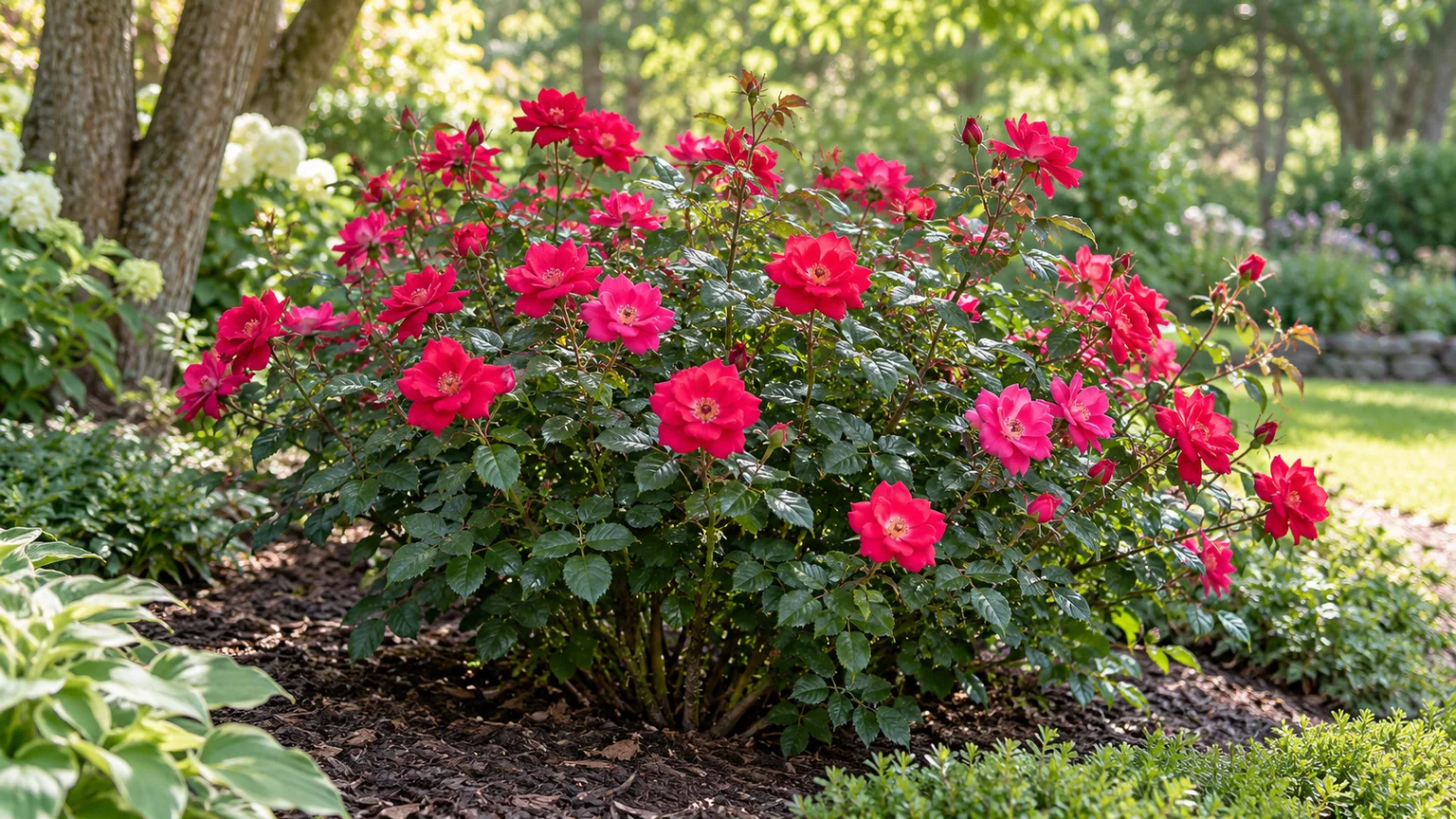
Knock Out roses are a family of repeat-flowering shrub roses, not one plant with one fixed size, color, or hardiness rating. They are generally easier to maintain than many old-fashioned or exhibition roses, but “easy care” does not mean immune to disease or able to thrive in any site.
Choose by the mature size and flower traits of the named cultivar on the label, then give it sun, drainage, and enough space. Once established, a simple annual pruning and a quick check of the foliage usually provide all the attention it needs.
What makes a Knock Out rose different?
Knock Out is a branded group of hybrid shrub roses bred for a long season of repeat bloom and comparatively strong resistance to common rose diseases. The original, Red Knock Out, is the cultivar ‘Radrazz’; later members of the family have their own cultivar names, flower forms, colors, and growth habits. NC State Extension describes the group as deciduous shrubs and lists 13 named cultivars, while University of Florida IFAS notes that grafted and own-root plants are both sold.
That distinction matters at the nursery: “Knock Out” on a pot tells you the plant belongs to a family, not exactly how tall it will be or how it performs in your climate. Check the full cultivar name and mature dimensions on the tag, especially if the shrub must fit under a window, along a walk, or in a narrow bed. NC State Extension Plant Toolbox and UF/IFAS Gardening Solutions provide useful group-level and cultivar context.
Like other shrub roses, most Knock Out plants bloom in repeated flushes from spring into fall in suitable conditions. Their flowers usually last longer on the shrub than in a vase, and many have less fragrance than traditional fragrant garden roses, so they are strongest as landscape plants rather than cut-flower varieties.
Compare the Knock Out rose varieties
The series ranges from compact red plants to larger shrubs with single or double flowers in pink, coral, peach, yellow, orange, and white. Names and availability change among nurseries and regions, so use this as a selection guide and treat the plant label as the final reference for the exact selection being sold.
| Selection | What stands out | Good reason to choose it |
|---|---|---|
| Red Knock Out ‘Radrazz’ | Original selection; cherry-red to hot-pink single flowers | Classic red shrub rose form |
| Double Knock Out ‘Radtko’ | Double cherry-red flowers | A fuller-looking red bloom |
| Pink Knock Out ‘Radcon’ | Bright pink flowers | A clear pink accent in a mixed bed |
| Pink Double Knock Out ‘Radtkopink’ | Double pink flowers | More petals and a rounded pink shrub |
| Blushing Knock Out ‘Radyod’ | Soft, light-pink single flowers | A paler, softer color against dark foliage |
| Coral Knock Out ‘Radral’ | Orange-brick flowers that mature toward coral | Warm color; often a larger, upright shrub |
| Rainbow Knock Out ‘Radcor’ | Coral-pink petals with a yellow center | Two-tone flowers and a compact habit |
| Peachy Knock Out ‘Radgor’ | Peach to pink flowers with a yellow center | A softer, warm-toned palette |
| Sunny Knock Out ‘Radsunny’ | Yellow flowers that fade toward cream; light fragrance | Yellow blooms and a more upright look |
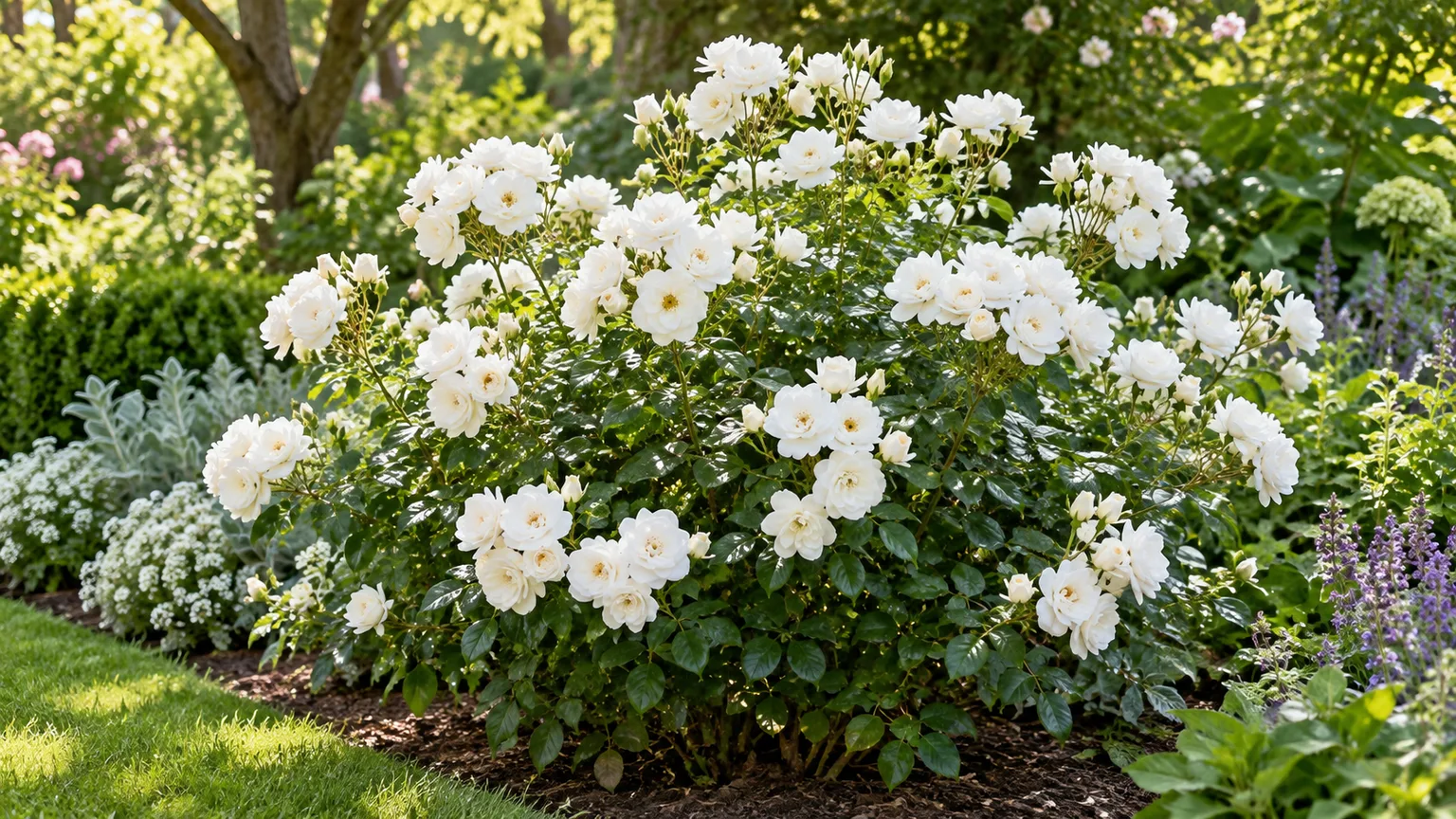
| White Knock Out ‘Radwhite’ | Single white flowers against dark foliage | A compact white-flowering shrub |
| Petite Knock Out ‘Meibenbino’ | Miniature red selection, around 18 inches tall | Small beds, edging, or an outdoor pot |
| Easy Bee-zy ‘SRPylwko’ | Yellow flowers with a citrus-like fragrance | A fragrant yellow option, where sold |
| Orange Glow ‘Radslam’ | Orange flowers with yellow and pink tones | A vivid warm-color accent, where sold |
The comparison follows the cultivar names in the NC State Extension Plant Toolbox; selection descriptions and inventory may change, and not every garden center carries every cultivar. Confirm the tag’s color, flower form, mature size, and hardiness information before buying rather than relying on a generic Knock Out label.
Choose by flower form, size, and site
For a low edging or patio pot, start by asking for Petite and verify that the container will still receive direct outdoor sun. For a hedge or broad foundation planting, choose a standard selection only if you can leave enough room for its mature width; shearing it into a tight box every few weeks works against good airflow and is not necessary for repeat bloom.
Single versus double flowers is mostly a visual preference, while the “best” color depends on how the rose will sit beside siding, paving, and nearby flowers. If fragrance or long stems for bouquets are the priority, compare other rose classes too: Knock Out roses are valued more for recurring landscape color and lower routine maintenance than for strong scent or vase life.
Is a Knock Out rose a good fit for your garden?
Consider one if you want a flowering shrub that can make a small hedge, anchor a sunny border, soften a foundation, or provide color over a long season without daily deadheading. The dense habit can also create a visual screen, but the plants have prickles and may spread wider than a narrow walkway or entry bed allows.
Skip or relocate the plan if the site stays shaded, the soil remains soggy, or you need a fragrant rose for cutting. Knock Out roses can flower in partial shade, but bloom is usually stronger with a full-sun site; even disease-resistant shrubs can lose foliage in a humid, crowded bed. In an area with frequent deer or rabbit browsing, plan a physical barrier rather than assuming rose prickles will protect it.
Give it sun, airflow, and enough room
Choose a site with at least six hours of direct sun daily; six to eight hours is a useful target for heavier flowering. A few hours of shade may be tolerated, but a plant that grows long stems toward light or produces sparse flowers often needs more sun, less competition, or a less aggressive pruning schedule. The NC State Plant Toolbox defines full sun as six or more hours, and UF/IFAS recommends six to eight hours for this rose group.
Air movement is valuable where warm rain and humidity encourage leaf diseases. Avoid crowding plants against one another or a solid wall, and space them using the cultivar’s expected mature width rather than a fixed spacing rule; NC State notes that the group commonly needs about three to six feet of planting space. If planting a hedge, leave enough space for a hand and pruners to reach the interior and for wet leaves to dry after rain.
Plant a container-grown rose carefully
Plant a nursery-grown rose in spring after the soil can be worked, or in early fall where there is enough mild weather for roots to establish before freezing. In very hot climates, avoid transplanting into peak heat if you can wait for cooler weather; in cold regions, prioritize spring planting so the rose has a full growing season to settle in.
Dig a hole roughly as deep as the nursery pot and wider than the root ball. Slide the rose out gently, loosen circling roots at the bottom if present, set the top of the root ball level with the surrounding soil, then backfill with the excavated soil and water slowly to settle it. Martha Stewart’s gardening guide describes this same container-to-bed sequence; it also recommends adding compost to prepare a garden bed rather than packing a small pocket of rich material around the roots.
If planting more than one shrub, check the label for that specific cultivar’s mature width and leave room accordingly. Keep the bud union or crown near the nursery’s original soil line unless a local extension recommendation for your winter climate advises otherwise; planting much too deep in heavy, wet soil can leave the base slow to dry.
Water to establish roots, then adjust
During the first growing season, water deeply enough to wet the root ball and the surrounding soil when the top few inches begin to dry. The right interval depends on rainfall, soil texture, heat, and pot size, so test the soil instead of following a calendar blindly; a newly planted rose in sandy soil during a hot spell may need attention much sooner than one in loam after rain.
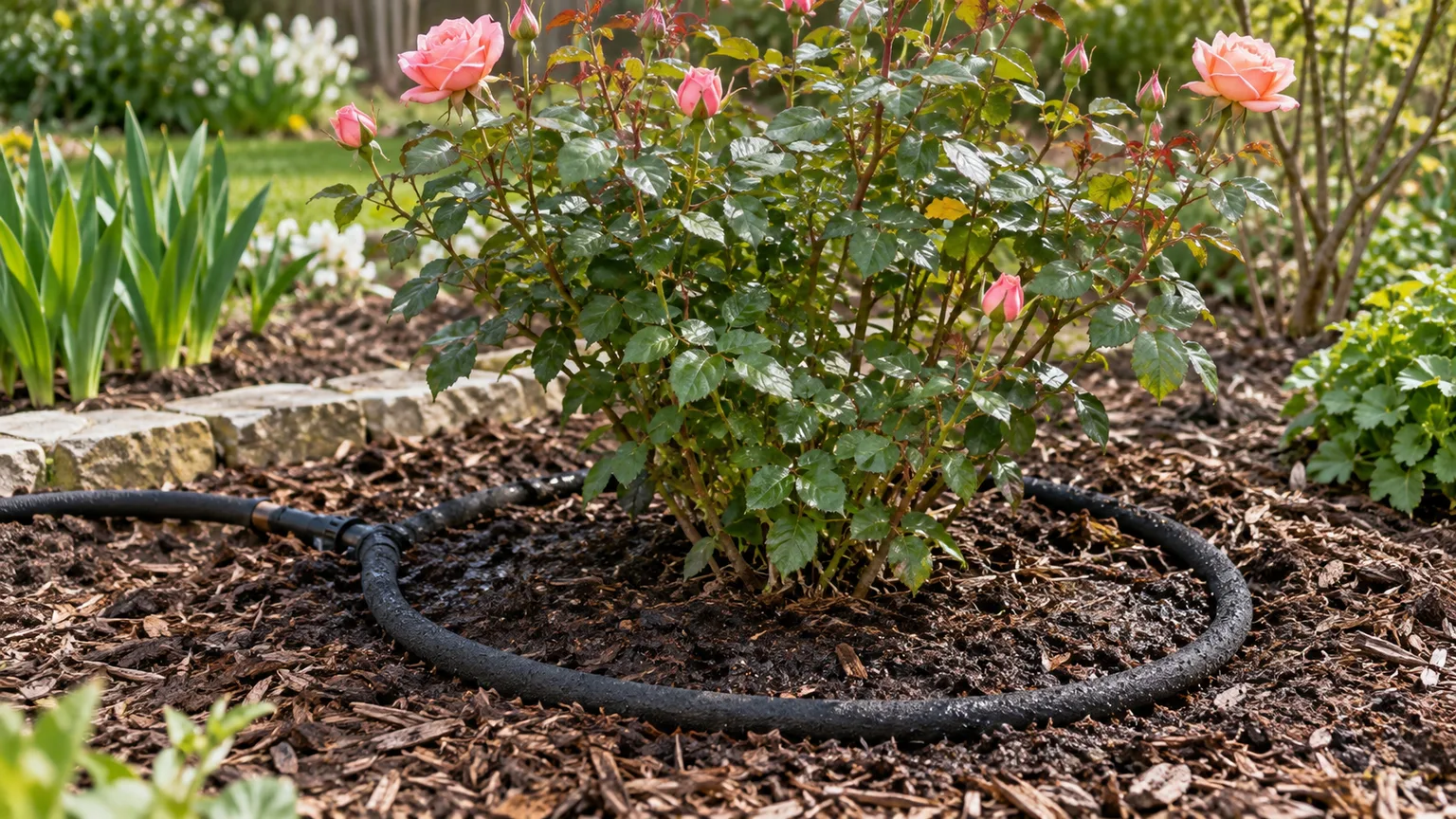
Once established, give supplemental water during extended dry weather, especially when leaves wilt in the morning or the soil is dry below the surface. Direct water at the base with a soaker hose or drip line where possible, and avoid frequent shallow splashes that wet only the top inch. UF/IFAS recommends regular watering through establishment and mulch to conserve moisture; in a wet or poorly drained bed, more water is not the cure for yellowing leaves.
Mulch and fertilize with restraint
Spread a two- to three-inch layer of organic mulch over the root zone to moderate soil temperature, slow evaporation, and reduce weeds. Leave a small clear gap around the stems so mulch does not stay pressed against the canes, and replenish it as it breaks down rather than piling a new thick layer over the old one each season.
Do not fertilize a newly transplanted rose immediately just to force growth. Let it establish and complete a first bloom cycle, then use a soil test or the fertilizer label to decide whether it needs a balanced or rose-formulated product; water the soil before feeding and avoid late-season fertilizer in cold-winter areas so tender growth is not encouraged close to dormancy. Martha Stewart’s report on advice from a rose portfolio manager similarly recommends feeding after the first flowering wave and following the label, not applying a fixed dose to every garden.
When leaves are healthy and the shrub is blooming well, extra fertilizer is unlikely to solve a light, water, or drainage problem. Excessive nitrogen can push soft leafy growth and create a larger shrub to prune without addressing the underlying cause of poor flowering.
Prune once for shape and renewal
Knock Out roses bloom on new growth, so annual pruning is mainly a way to manage size, remove weak or damaged wood, and renew the shrub. You do not need to shape every cane like a show rose, and there is no universal rule that every plant must be reduced to exactly 12 inches.
The best timing depends on climate. In colder regions, wait until the hardest winter weather has passed and buds begin to swell in late winter or early spring; cutting too early can expose fresh growth to a late freeze. In mild climates, a later-winter prune is common, but local extension calendars are more useful than a fixed month because spring arrives at different times.
Make the late-winter reset
Put on sturdy gloves and use sharp bypass pruners. First remove dead, broken, crossing, or pencil-thin canes at their point of origin; then shorten the remaining framework by roughly one-third to one-half if the shrub is healthy and you want a compact form. Make clean cuts just above an outward-facing bud when practical, and clear the debris from around the plant.
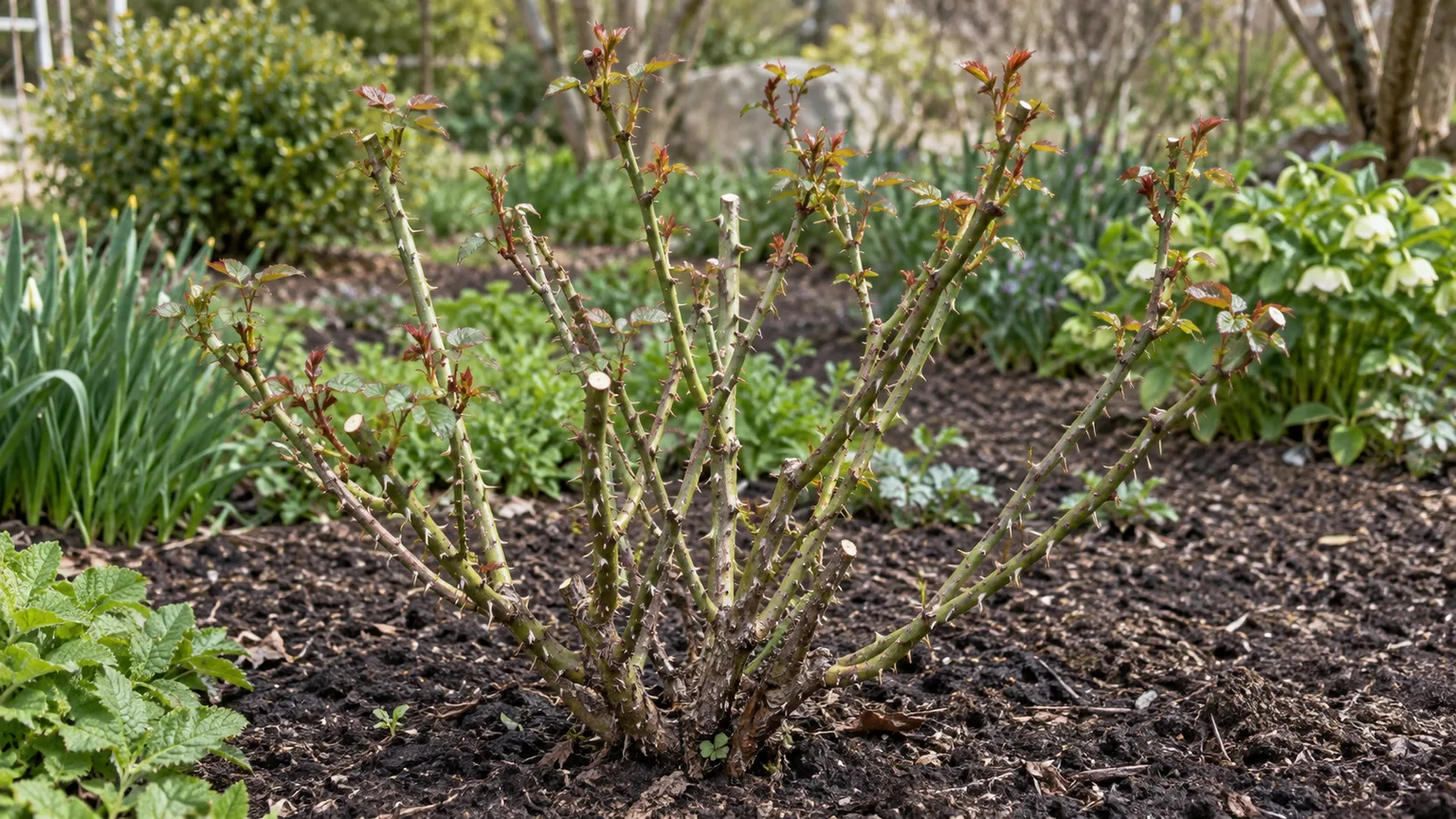
For a mature shrub that has grown much taller than its allotted space, you can cut it harder as a deliberate size reset, provided it is healthy and well established. University extension advice and the Knock Out grower recommendations reported by Southern Living and Martha Stewart describe different pruning severities, ranging from removing a portion of growth to cutting the shrub back to about a foot; those are options for different goals, not contradictory instructions for every rose.
Avoid cutting below the base or graft union, and do not remove so much living growth that the remaining shrub consists of a few weak stubs. If a plant has suffered winter dieback, wait for live buds to show you where healthy wood begins, then cut to that point rather than choosing a height in advance.
Keep in-season pruning light
During the growing season, remove storm-damaged or diseased canes and trim a wayward branch that blocks a path. A light cut after a heavy flush can tidy the shrub, but a severe cut late in summer or early fall may prompt new growth that has little time to harden before winter in cold areas.
Clean pruners between plants if you have seen a suspicious disease, and disinfect them after working on a rose diagnosed with a systemic virus. Do not shear the whole plant repeatedly simply to keep every branch at the same height; that can remove flowers and pack growth into a dense outer shell that shades the interior.
Keep repeat blooms coming without routine deadheading
Most Knock Out selections are self-cleaning: faded petals usually drop without the gardener removing each flower. You can leave the spent blooms alone if appearance is acceptable, which saves time and lets pollinators use open flowers while they last.
If the shrub is producing rose hips or you want a tidier look, snip off fading flower clusters with a short stem rather than cutting deeply into the framework. Removing hips can encourage a faster repeat flush on some plants, but the main drivers of steady bloom are sunlight, healthy roots, and renewal growth; deadheading cannot compensate for shade or drought.
Troubleshoot disease resistance realistically
“Disease-resistant” describes a tendency, not immunity. Knock Out roses were selected for better resistance to common rose diseases, especially black spot, but leaf disease can still show up during prolonged wet weather, in crowded sites, or when a plant is stressed. The correct response is to identify the pattern first and use the least disruptive effective step.
If a shrub suddenly declines, look at more than the newest leaves: check the underside of foliage, the cane bases, and the soil moisture, then compare symptoms across all branches. A few damaged leaves after rain are not enough to identify a serious disease, while progressive distortion, unusual thorniness, or repeated defoliation deserves a call or photo to a local Extension office.
Manage black spot and powdery mildew
Black spot begins as dark, round leaf lesions that may develop yellowing around them; infected leaves can drop. Powdery mildew looks more like a white or gray powder on new leaves and shoots, sometimes with distorted growth. Clemson Cooperative Extension notes that black spot is favored by long warm, wet periods, while rose powdery mildew can be troublesome during mild weather with humid nights and drier days.
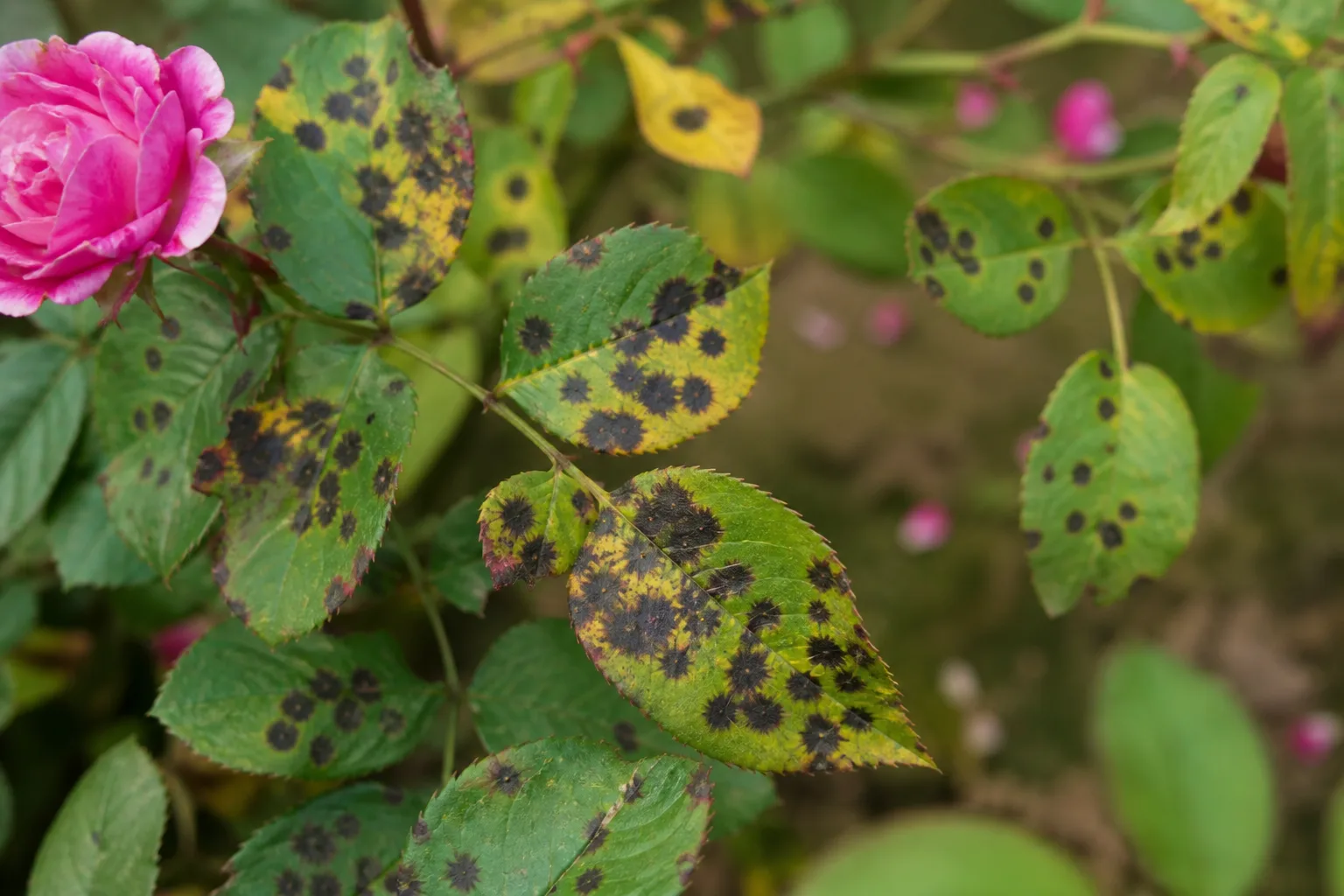
Start with leaf-dry practices: water at soil level, open crowded growth, remove heavily affected foliage, and rake up fallen leaves at season’s end. If disease continues to spread despite those steps, ask local Extension for cultivar-appropriate options and follow the current pesticide label exactly; do not copy a spray schedule from a different climate or apply horticultural oil to drought-stressed plants or during unsafe heat. Clemson Cooperative Extension’s rose disease guide explains symptoms and regional management limits.
Treat possible rose rosette as urgent
Rose rosette disease is more serious than ordinary black spot. A suspect plant may show clusters of unusually red or distorted shoots, very thorny stems, shortened internodes that form a broom-like tuft, and weak or deformed flowers; no single clue proves the diagnosis, and herbicide injury can imitate some symptoms. NC State Extension describes the disease and its look-alikes in its Knock Out rose troubleshooting article.
Do not try to cure a suspected systemic virus by pruning off only the odd branch or spraying a fungicide. Photograph the whole shrub and the affected growth, then contact your county Extension office for diagnosis; if rose rosette is confirmed, Clemson advises removing the infected plant and roots, bagging or otherwise disposing of it promptly, and disinfecting tools before using them on other roses. Keep nearby roses from touching while you wait for guidance, and do not compost a confirmed infected plant.
Identify common pests before treating
Japanese beetles chew flowers and leaves, often leaving ragged petals or skeletonized foliage. Handpick visible adults into soapy water if numbers are low; avoid placing pheromone traps right beside the rose because they can attract more beetles into the bed. If damage is severe, check with local Extension before choosing any insecticide, particularly while flowers are open and pollinators are visiting.
Rose slugs are not true slugs; they are sawfly larvae. They may feed between leaf veins and leave pale translucent “windows” that later turn brown, or chew holes as they grow. Inspect leaf undersides and rinse or pick off larvae early; Clemson Cooperative Extension notes that products labeled for caterpillars such as Bt do not control sawfly larvae, so correct identification matters before treatment.
Aphids cluster on tender shoot tips and can often be rinsed off with a firm stream of water. Deer and rabbits may also browse roses despite the canes’ prickles, so protect a repeatedly browsed shrub with a barrier rather than escalating immediately to broad-spectrum sprays. See Clemson’s guide to rose insects and related pests for diagnostic details and South Carolina-specific recommendations.
Protect the root zone through winter
In-ground Knock Out roses generally need less winter wrapping than tender hybrid teas, but hardiness varies among selections and exposed sites. Check the cultivar label for your USDA zone, and factor in wind, drainage, snow cover, and whether a plant is in an unusually cold pocket of the yard; a zone number describes typical annual extreme minimum temperatures, not a guarantee for every garden.
After the plant has gone dormant and the ground has cooled, renew the mulch over the root zone without burying the canes. In a severe-winter location, use a loose insulating mulch or wind protection if local rose guidance recommends it, then remove excess winter cover in spring and wait to prune until winter damage is visible. In mild climates, avoid wrapping plants tightly where trapped moisture and warmth can encourage rot or premature growth.
Grow a Knock Out rose in a container outdoors
Petite is the easiest member of the group to fit into a container, but a standard cultivar can also grow in a large, stable pot with drainage holes. Use a quality potting mix rather than heavy garden soil, and choose a container large enough to hold the root ball with room for new roots; a larger pot also dries more slowly than a small one.
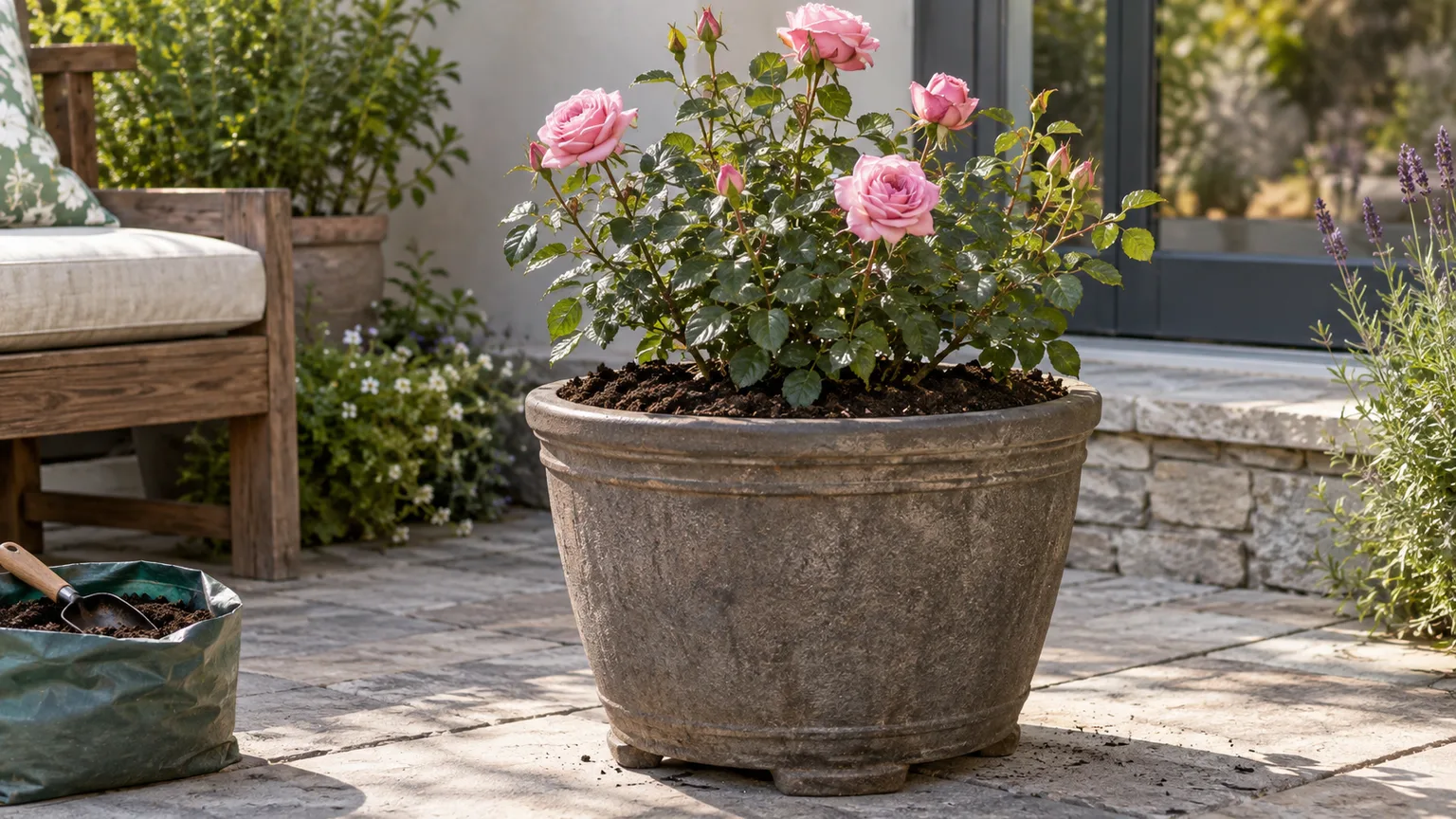
Place the pot outdoors in full sun, where air can move around it, and check moisture more often than you would for a shrub planted in the ground. Container roses can dry quickly in heat and can also sit in water if the drainage holes are blocked, so water thoroughly and let excess drain away. Repot when roots circle tightly or the mix no longer holds moisture evenly, and refresh the potting mix as needed.
A pot exposes roots to colder temperatures than garden soil does. In cold-winter regions, protect the container during dormancy by moving it to an unheated sheltered location or insulating the pot according to local advice; bringing a dormant rose into a warm living room can disrupt its seasonal rest. Knock Out roses are outdoor shrubs, not ordinary indoor houseplants.
Conclusion
Choose a Knock Out rose by its cultivar label, not by the family name alone: color, flower form, mature width, and hardiness differ among selections. Give the shrub a sunny, well-drained site, water it deeply while it establishes, and use an annual late-winter or early-spring prune to keep its size and shape manageable.
The series can make rose growing simpler, but it still benefits from observation. Keep foliage dry when possible, clean up fallen leaves, identify pests before treating, and get prompt extension help for the unusual shoot growth associated with rose rosette disease.