Lawn Care Tips for Mowing, Watering, and Feeding
Use practical lawn care tips to set mowing height, water efficiently, test soil, fertilize safely, repair thin spots, and adapt chores to your grass type.
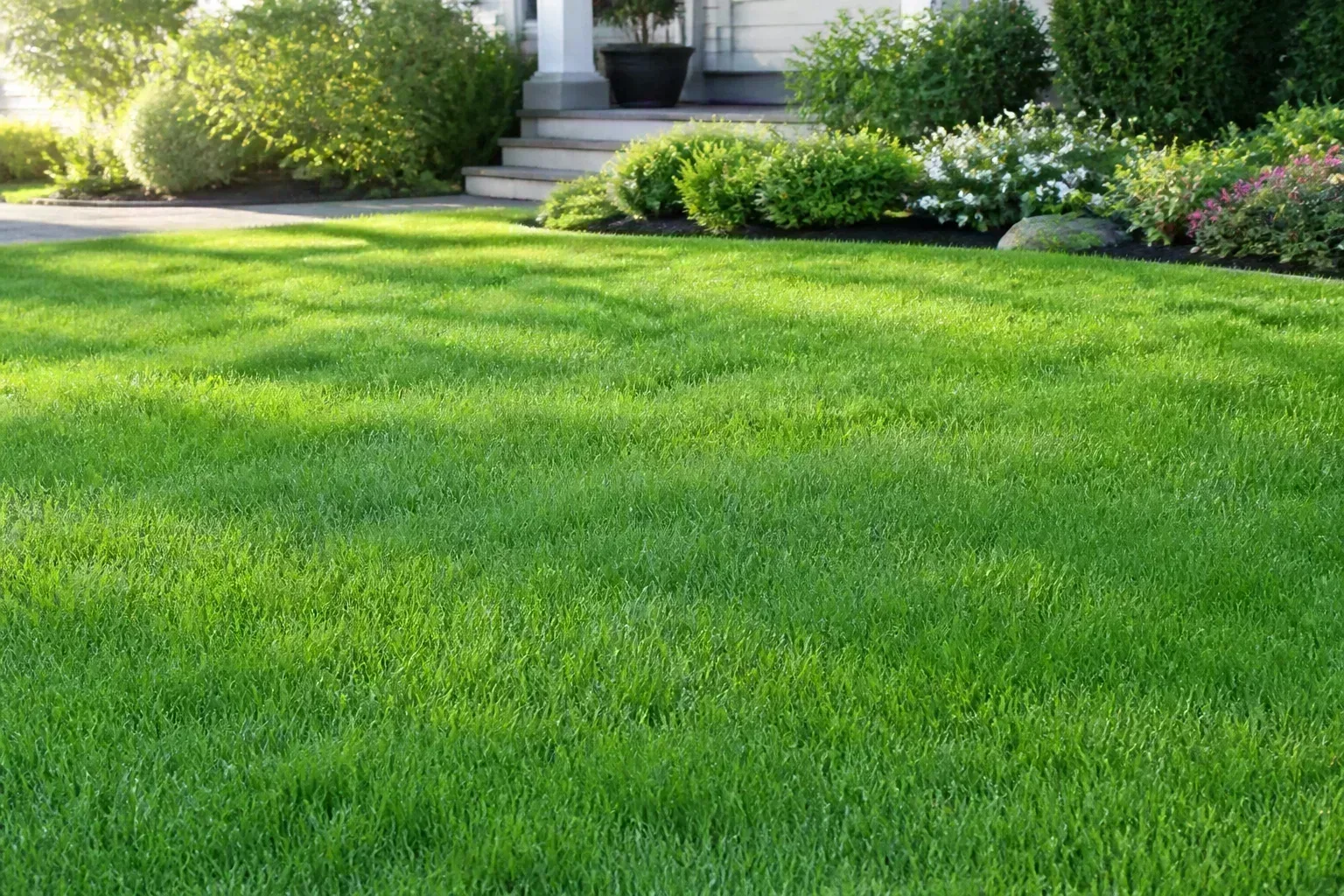
A healthy lawn is built through a few well-timed habits, not a long list of products. The useful order is simple: identify the grass you have, notice what the site is telling you, mow at a suitable height, water only when the root zone needs it, and base fertilizer or renovation on evidence. That order prevents a common cycle in which brown patches trigger more water, thin growth triggers more fertilizer, and neither corrects the underlying problem.
No single calendar works across every yard. Cool-season grasses grow most actively in cooler weather, while warm-season grasses put on their strongest growth in warmth; shade, soil, slope, traffic, and local rainfall then change the details. Use the guidelines below as a decision system and check your local extension service for species-specific timing and any local fertilizer rules.
Start with grass, site, and the job you want the lawn to do
Before changing your routine, decide what “healthy” means for your property. A play area that gets daily foot traffic needs resilient coverage and repair, while a lightly used side yard may be perfectly successful with less irrigation, fewer fertilizer applications, or a taller, more natural look. A uniform golf-green finish is a different management goal from a durable home lawn, and it costs more time and inputs to maintain.
Look at how the lawn performs through a full growing cycle, not just on the day it looks tired. Note where grass grows quickly, where it stays thin, which areas dry first, and where water pools after rain. Those repeated patterns help separate a grass-care issue from a site issue, such as shade, compacted soil, poor drainage, or runoff from a roof or path.
Read the grass’s growth cycle and map the site before acting
Cool-season grasses such as fescues, Kentucky bluegrass, and perennial ryegrass generally grow most vigorously in cooler spring and fall weather. Warm-season grasses such as bermudagrass, zoysiagrass, and St. Augustinegrass grow most actively after warm weather arrives and may turn straw-colored as they enter winter dormancy. The broad north-versus-south calendars used in lawn guides are only starting points; elevation, coastal weather, cultivar, and local microclimate can shift the calendar.
This difference matters because a task that helps one lawn can stress another. Overseeding cool-season turf is commonly planned for the late-summer-to-fall establishment window, while warm-season lawns are generally repaired during active warm growth. A regional schedule from This Old House similarly separates cool and warm regions, but use your local extension recommendations for exact dates and species-specific heights.
Walk the lawn after rain and again during a dry spell. If water runs off a slope, sits in a low spot, or disappears quickly from sandy soil, the same sprinkler schedule will not work everywhere. A screwdriver or soil probe can help you check whether moisture has moved below the surface; if the top looks damp but soil a few inches down is powder-dry, a brief surface sprinkle is not solving the root-zone problem.
Make a rough map of sun, shade, traffic, and drainage. Grass under dense tree shade may thin despite adequate fertilizer because it cannot receive enough light; a narrow path may wear down because feet repeatedly compress the same soil; a low corner may fail because roots stay oxygen-starved in saturated ground. Each cause calls for a different response, so avoid using a bag of fertilizer as a general lawn medicine.
Take a soil test before applying lime or phosphorus, before a major renovation, and whenever the lawn repeatedly underperforms despite reasonable mowing and water. Penn State Extension recommends collecting multiple subsamples from a relatively uniform area and separating areas that differ in soil or past treatment; follow the instructions from the lab you use because sampling depth and handling can vary. A lab report can guide pH and nutrient corrections, while a visual color change alone cannot tell you which nutrient is missing.
Mow for roots and steady density
Mowing is the task most homeowners repeat, so small improvements compound. Set the deck to the height recommended for your grass species and the season, then keep it there consistently rather than alternating between very short cuts and long, infrequent cuts. A higher, appropriate canopy shades the soil, supports deeper rooting, and gives grass more leaf area to recover after heat or traffic.
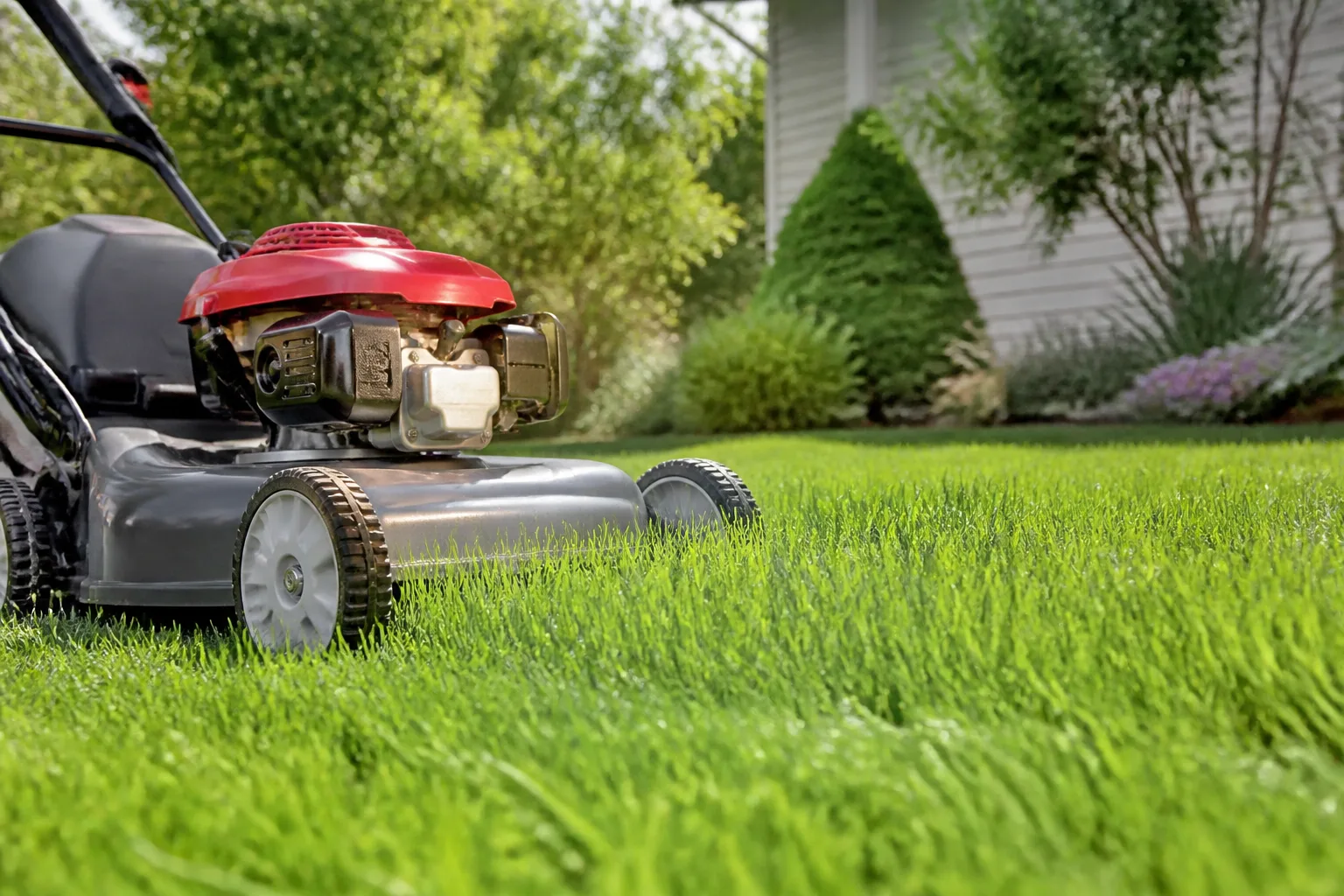
The correct height is not one universal number. Fine ornamental turf may be kept short, but a typical family lawn benefits from a taller setting suited to its grass type; during heat or drought, raising the deck slightly can reduce stress. The Royal Horticultural Society’s mowing guidance recommends adapting height to lawn style and conditions and avoiding cuts that remove more than one-third of the grass blade at a time.
Use the one-third rule, a sharp blade, and a flexible schedule
If a lawn has grown too tall, do not scalp it in one pass. Remove at most about one-third of the blade, wait for recovery, and make another cut later if needed. This may mean mowing twice in a week during a fast-growth spell or waiting longer in drought; the grass’s growth rate is a better schedule than a fixed weekly appointment.
Mow when the grass is dry enough that clippings do not form wet clumps and the soil is firm enough to support the mower. Avoid driving over saturated ground, which can rut or compact it. Change direction periodically to reduce repeated wheel tracks, and slow down around turns and uneven spots where the mower can scalp high points.
Inspect the blade if the tips look ragged or the lawn takes on a dull brown cast shortly after mowing. A sharp blade slices; a dull one tears leaf tissue and makes the cut look worse. Before cleaning or working near a mower blade, disconnect the spark plug or remove the battery according to the manual, and use the manufacturer’s safety steps.
Water the root zone, not a timer setting
Established lawns usually need less frequent, deeper irrigation than daily light sprinkling. Frequent shallow watering keeps moisture near the surface, where roots have less reason to grow deeper, and can leave the root zone dry even while the grass blades look wet. Watering needs still vary with grass species, soil texture, temperature, wind, shade, rainfall, and local restrictions, so a universal number of minutes is not meaningful. University of Minnesota Extension’s water-saving guidance also connects mowing height and appropriate fertilizer management with reduced irrigation needs.
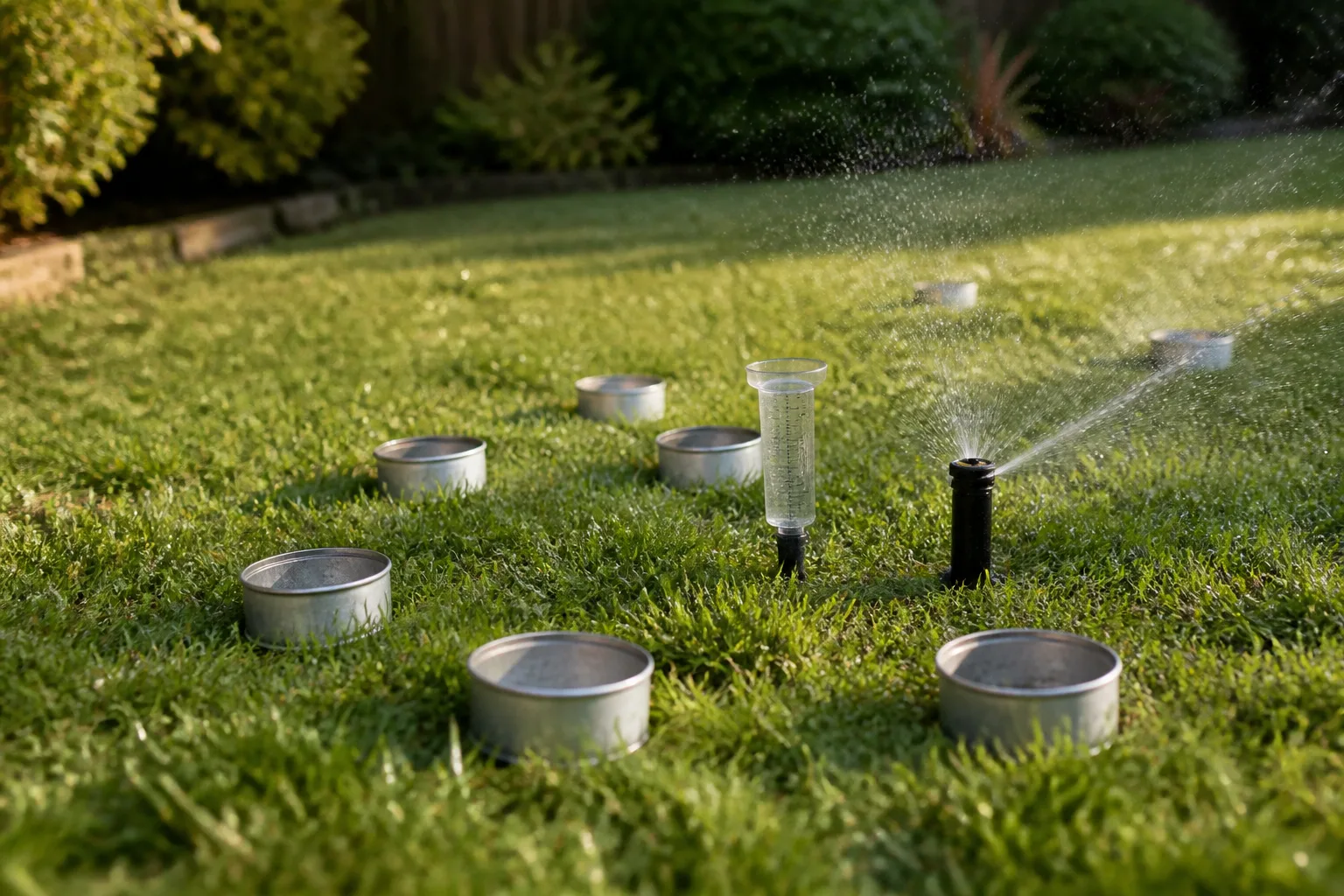
Calibrate the sprinkler instead of guessing. Set several straight-sided cups or catch cans across the area, run the system for a timed interval, and compare the collected depths. If the cups vary widely, move the sprinkler, adjust the heads, or divide the area into zones; once coverage is even, repeat the test to estimate how long it takes to deliver the depth your local guidance recommends. This simple measurement method is also described in This Old House’s lawn-care schedule.
Water early enough that leaves can dry during the day, and stop if water begins running onto pavement or pooling downhill. On compacted or clay-heavy soil, apply water in shorter cycles with pauses so it can soak in rather than run away. After irrigation, check soil moisture in a few spots and adjust for rain rather than running the same controller program automatically.
If your lawn is established and the season turns hot and dry, some cool-season turf may slow growth or go dormant instead of remaining vivid green. Dormancy is not automatically a sign that the lawn needs fertilizer. Follow local guidance on how much water a dormant lawn needs, and avoid heavy traffic on stressed turf because worn areas recover slowly until favorable growing conditions return.
Fertilize from a soil test, not a shade of green
A greener lawn is not always a healthier lawn. Excess nitrogen can push fast, soft growth that demands more mowing and water, while phosphorus or potassium should not be added just because a fertilizer bag contains all three nutrients. Penn State Extension’s turfgrass guide explains that a soil test is the sound way to determine some nutrient needs and that fertilizer programs vary with grass species, soil, irrigation, clipping return, traffic, and the owner’s expectations.
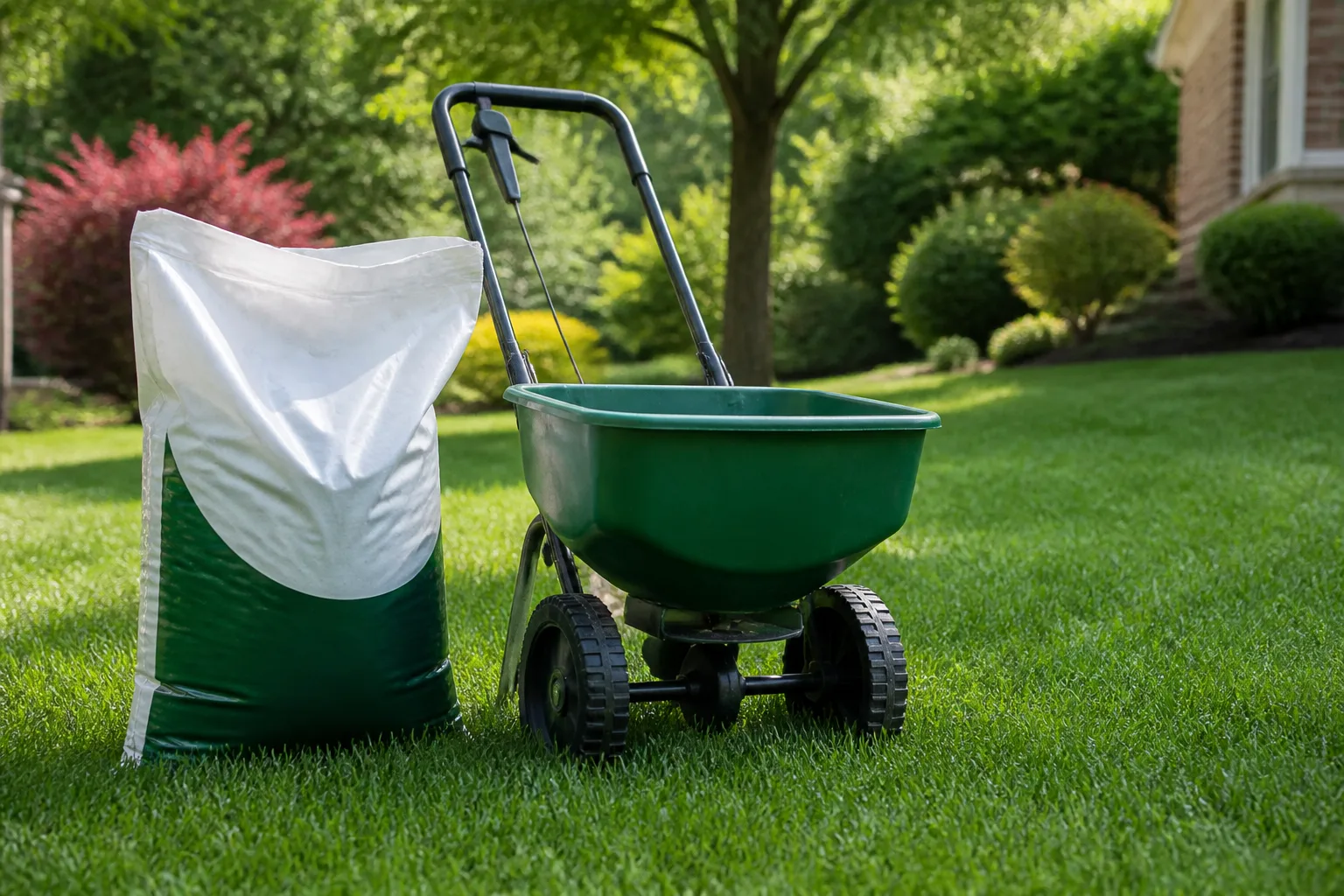
Use a soil-test report and the fertilizer label to decide what to apply, how much, and when. The three numbers on a fertilizer grade represent percentages of nitrogen, phosphate, and potash by weight, in that order. They are not a quality score; the right product is the one that supplies the nutrients your soil and turf need at the labeled rate. Penn State Extension’s turfgrass fertilization guide explains why those choices vary with grass species, soil type, and management.
Apply nutrients carefully and keep them out of runoff
Time fertilizer for active growth and avoid feeding a lawn that is drought-stressed, dormant, frozen, or waterlogged. Do not apply immediately before a forecast downpour, on hard surfaces, or where granules can wash into a storm drain. Sweep any fertilizer from pavement back onto the lawn, keep it away from waterways, and follow the product label and local restrictions.
More is not a shortcut. Applying too much at once can burn turf, create a flush of growth, or send nutrients off-site; applying a product with unneeded phosphorus can contribute to water pollution through runoff. If the soil test says phosphorus is already adequate or high, choose a product without added phosphorus where appropriate and permitted. If the report is unclear, ask the testing lab or local extension educator to interpret it before purchasing amendments.
Return clippings and judge thatch by what you can measure
Short, dry clippings usually can stay on the lawn. They settle between grass blades and break down, returning some nutrients; Penn State Extension notes that returning clippings can reduce fertilizer needs by as much as one-third under its turf-management guidance. That does not mean clippings replace a soil test or provide every nutrient in the proportion a lawn needs.
Collect or spread clippings when they are long, wet, or left in visible piles. Thick clumps can smother the grass underneath and make a freshly mown lawn look uneven. If you have applied a pesticide, follow its label before reusing clippings as mulch or compost, and avoid moving clippings from a problem area into a garden until you know whether they are suitable.
Thatch is a dense layer of living and dead stems, roots, and crowns between green blades and the soil surface; it is not simply a layer of grass clippings. A thin layer is normal. To check it, cut a small wedge of turf and inspect the brown spongy layer at soil level. If it is thick enough to make the lawn feel springy or keep water from reaching soil, identify the grass type and local thatch guidance before renting a dethatcher; some grasses naturally produce more thatch than others.
Aerate only when compaction is limiting the lawn
Core aeration removes small plugs of soil and can help compacted ground recover by creating channels for air, water, and roots. It is useful when the soil is hard to penetrate, water repeatedly ponds or runs off, or grass thins along heavily trafficked routes. It is not a routine annual requirement for every lawn, and it will not correct shade, poor drainage, the wrong grass for the site, or a watering problem by itself.
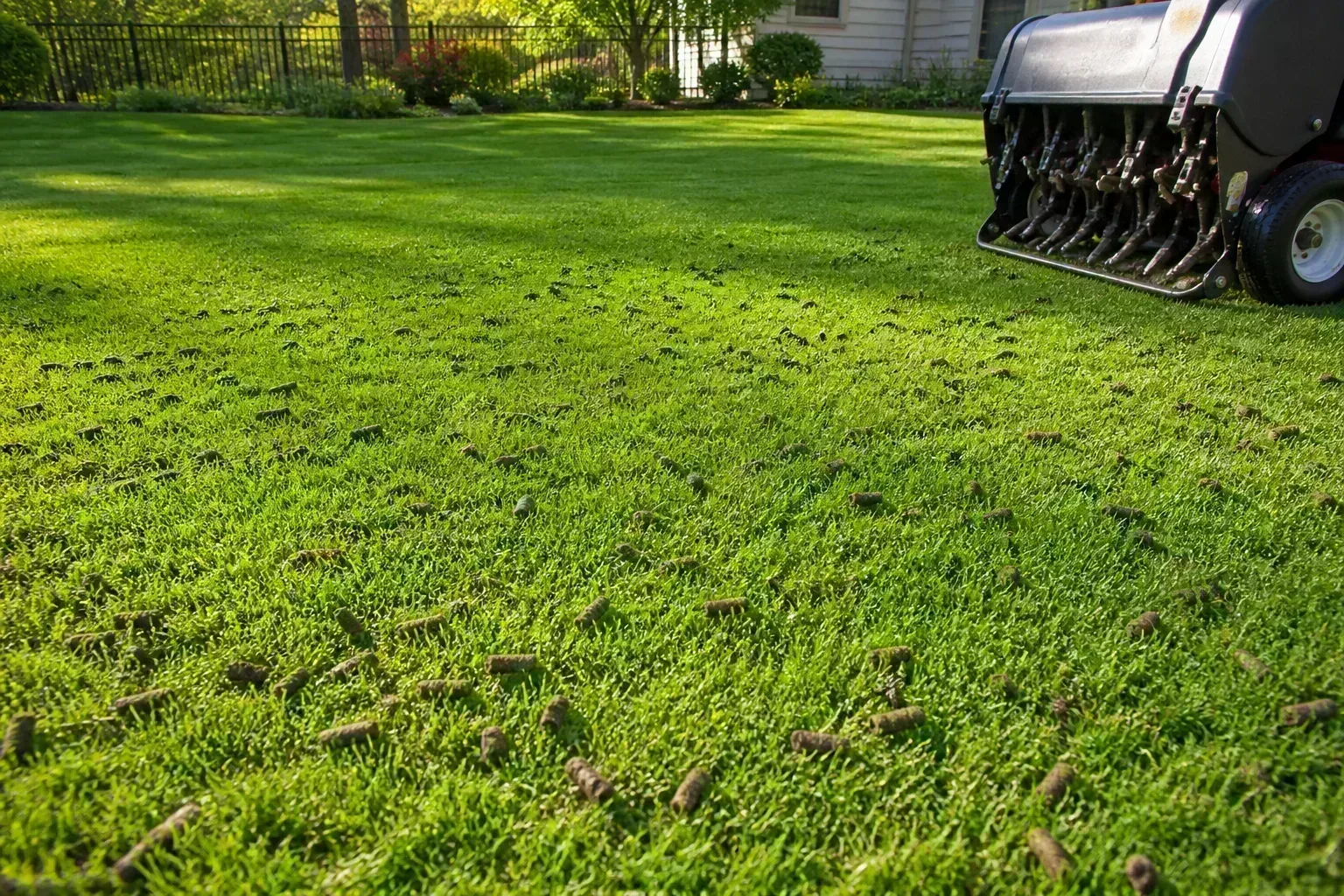
Choose a time when the lawn is actively growing and can fill in after the disturbance; the right window differs between cool-season and warm-season grasses. Soil should be moist enough for the tines to penetrate but not saturated. If compaction is confined to a path or play area, aerate that area rather than treating the entire yard, and reduce the traffic pattern that caused the compaction in the first place.
Dethatching and aeration solve different problems. A dethatcher removes excess surface thatch; a core aerator addresses compacted soil. Before renting either machine, inspect the turf plug and soil. If you are unsure whether the main barrier is thatch, compaction, or poor drainage, a local extension office can help you choose the right remedy and timing.
Repair thin areas in the right growing window
A bare patch is a symptom, not a diagnosis. First determine whether the cause is dog traffic, shade, standing water, soil compaction, insects, disease, or a mowing injury. If the cause remains, new seed may sprout and then fail for the same reason, so fix the site condition before buying grass seed.
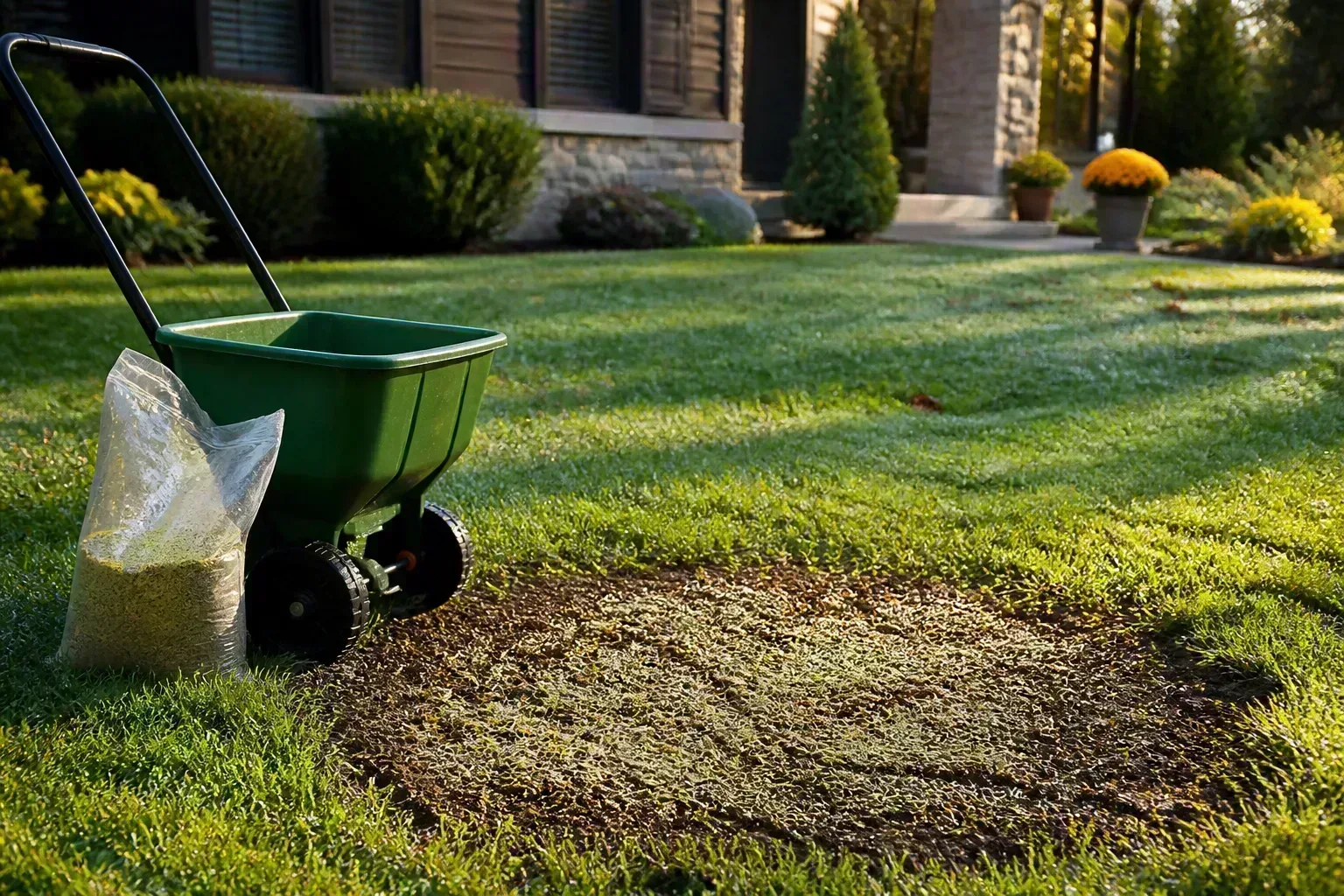
For small spots, loosen the surface, remove dead debris, and choose seed that matches the existing grass and local climate. Spread it at the rate on the seed label, make good soil contact, and keep the seed zone consistently moist during germination without washing seed away. As seedlings emerge, gradually shift from frequent light watering to the deeper pattern used for established turf.
For larger thin areas, compare overseeding with patching in sod or replacing the lawn. The best option depends on area, soil preparation, irrigation access, grass type, and whether the site is suitable for turf at all. Cool-season lawns are often renovated in late summer or early fall, when seed can establish before winter; warm-season lawns need an active-growth window. This Old House’s seasonal guide offers a broad regional contrast, but local extension timing should lead.
Control weeds by improving the conditions they exploit
A few weeds do not mean the entire lawn needs a blanket treatment. Identify the weed first: broadleaf weeds, grassy weeds, and sedges respond to different approaches, and a product aimed at one group may not work on another. For small infestations, pulling or digging when soil is moist can work if you remove the crown or taproot and prevent seedheads from scattering.
Dense, well-adapted turf is the best long-term competitor against many weeds. Mow at a suitable height, repair bare soil, and correct chronic shade or waterlogging rather than trying to make grass thrive in an unsuitable location. If you use a herbicide, read the label for the target weed, grass species, weather limits, protective equipment, and reseeding interval; do not apply it where it can drift onto desired plants or run into drains.
Follow a cue-based seasonal lawn-care plan
Use season as a prompt to inspect, not as an automatic shopping list. The actual timing depends on when your grass begins active growth, local climate, soil conditions, and the growing window for the specific task. A useful annual plan is built around the lawn’s growth and the weather forecast rather than a one-size month-by-month schedule.
Spring: assess and prepare
When the ground is no longer soggy, clear branches and heavy leaf mats, inspect for winter injury, and take a soil test if one is due. Begin mowing when growth requires it, using a high setting for the first cut if grass has become long. Avoid aggressive dethatching or heavy traffic on soft soil, and do not apply fertilizer simply because spring has arrived; determine whether the grass type and soil report call for it.
Summer: protect grass under heat and drought
Raise the mower slightly if local grass guidance supports it, avoid removing too much leaf at once, and water based on soil moisture and rainfall. Pause nonessential renovation and fertilizing when turf is heat-stressed or dormant. If you see a brown patch, check soil moisture, sprinkler coverage, and grass type before assuming the lawn needs more water.
Fall: repair and strengthen where growth allows
For cool-season lawns, the cooler weather can offer a strong window for overseeding and other recovery work. Aerate only compacted areas, feed according to the soil test and regional recommendation, and keep leaves from forming a dense mat that blocks light. Warm-season lawns have a different growth cycle, so do not copy a cool-season renovation calendar; prepare for dormancy as growth naturally slows.
Winter: avoid damage and plan ahead
When grass is dormant or the soil is frozen, limit repeated foot traffic that can crush or compact the turf. Mowing is unnecessary when grass has stopped growing, and cutting wet or frozen blades can leave a ragged finish. Use the quiet period to identify persistent trouble spots, service the mower safely, and plan whether an unused strip of lawn should remain turf next year.
Troubleshoot brown patches before treating them
Brown grass can result from drought, dormancy, scalping, shade, waterlogging, fertilizer burn, pet urine, disease, or insects. Look at the shape and location of the damage, then check moisture, drainage, recent mowing, recent applications, and the grass’s seasonal growth pattern. Uniform browning during a hot dry period points to a different set of possibilities than rapidly expanding circles, irregular patches near a downspout, or a strip that follows a mower turn.
A practical first check is to compare affected and healthy areas. Is soil equally moist? Does water reach the patch? Is the grass still attached at the crown, or does it lift easily? Did the problem appear after fertilizer, a heat wave, or a change in mowing height? Those observations can narrow the likely cause without exposing the whole yard to an unnecessary pesticide or fertilizer treatment.
If a problem spreads, returns despite correcting water and mowing, or has signs you cannot identify, take clear photographs and a small sample if your local extension diagnostic service requests one. Follow local expert guidance before applying pesticide. Avoid combining products or repeating applications because “more” can injure the turf and make diagnosis harder.
Lower the workload by changing the lawn, not just the routine
The lowest-maintenance lawn is often a smaller, better-placed lawn. Keep durable turf where you need a play surface, a path, or open space; consider a locally suitable groundcover, planted bed, or less frequently mown area where grass struggles under shade, steep slopes, or low use. A lawn should serve the household and site rather than consume water and labor simply to maintain an uninterrupted green rectangle.
You can also relax the finish. A taller cut, less frequent mowing during slow growth, and a flower-rich edge or mini-meadow can reduce some routine work and add habitat where local conditions support it. The RHS describes lawns as spaces that can range from close-cut turf to longer, flower-rich grass; any change should account for local species, visibility, fire or access concerns, and neighborhood requirements. Start with one defined section, observe how it performs, and expand only if it suits the property.
Conclusion
A dependable lawn-care routine begins with observation: know the grass, understand the site, and pay attention to growth and soil moisture. Then mow without scalping, water only as needed and measure your system, use a soil test to guide nutrients, and reserve aeration or overseeding for conditions that justify them.
When the lawn still struggles, diagnose the cause before adding another input. Grass type, shade, drainage, compaction, climate, and the way you use the yard all matter; a routine that respects those differences is usually healthier and easier to maintain than a rigid calendar of treatments.



