How to Grow and Care for Common Mullein
Learn how to grow common mullein from light-loving seed, manage its two-year life cycle, choose a dry sunny site, and prevent unwanted seedlings.
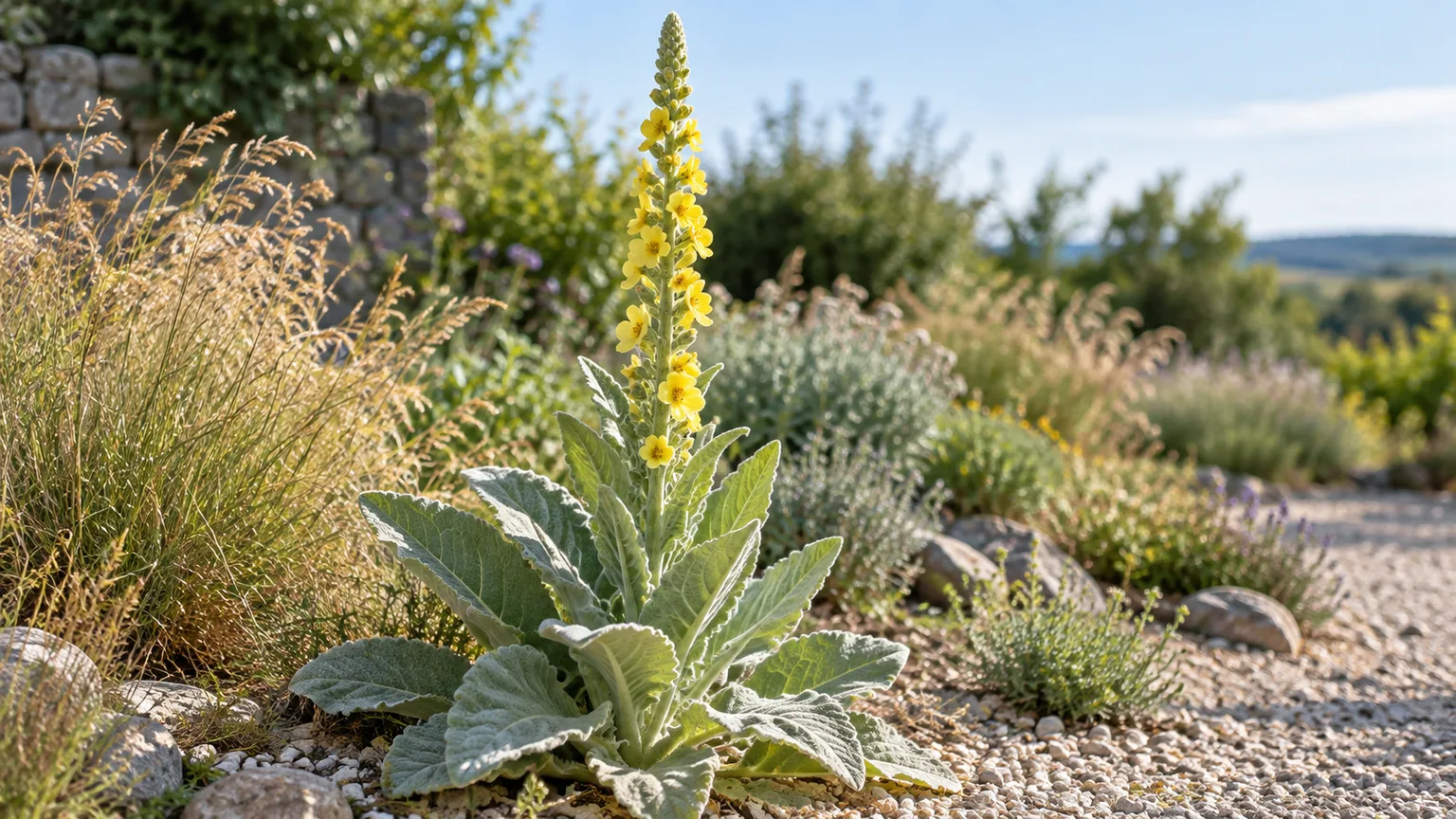
Common mullein is easy to start, but it is not a plant to add casually. A single Verbascum thapsus can make a dramatic yellow flower spike and release enough seed to keep appearing in disturbed soil for years, so the best care plan begins with a decision: do you want this particular species in this particular place?
If you do, give it sun, quick drainage, and a seed-control plan before flowers open. The details below also help you tell common mullein from the many ornamental verbascums sold for gardens, whose size, lifespan, flower color, and tendency to self-sow can differ.
What Mullein Is—and Why the Species Matters
“Mullein” is a common name used for many plants in the genus Verbascum. This guide focuses on common mullein, V. thapsus: a Eurasian species naturalized across much of North America, known for a first-year rosette of soft gray-green leaves and a tall second-year spike of yellow flowers. The University of Wisconsin–Madison Extension describes the plant as a biennial or short-lived perennial with a deep taproot; the Royal Horticultural Society’s Verbascum guide covers a broader genus that includes annuals, biennials, short-lived perennials, and cultivated hybrids.
That distinction matters in the garden. Advice that fits a compact purple-flowered perennial such as V. phoeniceum may not fit a tall, prolific common mullein, and a nursery label that says only “mullein” does not tell you exactly how large a plant will become or how readily it will seed. Check the botanical name on the packet or plant tag before choosing a location, especially if you are trying to avoid a self-sowing weed.
Common mullein is also easy to mistake for other woolly-leaved rosettes when it is young. Look for a single crown with broad, softly hairy gray-green leaves arranged in a low spiral; the next season’s flowering stem is the clearest confirmation. The North American native alternative will depend on your region and garden conditions, so use a local extension plant list rather than substituting another plant based on leaf color alone.
Understand Common Mullein’s Two-Year Cycle
Year One: A Low Rosette
In its first growing season, common mullein usually builds a basal rosette rather than a flower stalk. The leaves radiate from one central crown close to the soil, growing broad and oblong with a dense, woolly surface; this silver-gray, felted look is why the plant is sometimes called woolly mullein. A healthy rosette can occupy more ground than a new seedling suggests, so leave room around it instead of tucking it tightly between small perennials.
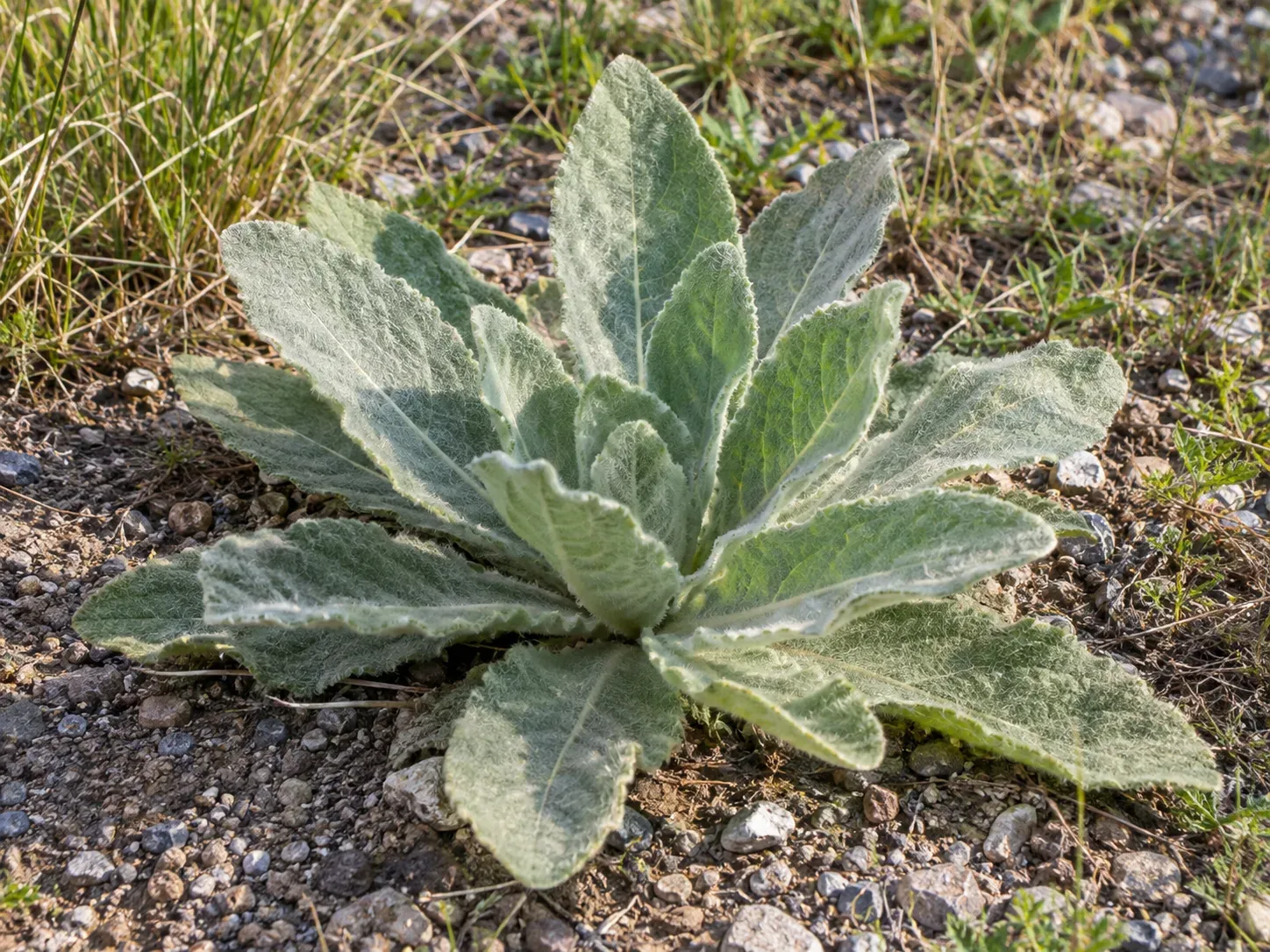
The plant is storing energy in its crown and root during this stage. It may remain green through a cold winter, but a rosette that does not flower in its first year is behaving normally, not failing. Avoid digging it up to inspect the root or moving it once the taproot has developed; the less it is disturbed, the better its odds of carrying its stored energy into spring.
Year Two: A Tall Flower Spike
After a winter chill, a mature rosette may send up an erect flowering stalk in its second season. This cold exposure is called vernalization: it is a seasonal signal for flowering, not a seed-treatment step you need to perform in the freezer. The NC State Extension Plant Toolbox reports that common mullein’s spike can reach 6 to 10 feet in favorable conditions, while height and branching vary with site and plant vigor.
Small five-petaled yellow flowers open in sequence from the lower part of the spike upward, so the display develops over time rather than appearing all at once. Individual blooms are brief, but successive flowers can keep a tall stalk attractive for weeks. Insects visit the flowers; if you leave the stalk to mature, however, its capsules can shed an enormous number of tiny seeds. Decide before blooming whether you want that seed crop or would rather cut the stalk down after flowering.
The calendar is a rough guide, not a promise that every plant will flower on a fixed date. A small seedling that germinates late may need longer to form a substantial rosette, while a plant in a warm, open site can grow faster than one competing with weeds. Think of the cycle as two stages—rosette growth followed by cold exposure and a flowering stem—rather than expecting a bloom during the same season you sowed.
Decide Whether Common Mullein Fits Your Garden
Common mullein suits a sunny, dry edge, gravelly bed, or intentionally wilder planting where a tall biennial will not crowd smaller plants. It can also be useful where you want a conspicuous vertical accent and are willing to inspect the area for seedlings. Its ability to establish in poor ground is not a reason to plant it in every neglected corner: it is naturalized in North America, and its seed behavior can make it an unwelcome guest.
Check your state, county, or local invasive-plant and noxious-weed lists before buying or sowing V. thapsus. For example, NC State’s plant profile notes noxious-weed listings in Colorado and Hawaii; that is not a complete, current map for every jurisdiction. If local guidance discourages it, choose a better-behaved ornamental verbascum or a locally appropriate native plant instead. Avoid sowing it beside natural areas, restoration sites, pastures, or open ground where you cannot remove seedlings reliably.
There is a practical difference between a plant being easy to pull and being harmless to introduce. Common mullein’s seeds can wait in soil until a later disturbance brings them close enough to light, so a site that is tidy today may produce seedlings after future digging, construction, or animal disturbance. If you rent, maintain a shared property, or garden beside a meadow, the person who tends that area later may inherit the seed-control work. Choose a spot you can revisit, and skip sowing if you cannot commit to removing unwanted rosettes.
Choose a Sunny Site With Fast Drainage
Sun, Wind, and Space
Choose a spot with full sun—ideally six or more hours of direct light—and enough open space for a broad rosette and a tall spike. Shade encourages weak, stretched growth and reduces flowering; surrounding plants that close over the soil can also make it harder to monitor new seedlings. A bright garden edge or the back of a dry border is generally easier to manage than the middle of a densely planted bed.
Allow roughly 2 to 3 feet around a mature common mullein unless local growing conditions or the seed packet suggest a different size. Taller spikes can catch wind, especially when grown in fertile soil, so use a sheltered but sunny position rather than a narrow exposed corridor. Do not crowd it against a path where the broad, low leaves or flowering stalk will be repeatedly brushed or broken.
Place it where its first-year leaves will not be hidden by taller plants. A rosette shaded by neighboring perennials may stay small or disappear from view, which makes accidental digging more likely. If you are using mullein as a vertical accent, put it behind shorter plants, but keep a little bare access around the crown so you can remove volunteer seedlings and inspect the stalk as capsules begin to form.
Soil That Stays on the Dry Side
Drainage matters more than a precise pH target. Common mullein tolerates poor, sandy, gravelly, or rocky ground and is much less comfortable where water sits around its crown through winter. The RHS similarly recommends sunny, well-drained conditions for verbascums and warns that many dislike wet winter soil and rich ground. Heavy clay is not automatically unusable, but a persistently soggy planting pocket is a poor choice.
Do not improve the site by digging in lots of compost or adding routine fertilizer. Common mullein is adapted to open, relatively lean conditions, and a rich bed can make the plant grow taller and less stable. If the only available spot stays wet, choose a different plant or raise the planting area so water drains away; watering less cannot correct a site where soil remains saturated.
You do not need to chase an exact soil-pH number. Several extension and horticultural references describe the species as tolerant of a range of soils, with drainage and exposure being more decisive than amending the bed to a narrow pH target. A simple clue is what happens after ordinary rain: if water repeatedly stands around the crown or the soil remains slick and saturated, the site is too wet for dependable overwintering. Improving a small raised area may help, but do not turn the whole bed deeply if common mullein seed is already present below the surface.
Sow Mullein Seed at the Surface
Direct-Sow for the Least Root Disturbance
Seed is the simplest way to grow common mullein. Sow outdoors in late spring or early summer when the soil is workable and hard frost has passed; the exact calendar date depends on your local climate. Clear the chosen patch of weeds, loosen only the surface, and scatter seed thinly. Press it gently against the soil, but do not bury it under a normal layer of soil or mulch: the tiny seeds need light to germinate.
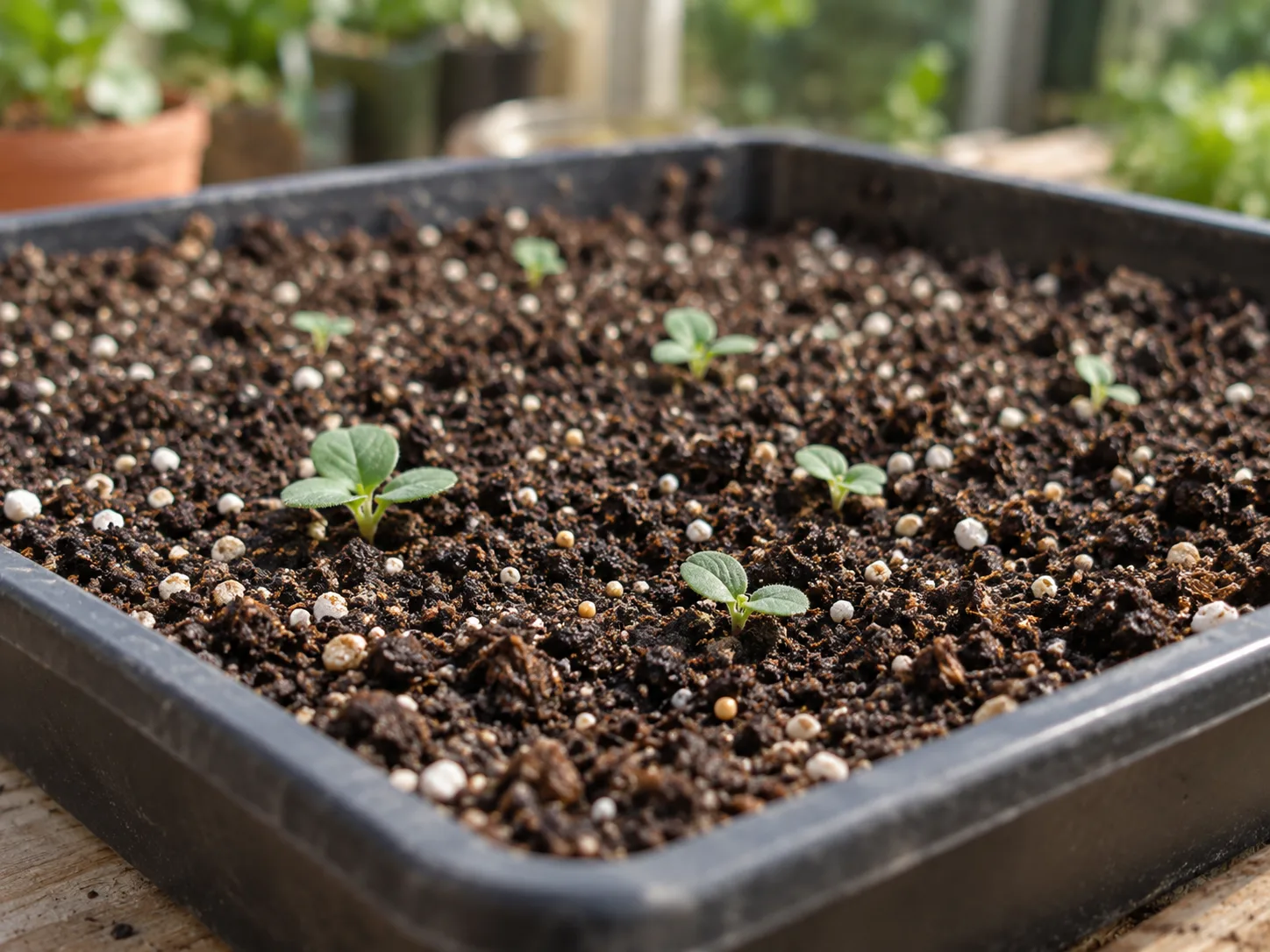
Keep the surface lightly and evenly moist until seedlings appear, using a gentle mist or careful watering that will not wash the seed into a hole. The University of Wisconsin–Madison Extension notes that common mullein seed germinates near the surface where light reaches it and that disturbance can expose seed already buried in soil. This explains both the sowing method and why repeated digging may bring old seedlings back.
Sow a small patch rather than broadcasting a heavy handful. The seed is so fine that a dense flush can be difficult to thin without disturbing neighboring roots; once seedlings show true leaves, retain only the strongest plants at the spacing you planned for their full rosettes. If you are unsure whether you want a colony, start with a few seeds in one marked patch and remove any extras before they build a deep root. A light mulch is useful around many garden plants but works against this sowing method by blocking light, so keep the seed surface uncovered until germination.
Use a Tray When You Need More Control
A seed tray helps when you want to identify seedlings before planting or keep the sowing area separate from other garden beds. Sprinkle the seed over a fine, free-draining seed mix, press it into contact with the surface, and keep the tray bright but not baking hot. Gardens Illustrated recommends sowing verbascum seed in warm conditions and moving seedlings on once they have true leaves; germination timing varies with seed freshness, temperature, moisture, and light.
As soon as seedlings are large enough to handle, move them into deep individual cells or small pots, then plant them in their final place while they are still young. Use a dibber or spoon to lift each seedling with as much mix around its roots as possible. Do not wait until a large taproot fills the pot, and do not keep shifting the plant from pot to pot; the Gardens Illustrated growing guide specifically cautions that root disturbance can set verbascums back.
If you must delay planting, use a container deep enough that the seedling is not immediately root-bound, and check it regularly rather than letting roots circle for weeks. Harden off indoor-grown seedlings gradually: expose them to outdoor conditions for increasing periods over several days, protect them from harsh wind at first, and keep the root ball evenly moist during the transition. Once planted, water around the root zone and avoid repeatedly lifting the plant to check whether it has taken; new growth is a better signal than tugging on the stem.
Water by Growth Stage, Not by a Fixed Schedule
Water newly sown seed and young rosettes often enough to prevent the surface from drying completely, but do not keep the mix waterlogged. Once the plant has rooted into garden soil, normal rainfall is often sufficient in a dry climate; give it a deep drink during a prolonged drought if leaves wilt or the soil is dry well below the surface. A plant in its first season needs closer attention than an established plant, so judge moisture at the root zone rather than following a weekly rule.
When the flower stalk is extending and flowering, avoid letting a newly established plant go bone-dry for long stretches, but do not compensate with frequent shallow watering. Deep, occasional water encourages roots to explore the soil; frequent surface sprinkling can keep the crown damp without solving dry soil lower down. If the plant is wilting in a wet bed, investigate drainage rather than adding more water or fertilizer.
Routine fertilizer is usually unnecessary in the lean, sunny site common mullein prefers. Do not apply a balanced granular feed just because the rosette looks slower than a nearby garden perennial; the plant’s first-season job is to establish roots, not to produce a tall stem immediately. A rich, irrigated bed may push quick, lush growth that is more vulnerable to flopping, while excess water around the crown raises the chance of rot. If a soil test identifies a genuine nutrient problem for surrounding plants, address that bed-wide need carefully or grow mullein elsewhere rather than using fertilizer to force height.
Choose Common Mullein or an Ornamental Verbascum
Choose common mullein when you want the native-to-Eurasia species’ architectural yellow spike, woolly rosette, and easy seed production—and when your local growing conditions make planting it appropriate. Choose an ornamental verbascum when you want a defined flower color, more compact scale, or a cultivar selected for a border. The genus includes forms with white, cream, pink, purple, and yellow flowers, and the RHS genus guide lists very different habits and mature sizes.
For example, V. phoeniceum tends to have a shorter, more colorful flowering display than common mullein, while V. olympicum is an imposing species that still needs generous room. Cultivars may be hybrids and some can be short-lived or sterile, but do not assume every ornamental verbascum is sterile or incapable of self-sowing. Read the plant label for mature height, width, lifespan, hardiness, and propagation notes; if seed containment is a priority, remove spent spikes even when the seller describes a variety as well behaved. Harvest to Table’s verbascum overview also distinguishes common mullein from refined species and hybrids used in borders.
Use the plant’s growth form to match it to the job. Common mullein gives a tall, narrow flowering accent above a broad basal rosette; a shorter species or cultivar may fit a mixed border better, and a low form may suit a rock garden. Flower color alone is not enough to predict maintenance: some hybrids flower for a long time but are short-lived, and some species reseed more freely than a named sterile hybrid. If the label omits seed behavior, assume that spent flowers could produce volunteers and plan to deadhead until you learn otherwise.
Prevent Unwanted Self-Sowing
The best way to limit a common mullein patch is to prevent mature seed from falling. Watch the flowering stalk after petals fade: small capsules form along the spike, and they eventually dry and open. If you want no seedlings, cut the stalk before capsules turn dry and brown, then bag the material rather than shaking it over the bed. Follow local disposal rules; do not move seed-bearing stalks to a compost pile unless you know your process reliably destroys weed seed.
The scale of that decision is easy to underestimate. Wisconsin Extension estimates that a single common mullein can produce roughly 100,000 to 240,000 seeds under favorable conditions; actual production varies by plant and site, but even a fraction of that can be more seed than a small ornamental bed needs. One or two intentionally retained stalks are easier to manage than an entire patch. If you want to collect seed, cut mature capsules into a paper bag over a clean surface, label the species, and keep the seed separate from material you intend to discard or compost.
Pull unwanted rosettes while they are small and the soil is damp, gripping near the crown and removing the root as completely as practical. Wear gloves if the woolly leaves irritate your skin. Avoid rototilling or digging broadly through an infested patch: bringing buried seed into light can trigger another flush of germination. The Wisconsin Extension management guidance recommends hand removal before flowering, minimizing soil disturbance, and establishing other vegetation where you want the ground covered.
You do not need to eradicate every seed from the soil to make a garden manageable. Instead, avoid new seed rain, remove visible seedlings during regular weeding, and keep a living ground cover over bare soil where possible. Seeds can remain viable for decades, and germination is favored by light at or near the soil surface, so a cleared patch may produce seedlings again after later digging or construction. That is a long-term maintenance trade-off, not evidence that the plant has spread vegetatively through its roots.
Troubleshoot Rosettes, Flowering, and Leaning Stalks
Common mullein usually has few serious pest problems, but conditions and local insect pressure matter. The NC State profile notes occasional spider mites in hot weather and slugs or snails in some settings; a dry, sunny site generally fits the plant better than a crowded, constantly damp bed. Look under leaves for fine webbing or stippling before deciding that a rosette is simply drought-stressed, and inspect new growth for chewing rather than treating every hole as a disease.
A Rosette Has Not Flowered, or a Spike Is Leaning
A first-year rosette is expected to stay low. If an older plant does not flower after winter, check whether it actually received a full season of growth, whether the site is shaded, and whether it was transplanted or damaged at the crown. Common mullein usually flowers after winter exposure and adequate rosette development; a plant raised late, kept root-bound, or repeatedly moved may need another season or may fail to flower.
A tall stalk that leans often points to a combination of height, wind exposure, and lush growth. NC State notes that rich soil can make the flower stalk more likely to fall over. Avoid heavy feeding, give a large plant room, and choose a sheltered position; if a spike is already leaning, a discreet stake can keep it upright, but it will not correct wet soil or excessive shade. A broken stalk will not become straight again, so remove it cleanly if it is damaged.
If foliage has holes, look for feeding signs before reaching for a treatment. Mullein can host the mullein moth’s caterpillars, while NC State also lists slugs, snails, and spider mites as occasional problems. A few chewed leaves do not necessarily threaten a mature plant, and the RHS notes that mullein foliage has wildlife value; judge the severity and identify the insect first. Remove badly affected leaves only when needed, keep the crown from staying wet, and avoid using any pesticide unless its label permits that site and target.
Overwinter the Rosette and Plan for the Plant’s End
Common mullein is adapted to a seasonal outdoor cycle. Leave a healthy first-year rosette in place through winter; cold helps prepare the mature plant to flower, and established plants generally need no elaborate winter covering in a well-drained site. In regions with freeze-thaw cycles, avoid piling wet mulch over the crown, where it can hold moisture against the plant. Container-grown specimens are more exposed to cold and drying than plants in the ground, so a deep pot in a protected outdoor position is safer than a small pot left to freeze solid.
In spring, remove dead leaves carefully and check whether the crown is firm before assuming the plant is lost. Do not dig out every rosette that looks compact in winter; many are simply in their first year. Marking or photographing the plant’s position in fall helps you distinguish intended plants from volunteers when growth resumes. If the crown is mushy after a wet winter, drainage is the more likely care issue to correct for the next sowing than a lack of winter fertilizer or extra mulch.
After flowering and seed set, common mullein normally declines and dies rather than returning as the same perennial crown. You can let a selected spike mature if you want to collect seed or accept a few volunteers, but cut it earlier if you want to avoid adding to the seed bank. The plant’s life cycle is part of its appeal: a low silver rosette in one season, followed by a tall pollinator-visited display in the next. It is also why you should decide where the next generation is welcome before the capsules open.
Conclusion
Grow common mullein only where its size, dry-site preference, local status, and seed behavior fit your garden. Sow the tiny seeds on the surface, keep seedlings lightly moist, transplant them while small, and give established plants sun with excellent drainage rather than rich soil and constant water.
Then manage the plant on purpose: leave the flower spike if you want seed, or remove it before capsules mature if you do not. If you want verbascum color without the uncertainty of a prolific common species, choose a named ornamental form and check its mature size and seed habits before planting.



