How to Grow and Care for Big Bluestem
Learn how to grow big bluestem from seed or plugs, choose a sunny site, water it through its first year, and keep mature clumps upright.
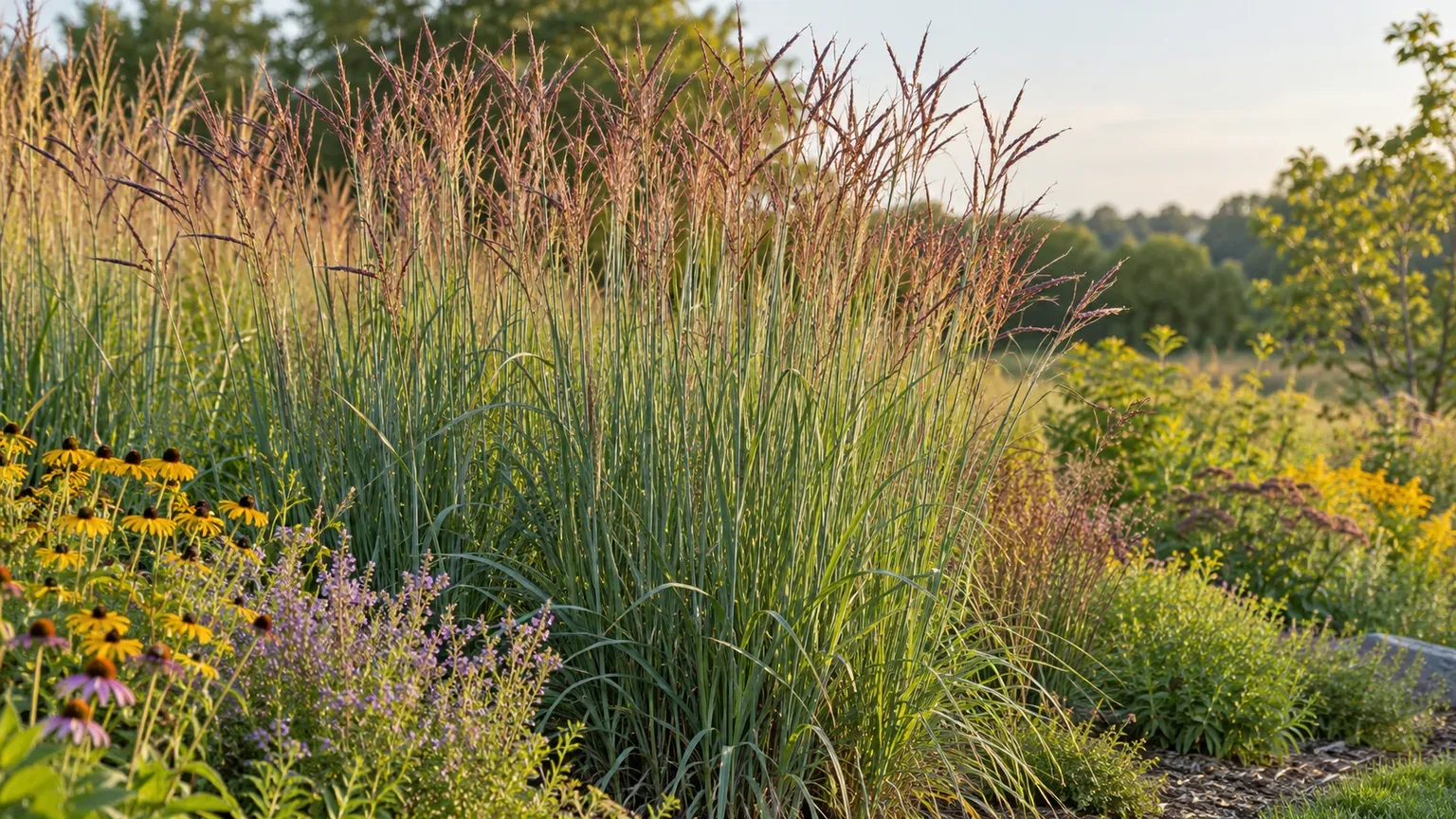
Big bluestem (Andropogon gerardii) is a warm-season prairie grass for gardeners who have room for height and a long season of changing color. Its blue-green summer blades and branched, turkey-foot seed heads rise above many perennials, then shift to copper, russet, or burgundy as temperatures cool. A mature planting can be striking and useful to wildlife, but it is not a compact accent: a typical plant can reach 4 to 8 feet tall and spread 2 to 3 feet wide.
The best route to a strong clump is straightforward: choose a sunny, open site, plant in spring, keep new roots evenly supplied with moisture while they establish, and resist the urge to fertilize or water a mature plant on a lawn schedule. Big bluestem grows slowly at first, so give it time before deciding it has failed. If you want a low border plant or an instant screen in a small bed, choose a smaller grass instead.
Is big bluestem right for your garden?
Big bluestem is a long-lived perennial native to much of central and eastern North America, including the Great Plains and tallgrass prairie region. It grows during the warm part of the year, so new shoots appear after spring temperatures rise rather than pushing out in the first cool weeks of the season. A well-sited plant offers structure from summer into winter, and its roots and stems play a role in prairie habitat, but a native label alone does not make it suitable for every yard or region.
Check whether the species is native to your area and whether your goal is an ornamental garden, a meadow, or a restoration planting. In a naturalized restoration, use seed sourced for your region and follow local guidance on mixtures and seeding rates; a named ornamental cultivar may not serve the same purpose as locally adapted wild-type seed. For a small residential border, one or a few nursery-grown plants make it easier to control placement and see their eventual scale.
Plan for its mature height and width
Picture the grass at full height, not at the size of the pot you buy. NC State Extension lists a mature size of roughly 4 to 8 feet tall by 2 to 3 feet wide, while the Kansas State University ornamental-grass trial records plants growing larger across successive seasons. A young plug can look sparse for a year or two before it becomes the tall, architectural plant you expected.
Place it where its summer height will not block a view, bury shorter plants in shade, or crowd a narrow path. As a starting point for separate landscape clumps, allow about 2 to 3 feet between plant centers and more where you want distinct silhouettes or need access behind the planting. Use the mature spread on the nursery tag if it is more specific to the cultivar you have selected.
Read the seasonal color and shape
The visual effect changes through the year. New growth is green, the summer foliage often reads blue-green, and the fall color ranges from warm bronze and orange to deeper red or burgundy depending on the plant, weather, and selection. The flower heads usually branch into several fingerlike racemes that suggest a turkey’s foot; they appear above the foliage in late summer or fall rather than looking like a dense plume.
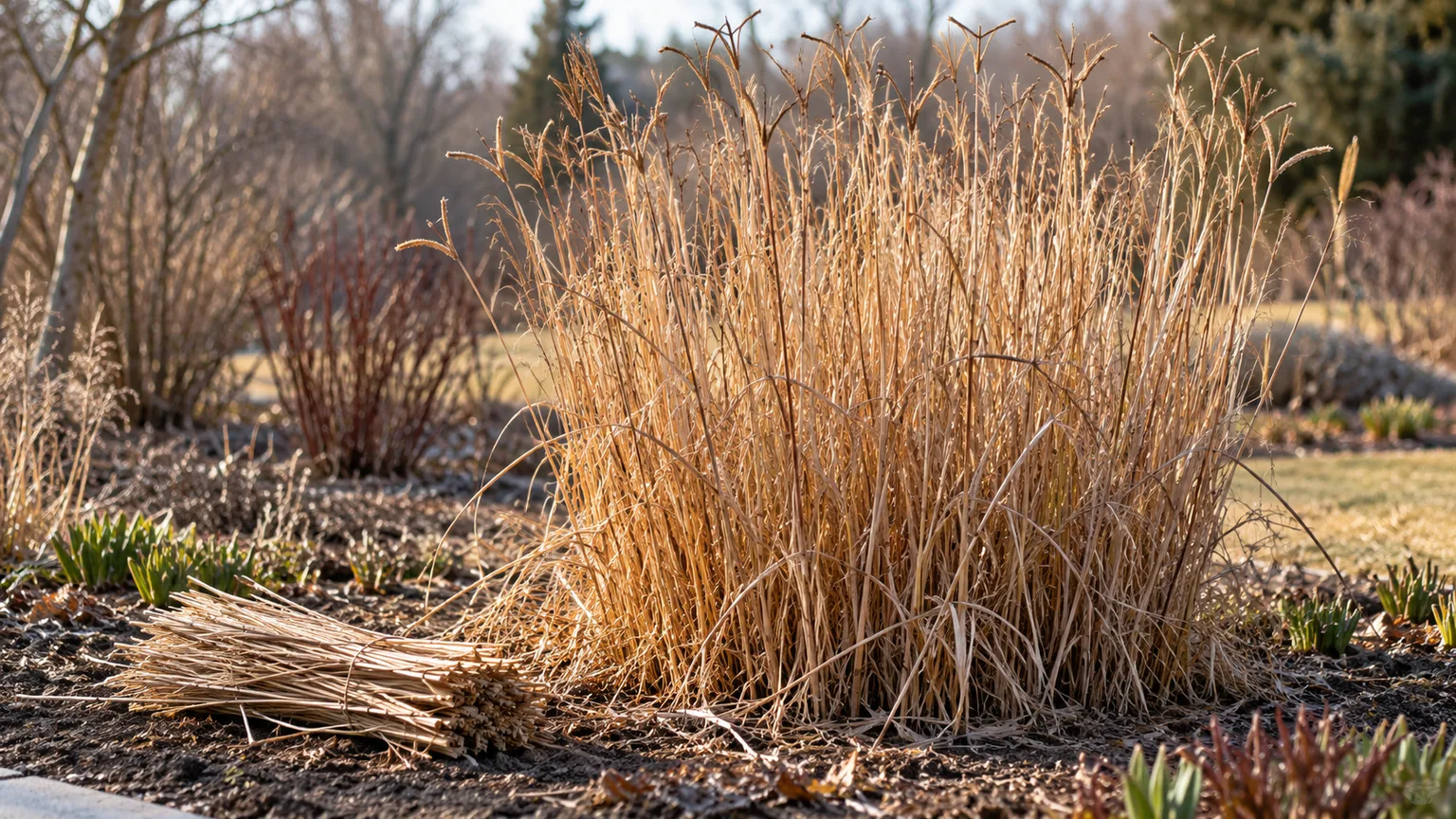
The winter clump stays upright and tawny if it is not cut down too early. That persistence supplies texture and cover, but it also means the grass can look rough beside a highly clipped formal border. If you prefer a uniformly neat winter garden, either position it in a less prominent area or accept a late-winter cleanup as part of the design.
Choose a site that keeps the stems upright
A site that matches the plant’s natural growth pattern solves several common care problems in advance. Big bluestem is tolerant of a range of soils and can take dry spells after it establishes, but it performs best with enough sun and room for air and stems to move. Rich, irrigated, crowded conditions may produce lush growth that falls over rather than a sturdier clump.
Before planting, observe the space at midday and after rain. Count direct-sun hours, note where water stands, and check whether a roof, fence, or nearby tree will cast shade once summer foliage fills in. These simple checks matter more than amending the whole bed or buying fertilizer.
Give it sun and open air
Choose a spot with full sun, ideally six or more hours of direct light during the growing season. Big bluestem can tolerate some light shade, but too little sun often weakens stems and makes a tall plant lean toward brighter areas. If the only available location is shaded for most of the day, use a shorter, shade-tolerant grass rather than trying to correct the site with feeding or staking.
Leave enough room around the clump for airflow and for nearby perennials to receive light. The plant’s narrow footprint on a label can understate the visual space it occupies because the leaves rise high and arch outward. A sunny back-of-border position works well when the grass is still visible from the house, while a sunny slope or meadow edge makes its height feel more natural.
Match the soil and drainage
Big bluestem adapts to sandy, loamy, and clay soils, and it tolerates some variation in moisture. It still needs soil that drains rather than remaining saturated for long periods. NC State Extension notes its tolerance of a wide range of textures and occasional wet conditions, but those traits should not be mistaken for a preference for waterlogged ground. If water sits in the planting hole after rain, choose a better-drained position or raise the bed modestly instead of trying to keep a permanently wet site alive with extra care.
Do not dig a deep pocket of compost into heavy clay and leave the surrounding soil dense; that can create a basin that holds water around the roots. Loosen compacted ground across the planting area, remove perennial weeds, and use only modest organic matter if a soil test or poor structure gives you a clear reason. Avoid liming or acidifying by guesswork. A soil test is useful when plants repeatedly struggle or when you are preparing a large planting, but big bluestem does not need a narrow pH target to grow in an ordinary garden.
Choose between seed, plugs, and divisions
The propagation method changes how quickly the planting looks finished and how much attention it needs at the start. Seed is economical for a meadow or broad restoration, but small seedlings are vulnerable to weed competition and may take longer to become recognizable clumps. Plugs cost more per plant but are easier to place in a designed border and give you a visible start. Division makes sense when you already have a healthy, established clump and want to reproduce it or reduce its size.
For a first ornamental planting, buy a few robust nursery plants if you need predictable placement. For a large naturalized area, locally appropriate seed is usually more practical; ask a native-seed supplier or extension office about regional ecotypes, seed quality, and any stratification the specific lot requires. Seedlings from open-pollinated plants may vary in height, spread, and fall color, so do not expect a seed-grown planting to match a named cultivar exactly.
When seed is the better option
Use seed when you are planting a broad area, can prepare a weed-free seedbed, and do not need an immediate screen. Big bluestem seed may benefit from a period of cold, moist stratification, but dormancy and germination vary among seed lots. Gardening Know How’s big bluestem guide describes a month of stratification as a way to improve germination; follow your supplier’s directions rather than assuming every packet needs identical treatment.
For a small garden, start some seeds in pots or plug trays so you can distinguish seedlings from weeds and move them when they have a root system. Direct sowing is reasonable where the seedbed is open and you can keep it moist, but expect uneven emergence and make a plan for weed control that does not disturb the young grass. If the site is dominated by vigorous weeds, spend the season preparing the bed before sowing instead of scattering expensive native seed into competition.
When to buy a nursery-grown plant
Choose a container-grown plant when you want to control cultivar, spacing, or a specific garden composition. Check the pot for several firm shoots and healthy roots without a dense mat circling the container. A small plug may not look impressive at purchase, but it is easier to establish than a large, root-bound specimen that has been held too long in a small pot.
Divisions are another option, usually in early spring as new growth begins. A mature clump can be tough to cut through, and small divisions with few roots may struggle in heat. If you divide, keep each section substantial, with active roots and several growing points, and replant it promptly at its former depth. Water it as you would a new nursery plant until you see steady new growth.
How to plant big bluestem in spring
Plant in spring after the ground is workable and the severe cold has passed, while leaving enough of the warm season for roots to settle in. Spring planting is especially helpful in regions with cold winters because the plant can establish before its first dormant season. Kansas State University describes big bluestem as a warm-season grass that should be planted in spring; its ornamental-grass observations also show that clumps can continue increasing in size over several years.
For a nursery plant, water the pot before planting, dig a hole about as deep as the root ball and wider than it, then loosen any circling roots gently. Set the crown at the same level it grew in the pot; burying the base too deeply can hold moisture against the stems. Backfill with the original soil, firm it enough to remove large air pockets, and water slowly so the root ball and surrounding soil make contact.
Mulch lightly to suppress weeds, keeping the material a few inches away from the crown so new shoots are not smothered. Do not add a thick, rich blanket of compost or a high-nitrogen starter feed by habit. For direct seeding, prepare a firm, weed-free seedbed, sow shallowly according to the supplier’s instructions—often around ¼ to ½ inch deep—then press the soil lightly over the seed and keep the surface evenly moist until emergence. Mark the location so you do not weed out the new grass by mistake.
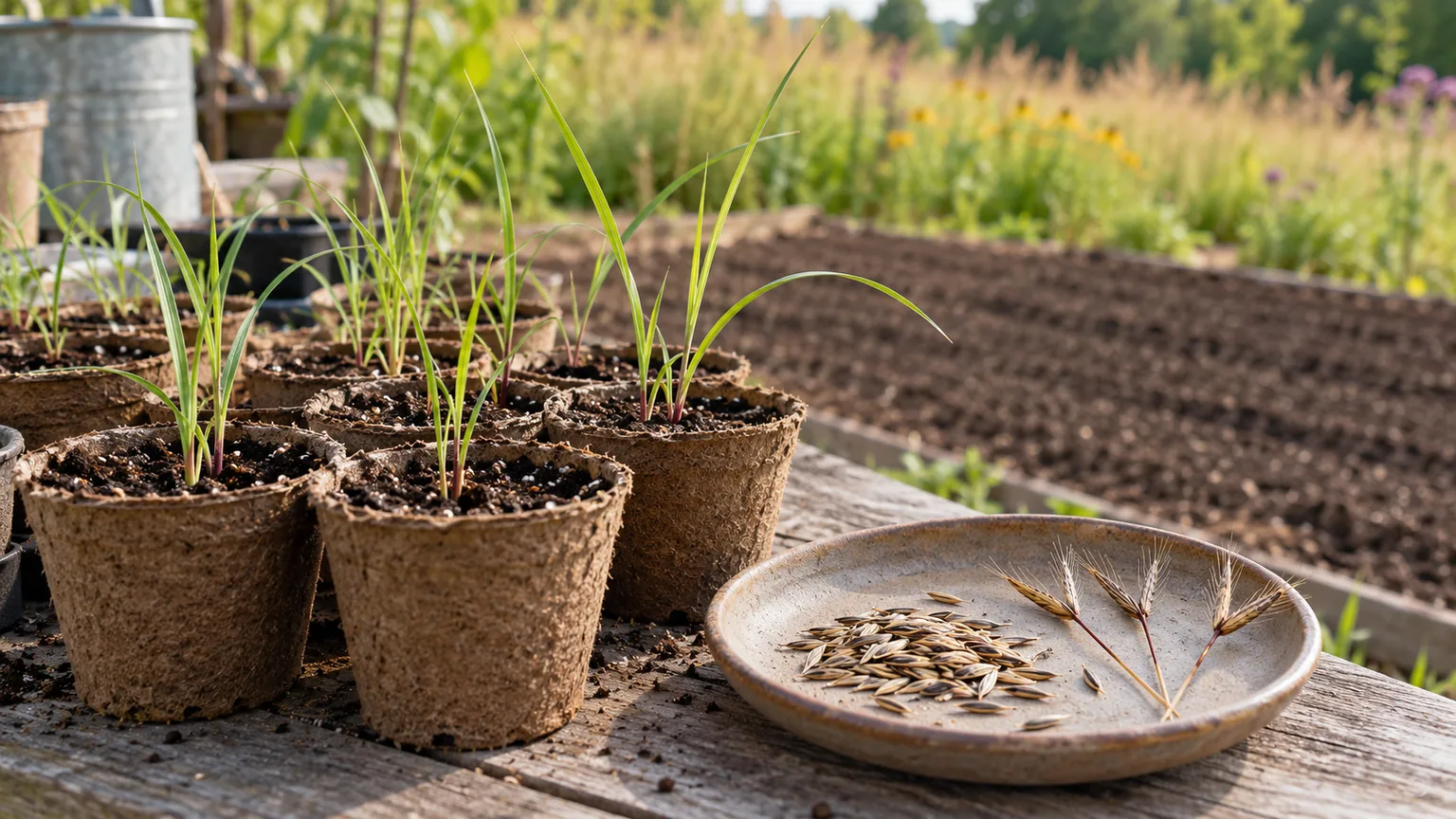
Help new plants establish in year one
First-year care is more attentive than mature-plant care. While the roots are expanding, water when the surrounding soil begins to dry rather than waiting for the young plant to show stress. Aim the water at the soil and wet the root zone, then let excess drain; constant saturation is not a shortcut to establishment. During a dry spell, check the soil with a finger or trowel near the root ball, because the surface can look damp while the small root zone is dry.
Keep weeds from shading seedlings and competing for moisture. Pull small weeds by hand or cut them at soil level when they are close to the grass; aggressive cultivation can uproot seedlings or damage the shallow crown. A sparse first season is not necessarily a failure. Warm-season grasses often make their strongest visible growth later than cool-season plants, and Kansas State’s trial notes that big bluestem was relatively slow to establish even as plant size increased in following years.
Do not judge success by height alone in the first summer. Look for firm stems, new leaves from the crown, and gradual widening of the clump. If you planted seed and nothing has emerged after several weeks, check soil temperature, seed depth, surface moisture, and weed competition before sowing again. Some seed may remain dormant or germinate unevenly, so a second sowing is best done after correcting the condition that prevented the first round.
Water and feed mature plants sparingly
Once a clump is established, water during prolonged drought if the soil is dry and the plant shows stress, but do not irrigate automatically every week. Its deep fibrous root system helps established plants tolerate dry periods, while regular irrigation in well-drained soil can support healthy growth in a garden setting. NC State Extension lists drought tolerance among the plant’s useful traits; that is a resilience after establishment, not a reason to neglect new transplants.
Routine fertilizer is usually unnecessary. Too much nitrogen can push soft, top-heavy leaves, especially when the plant also gets abundant water or grows in partial shade. Both Fine Gardening and Kansas State note that excess fertilizer, water, or shade can contribute to lodging. If neighboring plants and big bluestem all look nutrient-stressed, test the soil and address the confirmed deficiency rather than feeding this grass on a calendar.
Keep the crown clear of dense, wet mulch and avoid frequent lawn-sprinkler overspray if it keeps the planting saturated. In a rain garden or near a pond, big bluestem may tolerate periodic moisture if the soil drains between wet periods. If the planting remains waterlogged for days, move or raise plants rather than trying to balance the site with less fertilizer.
Cut back the clump at the right time
Leave the foliage and seed heads standing through fall and winter if you want winter structure, seed for birds, and cover within the garden. The stems turn tawny and can catch snow, so a clump left intact can look attractive rather than neglected when it sits among other winter-interest plants. If you prefer a cleaner view, cut back after the growing season has fully ended, but avoid clipping green foliage while the plant is still feeding its roots.
In late winter or very early spring, cut the previous year’s stems down to about 6 to 12 inches before new shoots lengthen. Use sharp loppers or hedge shears, tie the dry foliage loosely if that makes cleanup easier, and keep the blades above the crown rather than cutting into it. If you wait until fresh growth is several inches tall, work around the shoots carefully; severed new leaves will make the plant look ragged for the season.
Do not burn an ornamental planting just because big bluestem evolved in fire-influenced grasslands. Prescribed fire is a specialized land-management tool that depends on local law, training, permits, weather, and a suitable site. In a home garden, cutting and removing the old stems is the safer routine. If you are part of a prairie restoration project, follow the land manager’s plan and local fire authority guidance rather than improvising a burn.
Divide and move an established clump
Big bluestem grows from a crown and short rhizomes, so an established plant can widen over time without behaving like a fast-running bamboo. Divide it when the clump has outgrown its allotted space, the center is thinning, or you want to make another plant. Early spring, just as new growth begins, is the most practical time because you can see the crown and give divisions a full warm season to root.
Water the plant the day before if the soil is dry, then dig around the outside of the clump and lift as much of the root mass as you can. Use a sharp spade or pruning saw to split the clump into sections, each with healthy roots and several live shoots or buds. Replant at the same depth, water thoroughly, and maintain even moisture while the divisions re-establish. Avoid making tiny fragments from a large, woody crown; small pieces with too few roots are more likely to dry out.
You do not need to divide it on a fixed schedule. If the clump is flowering well, standing upright, and still fits its space, leave it alone. A slow-growing perennial can be less vigorous immediately after division, so dividing simply to make more plants is not worth it when healthy nursery plugs or seed would be easier.
Use big bluestem in a planting plan and select a cultivar
Treat it as a vertical anchor or a loose screen rather than a low edging grass. One clump can punctuate a sunny perennial bed, while a group can mark a boundary, soften a fence, or create a transition between a maintained garden and a meadow. Keep the plant where its mature height is useful and do not put it directly in front of small flowers that need to stay visible from the path.
For a layered native planting, place shorter flowering plants at the front and big bluestem behind or among them with enough space for both to receive light. Fine Gardening highlights its fall color, winter structure, movement, and suitability as either an accent or a mass planting. Consider pairing it with grasses and forbs appropriate to your region; prairie dropseed, little bluestem, blazing star, asters, and native coneflowers can provide contrasting heights and bloom periods where they are locally suitable.
The dense growth can provide cover and nesting structure for wildlife, and NC State Extension identifies big bluestem as a host for several butterfly larvae, including skippers and the common wood-nymph. That benefit is strongest when the planting is part of a diverse, pesticide-conscious landscape rather than a single-species wall. Leave at least some stems through winter, and avoid treating the plant as a complete substitute for regionally diverse habitat.
Big bluestem can also stabilize a slope after it becomes established, but a few new plugs are not an immediate erosion-control system. On a steep or actively eroding bank, use a site-specific planting plan that protects the soil while roots develop and accounts for water movement. For restoration or stormwater projects, consult a local native-plant or conservation specialist about seed sources and species mix.
The straight species is a good choice when you want a representative native grass or a planting that can vary naturally. Cultivars offer more predictable ornamental traits, such as darker foliage, consistent fall color, or a slightly different stature, but the exact height and color still respond to sun, moisture, and climate. Read the grower’s mature dimensions and ask whether the selection is appropriate for your region before buying.
‘Blackhawks’ develops deep purple to nearly black foliage late in the season, while ‘Red October’ is selected for red fall color and a relatively narrow form. Fine Gardening’s cultivar discussion also describes ‘Red Bull’ as a taller selection and ‘Dancing Wind’ as a more rigid plant with persistent red color. These are useful garden choices when fall display matters, but availability and local performance can vary.
‘Bison’ is commonly selected for improved cold tolerance, according to Gardening Know How. NC State Extension notes ‘Blackhawks’ and ‘Red October’ among the cultivars and varieties. Names can be misspelled or used loosely in retail listings, so verify the botanical name and cultivar label. If you are rebuilding a local prairie, ask a restoration supplier whether a cultivar is appropriate; a selected ornamental plant and a regionally sourced population are not interchangeable by default.
Troubleshoot slow growth, flopping, and spread
Big bluestem has few serious pest or disease problems under suitable conditions, so the first troubleshooting step is usually cultural rather than chemical. Recheck the site before treating the plant: sunlight, water, soil texture, planting depth, and weed competition explain many weak or delayed clumps. Give one change time to work, then judge new growth instead of expecting old stems to straighten or damaged leaves to recover.
Fixing a clump that leans or collapses
A leaning clump often points to partial shade, soil that stays too rich or wet, excessive fertilizer, or a planting that is still young and not yet sturdy. Fine Gardening specifically notes that too much water, shade, or fertilizer can make big bluestem top-heavy. If the stems lean toward a brighter side, improve light exposure or move the plant while it is small; staking a mature clump may hold it temporarily but will not correct the cause.
If the clump flops after heavy rain despite full sun, check drainage and stop routine feeding. Avoid cutting the plant halfway through summer as a rescue; that removes the season’s ornamental stems and can stress the plant without changing the soil or light. If the site is persistently wet or shaded, transplant to a better position in spring or replace it with a species adapted to those conditions.
Managing seedlings and expanding clumps
Big bluestem’s short rhizomes support a gradually widening clump, and seed can produce volunteer plants where it finds bare soil. That is different from a fast-running grass that sends long rhizomes across a bed. NC State Extension describes it as spreading by short rhizomes and occasionally by seed. If you want a defined border, inspect the edge once or twice during the growing season, remove unwanted seedlings while small, and divide or trim the outer crown when it approaches the planned boundary.
Its behavior also depends on region and setting. A plant that belongs in a local prairie can still be too large or too freely seeding for a small formal bed; outside its native range, check local extension or conservation guidance before planting. If you need a tightly behaved edging plant, choose a shorter grass instead of relying on a barrier to control a naturally tall, broad clump.
Conclusion
Big bluestem is easiest to grow when you work with its prairie habit: give it full sun, allow room for a 4- to 8-foot plant, and choose seed or plugs according to how quickly and precisely you need to fill the space. Keep new plants watered through establishment, control weeds, and then ease back on irrigation and fertilizer so stems remain sturdy rather than lush and floppy.
Leave the tawny clump through winter if you value its structure and habitat, then cut it back before spring shoots grow tall. Expect a gradual start, use regionally appropriate material for restoration, and monitor the edges if you need a tidy garden boundary. In the right sunny site, the wait pays off in durable summer height, late-season color, and a graceful native-grass presence that returns each year.