How to Harvest Lavender: Timing, Cutting, and Drying
Learn how to harvest lavender at the right bloom stage, cut above old wood, protect regrowth, and dry small bundles for lasting fragrance.
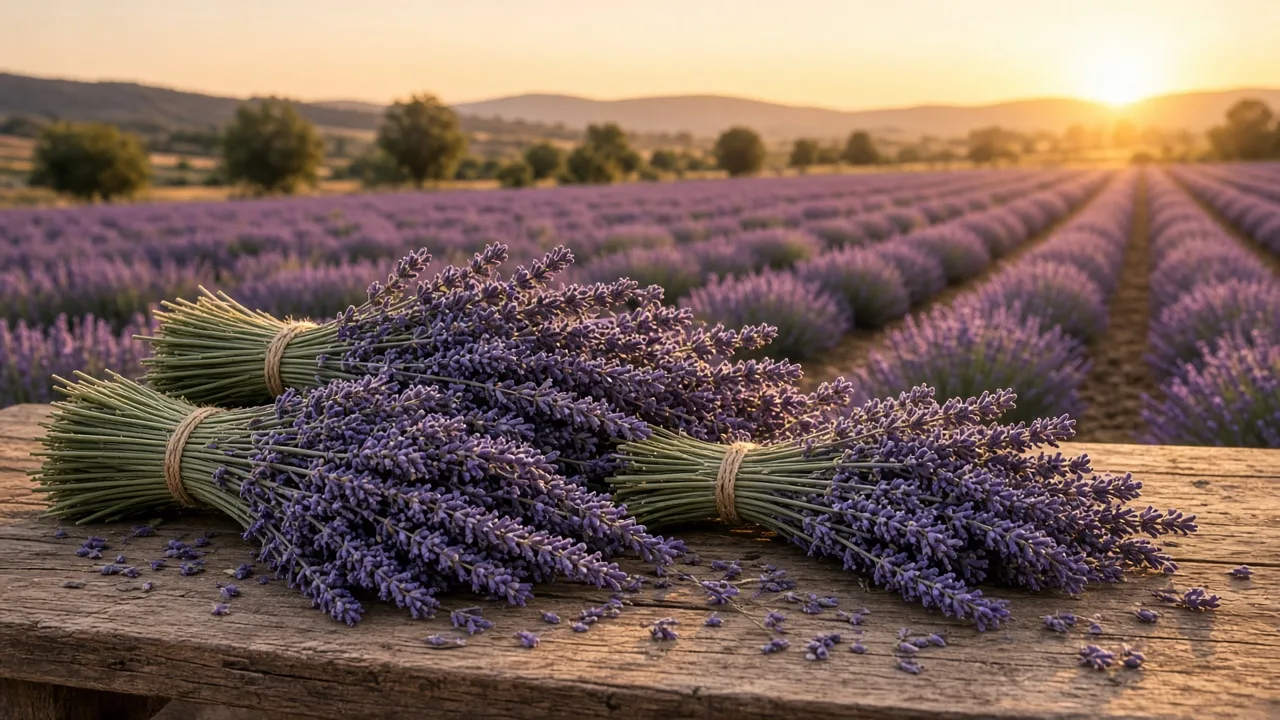
The right way to harvest lavender depends on what you want from the stems. Cut early for dried buds that hold their color, wait longer for a fuller fresh bouquet, or leave more flowers if the plant is feeding bees. The cut itself also matters: harvesting should remove flower stalks and a modest amount of green growth, not turn a living shrub into bare wood.
For most home gardeners, the best all-purpose moment is when the flower spikes are fully colored and the first few florets have just opened. Cut after dew dries, follow each stalk into flexible leafy growth, and dry the harvest in small bundles with steady airflow. This approach aligns with the RHS lavender growing guide on flowers and foliage for drying while giving you a clear way to protect the plant.
Choose the harvest stage based on the end use
Lavender is not “ready” at one universal point. Closed buds are tight, richly colored, and less likely to drop from the spike during drying. Partly open spikes give you a useful compromise between fragrance, color, and bud retention. Fully open flowers make a soft, immediate display in a vase, but they are more fragile once dried and may shed more when handled.
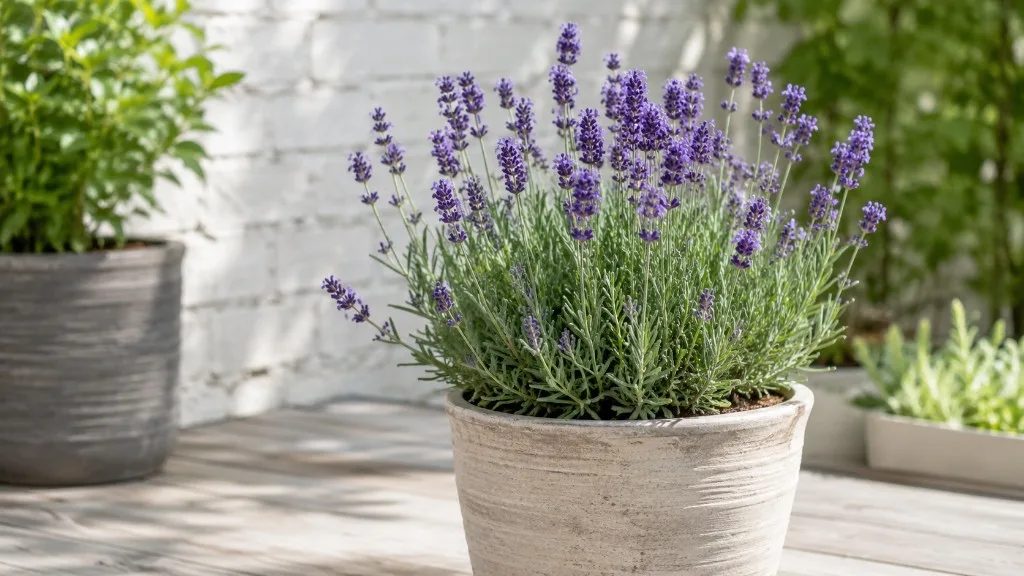
For dried bundles, sachets, and most craft projects, harvest when the spike is colored and only a few florets have opened. For a fresh bouquet, wait until more of the spike is open and cut longer stems. If your goal is simply to enjoy the garden, harvest selectively and leave enough flowers to keep the plant useful to pollinators.
Essential-oil production is a different operation from a kitchen-garden harvest. Oil yield and composition change as flowers develop, so a commercial grower may use a later stage than a home gardener who wants intact dried buds. Do not force a single timing rule onto every use; decide whether you value bud retention, open-flower appearance, fragrance, or pollinator time most.
Harvest after dew dries
The best daily window is usually morning after dew or overnight irrigation has dried, before intense heat reaches the plant. This gives you dry stems and flower heads, and it avoids placing wet material into a tied bundle where moisture can linger. If your mornings stay damp, wait until the surface moisture is gone rather than cutting on a clock.
Morning is a helpful default, not a rigid requirement. A cool, dry afternoon is preferable to a dewy morning, a hot spell, or a plant that has just been watered. The bloom stage still matters most for quality, so if you miss the ideal hour, harvest on the next dry opportunity before the flowers fade.
Never bundle lavender straight from rain. Shake-free surface moisture is not enough if the flowers feel cool and damp inside the spike. Let the plant dry naturally, then cut only the clean, healthy stems you can process promptly.
Use clean sharp pruners or harvesting shears
Small bypass pruners, herb snips, or sharp scissors all work for lavender. Choose a tool that makes one clean cut through the stalk without crushing it, and keep a basket or shallow tray beside you so cut stems are not dragged through soil.
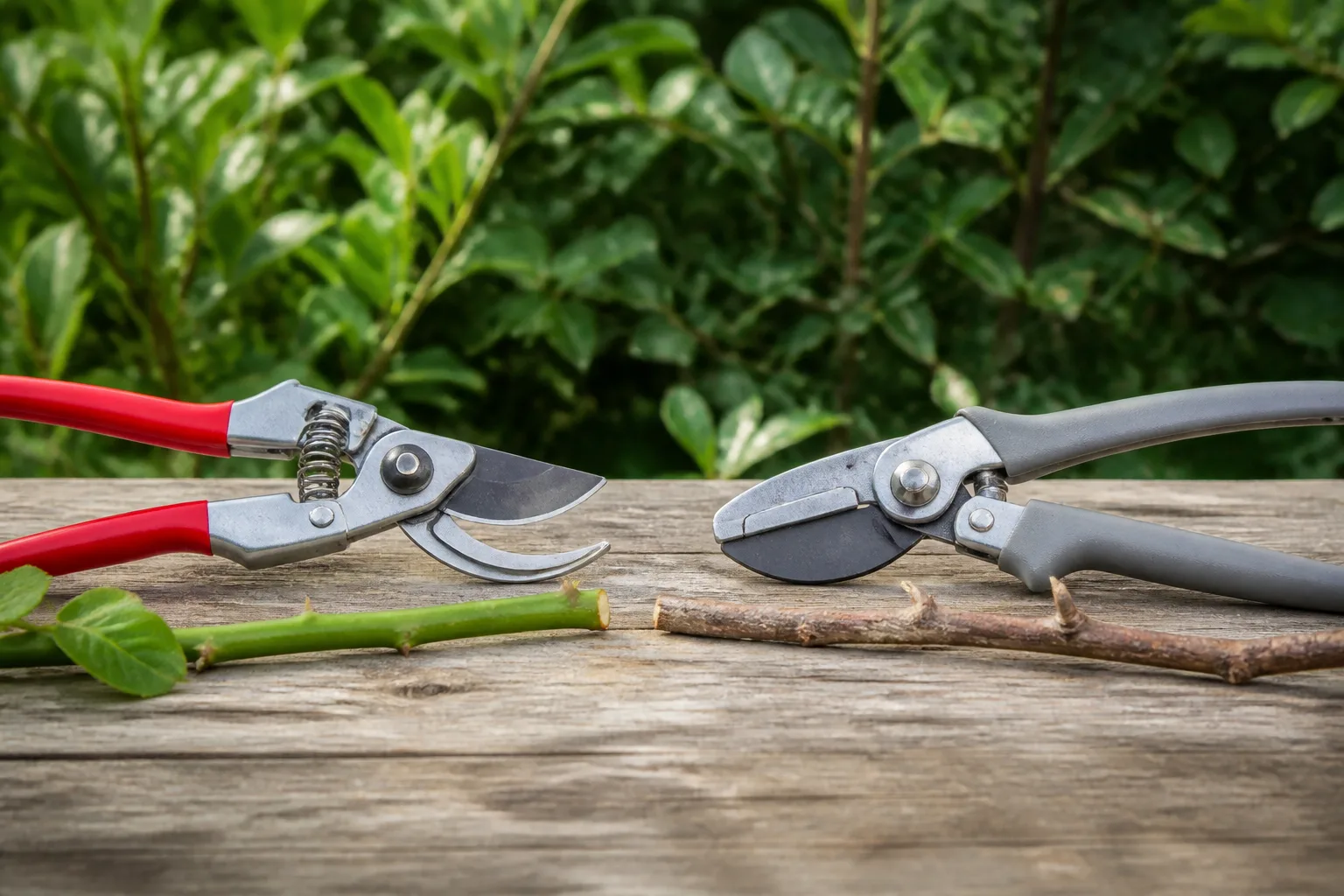
Wipe soil and plant residue from the blades before you begin. If you have recently cut a diseased plant, clean and disinfect the tool according to the product label before moving to healthy lavender. A clean blade is useful for plant hygiene, but sharpness is the bigger day-to-day advantage: it lets you cut quickly without pulling at the crown.
Work with a small handful at a time. Holding the entire plant in one bunch hides the boundary between green growth and old wood, which is exactly where a careless harvest can do lasting damage. Gloves are optional; they help if the foliage irritates your skin, but they do not replace a careful cut.
Learn the difference between green growth and old wood
Lavender is a woody perennial shrub. Older basal stems become brown, hard, and leafless, while current-season growth is more flexible and carries visible leaves. That distinction is the key to harvesting without killing the plant: make the cut where living foliage remains below it.
Follow a flower stalk down from the spike. As soon as it meets a leafy, flexible section, look for a natural junction such as a leaf pair or side shoot. Cut just above that living growth, leaving enough green material to support new branching. The Purdue Extension guidance on lavender pruning likewise advises waiting for active growth after winter and cutting back to healthy wood when damage is involved.
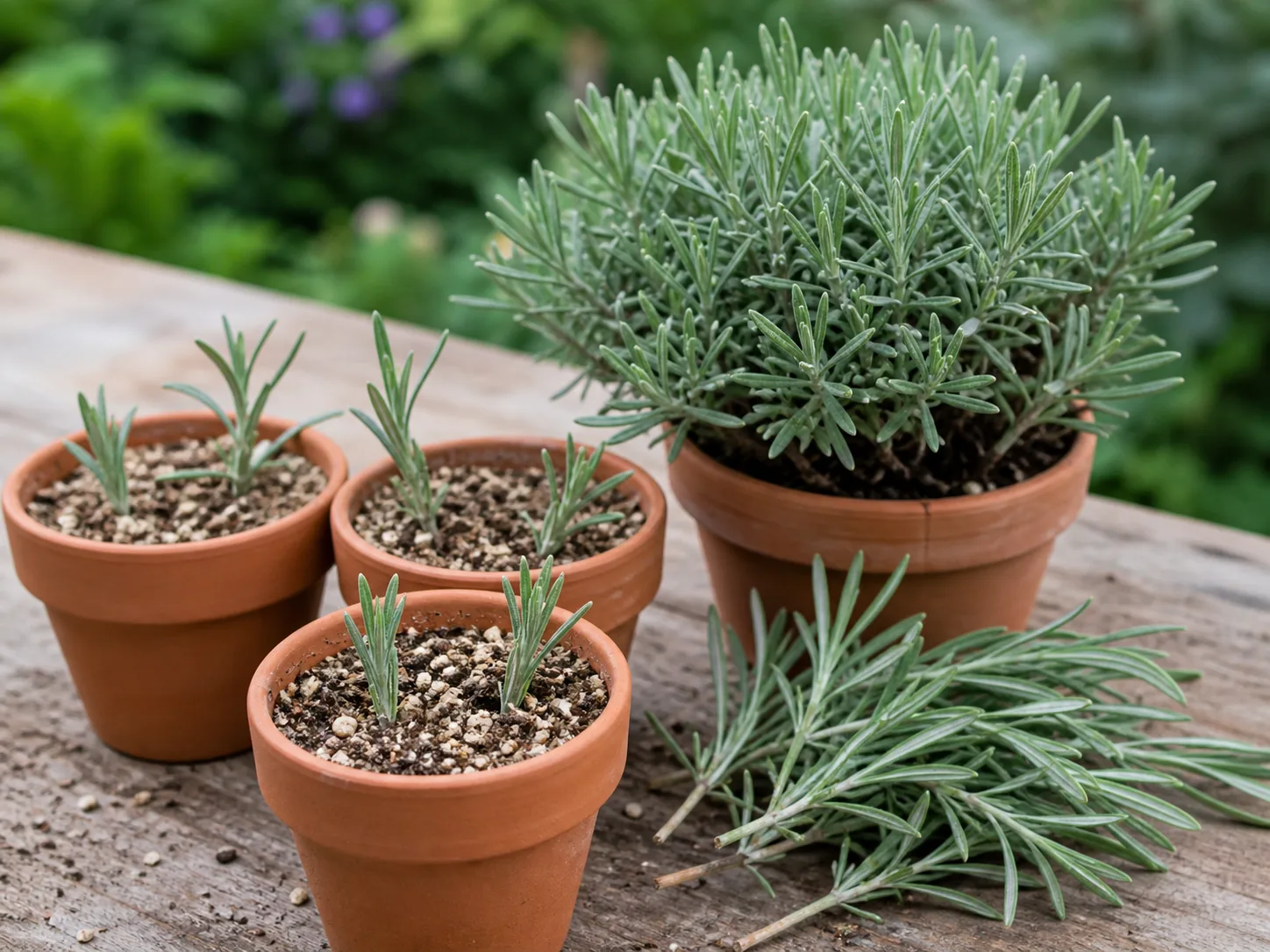
Do not chase the longest possible stem if doing so takes you below all the leaves. Many lavenders do not reliably produce new shoots from bare, leafless wood. If the plant has become a tangle of long bare branches, treat it as an aging or neglected shrub rather than a harvest that needs one heroic cut.
Cut stems long enough for your intended use
Long stems are convenient for hanging bundles and fresh arrangements, so follow the flower stalk as far down as you can while staying in green growth. For a vase, cut several stems to a similar length and remove leaves that would sit below the water line. For dried buds or sachets, stem length matters less than getting clean, dry flower heads.
Cutting at a consistent height can lightly shape the shrub at the same time. Imagine a rounded dome rather than a flat hedge and make cuts around the mound instead of taking a deep ring from one side. A shorter, healthy stem is more valuable than a long stem that leaves a bare patch in the crown.
How much lavender can you harvest at once?
An established, healthy lavender can tolerate a substantial flower harvest because removing spent or opening flower stalks is part of normal maintenance. A young plant needs more restraint. Its first priority is building roots and branches, so take only a few stems until it has formed a sturdy, leafy mound.
As a practical guardrail, keep the main growing-season harvest to about one-third of the plant’s current green framework. This is not a promise that every cultivar will respond identically; size, age, water stress, weather, and species all change the margin of safety. If you cannot see green leaves below the proposed cut, move the cut upward or leave that stalk in place.
Postpone a large harvest if the plant is wilted from drought, recently transplanted, badly heat-stressed, showing root or crown rot, or recovering from winter injury. A calendar does not override plant condition. Harvest the healthy side of a struggling plant lightly and solve the underlying problem first.
English lavender and lavandin timing
English lavender, Lavandula angustifolia, and lavandin, Lavandula × intermedia, are common choices for fragrance and dried stems. Cultivars such as ‘Munstead’, ‘Hidcote’, ‘Grosso’, and ‘Provence’ do not all flower on the same week, so inspect the spikes rather than relying on a date printed on a calendar.
For dried use, cut English lavender and lavandin when color is developed and the first few florets on a spike have opened. Most of the spike should still look tight. This early cut helps buds stay attached and keeps a bundle from turning into loose petals during handling. For a fresh arrangement, let more flowers open and accept that the stems will be more delicate.
The RHS guide distinguishes hardier English types and hybrids from less-hardy tender types, a difference that matters when you plan post-harvest care. A plant in a cold, wet site may need more conservative pruning than the same cultivar in a sunny, fast-draining bed.
Spanish and French lavender differ in flower form
Spanish lavender, Lavandula stoechas, has a compact flower head topped by showy bracts, sometimes described as “ears.” The common names French lavender and Spanish lavender are used inconsistently in garden centers, so check the botanical name on the tag if you want a reliable harvest or overwintering plan.
These types may flower over a longer period or produce repeat flushes in mild conditions. Deadheading after a flush can encourage more flowers, but the same structural rule still applies: cut into flexible green growth and avoid stripping the crown to bare wood. A tender plant in a container may also be more vulnerable to cold and wet roots than an English lavender planted in the ground.
Leave some flowers for pollinators
Lavender can be a busy nectar source when it is in flower. The Fine Gardening garden example shows how a lavender planting can serve both a harvest and a pollinator-friendly garden, and that is an easy principle to use at home: harvest in sections instead of clearing every spike at once.
Leave one part of the plant in bloom while cutting another. You will still have enough material for a bundle, and you extend the time bees can use the flowers. Staggering the harvest also gives you a simple side-by-side test of early buds versus more open flowers.
If bees are working the plant heavily, move slowly and choose a quieter period of the day. Do not spray an insecticide over open blooms just to protect a cosmetic harvest. If a pest problem truly needs treatment, follow the product label for the crop, site, pollinator precautions, and harvest interval.
Tie small bundles, not thick wet bunches
Sort the cut stems and make bundles about an inch in diameter, or small enough that air can reach the center. Align the cut ends and secure them with twine or a rubber band. A rubber band stays tight as stems shrink, while a loose knot can let stems fall to the floor.
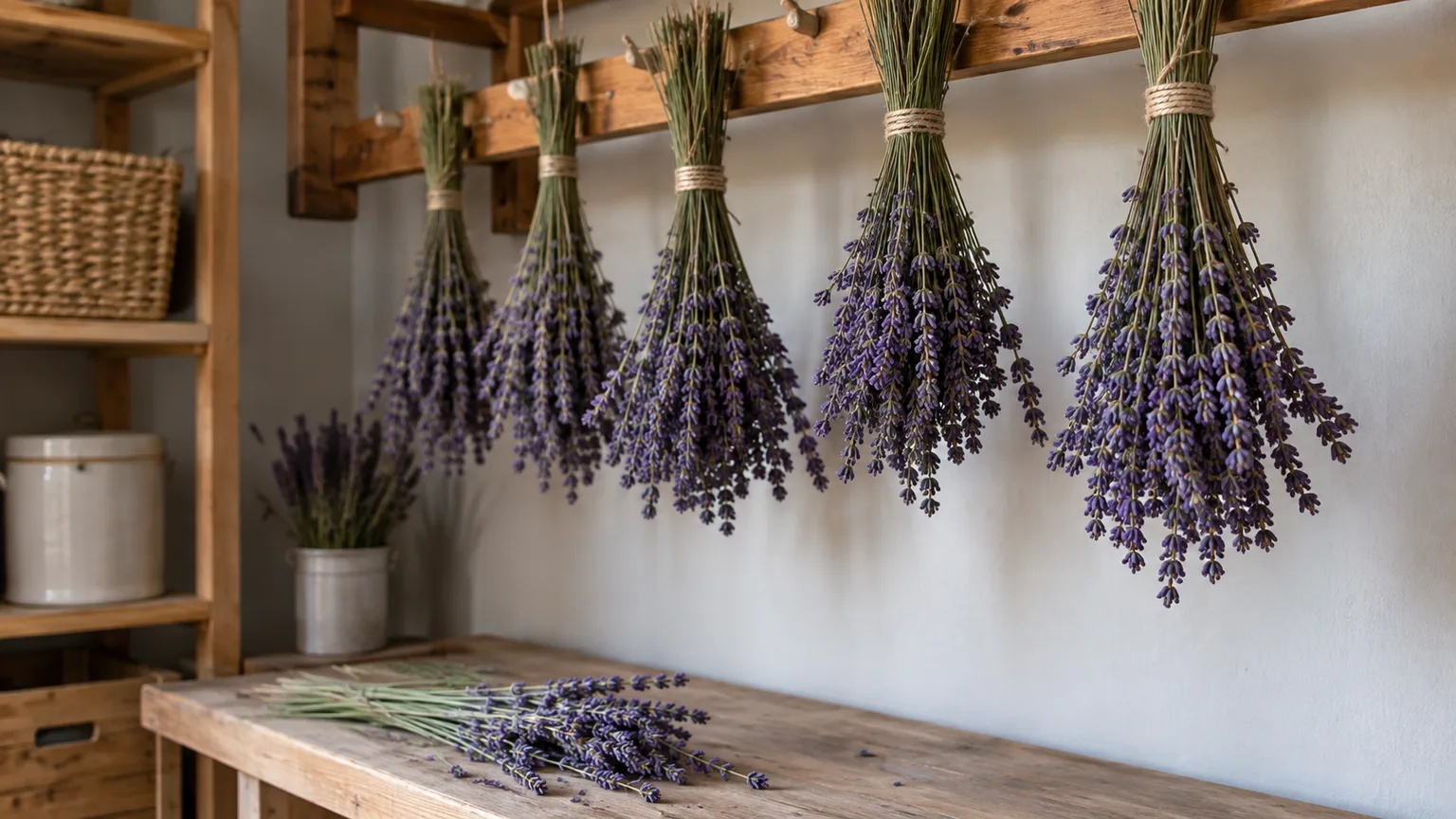
Hang bundles upside down in a dry, dark or low-light, well-ventilated place. Direct sun can fade color, while a humid bathroom, damp basement, or sealed cupboard slows drying. The Savvy Gardening harvest guidance also emphasizes small bundles and a dry, food-safe location when the buds will be used in cooking.
Put clean paper or a tray underneath if you want to catch loose buds. Avoid hanging culinary lavender in a garage, shed, or barn if dust, pests, chemicals, or rodents could contaminate the harvest. Air-drying works because moisture can leave the bundle; it fails when the bundle is too large or the room cannot exchange air.
How long does lavender take to dry?
Do not judge readiness by the outside of the bundle alone. Drying time changes with humidity, stem thickness, flower maturity, bundle size, and airflow. Instead, test the center: stems should feel crisp rather than cool and bendable, and the flowers should release when gently rubbed.
If a bundle smells musty, feels soft, or shows gray fuzz, separate it from clean material. Improve airflow and discard visibly moldy material rather than sealing it in a jar. Never store partly dry lavender; trapped moisture can spoil the whole batch.
Very dry lavender is also easy to overhandle. Move it carefully to your work surface, especially if you want intact flower spikes for decoration. A little natural shedding is normal; widespread loss usually means the flowers were harvested too late or handled too roughly.
Strip and store dried buds correctly
Hold a fully dry stem over clean paper, a bowl, or a tray and roll the flower head gently between your fingers. Let the buds fall, then remove large stem pieces and any debris. If you want a tidy culinary ingredient, sift the buds lightly rather than grinding them into dust.
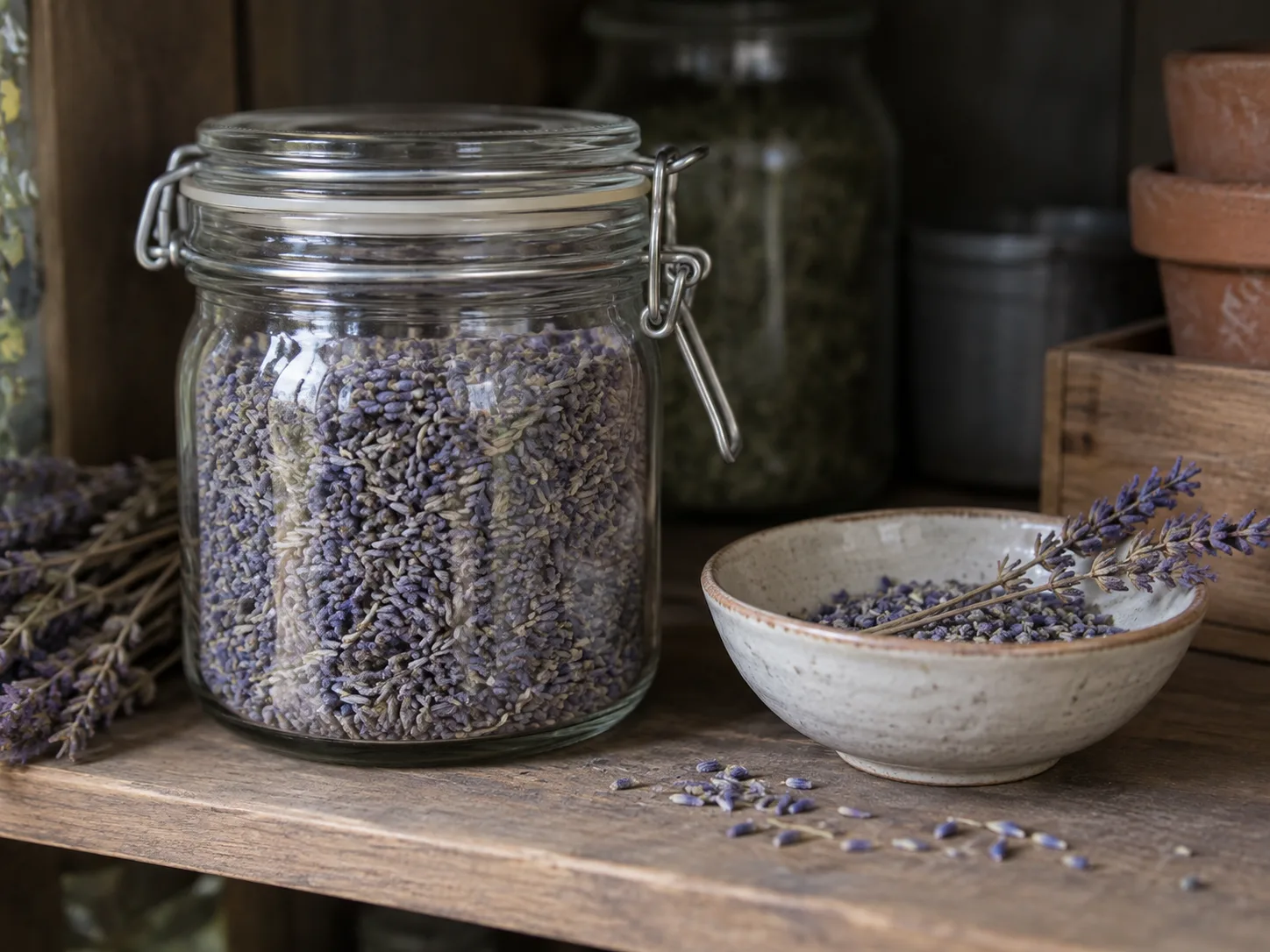
Store buds in a clean airtight container away from light, heat, and humidity. Label the container with the cultivar and harvest date if you grow more than one kind; that small record helps you learn which plants have the fragrance and color you prefer. Check the jar after a day or two: condensation means the material was not dry enough, so spread it out again before resealing.
Use whole dried flower spikes for wreaths and arrangements, loose buds for sachets, and only clean, correctly identified material for food. Storage preserves what you harvested; it cannot repair flowers that were cut overmature, contaminated, or damaged by mold.
Culinary lavender safety and washing
Not every lavender sold as an ornamental makes a pleasant culinary ingredient. English lavender cultivars are commonly preferred because many have a sweeter profile than strongly camphor-scented types, but the cultivar name alone is not enough. You also need confidence that the plant was grown without a treatment that is not approved for food crops.
Do not cook with a newly purchased nursery plant if its pesticide history is unknown. Washing the flowers does not make an unapproved treatment safe to eat. Use only flowers from a correctly identified plant with a trustworthy food-safe growing history, and use a small amount because lavender flavor becomes medicinal when overdone.
Clean, pesticide-free flowers cut after dew dries generally do not need washing before air-drying. If dust or contamination makes rinsing necessary, spread the stems in a single layer until all surface moisture is gone before tying them. That extra drying step reduces the chance of a wet bundle, but it does not replace label directions or a known harvest interval.
Harvesting and pruning can happen together
A planned harvest can act as light pruning. Remove flower stalks at a consistent height, keep green leaves distributed around the crown, and take spent stalks before they collapse into the mound. This keeps the plant compact and reduces the need for a severe correction later.
Think of pruning as shaping a dome, not shearing a hedge. Leave the lower green framework intact and avoid cutting a flat line across the top. Annual light trimming after flowering is safer than waiting several years and trying to force an old, leafless shrub to produce shoots where it has few viable buds.
The best timing for a harder cleanup depends on the plant and climate. In a cold region, wait until spring growth clearly shows what survived winter before removing apparently dead sections; in a mild region, a post-flowering trim may be reasonable. The plant’s live growth and local weather are better guides than a universal month.
What to do after the main harvest
Inspect the plant once the first cutting is complete. Remove missed dead stalks, check for broken branches, and make sure irrigation is not keeping the crown wet. Established lavender usually prefers full sun, very good drainage, and modest fertility; pushing lush growth with heavy nitrogen after harvest can produce soft stems instead of a compact flowering mound.
If the plant is healthy and its cultivar and climate allow it, a smaller later flush may develop. Treat that as a bonus, not a guarantee. English types, lavandins, Spanish types, container plants, and stressed plants can all behave differently.
Record the date, cultivar, bloom stage, and drying result in a garden notebook. One season of notes can tell you more about your own lavender’s harvest window than a generic calendar, especially when spring warmth and summer rain vary from year to year.
Why lavender sometimes fails to regrow after cutting
The most serious harvest mistake is cutting below visible green growth into bare, leafless wood. Some lavender may survive a deeper cut, but many plants do not reliably break new growth from old stems. If a branch dies after harvest, trace the damage back to healthy green tissue and remove only that section.
Other problems can look like a bad cut. Wet soil can cause root or crown rot, winter cold can kill marginally hardy types, drought can stop new growth, and an old plant may simply be past its most productive years. Check the crown, soil moisture, weather history, and remaining green stems before blaming the harvest.
If most of the plant is brown and woody but a few shoots remain, do not remove everything in one attempt. Preserve the living shoots, improve the growing conditions, and consider replacing a very old or badly declining plant. A new plant is often more reliable than repeated deep cuts into a structure that no longer has enough leafy nodes.
Avoid harvesting a wet or diseased plant
Skip any spike with gray mold, soft rot, suspicious lesions, or heavy contamination. Do not mix questionable stems with a clean drying batch, and do not use diseased or chemically treated flowers for food or crafts that touch skin. Bag or dispose of affected material according to local guidance and diagnose the plant before taking more cuttings.
Wet weather is a reason to delay, not a reason to harvest harder. Good spacing, full sun, and free-draining soil help foliage dry after rain, while a persistently damp crown points to a growing-condition problem rather than a harvest-timing problem.
If only a few flowers are affected, harvest the clean portion separately once it is dry. If the entire plant is declining, prioritize plant health over fragrance. A smaller clean harvest is a success; a large moldy bundle is not.
A harvest checklist
Before the first cut, answer these questions:
- What is the end use: dried buds, a fresh bouquet, fragrance, culinary use, or pollinator display?
- Are the spikes fully colored, with only a few florets open for a dried harvest?
- Has dew, rain, or irrigation dried from the plant?
- Are the pruners sharp and clean?
- Can you see flexible green growth below the proposed cut?
- Are you leaving enough leafy material on a young, small, or stressed plant?
- Is a clean, dry, ventilated place ready for the stems?
- If the harvest is edible, do you know the cultivar and treatment history?
If any answer is no, pause and solve that problem first. The extra few minutes prevent the most common failures: brittle overmature flowers, wet bundles, contaminated culinary buds, and a shrub cut into wood that cannot readily regrow.
Conclusion
For dried lavender with strong color and fragrance, harvest when the flower spikes are fully colored and only the first few florets have opened. Cut after dew dries, follow each stalk down into flexible leafy growth, and make the cut above old bare wood.
Tie small bundles and hang them in a dark, dry, airy place until the center is crisp. Harvesting this way gives you useful stems while preserving the shrub’s leafy framework. Leave some flowers for pollinators, delay cutting when the plant is wet or stressed, and use a known, untreated edible cultivar for cooking. A careful harvest is light pruning, good postharvest handling, and the start of a healthier next flush—not a race to remove every flower.