Corsican Mint Care for Beds, Pots, and Garden Paths
Learn Corsican mint care for shaded beds, stepping stones, and pots, with practical watering, propagation, winter, and spread-control advice for all seasons.
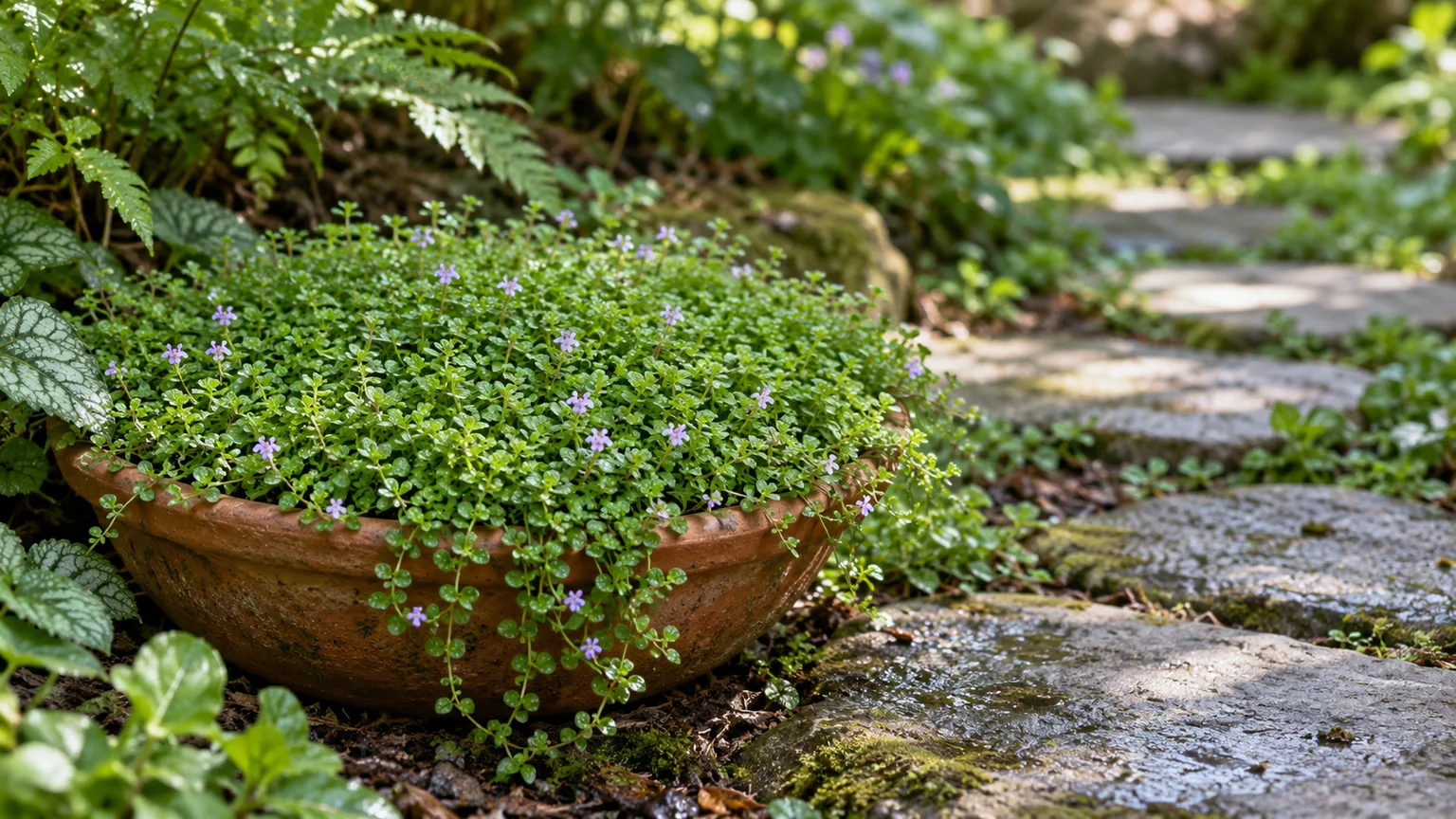
Corsican mint, Mentha requienii, is a tiny perennial that grows sideways into a scented mat rather than standing upright like most garden mints. It can soften the joints between stepping stones, edge a moist rock garden, or spill from a pot, but it needs more consistent moisture than a drought-tolerant groundcover and can wander beyond a small planting if conditions suit it.
For the best chance of success, start with the site: give it bright shade or gentle sun, soil that holds some moisture but drains freely, and an edge you can inspect. Then water according to the soil and weather instead of a calendar. This guide explains where Corsican mint fits, how to establish it, and what to change when the patch dries, scorches, or turns soft and dark.
What Corsican Mint Looks Like
Corsican mint is the accepted name for a low-growing member of the mint family, Lamiaceae. Kew’s Plants of the World Online records Mentha requienii as an accepted species native to Corsica and Sardinia; the Royal Horticultural Society’s plant profile describes it as a herbaceous perennial with rounded, peppermint-scented leaves and lilac summer flowers. Its small foliage and creeping stems make it easy to mistake for moss at a distance, but a rubbed leaf has a clear mint aroma.
Its mature dimensions vary by reference and growing conditions. The Missouri Botanical Garden Plant Finder describes a typical mat around half to one inch tall that can spread a foot or more, while the RHS profile gives a maximum height of up to 10 centimeters and spread of roughly 10 to 50 centimeters. Use those figures as a range, not a guarantee: flowering stems, rich soil, and ample moisture can lift the foliage above its usual carpet-like profile.
Corsican mint is valued for its leaf scent, tiny scale, and ability to fill small gaps, not for a tall harvest. The Missouri Botanical Garden Plant Finder notes that its leaves can flavor teas and foods, and that they have been used for crème de menthe; because the taste is concentrated, try a small amount first. Only eat a plant you have positively identified and grown without products that are not labeled for edible crops.
Where Corsican Mint Grows Best
Choose a cool or temperate spot that stays evenly moist without remaining waterlogged. A partly shaded border, the edge of a rock garden, or the sheltered side of a path can work well; a hot, exposed bed that dries quickly is a poor match even if other mints thrive there. In a garden, the safest site is one where the mat can spread a little without smothering delicate seedlings or entering a lawn.
The plant is useful where you want low texture and fragrance under light, occasional contact. The Missouri Botanical Garden recommends it around paving and stepping stones but describes its foot-traffic tolerance as limited. That distinction matters: it can fill the spaces between stones that carry your weight, yet it is not a substitute for turf on a route people walk across repeatedly.
Think about maintenance before planting. If you cannot check its edge, if water runs off the site, or if the location is difficult to reach for trimming, start with a container instead. A small, controlled mat is easier to enjoy than a large patch growing through neighboring plants.
Light: Bright Shade Beats Hot Afternoon Sun
The RHS profile places Corsican mint in full or partial shade, while the Missouri Botanical Garden says it can grow from full sun to partial shade and appreciates afternoon shade in hot summer climates. Practical guidance from Epic Gardening and Gardenia.net also favors partial shade, especially where summer heat can dry or scorch the fine foliage. For most gardeners, bright shade or morning sun followed by afternoon shade is the easiest starting point. In a cool coastal climate, it may tolerate more sun if the soil stays damp; in a hot inland garden, direct afternoon rays can dry or scorch the fine foliage quickly.
Shade should still mean usable daylight. Deep, dry shade beneath dense tree roots can leave a new plant struggling for both light and water, while a bright north- or east-facing exposure may offer a better balance. Observe the area at midday and late afternoon before planting; if it becomes hot enough to bake the soil surface or remains dark for most of the day, choose another spot or use a container you can move.
Acclimate nursery plants gradually if their original growing conditions are unknown. Set them in the intended area for a few days, then move them into the final light once they remain hydrated and show no pale, crispy patches. This simple step helps separate sun stress from a watering problem later.
Soil and Drainage
Aim for humus-rich soil that retains some water but still lets excess drain away. The RHS profile recommends moist but well-drained conditions and says Corsican mint can grow in loam or clay; the Missouri Botanical Garden’s culture notes likewise caution against dry soil. These descriptions are compatible: a moisture-retentive soil is not the same as a permanently saturated one.
Before planting, water the area and watch what happens over the next few hours. If puddles remain or the soil stays shiny and soupy, improve the site with a raised pocket or choose a pot with drainage rather than setting the plant into a waterlogged hole. If the ground dries hard between rains, blend in finished compost to increase moisture retention, then mulch lightly without burying the crown.
There is no need to chase a precise pH number. The RHS profile lists a broad pH tolerance, and the Missouri Botanical Garden notes a preference for rich, light soil rather than a narrow soil reaction. A simple container mix with added compost is usually easier to manage than trying to amend a garden bed to an exact reading.
How to Plant Corsican Mint in a Garden
Plant after the danger of a hard frost has passed and the ground is workable, or in early fall where roots have time to settle before the soil freezes. The Missouri Botanical Garden suggests spacing starter plants about 6 to 10 inches apart. Use the closer end if you want small gaps to fill sooner; use wider spacing when you want a slower, more inspectable edge or need room to remove pieces later.
Loosen only the area you plan to cover, set each plug level with the surrounding soil, and firm the soil gently around it. Water the planting thoroughly to settle soil against the roots, then check it every few days during the establishment period. The goal is to keep the root zone from drying out while the plant is making contact with its new site, not to leave the crown submerged.
Do not cover the growing points with a thick layer of mulch. A thin organic layer around the planting can reduce moisture loss, but keep the tiny stems visible and leave a narrow boundary at edges you intend to monitor. Once runners begin to root, remove any that cross into turf or a neighboring planting before they form a second patch.
Planting Between Stepping Stones
Plant Corsican mint in the soil joints between stable stones, not in a layer of gravel alone. Scrape out enough joint material for a small plug and its roots, fill the gap with moisture-retentive planting soil, and water the plug in; ensure the path drains rather than collecting runoff around the crowns. If the joints are too narrow for roots or the stones are set on a deep, dry base, the plant may not establish even when its top looks damp.
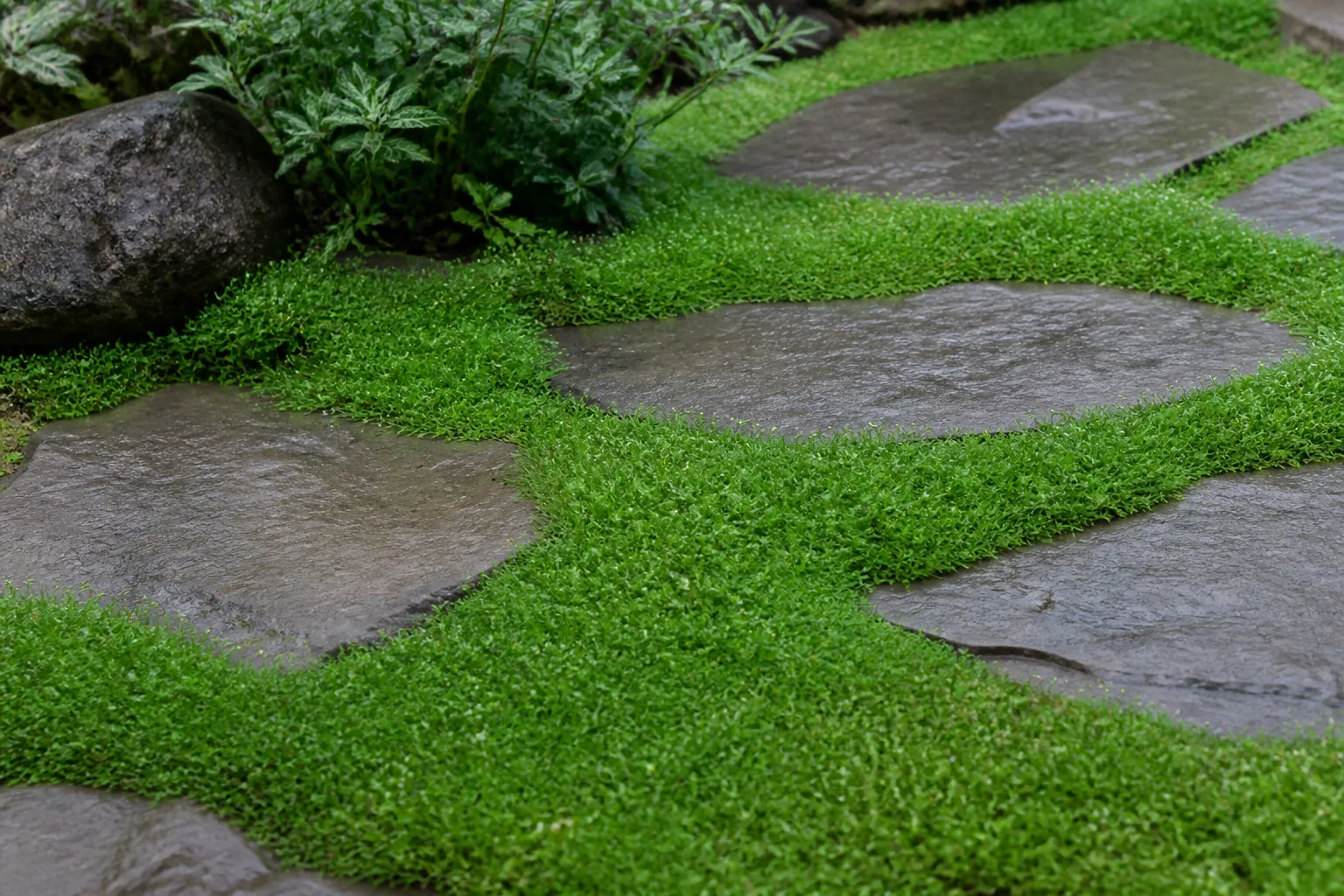
This is a placement example showing why exposed stone matters; the pictured groundcover is not Corsican mint.
Leave enough exposed stone for a safe walking surface. The mat should frame the pavers and take occasional brushing, not rise so high that it becomes slippery or hides an uneven edge. When the route receives daily foot traffic, use Corsican mint in nearby joints or a protected section and choose a more durable surface plant for the main line.
Watering: Keep Moisture Even
Corsican mint performs best when the root zone stays lightly and consistently moist, but roots still need air. Water when the top layer begins to dry and the soil just below it is approaching dry; if both surface and root zone are wet, wait. This is a better guide than “once a week,” because a small pot in warm wind can dry in a day while a clay bed in cool shade may remain moist for much longer.
Water slowly over the soil rather than relying on a brief mist over the leaves. For a bed, soak the root area and then allow excess to drain; for a container, water until some drains from the bottom and empty the saucer. During hot, dry spells check often, especially around paving where stones heat up and rainfall may not reach the plant evenly.
Adjust the rhythm seasonally. Active spring and summer growth uses water faster, while cool weather and winter dormancy slow drying. If the plant repeatedly wilts despite wet soil, stop watering and check drainage and roots; adding more water to a saturated root zone can turn a temporary stress into rot.
Growing Corsican Mint in a Pot
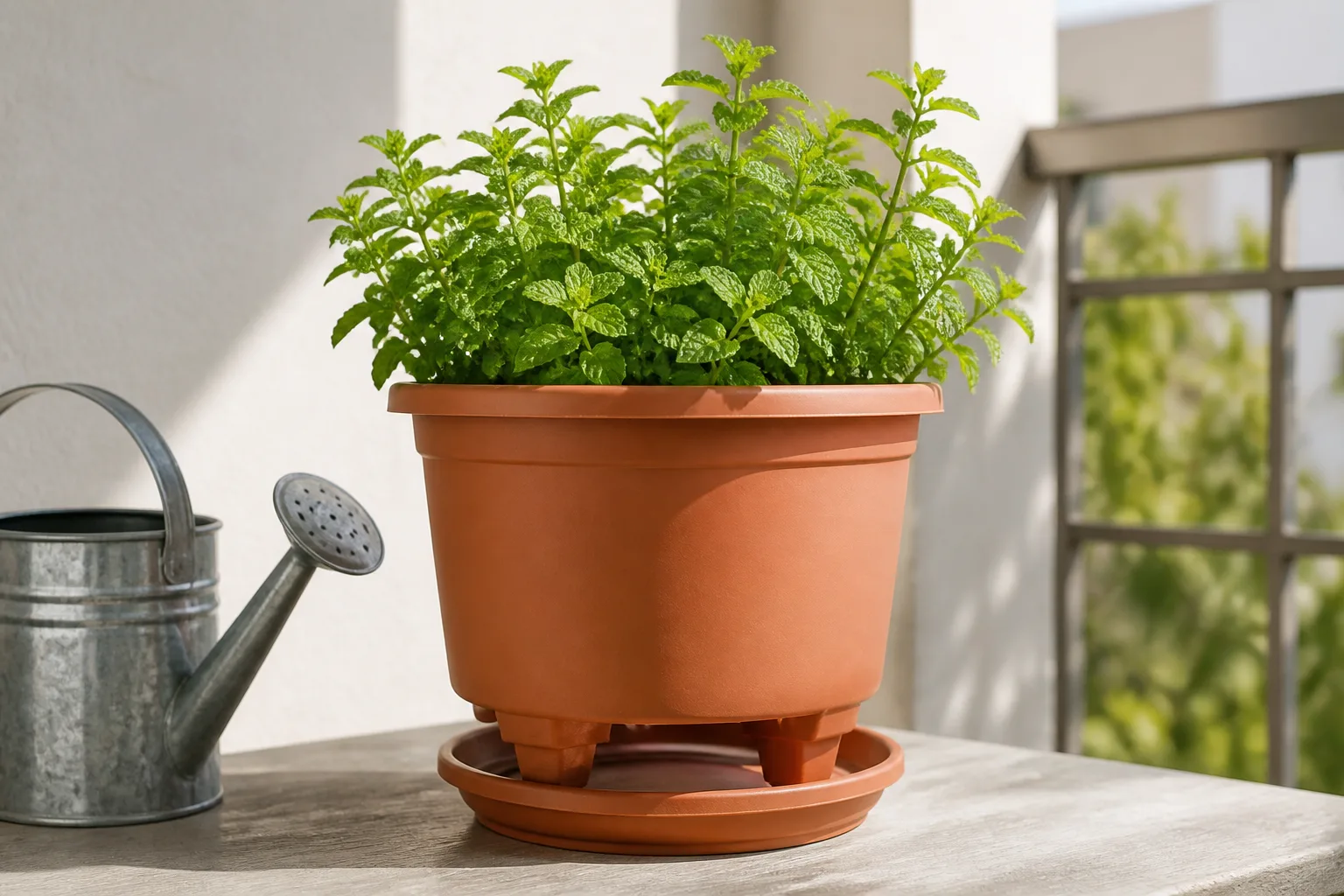
A pot is the easiest choice when spread control matters or your garden soil dries out too quickly. Choose a broad, shallow container with drainage holes and ordinary quality potting mix amended with a little compost. A wide surface suits the plant’s creeping habit better than a deep narrow pot; place the container on paving or another hard surface so rooting stems cannot bridge directly into a bed.
Water a container more often than a ground planting, but let the surface begin to dry between waterings. Terracotta loses moisture faster than glazed ceramic or plastic, so factor the material into your checks. The pot’s weight is useful: learn how heavy it feels after a full watering and compare that with its weight as the mix dries.
A pot sitting directly on garden soil is not a reliable barrier. Roots can emerge through drainage holes, and a runner can trail over the rim and root where it touches the ground. Raise the pot on feet or a stand, sweep away loose stems, and inspect underneath every few weeks; for an especially valuable paved area, place a saucer beneath the pot but do not leave standing water in it.
Fertilizer and Flowering
A plant in reasonably fertile garden soil usually needs little extra feeding. In a container, use fresh potting mix when repotting and apply a balanced fertilizer only if growth is weak despite suitable light, water, and drainage; follow the product label rather than estimating a stronger dose. Heavy feeding can push soft growth without correcting the underlying cause of a struggling plant.
Small lilac flowers appear in summer, though their timing varies with climate. Let flowers remain if you like their fine texture and want the patch to set seed; trim spent stems if you prefer a neater mat. Flowering can make the plant look taller for a short period, so do not mistake that seasonal lift for a change in its basic spreading habit.
How to Propagate Corsican Mint
Division is the most dependable way to make more plants while keeping the same characteristics as the parent. It also gives you a practical opportunity to thin an overgrown patch, replace weak sections, or move a small plug to a better site. The RHS propagation guidance recommends dividing Corsican mint in spring or autumn, when cooler conditions make it easier to keep fresh divisions hydrated.
Corsican mint can also self-seed in favorable conditions, but seed is less predictable as a home propagation route. Availability may be limited, and seedlings can take longer to make a useful patch than a rooted division. If you want to preserve a known fragrance and appearance, division is the simpler choice.
Division: The Reliable Method
Water the parent patch the day before dividing so the soil is workable rather than dusty. Lift a small section with a trowel, keeping a bit of soil around the roots, and separate it into pieces that each have rooted stems and visible healthy growth. Replant the sections at their original depth, firm gently, water them in, and keep the soil evenly moist while they re-establish.
Start with fewer divisions than you think you need. A rooted piece can expand across open ground, and planting too many close together makes the new patch harder to inspect. If the original area is healthy but spreading farther than you want, remove the surplus sections and share or compost them before they root elsewhere.
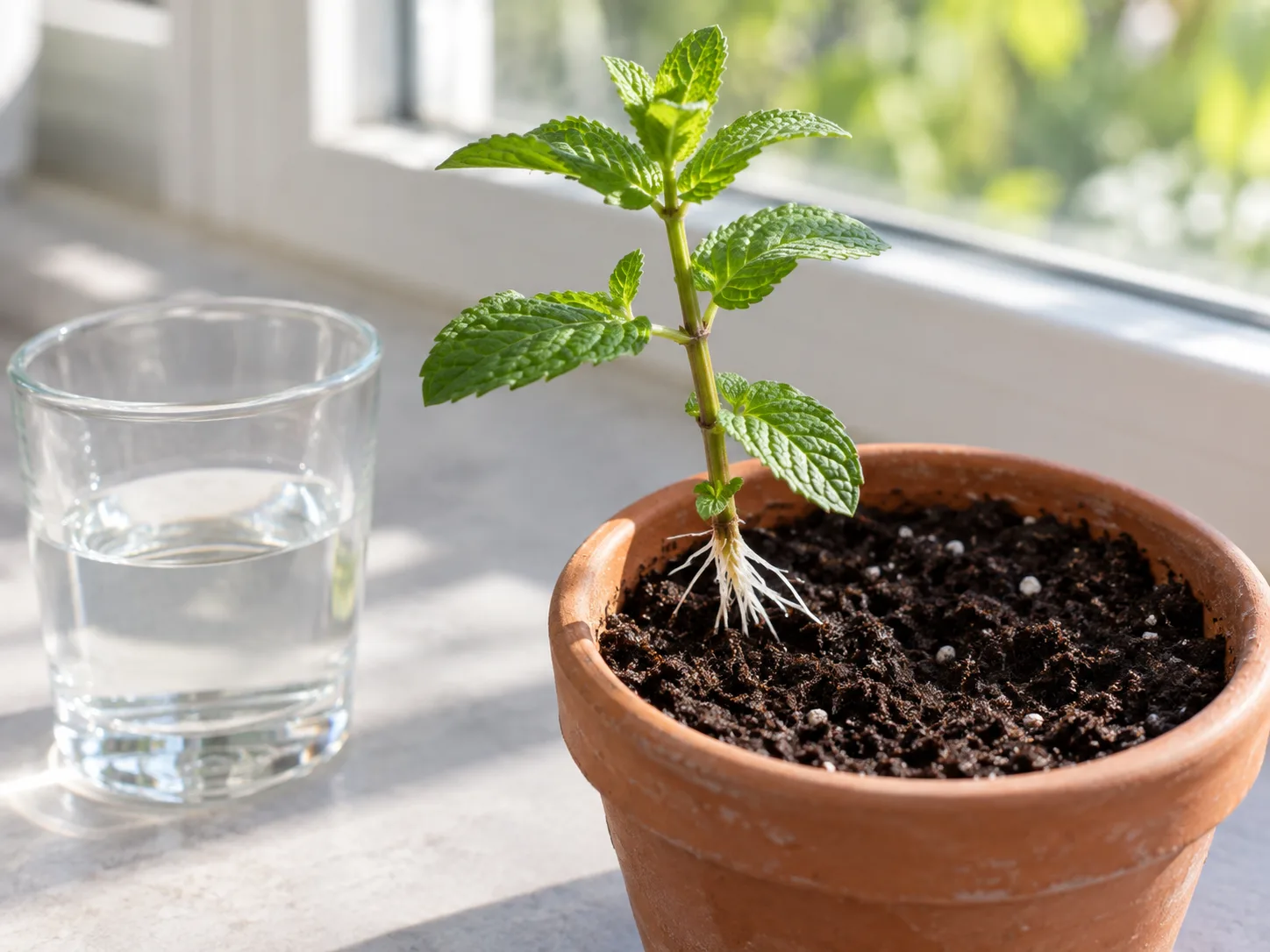
The photo shows a mint cutting rather than a Corsican mint division, so use it only as a visual reference for protecting young roots during propagation. Corsican mint forms a low mat, and a small rooted section is usually easier to divide than a long upright stem is to take as a cutting. For more detail on the general process, see our guide to propagating mint.
Growing from Seed
Seed-grown Corsican mint is possible, but not the fastest way to fill a path. Seeds are small and can be difficult to handle; follow the seed supplier’s specific sowing depth and temperature instructions, keep the mix lightly moist, and avoid washing seed out of a shallow tray with a strong stream of water. Germination and establishment can vary with seed freshness and temperature, so do not plan a full groundcover installation around an uncertain packet.
Once seedlings have several leaves and enough roots to hold a plug together, pot them on or plant them into a prepared site during mild weather. Keep new plants protected from drying wind and strong midday sun until they are settled. If seed is unavailable or germination is uneven, ask a reputable nursery for a rooted division.
Pruning and Harvesting
Corsican mint does not need routine shaping while it is growing in a small, contained space. Trim runners that cross a path boundary, lift sections that are crowding other plants, and tidy the patch after flowering if it becomes uneven. Small scissors are more precise than a lawn mower for a groundcover this short; cutting too low can remove much of the leafy surface you wanted.
For kitchen use, snip a few clean leaves or short leafy tips rather than stripping a whole patch. The Missouri Botanical Garden lists teas and foods among its uses, but the aroma and flavor are intense enough that a cautious first taste makes sense. Wash harvests, avoid plants treated with products not labeled for edible crops, and never use a plant for food if you are uncertain of its identity.
Winter Care and Hardiness
Hardiness references do not give a single identical range. The Missouri Botanical Garden lists USDA Zones 6–9, while the RHS rates Corsican mint H7 under its UK system; those are different systems, and neither is a guarantee that a particular planting will survive a wet winter, a dry freeze, or a container exposed above ground. Epic Gardening lists a narrower US range, which reinforces the need to treat zone labels as guidance rather than a promise.
In mild climates, the plant may stay green or slow down without disappearing. In colder regions, foliage can die back and a sheltered garden patch may return, self-seed, or fail depending on winter moisture, freeze depth, and local exposure. For a pot, move it to a protected, unheated location or insulate the container before a hard freeze; its roots are more exposed to temperature swings than roots in the ground.
Reduce watering in winter because cool soil dries more slowly, but do not let a container become bone dry for a long period. If your winters are colder than the plant’s likely range, keep a small division in a protected pot as insurance and treat the outdoor patch as experimental. This is more dependable than promising the plant will overwinter based on one hardiness number.
Troubleshooting Common Problems
Look at both foliage and soil before changing care. Corsican mint is low enough that surface conditions matter: a thin, dry soil layer can stress the mat quickly, while wet soil at the crown can keep leaves cool and limp even when the plant appears thirsty. Change one factor at a time and observe new growth rather than expecting damaged leaves to turn green again.
Scorched, Dry, or Thinning Patches
Crispy edges, bleached foliage, or a patch that thins on the sunniest side usually point first to heat or moisture loss. Check whether hot afternoon light reaches it, whether the soil is dry beneath the surface, and whether stones or walls are reflecting extra heat. Move a container to bright shade or add afternoon shade to a bed; if the root zone is dry, water slowly and consider a thin mulch layer around, but not over, the growing stems.
If the center of a container is dry but its rim is wet, the root ball may have become hydrophobic or the water may be running down the pot walls. Water in two slow passes and see whether moisture reaches the middle. If it still fails to wet evenly, briefly soak the pot from below, let it drain completely, and resume checking before each watering.
Black, Limp Growth and Persistently Wet Soil
Soft, darkened stems can signal that the root zone stays too wet, especially when the patch is in dense soil or a container without free drainage. Pause watering, check how quickly the site drains, and lift a small section if the plant continues declining; healthy roots should be firm rather than mushy. Remove badly affected pieces, improve drainage, and replant any firm healthy divisions in fresh, airy soil.
If one section is failing while adjacent parts grow, look for a local cause before replacing the whole patch. Roof runoff, a leaking hose, a low spot, or a container saucer full of water can keep just one area saturated. Correct that water source and wait for new growth to judge recovery.
Pests, Diseases, and Controlling Spread
The RHS profile notes that Corsican mint may be susceptible to sage leafhoppers and caterpillars, as well as powdery mildew and mint rust; it flags powdery mildew particularly in drought conditions. Inspect leaf undersides, growing points, and crowded or stressed areas rather than treating preventively. If you see insects, identify them before using any control product, and choose only a product labeled for the plant and pest involved.
For fungal problems, first correct the conditions that favor stress: give the planting suitable light, avoid leaving the crown in standing water, and do not let a container remain dry for long spells. Remove badly diseased material and dispose of it according to local guidance; do not assume a stronger fertilizer or a general pesticide will solve a drainage or climate mismatch. If rust repeatedly returns, avoid moving infected divisions to a new area.
The mat spreads by creeping stems that root as they travel, and established plants may self-seed. The RHS profile cautions that Corsican mint can become a nuisance and recommends restricting its root run in a deep container; the Missouri Botanical Garden also warns it may be somewhat invasive. Keep it in a pot on paving, use a clear planting edge, and inspect the perimeter regularly so rooted runners can be pulled before they establish a second patch. Do not assume that a shallow nursery pot sunk into the ground will contain it indefinitely.
If pets chew plants, use extra care. The ASPCA’s garden mint entry lists mint as toxic to dogs, cats, and horses because of essential oils, but it does not identify Corsican mint separately; do not treat a genus-level listing as a species-specific risk assessment or assume the plant is safe. Keep it out of reach of nibbling pets and contact a veterinarian or animal poison-control service if an animal eats it.
Conclusion
Corsican mint works best where its small, fragrant mat can stay cool and evenly moist without being soaked. Plant it in bright shade or gentle sun, prepare soil that holds moisture while draining, and choose a container or inspectable edge if you do not want creeping stems to travel. Between stepping stones it can add a fine, scented surface, but it is for light, occasional contact rather than heavy foot traffic.
Water by checking the root zone, divide rooted pieces when you want reliable new plants, and protect containers more carefully than in-ground patches during winter. When growth fades, check heat, moisture, drainage, and spread before adding fertilizer or replacing the plant. A well-chosen site does more for Corsican mint than a complicated care schedule.