How to Grow Tarragon: Care, Planting, and Harvest
Learn how to grow tarragon in beds or pots, choose French or Russian plants, manage sun and drainage, propagate, harvest, and protect the roots over winter.
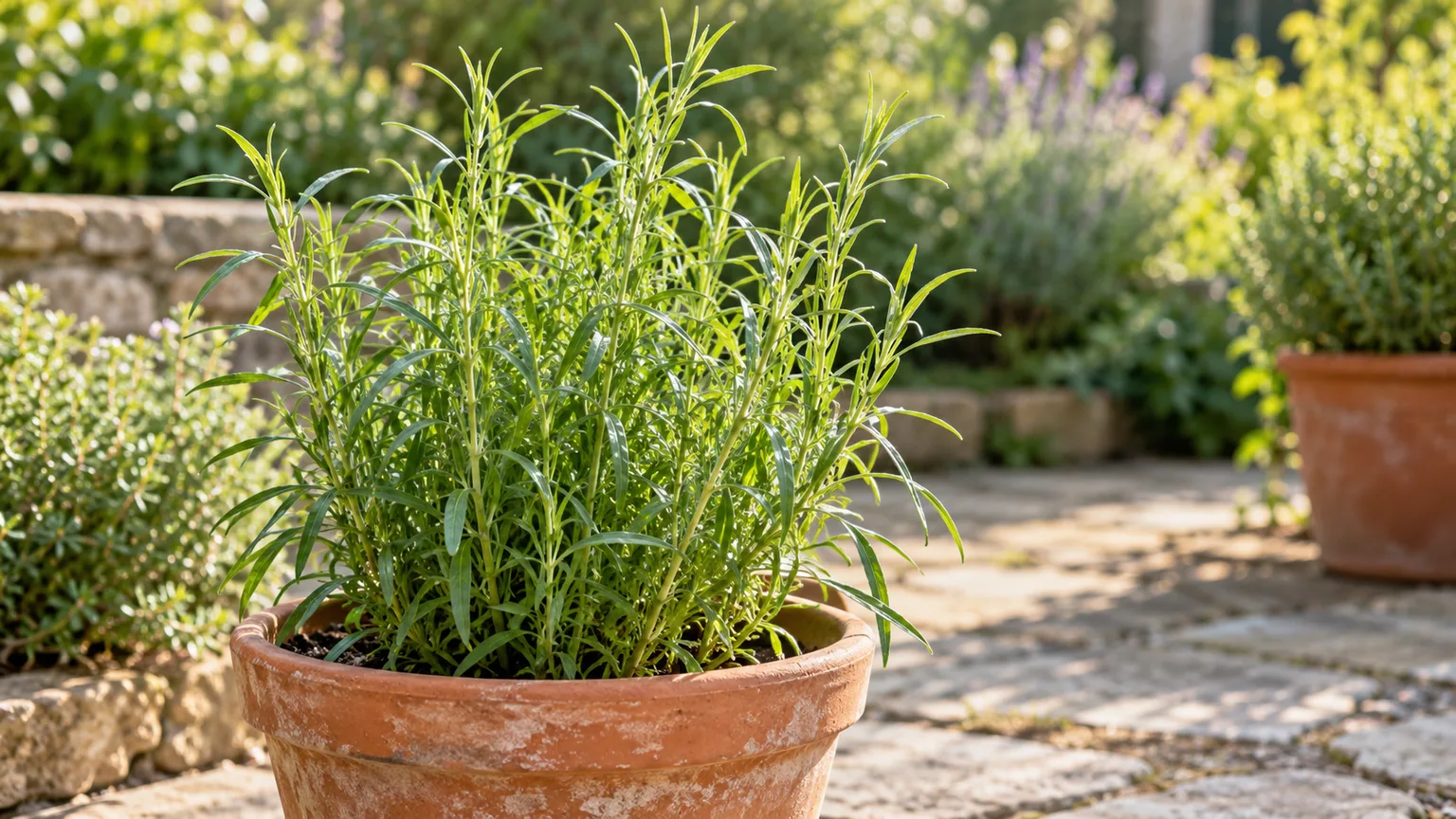
French tarragon is a perennial kitchen herb with fine, aromatic leaves and a warm anise flavor. The trick is buying the right plant: the French type cooks well but is usually propagated from cuttings or divisions, while seed packets labeled tarragon often grow Russian tarragon, a tougher plant with a noticeably milder, more bitter taste.
Once you have the right plant, tarragon is relatively low-maintenance. Give it bright light, a sheltered position, and soil that drains promptly; water regularly while it is settling in, then let the soil partly dry between waterings. In places with cold, wet winters, a movable pot can save a French tarragon plant more reliably than a protected label on a garden bed.
| Need | What works |
|---|---|
| Plant to buy | French tarragon for the classic culinary flavor |
| Light | Full sun in cooler conditions; morning sun and afternoon shade in hot summers |
| Soil | Loose, well-drained soil; avoid a site that stays wet |
| Water | Keep a new plant evenly moist; water an established plant when the root zone dries |
| Start | Buy a labeled plant, root a cutting, or divide a known French tarragon clump |
| Harvest | Snip leafy tips in small cuts after the plant is established |
Quick answer: choose French tarragon, drain well, harvest lightly
For the best cooking flavor, start with a healthy plant labeled French tarragon (Artemisia dracunculus ‘Sativa’). Plant it in spring after hard frosts have passed, in a spot that gets several hours of light and has loose, free-draining soil. In a hot climate, give it morning sun and shade during the hottest afternoon hours; in a cooler climate, a sunny, sheltered bed usually works.
Water a newly planted clump when the top layer of soil begins to dry, then reduce watering once it has rooted into the bed. A pot needs closer checks because its mix dries faster, but the container must have drainage holes and should never sit in a saucer of standing water. Take only a few leafy stem tips at first, then harvest more often as the plant fills out.
The care issue that ends the most tarragon plants is not a missed feeding. It is roots that remain cold and wet, especially in winter. If your soil is heavy, your garden holds rain, or your winters combine freezing temperatures with persistent moisture, choose a container you can move to a sheltered, dry place.
Pick the right tarragon before you buy
“Tarragon” can mean more than one plant, and the name on a seed packet does not guarantee the flavor you expect. French tarragon is the preferred culinary type, with a delicate, peppery-anise taste. It is often sold as a small nursery plant or shared as a cutting because it rarely produces viable seed. The RHS notes that French plants can vary under different names and recommends checking the aroma when buying in person; rub a leaf gently and look for the sweet, clear tarragon scent.
Russian tarragon is hardier, generally taller, and easy to grow from seed, but its flavor is usually more grassy, mild, and sometimes bitter. It can be useful as a tough ornamental or as a source of plentiful foliage, but it is not a dependable substitute when a recipe expects French tarragon’s concentrated aroma. If flavor is the goal, do not choose a seed packet simply because it is the cheapest or easiest option. The RHS growing guide distinguishes the two types, and its French tarragon plant profile identifies the culinary form and its vegetative propagation.
French, Russian, and Mexican tarragon
French and Russian tarragon are related forms of Artemisia dracunculus, but they behave differently enough that the label matters. French tarragon tends to form a smaller clump and is prized for flavor; Russian tarragon grows more vigorously, sets seed, and is easier to start from seed. If a plant is unlabeled, taste or smell a leaf before committing garden space to it.
Mexican tarragon is different again: it is Tagetes lucida, not Artemisia. It is sometimes grown as an anise-scented substitute in hot regions, but it has its own growth habit and flavor. If you want the traditional perennial French herb, check the botanical name or buy from a nursery that identifies the cultivar rather than treating the common names as interchangeable.
Site it for light, warmth, and airflow
Tarragon wants a bright site, but “full sun” is not the same as intense all-day heat. In a mild summer, give it an open sunny position. Where afternoons turn hot, especially beside a south- or west-facing wall, several hours of morning sun followed by light afternoon shade can prevent the slender leaves from scorching and help the plant keep growing through summer.
Choose a sheltered spot that still has moving air. Tarragon’s narrow stems can lean in exposed wind, while a crowded, damp corner keeps foliage wet and increases the chance of mildew. A raised herb bed, gravelly border, or pot near the kitchen door can work well if it gets good light and drains after rain. The RHS recommends a sheltered, sunny location and well-drained ground for tarragon; its growing guide also cautions that French tarragon can struggle when cold weather and persistent wetness arrive together.
Indoors, a bright south- or west-facing window can keep a pot alive for a while, but a dim kitchen counter is not a good long-term substitute for outdoor light. If stems become long, pale, and sparse, move the plant closer to stronger light or outdoors when temperatures allow. A cool winter rest is also better for a perennial herb than keeping it in a warm room with weak light and constant moisture.
Prepare lean, fast-draining soil
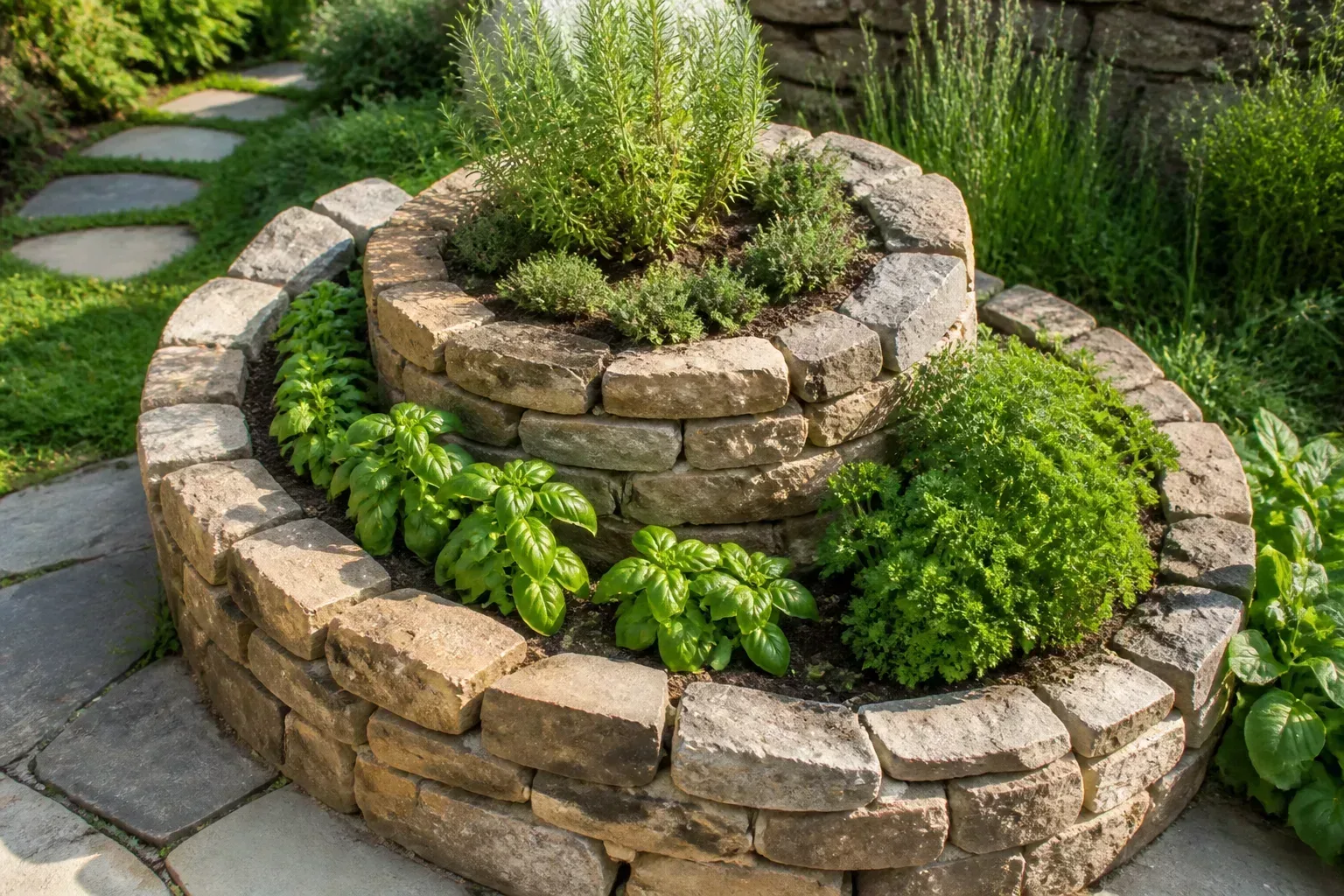
Tarragon’s roots need oxygen as much as they need water. A light loam or sandy soil that drains promptly is safer than rich, compacted ground that stays wet after irrigation. The RHS lists loam and sand as suitable soil types and warns that French tarragon struggles in heavy, poorly drained soil. Harvest to Table likewise recommends well-drained sandy loam and notes that cold, wet, compacted soil is a poor fit.
Before planting, water the intended spot or check it after rain. If puddles remain for hours or the soil clings in a dense, sticky mass, plant in a raised bed or pot instead of trying to fix the whole root zone with a handful of sand. A modest amount of mature compost can improve structure in poor soil, but avoid turning the planting area into a heavily enriched, moisture-retaining pocket. Tarragon is not a crop that needs a rich bed to produce useful leaves.
Do not place it at the lowest point of a slope, beside a downspout, or in a bed that is watered daily for neighboring plants. Those locations can leave a drought-tolerant herb with persistently wet roots even when the surface looks dry. A slightly raised planting position is useful if the surrounding ground stays damp in winter.
Choose a bed or pot for your winter weather
Use an in-ground bed when it drains well and your winter weather is not persistently cold and wet. This lets roots spread into a larger soil volume and reduces summer watering. Use a pot when you need to control drainage, move the plant out of winter rain, or shield it from strong afternoon heat. Containers are especially practical for French tarragon because you can protect the roots without bringing the plant into a warm living room.
The trade-off is that a pot dries faster in summer and freezes faster in winter than garden soil. It also limits the clump’s space, so you may need to divide or repot it after a few seasons. In contrast, a ground-grown plant can spread its roots but is harder to rescue once the surrounding soil becomes waterlogged. The RHS recommends container growing for French tarragon in wet, cold winter conditions, while Harvest to Table gives container growing as a practical option for cooks who want the plant close at hand.
Use a roomy container with open drainage
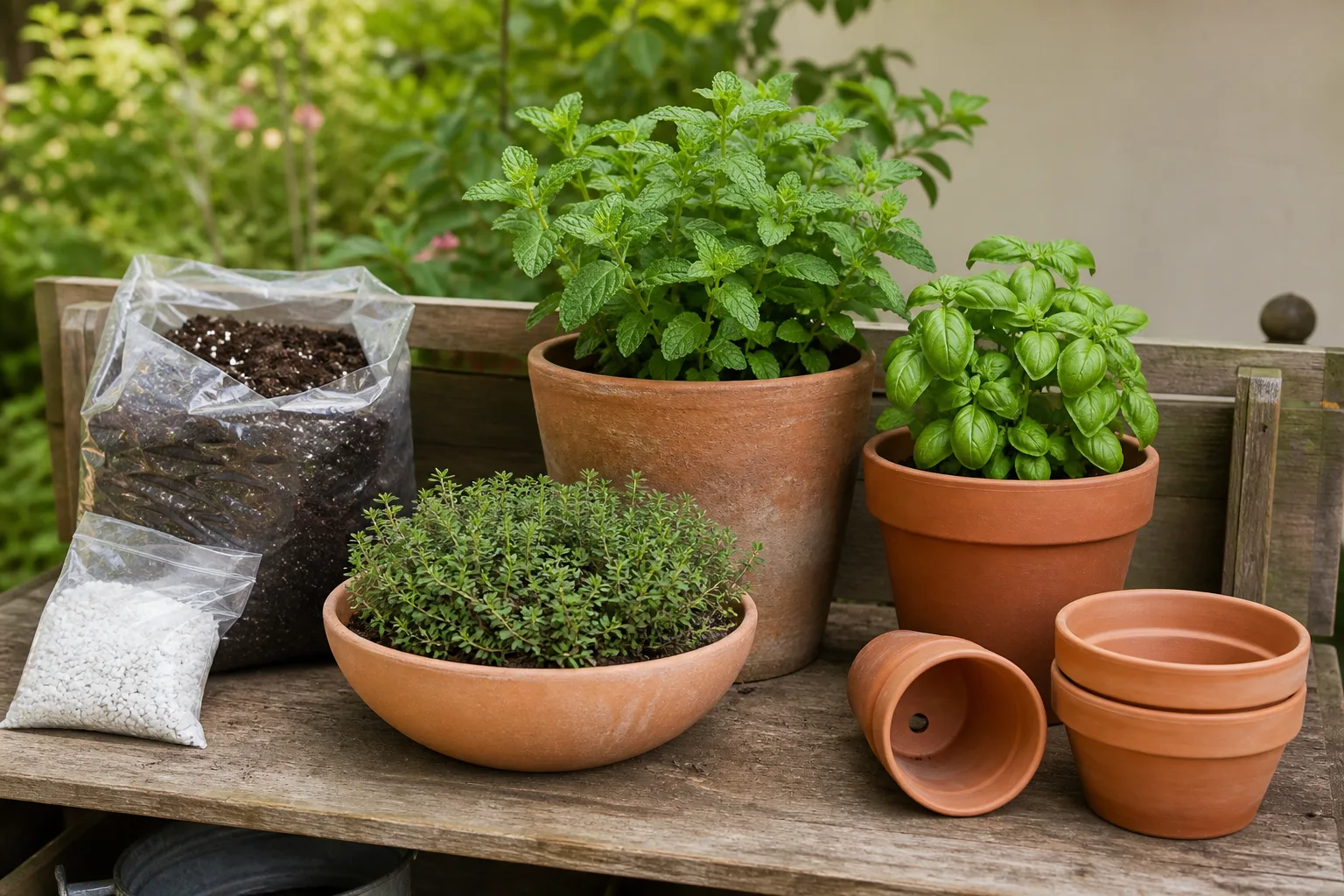
Choose a pot at least about 8 to 10 inches (20 to 25 cm) wide and deep for one young plant, with multiple drainage holes. A larger pot buffers short dry spells and gives the roots room to develop, but an oversized pot filled with dense, wet compost can hold more water than a small clump can use. Use a free-draining container mix; blending in a little horticultural grit can help if the mix is heavy, but drainage holes matter more than a gravel layer at the bottom.
Set the pot where it receives useful sun and air, and empty any outer cachepot after watering. If your patio bakes in afternoon heat, move it to a spot with morning sun and later shade. For winter, the same pot can move under an open porch, into a cold frame, or into the rain shadow of a wall. The RHS advice on growing herbs in containers specifically notes that French tarragon dies back and should be protected from freezing, saturation by rain, and becoming completely dry.
Plant young tarragon and give it time to establish
Set a nursery plant outside in spring once hard freezes have passed and the soil is workable. If it was raised under cover, acclimate it over several days: begin in bright shade, add a little direct sun each day, and bring it back under shelter if a cold snap is forecast. This reduces the shock of moving tender greenhouse growth into wind and sun.
Dig a hole about as deep as the root ball and roughly twice as wide. Loosen circling roots gently, set the plant at the same depth it grew in its pot, backfill with the native soil, and water once to settle the roots. Space plants around 18 to 24 inches apart if you are planting more than one; a single French tarragon plant usually provides enough leaves for a household, so leaving it room to breathe is more useful than crowding several into a small herb bed. Harvest to Table suggests one plant for typical culinary use and more only when you want to preserve a larger crop.
For the first several weeks, check the soil every few days rather than assuming the established-herb routine already applies. New roots have not yet explored the surrounding bed, so a plant can wilt in dry wind even when mature tarragon would cope. Give it time to produce new growth before taking more than a few tips; the first season is mainly about building a strong root system.
Water by plant age and soil, not the calendar
New plants need consistent moisture while their roots settle, but not soggy soil. Feel the upper inch of soil and water when it has begun to dry. In a garden bed, a deep watering followed by time for the surface to dry encourages roots to grow downward. In a pot, check more often during warm, windy spells because the mix can dry quickly; water through the root ball until excess drains out, then discard water from the saucer.
Once established, in-ground tarragon can tolerate short dry periods. Water during prolonged heat or drought when growth slows and the soil is dry below the surface, not because a fixed number of days has passed. Container plants need more frequent attention, but frequent small sips keep only the top layer damp and can leave the lower root zone both wet and poorly aerated. Push a finger a little below the surface or lift the pot to compare its weight before watering.
If leaves droop while the soil is dry, water thoroughly and watch for recovery. If they droop while the soil is wet, stop watering and check drainage before adding more. Persistent wetness can starve roots of oxygen and lead to decline; adding fertilizer to a water-stressed plant will not solve the underlying problem. Harvest to Table advises keeping young plants moist until established, then allowing the soil to approach dry between waterings; the RHS similarly warns against overwatering tarragon, especially in containers and cool weather.
Feed sparingly and keep stems open
Tarragon is a light feeder. If the bed has ordinary garden soil and the plant is producing healthy, aromatic shoots, you do not need a routine fertilizer schedule. A thin surface dressing of mature compost in spring is enough for most gardens. In a container, refresh the top layer or repot into new mix when the plant has used its growing space; if growth is pale despite good light and sound roots, a light application of balanced fertilizer at the label rate may help.
Avoid repeated high-nitrogen feeding. It can produce soft, fast growth that needs more water and may be less robust in heat, wind, and winter. Do not try to increase leaf flavor by starving a plant or overfertilizing it; the more reliable controls are correct plant identity, suitable light, good drainage, and regular light harvesting.
Keep the center of the clump open by removing dead stems and thinning crowded growth. If a few stems begin to flower, snip the tips back to a leafy joint. French tarragon rarely produces useful seed, so removing buds is mainly a way to redirect growth and keep a neat supply of tender leaves, not a seed-saving strategy.
Propagate French tarragon to keep the flavor true
French tarragon is usually multiplied vegetatively because its seed is not reliably viable. That is useful for the gardener: a cutting or division from a known, flavorful plant keeps the desired traits, while a packet of “tarragon” seeds may produce Russian tarragon instead. The RHS guide to tarragon recommends division or summer softwood cuttings for French plants; Harvest to Table describes the same two routes.
Use a healthy, pest-free parent clump. If the original plant’s flavor is weak or the label is uncertain, do not propagate it just to make more of the same. Take a cutting in the growing season, or divide an established clump as new growth begins in spring. Both methods work best when the new plant can establish before winter.
Root softwood cuttings
In late spring or early summer, choose a nonflowering, flexible stem with fresh growth. Cut a 5- to 6-inch section just below a leaf joint with clean scissors, remove leaves from the lower third, and place that bare section in a small pot of damp but airy propagation mix. Keep the pot in bright shade and warm conditions. Covering it loosely with a clear bag can slow moisture loss, but leave an opening for air and remove the cover if condensation stays heavy.
Keep the medium slightly moist, not waterlogged. After several weeks, check gently for resistance when you tug the stem; if it pulls free easily, give it more time rather than tugging repeatedly. Once roots hold the mix together and new growth appears, pot the cutting up or harden it off for a protected outdoor spot. A cutting that wilts in direct afternoon sun is more likely to need less exposure and steadier moisture than a large dose of fertilizer.

Divide an established clump
Division is often simpler than rooting several cuttings, particularly when the middle of an old plant has become woody or sparse. In early spring, water the plant the day before if the ground is dry, then lift around the clump with a garden fork. Pull or cut it into sections, making sure each division has healthy roots and several live shoots. Discard any section that is soft, blackened, or hollow rather than trying to replant damaged roots.
Replant the divisions promptly at their former depth in fresh, free-draining soil, and water them in. Keep them evenly moist while they establish, then return to the lighter watering routine. Divide a productive clump every few years when growth becomes crowded, the center thins, or the plant’s vigor fades; dividing too often can keep a plant small and delay harvest. RHS guidance describes division every few years as a way to maintain younger, productive French tarragon.
Prune and harvest for repeated shoots
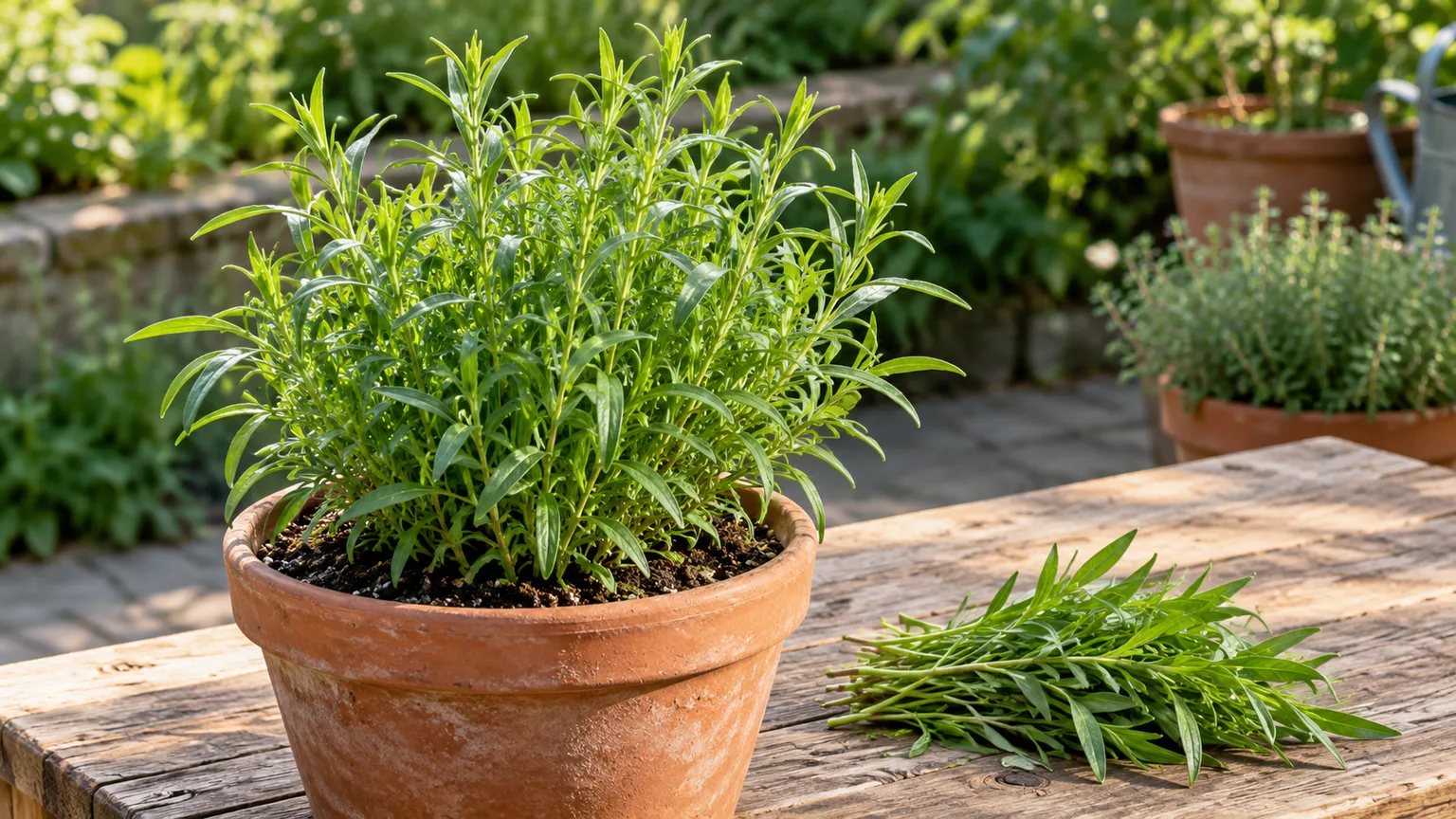
Wait until the plant has settled and put on several healthy stems before making a substantial harvest. A small plant can spare a few tips for dinner, but removing most of its foliage before the roots are established slows the growth you are trying to encourage. Once the clump is growing strongly, snip leafy shoot tips with clean scissors, cutting just above a pair of leaves or a branching point so the stem can push side shoots.
Take a light, even harvest from several stems rather than stripping one side bare. Leave enough green growth for the plant to keep photosynthesizing, and stop heavy cutting as the season cools so new shoots are not forced just before dormancy. Regular tip harvesting keeps the plant compact and gives you fresher leaves than waiting for a single oversized crop. The RHS recommends picking shoot tips from spring to autumn and pinching flowering stems; Harvest to Table also advises cutting leafy growth back more than once during the season to encourage bushier regrowth.
Use the leaves fresh for the strongest aroma. Their anise note works especially well with eggs, chicken, fish, mushrooms, and delicate sauces. Add fresh tarragon toward the end of cooking because prolonged heat can dull its fragrance and make the flavor seem harsher. The cooking guidance from Planet Natural and Harvest to Table both emphasizes the fresh herb’s stronger aroma and the advantage of adding it late.
Store tarragon without losing its aroma
Fresh tarragon is most fragrant soon after picking. For a short hold, wrap dry sprigs loosely in a barely damp paper towel and refrigerate them in a covered container. Wash only what you plan to use, then dry it well; wet leaves bruise and spoil faster. If you harvest more than you can cook within several days, freezing usually keeps more of the fresh character than air-drying.
To freeze, remove leaves from the tougher stems and freeze them in a small airtight container, or chop them and freeze portions in an ice-cube tray with water. Use a little portion at a time in soups, sauces, or braises. Tarragon can be dried in a shaded, well-ventilated place and stored in an airtight jar, but dried leaves have a milder flavor, so use them more generously and replace old jars when the aroma fades. Label the container with the date instead of assuming a dried herb will stay potent indefinitely.
You can preserve leaves in vinegar for a bright cooking ingredient, but keep the finished bottle refrigerated unless you are using a tested food-preservation method. Do not store fresh herbs submerged in oil at room temperature. Simple freezing and refrigeration are easier ways to preserve a small home harvest safely without losing track of storage conditions.
Carry container and in-ground plants through winter
Tarragon is a herbaceous perennial: stems can die back after hard frost while the roots remain alive and produce new shoots in spring. That seasonal dieback is not automatically a sign the plant has failed. Mark the spot or keep the pot where it will not be discarded, and wait for spring before assuming the clump is dead.
French tarragon is more vulnerable than Russian tarragon when freezing weather coincides with saturated soil. In a wet-winter region, grow French tarragon in a pot and move it to a cool, sheltered place such as a porch, cold frame, or greenhouse. A cool protected rest is different from forcing leafy indoor growth: keep it out of standing rain, water only enough to prevent the root ball from becoming bone dry, and provide some air movement. The RHS notes that a rain shadow or cold frame can protect container herbs from both saturation and extreme freezing.
In a well-drained bed, leave the roots in place and remove old stems in spring down to the lowest fresh shoots. A light mulch can buffer sharp temperature changes in a colder climate, but do not pile wet mulch against the crown or use it to hide a drainage problem. If a ground-grown French plant repeatedly fails over winter, change its position or move it into a container before the next cold season rather than repeating the same protection around waterlogged roots.
Diagnose weak growth, yellow leaves, and mildew
Long, pale stems with few leaves usually point first to insufficient light or too much crowding. Move a potted plant to a brighter location, give stems space for air, and pinch the tips after growth resumes. If the pot sits indoors, compare the light it receives with a bright outdoor spot; ordinary room light is often weaker than it appears.
Yellowing with damp soil or a sour smell suggests poor drainage or root stress. Stop watering until the surface and root zone begin to dry, empty the saucer, and confirm that drainage holes are clear. If the roots are soft and dark, remove damaged material and repot or replant into fresh, airy mix. Dry, crispy leaves and a light pot point in the opposite direction: water thoroughly, let the excess drain, and check the pot again during the next hot spell.
Powdery white coating or rusty spots are signs to improve airflow and remove affected foliage rather than wetting the leaves at night. Tarragon is generally trouble-free when grown in sun and well-drained soil, but the RHS notes susceptibility to powdery mildew and rust, and Harvest to Table warns about mildew and root rot where plants or soil stay wet. Thin crowded growth, water at the base when needed, and avoid overhead irrigation late in the day. Do not use a pesticide on an edible herb unless the product label permits that crop and you can follow its harvest interval; often the first useful fix is correcting moisture and spacing.
Avoid the mistakes that end a productive clump
- Buying seed when you want French tarragon: look for a labeled French plant or obtain a cutting or division from a plant with the flavor you want.
- Putting it in the wettest bed: test drainage after rain and use a raised bed or container if the soil stays saturated.
- Keeping a pot permanently damp: water to the root zone, let excess drain, and adjust the interval to weather and pot size.
- Treating every brown or drooping leaf as thirst: check soil moisture first; a wet-rooted plant can wilt too.
- Cutting a new plant hard: establish roots and a full set of shoots before taking a large harvest.
- Bringing a dormant plant into a warm, dim room: protect it from harsh cold and rain while allowing a seasonal rest.
- Ignoring an old, thinning center: divide the clump or take fresh cuttings before the remaining roots decline.
These decisions are more reliable than a rigid monthly schedule. A sunny, dry-summer garden and a damp winter patio need different care, even when the pots contain the same cultivar.
Conclusion: protect the roots and harvest in small cuts
Start with French tarragon if you want the familiar kitchen flavor, and buy a plant or propagate one vegetatively rather than trusting an unlabeled seed packet. Give it bright light, a sheltered site, and soil that drains after rain. Water more closely while it establishes, then respond to the soil and weather instead of the calendar.
In a bed with good drainage, let the clump settle and harvest its leafy tips a little at a time. In a cold, wet climate, use a container you can shelter for winter. Divide a crowded plant every few years, keep a cutting as a backup, and the small, aromatic leaves will be ready whenever dinner needs them.