How to Grow and Care for Sweetbay Magnolia
Learn how to grow sweetbay magnolia, choose a moist site with enough room, water through establishment, and manage its climate-dependent foliage, flowers, and fruit.
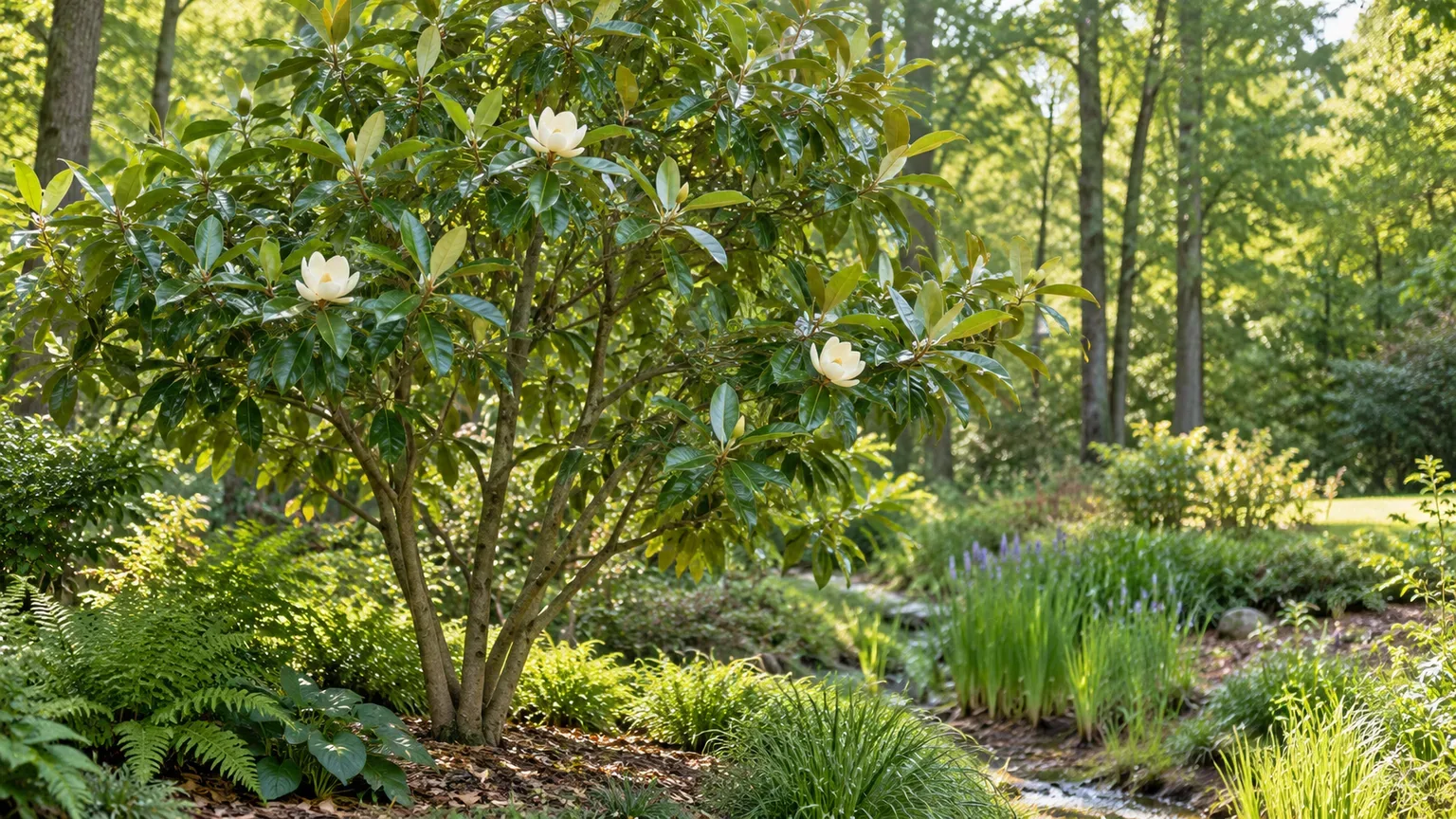
Sweetbay magnolia (Magnolia virginiana) is a native flowering tree for a garden that stays evenly moist, where many magnolias struggle. It brings creamy, lemon-scented flowers, polished green leaves with pale undersides, and red seeds in late summer or fall. Its most important quirks are easy to miss at the nursery: the same species may lose its leaves in a cold winter or stay leafy in a warm one, and a plant sold as a small shrub can become a substantial tree.
The simplest way to succeed is to choose a locally adapted selection, plant it where the soil holds moisture without remaining underwater, and give its eventual crown more space than the young plant appears to need. Once it is established, sweetbay magnolia needs little routine pruning or fertilizer; moisture, placement, and avoiding unnecessary disturbance matter more.
Is Sweetbay Magnolia a Good Fit for Your Yard?
Choose sweetbay magnolia if you have a damp border, rain-garden edge, low area with reliable drainage, or woodland margin that gets sun to partial shade. It suits gardens where a broadleaf native with fragrant summer flowers is useful, and it tolerates moist or periodically wet ground better than many magnolias. It is not a solution for a pond margin that stays submerged, a site that bakes dry every summer, or a narrow foundation bed with no room for branches.
Its mature size is the first purchase decision. Extension references commonly give a range of about 10 to 35 feet tall and similarly broad, while some trees in the southern part of the range can exceed that typical garden size. A nursery specimen may be only a few feet high and grow into a multi-stem shrub or a small-to-medium tree. If you need a screen, patio accent, or formal narrow column, ask the nursery which selection it is selling and what that plant has reached in your region; do not infer a compact habit from the species name alone. NC State Extension’s Plant Toolbox and UF/IFAS describe the species’ variable dimensions and forms.
Identify Its Form, Foliage, and Seasonal Changes
Sweetbay’s leaves are narrow to oval, glossy medium or dark green above, and conspicuously pale or silvery underneath. A breeze can flip the leaves and make a mature crown shimmer. The tree may grow with one central trunk and an upright crown, or send up multiple stems to form an open, spreading shrub. Its natural look is looser than the dense, evergreen silhouette of Southern magnolia, so use it as a specimen or layered screen rather than expecting a clipped hedge.
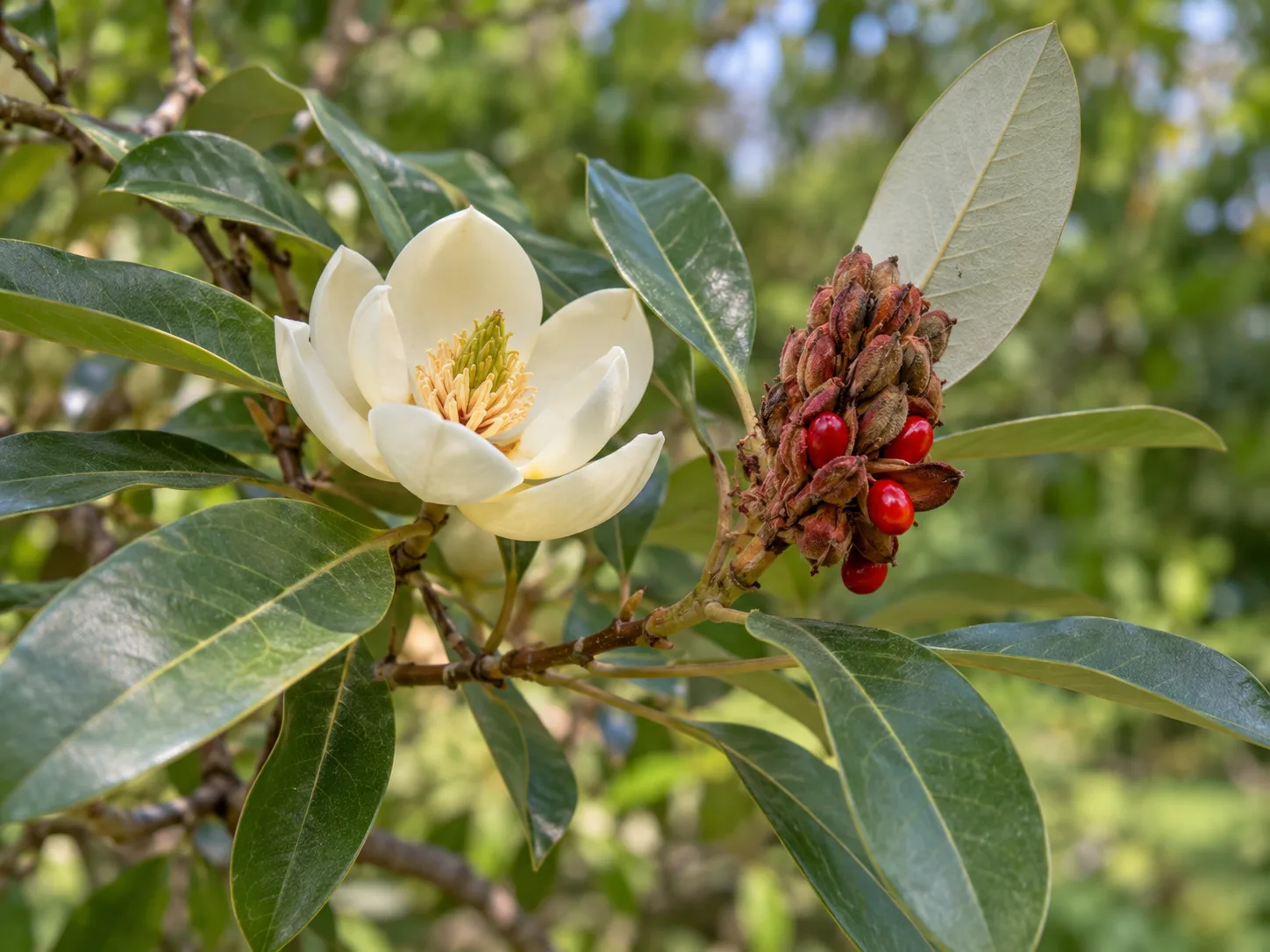
The creamy-white flowers are smaller than those of many familiar magnolias but carry a lemon-like fragrance. They appear over an extended period in late spring and summer, with timing shifting by region and weather. The leaves may fall in a colder climate, partly persist through winter, or remain evergreen in warmer conditions and certain selections. That range is normal, not a sign that one tree is necessarily healthier than another. University of Arkansas Cooperative Extension notes that foliage retention varies by source and local climate, while Penn State Extension describes the plant as deciduous to evergreen.
Choose a Site With Light, Moisture, and Room
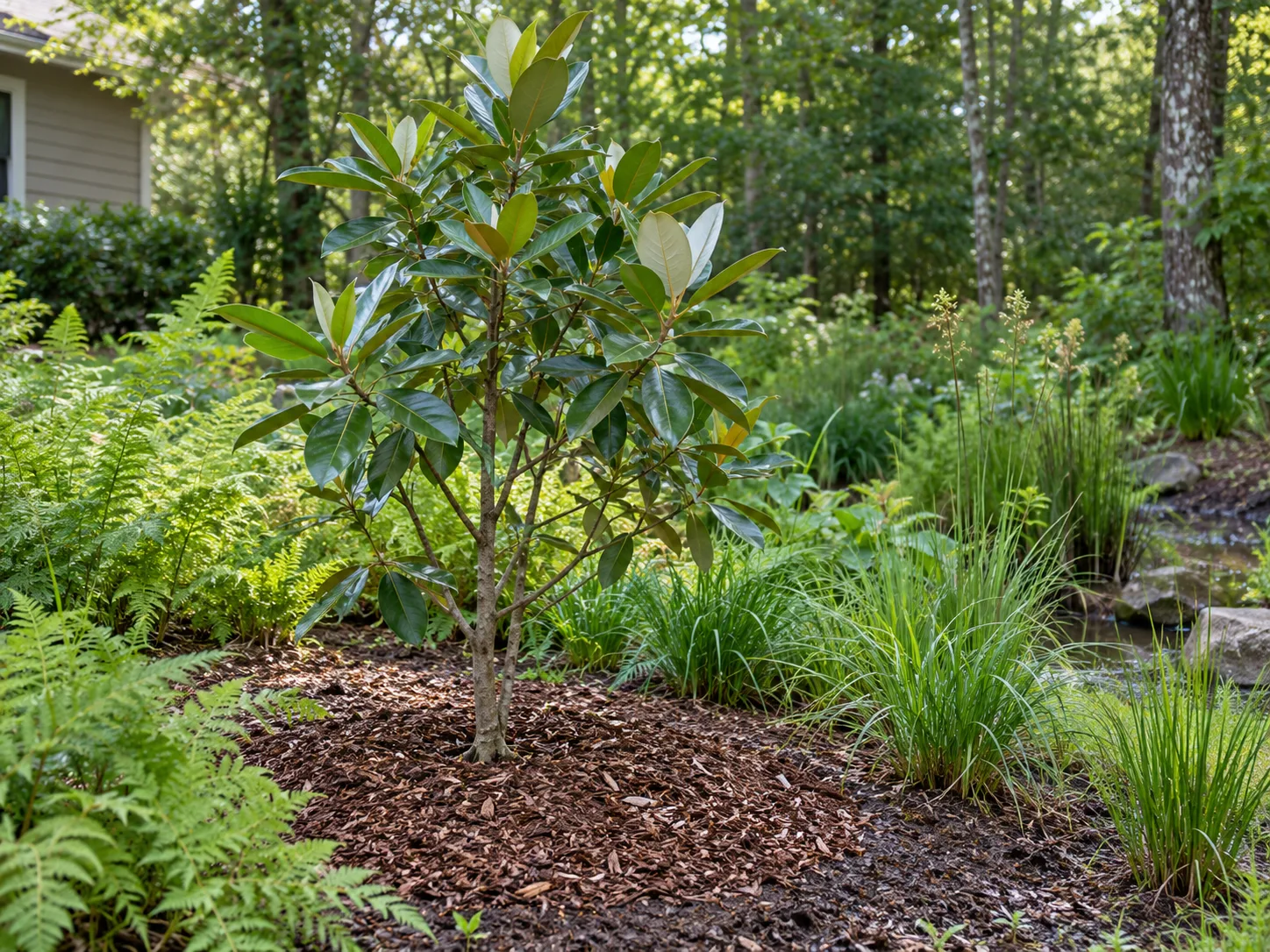
Before digging, observe the site after rain and through the hottest part of summer. Sweetbay magnolia is most useful where soil stays cool and moist, but water does not stand against its root collar for long periods. Map the likely mature crown, not just the nursery pot: allow room for branches, access for maintenance, and the canopy’s eventual spread from walls, paths, overhead wires, and neighboring plants. A naturalized spot beside a rain garden or stream can work if it drains between wet periods and is not a flood channel.
Sun exposure and heat
Full sun to partial shade is suitable. In a cooler region, more direct light usually supports a fuller crown and better flowering; in a hot, exposed site, afternoon shade can reduce heat and moisture stress. Deep shade is not automatically a problem for survival, but it can produce a thinner, less floriferous tree. If the garden is shaded by buildings, check that the canopy still receives several hours of open light rather than choosing a site based only on its morning appearance.
Soil texture, acidity, and drainage
Aim for moist, organically enriched soil that trends acidic. Sweetbay can grow in clay and wet ground, but the label “wet-soil tolerant” describes an adaptation to moisture, not immunity to flooding or oxygen-starved roots. A site that is saturated for days after ordinary rain, receives runoff from a roof, or remains under moving or standing floodwater is a higher-risk location. Improve the landscape drainage or choose a plant matched to that hydrology rather than filling the hole with a different soil and creating a bathtub around the roots.
The NC State Extension profile recommends consistently moist to wet, acidic, organically rich conditions and notes that alkaline soil can cause chlorosis. A soil test is more useful than guessing at pH from leaf color. Avoid placing lime, sulfur, or fertilizer around the tree until a test or local extension recommendation supports that change.
Plant Sweetbay Magnolia at the Right Depth
Plant in spring or fall when temperatures are moderate and the ground is workable; avoid planting during heat, drought, or frozen soil. Dig a hole two to three times wider than the root ball but no deeper than its height. Loosen circling roots on a container-grown tree, and find the root flare before setting the plant. The flare—the point where the trunk broadens into the first structural roots—should sit at or slightly above finished grade, not buried under several inches of soil or mulch.
Backfill with the soil removed from the hole unless your local soil test or extension service recommends a specific amendment. A heavily amended pocket can hold water differently from the surrounding soil and encourage roots to stay in the hole instead of expanding outward. Water slowly after planting to settle air pockets, then spread a 2- to 3-inch layer of organic mulch over the wider root area. Keep mulch a few inches away from bark so the trunk base stays exposed and dry.
Leave the tree’s nursery stake in place only if it needs support against wind; remove it once the root ball is stable, and do not tie tightly around the trunk. For a multi-stem form, preserve the stems the plant naturally produced unless you have a clear reason to train a single leader. If planting beside a building, consider the species’ potential 10- to 35-foot width and local mature examples before choosing a distance; no one spacing number fits all cultivars, forms, or structures.
Water for Establishment, Not Permanent Saturation
Newly planted sweetbay magnolias need regular irrigation until roots extend into surrounding soil. For the first growing season, check moisture by hand a few inches below the mulch and water deeply when that layer begins to dry. In a second season, continue checking during hot or rainless stretches; established roots reduce irrigation needs, but the species is not a good match for a dry site with no supplemental water. The interval depends on rainfall, soil texture, temperature, and root-ball size, so a calendar schedule alone can overwater clay and underwater sand.
Water the root zone slowly rather than wetting only the trunk or running a sprinkler briefly over the foliage. If the soil is still cool and wet after rain, wait and reassess. A tree that wilts in a saturated site may be suffering from damaged roots or poor drainage, not asking for more water. In a drier landscape, maintain a broad mulch layer and use a soaker hose or dripline to keep the root zone evenly moist; do not pile mulch against the trunk.
Penn State Extension places sweetbay magnolia in wet-to-moist hydrologic zones and notes its intolerance of drought conditions. That description is a useful site-planning signal, but it does not mean roots must sit underwater. The balance is dependable moisture with enough drainage and aeration for roots to function.
Understand Evergreen and Deciduous Forms
Sweetbay magnolia is not reliably evergreen everywhere it is sold. In colder northern parts of its range, it commonly behaves as a deciduous shrub or small tree; in warmer areas, it is often semi-evergreen or evergreen. Midrange gardens may see partial leaf retention, winter browning after a cold snap, or leaf drop in an unusually severe winter. That variation reflects both climate and plant selection, so a hardiness zone printed on a tag cannot guarantee winter foliage at a specific address.
If year-round screening matters, choose a named cultivar selected for winter leaf retention and cold tolerance, then verify its performance with a regional extension service or a nursery that grows it locally. NC State’s profile lists ‘Henry Hicks’ as an evergreen selection and describes ‘Northern Belle’ as cold tolerant; the performance of individual plants still depends on exposure, establishment, and local winter conditions. Do not choose a southern selection for a colder site solely because the species as a whole is rated for a broad zone range.
In the first winter, a young tree may lose leaves or show some edge damage without being dead. Wait until spring growth begins before making major cuts. Check flexible twigs for living green tissue and look for buds before assuming the plant has failed. A mature tree that is suddenly dropping leaves during summer needs a moisture and root-zone check rather than the same explanation as normal autumn leaf fall.
Follow the Flower, Pollination, and Fruit Cycle
Sweetbay flowers do not open all at once. Individual creamy-white blooms open and close over a short span, while new buds can appear over several weeks from late spring into summer. Fragrance is strongest near a bloom, and the flowers are easiest to appreciate close up, where their modest size and central reproductive structures are visible. A late frost, a very young plant, shade, or transplant stress can delay or reduce bloom; missing flowers during the first years is not by itself a sign that fertilizer is needed.
Magnolias are insect-pollinated, and beetles are among the visitors associated with their bowl-shaped flowers. The flower’s structure makes pollen accessible as insects move across it. After pollination, the flower’s central structure develops into a cone-like aggregate of follicles; as it matures, the follicles open and bright red seeds become visible. Gardening Know How’s overview of beetle pollination explains the broader magnolia–beetle relationship, while UF/IFAS’s species profile describes sweetbay’s late-summer fruit and red seeds.
The fruit is ornamental and provides food for wildlife, especially birds. It can also drop fragments and seeds, so avoid placing a tree where every falling seed will become a cleanup problem on a narrow patio or formal walkway. Fruit production depends on a mature, healthy tree and successful pollination; no care routine can force a young transplant to fruit immediately. Leave some seeds for wildlife or collect them only after they mature and open.
Feed Only When Soil or Growth Calls for It
Do not fertilize a sweetbay magnolia simply because it is a tree or because it has not flowered yet. First look at the pattern: Is the tree putting on reasonable growth? Are leaves uniformly pale, or are only the newest leaves yellow between green veins? Has soil been tested? A broad layer of composted organic matter or leaf mulch can support soil structure, but it should not be heaped against the trunk and it cannot correct every nutrient or pH problem.
If growth is weak or leaves show persistent chlorosis, test soil pH and nutrient levels through a local extension lab. Alkaline soil can limit nutrient uptake even when those nutrients are present, so adding a high-nitrogen fertilizer may worsen the imbalance or stimulate leafy growth without resolving the cause. Use an acidifying product only if the test and local recommendations call for it, and follow the product label. Do not fertilize a drought-stressed or newly transplanted tree until it has resumed healthy growth.
Container plants lose nutrients more quickly because frequent watering moves dissolved minerals through the pot. If you keep a compact selection in a large container for a temporary patio display, use a labeled slow-release tree or shrub fertilizer at the stated rate only during active growth. The simplest way to avoid fertilizer burn and excess soft growth is to use a nutrient plan based on the potting mix, plant vigor, and label rather than a generic monthly schedule.
Prune Lightly and Choose a Tree or Shrub Form
Sweetbay magnolia needs little routine pruning. Remove dead, broken, rubbing, or diseased branches when you notice them, cutting back to a sound lateral branch or branch collar without leaving a long stub. For a young tree, decide whether you want a central leader or a multi-stem shrub before substantial stems become large. Keep the best-positioned stems and remove small competing shoots gradually; do not strip the lower branches merely to make a standard tree in one season.
For shaping, prune after the main flowering period or during the dormant season, and make small cuts rather than heading back the whole crown. Magnolias can look awkward after severe topping, and large wounds take longer to close. A crowded crown can be thinned selectively to improve structure, but the tree does not need an open center for health. Avoid pruning just before a cold snap or removing many large limbs at once, especially on an older plant.
If a sucker or basal shoot is unwanted, remove it at its point of origin while small. If it is part of the plant’s attractive multi-stem form, keep it. Pruning can guide form but cannot keep a vigorous tree permanently tiny; if the mature footprint is too large for the site, choose a more compact selection or a different plant before planting.
Diagnose Yellow Leaves, Scale, and Leaf Spots
A few old leaves yellowing and dropping is normal, particularly on a deciduous or semi-evergreen form. A sudden flush of pale foliage, dead twig tips, sticky residue, or spreading spots deserves closer inspection. Check whether the symptom affects the whole canopy or one branch, whether soil is dry or saturated, and whether the leaves are old or newly emerged. Take a photo and note the season before treating; a pattern is more informative than one discolored leaf.
Yellow leaves and chlorosis
When leaf tissue turns yellow while veins remain green, alkaline soil is one possibility; it is not the only one. Waterlogged roots, drought, transplant stress, root injury, or nutrient imbalance can also prevent leaves from functioning normally. Check moisture first, then inspect the trunk base and root flare for buried mulch or soil, and submit a soil sample if chlorosis persists. Do not add acidifier or iron fertilizer based on leaf color alone; a high pH diagnosis and local rates matter.
Scale insects and leaf spots
Scale insects appear as fixed bumps on twigs or leaf undersides and may be accompanied by sticky honeydew. Confirm that the bumps are insects before spraying; small natural bark features can be mistaken for scale. A light infestation on a vigorous tree may be monitored, while a heavy infestation or declining branch merits advice from a local extension office or certified arborist. Horticultural oils can injure plants in hot weather and must be applied according to the label, so avoid routine blanket spraying.
Leaf spots can appear during humid weather. Rake up badly affected fallen leaves, avoid repeatedly wetting the canopy late in the day, and improve airflow if adjacent plants crowd the tree. If spots return or branches die back, identify the disease before applying a fungicide; many mature trees tolerate minor leaf spotting without treatment. NC State Extension lists chlorosis in alkaline soil, scale, weevil feeding, and leaf spots among possible problems.
Propagate Carefully and Treat Containers as Temporary
Sweetbay magnolia can be propagated from seed, cuttings, or layering, but these methods serve different goals. Seedlings are variable and may not match a named cultivar; they also take longer to reach flowering size. Collect mature seeds after the follicles turn dry and open, clean away the red fleshy coating, and follow a regional magnolia seed-starting guide for cold, moist stratification and sowing depth. Keep the medium evenly moist, not waterlogged, and shelter seedlings from harsh sun while they establish.
Softwood cuttings can preserve the traits of a selected plant, but rooting is not guaranteed and young cuttings need consistent humidity and careful moisture control. If you want a specific cultivar for winter foliage or size, buying a correctly labeled nursery plant is more predictable than growing from seed. Gardeners’ Path’s Sweetbay guide discusses propagation by seed, cuttings, and layering; for exact seed handling, use a method from a local botanical garden or extension service that matches your climate.
A container can work for a compact selection while it is young, but a tree that may grow 10 feet or more is not a permanent small-pot plant. Choose a stable, generously sized pot with drainage, use a moisture-retentive but well-aerated mix, and check it more often than an in-ground tree. Roots in a pot heat, dry, and freeze faster. Plan to transplant into the landscape before the root ball becomes severely crowded rather than repeatedly moving a large, stressed specimen.
Protect Young Trees Through Winter
Cold tolerance and winter leaf retention are different traits. A sweetbay may survive a colder zone while losing its leaves, whereas a tender or poorly established plant can suffer stem or bud injury in a winter that is normally within its listed range. If your garden is near the northern edge of the species’ range, select a locally proven cultivar, shelter the young tree from drying wind, and avoid a frost pocket where cold air collects.
Before the ground freezes, maintain a 2- to 3-inch mulch layer over the root zone, leaving a clear ring around the trunk. Continue watering during a dry autumn until the ground freezes; do not keep the soil saturated. Avoid late-season nitrogen that could encourage soft growth. Do not wrap the whole plant as a routine measure; if protection is needed, use a breathable wind barrier around a young tree and remove it when the damaging conditions pass.
After a cold snap, wait for buds to swell before pruning back apparent winter damage. Some twigs may be injured while the main branches remain alive. Scratching bark can reveal green tissue, but do this sparingly on a small twig rather than cutting into the trunk. If an established tree loses foliage during a normal fall, that can be expected in a deciduous form; if it drops leaves abruptly in summer, inspect root moisture and drainage.
Use a Simple Seasonal Care Rhythm
At planting: expose the root flare, set the ball at grade, water slowly, and mulch broadly without touching the trunk. Record the cultivar name and the nursery’s local size and hardiness claims so you can compare them with regional guidance.
During the first two growing seasons: check soil under the mulch every few days during dry or hot weather, then lengthen the interval after rain or as roots establish. Keep grass and competing weeds away from the root zone, and watch for new growth rather than expecting flowers immediately.
After flowering: remove dead wood and make any small structural cuts. During summer, keep the root zone from drying completely and inspect leaves for scale, spotting, or chlorosis. In autumn, note whether your tree drops leaves; that observation helps distinguish normal local habit from a sudden stress response the next year.
Before winter: refresh mulch if needed, water during dry spells while the soil is unfrozen, and protect young trunks from mower or string-trimmer injury. Every few years, check the tree’s clearance from paths, roofs, and nearby plants. If the crown is outgrowing its space, do not rely on severe pruning to fix a planting mistake.
Conclusion
Sweetbay magnolia is an excellent choice for a garden with dependable moisture, room for a real tree or large shrub, and enough light for good growth. Plant it at the correct depth in acidic, organic soil, water through establishment, and avoid treating wet-soil tolerance as permission for permanent flooding. Those few decisions do more for the tree than routine feeding or heavy pruning.
Expect its size and winter foliage to vary with climate and cultivar. If evergreen leaves, a narrow form, or a compact footprint are essential, confirm those traits locally before buying. Give the tree time to establish, then enjoy its fragrant flowers and the red seeds that follow without mistaking normal seasonal variation for a care failure.