How to Grow and Care for Teddy Bear Cactus
Teddy bear cactus care starts with full sun, fast drainage, and safe spacing. Learn what works outdoors, how containers change the routine, and when to skip it.
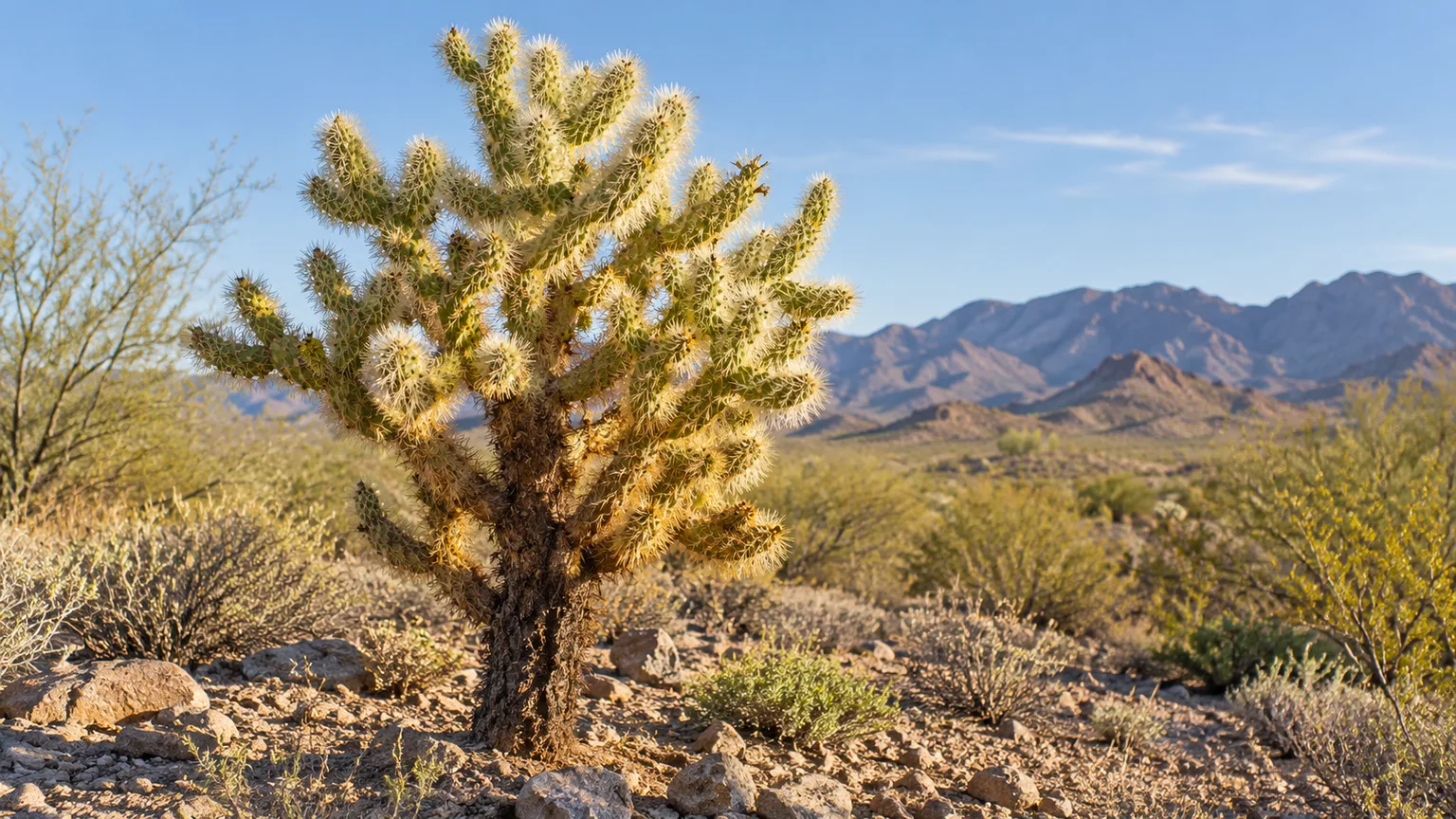
The teddy bear cactus is a poor match for anyone choosing a plant by its name. This is Cylindropuntia bigelovii, a desert cholla whose dense, silvery spines hide easily detached stem joints. It can make a striking specimen in the right dry, sunny landscape, but the same traits that make it visually unusual also make it a plant to site and handle with care.
The most useful starting question is not “How often should I water it?” It is “Can I give this cactus bright, dry conditions and keep people and animals from brushing against it?” If the answer is no, choose a less hazardous cactus. If the answer is yes, the routine is straightforward: strong sun, a mineral-heavy mix that drains promptly, cautious watering during active growth, and as little handling as possible.
Identify teddy bear cactus before you buy or move it
Teddy bear cactus and teddy bear cholla are common names for Cylindropuntia bigelovii, a member of the cactus family, Cactaceae. Its upright form is built from cylindrical, jointed stems rather than flat pads. The densely packed, straw-colored spines can make the plant look soft from a distance, but they conceal a prickly, segmented structure; Virginia Tech’s Dendrology fact sheet describes stems up to about 10 inches long and a generally upright plant that can reach around six feet.
The name “jumping cholla” is misleading if taken literally. The cactus does not launch pieces through the air; joints detach readily when brushed, stepped on, or otherwise disturbed, and the barbed spines can catch in clothing or skin. San Diego State University’s plant reference and the National Park Service’s Joshua Tree cactus guide note that joints fall off readily and can hitch a ride on an animal or person, a dispersal method that also makes this one of the more hazardous cacti to approach.
Before buying, check the plant label for the botanical name. A young cholla sold under a broad “cholla cactus” label may be another species with a different shape, mature size, or cold tolerance. For this guide, advice about the signature detachable joints applies to Cylindropuntia bigelovii; do not assume every cactus sold as a teddy bear cactus is correctly identified.
Is teddy bear cactus a practical houseplant?
It can be kept in a container, but that does not make it an easy indoor plant. Teddy bear cholla is adapted to bright, arid desert conditions, and a typical room often has lower light, more humidity, and more foot traffic than the plant’s needs and hazards allow. A sunny window may be the brightest spot available in a home, yet still provide less usable light than an exposed outdoor site.
Use this simple suitability test before you bring one home: can you provide several hours of direct sun, keep the pot stable, and place it where no one will lean over or brush the stems? Can you move it outside for maintenance without carrying it through a crowded room? If any answer is no, do not treat a small nursery plant as a safe desk or shelf cactus. Its growth may be slow indoors, but a slow-growing spiny plant is still a hazard if it sits beside a chair, doorway, child’s play area, or pet route.
For a container specimen, an outdoor patio or a locked greenhouse can be a better compromise than a living-room windowsill, provided the climate is warm enough and the site stays dry. In a cool or rainy region, overwintering may require a bright, protected space; a grow light can supplement a bright window, but it does not solve the access problem. Gardeners’ Path describes container-grown chollas being moved indoors in a cool climate and emphasizes the need for a very sunny window and supplemental light. That is a specialized setup, not proof that every home is suitable.
Light: give cholla strong sun without scorching it
Choose the brightest available position. In a suitable outdoor garden, teddy bear cholla does best in open sun, where air moves freely and rainwater does not linger around its base. In a container, use a south- or west-facing exposure in the Northern Hemisphere, or the sunniest equivalent in your location; if the stems stretch toward a window or lean, the plant is signaling that its light is inadequate.
Do not move a nursery-grown cactus straight into intense all-day sun. A plant raised under shade cloth or in a greenhouse can scorch even though the species is a sun lover. Start it in bright shade or with morning sun, then increase direct exposure over roughly one to two weeks, watching the sun-facing side for bleached patches or dry, tan scarring. If damage appears, step back to a slightly gentler position and acclimate more slowly; old scorch marks will not turn green again.
A grow light can help a container plant through a dim winter, but use it to maintain compact growth rather than to justify keeping the plant in a poor location year-round. Keep the lamp securely mounted and away from the stems, and follow the fixture’s distance and duration guidance. A plant that keeps producing narrow, pale, or weak new joints needs more light, not a stronger fertilizer dose.
Soil and pot: build drainage and prevent tipping
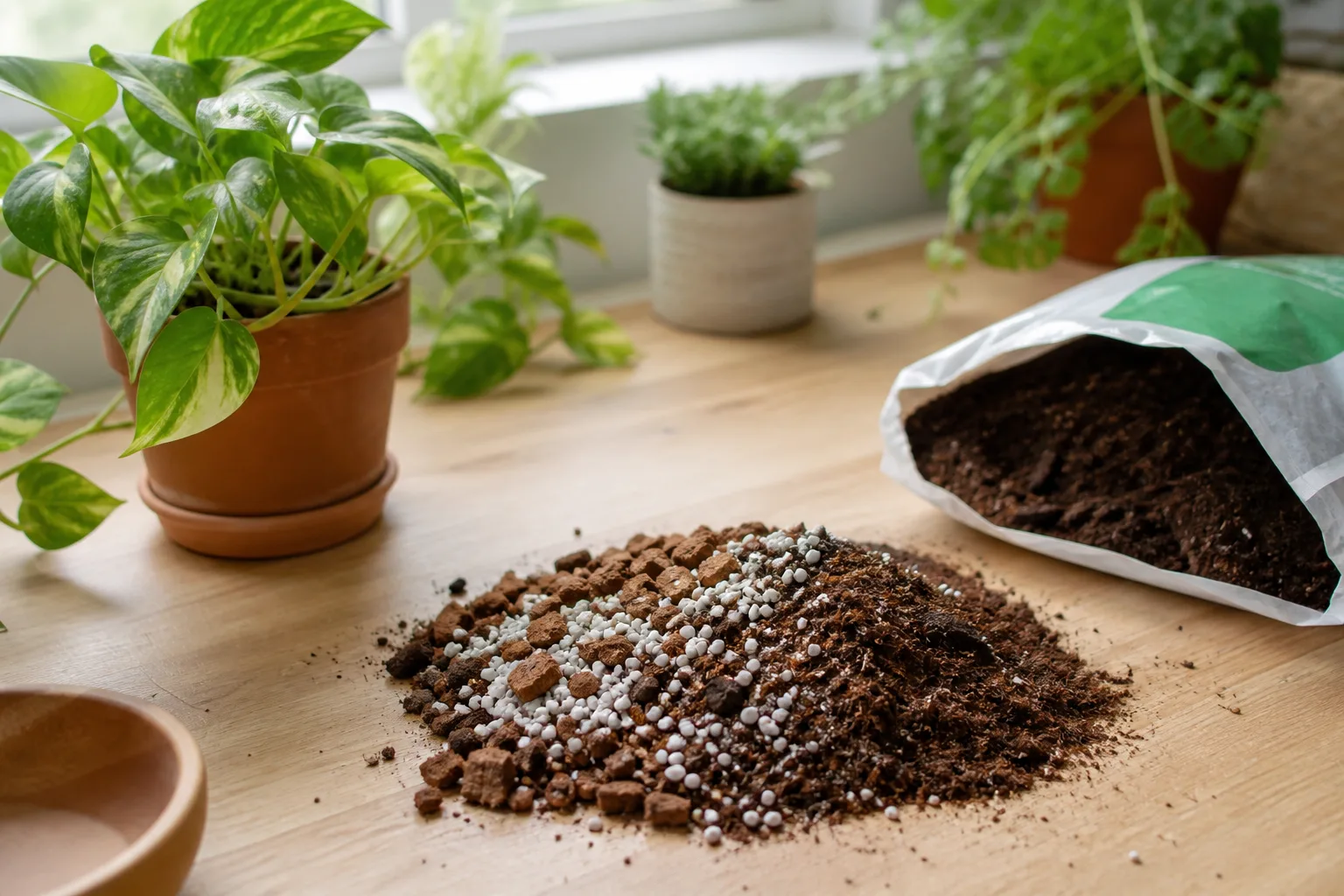
The goal is a root zone that becomes wet during a deliberate watering and then dries quickly. Use a cactus mix amended with substantial coarse mineral material, such as pumice, lava rock, or coarse perlite. A practical starting blend is roughly one part commercial cactus mix to one or two parts mineral grit by volume; adjust toward more mineral material if the original mix stays damp for days. Fine sand and ordinary potting soil can compact or hold too much moisture, so they are not substitutes for coarse grit.
Use a pot with an open drainage hole. A wide, heavy container is often safer than a tall, lightweight one because a branching cholla can become top-heavy; size it only modestly larger than the root ball so unused wet soil does not sit around the roots. Unglazed terracotta can help a mix dry faster, while a heavier ceramic pot can offer stability, but either material fails if drainage is blocked. Never let the pot stand in a saucer of water.
For an in-ground planting, start with the drainage rather than the fertilizer. Choose a naturally gravelly or sandy site, a raised mound, or a slope that sheds water; avoid a low spot where irrigation or storms leave the soil saturated. If your soil is heavy clay or stays wet through the cool season, container culture in a sheltered, sunny location is safer than trying to “fix” the planting hole with a little gravel at the bottom. Drainage has to work through the whole root zone.
Water: let the root zone, not the calendar, decide
There is no dependable weekly schedule for teddy bear cactus. A small pot in warm sun can dry much faster than a large pot in a cool room, while a dense mix can remain wet long after its surface looks dry. In a container, water thoroughly only after the mix has dried through the root zone; then let excess drain freely. A wooden skewer pushed near the center of the pot or the pot’s weight can help you judge moisture below the surface.
During warm, bright growth, a potted plant may need occasional water, but the interval could vary widely with temperature, pot size, mix, and airflow. In winter or during a prolonged cool spell, reduce watering sharply and do not water simply because a date on the calendar has arrived. If you cannot tell whether the center is damp, wait and check again rather than adding a small splash every few days; repeated light watering can keep roots damp without wetting the full root ball evenly.
An established outdoor plant in an arid climate may need little or no supplemental irrigation once established. Natural rainfall can be enough, and extra watering is most risky when the soil drains slowly or the weather is cool. A newly planted specimen or a container on a rain-shadowed patio may need a more deliberate first-season routine, but water only when the root zone is dry and the plant is actively growing. Treat shriveling as a cue to inspect both the stems and soil, not as automatic permission to soak a cactus whose roots may already be failing.
Temperature, rain, and humidity: fit the plant to your climate
This species belongs to dry desert environments in the southwestern United States and northwestern Mexico, including parts of the Mojave and Sonoran deserts, as described in Garden Design’s teddy-bear cholla profile. In a garden, warmth and sun are only half of the fit; the combination of winter cold, rainfall, drainage, and humidity matters just as much. A hardiness-zone number cannot tell you whether an exposed planting will sit wet through winter or whether a container can be protected from repeated rain.
If your climate has frequent summer storms or humid nights, use a covered, airy position or a movable pot, and avoid an irrigation routine copied from a hot desert garden. Keep water from pooling around the stem base, and do not use an indoor humidity tray or misting. A dry room is generally easier to manage than a humid one, but indoor air alone cannot compensate for weak light.
In a region with frost, do not assume the plant will tolerate every cold snap because some chollas grow in cooler zones. Genus-level hardiness information does not guarantee that C. bigelovii will handle a wet freeze in a container. Protect a potted plant before damaging cold, keep it bright while sheltered, and let the mix stay much drier in cool weather. If you are choosing a landscape plant for a climate with regular freezing rain, a locally adapted, less hazardous cactus is a more reliable choice.
Fertilizer: feed lightly, if at all
An in-ground plant in suitable native or mineral soil often needs no routine fertilizer. In a container, depleted mix may benefit from a modest feed during active growth, but fertilizer cannot correct weak light, a waterlogged root zone, or a pot that is too small to support the plant. Choose a cactus fertilizer or a balanced product diluted to a conservative fraction of the label rate, and apply it to already-moist soil rather than dry roots.
One light spring feeding is a reasonable starting point for a container-grown cholla that is making healthy new growth. Skip feeding in winter, during dormancy, immediately after root disturbance, or when the plant is stressed. Avoid repeated high-nitrogen applications: lush, soft growth is not the goal for a slow-growing desert cactus, and it can make the plant more awkward to manage without fixing its environment.
Safe placement: make distance part of the design
Give the plant a buffer from walkways, gates, patios, windows, children’s play spaces, and places where pets investigate. Do not rely on a small decorative fence or the assumption that people will remember the spines; design the route so brushing the plant is unlikely even when someone carries a pot, bends to weed, or approaches in low light. Outdoors, place it where windblown or naturally detached joints cannot roll into a path.
Treat every joint as armed. Wear thick clothing, eye protection, and sturdy footwear before working nearby, and use long-handled tongs or tools that keep your hands and forearms well away from the stems. Gardeners’ Path cautions that cholla spines can penetrate even leather gloves, so gloves are not permission to grasp a joint. Keep children and animals away during maintenance, and do not handle loose pieces with bare hands.
If a spine or joint becomes embedded, avoid rubbing or pressing it further into skin. The barbs can make removal difficult; for a deep puncture, eye or facial involvement, severe pain, or a piece that will not come free safely, seek medical care rather than improvising with fingers. This is one more reason not to place the cactus where accidental contact is likely.
Repot only when the plant or container requires it
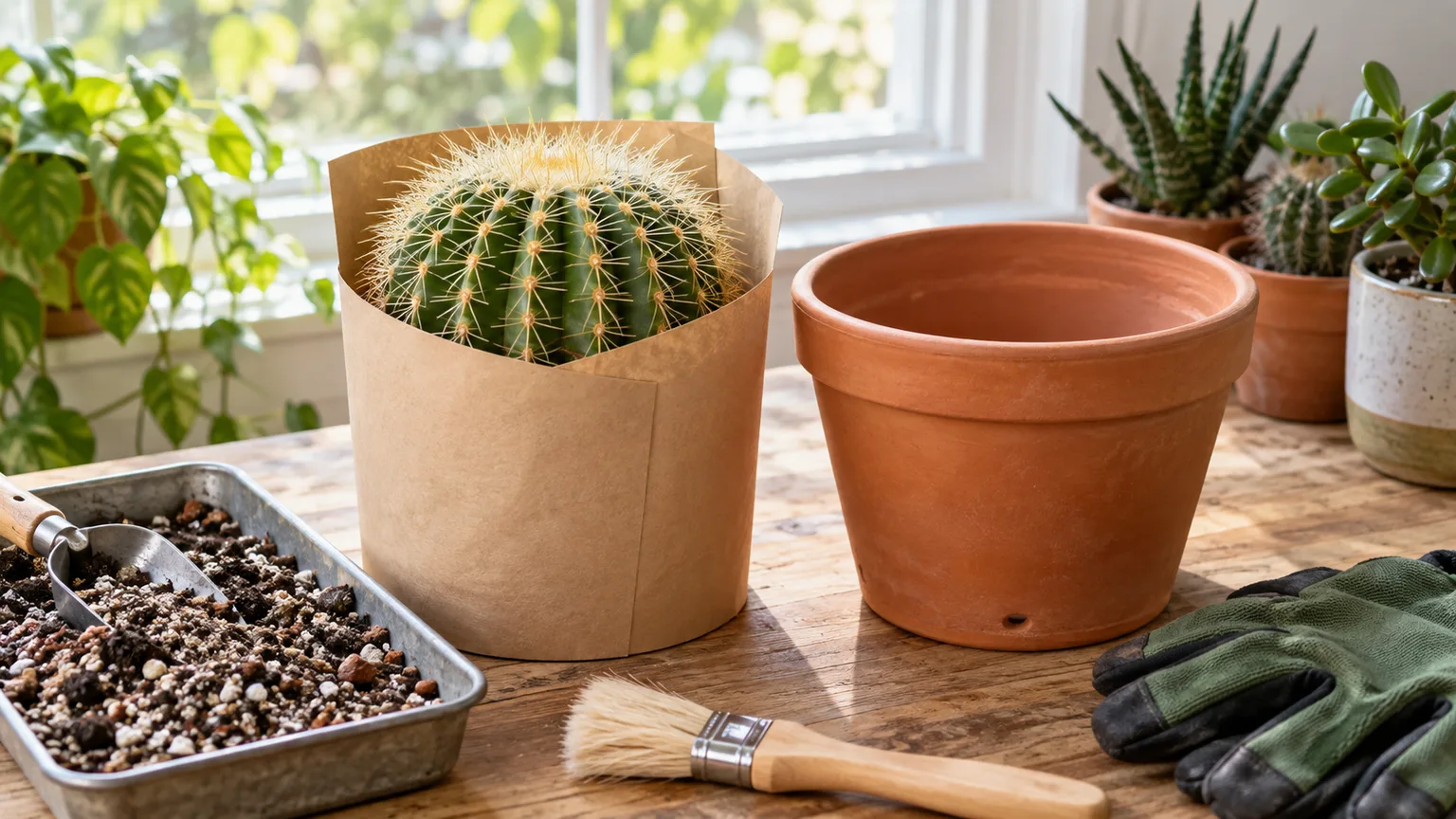
Repot when roots have filled the container, the pot is cracked or unstable, or the mix no longer drains properly—not on an automatic annual schedule. The fewer times you move a teddy bear cholla, the fewer opportunities there are for injury or broken stems. Prepare the new pot, dry mineral mix, tongs, a wide sheet of stiff cardboard, and a clear work area before moving the plant.
For a small specimen, place the cardboard between your hands and the cactus as a movable shield, and use tongs to guide the pot or root ball. For a large or top-heavy plant, ask another experienced adult to help; do not attempt a one-person lift that requires hugging or gripping the stems. If the plant cannot be moved without bringing it close to people, children, or pets, hire a qualified cactus professional or leave it in place and stabilize the container around it.
Set the root crown at the same depth it was growing before. Backfill with dry, fast-draining mix and avoid packing it so tightly that water cannot move through. After repotting, give damaged roots time to heal before resuming normal watering; a short dry recovery period is safer than soaking freshly disturbed roots. Keep the plant in bright shade briefly if its roots were heavily disturbed, then return it gradually to full sun.
Propagate from a detached joint with containment in mind
Teddy bear cholla often propagates through joints that fall and root, but that does not make handling them harmless. San Diego State University describes this ready detachment as vegetative propagation and animal dispersal; the same mechanism explains why loose joints must be kept out of footpaths. If your goal is simply to control spread, leave the mother plant undisturbed and remove only loose segments you can manage safely.
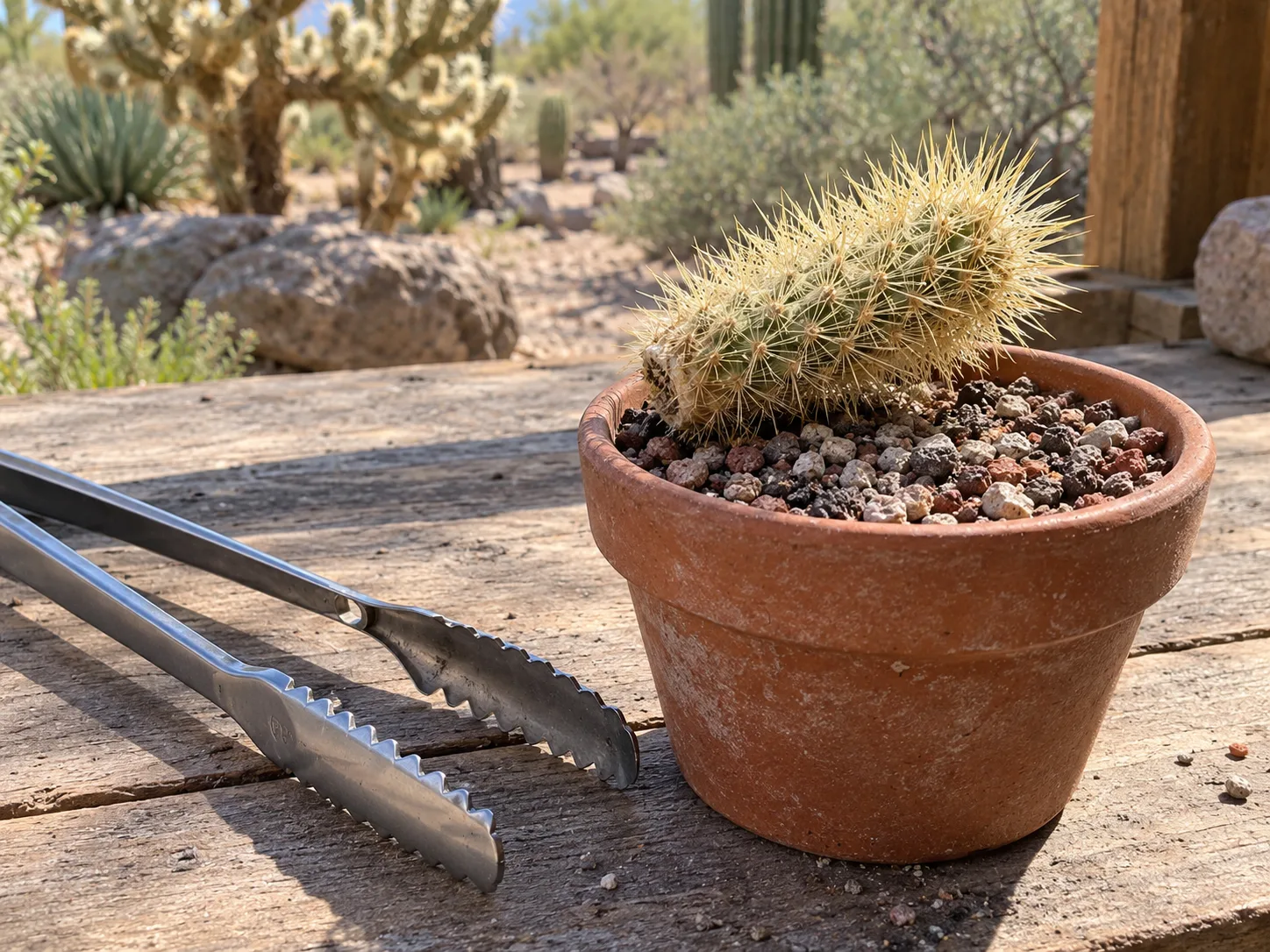
For intentional propagation, use a cultivated plant and take a segment only if you can work with long tools, protective clothing, a stable surface, and a secure place to set it. Do not collect material from public land or a wild population. With tongs, place a naturally detached or carefully cut joint in a bright, dry, ventilated spot until the wound is dry and callused. The callus reduces the chance that a fresh wound will rot when it contacts growing mix.
Set the callused base just deep enough to support the joint in a small pot of dry, gritty cactus mix. A stake or ring of coarse gravel can stabilize it without burying the stem. Keep the pot warm and bright but out of sudden harsh sun while roots form; do not keep the mix continuously wet. Epic Gardening’s cactus-cutting guide also recommends letting a cutting callus before planting and gradually increasing sunlight after roots establish. For a cholla, retain the extra safety distance throughout the process.
Wait for signs of rooting before treating the cutting like an established plant. A stable joint that resists a very gentle tug or begins fresh growth is more informative than a fixed number of days. Water lightly only after the mix has dried, and avoid moving the cutting repeatedly to check it. If the base turns soft, dark, or foul-smelling, rot is more likely than a need for more water.
Flowers and fruit: what to expect and what not to assume
A mature cholla can flower, but a young indoor plant may not bloom for years, especially if it receives weak light. Virginia Tech’s Dendrology fact sheet lists creamy-white flowers from February to May, while Gardeners’ Path’s species description gives yellow flowers in late spring. Because reliable references differ, expect small pale flowers in the warmer growing season rather than planning care around a precise color or date.
Do not increase water or fertilizer to force flowers. Strong light, a suitable outdoor season, and an appropriate dry rest are better foundations than extra feeding. Fruit may follow flowering, but this guide is not a harvesting guide: the plant’s dangerous spines make handling fruit a poor casual project, and food-use advice should come from a dedicated, authoritative source.
Pests and disease: check the base before treating the plant
In a dry, bright setting, chronic wet soil is usually the first problem to rule out. Look at the lower stems and soil surface from a safe distance for soft dark patches, persistent dampness, mold, or a plant leaning because its roots no longer anchor it. If the soil is wet and the stem base is soft, stop watering and isolate the pot from other plants while you decide whether any healthy segments can be saved safely.
Occasional scale or mealybugs can hide around joints, but do not reach into the spines to inspect or spray. Use a flashlight and magnification from a distance; if pests are present, choose a control method labeled for cacti and apply it only where you can do so without brushing the stems. Follow the product label exactly, and do not use home remedies that leave a moisture-retaining film or require hand-wiping the plant.
Troubleshooting common teddy bear cactus problems
Change one condition at a time, starting with the root zone and light. A cactus can shrivel from drought, but it can also lose water because damaged roots no longer absorb it; adding water to a plant already suffering from rot makes the diagnosis worse. Look for patterns across stem firmness, soil moisture, light exposure, and recent temperature before intervening.
Soft, dark, or collapsing stems
Softness near the base, a darkening wet patch, or a stem that collapses under its own weight points toward rot or severe tissue damage. Stop watering, move the pot out of rain, and do not tug on the plant to test it. If the base is compromised, a healthy detached joint may be propagated using the dry-callus method, but only if you can handle it safely; otherwise contact a cactus grower or discard the plant without direct contact.
Pale, stretched, or weak growth
New joints that are unusually narrow, pale, or angled toward a window usually indicate inadequate light. Move the plant to a brighter exposure gradually; a sudden jump from a dim room into full afternoon sun can scorch it. Existing stretched growth will not become compact again, so judge the correction by the shape and color of the next growth rather than by old stems.
Detached joints and sudden segment loss
One or a few fallen joints can be part of this cactus’s normal spread, especially after a brush or storm. If many joints fall over a short period, check whether the plant is being bumped, whether the soil has stayed wet, or whether the roots are unstable. Move people and pets away first; then decide whether to remove the loose pieces, leave them in place, or propagate one in a contained pot.
Conclusion
Teddy bear cactus care is mostly about choosing the right environment and then leaving the plant alone. Give Cylindropuntia bigelovii strong sun, a stable container or well-drained desert site, and water only when the root zone has dried; protect it from cool, wet conditions and do not fertilize as a substitute for proper light or drainage.
The harder decision is whether this is the right cactus for your space. Its detachable, barbed joints make it unsuitable beside paths, in busy rooms, or anywhere children and animals can reach it. If you can provide distance, dryness, and careful maintenance, it can be a compelling desert specimen; if not, choose a less hazardous cactus and enjoy the teddy bear cholla from a safe distance in its native landscape.