How to Grow Lemon Balm Indoors: Complete Care Guide
Grow lemon balm indoors from seed or cuttings with clear guidance on light, pot size, watering, pruning, harvest, and fixes for leggy or yellow growth.
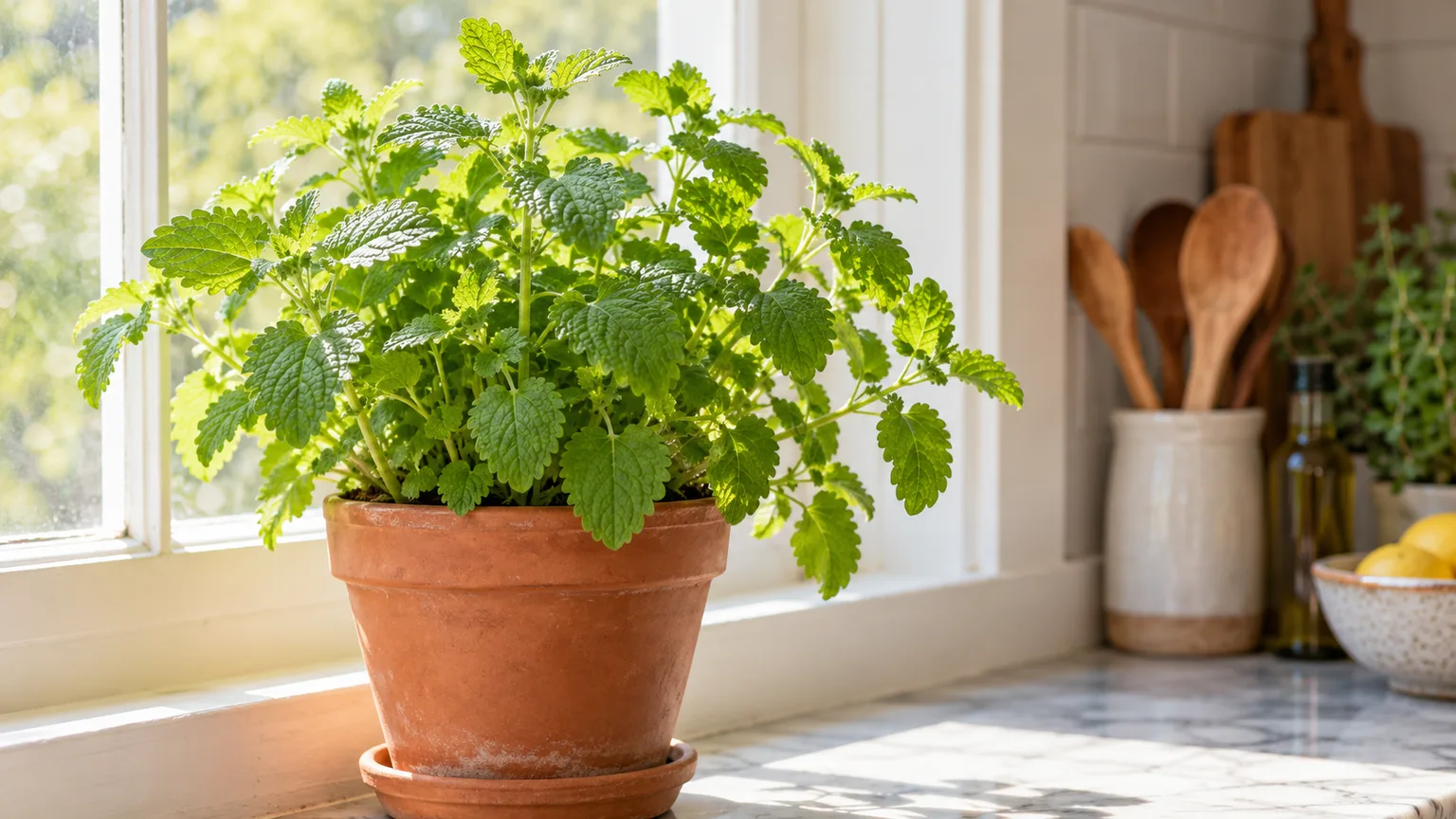
Lemon balm can live and produce leaves indoors, but it needs more usable light than many people expect from an “easy” herb. Give it a bright position, a pot that drains, and a watering routine based on the mix rather than the calendar, and it can provide fresh leaves for tea, salads, sauces, and desserts.
The plant is Melissa officinalis, a leafy perennial in the mint family. Its opposite, wrinkled, scalloped leaves release a citrus scent when rubbed; it is not lemon verbena or lemongrass. Outdoors lemon balm can spread by seed and form a wide clump, so a container is useful even if you later move it to a patio. A windowsill plant usually stays more manageable, though its roots still need room and periodic attention.
What indoor lemon balm needs before you begin
Before buying seeds or a plant, look at the spot where you plan to keep it. Lemon balm is a poor match for a dim room with no supplemental light: it may remain alive for a while, but stems stretch toward the window, leaf spacing widens, and harvests become sparse. If you can offer a bright window or a grow light, it is a realistic indoor herb; if not, a different low-light houseplant will be less frustrating.
A simple setup is one plant in a draining container, a loose potting mix, and a place with several hours of strong daylight. Lemon balm tolerates a range of outdoor soils and sun exposures, but indoor containers restrict its roots and light, so a reliable drain path and closer observation matter more than a precise soil pH number. The Missouri Botanical Garden describes the species as adaptable but cautions against wet soil; its outdoor cultural notes are useful context, while a home window still needs its own light and moisture checks.
For the quickest start, buy a healthy small plant or root a cutting from a known, healthy parent. Seeds are inexpensive and satisfying, but they take longer to become a harvestable plant. One pot is usually enough for a household kitchen: lemon balm grows vigorously, and a crowded cluster can be harder to keep well-lit and ventilated than a single plant you prune regularly.
Choose a seed, cutting, or nursery plant
The three practical routes are seed, softwood cutting, or nursery start. Choose seed if you want to grow from the beginning or select a named variety; choose a cutting when you have access to a healthy plant and want a quicker, genetically identical start; choose a nursery plant when you want leaves soon and can inspect it for pests before bringing it home.
Do not start several large pots just because a packet contains many seeds. The Royal Horticultural Society notes that one or two plants are usually sufficient for most uses, and lemon balm can self-seed readily when grown outdoors. A single well-kept indoor pot is easier to rotate, harvest, and inspect than a crowded group.
Sow lemon balm seed close to the surface
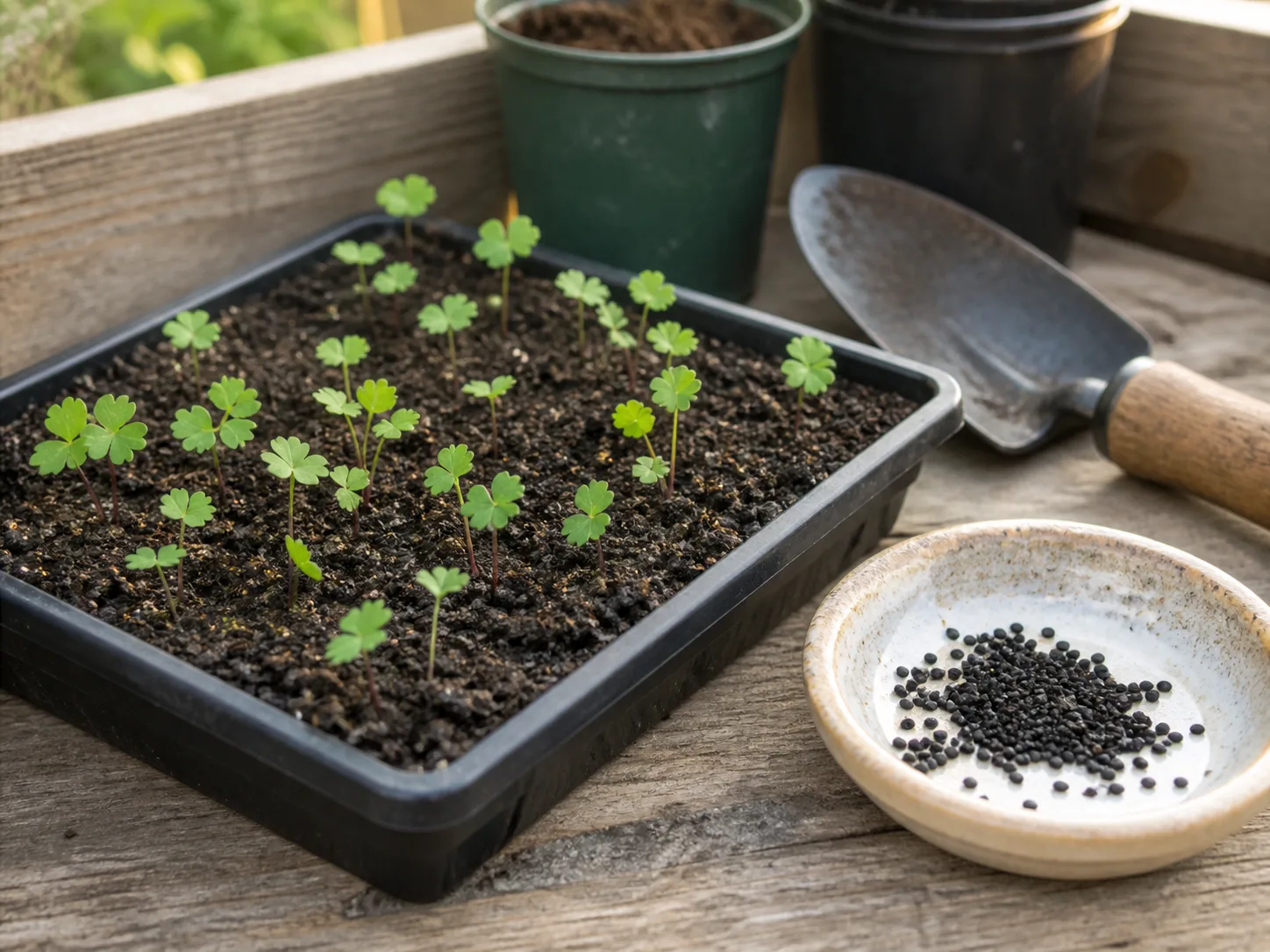
Use a small seed tray or pot with drainage and fresh seed-starting mix. Scatter only a few seeds across the surface, press them gently into contact with the mix, then cover them with just a thin dusting; some light aids germination, so burying them deeply can delay or prevent emergence. The RHS guide to growing lemon balm says indoor seed can take up to three weeks to appear, so do not discard a tray after ten days if it is still evenly moist and warm.
Moisten the mix before sowing so the seeds do not wash into a corner. Cover the tray loosely with a clear lid or plastic to reduce drying, then place it in a warm, bright position; open or remove the cover as soon as seedlings emerge so still, humid air does not linger around the stems. Keep the surface slightly moist, not saturated, and use a fine mister or bottom watering while the seedlings are tiny.
Once seedlings have a few true leaves and are large enough to handle, move the strongest one into its own small pot or final container. Hold the seedling by a leaf rather than pinching its delicate stem, and keep it at the same depth it was growing before. If several seedlings emerge in one spot, snip the weaker ones at soil level instead of pulling them and disturbing the roots of the seedling you are keeping.
Start with a cutting or established plant
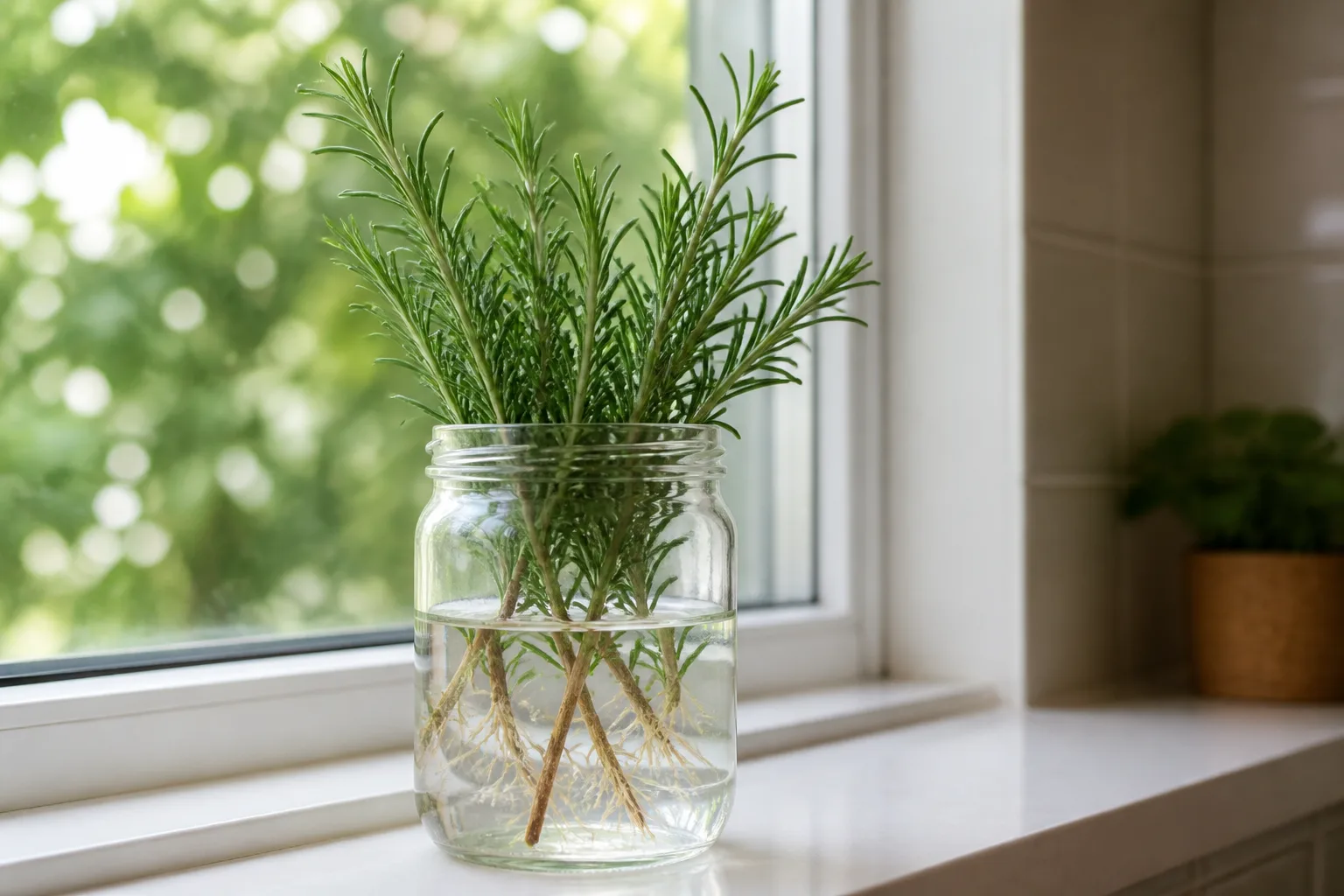
A healthy stem cutting is the fastest way to make a second lemon balm plant without buying more seed. In spring or early summer, choose a non-flowering tip about four to six inches long, cut just below a leaf node with clean scissors, and remove leaves from the lower portion that would sit in water or mix. The RHS propagation guidance for lemon balm says fresh stems root readily in water; Homes & Gardens’ indoor growing guide also describes rooting softwood cuttings before potting them.
Set the cutting in a clean glass with the lower nodes submerged and the remaining leaves above the water. Keep it in bright, indirect light, refresh the water when it turns cloudy, and pot it once it has a small network of roots rather than leaving it in water indefinitely. Water-rooted stems are delicate at first, so keep the new potting mix lightly moist while the plant adjusts, then return to the normal check-before-watering routine.
If you bring a nursery plant indoors, inspect the undersides of leaves and the stem joints before placing it beside other houseplants. Remove any yellow or damaged leaves, let excess water drain from the grow pot, and repot only if the roots are packed tightly or the original container lacks drainage. A plant that already has branching stems is usually a better immediate harvest than a tiny seedling.
Set up a pot that drains completely
Choose a pot with unobstructed drainage holes, roughly eight to ten inches wide for one established plant. That range is a practical indoor starting point, not a fixed botanical rule; a small rooted cutting can begin in a smaller pot and move up as its roots fill the mix. The RHS recommends containers at least 25 centimeters wide and deep for lemon balm outdoors, which reinforces that the plant appreciates usable root volume once it is established.
A terracotta pot dries faster than plastic, while glazed ceramic and plastic hold moisture longer. There is no universally best material: choose terracotta if your home tends to stay cool or you often overwater, and use a less porous pot if the mix dries unusually fast in a warm, bright window. In either case, never let the pot sit in water trapped in its saucer.
Use a quality potting mix labeled for herbs or vegetables, or an all-purpose indoor mix that feels loose rather than dense. If water pools on top or the mix stays wet for many days, blend in a modest amount of perlite or another coarse drainage component when you repot; do not try to fix heavy mix by putting stones in the bottom, because that does not create drainage through the soil profile. Avoid garden soil in an indoor pot, where it can compact and dry unevenly.
When roots circle the pot, emerge from several drainage holes, or the plant dries much faster than it used to, inspect the root ball before moving up a size. Shift it into a pot only a little wider and refresh the surrounding mix; a very large container can stay wet longer than the small root system can use. Spring, when active growth resumes, is a convenient time to repot or divide a plant that has become crowded.
Find the brightest safe spot
Aim for a bright window that provides several hours of direct or very strong indirect light. Indoor light varies with latitude, season, glass, window direction, and anything shading the outside; “bright room” is not a reliable measure. In the Northern Hemisphere, south- or east-facing windows are often good starting points, while a west window may work if afternoon heat does not scorch the leaves; in the Southern Hemisphere, reverse the directional assumption.
Recommendations for indoor lemon balm range from about five hours of direct sun or equivalent bright light in Gardener’s Path to six to eight hours of sunlight in Homes & Gardens. Treat those figures as a useful planning range, not a guarantee: six hours beside a shaded window is not equal to six hours of strong sun. A healthy plant should make compact new growth with reasonably short gaps between leaf pairs; long, leaning stems and small leaves indicate that the light reaching the foliage is inadequate.
Rotate the pot a quarter turn every few days if growth consistently leans toward the glass. If a plant has been in shade, move it closer in stages over several days instead of placing tender leaves into hot midday sun all at once. A sheer curtain can soften intense afternoon rays, but if the plant stays stretched, improve the light rather than adding fertilizer or pruning away the symptoms.
When the best window is still too dim, use a full-spectrum grow light positioned according to its manufacturer’s distance guidance and run it on a consistent timer. Keep the fixture close enough to deliver useful light without heating or bleaching the leaves; there is no single distance that works for every lamp. A grow light is especially helpful through short winter days or in apartments with deep-set windows.
Water by checking the root zone
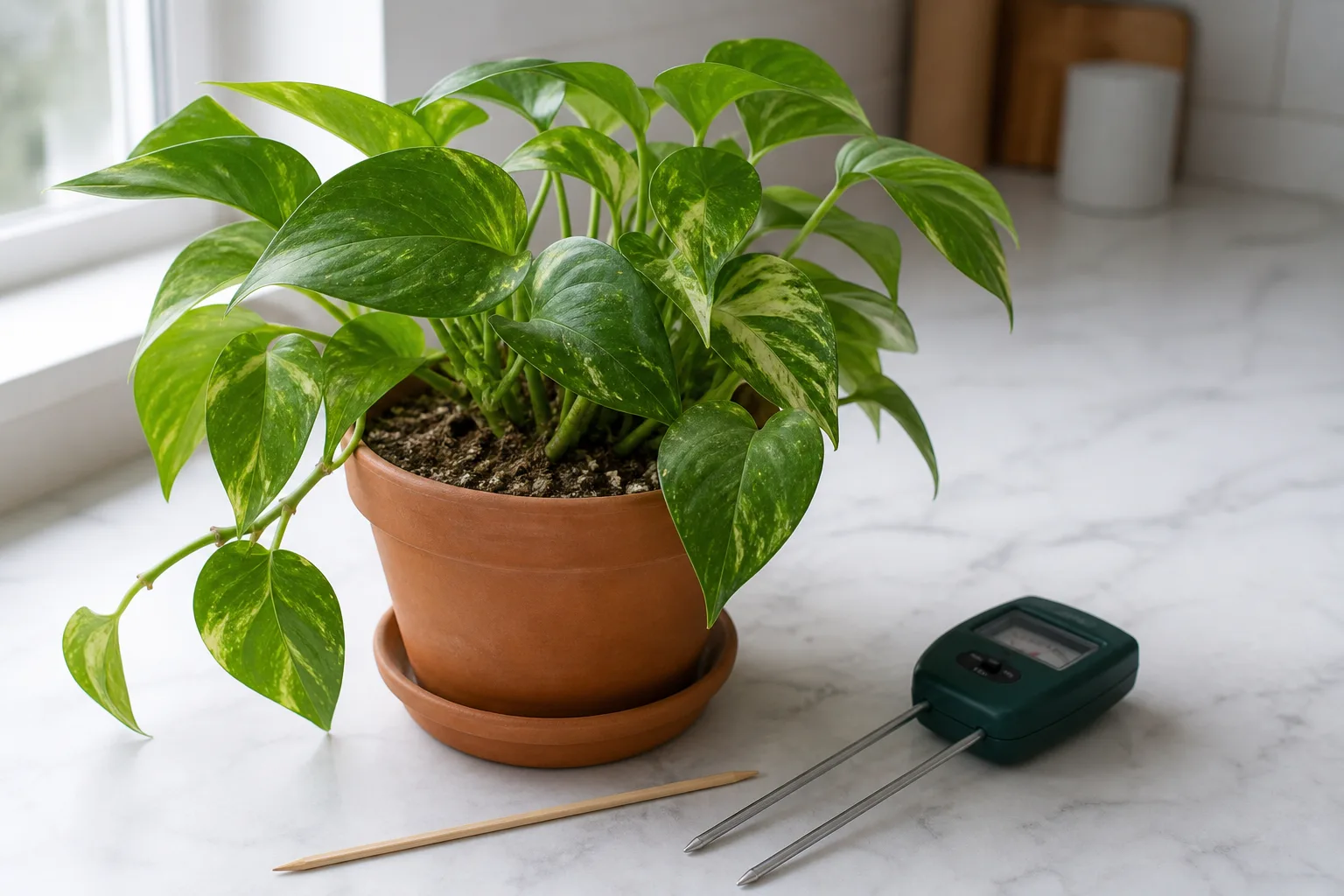
Water when the top inch of mix has dried, then water slowly until some drains from the bottom. Empty the saucer after the pot finishes draining; lemon balm likes some moisture in the mix but does not want its roots sitting in water. The top-inch check is a starting point supported by indoor-growing advice from Homes & Gardens, not a weekly schedule.
Check more often during bright, warm weather and less often in winter or after moving the plant farther from a window. Terracotta, small pots, and active growth speed drying; plastic, large pots, cool rooms, and low light slow it. After a few weeks, lifting the pot before and after watering helps you recognize its light, dry weight without relying on a moisture meter.
A drooping plant can be thirsty, but droop by itself does not tell you to add water. Feel the mix first: if it is dry through the upper inch and the pot feels light, water thoroughly; if it is damp or heavy, wait and check drainage instead. Repeated small sips wet only part of the root ball and can leave salts near the surface, so give a complete watering when the plant actually needs one.
Keep temperature and airflow steady
Lemon balm grows comfortably at ordinary indoor temperatures, but it does not appreciate repeated blasts of cold air or radiator heat. Gardener’s Path gives a practical range of about 65 to 70 degrees Fahrenheit during the day, with cooler nights; a steady room in that general range is preferable to a spot that swings sharply each day. Avoid placing the pot against cold winter glass or directly over a heating vent.
Normal household humidity is usually adequate. What matters more is airflow through the foliage and a potting mix that can drain: close-packed leaves, persistently wet soil, and stagnant air create conditions that encourage mildew. Leave a little space around the plant and water the soil rather than routinely wetting the leaves.
If the plant spends summer outdoors, do not carry it directly from a dim room into full afternoon sun. Set it in sheltered shade first, then increase the light gradually over a week or two, watching for pale patches, crisp edges, and wilting. Reverse the transition before cold weather, and check the leaves for hitchhiking insects before bringing the pot inside.
Feed only while growth is active
Fresh potting mix may supply enough nutrients for the first stretch of growth. If leaves become uniformly pale and growth slows despite good light, healthy roots, and appropriate watering, a diluted balanced liquid fertilizer can help a container plant; follow the product label and use a conservative rate. Homes & Gardens suggests a balanced feed about monthly during the growing season, while Gardener’s Path recommends half-strength feeding every four to six weeks for indoor lemon balm.
Do not fertilize a plant just because it is small or struggling. Low light, waterlogged roots, a recent transplant, or a pot that is too large can all cause weak growth, and extra fertilizer will not correct those problems. Pause feeding when growth slows in winter, and avoid frequent heavy doses that produce soft growth faster than the plant can support.
Pinch stems to keep the plant compact
When a young plant has several established pairs of leaves, pinch or snip the growing tip just above a leaf pair. Two side shoots often develop at the node below, giving the plant a fuller shape and more harvest points. Use clean scissors, and make small cuts rather than removing a large portion of a young plant.
Frequent light harvesting can do the same job as pinching. Follow the stem down to a healthy pair of leaves and cut just above it, leaving enough foliage for the plant to keep photosynthesizing. Remove flower buds if your priority is tender leaves and compact growth; if you prefer to see the flowers, you can allow some to open and then cut the plant back after flowering.
Flowering is not a reason to throw the plant away. Lemon balm is a perennial, and the Missouri Botanical Garden’s plant profile notes that pruning spent flower stalks encourages fresh leaves and limits self-seeding outdoors. Indoors, cut back straggly or spent stems to a healthy node and give the plant strong light while it produces new growth.
Harvest leaves without exhausting the plant
Wait until the plant is established, has several branching stems, and can spare a small harvest without losing most of its leaf area. Take individual young leaves for a small recipe, or cut the upper few inches of a stem just above a leaf pair when you want a larger amount. Avoid stripping bare stems or removing more than about one quarter to one third of the foliage at a time, especially on a small plant.
The newest leaves usually have the best texture for fresh use. Harvest in the morning after any dew has dried if you want the leaves at their freshest, and use them promptly in tea, fruit, fish, salads, or sauces; the RHS harvest advice also recommends using young leaves as fresh as possible. Rinse only what you plan to use, and dry the leaves gently so they do not sit wet in the refrigerator.
Frequent harvest keeps the plant branching, but a young or recently stressed plant needs time to rebuild. If growth has slowed after a heavy cut, pause harvesting, confirm the light and root-zone moisture are appropriate, and let several new leaf pairs form before trimming again. Drying is possible for later tea, although dried lemon balm has milder flavor than fresh leaves; freezing small portions is another option when you want to preserve more of the fresh aroma.
Manage winter slowdown and outdoor moves
Lemon balm is a herbaceous perennial outdoors, and outdoor plants can die back in cold seasons before returning from the roots. A warm indoor plant may keep some leaves through winter, especially under a grow light, but shorter days often reduce its growth rate. Do not respond to every slow winter week with extra water or fertilizer; first check whether the mix is drying at the same pace as it did in summer.
A container left outside experiences colder roots than a plant in the ground, so its local climate and pot exposure matter. The Missouri Botanical Garden lists lemon balm as hardy in USDA Zones 3 through 7 in garden conditions, but that does not mean every small pot can safely remain outdoors in every location. If your goal is year-round indoor leaves, keep the plant in bright conditions and protect it from drafts; if you want natural dormancy, use a cool, sheltered place and reduce watering as growth declines.
Before moving it outdoors for summer, acclimate it gradually and choose a location with sun or light afternoon shade. A pot also contains the plant’s vigorous growth and helps prevent seedlings from appearing around other containers or beds. If you keep it outside for pollinators, cut back flowers before seeds mature when you do not want self-sown plants.
Troubleshoot common indoor problems
Change one condition at a time and watch the next few leaves. If you move the plant, repot it, fertilize it, and cut it back all at once, you will not know which change helped or made the problem worse. First check the light, then feel the mix, then inspect the leaves and stems closely.
Leggy stems and small leaves
Long stems with wide gaps between leaf pairs usually point to insufficient usable light. Move the pot toward a brighter window gradually or add a grow light, then wait for new growth to show whether the change is helping; old stretched stems will not shrink. Once the new shoots are growing compactly, pinch the tips to encourage branching instead of cutting the whole plant back immediately.
If the plant is already crowded, thin a few weak stems at the base so the remaining foliage gets better airflow. Fertilizer is not the first fix for legginess, because it can make a low-light plant produce more soft, elongated growth. Also rotate the pot so one side does not remain shaded behind the other.
Yellowing or drooping foliage
One old lower leaf turning yellow is not necessarily an emergency. Several yellow leaves, especially when the mix stays wet and the pot feels heavy, suggest that the roots may be short of air; stop watering, remove any standing water, and make sure the drainage holes are open. If the mix smells sour or the roots are brown and soft, trim only clearly rotten roots and repot into fresh, loose mix.
Crisp edges and a very light pot point in the opposite direction: the root ball may have dried too far or the plant may be receiving harsh sun through glass. Water a dry root ball thoroughly and allow it to drain, then soften the exposure if leaves continue to scorch. If the soil is moist, do not use drooping leaves as a reason to water again.
Powdery mildew and indoor pests
Powdery mildew looks like a dusty white coating on leaves and stems, not a mineral crust on the pot. Remove badly affected leaves, isolate the plant if possible, space it away from neighboring foliage, and avoid keeping the leaves wet; RHS and Missouri Botanical Garden both list mildew among possible lemon balm problems. If new growth remains clean after conditions improve, keep monitoring rather than reaching immediately for a spray.
Inspect leaf undersides and tender stem joints for aphids, mites, or other small insects, especially after bringing a plant indoors. A gentle rinse over the sink can dislodge many pests, after which you can isolate and recheck the plant over the next several days. Because the leaves are grown for food, never improvise a pesticide treatment: use a product only if its label permits use on edible herbs and follow all label directions and harvest intervals.
Conclusion
Indoor lemon balm succeeds when you match its care to what the room and pot are doing. Start with seed, a clean cutting, or a healthy nursery plant; give it a bright window or supplemental light, loose mix in a drained container, and water only after the surface begins to dry.
Then let the plant show you what it needs. Compact new growth means the light is working, a pot that becomes lighter means the mix is drying, and regular small pinches can produce a fuller plant without exhausting it. With those checks and a little restraint in winter, lemon balm can stay a useful culinary perennial rather than a short-lived windowsill experiment.