Papaya: Indoor Plant Care & Growing Guide
Learn how to start papaya from seed, water without causing root rot, move it outdoors safely, and understand why indoor fruit is uncertain.
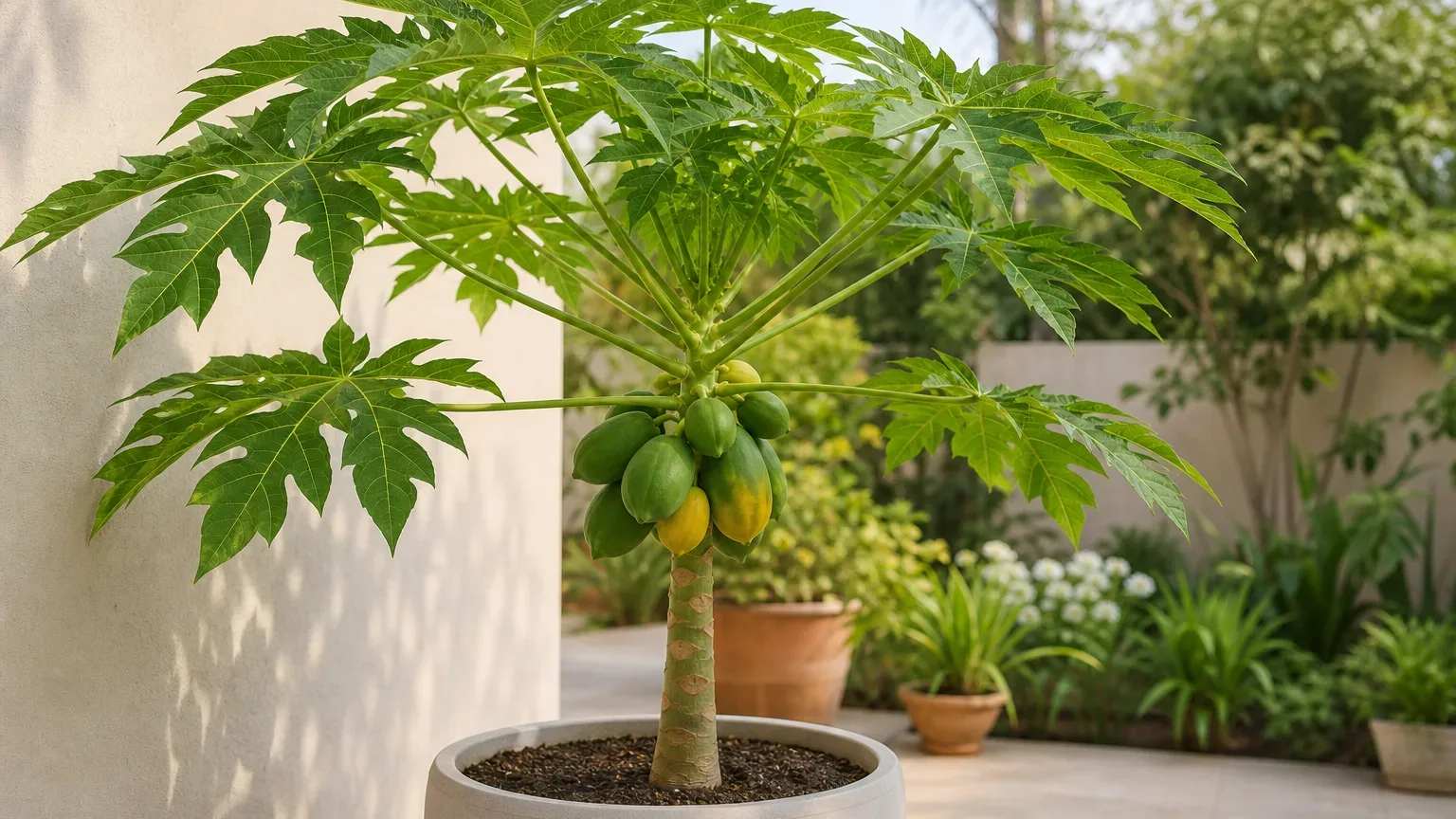
Papaya can grow indoors, but it is a high-light tropical project—not a compact, carefree houseplant. A seedling may make an impressive foliage plant beside a bright window; a plant that flowers and ripens fruit needs more light, warmth, height, and pollination than most ordinary rooms can provide.
The useful first decision is whether you want a leafy tropical novelty or a realistic fruit crop. That choice changes how many seeds to start, how large a pot to buy, whether you need a grow light, and whether an outdoor summer location is part of your plan.
Is Papaya Realistic as a Houseplant?
Yes, a papaya can grow in a container indoors when it receives warmth, strong light, water, and fast drainage. But Carica papaya is a large, fast-growing herb with a single trunk-like stem and a crown of broad leaves, not a woody tree that naturally stays small. The UF/IFAS papaya guide describes plants that can reach 33 feet in the landscape; a ceiling and pot restrict growth, but they do not change the plant’s basic architecture.
A bright sunroom, greenhouse, or sunny patio that can be used in warm weather is a better fit than a dim living room. Indoors, low light often limits growth long before the plant reaches the ceiling. Even where the foliage remains green, a papaya that cannot produce enough energy may become stretched, drop older leaves, or never flower.
Choose Foliage or Fruit Before You Start
For a foliage plant, a grocery-store seed is an inexpensive experiment. You can grow one seedling in a manageable pot and enjoy its oversized leaves without expecting fruit. The tradeoff is that it may eventually outgrow the room, so think of it as a seasonal or long-term project with a possible end point rather than a naturally miniature plant.
For fruit, look for a named container-suitable cultivar from a reputable nursery and ask whether the plant is bisexual or needs another papaya for pollination. Seed-grown papayas do not reveal their flower type until maturity, and the eventual plant can be male, female, or bisexual. For general plant identity and outdoor care, see our papaya growing guide; this page focuses on the extra constraints of keeping one in a pot indoors.
Start With a Seed or Nursery Plant
Starting from seed is straightforward, but it is not the fastest way to get a known fruiting plant. A nursery seedling gives you a head start and lets you inspect the crown, stem, and roots; a seed gives you an inexpensive ornamental project and an unknown flower type. Avoid buying a tall seedling packed into a very small pot, since a root-bound papaya can struggle to establish after planting.
Look for a firm, upright stem, a living growing point at the crown, and leaves without widespread distortion or spotting. Avoid a soft or dark stem base, a sour-smelling pot, and a plant whose root ball is tightly circling the container. Since papaya can grow quickly, confirm the cultivar and likely mature size before choosing a permanent location.
Prepare and Sow Papaya Seeds
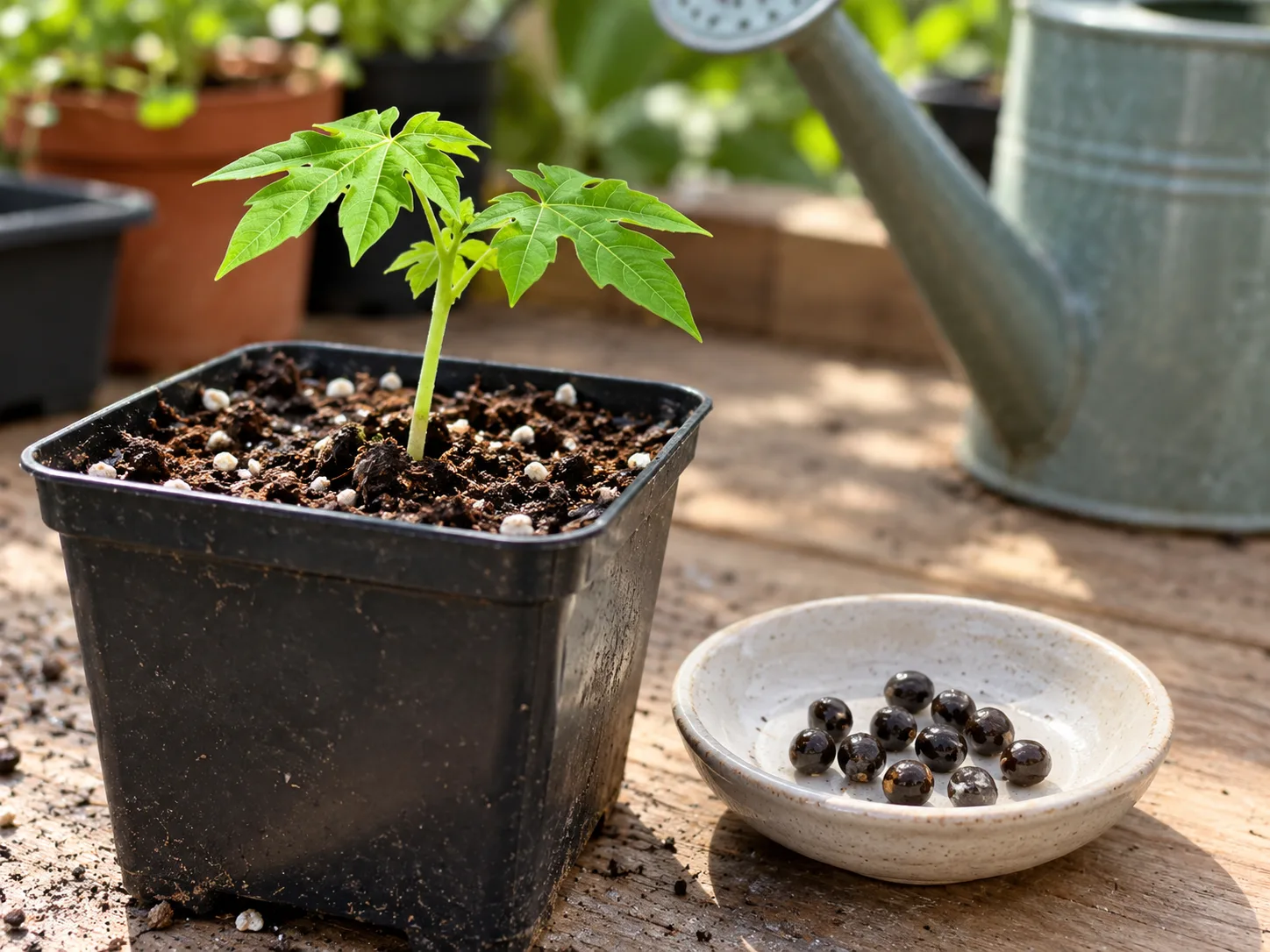
Seeds from a ripe grocery papaya can germinate, though the fruit’s cultivar and the resulting plant’s sex may be unknown. Scoop out several seeds, press and rinse them in a small strainer to remove the slippery gelatinous coating called the sarcotesta, then let them dry out of direct sun. UF/IFAS and University of Hawaiʻi CTAHR both describe removing this coating; CTAHR reports fresh seeds often germinate in about 10 to 14 days, while conditions and seed freshness can shift the timing.
Sow a few clean seeds about a quarter to half an inch deep in separate small pots of clean, airy seed-starting mix. Keep the mix warm and evenly moist, not waterlogged, and place the pots in a bright location once seedlings emerge. Growing seedlings separately makes it easier to keep the strongest one without tugging roots from a crowded shared pot; snip extras at the soil line rather than pulling them out.
Give Papaya the Strongest Light Available
Papaya grows and fruits best in full sun outdoors. Gardening Know How’s indoor papaya guide recommends six to eight hours of direct sunlight, but a window can deliver less usable light than the same number of hours outside, especially when trees, screens, roofs, or short winter days block the sun. Put the plant as close as practical to the brightest unobstructed window and rotate the pot occasionally so the crown does not lean strongly in one direction.
Watch the new growth rather than judging by room brightness. Long gaps between leaves, a thin leaning stem, and smaller new leaves suggest the plant is not receiving enough light; extra fertilizer will not fix that. If the brightest window still leaves weak growth, consider whether a tall papaya is the right plant for the space before buying a light or a larger pot.
South- and west-facing windows are often the strongest choices in the Northern Hemisphere, but an unobstructed east window can still provide useful morning sun. The actual exposure matters more than the compass label: a shaded south window may be dimmer than an open east-facing one. If you rely on a window, keep leaves near the glass without touching a cold pane and watch for a seasonal change in growth as day length shortens.
When a Grow Light Makes Sense
A full-spectrum LED grow light can supplement weak winter sun or support a plant kept far from the glass. Better Homes & Gardens’ grow-light guide describes full-spectrum LEDs as an efficient option for indoor growing, but fixture output and coverage vary widely. Follow the light maker’s height and daily-use directions, position the fixture over the crown, and adjust if leaves bleach, curl, or feel unusually warm.
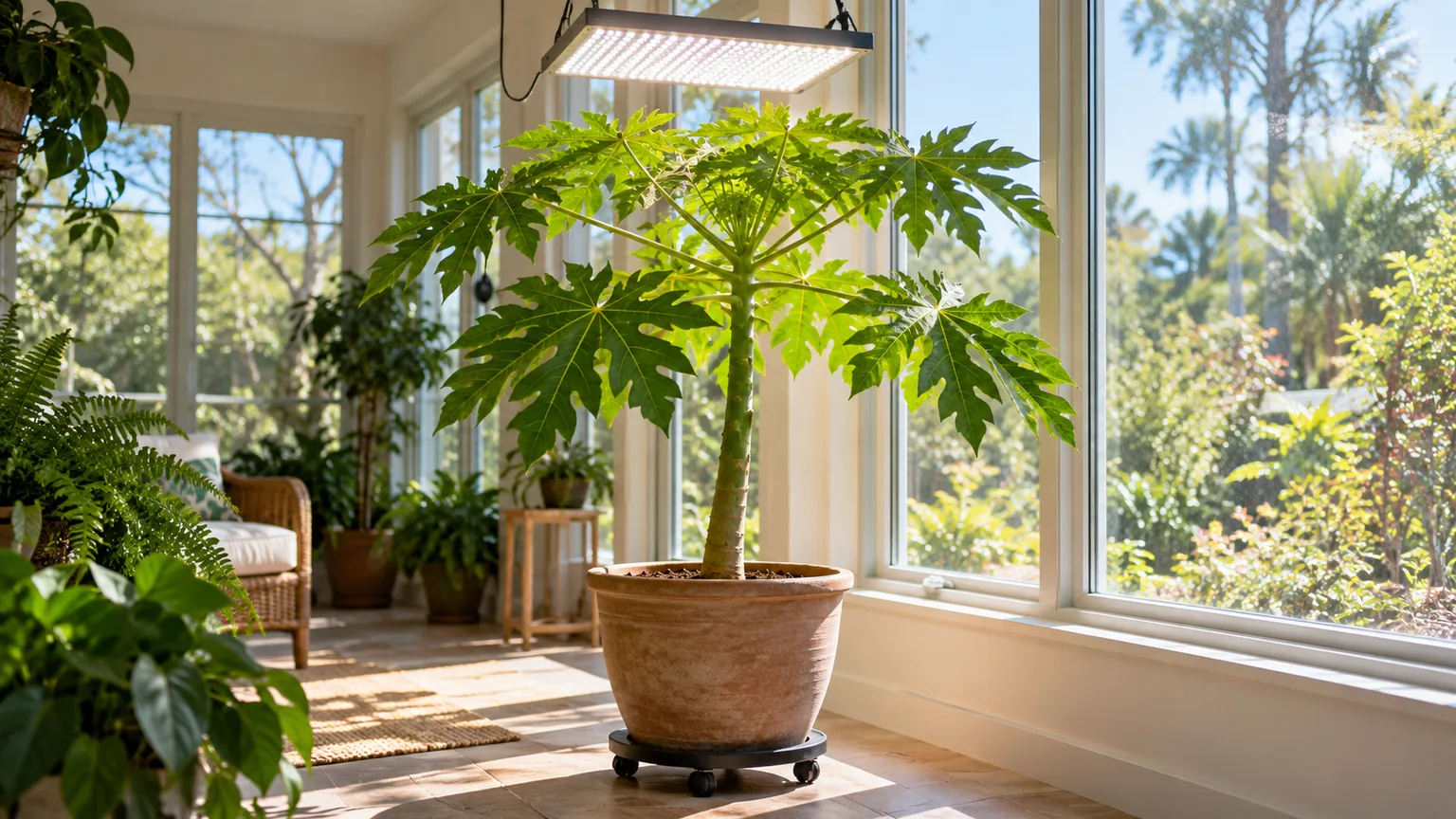
A small household bulb above the plant is not automatically an equivalent substitute. A broad, properly positioned fixture can light more of the papaya’s canopy, while a distant bulb may brighten the room without delivering useful light to leaves. Use a timer for a consistent routine and judge success by compact, healthy new growth rather than by a promise of fruit.
Keep Temperatures Tropical and Humidity Steady
Warmth matters as much as light. UF/IFAS reports best growth and fruiting in roughly 70–90°F (21–32°C); root growth slows below about 60°F (15.5°C), and freezing temperatures can damage or kill the plant. Keep the pot away from cold glass, exterior doors, and air-conditioning drafts, and do not use a brief warm afternoon as proof that a chilly room is suitable.
A stable warm room is usually more useful than trying to recreate tropical humidity with constant misting. If indoor air is very dry and new leaves develop crisp edges, check room humidity and consider a humidifier; misting changes humidity only briefly. Keep air moving around the foliage and avoid leaving the crown or potting mix persistently damp, which can create more problems than dry air.
Choose a Container That Drains and Can Be Moved
Use a pot with open drainage holes, a stable base, and enough depth for a growing root system. Gardening Know How suggests a 15- to 20-gallon container for mature potted papaya, but that is not a starting pot for a seedling and it can become very heavy when filled with wet mix. If you plan to move the plant seasonally, choose a sturdy wheeled caddy before the container becomes difficult to lift.
Better Homes & Gardens’ general container guide recommends moving up gradually rather than placing a small plant in an oversized pot; a very large volume of unused mix can stay wet around short roots. For pots up to 10 inches wide, its guide suggests a 1- to 2-inch increase in diameter; for larger pots, it suggests a 2- to 3-inch increase. Use those as houseplant rules of thumb, then let the actual root ball and papaya’s rapid growth determine the next step.
Plan the indoor route before choosing the heaviest pot you can find. A mature papaya may be top-heavy, and moving a large waterlogged container down stairs or through a narrow doorway is a real safety and plant-breakage risk. If a wheeled base will not fit through the doorway, a smaller ornamental specimen may be more practical than a large fruiting project.
Use an Airy Potting Mix
Choose a loose, fertile potting mix that holds some moisture but lets excess water drain quickly. A quality indoor potting base blended with coarse perlite, pumice, or fine bark can maintain both moisture and air spaces; avoid dense garden soil and heavy mixes that collapse into a wet mass. The UF/IFAS guide emphasizes well-drained soil because poor drainage promotes root disease.
Check the container itself as well as the mix. Water should leave the bottom freely rather than pooling in a sealed cachepot or saucer. If you like a decorative outer pot, use it as a cachepot and empty the collected water after irrigation; a layer of gravel inside a pot does not replace a drainage hole.
Water by Checking the Root Zone
Keep the root ball evenly moist during warm, active growth, but do not water on a rigid every-few-days schedule. Feel the upper inch or two of mix and lift the pot to learn how heavy it feels when moist; water thoroughly when the surface begins to dry and the container feels lighter. Let the excess drain fully, then empty the saucer or cachepot.
A sunny plant in a smaller pot may dry quickly, while a large pot in a cool, low-light room can remain wet much longer. If leaves droop while the mix is dry, water; if they droop while it is damp, inspect drainage and roots before adding more. Papaya is sensitive to prolonged waterlogging, so repeated small sips that keep the lower mix saturated are not safer than a thorough watering followed by a partial dry-down.
Feed During Active Growth, Then Scale Back
Papaya grows quickly and can use nutrients when it has enough warmth and light to make new leaves. Use a complete fertilizer labeled for container plants or edible plants and follow its rate; do not copy field fertilizer amounts from a landscape papaya schedule into a houseplant pot. UF/IFAS recommends frequent, smaller applications for fruiting papaya in the landscape, while indoor containers hold less soil and can accumulate salts more easily.
Feed only when the plant is actively growing, and reduce or pause applications when short winter days or cool rooms slow new growth. A crust on the mix, scorched leaf edges, or worsening stress after feeding can signal excess fertilizer or salt buildup. Water the pot thoroughly so salts can drain out, and avoid adding more fertilizer until growth resumes and the plant’s light, temperature, and roots are in good condition.
Repot Without Damaging the Root Ball
Repot when roots fill the pot, circle heavily, emerge from drainage holes, or the mix dries unusually fast despite appropriate watering. Move up one manageable container size at a time, rather than making a small root ball sit in a huge volume of damp soil. Papaya seedlings can be sensitive to root disturbance, so keep the root mass together and set the plant at the same soil depth it had before.
The growing point at the top of the stem is more important than making the new pot look deep or full. Do not bury the stem to stabilize a tall plant; use a stake tied loosely if the root ball shifts, and choose a heavier, wider container if the plant is top-heavy. After repotting, water to settle the mix and return the papaya to warm bright conditions while it recovers.
Move Papaya Outdoors Gradually for Summer
A warm outdoor season can provide light that is difficult to match in a home, but a plant raised behind glass needs time to adjust. Wait until nights are reliably warm—about 60°F (15.5°C) or higher is a prudent lower threshold for a tropical papaya—and do not expose it to frost. The plant grows best warmer than that, so stable warm weather is better than moving it out at the first mild afternoon.
Set it in a sheltered, shaded spot for a few hours a day, then increase outdoor time and sun exposure over one to two weeks. Better Homes & Gardens’ summer-move guide recommends gradual acclimation for houseplants moved outside because abrupt sun and wind can scorch foliage. Check the pot more often outdoors: heat and air movement can dry it faster, and inspect leaf undersides for pests before bringing it back inside.
Keep the Growing Point; Don’t Top for Height Control
Papaya’s main stem grows from one terminal growing point at the crown. UF/IFAS advises that papaya is generally not pruned because damaging this point can produce side shoots and may reduce growth or fruiting; removing dead leaves is different from cutting off a healthy top. If a papaya is about to reach the ceiling, topping it is not a reliable way to create a compact, long-term houseplant.
Choose a compact cultivar if you can verify one, keep the plant in a space with enough vertical clearance, or treat it as a temporary foliage project. If the growing point is accidentally damaged and side shoots appear, retain one or two of the strongest shoots and support them if the plant carries fruit. Remove dead or badly damaged leaves with clean pruners, but do not strip healthy leaves to control height; those leaves supply the energy the plant needs.
Read Yellowing, Droop, and Pest Symptoms
One old lower leaf turning yellow as the plant grows is not automatically a crisis; papaya leaves are short-lived and are replaced at the crown. Widespread yellowing, stalled growth, or a soft dark stem base deserves a closer look at the root zone. A wet, sour-smelling mix points toward poor drainage or overwatering, while a small dry pot and limp leaves suggest the plant needs water.
Inspect the undersides of leaves for mites, aphids, mealybugs, or whiteflies, especially after an outdoor stay. Isolate a plant with visible pests and remove dead leaves; a rinse can dislodge a light infestation if the plant can dry in a warm, bright place. For persistent damage, identify the pest before choosing a treatment and follow the product label; do not apply a pesticide indoors unless its label allows that use.
If leaves look pale or new growth is unusually small, check light and temperature before increasing fertilizer. Papaya ringspot virus and other diseases affect papaya in outdoor production, but a houseplant with mottled leaves should not be diagnosed from color alone. Compare new and old leaves, check the crown and stem, and ask a local extension service for help if symptoms continue to spread.
Understand Flowers, Pollination, and Fruiting
A papaya grown from seed does not come with a guaranteed flower type. Plants may be male, female, or bisexual: male plants usually do not produce useful fruit, female flowers need compatible pollen, and bisexual flowers often have both functional structures and can self-pollinate. The University of Hawaiʻi CTAHR papaya guide explains that flower type and fruit shape vary; UF/IFAS also notes the sex differences in its home-landscape guide.
That biology is one reason seed-grown indoor papaya often remains a foliage novelty. A female plant may flower without setting fruit if pollen is absent, and a bisexual plant can still fail to fruit if light, heat, or plant condition is poor. A compatible second plant or hand transfer of pollen between flowers may help a female plant, but it cannot compensate for a dim window, cold roots, or a plant that is not mature enough to flower.
UF/IFAS reports flowering and fruiting timelines for well-cared-for plants in warm landscapes, not a promise for a living-room seedling. Indoor light and root volume are usually limiting, so do not assume a seedling will bear fruit within a year. If fruit does set, support the tall stem and container, keep water steady, and harvest only after the fruit begins to change color; a potted plant may hold fewer fruits than an outdoor tree.
Follow a Seasonal Indoor Care Routine
Spring and summer: Give the plant its brightest position, resume feeding only as new growth becomes active, and move it outdoors gradually once nights are warm. Check moisture more often in hot weather and inspect for pests after each move. If it stays indoors, a grow light can help compensate for a shaded window.
Fall: Bring the pot inside before nights become cold, ideally before temperatures repeatedly approach the 60°F range. Inspect leaf undersides, rinse off dust or pests, and let the plant adjust in a bright warm room. Do not prune the crown or fertilize heavily just because the plant is moving indoors.
Winter: Keep papaya away from cold windows and drafts, maintain the brightest light available, and water less often if growth slows. A papaya that pauses or sheds an occasional old leaf in a dim winter room may be responding to reduced light; check that the mix drains and the stem remains firm before treating it as a nutrient problem. Plan the next season around the conditions that actually worked rather than increasing water or fertilizer automatically.
Keep a simple care log for the first few months, especially if the plant moves between indoors and outdoors. Note when you watered, whether the pot felt light or heavy, where it sat, and whether the crown produced a new leaf. This record helps distinguish a seasonal slowdown from a change in conditions: if leaf spacing increases after a move, light may have fallen; if the pot stays heavy much longer in winter, its water use has slowed. Adjust one factor at a time and watch the next leaves rather than making several corrections at once. The goal is a stable pattern of firm stems, healthy new growth, and a root ball that dries gradually between waterings—not a particular number of watering days.
Conclusion
Papaya can make an unusual indoor foliage plant, but its size, light needs, and tropical temperature preference make fruiting a much bigger challenge than keeping a seedling alive. Give it an airy draining mix, water by checking the pot, protect its terminal growing point, and use warm outdoor months when available. If you start with a clear goal—ornamental leaves or a serious fruiting attempt—you can choose the right seedling, pot, and amount of effort without expecting a typical living room to behave like a tropical greenhouse.