How to Grow and Care for Begonias: A Practical Guide
Begonia care varies by growth habit. Find the right light, water, soil, fertilizer, and propagation method for wax, cane, rex, and tuberous types.
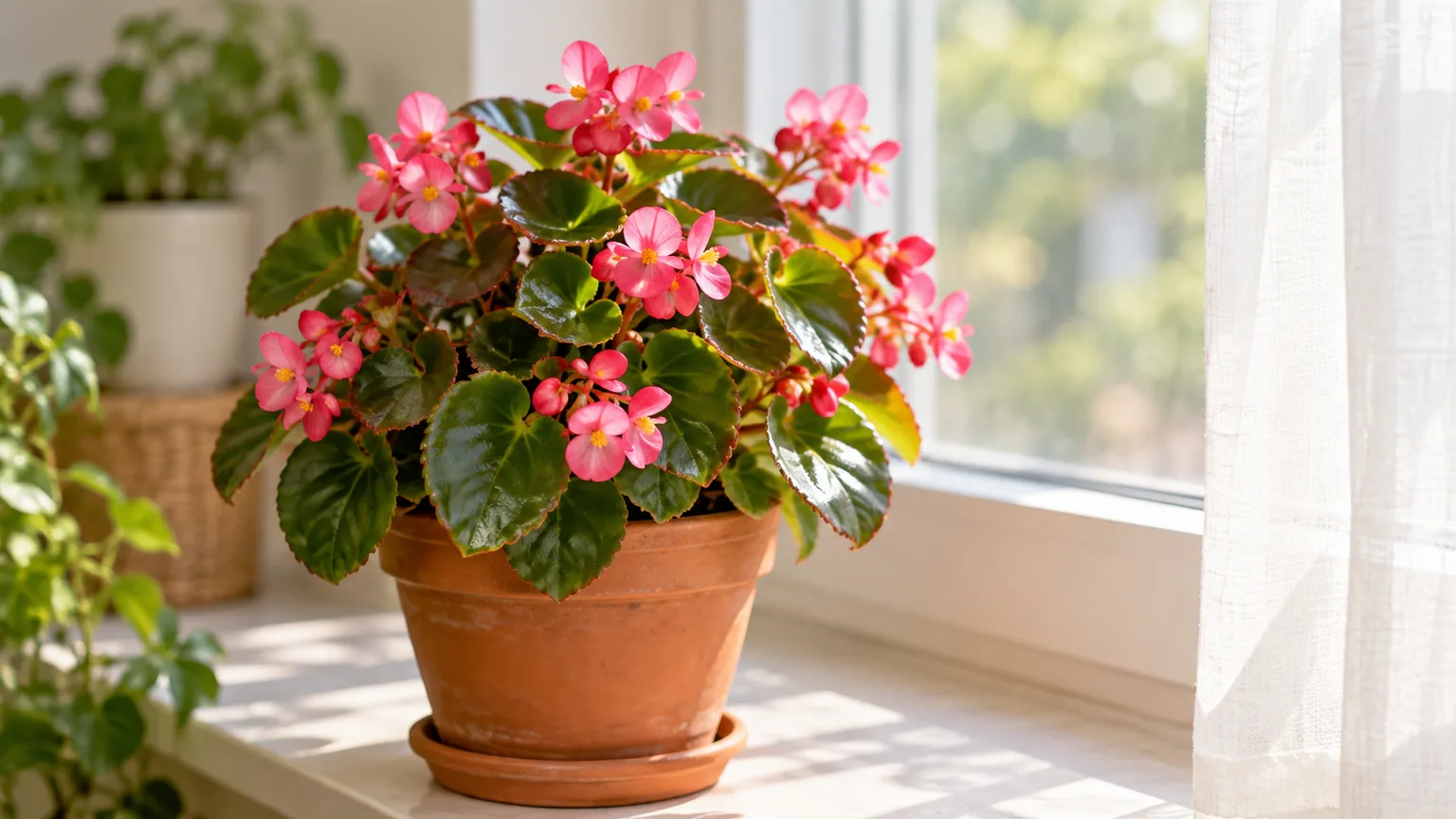
Begonias can be easy to grow once you match the routine to the plant. A wax begonia used as summer bedding, a cane begonia on a bright indoor shelf, a patterned Rex begonia, and a tuberous begonia in a hanging basket may all carry the same common name, but they do not share every care need. Most appreciate filtered light, a potting mix that drains freely, and moisture that does not leave their roots sitting in water. The main exception to an evergreen houseplant routine is a tuberous type that enters dormancy.
Before changing the watering, fertilizer, or winter plan, look at how the plant grows. Upright jointed stems suggest a cane begonia; a thick creeping rhizome and showy leaves point toward a rhizomatous type; a swollen underground tuber signals a tuberous begonia. If a store label only says “begonia,” the leaves, stems, and flowering pattern can still narrow the group. When you are unsure, start with bright filtered light and careful soil checks, then observe how the plant responds.
Know which begonia you have
The genus Begonia contains thousands of species, hybrids, and cultivars, so a single short rule cannot describe them all. Horticulture references group begonias by root or stem form, although common names overlap and some hybrids blur categories. For home care, three useful groups are cane and fibrous types, rhizomatous types such as many rex begonias, and tuberous or semi-tuberous types. Identifying the growth habit matters more than memorizing every species name.
Cane and fibrous begonias
Cane begonias have upright, often jointed stems that resemble bamboo canes. Angel-wing begonias, including Begonia maculata, are familiar examples. They are commonly grown for both foliage and dangling clusters of flowers. Many have fibrous roots, but gardeners often separate the cane habit because the stems need room and sometimes support.
Fibrous-rooted wax or semperflorens begonias are compact, branching plants with fleshy leaves and repeated small flowers. They are often sold as bedding plants or seasonal container plants, though they can live longer when protected from frost. The USDA Agricultural Research Service describes wax begonia as a widely cultivated bedding plant and reports that heat tolerance differs among breeding lines and cultivars. That is a useful reminder that one cultivar’s tolerance of a hot, humid summer does not guarantee the same result for every begonia (USDA Agricultural Research Service).
Rhizomatous and rex begonias
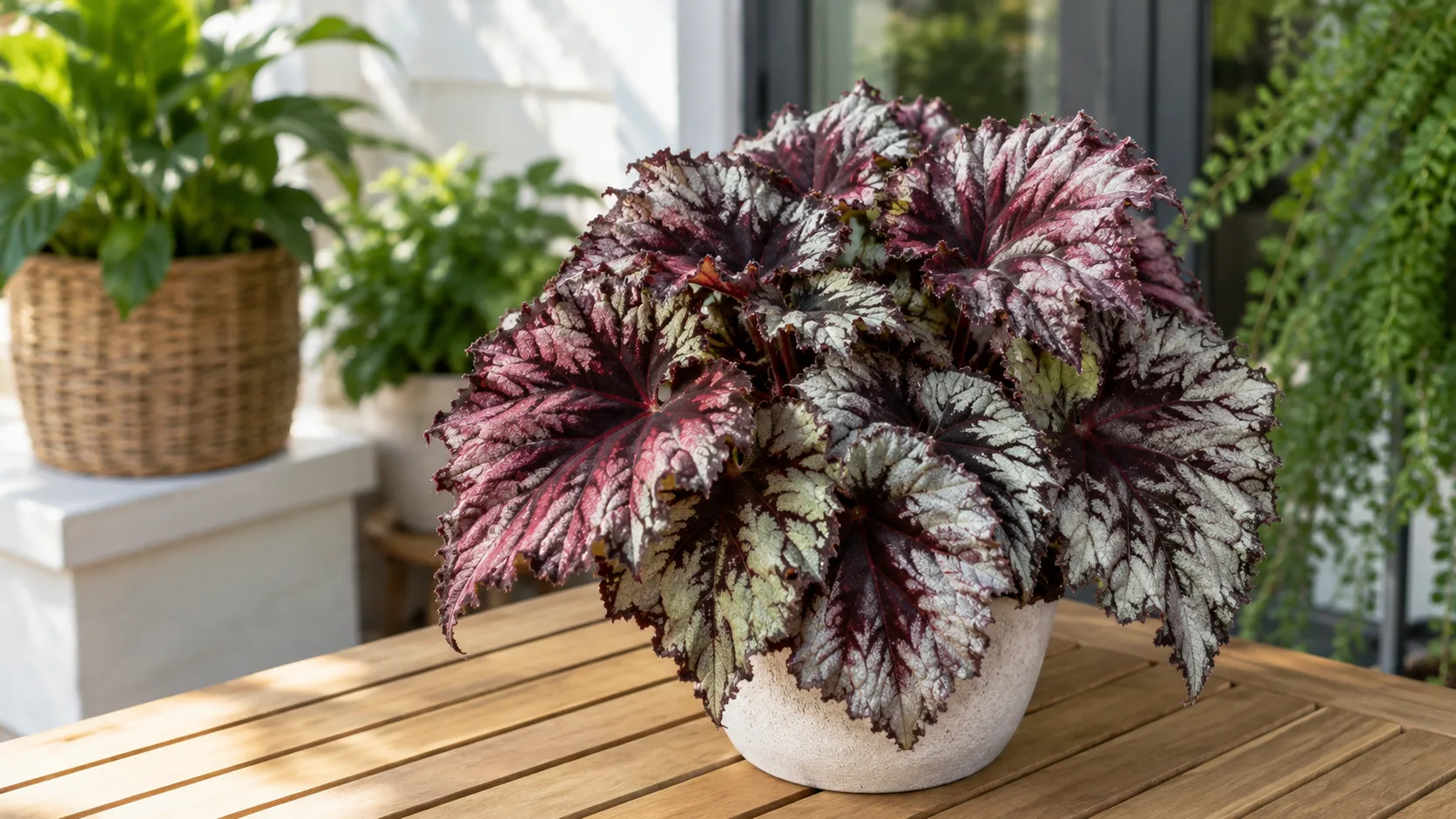
Rhizomatous begonias spread by a thick horizontal stem, or rhizome, that creeps at or just below the soil surface. Many are grown primarily for foliage. Rex begonias, often sold as the Rex Cultorum Group, are especially known for patterned leaves in silver, green, burgundy, and pink. Their leaves can be more sensitive to wet foliage and poor airflow than a sturdy outdoor wax begonia.
The plant’s compact, shallow root system usually does not need a very deep pot. Give the rhizome space to spread across the surface, keep the mix airy, and avoid burying the crown. RHS houseplant guidance distinguishes rhizomatous and rex begonias from cane and fibrous groups and recommends good drainage with care around leaf and crown moisture (RHS guide to begonias as houseplants).
Tuberous and semi-tuberous begonias
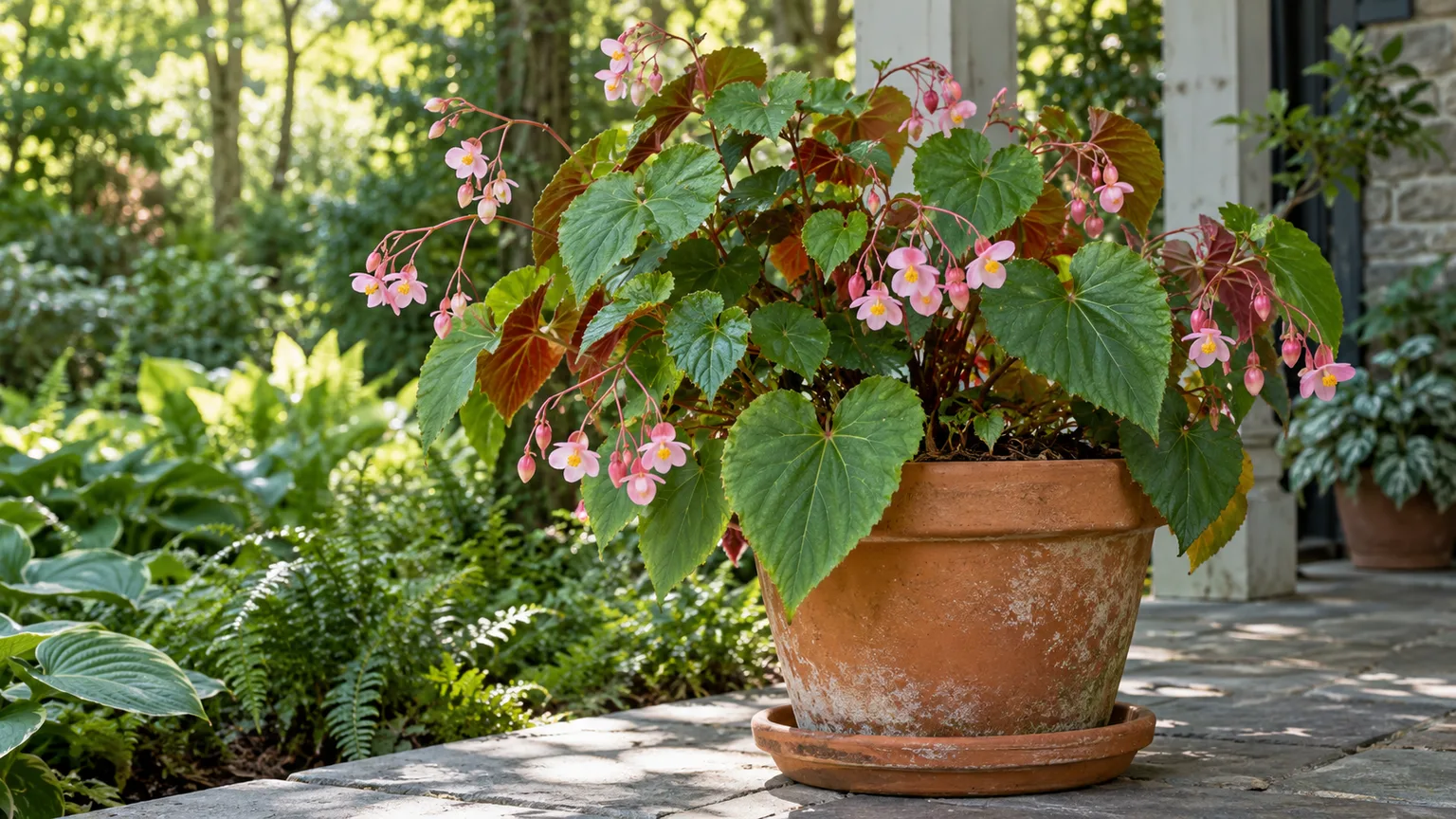
Tuberous begonias grow from a swollen storage organ and are prized for large, often showy flowers. Many are used in containers and hanging baskets. In regions with cold winters, their tops typically decline as the plant enters dormancy; the tuber can be lifted and stored for another season. Semi-tuberous florist types are a separate, variable group, and not every hybrid follows the same dormant cycle as a classic tuberous bedding begonia.
Hardy begonia is another exception to the usual “bring them inside” shorthand. Begonia grandis is a selected hardy species that can overwinter outdoors in some climates and sheltered sites. Its hardiness does not make tropical cane, wax, or rex cultivars frost-proof. For a full profile of that particular perennial, see our guide to growing Begonia grandis.
Begonia care at a glance
| Care question | Reliable starting point | Where type matters |
|---|---|---|
| Light | Bright filtered light or partial shade | Some wax cultivars tolerate more sun; rex leaves often scorch in harsh direct sun |
| Water | Water thoroughly, then let excess drain | Tuberous plants need less water as they enter dormancy; rex types dislike a wet crown |
| Soil | Moisture-retentive but airy and fast draining | Garden beds need good drainage; containers need drainage holes |
| Temperature | Keep tender varieties warm and frost free | Hardy B. grandis is a specific exception, not a genus-wide rule |
| Feeding | Feed lightly while actively growing | Flowering and foliage types may have different seasonal needs |
| Winter | Protect tender plants from cold | Tuberous types can be lifted; evergreen types continue with reduced winter growth |
This is a starting point, not a fixed schedule. A small pot in warm wind dries faster than a large indoor pot, and a plant in winter light uses water more slowly than one growing through summer. Check the plant and its mix before acting.
Choose the right light and placement
Most begonias grow well in partial shade outdoors or bright, indirect light indoors. Their natural environments are often sheltered, so a spot beneath high tree shade, on a bright porch, or behind a sheer curtain can be a better fit than hard afternoon sun. Look at the leaves as well as the flowers: thin or patterned foliage can fade, curl, or scorch when exposed to intense direct rays.
The word “shade” does not mean a dark corner. Deep shade can produce stretched stems, sparse leaves, and weak flowering. If an indoor cane begonia becomes leggy, move it closer to a bright window while keeping the leaves out of hot direct sun. If a wax begonia is outdoors in a cooler climate, some morning sun may help it flower; in a hot region, filtered shade can reduce heat stress. USDA ARS breeding trials with heat-tolerant wax begonia lines illustrate that environmental tolerance varies with cultivar and genetics, rather than following one rule for all begonias.
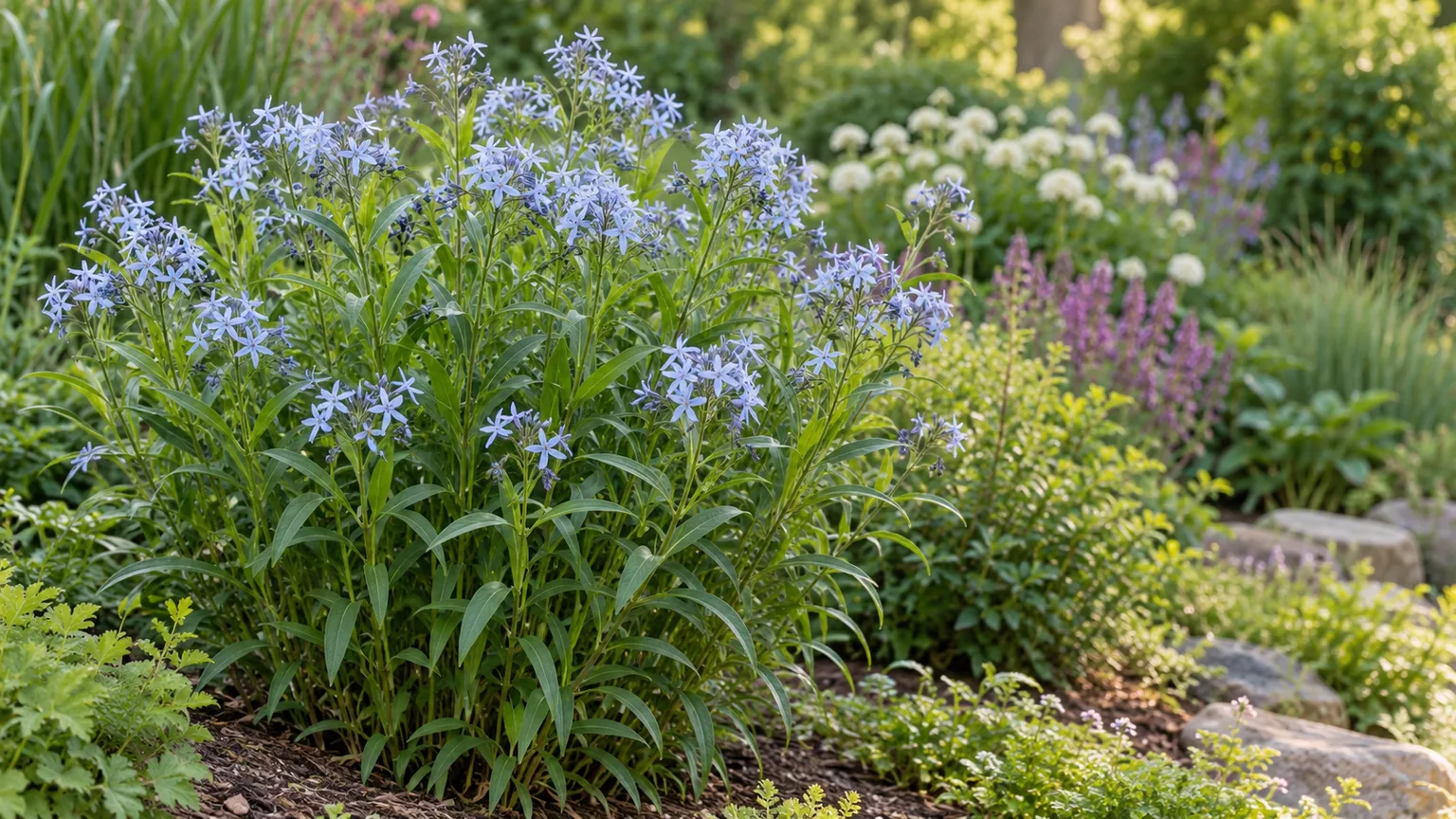
For an outdoor container, choose a sheltered site where wind will not snap brittle stems or batter large leaves. A healthy Begonia grandis in a shaded patio pot shows the sort of protected placement that can work for a hardy, shade-tolerant type, although the exact species still determines winter care.
Water begonias without keeping roots soggy
Begonias generally prefer steady moisture during active growth, but their roots need air as well as water. The common failure is leaving the potting mix wet for days, especially in a container without drainage or during cool, low-light weather. Waterlogged roots may rot, and leaves can yellow or droop even though the soil feels wet. The Connecticut Agricultural Experiment Station notes that begonia root rots often follow excess moisture and that preventing overwatering is important (Connecticut Agricultural Experiment Station’s begonia disease and pest profile).
For a container plant, press a finger into the top layer of mix and check the pot’s weight. If the surface has begun to dry and the container feels lighter, water slowly until the mix is evenly moist and a little drains through the bottom. Empty the saucer or cachepot after watering. If the mix is still damp and heavy, wait and check again instead of watering because a certain number of days has passed. The RHS recommends keeping indoor begonia compost moist but well drained and reducing water for some types in winter (RHS guide to begonias as houseplants).
Adjust watering to the growth habit
Cane and fibrous begonias need regular moisture while actively growing, particularly in small pots or hot outdoor displays. Rhizomatous and rex types also need moisture, but their shallow crowns should not remain wet; water the soil rather than splashing the leaves, and allow the surface to dry slightly between waterings. Outdoors, rain can supply much of the moisture, but containers may still dry quickly in wind.
Tuberous begonias need a different seasonal transition. While leaves and stems are growing, do not let the plant wilt repeatedly, but do not keep the tuber in soggy soil. As the foliage naturally yellows and the plant begins dormancy, reduce watering and allow the top growth to die back. Do not continue a summer watering routine through a leafless dormant period. If the plant remains evergreen and actively growing indoors, do not force it into dormancy just because winter has arrived.
Water at the soil line when possible. Keeping leaves and crowns wet for long periods can encourage fungal or bacterial problems, especially in humid rooms with little air movement. Gardening Know How similarly advises watering below begonia leaves and avoiding excess moisture; its advice is most useful as a practical indoor cue, while the RHS and local plant-health guidance support the broader drainage principles (Gardening Know How’s begonia houseplant guide).
Use airy soil and a fitting container
Use a loose, well-draining potting medium that holds some moisture without packing into a dense, airless mass. A quality peat-free houseplant mix amended with perlite, fine bark, or another suitable drainage ingredient can work well in containers. The goal is an even texture with water moving through the pot—not a mix that dries instantly and not a heavy soil that stays saturated.
Every container needs open drainage holes. A decorative cachepot can hold a nursery pot, but remove the inner pot to water and let it drain before returning it. Do not add stones to the bottom of a pot as a substitute for drainage holes; use a suitable container and medium instead. In garden beds, improve compacted or poorly drained soil before planting, and avoid low spots where rainwater pools around the crown.
RHS guidance recommends peat-free multipurpose or John Innes-type compost for several begonia groups, but gardeners can use a comparable locally available medium with good structure. Match the pot to the plant: rhizomatous types tend to spread across the surface, while taller cane begonias may need a heavier pot that will not tip. An oversized pot holds more wet mix than a small root system can use, raising the chance of prolonged saturation.
Manage temperature and humidity
Most begonias are frost tender. Wait until the danger of frost has passed before planting tender types outside, and bring potted begonias indoors before cold nights threaten them. Keep indoor plants away from icy window glass, exterior doors that open frequently, and heating or air-conditioning vents that create sudden hot or dry drafts. If the plant slows in winter, reduce watering and feeding in response to the slower growth rather than trying to force summer growth in low light.
Many tropical begonias appreciate moderate to high humidity, but a sealed, stagnant space can favor mildew and leaf disease. Provide gentle air movement and leave room between plants. Avoid misting as a routine fix: droplets can remain on textured leaves and around crowns, while the humidity increase is brief. A room humidifier or grouping plants may help in a very dry home, but keep the potting medium from staying wet. If using a pebble tray, set the pot above the waterline so its base does not sit in water.
Temperature preferences are not identical across groups. RHS guidance gives specific minimum winter temperatures for different indoor begonia groups, underscoring why one threshold cannot cover every cultivar (RHS guide to begonias as houseplants). For practical home care, avoid cold exposure and abrupt shifts, then use the plant’s growth, leaf condition, and reliable cultivar information to refine placement.
Fertilize during active growth
Fertilizer supports new leaves and flowers when the plant is actively growing; it cannot compensate for poor light, waterlogged soil, or damaged roots. Use a balanced liquid fertilizer diluted according to its label, and apply it to moist soil rather than to a dry root ball. Start lightly and watch the plant. Pale new growth, weak stems, or a plant that is not growing during a dark winter may call for a check of light, temperature, and roots before adding more fertilizer.
Flowering tuberous begonias in pots may benefit from a feed intended for flowering containers, while a foliage-focused rex begonia may have different nutrient needs. The RHS recommends seasonal feeds by group, including higher potassium for certain established flowering types and a nitrogen-containing feed for rhizomatous types. Those recommendations should not be translated into one universal formula or overdose; use a product that is appropriate for the plant and follow its packaging. Stop or reduce feeding when growth slows markedly in winter.
Prune and deadhead with a light touch
Remove dead, damaged, or diseased leaves promptly with clean scissors. For cane begonias, pinch or prune a healthy stem just above a leaf node when you want branching or a shorter shape. Avoid cutting every stem back heavily at once; removing too much foliage leaves the plant with fewer leaves to support recovery. Tall canes may need a stake before they lean, especially when the plant is grown in a small pot.
Deadhead spent flowers if you want a tidier display and to redirect the plant’s energy toward new growth. Some varieties drop their flowers cleanly, while others hold faded petals among leaves. You do not need to remove every flower on a healthy begonia. If you want to collect seed or simply enjoy the natural look, leave selected flowers in place and remove only decaying material that could stay wet against the foliage.
RHS outdoor guidance notes that tuberous begonia stems and foliage can be brittle and may need support as they grow. For cane types, preserve the upright framework that carries leaves and flowers. For rhizomatous types, trim dead leaves but do not bury or sever the creeping rhizome while tidying the pot.
Propagate begonias with the right method
Spring and early summer, when the plant is actively growing, are practical times to propagate many begonias. Start with a healthy, pest-free plant and clean tools. The right technique depends on the growth habit: a cane stem cutting is straightforward for an upright cane begonia, while a rex begonia can often be multiplied from a leaf or leaf section. Tuberous begonia division is a separate technique and should be done only when each section can retain a viable growing point.
Choose a method by type
Use a healthy stem section with a node for cane and many fibrous begonias. A node is the joint where a leaf attaches and where new roots and shoots can form. For a rhizomatous or rex type, use a leaf cutting or divide a substantial rhizome with growth points. Tuberous varieties can be divided when dormant or beginning growth, but each piece needs an eye or shoot; a cut fragment without a growing point may fail. Seed propagation is possible, but begonia seed is very small and takes more careful control of moisture, light, and warmth than a basic cutting.
For leaf propagation, BBC Gardeners’ World Magazine describes cutting a healthy rex leaf, making small cuts across the veins, and pinning the leaf against moist, free-draining compost; new plants form along the damaged veins (Gardeners’ World guide to begonia leaf cuttings). The exact approach varies by species, so do not assume that every cultivar produces equal numbers of plantlets from one leaf.
Stem cuttings for cane and fibrous types
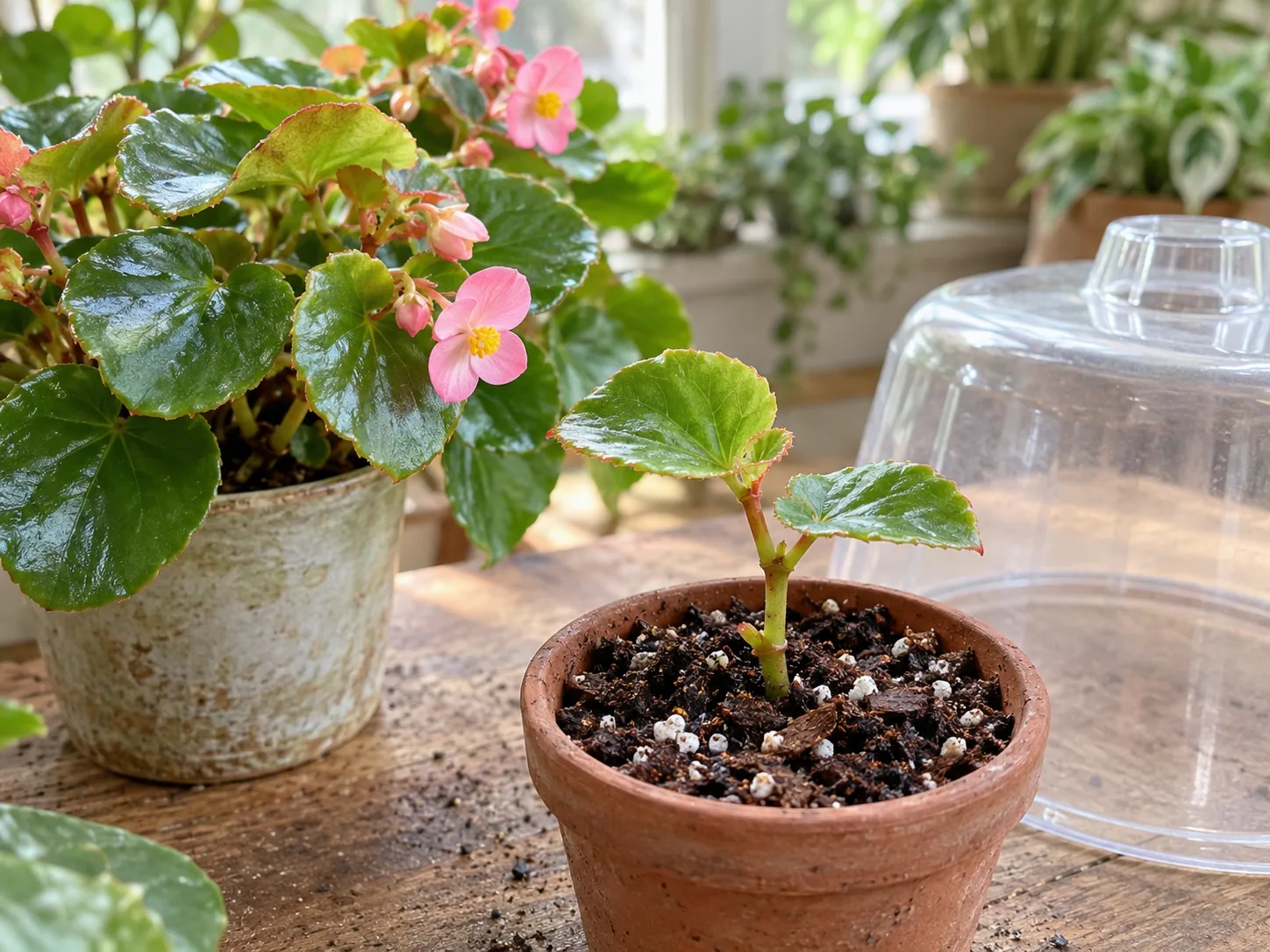
Choose a vigorous, non-flowering cane and take a short tip or stem section that includes at least one node. Remove leaves from the portion that will sit in water or mix, then root the node in clean water or a lightly moist, airy propagation medium. Place it in warm, bright indirect light. If you use a loose cover to hold humidity, vent it and remove it if condensation stays heavy. Once a cutting has a small, healthy root system and new growth, pot it into a modest container and keep the mix evenly moist while it establishes.
Longfield Gardens’ practical propagation guide also distinguishes stem cuttings for cane-like and wax begonias from leaf-cutting methods used for rex types, while recommending warm indirect light for rooting (Longfield Gardens begonia propagation guide). For a detailed cane-specific walkthrough, see our guide to propagating angel-wing begonia.
Repot when the roots need room
Repot when roots fill the container, water runs through unusually quickly, the plant dries out much faster than it used to, or a rhizome has reached the pot’s edge. A begonia does not need a very large pot to grow well. Move it into a container only modestly larger than the old one, with drainage holes and fresh mix. If the plant is healthy and has room, leave it in place rather than repotting simply because a calendar says so.
Lift the root ball gently and check for firm, healthy roots. Trim only roots that are clearly dead or mushy with a clean tool. Set the plant at the same depth it grew before. Keep the rhizome or crown at the surface, and do not bury cane stems deeper than their former soil line. Water to settle the mix, allow it to drain, and hold fertilizer until the plant shows signs of renewed growth.
If a plant is root-bound and you plan to divide it, choose the division based on its structure. A rhizome can be cut into sections with leaves or buds; a tuber must retain a viable eye. A fibrous-rooted wax begonia may be easier to propagate with stem cuttings than by pulling apart a crowded root system.
Troubleshoot pests, diseases, and weak growth
Check the whole plant and the soil before choosing a fix. Yellowing leaves can result from excess water, drought, low light, cold, or natural aging; the color alone does not identify the cause. Feel the mix, look for a musty smell or mushy roots, and compare new growth with old leaves. If growth is leggy, increase filtered light gradually. If flowers fade quickly, consider heat, direct sun, or inconsistent water before adding fertilizer.
Root and stem rots are more likely when the medium remains wet and poorly aerated. Water at the soil line, provide drainage, and avoid crowding plants. Powdery mildew and leaf spots can spread more readily when foliage stays wet and air movement is poor. The Connecticut Agricultural Experiment Station describes root rots, bacterial leaf spot, powdery mildew, and pests such as aphids and black vine weevils on begonias; it also emphasizes prevention through moisture management, air circulation, and sanitation. For a yellow-leaf diagnosis, see our guide to begonia leaves turning yellow.
Inspect the undersides of leaves and stem joints for aphids, mealybugs, or mites. Outdoor plants may also attract slugs or snails. Isolate an infested houseplant, remove visible pests, and clean the growing area. If a pesticide is needed, choose one labeled for the pest and the plant’s location, then follow the product directions. Some begonia foliage is sensitive to sprays, so test any label-authorized treatment on a small area first and allow time to check for injury before treating the entire plant.
Overwinter begonias by growth habit
First separate plants that keep growing from those with a dormant tuber. Cane, fibrous, and many rhizomatous begonias can often continue as houseplants through winter if they have enough light and remain warm. Move outdoor containers indoors before frost, inspect for pests, and give the plant a bright filtered-light position. Growth may slow in shorter days, so water less often and pause fertilizer if new growth has stopped.
For tuberous begonias in cold-winter regions, allow the foliage to yellow naturally near the end of the season and reduce water as growth declines. Before a hard freeze, lift the tubers, let them dry in a protected place, and remove loose soil and dead stems. Store sound tubers in a cool, dry, frost-free location in a breathable medium, checking occasionally for shriveling or rot. In early spring, start them in fresh, slightly moist mix and increase watering after shoots appear. The RHS recommends lifting tender tuberous begonias before the first frost and storing dry tubers in a frost-free place; local storage conditions may differ, so check the instructions for the cultivar you bought (RHS outdoor begonia guidance).
Hardy Begonia grandis should not be treated like a tender tuberous hybrid. In a mild, sheltered site it may survive in the ground, while colder or wetter winters can still damage it. Mulch and drainage can help in suitable climates, but use regional guidance to decide whether to leave it outdoors or lift and protect it. Our separate guide covers overwintering begonias in more detail.
Keep pets away from begonia plants
The ASPCA lists Begonia species as toxic to dogs, cats, and horses because of soluble calcium oxalates; it identifies the underground part as the most toxic portion. Keep pots and tubers away from chewing pets, and store lifted tubers where animals cannot reach them. Do not rely on a plant label or common name to determine the risk of a particular specimen; the ASPCA entry covers the genus (ASPCA’s begonia toxicity listing).
If a pet chews a begonia, contact a veterinarian or animal poison-control service for advice, especially if vomiting, drooling, or other symptoms occur. Do not induce vomiting or try a home remedy unless a veterinary professional tells you to do so. When arranging a room or patio, put begonias where pets cannot nibble leaves, stems, or storage tubers.
Conclusion
Begonia care becomes more predictable when you identify the growth habit first. Most begonias grow best with filtered light, an airy medium, and careful watering, but cane, fibrous, rhizomatous, and tuberous types differ in how they branch, bloom, propagate, and spend winter. Avoid treating every yellow leaf as a watering problem or every begonia as a shade-loving plant with the same temperature needs.
Start with a bright protected location and a pot that drains. Let the surface of the mix begin to dry before watering again, keep foliage and crowns from staying wet, and feed lightly during active growth. If you have a tuberous type, plan for its dormancy; if you have a cane or rex begonia, keep it growing indoors with suitable light and warmth. For hardy Begonia grandis or a named cultivar, follow guidance for that plant and your local climate.