How to Overwinter Begonias: Tubers or Houseplants
Learn how to overwinter begonias by type: bring active plants indoors or lift, cure, and store tubers, then restart them for bigger blooms.
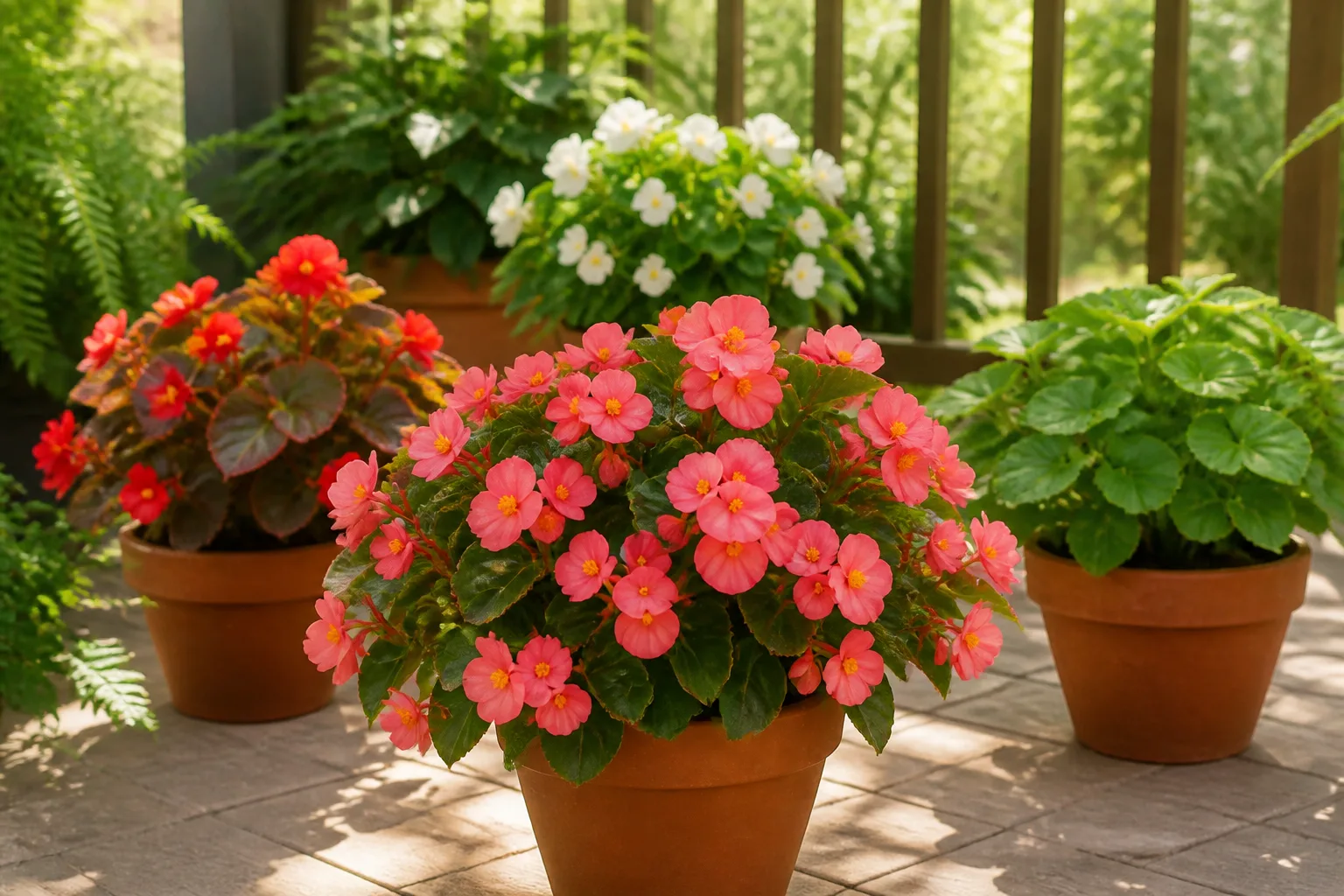
Yes—overwintering begonias is often worth doing, but the right method depends on what kind of begonia you have. A tuberous begonia needs a dry resting season, while a wax, cane, Rex, or rhizomatous begonia usually stays alive as an active houseplant. Treating both plants the same is the fastest way to get either a rotted tuber or a weak, leafless houseplant.
Your first fall task is identification, not pruning. Once you know whether the plant has a storage tuber, a creeping rhizome, or ordinary fibrous roots, you can choose a winter location, set a temperature deadline, and protect the plant’s energy for next year’s flowers.
Know the begonia type before you choose a winter plan
The word “begonia” describes a huge group of plants with very different growth habits. The Royal Horticultural Society’s outdoor begonia guidance separates tuberous, hardy, and semperflorens types because their winter routines are not interchangeable. (RHS begonia guidance)
Start with the plant tag, cultivar name, and the way the plant grows. If the tag is gone, slide a container plant gently from its pot or brush away a little soil at the crown. You are looking for a swollen storage organ, a thick stem running along the soil surface, or a network of fine roots.
Tuberous begonias go dormant
Tuberous begonias, including many large-flowered bedding and hanging-basket hybrids, store water and carbohydrates in a flattened or rounded tuber. The top growth naturally slows and dies back as days shorten and temperatures fall. That dieback is not automatically a sign that the plant is dying; it is the cue to stop asking the tuber to support leaves through a dark season.
In a cold-winter region, the tuber can survive only if it stays protected from a hard freeze. The American Begonia Society explains that cold-climate growers commonly lift tubers after foliage is ruined by a light frost but before a hard freeze reaches the ground. In practice, use the forecast as your safety margin: if a freeze is coming before the plant has naturally finished, move it to shelter and let it complete the transition there. (American Begonia Society)
Do not assume a large, showy flower automatically means “tuberous.” Some hybrids are sold in overlapping groups, and labels can be incomplete. If you cannot identify the plant confidently, keep a small healthy cutting or parent plant indoors while you investigate rather than putting the whole root system into dry storage.
Wax, cane, Rex, and rhizomatous begonias stay active
Wax begonias, often sold as Begonia semperflorens, have fibrous roots rather than a single storage tuber. Cane types such as angel wing and dragon wing begonias have upright stems, while Rex and other rhizomatous types grow from thick creeping stems at or just above the soil surface. These plants can slow down indoors, but they do not need the same dark, dry dormancy as a tuberous begonia.
For these active types, the winter job is to preserve enough healthy foliage for continued growth without forcing soft, leggy shoots in weak light. Proven Winners’ overwintering guide, contributed by horticulturist Dr. Rick Schoellhorn, likewise distinguishes active rhizomatous, cane, bedding, and Rex groups from tuberous begonias that require a rest period. (Proven Winners)
Rex begonias deserve extra attention because their patterned leaves can look fine one week and collapse the next when roots become too dry or indoor air is harsh. A humidifier, plant grouping, or correctly built pebble tray can help the immediate microclimate, but none of those fixes replaces drainage, light, or a reliable moisture check.
Choose the method that fits your climate and your plant
The best overwintering method is the one that matches the plant’s biology and the space you can actually provide. A healthy potted cane begonia with a bright window is a good whole-plant candidate; a bed-grown tuberous begonia in a freezing climate is a storage candidate; a hardy species in a suitable sheltered bed may need no lifting at all.
Use this decision rule before you start digging:
| Your plant and conditions | Best winter plan | Main reason |
|---|---|---|
| Tuberous begonia in ground where winter freezes | Lift, cure, and store the tuber | The ground can freeze before spring |
| Tuberous begonia in a pot | Let it dry down, then store the pot or lift the tuber | The container still needs frost protection |
| Wax, cane, Rex, or rhizomatous begonia | Bring in as an active plant | These types do not need dry dormancy |
| Hardy begonia confirmed for your site | Leave in the ground with species-appropriate protection | Digging can add unnecessary disturbance |
| Diseased, badly rotted, or heavily infested plant | Discard or take only clean, healthy propagation material | Indoor conditions can spread the problem |
Warm-climate gardeners should not confuse “rare frost” with “no risk.” In a sheltered, frost-free location, a potted tuberous begonia may be kept dry in its container, but rain and irrigation can repeatedly wet the dormant tuber. A dry covered porch or cool room is safer than an exposed patio, and a ground-grown plant may still be easier to lift than to protect from winter rain.
There is also an effort question. If a common wax begonia is exhausted after a long season, buying a new plant may be more sensible than carrying pests and a half-dead root ball indoors. Save the plants with strong stems, good color, and a cultivar you genuinely want again; overwintering is a preservation project, not a test of endurance.
Follow temperature and weather triggers—not a calendar
Fall dates vary too much for a single “dig on this day” rule. A late warm season may keep a begonia green well past the usual date, while a sudden cold front can damage a balcony pot before the regional first-frost average arrives. Watch both the forecast and the plant’s condition.
For active begonias, begin the indoor transition while nights are trending cool but before cold injury. A practical target is to move them when nighttime temperatures are approaching the mid-50s to around 60°F, especially for plants in exposed containers. The exact threshold varies by cultivar and shelter, but a plant that is still healthy gives you time to clean it, check for pests, and adjust it to lower indoor light.
For tuberous begonias, do not wait for a hard freeze. If a light frost has naturally blackened the foliage, lift the plant promptly; if the forecast predicts a hard freeze first, move the container or dig the plant before that event. The Oregon State University Extension Service recommends preparing tubers when frost threatens and emphasizes that the species is not the same as wax begonia. (Oregon State University Extension Service)
Temperature is only one part of the trigger. Rain matters for a dormant tuber, wind matters for brittle stems, and a bright warm window can wake a tuber earlier than you intended. Think in terms of a safe handoff: active plants move before they are chilled; dormant plants are stored before they freeze and after they have had a chance to dry.
Prepare outdoor begonias before you move or lift them
Preparation determines whether the plant enters winter clean and balanced or carries summer problems into a confined room. Start with a dry day if possible, and do not water a pot simply because you are about to move it. Wet soil is heavier, slower to drain, and more likely to stay cold around roots after the plant comes inside.
If the plant is in the ground, decide whether you are saving the whole root ball or lifting a tuber. Active types need a manageable root ball in a container with drainage. Tuberous types can be dug with enough soil attached to prevent damage, then allowed to cure before their storage medium is removed.
Inspect, clean, and quarantine
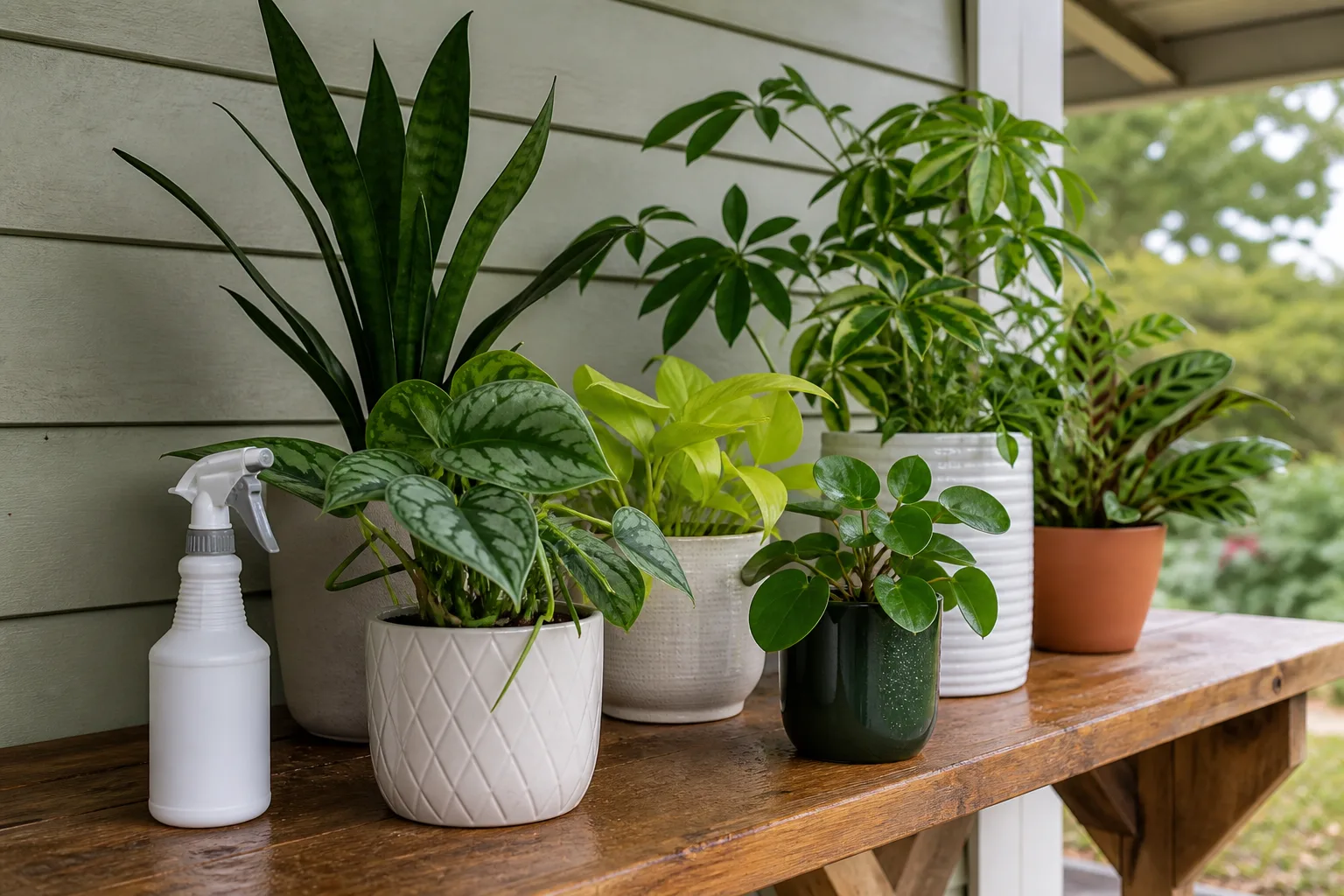
Inspect the undersides of leaves, stem joints, new growth, pot rims, and drainage holes. Look for webbing or fine stippling from spider mites, cottony clusters from mealybugs, aphids around soft tips, sticky residue, scale-like bumps, and fungus gnats associated with persistently wet mix. Also look for leaf spots, powdery growth, and stems that are soft or water-soaked.
Rinse an active plant with a gentle stream of water, remove dead leaves and fallen flowers, and clean the outside of the pot. Do not bring a plant with spreading disease, active crown rot, or a severe pest population straight beside your houseplant collection. Longfield Gardens’ practical winter-transition guidance also recommends inspecting foliage and soil, trimming unhealthy growth, and allowing a shaded transition before plants enter the home. (Longfield Gardens)
Keep the newcomer separate for at least two weeks, and check it several times during that period. A plant that looks clean on moving day can reveal pests after indoor warmth increases activity. If you use a soap or other treatment, choose one labeled for the plant and setting, follow the label, and test a small area first because begonia foliage can be sensitive.
Prune for balance, not a bare reset
Remove dead, diseased, broken, and severely crowded stems with clean snips. For an active begonia that has become too large, shorten the longest growth by roughly one-third rather than removing every leaf. The remaining foliage helps the plant recover from transplanting and gives you visible feedback about moisture and light.
Tuberous plants are different. Let their tops die back naturally when possible, then remove loose stems after the tuber has dried enough for them to release easily. Cutting green stems too early can leave wet tissue attached to the storage organ, while stripping a still-active plant can create more stress than it prevents.
Use the pruned healthy tips as a backup only if the plant is pest- and disease-free. Label cuttings and parent plants with the cultivar name and flower color; a winter collection becomes confusing quickly when every dormant tuber looks like a brown lump.
Bring active begonias indoors without shock
Move an active begonia first to a sheltered, shaded outdoor position for several days. This lowers the light difference between garden shade and a room, protects delicate leaves from wind, and gives you a final inspection window. A direct jump from bright outdoor light to a warm, dim corner often produces leaf drop even when the roots are healthy.
Pot a bed-grown plant in fresh, airy container mix rather than bringing a heavy mass of garden soil indoors. Choose a container only slightly larger than the root ball and set the crown at the same depth it occupied outside. Water once to settle the mix, let the pot drain fully, and do not leave water in a saucer.
Place the plant in bright filtered light, such as near an east- or west-facing window with a sheer curtain. Keep it away from heating vents, fireplaces, exterior doors, and cold glass; the goal is a stable room, not a series of hot and cold pulses. Get Busy Gardening’s overwintering method similarly recommends bright indirect light for fibrous types and a cool, stable indoor location away from heat sources. (Get Busy Gardening)
Some leaf drop after the move is normal because outdoor leaves were built for stronger light and more air movement. Give the plant a week or two to settle before making several changes at once. If leaf loss is rapid and accompanied by a soft crown, sour soil smell, webbing, or widespread spotting, treat it as a problem to diagnose rather than ordinary acclimation.
Lift, cure, and store tuberous begonias
Tuberous storage succeeds when the tuber is uninjured, dry on the surface, cool but never frozen, and easy to inspect. The most common mistake is packing a freshly dug, wet, wounded tuber into a sealed container. That traps the exact conditions that encourage rot.
Dig wide and handle the tuber gently
On a dry day, loosen the soil well away from the main stem with a garden fork. Work inward gradually rather than driving a spade beside the crown, where the tuber is easiest to nick. Lift the plant with soil attached, support the root mass in your hand, and brush off loose soil without scrubbing the skin.
Do not rinse a freshly lifted tuber unless you have a specific reason and enough time to dry it completely. A little dry soil is less dangerous than water caught in a cut or between a tuber and an old stem. Set damaged or suspicious tubers aside so a soft one does not sit against healthy material.
If you find a firm tuber with a small superficial wound, let the cut dry in moving air and watch it closely. A tuber that is mushy, foul-smelling, deeply discolored, or collapsing at the crown is not a good storage candidate. Removing rot with a sterile blade is sometimes possible when the affected area is limited, but do not try to save a tuber that is largely compromised.
Cure until stems release on their own
Lay the lifted plants in a single layer in a dry, frost-free, shaded place with gentle air circulation. A garage, basement, or covered porch can work if it stays above freezing and is not humid enough to keep the soil wet. Do not put them in a plastic bag or close them in a damp bin while they are curing.
Curing may take several days to a couple of weeks depending on the tuber’s size, the amount of soil attached, and the room’s humidity. The useful checkpoint is not a rigid number of days: the remaining stem should shrivel and detach with little resistance, and the surface soil should be dry enough to brush away. Oregon State Extension recommends allowing tubers to cure before removing remaining stalks and roots, while the American Begonia Society notes that resistance from the stem is a sign that the tuber needs more drying time. (Oregon State University Extension Service; American Begonia Society)
The tuber should feel firm, not juicy or soft. Do not aim to shrivel it; aim to dry the exterior and detached plant tissue while preserving the stored moisture inside. Once the stem releases, remove loose roots and soil with a soft brush, label the tuber, and photograph its shape if the growing point is difficult to recognize.
Pack dry, label each tuber, and inspect monthly
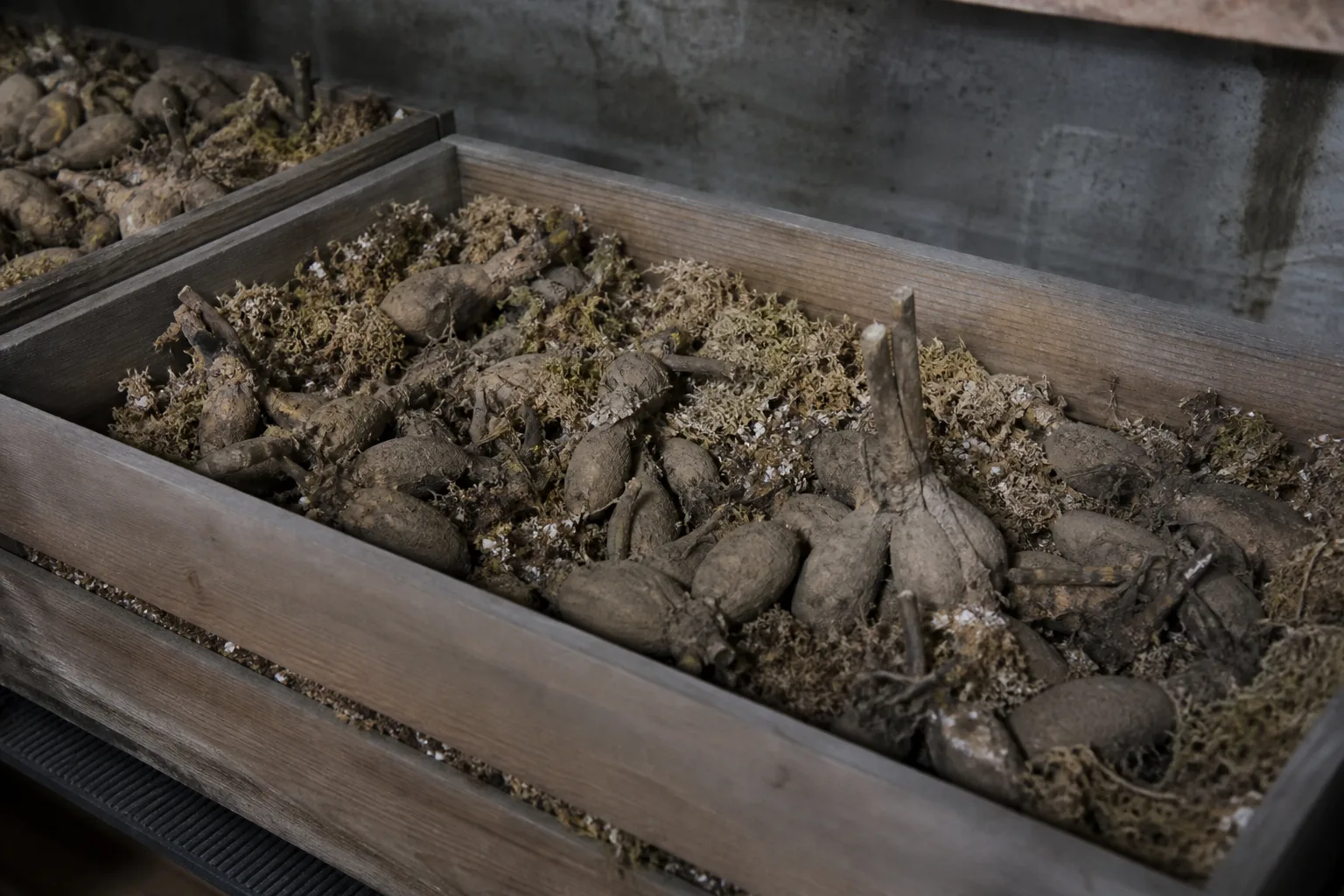
Place cured tubers in a cardboard box, paper bag, or open-sided tray where air can move. Separate them so they do not touch, then surround them with an airy medium such as dry coco coir, sawdust, peat-free packing material, vermiculite, or perlite. Avoid airtight plastic because it holds condensation and makes one rotting tuber more likely to contaminate its neighbors.
Storage guidance differs on whether the packing medium should be fully dry or barely moist. The practical compromise is to start with dry, airy material and monitor the tuber rather than adding water by schedule. The RHS describes barely moist soil or sand for some tuberous begonias, while the American Begonia Society emphasizes breathable individual bags and a cool, dry location; both approaches fail if the tuber sits in free water. (RHS begonia guidance; American Begonia Society)
Keep the box in a dark, frost-free place around 40–50°F (4–10°C) if you can provide it. The priority order is no freezing, no heating-vent warmth, no direct sun, and no persistent dampness. A slightly warmer room can work if it is dry and the tuber remains dormant; a cold outdoor shed that occasionally freezes is a poor choice even if it is dark.
Check each tuber about once a month. A soft spot, fuzzy mold, sour smell, or spreading discoloration means remove that tuber immediately and clean the divider or packing area. A very light, deeply wrinkled tuber suggests excessive dryness; adjust the surrounding medium very slightly and continue checking rather than spraying the tuber directly. Mark the box with the date and cultivar names so you can compare changes instead of guessing.
Care for active begonias through winter
Active begonias do not need to look as lush in January as they did on a summer patio. Their job is to stay healthy enough to resume strong growth when light improves. Stable conditions and restraint are more useful than trying to force continuous flowering in a dim room.
Give bright filtered light, stable temperature, and airflow
Set the plant close to a bright window but protect shade-grown foliage from intense direct afternoon sun. If stems stretch between leaves, leaves become smaller, or the plant leans hard toward the glass, increase light with a suitable grow light rather than simply adding fertilizer. Weak winter light is a common reason a plant becomes leggy and then gets pruned so severely that spring recovery is delayed.
Keep temperatures reasonably steady, generally in the 60s to low 70s°F for active indoor begonias. Avoid placing a pot where a heater blows directly across the leaves or where a draft chills the root zone each night. Turn the pot occasionally so one side does not grow toward the window, and leave enough space between plants for air to move.
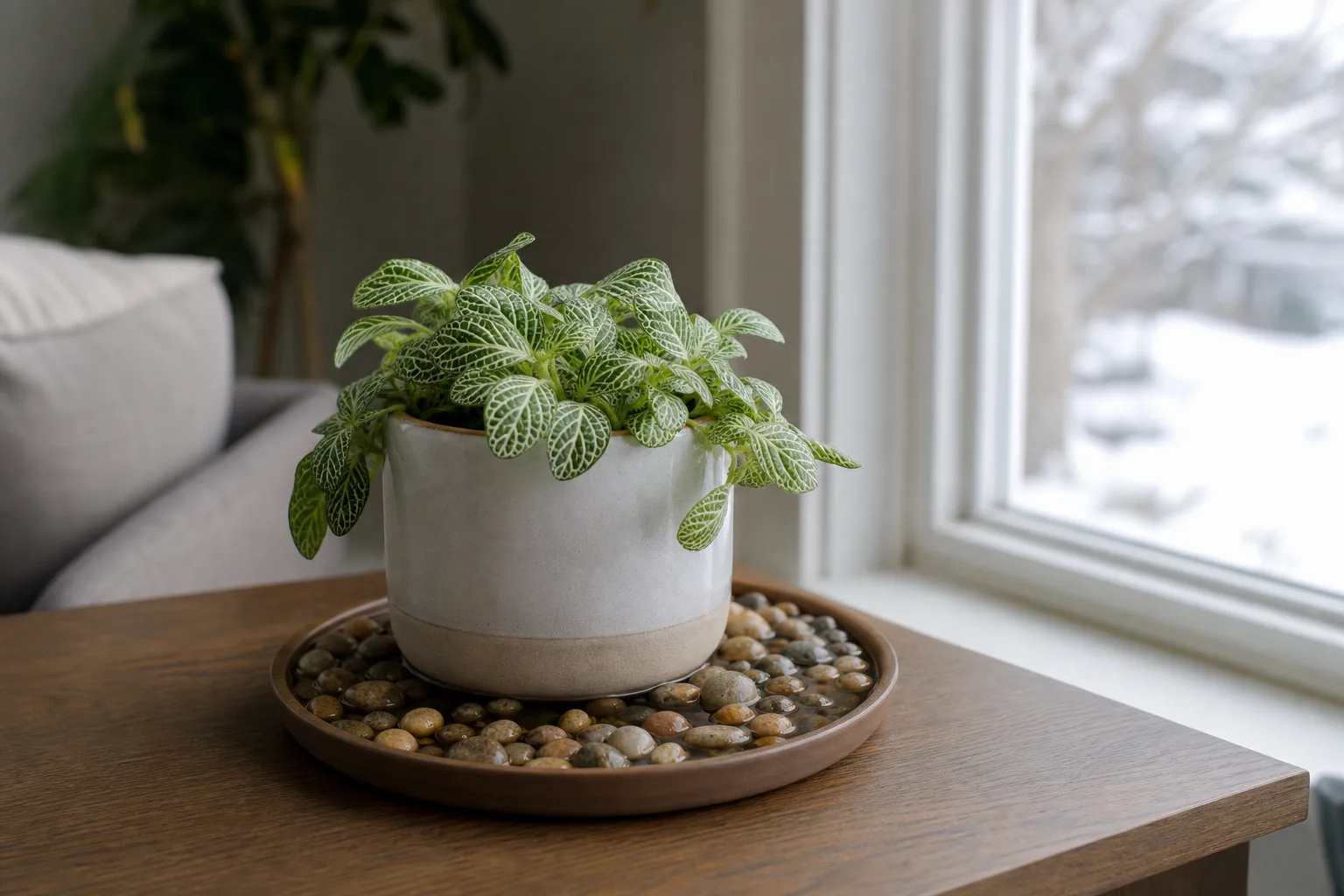
Begonias appreciate humidity, especially Rex types, but wet leaves and stagnant air can encourage fungal problems. A room humidifier or a correct pebble tray is more dependable than repeated misting. The tray must be wider than the pot, hold water below the top of the pebbles, and keep the pot base above the waterline; raising humidity does not mean soaking the roots.
Water by soil moisture and reduce feeding
Winter watering should follow the plant’s growth rate, pot size, light, and mix—not a weekly reminder. Feel into the upper inch or two of potting mix; if it is still cool and moist, wait. When it has dried to the point appropriate for that begonia, water thoroughly until some drains from the bottom, then empty the saucer.
Wax, cane, and rhizomatous begonias usually prefer to remain lightly and evenly moist, but never saturated. Rex begonias can decline when allowed to become bone-dry, yet their fine roots are also vulnerable to rot in waterlogged mix. Use a smaller pot rather than compensating for poor drainage with frequent tiny sips.
Do not fertilize a dormant tuber. For an active begonia, wait until it is producing healthy new growth and use a diluted, balanced fertilizer sparingly. A plant sitting in low light with little growth cannot use a heavy summer feeding rate; excess salts and soft, stretched growth do not translate into bigger flowers.
Troubleshoot winter failures and protect bloom potential
The symptom matters less than the pattern around it. A few yellow leaves after an indoor move can be acclimation; yellow leaves with wet soil and a soft stem point toward root or crown trouble. A dry leaf edge can reflect low humidity, but it can also come from heater air, salt buildup, root damage, or a pest, so check the plant before buying another remedy.
If an active plant drops leaves quickly, check light, temperature swings, and soil moisture in that order. Move it away from a vent or cold window, improve filtered light, and let the mix dry appropriately before watering again. If the crown or roots are soft, unpot the plant, remove dead tissue, and repot only healthy roots into fresh airy mix; a plant with extensive rot may not be worth carrying through the season.
If a stored tuber molds, assume moisture or injury before assuming the storage temperature alone is at fault. Remove the affected tuber, separate the rest, improve ventilation, and discard any that are soft. If tubers shrivel, check whether the room is too warm and dry or whether the medium has become dust-dry; make a small adjustment and monitor rather than turning the box into a damp enclosure.
Bigger blooms next season start with a sound tuber and a gradual restart, not with extra fertilizer at planting time. Once the plant is actively growing, provide the light and steady moisture that support strong stems, feed lightly during the growing season, and remove spent flowers if your cultivar benefits from deadheading. Oregon State Extension also notes that tuberous begonias are heavy feeders during active growth and that removing smaller female flowers can direct energy toward the showier male blooms when a larger-flower display is the goal. (Oregon State University Extension Service)
Wake tubers and harden plants in spring
Begin checking stored tubers as daylight increases and the risk of indoor warmth forcing premature growth becomes more likely. Healthy buds or “eyes” are the signal to pot them; do not plant on a fixed date if the tuber is still dormant and your outdoor soil is cold.
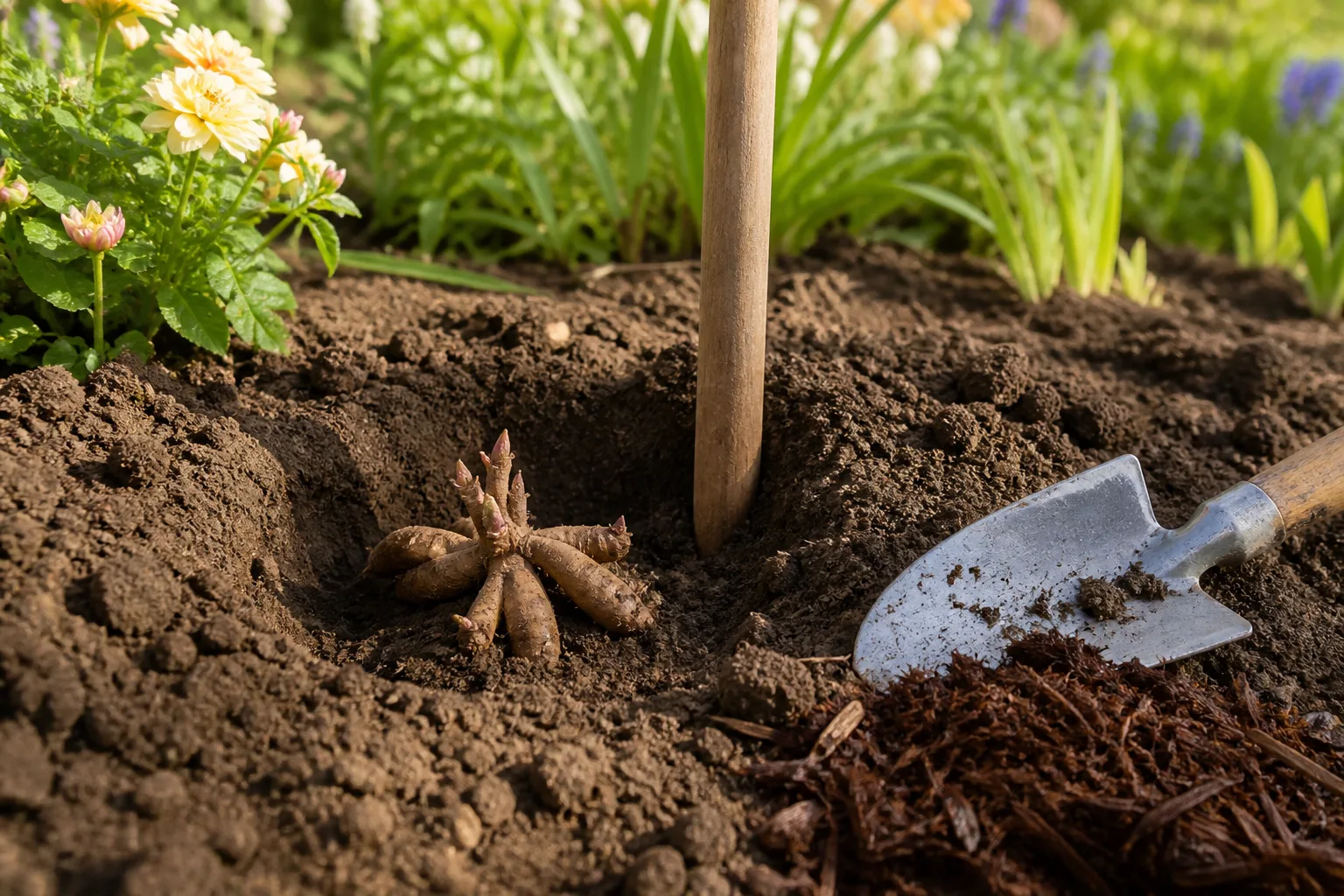
Use a small pot with fresh, well-drained mix. Set the tuber with its concave or hollow side upward and the upper surface at, or just slightly below, the mix surface. A deep planting position holds too much moisture around a waking tuber and makes it harder to see which way the buds are pointing.
Moisten the mix lightly to settle it, then wait for signs of growth before increasing water. Once shoots and roots are clearly developing, move the plant into brighter filtered light and resume modest feeding. Starting indoors several weeks before the last frost can produce a larger plant at planting time, but it also requires enough light to prevent thin, weak stems.
Active plants that lived indoors all winter need the same gradual return to outdoor conditions. First place them outside in bright shade for a short period during mild weather, protected from wind and rain. Extend the time outdoors over one to two weeks, then introduce gentle morning light before exposing them to the brighter position they used in summer.
Wait until frost risk has passed and nighttime temperatures are consistently suitable for the cultivar. A plant that looks acclimated at noon can still be chilled by a cold evening, and tender foliage can scorch if it goes from a filtered window to full sun in one step. Slow hardening off is part of the bloom plan because every lost leaf costs the plant energy it could have used to build stems and flowers.
Conclusion
To overwinter begonias successfully, identify the root system first. Tuberous begonias need a cool, frost-free rest after careful drying and packing; wax, cane, Rex, and rhizomatous begonias usually come indoors as active plants with bright filtered light, measured watering, and good airflow; and a confirmed hardy species may remain outdoors with the protection its site requires.
Act before a hard freeze, quarantine anything you bring inside, and treat moisture as the main winter variable. A firm tuber, a gradual spring wake-up, and steady summer care will do far more for next year’s bigger blooms than an aggressive fall pruning or a heavy dose of fertilizer.



