How to Grow and Care for Begonia Grandis in Shady Gardens
Grow hardy begonia for late-summer color with practical advice on light, watering, soil, winter limits, propagation, containers, and common problems.

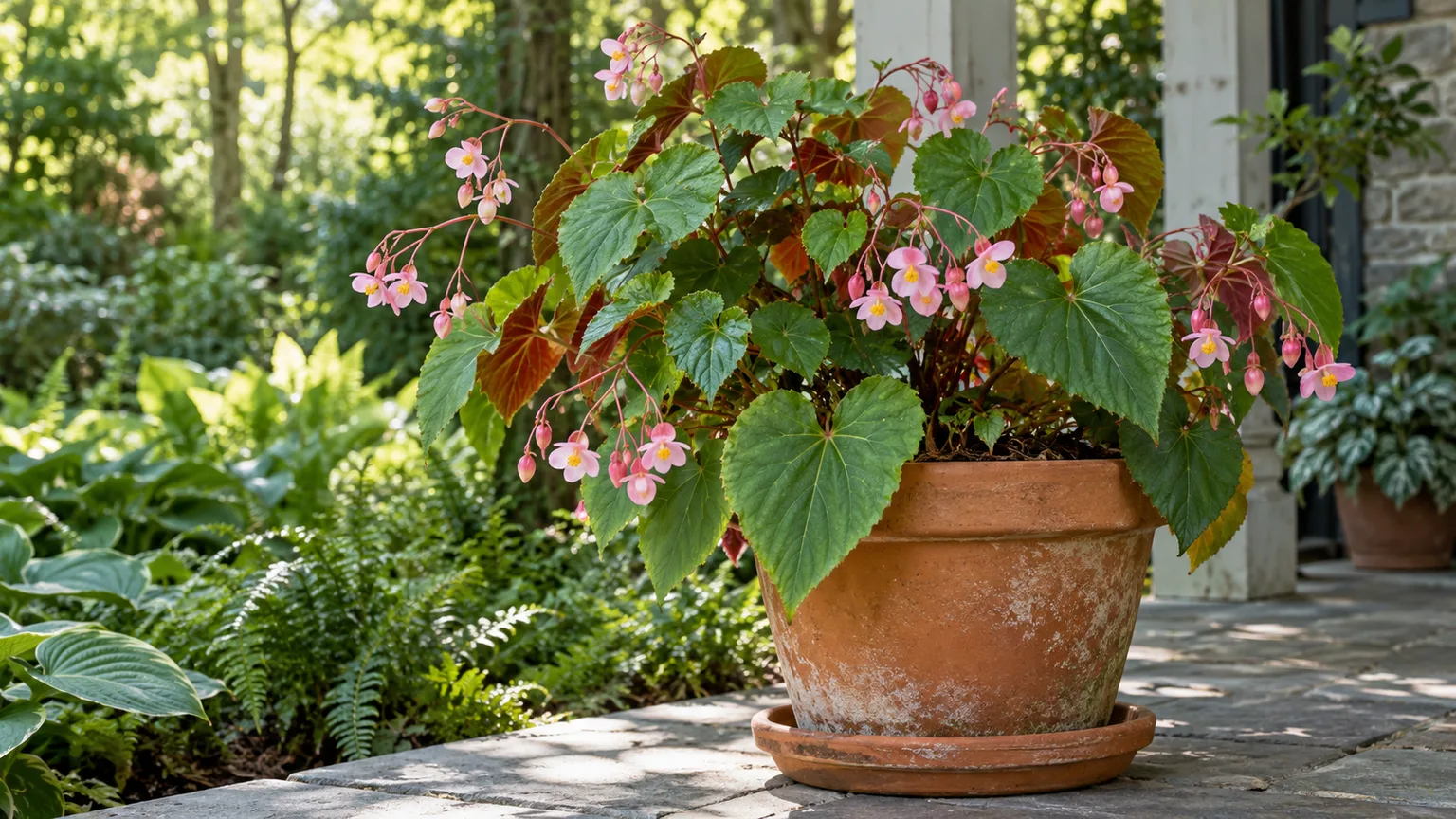
If you want flowers in a shady bed after spring perennials have faded, hardy begonia (Begonia grandis) is a useful late-season choice. It grows from an underground tuber, rises into a loose mound of asymmetric, heart-shaped leaves, and sends small pink or white flowers from arching stems in summer and early fall. The effect is soft and airy rather than a dense block of color, and the plant’s red-tinged leaf undersides add interest before and between blooms.
The care is simple once you separate hardy begonia from the tender begonias sold for summer bedding and indoor foliage. Choose shade, keep the root zone moist without leaving it saturated, and give the crown a reasonable chance through winter. The details that most often trip people up are that “hardy” does not mean equally reliable in every climate, and new shoots can appear later than expected in spring.
What Begonia grandis Actually Is
Begonia grandis is a deciduous herbaceous perennial in the begonia family, native to southern China and Japan. A mature plant commonly reaches about 18 inches to 3 feet tall and 18 inches to 2 feet wide, though cultivar and growing conditions affect the final shape. The NC State Extension Plant Toolbox profile describes it as a branching, bushy mound with pink flowers, shade tolerance, and a seasonal dormancy period.
Unlike a compact bedding begonia, hardy begonia has slender stems and a more open habit, with flowers held in pendant clusters above the foliage. The leaves are asymmetrical and toothed, green above and often reddish underneath. Its bloom window is commonly mid-summer into early fall; NC State lists flowers from July through October in its profile, but local temperature, light, and establishment can shift that timing.
Hardy Begonia Is Not the Same as Rex or Bedding Begonia
The common name “begonia” covers a large group of plants with different roots, habits, and winter needs. Rex begonias are mainly prized for patterned foliage and are usually grown as tender houseplants; wax begonias and many tuberous bedding types are sold for warm-season color. B. grandis is a different species: a garden perennial that can go dormant and return from its crown or bulbils where winter conditions allow.
Check the botanical name on the pot before applying care advice. A generic begonia article may recommend bringing the plant indoors before frost or treating it as a tropical annual, while hardy begonia can remain in the ground in suitable gardens. Conversely, the word “hardy” on a tag should not be read as a promise that every cultivar will survive every winter without protection. Treat the plant as ornamental rather than edible: the ASPCA lists begonias as toxic to cats and dogs, with underground parts the most toxic, and NC State flags this species as having low-severity poison characteristics. Keep pets from chewing it, and contact a veterinarian or animal poison-control service if you suspect ingestion.
Will Hardy Begonia Survive Your Winter?
Cold tolerance is the main qualification behind the word “hardy.” NC State’s database lists B. grandis for USDA Zones 6a through 9b, but its description also cautions that the plant may not be reliably winter-hardy in Zones 6 and 7 and recommends heavy winter mulch there. A recent feature in The English Garden on Begonia grandis adds another useful wrinkle: the RHS gives different cultivars different ratings, with some rated tender and others able to survive a mild winter.
Those references are not a contradiction to ignore; they show why a zone number alone is a poor guarantee. Cultivar, snow cover, wind exposure, winter wet, soil drainage, and the temperature swings in your particular site all affect survival. If your garden is at the colder edge of the listed range, plant in spring, use a sheltered spot with excellent drainage, and add a loose insulating mulch after the ground cools. In a colder or exposed garden, grow it in a pot you can protect rather than making an expensive mass planting your first test.
Also give it time in spring. In a personal account of growing B. grandis under an oak, retired nurseryman Jim Stephens observed bulbils remaining dormant until May or June; he also noted that plants left outdoors could start later than bulbils raised under cover. That experience is not a calendar guarantee for every region, but it is a good reason to check whether the crown is firm before assuming a slow plant has died.
Choose Shade That Still Supports Flowers
Hardy begonia is a good candidate for dappled shade, partial shade, or even deep shade. NC State lists all three conditions as suitable, which makes it more flexible than many summer-blooming perennials. Still, “tolerates deep shade” does not mean that every dark corner produces the same amount of growth and flowers; brighter filtered light often gives a fuller-looking mound.
Protect the foliage from strong afternoon sun, particularly in hot-summer regions, where thin leaves can scorch and dry quickly. A site below deciduous trees, on the east side of a building, or among taller shade plants can provide useful cover. If a shaded plant is healthy but flowers sparsely, try a little more morning or dappled light before reaching for extra fertilizer.
Build Moist, Well-Drained Soil
Aim for soil that stays evenly moist but does not hold standing water around the crown. NC State describes hardy begonia as preferring moist, organically rich, well-drained soil and lists it as adaptable to several soil textures and to acidic through neutral conditions. That combination matters: adding organic matter helps the root zone hold moisture, while open structure lets excess water drain away.
If your soil is compacted clay, do not solve it by digging one small pocket of potting mix; water can collect at the boundary between the amended hole and surrounding ground. Improve a wider bed with compost and loosened soil, or use a raised bed if the site remains soggy after rain. In a sandy bed, compost can slow drying, but avoid turning the planting area into a wet basin.
A light organic mulch helps conserve moisture during summer and buffers temperature swings in winter. Keep it loose and leave a small gap around the stems so the crown is not buried under a persistently damp layer. Mulch protects a suitable site; it cannot make a waterlogged one drain well.
When and How to Plant Hardy Begonia
Plant in spring after the soil is workable and the hardest frost has passed. Spring planting gives the roots a full growing season to settle before winter; in mild climates, an early-fall planting can work, but avoid putting a small, unestablished plant into cold, wet ground just before dormancy. Water the nursery pot first so the root ball slides out without tearing.
Set the crown at about the same level it sat in the pot and firm soil gently around it. Do not bury the leaf stems deeply or mound soil over the center, where trapped moisture can encourage decay. Space plants roughly 18 to 24 inches apart for a connected grouping, using the cultivar tag and the available bed width to make the final call; closer spacing fills gaps sooner but gives individual clumps less room to show their arching form.
Water thoroughly after planting so the root ball and nearby soil settle together. For a small planting, tuck hardy begonia beside ferns, hostas, or other shade-tolerant perennials, but leave enough space to see the mound and reach it for fall cleanup. In a naturalized bed, decide whether you want future bulbils and seedlings to fill in gaps before placing it beside delicate groundcovers.
Water by Soil Condition, Not a Calendar
Newly planted hardy begonias need steady moisture while roots spread beyond the original pot. Check the soil below the surface every few days during warm, dry weather, and water at the base when that root zone is beginning to dry. Rainfall, shade, soil texture, wind, and temperature all change how quickly the bed dries, so a fixed instruction such as “water every two days” can leave one garden thirsty and another saturated.
Once a clump is established, keep the soil from drying out completely, especially during a hot spell or while it is flowering. Water slowly enough to soak the root area rather than splashing foliage, and let extra water drain away. If the leaves droop while soil is dry, water and check again; if they droop while soil is already wet, pause irrigation and inspect drainage before adding more.
Containers dry faster than garden soil, so feel the potting mix rather than using the bed’s schedule. Water thoroughly until it runs from the drainage holes, then empty any saucer. The goal is a moist root ball with air spaces, not a pot that stays heavy and waterlogged for days.
Feed Lightly and Mulch With Care
Start with reasonably fertile soil and compost, not a high-phosphorus “bloom booster.” Hardy begonia’s shade, moisture, and establishment are more important to flowering than a heavy fertilizer dose. If growth is weak in a well-sited plant and the soil is poor, apply a balanced slow-release fertilizer in spring according to the product label; more is not automatically better.
Too much nitrogen can encourage soft leafy growth without fixing deep shade, drought, or poor drainage. If the plant is already producing healthy leaves and spreading at a manageable pace, skip extra feeding. A thin compost top-dressing and a light mulch usually address the practical needs of an outdoor clump without creating a complicated routine.
What to Expect From Its Flowers
Hardy begonia is often a bridge between early summer flowers and fall color. Its small pink blossoms hang in loose clusters, and a white-flowered form is sold as ‘Alba’; named selections such as ‘Heron’s Pirouette’ are also available. NC State describes flowers from July through October and notes that pollinators visit them, though a young plant, recently divided clump, or unusually dark site may not match that full window.
Give the plant time to establish before judging its bloom. A clump that has just been planted or divided may spend more energy on roots and leaves in its first season. If a mature plant has healthy foliage but few flowers, review the light and moisture first, then check whether it has had enough time to grow; adding fertilizer is unlikely to compensate for a permanently dark or dry location.
Deadheading is optional. Snipping off fading flower clusters can keep the display neater and may extend the flowering period, as NC State’s profile suggests. If you want bulbils or self-sown seedlings, do not remove every spent stem; let some mature so the plant can make its next generation.
Seasonal Care and Fall Cleanup
In spring, mark where the plant is growing if the bed is crowded or covered with mulch. Hardy begonia can emerge later than many perennials, especially after a cold or wet winter, so wait for warmer weather before digging into the crown. Once new growth appears, remove winter debris, refresh a thin layer of compost, and check that mulch has not buried the stems.
During summer, monitor moisture after dry stretches and remove only damaged or badly flopped stems. In fall, flowering can continue until frost; allow bulbils to develop if you want the plant to spread, then cut down collapsed stems after they yellow or die back. NC State notes that the plant becomes dormant as days shorten and may develop mildew as it goes dormant, so clearing decaying foliage and keeping the crown from sitting beneath a wet pile is sensible.
In the colder end of its range, add a loose winter mulch after the soil cools, but avoid packing wet material tightly around the crown. In a mild, well-drained garden, the plant may need little intervention. Use your local winter pattern and the cultivar’s label as a guide, and treat one successful winter as evidence for your own site rather than a universal cold rating.
Grow Begonia grandis in a Container
A container is useful when the garden is colder than the plant can reliably tolerate, the soil stays too wet, or you want to keep bulbils from spreading. Choose a wide pot with open drainage holes and enough room for a clump about 18 inches or wider. Use a free-draining potting mix that still holds some moisture; garden soil alone can compact in a pot and stay wet around the roots.
Place the pot in bright shade or dappled light, protected from hot afternoon sun and drying wind. Check moisture more frequently than you would in a bed, especially when the plant is in leaf, and let excess runoff leave the container. If the pot sits on a saucer, empty it rather than leaving the roots in standing water.
Winter protection is the container’s main trade-off: roots in a pot experience colder conditions than roots insulated by the ground. In a marginal climate, move the pot beside a sheltered wall or into an unheated, protected space before severe freezes, keeping the dormant mix just lightly moist rather than saturated. Avoid a warm room that pushes tender growth during the darkest part of winter; the plant is a seasonal outdoor perennial, not a tropical houseplant that needs year-round warmth.
Propagate With Bulbils, Seed, or Division
The easiest propagation method may already be happening on the plant. As days shorten, hardy begonia forms small bulbils in the leaf axils—the joints where leaf stems meet the main stem. NC State describes these as small, pea-sized asexual propagules that fall and can sprout the following spring; bulbils generally produce plants like the parent, while seedlings may show variation.
To collect bulbils, wait until they are plump and detach with a light touch rather than pulling immature ones from green growth. Place them just at or barely under the surface of a small pot of lightly moist, free-draining mix, keep the pot in bright shade, and protect it from drying out or sitting in winter water. Label the parent cultivar if you care about keeping named forms separate, and expect growth to begin later than a warm-season annual.
Division is a faster way to enlarge a clump or move it to another part of the garden. In spring, once new shoots make the crown visible, lift the outer portion with a clean spade and replant sections that have both roots and several healthy shoots. Water the divisions in and keep them evenly moist while they establish; avoid splitting the plant into tiny pieces with little root attached.
Seed is another option if you want more plants and do not need exact copies of a named cultivar. Let a few seed capsules mature, then sow the fine seed on a clean, moist seed-starting mix and keep the surface from drying while it germinates. Seedlings may vary and take longer to reach flowering size than a bulbil or division.
Encourage a Colony or Keep the Plant Contained
Hardy begonia can gradually form a small colony through bulbils and seed, especially in a sheltered bed with leaf litter and open soil. NC State describes it as a plant that can naturalize; Jim Stephens’ Garden Ruminations account records bulbils surviving under an oak and emerging the following spring. This spread is generally manageable, but the best place is one where a few volunteers would be welcome.
If you want the clump to stay defined, grow it in a pot or remove bulbils and seedlings while they are small. Deadheading every flower is not essential for control because bulbils form at the leaf joints, not only in spent flowers. Check the planting area in spring and lift any small plants that have appeared beyond the space you planned for them.
Diagnose Common Begonia grandis Problems
Before changing care, note whether symptoms affect old or new leaves, whether the soil is dry or wet, and where the plant is in its annual cycle. Hardy begonia naturally declines into dormancy after its growing season, so late-season yellowing is different from a midsummer collapse. One symptom rarely identifies the cause by itself; check the crown and soil along with the leaves.
The plant is usually straightforward in a suitable site. Most problems can be narrowed to light, moisture, winter conditions, late emergence, or a small number of common garden pests and diseases. Change one condition at a time so you can tell whether the plant responds.
Few or No Flowers
If foliage is lush but the plant rarely flowers, consider whether it receives any dappled or morning light. Deep shade can support leaves but still give a less showy display, and a young or newly divided clump may need time to settle. Keep the root zone moist through dry weather, but do not leave it waterlogged in an attempt to encourage growth.
Check the calendar before assuming a failure. This is a later-flowering perennial, not an early summer begonia, and its flowering period can run from midsummer into early fall. If the plant grows strongly but bloom remains sparse over several seasons, move a division to a brighter sheltered spot rather than applying repeated doses of fertilizer.
Yellow Leaves, Wilting, or a Collapsed Stem
Yellowing at the end of the season can be normal as the plant goes dormant. Yellow leaves during active summer growth may instead follow dry soil, prolonged saturation, root disturbance, or heat stress. Feel the soil below the surface: a dry root zone calls for a thorough watering, while wet soil calls for better drainage and less irrigation.
A collapsed stem is not always a dead plant. Older stems may flop after flowering or collapse naturally as the plant enters dormancy, while the underground crown remains alive. In spring, look for firm growth points and allow time for late shoots to emerge; a soft, foul-smelling crown in persistently wet soil is a more serious sign that the root system may have rotted.
Slugs, Snails, and Fall Mildew
Look for irregular holes and fresh slime trails if leaves are disappearing in a damp, shaded bed; slugs and snails are more plausible culprits than a need to spray the whole plant. Reduce hiding places around the crown and inspect after rain or in the evening. Avoid pesticide use unless you have identified the problem and can follow the label safely around pets and wildlife.
Powdery mildew or similar pale growth may appear as foliage declines in fall. NC State notes some susceptibility to mildew after dormancy begins. Remove and discard badly affected fallen leaves, give the crown room for air movement, and avoid leaving a dense, wet heap of stems over winter; do not treat normal seasonal yellowing as a disease that needs spraying.
Conclusion
Hardy begonia earns a place in a garden that needs late-season flowers in shade, provided the site has moisture without stagnant water and the winter conditions suit the cultivar. Start with a sheltered spring planting, give it dappled or deep shade, and water when the root zone begins to dry rather than following a fixed schedule. Its first season may be modest, and its spring return may be late, so judge it over more than a few weeks.
If your climate is marginal, test one plant or use a container you can protect; “hardy” is not a universal winter guarantee. Once established, Begonia grandis needs little feeding or pruning, and its bulbils make propagation simple if you want more plants. Let some mature for a colony or remove them to keep the clump where you planted it.