17 Best Types of Christmas Trees
Compare 17 types of Christmas trees by needle retention, fragrance, color, branch strength, and availability to find a live tree that fits your room and decorating style.
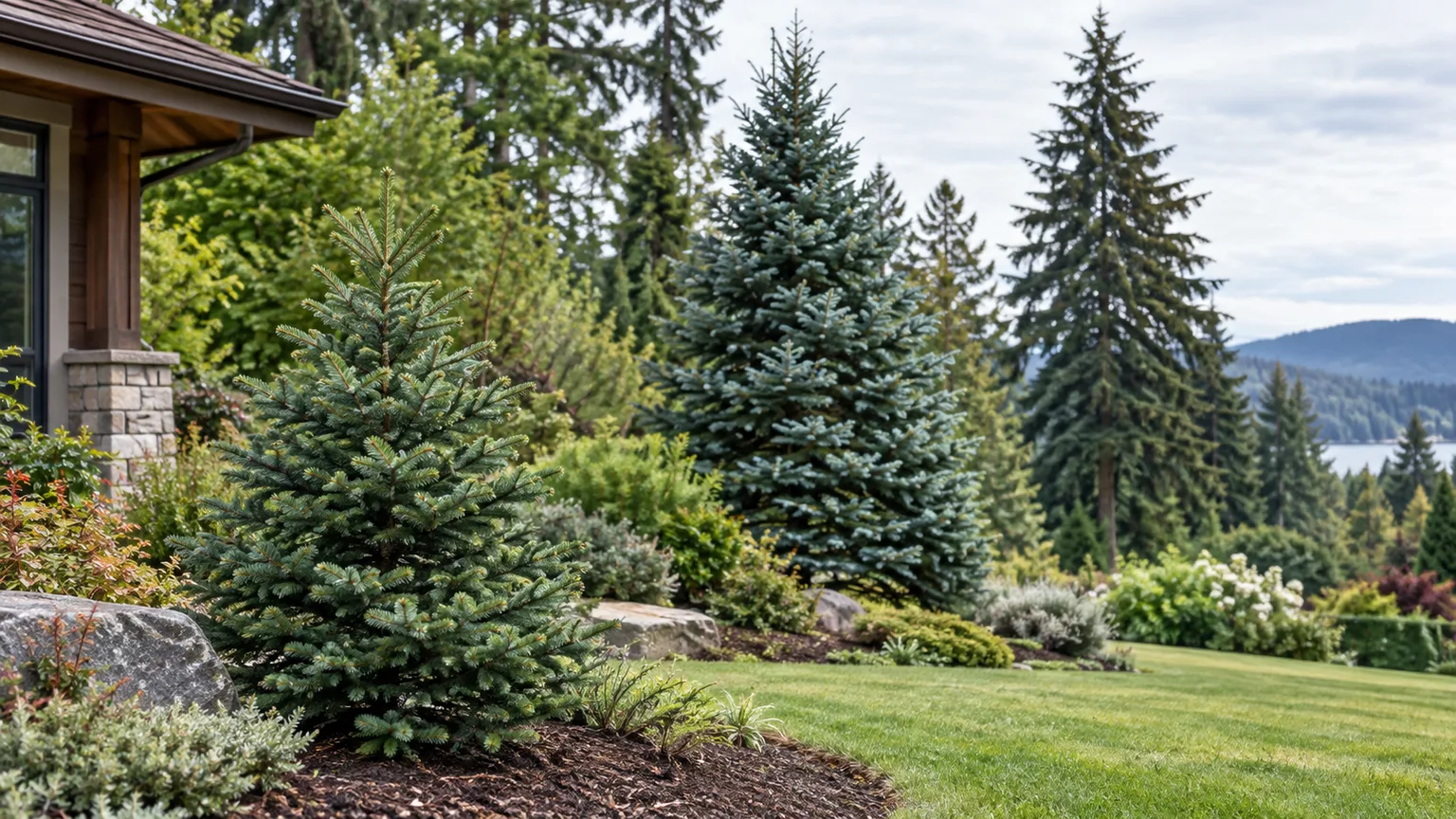
The best real Christmas tree is the one whose natural shape, needle feel, scent, and branches suit the way you decorate—and that you can keep watered once it is home. “Best” is not a fixed species ranking: a fresh, well-hydrated tree of a less famous variety can look better for longer than a dry specimen sold under a popular name.
Most holiday trees belong to the fir, spruce, or pine groups, but commercial choices also include cypress and eastern redcedar; which ones you will actually find depends on regional growers. The National Christmas Tree Association’s variety guide lists the main U.S. trade options. Those labels give you useful clues, but not a complete answer: firs tend to have softer needles and good ornament branches, spruces often have a more pungent scent and sharper needles, and pines can feel open and feathery or dense and sturdy depending on the species. Use the profiles below to narrow the field, then judge the individual tree in front of you.
Fraser Fir
Fraser fir (Abies fraseri) is a strong all-around choice when you want an easy-to-decorate silhouette without a heavy perfume. Its blue-green needles are short and soft, often with silvery undersides, and its branches angle slightly upward. That combination creates visible layers where baubles can hang without disappearing into a solid wall of foliage.
Choose Fraser fir if you want a refined shape, soft foliage, and branches that can support a normal mix of ornaments. It is especially useful in a smaller room because many trees have a relatively narrow profile. Its scent is pleasant but not always as forceful as balsam or grand fir, and the species may cost more or be harder to find outside regions where it is commonly grown. Soft needles do not make any live tree safe for a curious pet to chew; secure the stand and keep breakable decorations out of reach.
Noble Fir
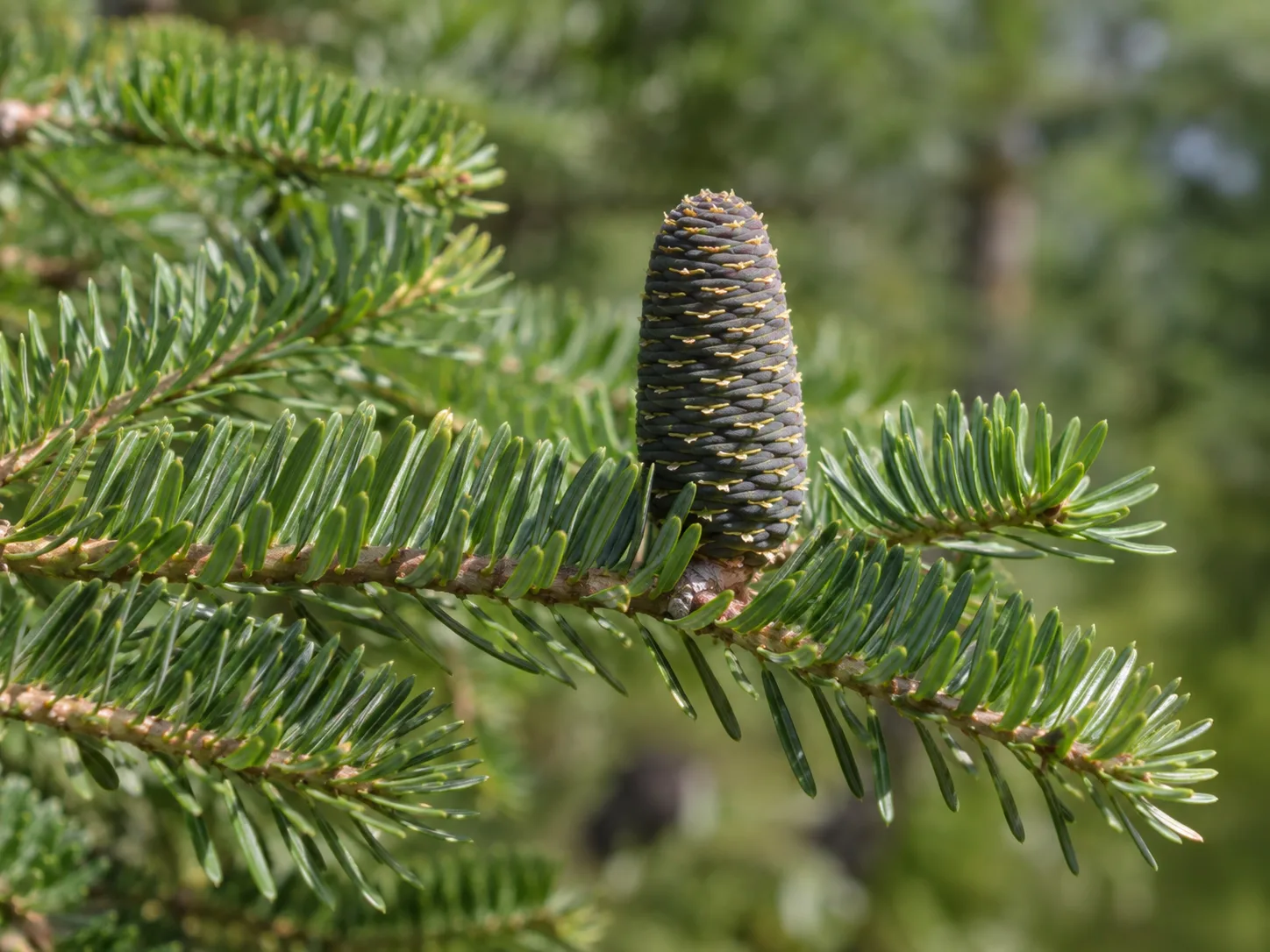
Noble fir (Abies procera) has a blue-green cast, sturdy branches, and a more open, tiered structure than a densely packed tree. Its branches point upward, so ornaments sit in clear pockets instead of resting against the lower boughs. If you like a tree that still looks composed with fewer decorations, noble fir’s natural symmetry does much of the visual work.
It is a smart pick for heavier ornaments and wreath-making because the branch structure is robust, but “sturdy” does not mean every branch can take unlimited weight. Check that the particular tree has the shape and width you can accommodate; noble fir can be broad, and well-formed specimens may command a premium. Availability also varies by region, so ask a local grower before making it your only option.
Colorado Blue Spruce
Colorado blue spruce (Picea pungens) is the color choice: its foliage can range from blue-green to silvery blue, creating contrast with warm lights and red or gold ornaments. Stiff branches hold heavier decorations better than soft, drooping boughs, and the tree’s naturally formal cone works well when you want a crisp, symmetrical outline.
The trade-off is its sharp, stiff needles. Wear gloves while handling it, especially when adjusting branches or taking ornaments down, and avoid it if a crowded room makes people brush past the tree. Dense foliage can also swallow small ornaments, so use fewer, larger decorations or place them closer to the branch tips. A blue spruce is an appearance-first selection; choose it for its color and shape, not because the word “spruce” guarantees a particular fragrance or indoor lifespan.
Grand Fir
Grand fir (Abies grandis) is a favorite for people who want fragrance to be part of the room. Its glossy, dark-green needles are relatively long for a fir, and crushed foliage is often described as citrusy or orange-like. The scent can be noticeable without the sharp resinous character some people associate with pine.
The species is grown and sold most readily in the Pacific Northwest, so it can be less common farther east. Its soft foliage looks good with simple lights and lightweight ornaments, but inspect the branch spacing before buying if you plan to hang large or heavy pieces. As with any aromatic tree, scent perception is personal; stand near it for a minute at the lot rather than relying on a catalog description.
Balsam Fir
Balsam fir (Abies balsamea) is a classic choice for a pronounced evergreen fragrance. Its dark-green needles are short, flat, and soft, while the naturally conical form reads as a traditional holiday tree. The boughs are also useful for wreaths and garlands, which makes balsam appealing if you want the tree and greenery around the home to share a familiar scent.
This fir is most readily found in the Northeast and Canada, although farms and sellers move trees beyond their native range. Balsam’s fragrance is a real advantage for some households and too much for others, particularly in a small room; smell one before committing. It can also have a more open look than a very dense tree, so check the space between tiers and confirm it suits your decorating style.
White Fir (Concolor Fir)
White fir, also called concolor fir (Abies concolor), is a useful middle ground if you like a blue-gray or silvery-green tree but want softer needles than a spruce. Its needles curve upward and can release a lemon-like scent when bruised. The color is often more muted than the vivid blue of Colorado blue spruce, which pairs well with natural wood, white lights, or restrained ornaments.
White fir is grown across parts of the western United States and may be sold under either common name, so ask for the botanical name if color matters to you. Its needle retention is often considered respectable, but no variety compensates for a tree that has been stored dry or left without water. It can be less familiar in eastern markets, and the pale foliage may read more gray than green in dim rooms.
Eastern White Pine
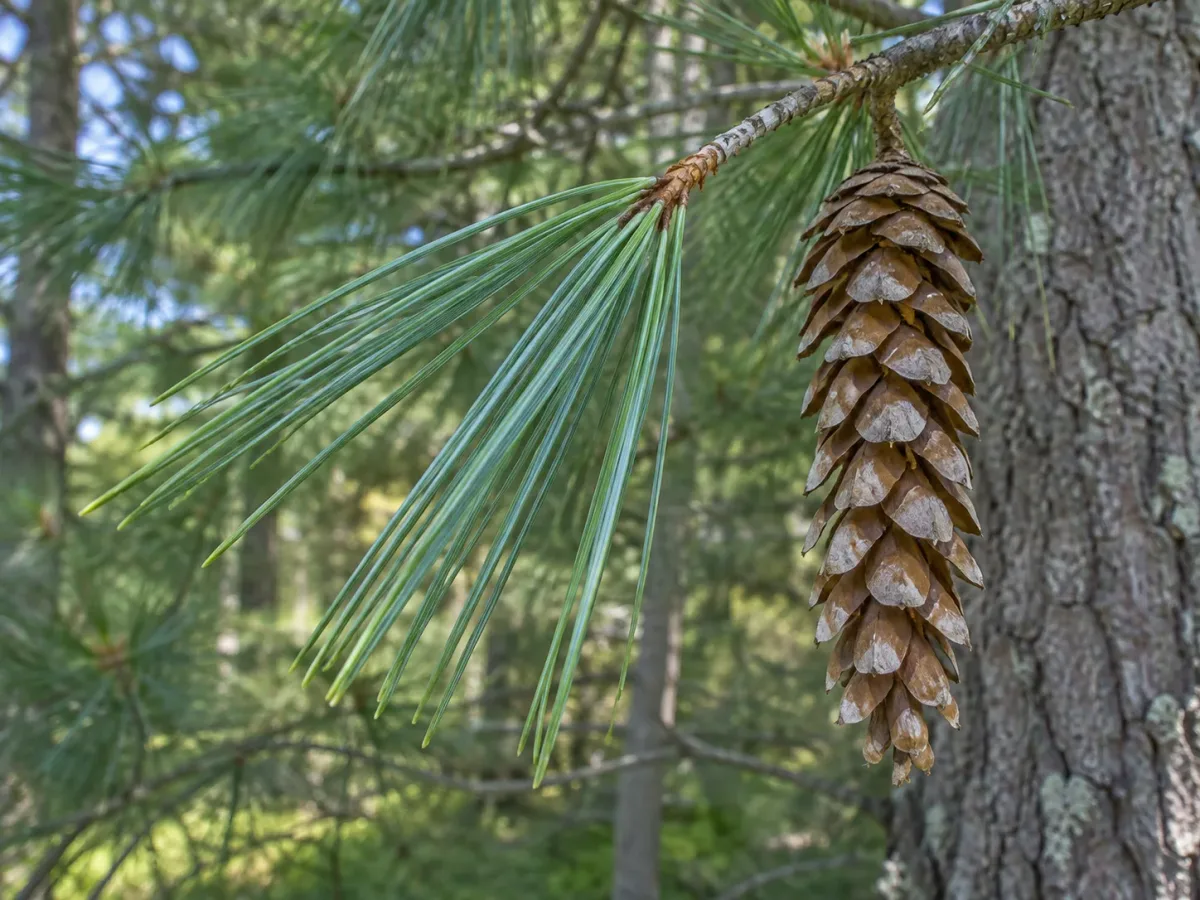
Eastern white pine (Pinus strobus) has long, fine needles gathered in soft clusters, giving it a loose, feathery outline unlike the compact triangle many shoppers picture. That airy structure leaves space for lights and larger visual ornaments, and its gentle texture is comfortable to work around. A branch or two can also add graceful movement to a garland or tabletop arrangement.
Its branches are less suited to a dense load of heavy glass ornaments than the thick boughs of a fir or spruce. Think lightweight pieces, ribbon, paper ornaments, and lights rather than packing every branch. The fragrance is generally subtler than that of balsam or grand fir, and this pine is most likely to appear in the Northeast and nearby markets. Choose it for texture and a relaxed silhouette, not for a conventional full-bodied look.
Douglas Fir
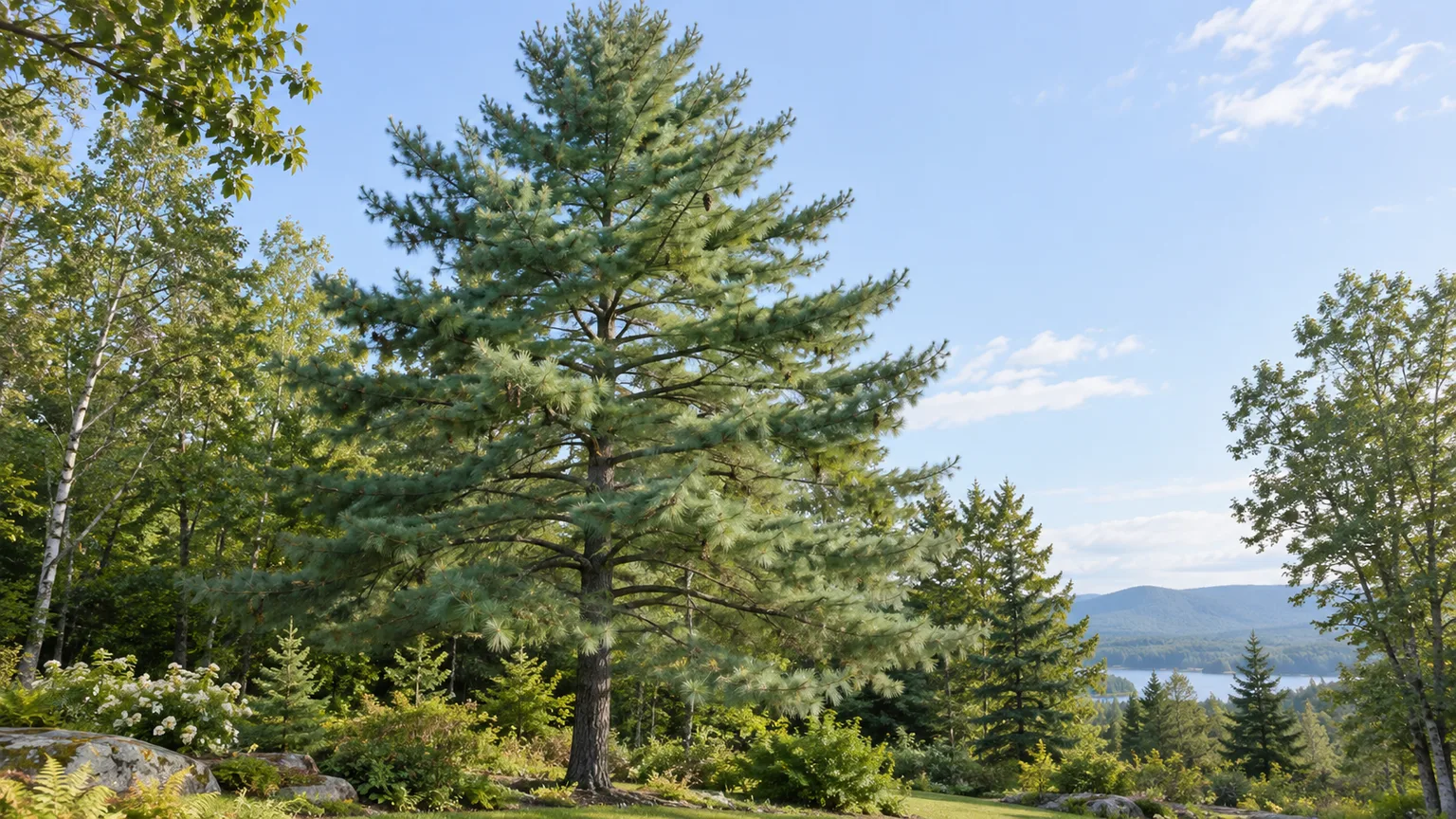
Douglas fir (Pseudotsuga menziesii) is not a true fir despite its familiar name. It is widely grown in the western United States and is a common, often accessible cut-tree option in many markets. Soft, dark-green needles and a full conical form give it the familiar “Christmas tree” look, while the aroma can be sweet and resinous.
Density is the detail to check before you buy. A very full Douglas fir may leave little room to thread lights or place ornaments near the trunk, so look between the branches rather than judging only from the front. Its branches can hold a moderate decorating load, but an individual tree’s cut, freshness, and branch arrangement matter. If it will stand indoors for several weeks, prioritize a fresh specimen and consistent water over claims about how long the species lasts.
Norway Spruce
Norway spruce (Picea abies) has the narrow, classic outline many people associate with older holiday illustrations. The short needles are dark green, and the tree can give off a pronounced evergreen fragrance. Its shape suits traditional lights and ornaments, particularly when you prefer a natural tree with a little space between tiers.
Needle drop is the main compromise: a Norway spruce can shed more readily indoors than many firs, especially when it is already dry or the room is warm. Buy it closer to the date you plan to decorate, keep it away from heating vents and fireplaces, and check the water reservoir every day. If you know your household tends to forget watering or you want to set up very early, a fir or Scots pine may be a more forgiving choice.
Scots Pine
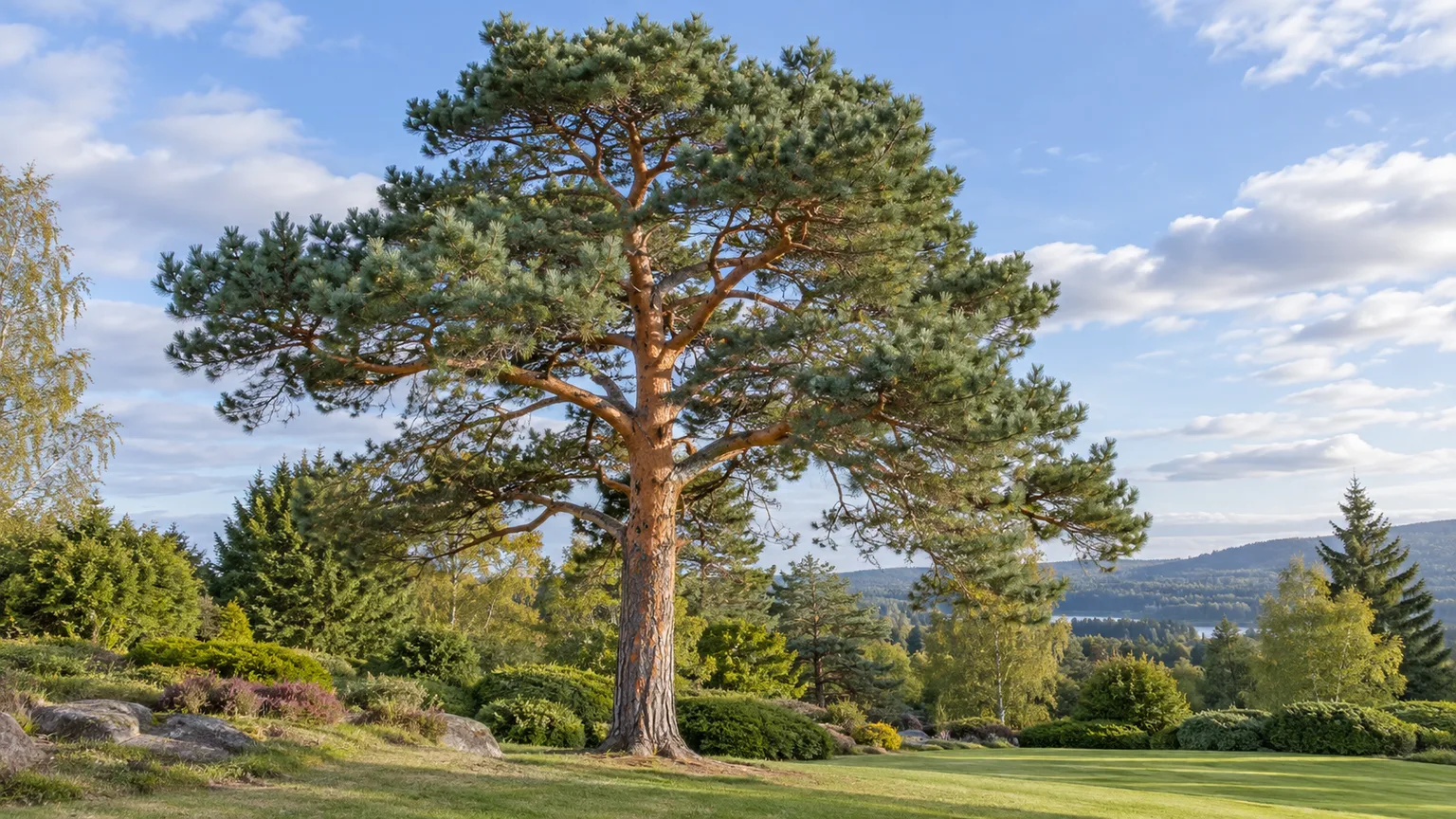
Scots pine (Pinus sylvestris), often called Scotch pine in the Christmas-tree trade, is valued for strong branch structure and reliable needle retention when it is fresh and cared for. Its needles grow in pairs and are firmer than the soft foliage of most firs. A tree can have a slightly irregular, natural outline and warm-toned bark, details that suit a rustic decorating scheme.
Those firm needles can be prickly, so use gloves when handling the tree and do not expect them to deter a cat or dog. The branches are a plus if you use heavier ornaments, but look for even spacing and a well-balanced trunk rather than assuming every specimen is full. Scots pine is common in some regions and less available in others; regional farms determine what actually reaches the lot.
Leyland Cypress
Leyland cypress (Cupressus × leylandii) is a hybrid evergreen sold as a Christmas tree in parts of the southeastern United States. Its fine, scale-like foliage gives it a soft, feathery surface and a green-to-gray-green color that looks different from the flat needles of a fir. Its scent is usually lighter than the strongly aromatic firs, which may suit a household that wants less fragrance.
Availability is regional, and its branch structure may be less appropriate for a heavy collection of ornaments than a robust fir. Ask the seller how long the tree has been cut and check that the center is not already dry; low scent should not be confused with superior freshness. Allergy responses are individual, so do not treat any species label as a guarantee that a tree will be allergy-proof.
White Spruce
White spruce (Picea glauca) has short, stiff needles and a blue-green cast that can look bright under cool white lights. Its branches have a crisp structure that works for a more formal silhouette and can support a useful range of decorations. It is a northern tree, so it is more readily sold in parts of Canada and the northern United States than in warmer regions.
Crushed needles can have an unpleasant odor, so avoid rubbing branches while decorating and pause to smell the tree before taking it home. Like other spruces, it can be prickly to handle. Its look may resemble Colorado blue spruce from a distance, but the color varies by tree and the two should not be treated as interchangeable if you are shopping for a specific blue tone.
Eastern Redcedar
Eastern redcedar (Juniperus virginiana) is a juniper, not a true cedar. It has scale-like or awl-shaped foliage, a narrow pyramidal habit, and a distinctive aromatic character that makes it a regional alternative in parts of eastern North America. Small blue, berry-like cones may appear on outdoor trees, although a cut specimen’s shape and fruiting can vary.
This is not a standard tree-lot choice everywhere. It is most appealing when you have access to a locally grown, well-shaped tree and want a natural, less conventional profile. Check branch spacing and ornament support in person; narrow, dense growth can make decorating awkward. If cutting your own, use a farm that permits it or confirm local rules and landowner permission rather than assuming a wild tree is available to harvest.
Arizona Cypress
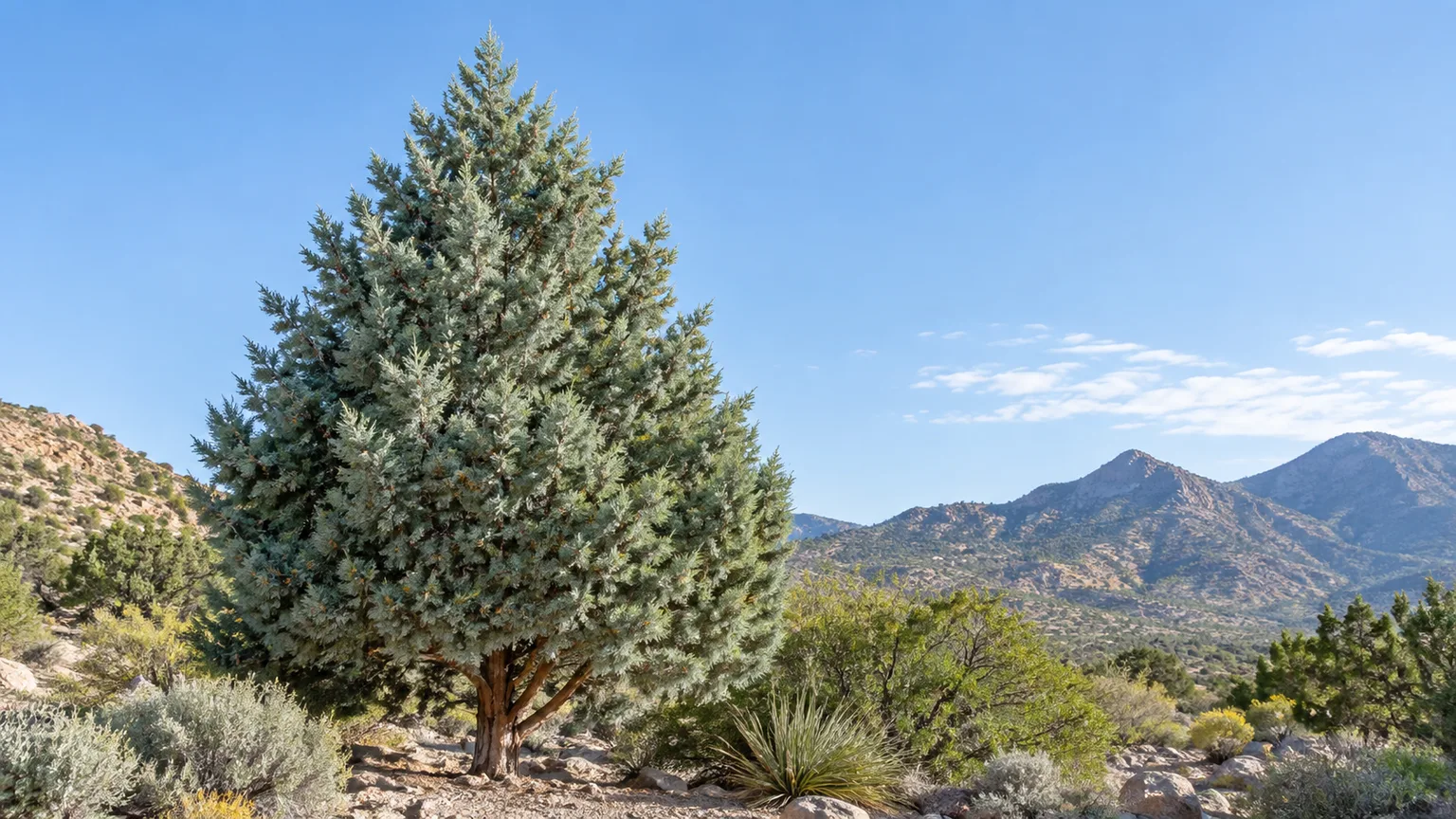
Arizona cypress (Hesperocyparis arizonica, also sold under the older name Cupressus arizonica) brings a blue-gray or muted green color and scale-like foliage to the list. It is more likely to be offered by growers in the Southwest and other warm regions than by northern tree farms. For a shopper who cannot find a familiar fir locally, it can be a distinctive regional option rather than an odd substitute.
Its narrow foliage texture and branch strength differ from the broad, layered boughs of a fir. Inspect it with your intended ornaments in mind, and do not expect a generic care tip to make every species behave alike. The exact form, freshness, and local growing conditions matter; ask the seller whether the tree is commonly used as a cut holiday tree in your area and how it performs indoors.
Virginia Pine
Virginia pine (Pinus virginiana) is a regional pick in the southeastern United States. Its short needles and sturdy branches give it a more rugged, textured look than the long-needled eastern white pine. It can work well for a household that wants locally grown greenery and a tree with a less polished, more natural outline.
Needles may feel stiff, and the shape can be less uniformly symmetrical than a carefully sheared fir. That is not automatically a flaw: a slightly open tree gives ornaments room, but you will want to rotate it at the lot and inspect the back before loading it. Ask whether it has been freshly cut and how the farm recommends handling its branches; a locally popular species may be unfamiliar to a chain retailer.
Canaan Fir
Canaan fir is a market name used for a fir type closely related to balsam fir, often grown in the Appalachian region. It shares the classic fir outline and soft, short needles, with foliage color that can range from medium green to blue-green. Growers value it as a regional option, and shoppers may find it offers a familiar fir appearance when Fraser or balsam trees are scarce.
Its characteristics can vary more than a name on a lot tag suggests, so treat the individual tree as the final test. Check the branch spacing, needle flexibility, and freshness instead of assuming every Canaan fir has the same color or scent. If you are comparing it with Fraser or balsam fir, stand the trees side by side and choose according to your decorating load, room size, and fragrance preference.
Black Hills Spruce
Black Hills spruce is a dense, compact form of white spruce, commonly identified as Picea glauca var. densata. Its tight branching and blue-green needles create a full tree with a naturally tidy outline. It can appeal to shoppers who want a smaller, substantial-looking spruce or a tree that does not need many ornaments to feel finished.
The same density can make lights and ornaments harder to place, while the needles are firm and can be sharp. This variety is not stocked as broadly as the best-known firs, so availability depends on local growers. Before buying, inspect the interior for dry, brown needles and test whether your usual ornaments can sit securely on the outer branches.
How to Choose and Keep a Christmas Tree Fresh
Start by measuring the ceiling, the footprint, and the route from the door to the stand. Include the topper and stand in your height calculation, then account for the widest lower branches; trees often look smaller outdoors than they will in a living room. If the tree will sit in a corner, check that the attractive side can face out while the trunk stays straight in the stand.
Use this quick comparison as a starting point, not a guarantee about every tree. Practical buying guides from Gardeners Dream and Christmas Trees Direct also focus on the variables that change the choice at home—space, scent, needle feel, branch strength, and how early you plan to display the tree. Their availability and product-life estimates reflect their own markets, so inspect the tree you are considering rather than treating any variety label as a guarantee.
| If you care most about… | Start with… | Check before buying |
|---|---|---|
| A balanced, easy-to-decorate tree | Fraser or noble fir | Width, branch spacing, and local price |
| A strong evergreen fragrance | Balsam or grand fir; Norway spruce | Smell it yourself; scent is personal |
| Blue or silver foliage | Colorado blue spruce or white fir | Actual color under daylight and indoor light |
| Heavy ornaments | Noble fir, Scots pine, or a sturdy spruce | Branch thickness and attachment on that specimen |
| Soft needles | Fraser, balsam, or white fir | Do not treat softness as pet protection |
| A light, feathery silhouette | Eastern white pine | Use lighter ornaments and expect a less dense outline |
| A locally distinctive tree | Leyland cypress, Virginia pine, Arizona cypress, or redcedar | Regional availability and indoor performance |
At the lot, look for resilient needles that remain attached when you gently stroke a branch, a flexible outer twig, and a trunk that is not badly damaged. Ask when the trees arrived and whether they have been kept in water or protected from drying wind. Do not rely on one shake test: some needle loss from the inner, older growth is normal, and tree freshness depends on more than a dramatic shower of needles.
Once home, make a fresh straight cut across roughly half an inch of the trunk base if the tree has been out of water or the cut is no longer fresh. Put it in a water-holding stand promptly, then keep the cut surface submerged by checking the reservoir at least daily. University of Georgia Cooperative Extension recommends a fresh cut, adequate stand water, and placement away from heaters, fireplaces, and wood stoves; plain water and a consistent refill routine are more useful than trying to rescue a dry tree with additives. A tree that has dried out may not resume normal water uptake just because you refill the stand.
The species is only one part of how long a tree looks good indoors. A fresh tree in a cool spot with a full reservoir usually has an advantage over an older tree beside a heat source, regardless of its label. Use lights and cords in sound condition, switch them off when no one is home or awake, and anchor the stand if children or pets might pull on branches. For additional care detail, University of Georgia Cooperative Extension’s selection and care guidance explains freshness, water, and placement, while the National Christmas Tree Association’s holiday safety guidance addresses safe seasonal use.
Conclusion
For an easy all-around choice, begin with Fraser fir; for fragrance, compare balsam and grand fir; for blue color, consider Colorado blue spruce or white fir; and for a lighter silhouette, look at eastern white pine. If your priority is heavy ornaments, inspect noble fir, Scots pine, or a sturdy spruce in person. The right answer depends on what is actually available where you live and the exact tree’s condition.
Before paying, confirm that the tree fits your room, that its branches suit your ornaments, and that you can keep its trunk base in water. Those checks do more to protect your holiday display than a promise that any single species is “the best.”