Azalea vs. Rhododendron: How to Tell Them Apart in a Garden
All azaleas are rhododendrons, but garden labels use the names differently. Learn which flower and leaf clues help—and where those clues can mislead outdoors.
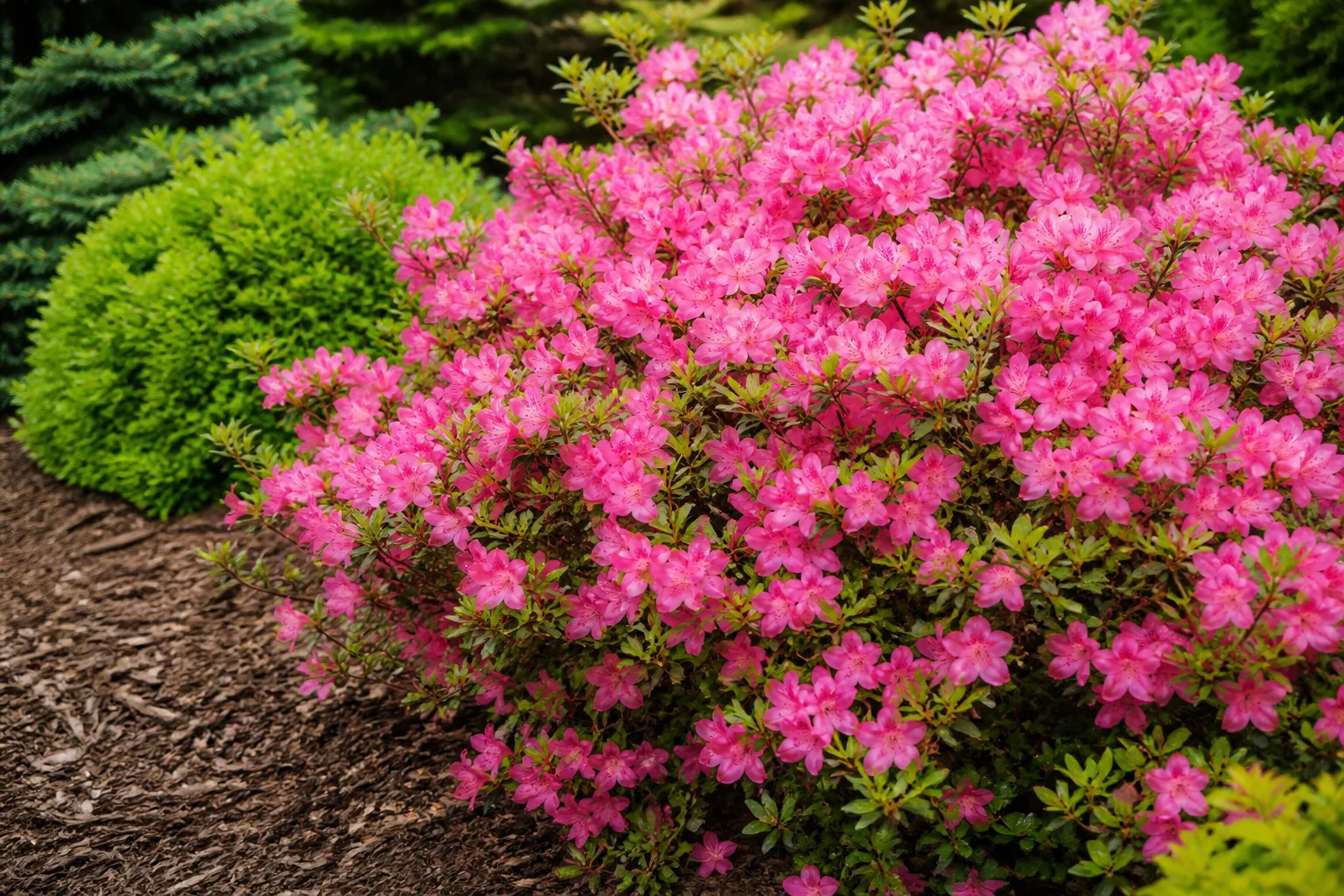
If a shrub is labeled “azalea” or “rhododendron,” the name alone can seem to settle the question—until you see a plant that looks like both. The confusion is real: azaleas belong to the genus Rhododendron, so “azalea versus rhododendron” is a garden-language comparison between groups within one genus, not a contrast between two separate genera.
For a practical identification, start with a fresh flower and count its stamens, then inspect the underside of a mature leaf with a hand lens. Most azaleas have five or six stamens and hairs that lie along the leaf surface; many rhododendrons have ten or more stamens, and small-leaved lepidote rhododendrons have tiny scales beneath the leaves. These are useful patterns, not a guarantee: cultivar, hybrid, flower form, and the way a nursery uses a common name can complicate a quick guess.
The quickest reliable answer
When the plant is flowering, a single uncomplicated flower is often your best first clue. Azalea flowers usually have five or six stamens; the plants sold as rhododendrons generally have ten or more. If the bloom is double or the stamens are hidden, turn to the leaf underside rather than counting decorative petals or judging by color.
| Clue | More typical of an azalea | More typical of a rhododendron |
|---|---|---|
| Stamens in a single flower | Five or six | Ten or more |
| Leaf feel and shape | Often thinner, softer, and more pointed | Often thicker or more leathery, especially in broad-leaved types |
| Leaf underside | Long, flat-lying hairs may be visible | Small-leaved lepidote types have scales; other groups vary |
| Flower placement | Flowers may appear along the sides of a stem as well as at the tip | Flower trusses usually gather at branch tips |
| Leaf retention | Evergreen or deciduous | Usually evergreen in common garden types, but deciduous species exist |
Treat the rows as a set of clues, not a scoring system where one “yes” wins. A large evergreen azalea can look more like a rhododendron than a deciduous azalea does, while a small-leaved rhododendron may initially resemble an evergreen azalea. The strongest field identification comes from the flower and leaf surface together, followed by the plant label or a regional expert’s confirmation.
Why the names overlap
Botanically, Rhododendron is the genus name used for azaleas as well as the shrubs gardeners commonly call rhododendrons. The Azalea Society of America explains the distinction through groups within the genus; its practical overview notes that azaleas usually have five stamens, thinner leaves with hairs along the underside, and flowers that can occur along the stem, while the familiar rhododendron group usually has more stamens and terminal flower clusters. The University of Washington’s Elisabeth C. Miller Library gives the same central clarification and points gardeners to flower and leaf details for identification. (Azalea Society of America; University of Washington Elisabeth C. Miller Library)
That means a botanical label such as Rhododendron followed by a species or cultivar name does not rule out an azalea. In nursery and garden conversation, “azalea” remains a useful horticultural name for familiar groups with characteristic flower and leaf traits, even though it is not a separate modern genus. A plant tag may use either the common name or the genus name, and both can be correct.
The naming convention is useful for recognizing the sort of plant a seller is describing, but it cannot identify every individual shrub. Plant labels, cultivar records, and regional sources are more reliable than trying to infer a fine-grained taxonomic identity from a snapshot alone. NC State Extension’s Plant Toolbox reflects this overlap by listing both “azalea” and “rhododendron” among common names for the genus profile. (NC State Extension Plant Toolbox)
A field checklist: inspect more than one clue
Use this order when you are standing beside an unknown flowering shrub:
- Choose one fresh, single flower and count the stamens if you can see them.
- Look at where the flowers sit: distributed along the stems, concentrated at branch tips, or both.
- Turn over a mature, healthy leaf and check its texture and underside with a 10× hand lens or a phone’s close-focus camera.
- Note whether the leaves persist through winter, but keep that clue secondary.
- Compare several features with a nursery tag, cultivar record, or extension identification service before treating the name as certain.
This sequence makes the easiest high-value evidence available first. A bloom may be absent, damaged, or too double to inspect; in that case, the leaf underside and growth pattern move up the list. Birds & Blooms also cautions readers that these are general identifying traits and recommends a second opinion for difficult plants, a useful reminder for hybrids and cultivars that blur the usual distinctions. (Birds & Blooms)
Take notes rather than making a permanent label from one observation. For example: “five visible stamens, flat hairs on lower midrib, evergreen, flowers along side shoots” is far more useful than “looks like an azalea.” It preserves the evidence if a later photo, a different season, or a plant record points in another direction.
Flower clues are the best place to start
Flower shape and arrangement are easy to notice from a path, but the reproductive parts give a stronger clue when the bloom is open and simple. Look at several flowers if possible; one damaged bloom, an unusual cultivar, or a heavily doubled flower can hide the feature you need.
Count stamens, not petals
Stamens are the slender pollen-bearing structures inside a flower. Each usually consists of a filament with an anther at its tip; the stigma and style in the center are separate parts, so do not count those as stamens. In broad terms, an azalea flower usually has five, sometimes six, stamens, while the group commonly called rhododendrons usually has ten or more. Both the Azalea Society of America and the University of Washington’s library describe this as a general identification clue, not an infallible rule. (Azalea Society of America; University of Washington Elisabeth C. Miller Library)
To count them, choose an open flower that has not browned or been damaged. Gently pull back a petal only if the flower is already loose or spent; avoid tearing a healthy bloom on a plant you do not own. Count the thin filaments around the central style, moving clockwise so you do not lose your place. If petals are doubled, stamens can be partly transformed or hidden, which makes that flower a poor specimen for this test.
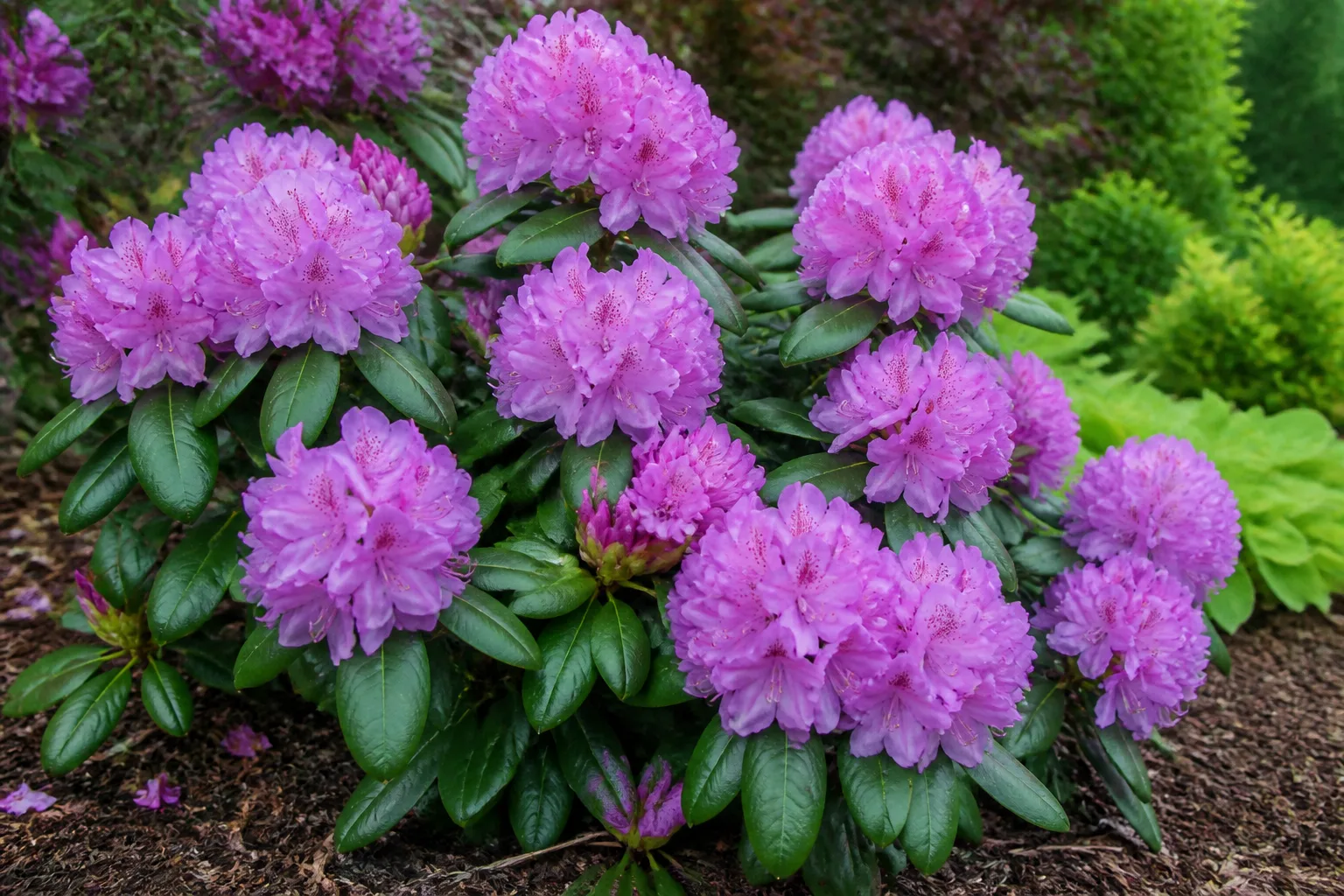
Do not mistake a showy cluster for one flower. Rhododendron trusses often look like a single pom-pom from a distance, but they are made of separate flowers; pick one bloom within the truss and count its stamens. Likewise, an azalea shrub covered in bloom carries many separate flowers even when the branches look carpeted with color.
Compare flower shape and placement
Azalea flowers are often funnel-shaped, with a relatively open throat and long stamens that project beyond the petals. The plants commonly called rhododendrons often have bell-like or broadly flared flowers grouped into a rounded truss at the end of a branch. The NC State profile and the Birds & Blooms identification guide both present these as useful general contrasts while recognizing variation across the genus. (NC State Extension Plant Toolbox; Birds & Blooms)
Arrangement adds context. Azaleas can set flowers along the sides of new growth as well as at the tip, while familiar rhododendron forms tend to concentrate their trusses at shoot ends. Yet a single flowering branch may not show the whole pattern; follow several stems back through the shrub before deciding. A cultivar with dense branching can make terminal flowers seem evenly distributed, and a sparse rhododendron may not produce the lush dome people expect.
Petal color is weak evidence. Azaleas span white, pink, purple, red, orange, and yellow, and rhododendron flowers cover many of the same colors. Color can narrow down a cultivar when paired with a known region and bloom season, but it does not separate the two groups on its own.
Leaf clues can settle a close call
Leaf size is a useful first impression but not a verdict. Many azaleas have relatively small, narrow leaves, while many garden rhododendrons have larger, thicker leaves; however, azaleas vary widely in leaf size and some rhododendrons have small foliage. Compare leaves from the same stage of growth, because a fresh spring leaf may be softer and more brightly colored than a hardened summer leaf.
The underside can provide better evidence than the upper surface. Azalea leaves often have long, straight hairs that lie nearly parallel to the surface, commonly concentrated near the midrib. Small-leaved rhododendrons in the lepidote group have tiny round scales on their leaf undersides; the word “lepidote” itself refers to this scaly covering. The Miller Library and the Azalea Society of America describe these hairs and scales as especially helpful when two evergreen shrubs look alike. (University of Washington Elisabeth C. Miller Library; Azalea Society of America)
Use a hand lens to look for hairs and scales
Pick a mature leaf that is clean and undamaged. Hold it against a light background, turn the underside toward the light, and inspect the midrib and nearby surface with a 10× hand lens. Flat-lying hairs look like fine threads aligned with the leaf; scales look more like tiny round or disk-shaped points embedded on the surface. A phone macro lens can help you record the pattern, but a hand lens is often easier because it holds a stable view.
Check more than one leaf before interpreting what you see. Dust, dried pollen, insect residue, and stippling from feeding can all make a leaf look speckled; pest damage is usually irregular and may come with discoloration or marks on the opposite surface. If the underside is dirty, brush it gently with water and allow it to dry instead of scraping away the features.
Leaf texture supports the close-up evidence. Azalea leaves are often thinner, softer, and more pointed; broad-leaved rhododendrons often feel more leathery. These qualities overlap, so do not diagnose from “soft versus stiff” alone. Pair texture with flower parts, hair or scale pattern, and the distribution of flowers to make a more defensible identification.
Treat leaf retention and growth habit as supporting clues
Seasonal behavior can help when you observe the shrub across the year, but it is not a shortcut that works for every type. Many azaleas are deciduous, and many common rhododendrons are evergreen. There are evergreen azaleas and deciduous rhododendron species, so a shrub that drops its leaves or keeps them in winter can challenge rather than confirm a first guess.
Evergreen does not automatically mean rhododendron
An evergreen azalea keeps foliage through at least part of winter, though leaf color, leaf drop, and the proportion of leaves retained can vary with cultivar and climate. Some azaleas form smaller winter leaves or shed part of their foliage under stress or cold conditions. A gardener who sees a bare or partly bare shrub in January cannot infer a separate genus from that one seasonal snapshot.
Deciduous azaleas often provide a clean seasonal signal: their leaves fall, then spring flowers can open on bare or newly leafing branches. But deciduousness is not exclusive to azaleas. NC State Extension describes the genus profile as including both evergreen and deciduous shrubs, and Birds & Blooms likewise notes that most—not all—azaleas lose their leaves. (NC State Extension Plant Toolbox; Birds & Blooms)
If you are comparing plants during winter, use last year’s photos, a fallen leaf, old flower stems, and the original nursery tag if available. Evergreen habit can strengthen a rhododendron guess only when it agrees with leaf and flower evidence; it should not overturn a clear five-stamen flower or a distinctive leaf-hair pattern.
Size, color, and bloom date are weak clues
Rhododendrons are often described as the larger shrubs, but garden forms range from compact mounds to substantial woodland shrubs. Azaleas also vary in size, from low cultivars to large, open shrubs. A tall plant does not become a rhododendron by virtue of height, and a compact plant is not automatically an azalea.
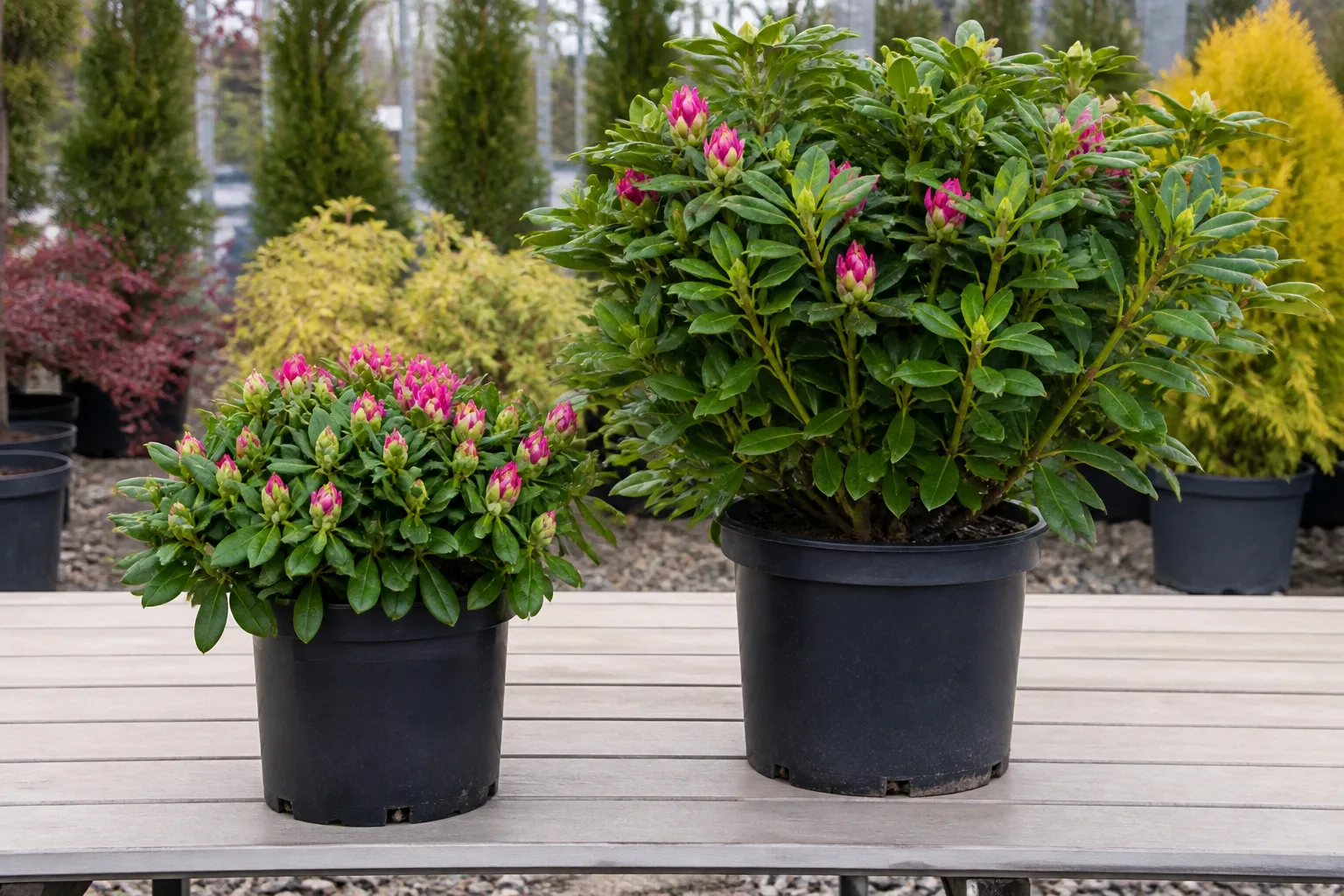
Flowering calendars depend on species, cultivar, elevation, exposure, and the year’s weather. One azalea may flower early while another opens later, and different rhododendrons can bloom across a long spring window. “It flowered in April” is useful information for matching a regional plant list, but it cannot reliably settle the name without local context.
Even a striking yellow or orange bloom is a clue, not a categorical test. The Azalea Society of America notes a broad color range among deciduous azaleas, while the familiar garden rhododendrons are more commonly seen in white, pink, purple, or red. Hybrids and cultivar selection make color too variable to use as a stand-alone identification rule. (Azalea Society of America)
Identify a shrub when it is not blooming
An unbloomed plant is still identifiable to a useful level if you collect enough evidence, but confidence may be lower until flowers appear. Start with a healthy, mature leaf rather than a tiny new leaf or one with damage, and compare several leaves from different sides of the plant. Then use the following sequence:
- Look under the leaf. With a hand lens, check for flat-lying hairs along the midrib or tiny round scales on the surface.
- Check the leaf texture and outline. Record whether it is thin and soft or thick and leathery, and note whether the tip is pointed; do not treat these traits as decisive by themselves.
- Look at the branch tips. Note whether old flower stalks or buds are concentrated at the ends, and whether small shoots carry buds farther down the stem.
- Track the plant through a season. Record whether leaves persist, change color, or drop, and when the shrub next flowers.
- Compare your notes with the tag or a local reference. Use a named cultivar or species record when you find one instead of forcing every feature into a generic azalea/rhododendron chart.
Photograph the whole shrub, a mature leaf from above, the same leaf from below, a branch tip, and an open flower when it appears. Include a ruler or familiar object for scale, but keep it beside the leaf rather than pressing it onto the plant. These five views let an extension educator or specialist check habit, leaf structure, flower arrangement, and the reproductive parts rather than guessing from a single close-up.
If no flowers are present and the leaf underside is ambiguous, record the result as “likely” rather than relabeling the plant with certainty. Some features require a loupe or a flower, and cultivar history may be impossible to reconstruct from appearance alone. A careful provisional identification is more useful than confidence based on one familiar-looking blossom.
What the name means for care
For everyday growing, the overlap is more important than the label. Many azaleas and rhododendrons prefer acidic, organic soil that stays evenly moist but drains well, with protection from intense afternoon heat in climates where foliage or shallow roots dry quickly. NC State Extension describes these shrubs as suited to dappled shade and moist, well-drained acidic conditions, while the Azalea Society of America outlines similar moisture and drainage needs for azalea groups. (NC State Extension Plant Toolbox; Azalea Society of America)
The name still matters when you choose a plant for a specific site. A label identifies a species or cultivar whose mature size, cold tolerance, leaf behavior, bloom timing, and sun tolerance can differ substantially from another member of the same broad group. Read the full botanical name on the tag, then confirm the plant’s mature dimensions and hardiness for your region instead of assuming the shared care pattern makes two shrubs interchangeable.
Shared needs still depend on the cultivar and site
If you inherit an unlabeled shrub, avoid drastic pruning, transplanting, or fertilizer decisions based only on a tentative identification. First solve the basic conditions that both groups commonly need: reliable drainage, even moisture during establishment, and a root zone that is not being baked by reflected afternoon heat. If a symptom appears, diagnose the soil, roots, and exposure before applying a treatment; the common name is not a diagnosis.
When buying a replacement, use the nursery tag as the start of the answer, not the end. Search the scientific name, compare it with an extension or botanical garden profile, and ask the seller which plant group and cultivar they are using. Plant Addicts likewise emphasizes that the usual differences are general traits and that a definitive identification is not always possible from one characteristic. (Plant Addicts)
When a photo-based guess is not enough
Some plants will remain difficult to name from a photograph. Double flowers may hide the stamens; a foliage-only shot may not show scales; a hybrid may combine an azalea-like leaf with a rhododendron-like flower cluster; and a young plant may not yet show its mature shape. Even well-informed garden sources frame these traits as tendencies rather than an absolute key, because the horticultural groups have wide variation.
Ask for help when the exact name affects a purchase, a garden record, a plant collection, or a regional conservation decision. Contact a cooperative extension office, botanical garden, local rhododendron society, or the seller who provided the plant. If you are only deciding whether to water, mulch, or preserve the shrub, its observable site needs may be enough; exact taxonomy is not required for every care choice.
Record the details that help an expert
Send a concise set of evidence instead of a single flower close-up. Include where and when the plant was growing, the approximate shrub size, whether leaves persist over winter, and clear photos of the whole plant, one flower from the front and side, and the top and underside of a mature leaf. If possible, include a sharp close-up of the leaf midrib and the count of stamens from an undamaged, single flower.
Preserve the original tag or take a readable photo of it before it fades. A cultivar name can resolve a question that visible traits cannot, especially when the plant is a hybrid. The local reviewer may be able to match the name to a regional list or request one additional feature, such as leaf scales, rather than asking you to dig up the shrub or cut off a branch.
Conclusion
Azaleas are part of the genus Rhododendron, and the everyday distinction is best made by combining flower and leaf evidence. Start with stamens in a single flower, then check how flowers sit on the stems and inspect leaf undersides for flat-lying hairs or scales. Treat evergreen habit, size, bloom time, and color as supporting clues because each varies across species and cultivars.
When the evidence agrees, you can make a practical identification; when it conflicts, keep the label provisional and document the shrub until an open bloom, plant record, or local expert clarifies it. That approach gives you a better answer without pretending that one familiar-looking trait can identify every azalea or rhododendron.