How to Grow and Care for Bridal Wreath Spirea Shrubs
Bridal wreath spirea blooms on older stems. Find its best planting space, watering rhythm, pruning window, and fixes for sparse flowers or leggy growth.
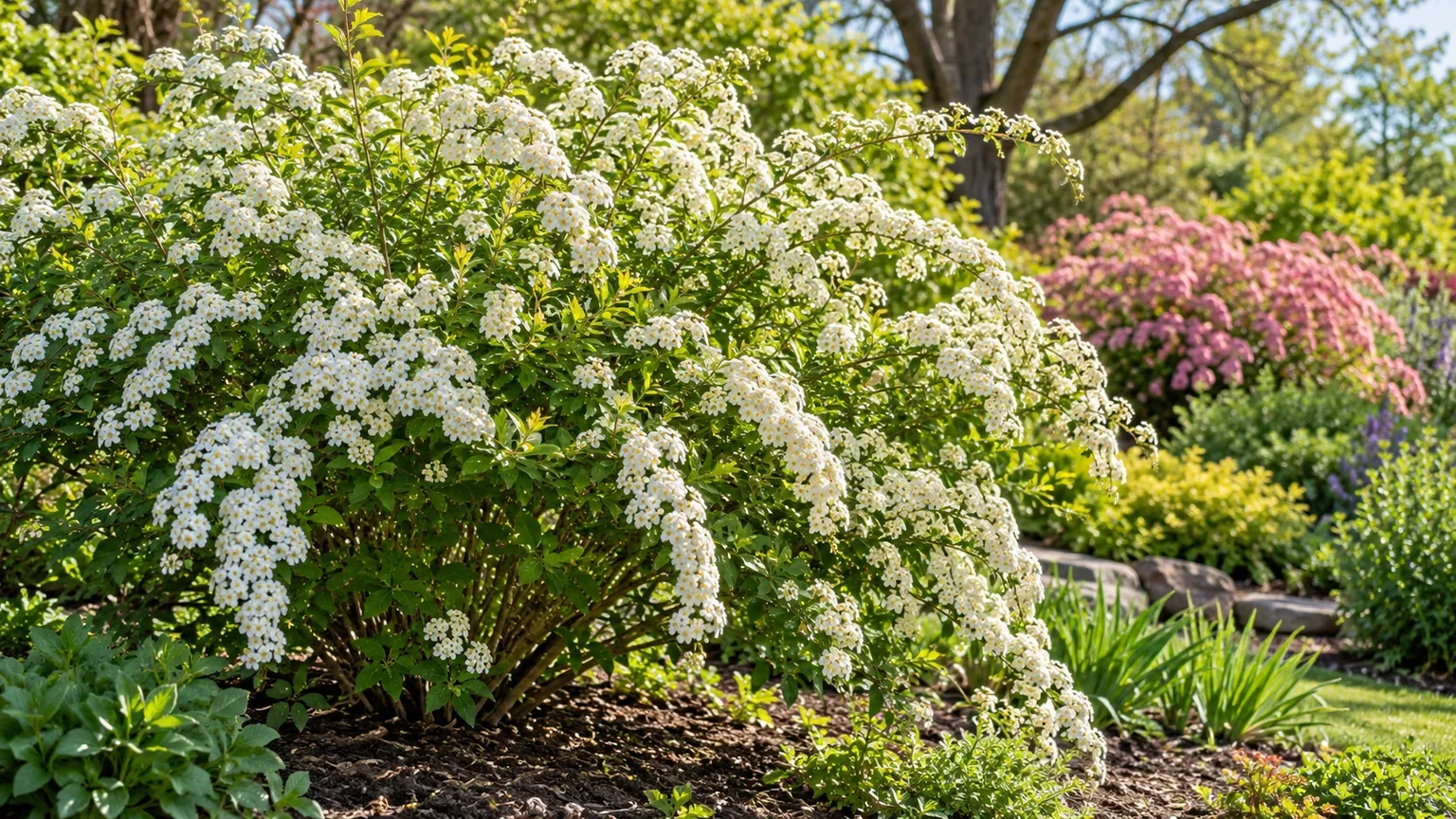
Bridal wreath spirea is a spring-flowering shrub for gardeners who want a dramatic, short-lived display followed by an easy green backdrop. The name can refer to more than one plant, though, and that matters: a shrub sold as bridal wreath may be Spiraea prunifolia or the different hybrid S. × vanhouttei. Check the botanical name on the nursery label before you choose a spot or prune it.
For S. prunifolia, the central care rule is simple: give it room, keep its roots out of standing water, and prune just after its white flowers fade. It blooms on stems formed the previous year, so a winter haircut can remove the very buds you want to see in spring.
Identify the Bridal Wreath Spirea You Have
Spiraea prunifolia is a deciduous shrub in the rose family, Rosaceae. It grows as an upright, clumping plant with long branches that arch outward; NC State Extension lists a mature height and width of about 4 to 8 feet for both dimensions. In early spring, small double white flowers line the branches, often before the leaves open. The foliage is glossy green through summer and may turn yellow, orange, or red in fall.
The label is worth checking because S. × vanhouttei also goes by bridalwreath spirea. Penn State Extension distinguishes the two: S. prunifolia has smaller clusters of double flowers and a shrub about as wide as it is tall, while the hybrid carries single flowers on longer, vase-shaped branches. Japanese spirea, S. japonica, is another plant in the genus, typically with a rounded habit and pink summer flowers; its pruning schedule and regional environmental concerns are not interchangeable with those for this spring bloomer. See the NC State Extension profile for S. prunifolia and Penn State Extension’s comparison of spirea species before treating an unlabeled shrub as a particular type.
Many nurseries sell the double-flowered form as S. prunifolia ‘Plena.’ If a tag says only “bridal wreath,” take a photo of its flowers and leaf shape, then compare the plant with a reliable botanical profile or ask the nursery to confirm its botanical name. You do not need to identify every cultivar to care for the shrub, but you do need to know whether it is a spring bloomer before you prune it.
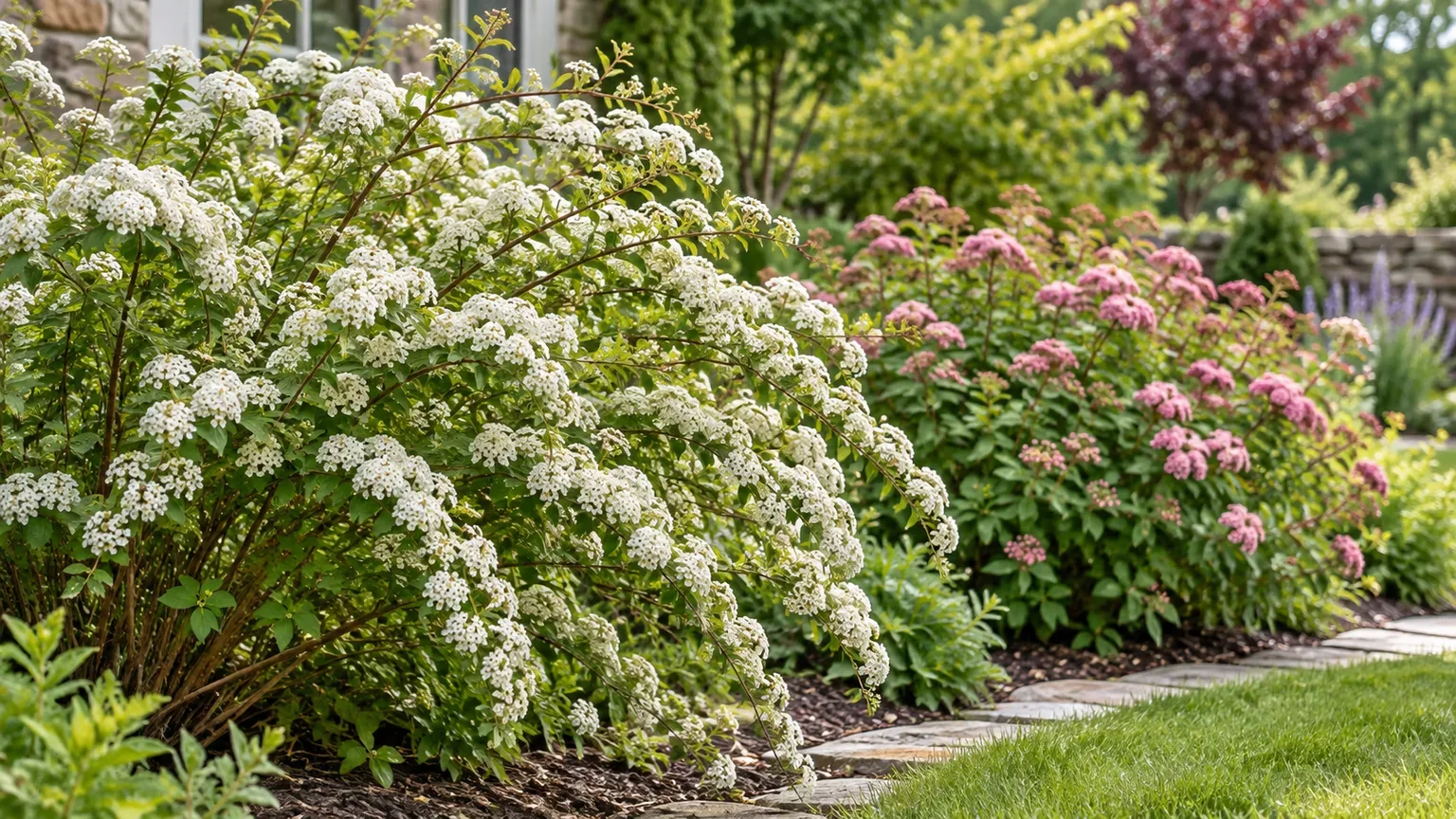
For a side-by-side overview of the genus and how spring and summer bloomers differ, see the general spirea growing guide.
Choose a Site That Fits Its Mature Shape
Think of bridal wreath spirea as a specimen or loose flowering hedge, not a compact foundation plant that will stay the size of its nursery pot. A shrub that matures at 4 to 8 feet tall and similarly wide needs open space around its arching stems. Set it where the full outline can show, with enough clearance from doors, paths, windows, and neighboring plants that you will not feel compelled to shear it into a narrow box.
Sun and exposure
Full sun gives bridal wreath spirea its strongest bloom. NC State Extension defines full sun as at least six hours of direct light and notes that the plant can also tolerate partial shade; in practice, several hours of direct sun is a sound target if you want a heavy flower display. Light shade is a reasonable compromise in a hot site, but deep shade often means fewer flowers and a looser, leggier canopy.
Watch the shrub for a full day before blaming fertilizer or age for sparse bloom. A building, mature tree, or newly grown hedge may shade the plant in spring even if the garden looked sunny when you first planted it. If you cannot improve the light, accept a lighter flower show rather than feeding the shrub heavily to compensate.
Soil and drainage
The key soil requirement is drainage, not a narrow pH target. The species profile lists clay, loam, and rocky soil textures as acceptable when drainage is good; it also records both moist and well-drained soil conditions. That means clay is not an automatic reason to reject the plant, but a low, saturated pocket is a poor planting site.
After a rain, look for puddles that remain around the root zone or soil that stays slick and waterlogged for days. If water collects there repeatedly, choose a higher location or improve the broader bed before planting; a small layer of gravel in the bottom of a hole does not correct a poorly drained site. Keep the shrub’s crown at grade and avoid burying the base of its stems under extra soil or mulch.
Plant Bridal Wreath Spirea Without Crowding It
Plant in spring or fall when temperatures are mild and the ground is workable. In colder climates, spring gives a new shrub more time to establish before winter; in areas with mild winters, fall planting can work if the roots have time to settle before hard freezes. Avoid planting during a heat wave or when the root ball is dry and the soil is baked.
Dig a hole about as deep as the root ball and wider than it, then loosen circling roots gently if the plant is pot-bound. Set the root ball so its top sits level with the surrounding soil, backfill with the native soil you removed, and water slowly to close air pockets. Do not amend only the planting hole with rich compost: a sharp difference between the hole and surrounding ground can make water movement and root growth less predictable.
Space plants according to their expected spread, not a generic hedge measurement. For a single, full-sized shrub, allow roughly 4 to 8 feet of growing room; if you want a continuous screen, plan for the mature width and accept that branches may overlap as the plants develop. Tight spacing forces you to prune the natural arching form more often and can reduce airflow through the interior.
A two- or three-inch layer of organic mulch helps moderate soil moisture and temperature while roots establish. Leave a bare ring around the stems so mulch does not stay pressed against the crown. Check the plant label for the cultivar’s mature dimensions if it names one, because a nursery specimen may look small for several seasons before it reaches its adult size.
Water for Establishment, Then Read the Soil
Water a new shrub deeply enough to wet the full root ball and nearby soil, then let the surface begin to dry before watering again. During the first growing season, check moisture several times a week during hot, windy, or dry spells; the schedule should respond to rainfall, soil texture, mulch, and temperature rather than a fixed calendar. Sandy soil may dry quickly, while clay soil can remain wet long after the surface looks dry.
To check, push a finger or narrow trowel a few inches into the soil near the edge of the original root ball. If that area is dry, water slowly at the base until moisture reaches the root zone; if it is still damp, wait and check again. A brief sprinkler pass can wet the leaves while leaving the original root ball dry, so make sure water reaches the soil where the nursery roots are concentrated.
Once established, bridal wreath spirea tolerates occasional dry periods better than a recently planted shrub, but it still benefits from a deep drink during prolonged drought. Do not interpret every drooping leaf as thirst: if the soil is already wet, more water can worsen root stress. Check moisture first, then adjust irrigation or drainage according to what you find.
Fertilize Lightly or Skip It
A healthy shrub with steady growth and normal flowering usually does not need a yearly dose of synthetic fertilizer. Adding nitrogen when it is not needed can push leafy shoots at the expense of the open, flowering outline you chose the plant for. Start with the growing conditions—sun, drainage, moisture, and pruning timing—before assuming a weak display needs food.
If the plant grows poorly across several seasons, test the soil or ask a local extension service to interpret it before applying a specific nutrient. A thin layer of finished compost over the root zone can improve soil structure over time, but keep it away from stems and do not pile it against the crown. Avoid fertilizing late in the growing season, when tender growth may not have time to mature before cold weather.
Prune After Flowering to Save Next Year’s Buds
Prune bridal wreath spirea immediately after its spring flowers fade. This shrub blooms on old wood—the stems produced during the previous growing season—so flower buds for next spring develop after the current display. If you cut those stems in late winter or early spring, you can remove much of the coming bloom before it opens. NC State Extension recommends shaping the shrub after flowering, and this species-specific timing is more useful than generic advice that treats every spirea alike. Practical pruning guides can disagree when they group spring and summer bloomers together; Gardening Know How’s broad spirea pruning guidance should be read alongside the species profile, while Blooming Expert’s pruning discussion explains why spring bloomers need a post-bloom window.
The actual calendar date changes with climate. Use the shrub itself as your cue: once most flowers have faded and the display is over, make the needed cuts rather than waiting for a particular month. Because the flowering period is brief, putting a reminder on your calendar while the shrub is in bloom can help you catch the right window.
Shape a young or established shrub
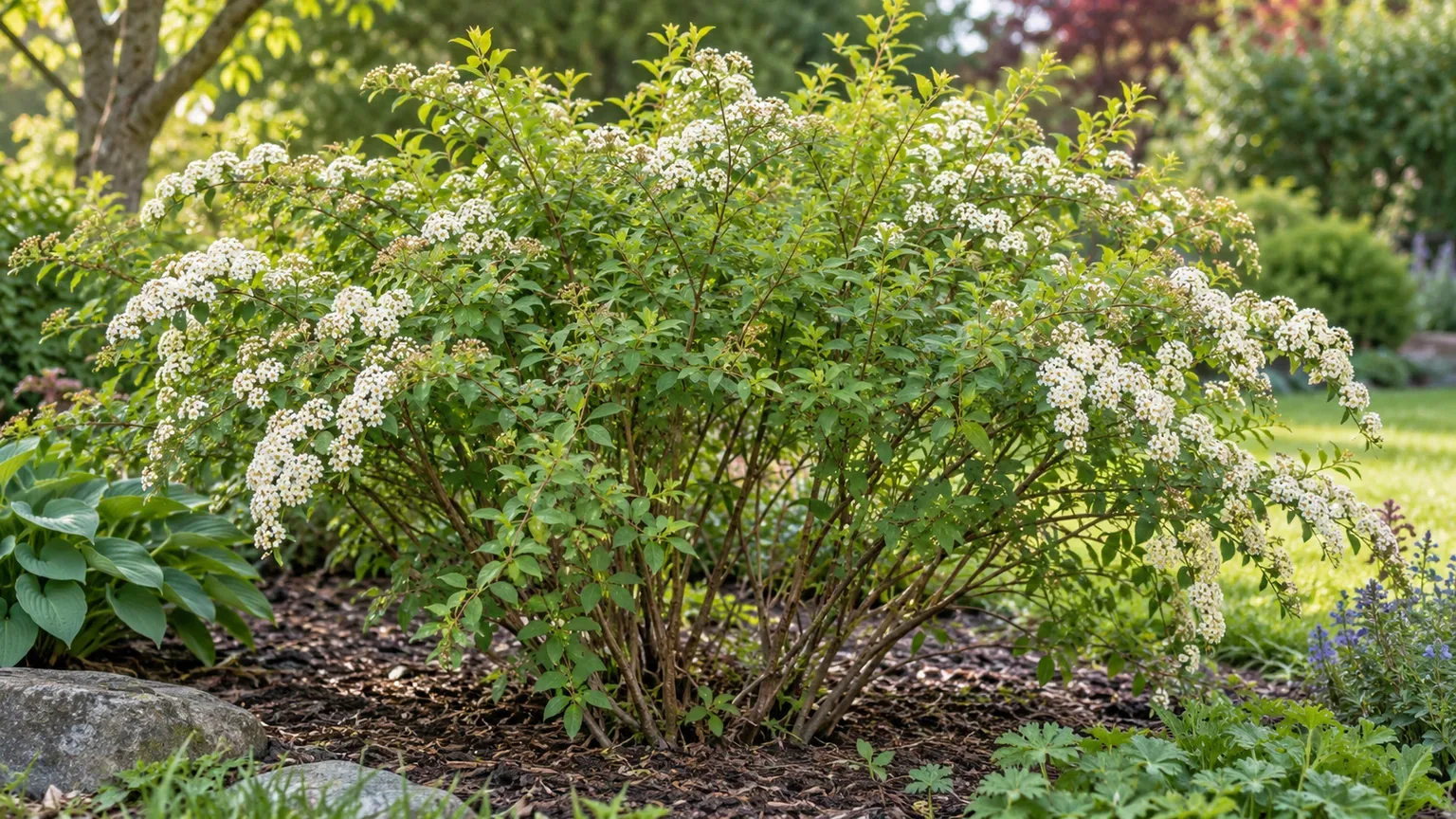
Start with clean, sharp bypass pruners. Remove stems that are dead, broken, crossing through the center, or rubbing against another stem; make each cut just above a healthy side branch or at the base of the cane. Step back often and preserve the arching silhouette rather than trimming all branch tips to the same height.
For light size control, shorten only the branches that extend beyond the space you have. Cutting every outer tip into a flat edge removes the cascading profile and encourages a dense shell of new shoots around a crowded center. If the shrub is still young and its shape is good, it may need little more than deadwood removal after flowering.
Renew an overgrown shrub gradually
When the center becomes congested or the oldest stems flower weakly, thin selected canes at ground level after blooming. Removing about one-third of the oldest stems in a year is a cautious renewal approach: it opens the center to light while leaving younger branches to carry flowers. Repeat in later years only if the shrub still needs renewal.
Avoid cutting the whole shrub to the ground as a routine fix. That removes the coming season’s bloom and may produce a mass of upright shoots instead of the layered arching form you wanted; it also does not solve a poor site or chronic crowding. If you missed this year’s post-bloom window, wait until after the next display for structural pruning, and remove only clearly broken or hazardous branches in the meantime.
Improve Blooming by Fixing the Actual Limitation
When bridal wreath spirea blooms sparsely, first ask whether it was pruned before flowering. A winter or early-spring cut is the most direct explanation if the shrub otherwise has healthy foliage and normal shoot growth: the plant may have lost the flower buds on its older stems. Let it grow through the season and resume pruning after the next spring display rather than making another corrective cut.
Next, check spring sunlight and the shrub’s age. A plant in dense shade may make leaves but few flowers, while a recently planted shrub may need time to establish before it produces its fullest display. Compare the light reaching the branches before and after trees leaf out; early spring sun can be misleading if the canopy becomes shaded later in the season.
Excessive nitrogen, hard annual shearing, and severe drought can also leave you with a shrub that grows but performs poorly. Change one factor at a time so you can see whether light, watering, or pruning was the limiting issue. Heavy fertilizer is not a substitute for sunlight, and cutting harder rarely fixes a shrub whose flower buds were already removed.
The white flowers are carried along the previous season’s growth, so they can appear on bare branches before the leaves fill in. The contrast is part of the plant’s appeal, but the display is naturally seasonal rather than continuous. If you want color after spring, pair it with perennials or shrubs that flower later instead of expecting this spirea to rebloom like many summer-flowering S. japonica cultivars.
Follow a Simple Seasonal Care Rhythm
Spring: Enjoy the flowers before reaching for pruners. After the display fades, remove dead or damaged canes, make any needed size cuts, and renew only a portion of old stems; in the first growing season after planting, keep checking root-zone moisture as the weather warms.
Summer: Let the shrub fill out, water during extended dry spells, and watch for new suckers outside the space you intended. Avoid routine shearing after midsummer because new growth needs time to mature and late cuts can sacrifice the next spring’s flower buds. A mulch refresh is useful only if the layer has thinned; keep it from touching the stems.
Fall and winter: Let the shrub enter dormancy without a heavy shaping cut. The leaves may change color and drop, while the bare stems hold the framework that will carry next spring’s bloom. In colder regions, check after freeze-thaw cycles that roots have not heaved above the soil; water only if the ground is unfrozen and the root zone is unusually dry.
Propagate by Cuttings or Layering
The most reliable home methods are softwood cuttings and layering. These vegetative approaches are useful when you want a plant that resembles the parent, especially if you have a named form such as ‘Plena.’ Seeds can be grown, but seedlings may not reproduce a selected cultivar’s exact flower form or other traits.
Root softwood cuttings
Take softwood cuttings in late spring or early summer from flexible, healthy new growth that is not carrying flowers. Cut several 4- to 6-inch tips just below a leaf node, remove leaves from the lower half, and place the cut ends in a clean pot filled with moist, free-draining propagation mix. A rooting hormone is optional; follow its label if you use it, and keep the powder away from children and pets.
Cover the pot loosely with a clear plastic bag or propagation dome to reduce moisture loss, but keep leaves from touching the cover and ventilate it if condensation stays heavy. Set the cuttings in bright shade, not direct afternoon sun, and keep the mix evenly moist without leaving the pot in standing water. New growth is encouraging, but roots are the real test: after several weeks, tug very gently or check a cutting at the edge before potting rooted pieces separately.
Let young plants build roots in containers before moving them to a permanent garden site. Acclimate them gradually to outdoor sun and wind, and protect small pots during their first winter because container roots experience colder conditions than roots in the ground. Transplant when the plant has a substantial root system and the weather is mild.
Use layering or seed with realistic expectations
Layering uses a flexible branch that is still attached to the parent. In spring or early summer, bend a low stem to the soil, nick or gently scrape a small section near a node if needed, pin that section down, and cover it with a few inches of soil while leaving the tip exposed. Keep the buried section lightly moist and check later in the season; separate it only when it has formed its own roots.
Seed propagation is slower and less predictable for a named cultivar. If you collect seed, sow it in a labeled pot using a clean seed-starting mix and follow the seed’s seasonal requirements; do not assume a seedling will match the parent’s double flowers. For most gardeners who want another plant like the one they own, a cutting or layered branch is the clearer path.
Diagnose Yellow Leaves, Sparse Growth, and Pests
A few yellow leaves in autumn are normal as the shrub prepares to drop its foliage. Yellowing during active growth needs context: look at where it starts, how the soil feels, whether the plant is shaded, and whether the leaves show spots or insects before choosing a treatment. Yellow leaves do not automatically mean the shrub needs fertilizer or more water.
If the soil stays wet, investigate drainage and irrigation first; if the root ball is dry, water deeply and check again rather than repeating shallow sprinkles. If only one section is affected, inspect stems and leaf undersides for scale, aphids, rolled leaves, or other visible damage. Remove only clearly dead material and improve light or airflow where practical.
NC State Extension lists leaf spot, fire blight, powdery mildew, root rot, aphids, leafrollers, and scale among possible problems for this species, while also describing the shrub as generally durable. That means a problem is possible, not inevitable. Photograph the affected leaves and the whole plant, note recent weather and watering, and ask a local extension office for diagnosis if decline is spreading; several unrelated stresses can produce similar symptoms.
Avoid spraying as a first response to spots, yellowing, or insects. Identify the cause and use any pesticide or fungicide only if its label covers the pest or disease and the plant site; a treatment cannot fix waterlogged roots, shade, or pruning at the wrong time. Maintain enough room for air movement and water the soil rather than routinely wetting foliage late in the day.
Check Local Suitability and Manage Suckers
Spiraea prunifolia is native to parts of Asia, not North America, so gardeners choosing plants for ecological restoration may prefer a locally native shrub. Penn State Extension notes that native meadowsweet (S. alba) is a different species associated with moist sites in eastern North America; it is not a drop-in substitute for every sunny, well-drained garden. Match a native alternative to the actual soil and moisture conditions rather than choosing by flower color alone.
Do not confuse bridal wreath spirea with Japanese spirea when checking spread concerns. Penn State’s species comparison describes S. prunifolia as a generally well-behaved landscape shrub and distinguishes it from Japanese spirea’s documented seed spread in some regions. The University of Connecticut Plant Database profile for S. japonica specifically reports invasive tendency in Connecticut for that other species; it is not evidence that S. prunifolia carries the same status everywhere. Check your state or county invasive-plant guidance for the botanical name on your label.
Bridal wreath spirea can also send up shoots from the base or nearby roots, so inspect around the plant if you want to keep a defined footprint. Cut unwanted suckers at their point of origin rather than mowing the tips; repeated trimming may leave a woody stub that resprouts. If the shrub is spreading farther than you can manage or has outgrown its place, moving or replacing it is often easier than repeatedly shearing its natural form.
Conclusion
Bridal wreath spirea is easiest to care for when you identify the species, give its arching 4- to 8-foot form enough room, and prioritize drainage over fertilizer. Water a new planting as its root zone dries, then adjust for rainfall and soil once it is established. Most of all, prune after the spring flowers fade: that timing keeps the previous year’s stems—and next year’s buds—on the shrub. If you remember that one seasonal cue, you can maintain its natural shape without trading away the display that makes it worth growing.