How to Grow and Care for Spirea Shrubs
Spirea care starts with the right shrub. Compare spring and summer bloomers, check Japanese spirea’s local status, and follow a practical planting and pruning plan.
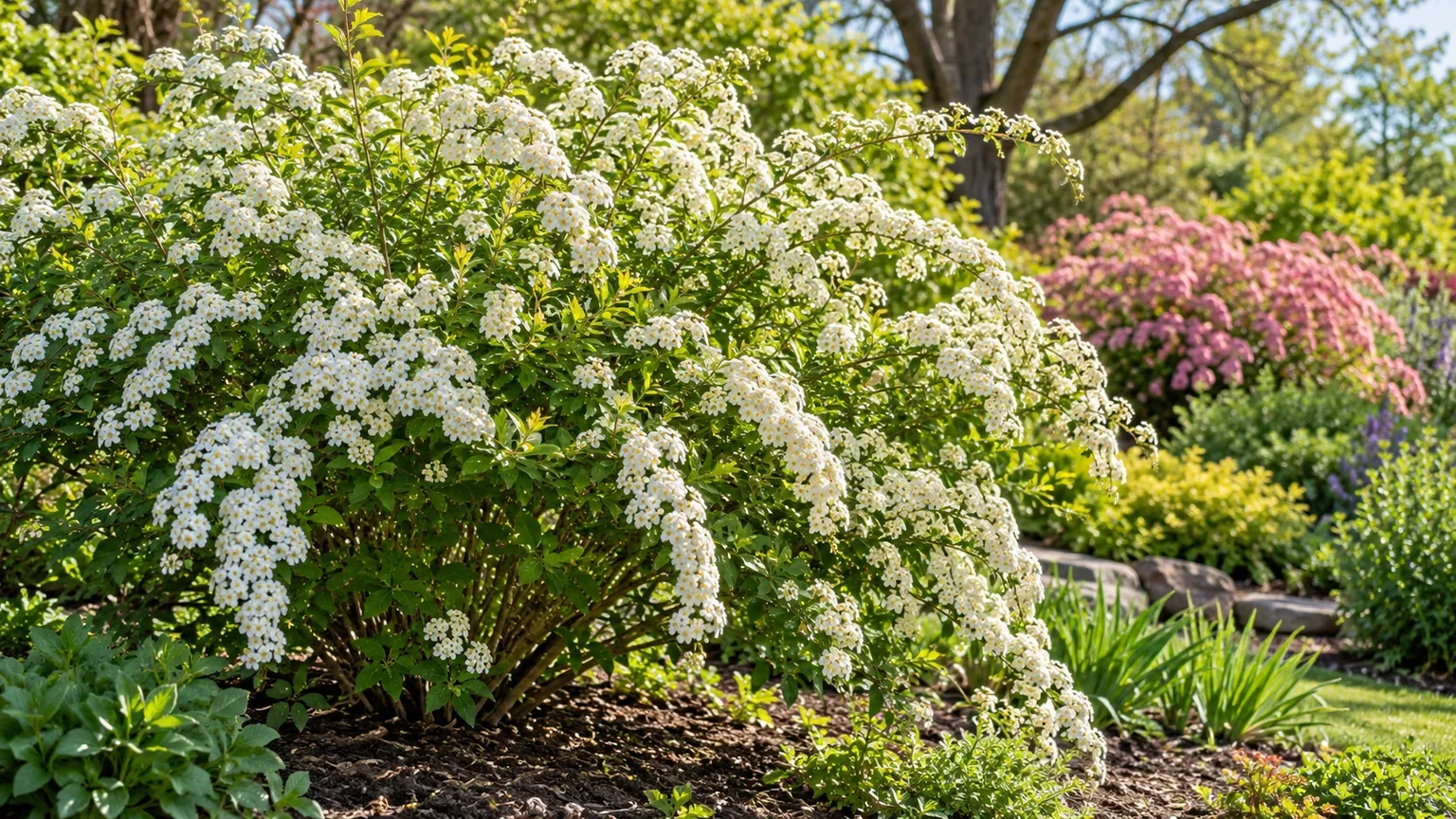
If a nursery tag says only “spirea,” pause before you choose a spot or pick up the pruners. The genus includes shrubs that flower in spring on last year’s stems and others that bloom in summer on new growth; some are native where you garden, while Japanese spirea can escape cultivation in parts of the eastern United States.
The most reliable care plan starts with the botanical name and mature size on the plant label. Once you know which spiraea you have, you can match it to your climate and soil, water it through establishment, and prune it without cutting away the next flush of flowers.
Start With the Right Spiraea for Your Region
Spiraea is a large genus of deciduous shrubs in the rose family. Plants differ in adult height, shape, bloom season, hardiness, and how readily they spread. A compact Japanese spirea cultivar and a tall arching bridalwreath may share a common name, but they do not make the same landscape choice. Read the cultivar label for mature height and width rather than judging from the small nursery pot. The NC State Extension Plant Toolbox describes the genus as including more than 80 species and notes that species vary in their pruning needs and habit.
In the eastern United States, check local invasive-plant lists before buying Spiraea japonica, or Japanese spirea. NC State Extension reports that it escapes and naturalizes in North Carolina and lists it as invasive in several nearby states; the University of Connecticut Plant Database also flags an invasive tendency in Connecticut. That does not mean every spiraea is invasive everywhere. It does mean you should identify the species, not rely on a generic “spirea” label, and check guidance for your county or state before planting.
Native spireas can be better choices where they suit the site. Meadowsweet (S. alba) and steeplebush (S. tomentosa) are eastern North American species; they can favor moister conditions than the typical ornamental shrub. Match the plant to the local habitat and your garden’s drainage instead of treating “native” as a single care profile. Penn State Extension’s overview of good and bad spireas explains why the common name covers both locally useful native plants and non-native species that may spread.
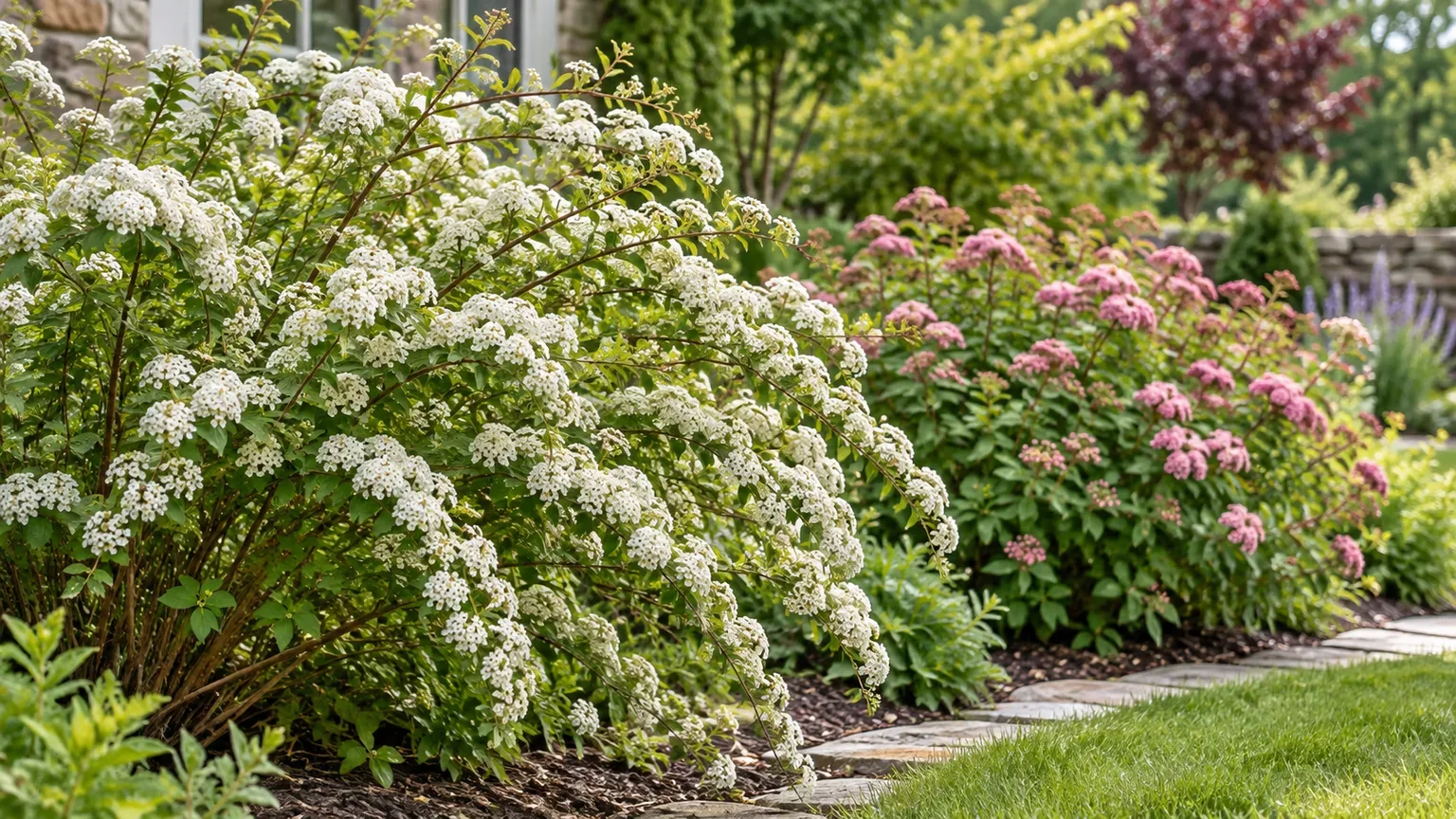
Spring-flowering spiraeas
Bridalwreath types such as S. prunifolia and S. × vanhouttei, along with Thunberg spirea (S. thunbergii), carry many white flowers along arching or slender branches in spring. They set flower buds on stems that grew the previous year. That “old wood” detail determines when you prune: a hard cut in late winter can remove the flowers you were expecting a few months later.
These shrubs are useful when you want a loose, fountain-like form rather than a clipped mound. Check the mature spread before placing one near a path or window; the arching branches often need room to show their shape. If a label uses “bridalwreath,” confirm the botanical name because more than one species shares that common name.
Summer-flowering spiraeas
Japanese spirea and its hybrids are commonly sold as small, rounded shrubs with pink or rose-colored flower clusters and foliage that may emerge bronze, gold, or chartreuse. Their flowers form on current-season growth, so a late-winter or early-spring prune is less likely to remove the coming bloom. Cultivar size varies, so “dwarf” still needs a specific height and width on the label.
Before choosing a Japanese spirea for its foliage, flowers, or compact habit, look up its status in your area. Penn State Extension notes that common cultivars can produce abundant seed and that claims about newer sterile selections should be verified over time. Where S. japonica is restricted or considered invasive, select a locally recommended native shrub rather than assuming a cultivar name eliminates the risk. In other regions, follow local guidance about planting and managing it.
Match the Planting Site to the Shrub
Most ornamental spireas flower best in full sun, often described as six or more hours of direct light. Many tolerate partial shade, but fewer flowers, looser growth, and less vivid foliage are common trade-offs. If a shrub is healthy but blooms sparsely, measure its actual direct sun across the day before adding fertilizer or pruning harder. The genus profile from NC State Extension identifies full sun and well-drained soil as a general starting point, while individual species can tolerate more varied conditions.
Drainage is more important than chasing a “perfect” neutral pH. Many spireas adapt to ordinary garden soil, but a root zone that stays saturated can cause decline. If water still pools hours after rain, plant on a raised area or choose a species that fits the moisture level; adding a small amount of compost to the planting hole will not fix a persistently wet site. Likewise, do not add lime, sulfur, or fertilizer unless a soil test or a clear site need supports it.
Plan around the shrub’s eventual width, not just the flower color. Crowding a mature spirea against a walkway, foundation, or another shrub makes airflow and pruning harder and may force repeated shearing. For a hedge or mass planting, use the mature spread on the specific cultivar tag to set spacing; a generic distance for the genus can leave compact varieties too far apart or large forms jammed together.
Plant Spiraea at the Correct Depth
In regions with cold winters, plant container-grown spirea in early spring once soil is workable or in fall early enough for roots to settle before the ground freezes. In milder climates, fall planting can reduce heat stress while the shrub establishes. Avoid planting during heat waves, drought, or frozen conditions, and use the timing on the nursery tag if it is more specific to the cultivar and region.
Dig a hole about twice as wide as the root ball and no deeper than its height. Loosen circling roots at the outer edge if the shrub is pot-bound, then set it so the root flare—the point where the first main roots widen from the stems—sits at or just above the finished soil level. Planting too deep can keep the crown wet and weaken the shrub; planting much too high can expose roots to drying. Backfill with the original soil, firm it gently, and water slowly to settle air pockets.
Spread a two- to three-inch layer of organic mulch over the root zone, extending toward the drip line when practical. Leave a few inches of open soil around the stems instead of piling mulch against the crown. A mulch “volcano” holds moisture against bark and hides the planting depth, which is exactly the wrong place to keep the shrub constantly wet.
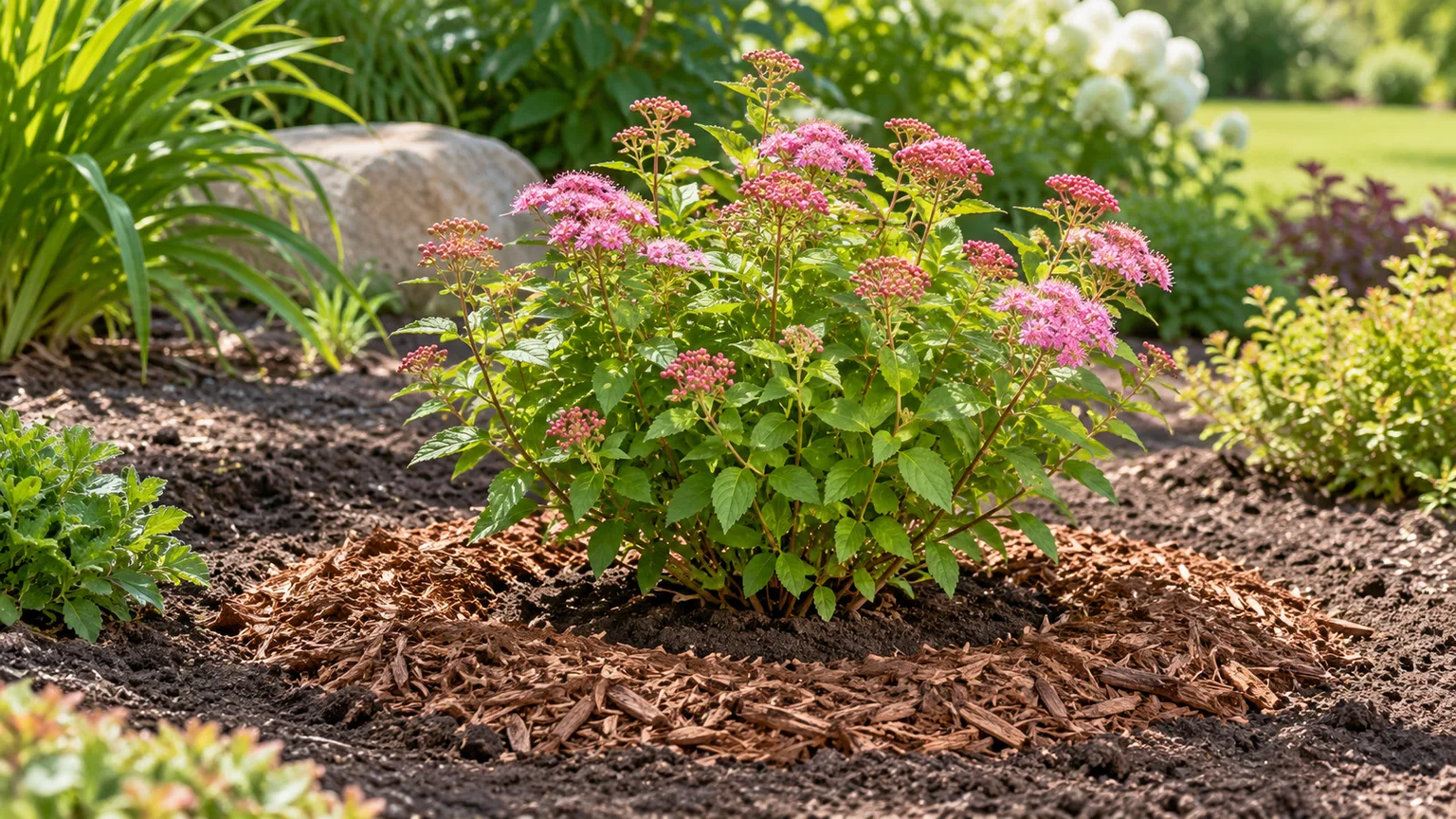
Water and Mulch by Checking the Root Zone
Water a new shrub thoroughly at planting, then check the root ball and nearby soil regularly through its first growing season. Water when the upper few inches of the root zone begin to dry, applying enough to soak the full root ball rather than wetting only the surface. The interval depends on rainfall, temperature, soil texture, and plant size; a weekly calendar may be too often in clay after rain and too little during a hot, windy week in sandy soil.
Established spireas usually need less supplemental water than new plantings, but “established” does not mean drought-proof. During a long dry spell, check below the mulch and water deeply if the soil is dry several inches down. Shallow, frequent sprinkling encourages roots to stay near the surface and can keep leaves wet without replenishing deeper soil. Direct a hose or drip line at the soil, not the flowers and foliage.
If leaves wilt while the soil is wet, do not respond by watering more. Check drainage and inspect the base for soft or darkened stems; saturated roots can lose function and mimic drought stress. If the soil is dry, water slowly and reassess later that day. Keep mulch in place to reduce evaporation, but replenish it only when it has thinned rather than stacking new layers every season.
Fertilize Only When Growth Calls for It
Spirea does not need an automatic annual feeding if it is growing steadily and flowering well. Extra nitrogen can push soft leafy growth at the expense of flowers, and a fertilizer cannot correct shade, poor drainage, or pruning at the wrong time. First look for the cause of weak growth: competition from nearby roots, compacted soil, drought during establishment, or persistent wetness.
If a soil test shows a nutrient need or the shrub has persistently weak growth after site problems are corrected, use a balanced landscape fertilizer labeled for shrubs and follow its label rate. Apply it during active spring growth rather than late in the season, when a flush of tender growth may not harden before cold weather. A thin top-dressing of finished compost can improve soil structure, but it is not a substitute for fixing drainage or testing the soil.
Avoid spreading lawn fertilizer over the spirea’s root zone. Lawn products can deliver more nitrogen than an ornamental shrub needs, especially when they are applied repeatedly. For a healthy plant, good light, the right moisture, and a correctly timed pruning cut are usually more valuable than another bag of feed.
Prune Spiraea by Bloom Time
The simplest pruning rule is to identify when the shrub flowers and whether those flowers grow from last year’s stems or the current year’s growth. Spring-flowering types generally bloom on older wood; summer-flowering types generally bloom on new wood. BBC Gardeners’ World Magazine explains this older-stem versus same-season growth distinction in its year-round pruning guide, and Gardening Know How’s spirea pruning guide also distinguishes light shaping after flowering from more substantial dormant-season pruning.
Before making a major cut, confirm the shrub’s name or wait to observe a full bloom cycle. Remove dead, broken, or diseased stems whenever you notice them, cutting back to healthy wood or to the base of the stem. For routine shaping, use hand pruners for small branches and loppers for larger ones; make clean cuts without leaving long stubs. A spirea rarely needs to be sheared into a tight ball. Repeated shearing can remove flower buds at the wrong time and leave dense outer growth shading the interior.
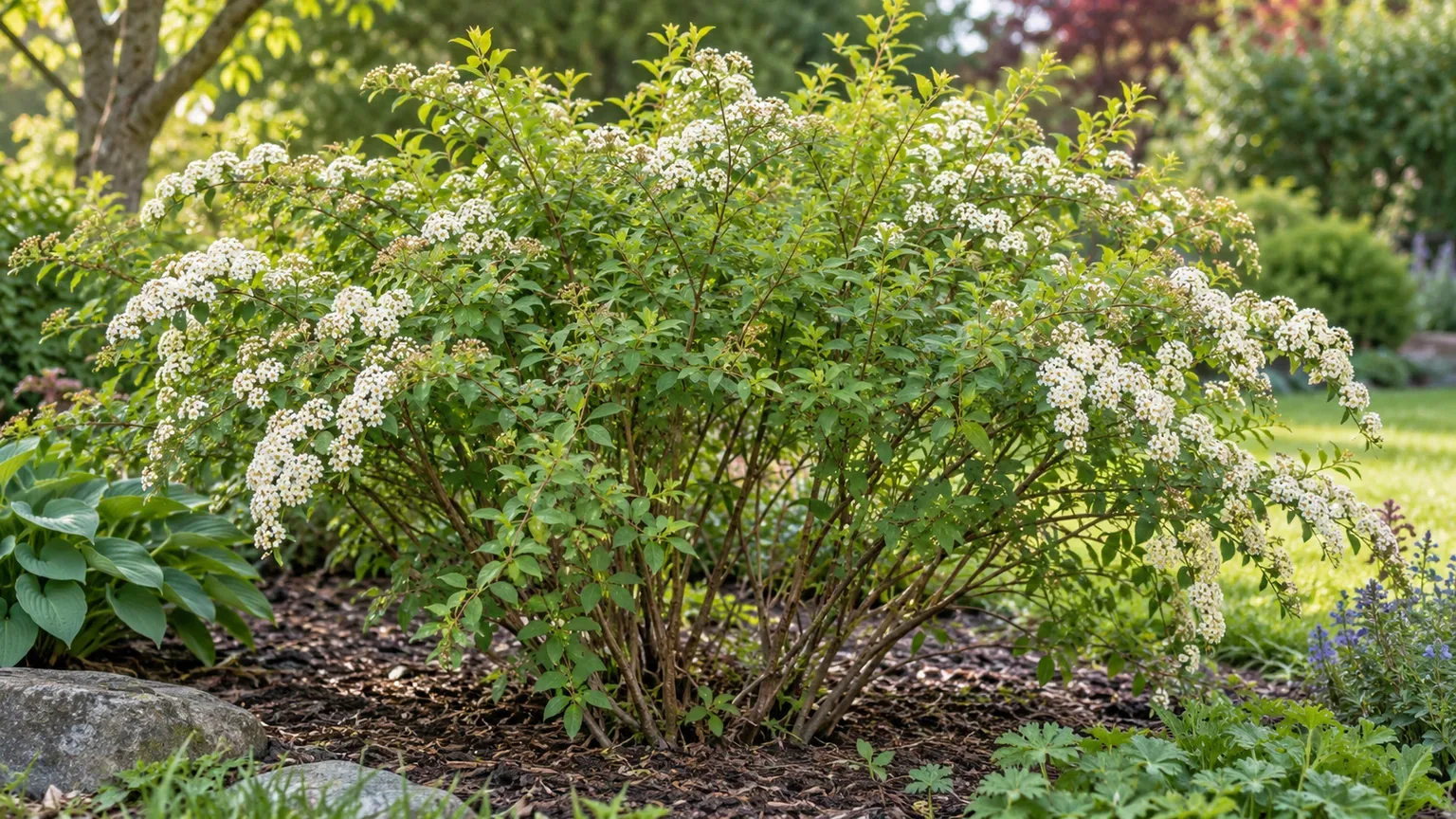
Spring bloomers: prune after flowering
Prune bridalwreath and other spring-flowering spireas after their flowers fade, while there is still time for new stems to mature before winter. Start by removing dead or crossing branches at their point of origin. If the shrub is too tall or dense, thin selected older stems rather than cutting every branch to the same height; that preserves its natural arch and lets light reach the interior.
For an established, overgrown shrub, a gradual renewal is usually safer than a severe annual haircut. Remove about a third of the oldest stems at ground level after bloom, then repeat over the next one or two years if the plant still needs opening up. A single renovation cut can sacrifice much of the next season’s display, so do not use it just because the shrub looks untidy in winter. Wait until flowering is finished, then make the smallest set of cuts that restores space and shape.
Summer bloomers: prune before new growth
Prune Japanese spirea and other summer-flowering types in late winter or very early spring, before new growth expands. Remove winter-killed tips, thin a few of the oldest stems, and shorten remaining branches only as much as needed to keep the cultivar within its space. Because these shrubs flower on new shoots, a timely dormant prune can encourage a fresh framework of growth and flowers later in the season.
Some compact Japanese spireas can tolerate a hard reset, but cutting a shrub to the ground should not be your default fix. It removes habitat and form, can delay a full flower display, and may be inappropriate for a cultivar you have not identified. If the shrub has outgrown its location, check its mature size and local invasive status; replacing it with a better-sized, appropriate plant may be simpler than repeatedly forcing it into bounds.
Spent flower clusters on some summer bloomers can be trimmed off if you want a tidier plant or want to reduce seed production. Some cultivars may flower again, but the response varies with cultivar and climate; deadheading is not a reliable substitute for adequate sun or correctly timed pruning. Where seed spread is a concern, remove spent heads before they mature and dispose of them according to local guidance rather than putting them in a home compost pile.
Grow Compact Spiraea in a Container
Small cultivars can grow in a large outdoor container, but check the plant’s mature dimensions before buying. A pot does not keep a vigorous shrub miniature, and repeated hard pruning to fit a small container can reduce flowering and stress roots. Choose a container with several drainage holes and enough volume for the mature root system; use a quality outdoor potting mix rather than dense garden soil.
Place the container where the cultivar gets the sun it needs and where excess water can drain freely. Containers dry faster than in-ground beds, so check moisture more often, especially during wind or heat. Water until it drains from the bottom, then empty any saucer so roots are not left standing in water. In cold-winter areas, the roots of a potted shrub are more exposed than roots in the ground; shelter the pot against a protected wall or move it to an unheated sheltered space if the cultivar’s hardiness guidance calls for it.
Repot when roots crowd the container or water runs straight through without wetting the mix. Move up one pot size, or prune a small amount of the root mass and refresh the mix if you are comfortable doing so. Do not repot solely because the shrub is dormant; the aim is to restore a healthy root environment, not to disturb it on a fixed schedule.
Follow a Simple Seasonal Care Calendar
Use the shrub’s flowering season as your calendar; dates shift by climate and cultivar, so “after bloom” and “before new growth” are more reliable than a fixed month.
| Season or stage | What to do | What to avoid |
|---|---|---|
| Planting and first growing season | Set the root flare at soil level, water deeply after planting, and check moisture regularly. Keep mulch over the root zone but away from stems. | Do not bury the crown, rely on frequent surface sprinkling, or fertilize a stressed plant before checking drainage. |
| Late winter to early spring | Inspect for winter injury. Prune summer-flowering types before their new growth expands. Confirm the cultivar’s local hardiness and invasive status before replacing plants. | Do not cut back a spring-flowering shrub before it blooms unless you are willing to forgo that display. |
| After spring flowering | Prune spring bloomers, remove dead or crossing branches, and deadhead only when tidiness or seed control is useful. | Do not shear all stems into a tight mound or compost seed heads from a species with local spread concerns. |
| Summer heat or prolonged drought | Check soil several inches below the mulch and give established shrubs a deep drink when the root zone is dry. Watch for aphids, mites, or leaf spots. | Do not water a wilted shrub automatically if the soil is already saturated. |
| Fall and winter | Maintain a light mulch layer and let healthy shrubs enter dormancy naturally. Water before the ground freezes only if the soil is dry and the plant is not dormant in a wet site. | Avoid heavy late-season fertilizer and unnecessary pruning that could remove next spring’s flowers. |
For Japanese spirea in a region where it is still permitted but known to self-seed, add seed-head checks after flowering. Regional rules and recommendations can change; use your extension service or invasive-species council for current local advice.
Propagate Spiraea by Layering or Cuttings
Layering is a low-risk way to make a second shrub because the branch stays attached to the parent while it forms roots. In spring or early summer, choose a healthy, flexible stem that can reach the ground. Bend a section to the soil, pin it in place, and cover a node with a few inches of soil while leaving the tip exposed. Keep that patch lightly moist and check for roots later in the growing season; if the section resists a gentle tug, it may be ready to separate. If it has not rooted, leave it attached and check again rather than pulling it up early.
Softwood cuttings are another option when you want a plant with the same characteristics as the parent. Take several healthy, non-flowering shoot tips in late spring or early summer, trim just below a node, remove the lower leaves, and insert the base into a clean, free-draining propagation mix. Keep the mix evenly moist and the cuttings in bright, indirect light. A clear cover can slow drying, but it should not touch the leaves; ventilate it if condensation stays heavy or mold appears. Rooting time varies, so wait for resistance and new growth before potting each cutting separately.
Seeds are less dependable for preserving a named cultivar because seedlings may not match the parent. They can also create unwanted spread when the species is self-seeding. If your goal is a specific flower color, leaf color, or compact size, buy a correctly named, locally appropriate cultivar or use a vegetative method rather than sowing seed.
Check Pests and Disease Before Treating
Spireas are usually resilient, but aphids, spider mites, scale, leafrollers, leaf spots, powdery mildew, and root problems can occur. The NC State Extension species profile for Japanese spirea lists several of these pests and diseases, while the University of Illinois Extension shrub profile notes common leaf and insect problems. A label or photograph alone cannot tell you which issue is active, so inspect the whole shrub before treating it.
Look beneath leaves and along new shoots. Aphids cluster on soft tips and may leave sticky honeydew; spider mites cause stippling and sometimes fine webbing, especially in hot, dry conditions; scale insects appear as fixed bumps on stems or leaves. Rolled leaves may shelter a caterpillar. A strong stream of water can dislodge aphids, and light infestations often need monitoring rather than a pesticide. Encourage good air circulation and avoid excess fertilizer that produces tender growth.
Powdery mildew appears as a white surface coating and is more likely where growth is crowded and air movement is poor. Leaf spots need a closer look because insect feeding, weather injury, and multiple diseases can look similar. Improve spacing and water at the soil line rather than wetting foliage late in the day. If you use any pesticide or fungicide, identify the problem first and follow the product label; avoid spraying open blooms when pollinators are visiting.
Wilt, yellowing, or dieback in soggy soil points first to drainage, not a need for more water or fertilizer. Remove only clearly dead material, improve the site if possible, and seek a local extension diagnosis if damage keeps spreading. Fungicide cannot repair roots that are repeatedly waterlogged.
Troubleshoot Sparse Flowers and Weak Growth
Start with the simplest cause: pruning at the wrong time. If a spring bloomer was cut back in winter, it may have lost the previous season’s flower buds; give it a full growth cycle and prune only after its next bloom. If a summer bloomer is healthy but has few flowers, check light and excess nitrogen before increasing fertilizer.
| What you see | First checks | Next step |
|---|---|---|
| Healthy leaves but few flowers | Bloom type, pruning date, direct sun, and recent fertilizer use | Adjust the pruning window and improve light if practical; wait a season after a badly timed cut. |
| Wilt with dry soil | Root-ball moisture, especially in a new planting or container | Water slowly until the root ball is soaked, then check again rather than repeating a shallow sprinkle. |
| Wilt or yellow leaves with wet soil | Drainage, mulch piled on stems, and roots sitting in a low spot | Pause irrigation, pull mulch back from the crown, and improve drainage or move the shrub during a suitable dormant period. |
| Sparse interior or leggy branches | Shade, crowding, and age of the oldest stems | Increase light or selectively renew a few old stems after the correct bloom period; avoid a top-only haircut. |
| White coating, spots, or leaf curl | Leaf undersides, airflow, recent weather, and visible insects | Confirm the cause before treatment; correct the growing condition and monitor new growth. |
Newly planted spirea may spend a season establishing roots before making much top growth, especially if it was planted during hot or dry weather. That is different from progressive dieback. If only a few branch tips are dead after winter, scratch a small area of bark to see whether the tissue is green underneath, then remove dead tips once living buds begin to show. If the whole shrub continues to decline, take clear photos and a sample to a local extension office before making a major cut or applying a chemical.
Prepare Established Shrubs for Winter
Most established spireas tolerate cold within the hardiness range listed for their species or cultivar. Do not apply one temperature threshold to the whole genus: a plant that survives in a sheltered garden may suffer in an exposed site, and containers experience colder root conditions than garden soil. If winter survival matters, confirm the cultivar’s USDA zone range before planting and place it where wind and standing water are not chronic problems.
After the soil cools, maintain a few inches of mulch over the root zone, leaving stems clear. Do not wrap a healthy shrub automatically; air movement and a well-drained site are usually more useful than trapping moisture around the crown. Avoid stimulating tender new growth with late-season fertilizer or an unnecessary hard prune. In the first winter after planting, check that freeze-thaw heaving has not exposed the root ball and gently reset loose soil if needed.
Conclusion
Growing spirea is straightforward once you stop treating the genus as one uniform shrub. Choose by the exact species and mature size, verify local suitability—especially for Japanese spirea—then give it sun, drainage, and moisture checks that fit your soil. The pruning decision is equally simple: spring bloomers wait until flowers fade, while summer bloomers are shaped before new growth starts. If flowering or growth falters, check those fundamentals before reaching for fertilizer or a treatment.