How to Grow and Care for Red Mulberry
Learn where red mulberry belongs, how to plant and care for it, when to prune, how to handle fruit, and how to avoid confusing it with white mulberry.
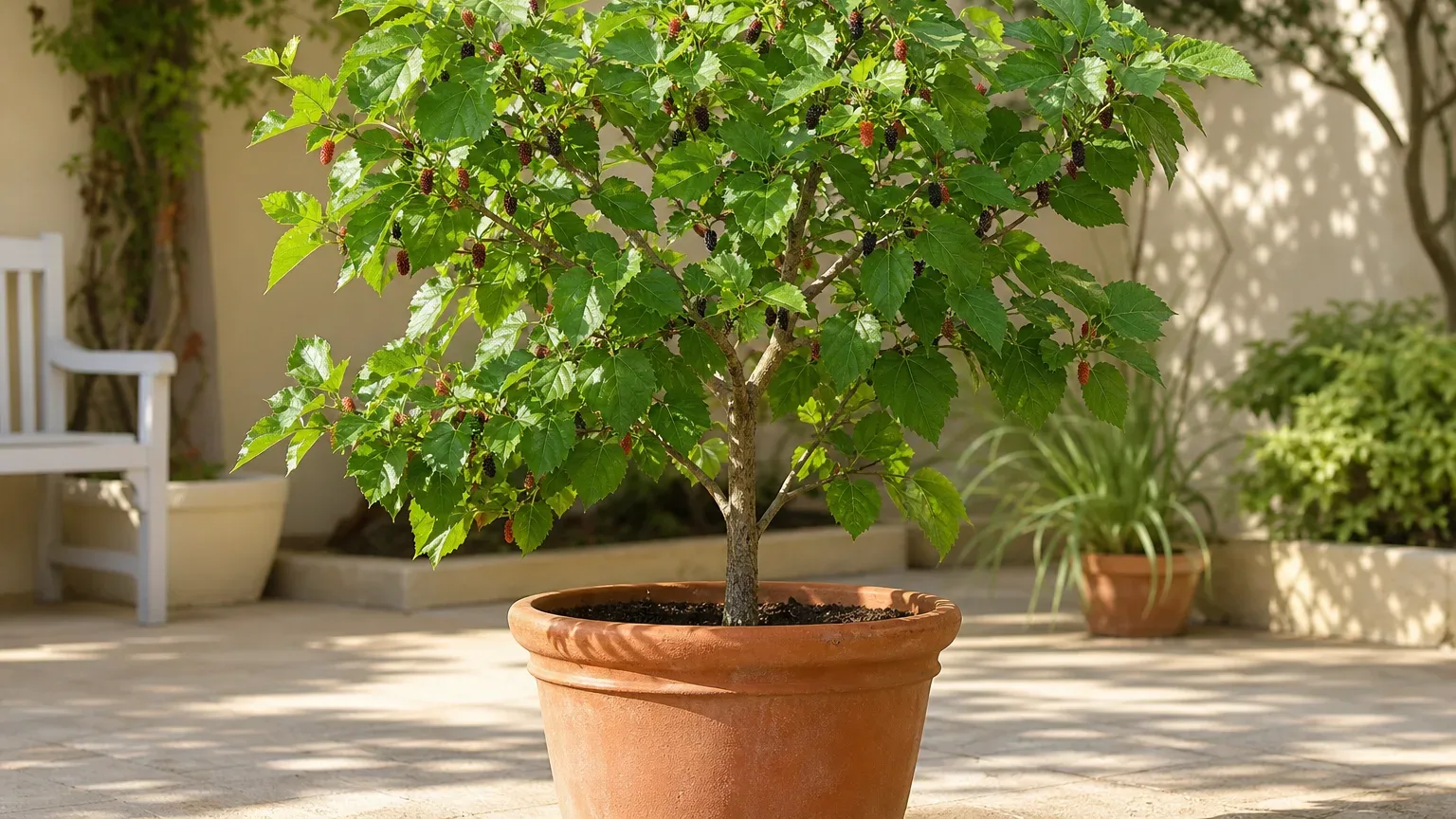
Red mulberry (Morus rubra) is a deciduous North American tree for a yard with enough room to welcome both a broad canopy and falling fruit. It can provide shade and a summer crop, and its berries feed wildlife, but the fruit stains hard surfaces and seedlings can appear wherever birds carry seed. Choose the site before you buy the tree, then confirm you are getting red mulberry rather than white mulberry or a hybrid.
For good establishment, give it full sun when possible, rich soil that stays moderately moist but drains freely, and supplemental water while roots spread. Prune during dormancy, and ask about pollination before purchase if berries matter: male and female flowers usually occur on separate trees. NC State Extension’s species profile is a useful reference for the tree’s identification, growing conditions, fruit, and problems.
What to know before planting red mulberry
Red mulberry is a good choice when you want a native shade tree that can also produce edible fruit and you have a large lawn, edge planting, or naturalized area where berry drop is acceptable. It is less suitable over a driveway, walkway, patio, pool deck, or outdoor dining area. Birds eat the fruit and leave colored droppings; ripe berries also fall and can stain shoes, paving, and parked vehicles.
The tree’s mature outline varies by conditions and source. NC State describes a dense, spreading crown and gives a broad potential range of roughly 25 to 60 feet tall and 35 to 40 feet wide. Treat that as a planning range, not a promise that the tree will stop at a particular height. Give it open sky, keep it well clear of overhead wires, and allow enough room that future pruning will not have to remove major limbs just to preserve access.
Think about the fruit as a regular seasonal job, not a decorative detail. A fruiting canopy can feed birds and provide a harvest, but you will need to pick frequently or accept a layer of soft berries beneath it. If your priority is a clean patio, a fruiting red mulberry is the wrong tree for that position; moving it to open lawn is a better long-term solution than repeatedly pruning away the fruit-bearing canopy.
Confirm you are buying Morus rubra
Nursery tags that say only “mulberry” are not specific enough when preserving a native species matters. Look for the botanical name Morus rubra, ask whether the plant is seed-grown or a selected cultivar, and ask directly about flower sex and pollination needs if you want a crop. Red mulberry is uncommon in the nursery trade, so check the name on the invoice or label rather than assuming that a generic mulberry is native.
Leaves help, but one leaf is not a reliable verdict. Red mulberry leaves are alternate on the twig, often heart-shaped, toothed, and rough on the upper surface; leaves on one tree can vary from unlobed to lobed. The bark on older trunks develops long, scaly ridges. The fruit is an elongated cluster of small drupes that may be red before it darkens toward purple. These features are useful together, but leaf shape and fruit color can overlap with other mulberries.
White mulberry (Morus alba) was introduced from Asia and has naturalized widely. NC State Extension notes that it can hybridize with red mulberry; a hybrid may not fit neatly into a quick leaf-based identification. The extension profiles for red mulberry and white mulberry distinguish their native status, habit, and management concerns. If you are choosing a tree rather than identifying a volunteer, buy from a nursery that can document its source and species. That is more dependable than collecting an unknown seedling from a roadside or relying on berry color alone.
Choose a site with room for the whole tree
Start with the future canopy and work inward. Red mulberry develops a wide crown, so plant it where the branches can spread without touching a roof or blocking a path. Set the tree far enough from pavement and parking that most fruit falls onto soil or mulch. Also avoid planting over buried utility lines, septic infrastructure, or a narrow side yard where a mature canopy would have to be constantly reduced.
Check the planting spot after rain. A little moisture is useful; standing water that remains for days is a warning that roots may lack oxygen. If the only available space is compacted or poorly drained, improve the site broadly or choose a different position rather than digging a small amended pocket. The roots will eventually grow beyond that pocket into the surrounding soil.
Do not place the tree where you would be unhappy with birds gathering during fruit season. Wildlife is part of the appeal of a native fruiting tree, but it changes how the space functions. An open lawn or woodland edge gives fallen fruit room to decompose and makes cleanup easier than a paved courtyard.
Match sunlight, soil, and climate
Full sun is the best target for a strong crown and dependable flowering. Red mulberry can tolerate part shade, but a tree receiving only a few hours of direct light may grow toward the brighter side and produce less fruit. If the yard is shaded by mature trees, observe it through the growing season before planting; a sunny-looking winter site may be shaded once surrounding trees leaf out.
Choose soil that holds some moisture while still draining. NC State recommends rich, moist, well-drained soil and warns that red mulberry does poorly in poor soil. A deep loam is convenient, but the more useful test is whether water drains after a thorough soak and whether the root zone avoids drying completely during establishment. Do not try to solve heavy clay by placing a small amount of potting mix in the planting hole; that can create a sharp change in texture that roots are reluctant to cross.
Red mulberry is native across a broad part of eastern North America, with NC State listing hardiness across zones 4a through 9b. Local winter lows, summer heat, and site exposure still matter. In a colder location, select nursery stock from a source with a suitable regional history; in hot or dry weather, keep a young tree watered until it is established. Its native range is broad, but that does not make a newly planted root ball drought-proof.
Plant red mulberry at the right depth
Plant a container-grown tree in fall or early spring when temperatures are moderate and the soil can be worked. Avoid planting into frozen ground or during a heat wave if you can wait. A dormant bare-root tree needs the same attention to root depth and immediate watering; protect its roots from drying while you prepare the planting site.
Dig a hole two to three times wider than the root ball and no deeper than its height. Find the root flare—the point where the trunk widens into the uppermost main roots—and set it at or slightly above the finished soil line. If the trunk disappears straight into the potting mix, brush away excess soil until you can see the first structural roots. Backfill with the excavated soil, firm gently to remove large air gaps, and water slowly so soil settles around the roots. This planting approach matches the general mulberry guidance from Epic Gardening, which also emphasizes wide clearance and well-drained soil.
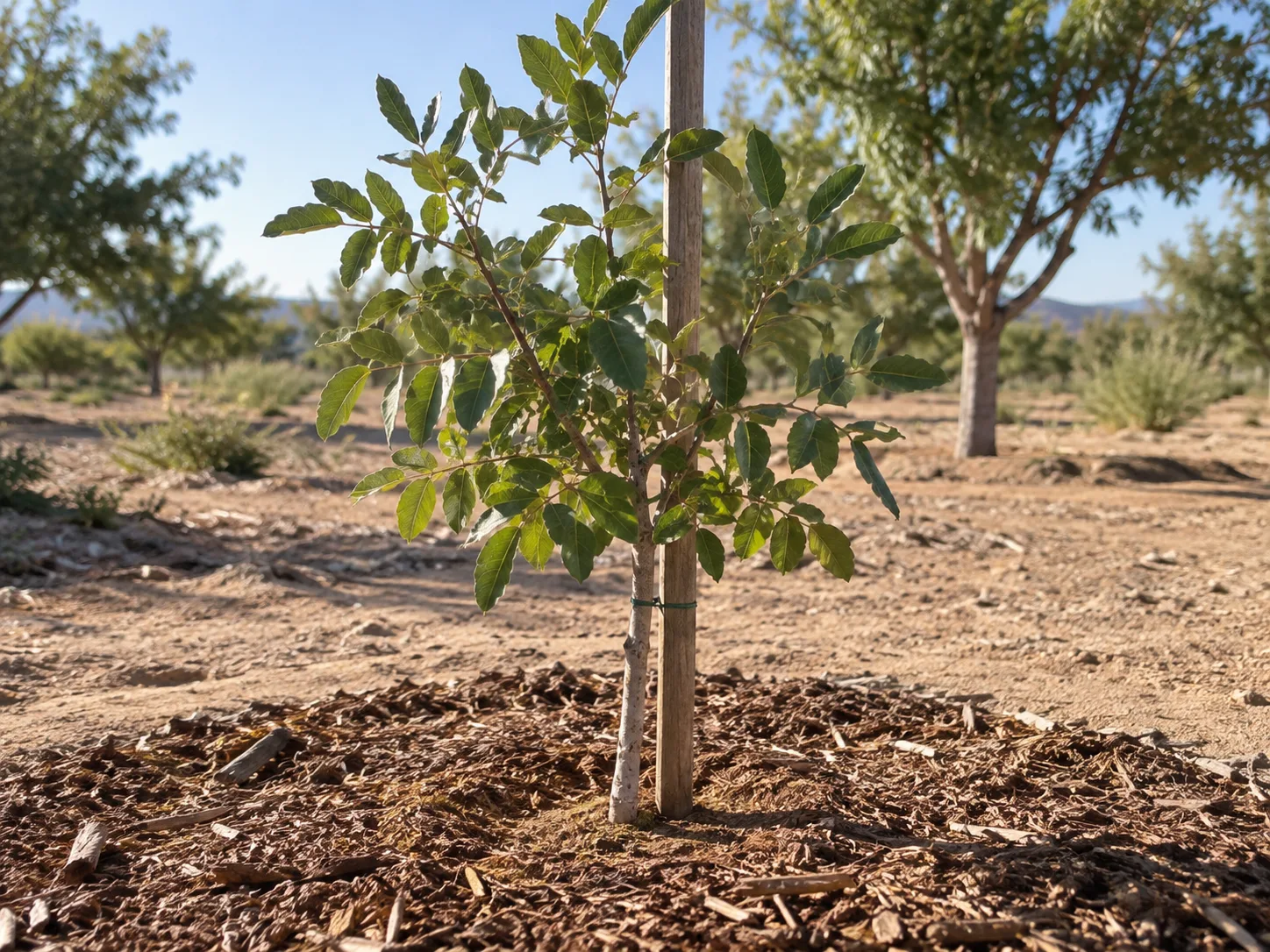
Loosen circling roots on a container-grown sapling before planting; severe girdling roots may need a nursery professional’s attention or a replacement tree. Stake only if the root ball rocks in wind or the planting site is exposed. If you stake, allow some trunk movement and remove the ties once the tree stands securely. Spread a 2- to 3-inch mulch layer over the root zone, extending beyond the planting hole, but keep mulch several inches away from the trunk so bark stays dry.
Water and mulch while roots establish
During the first growing season, water deeply whenever rain does not keep the root zone evenly moist. The right interval depends on soil texture, temperature, rainfall, and the size of the tree, so a fixed weekly amount can either under-water a fast-drying site or saturate heavy soil. Check moisture several inches below the surface near the root ball. If it is dry there, soak slowly; if it is still wet and cool, wait and recheck.
A long, slow watering encourages moisture to move through the root zone instead of running across the surface. A hose at a trickle or a soaker hose works better than a brief sprinkle around the trunk. During hot, windy weather, check more often; after a soaking rain, skip the next scheduled watering. Continue this attentive routine through the first season and into the next as needed, particularly if the tree was planted in a dry or exposed location.
Once the root system is established, red mulberry can handle ordinary dry periods better than a newly planted tree. Long droughts can still cause leaf-edge scorch and reduce fruit quality. Keep a broad mulch ring to limit rapid drying and mower damage, refresh it when it thins, and keep the trunk flare visible. Mulch should conserve moisture, not become a wet mound against the bark.
Fertilize only when the tree needs it
A healthy red mulberry in fertile soil usually does not need a routine fertilizer schedule. Heavy feeding can push long, soft shoots rather than solve the actual cause of weak growth, and it does not guarantee a better fruit crop. First check whether the tree is planted in full enough sun, whether water drains, and whether it has recovered from transplant stress.
If growth is unusually sparse or leaves look generally pale, test the soil before adding nutrients. A soil test helps distinguish a real deficiency from root damage, poor drainage, drought, or shade. If the results support feeding, follow the lab’s recommendation or the product label and spread fertilizer over the root zone rather than against the trunk. A thin layer of finished compost as a surface mulch can improve organic matter without turning fertilizer into a yearly habit.
Understand pollination and fruiting
Red mulberry bears small greenish flowers in spring. NC State reports that male and female flowers usually appear on separate trees, a pattern called dioecious; male trees do not produce berries, while a female tree needs pollen to set fruit. Because nursery stock and cultivars can vary, ask the seller whether the plant is female, whether it is known to fruit, and whether it needs a pollinizer nearby. Do not buy two trees by default: confirm what the selected plant actually requires.
A tree grown from seed can take several years to flower, and its sex, vigor, and fruit traits are not known in advance. A cutting is genetically the same plant as its parent, but it can still take time to establish and fruit. If a reliable home harvest is the primary goal, a nursery-grown plant with documented fruiting characteristics is a more predictable start than an unknown seedling. The broader RHS guide to growing mulberries also cautions that mulberries can take years to fruit; its detailed growing advice focuses chiefly on black mulberry, so confirm cultivar-specific expectations for red mulberry with the seller.
Harvest ripe berries without inviting stains
Red mulberry fruit develops in clusters and changes color as it matures, often moving from red to deep purple. Pick a berry when it is fully dark, soft, and releases with a gentle touch. A firm red berry is still underripe. In much of the native range, fruit ripens in early summer, but local weather and the tree’s genetics shift the calendar; judge ripeness by the berry rather than a date.
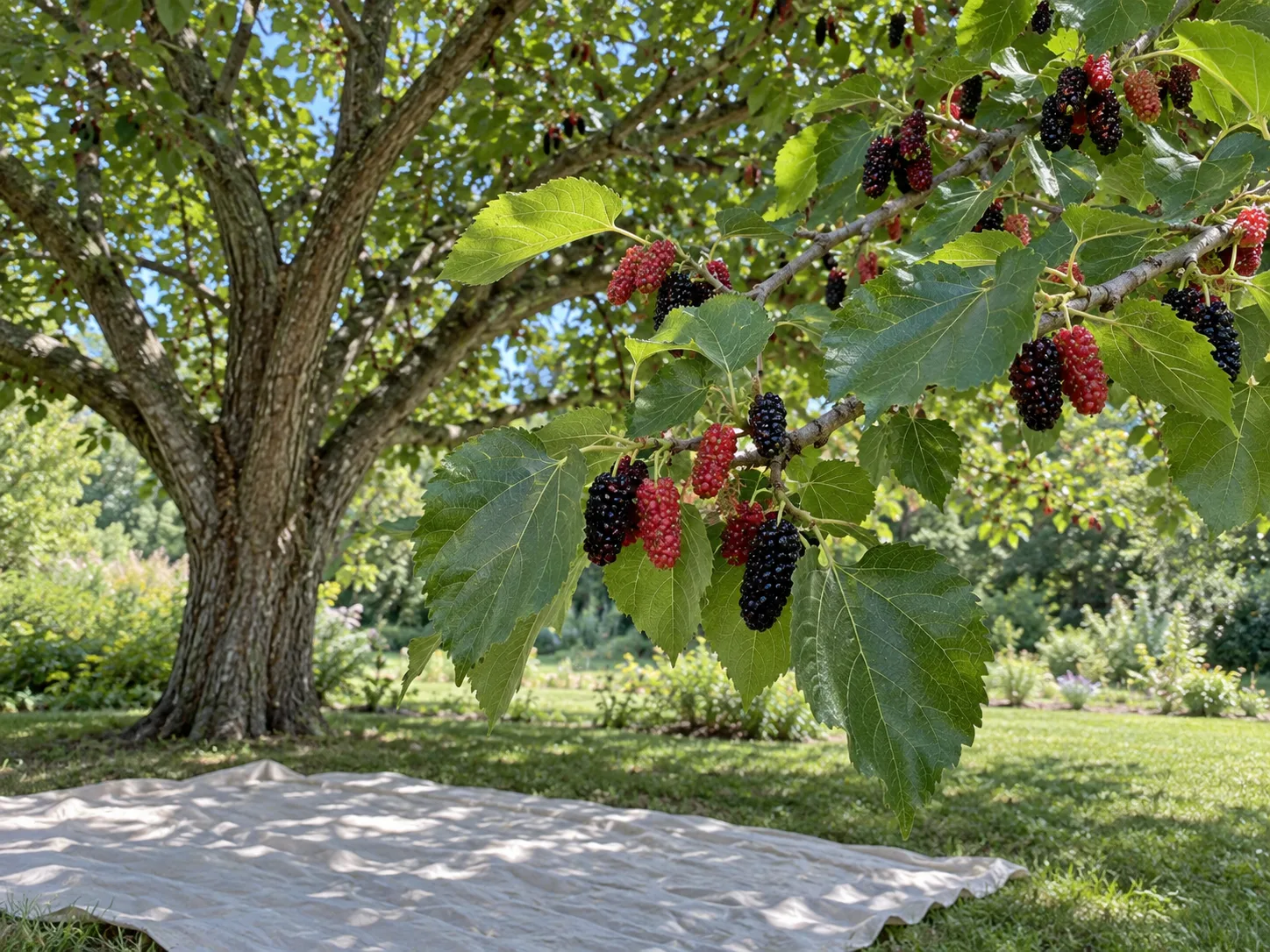
Hand-pick the lower branches into a shallow bowl, or place a clean sheet beneath a reachable section and gently shake it. Ripe berries should fall more readily than firm ones. Do not climb onto brittle limbs or shake a large branch hard enough to split it. If fruit is high above safe reach, leave it for wildlife or ask an arborist about safe access rather than risking a fall.
Harvest every day or two during the heaviest drop if you want clean ground and usable fruit. Mulberries bruise easily, so avoid piling them deeply. Chill or freeze them soon after picking and wash just before use. NC State Extension says ripe fruit is edible, while unripe fruit and the tree’s milky sap can cause low-severity toxic effects. Eat only fruit that is fully ripe, avoid tasting sap, and keep fresh pruning debris away from children and pets that may chew it.
Prune in dormancy and train a sound canopy
Prune after the tree has dropped its leaves and while it is dormant, usually in late fall or winter before spring growth begins. Mulberries can bleed sap from cuts made during active growth, which is messy and avoidable. NC State Extension recommends dormant-season pruning; RHS likewise places mulberry pruning in the dormant window because cuts can bleed heavily.
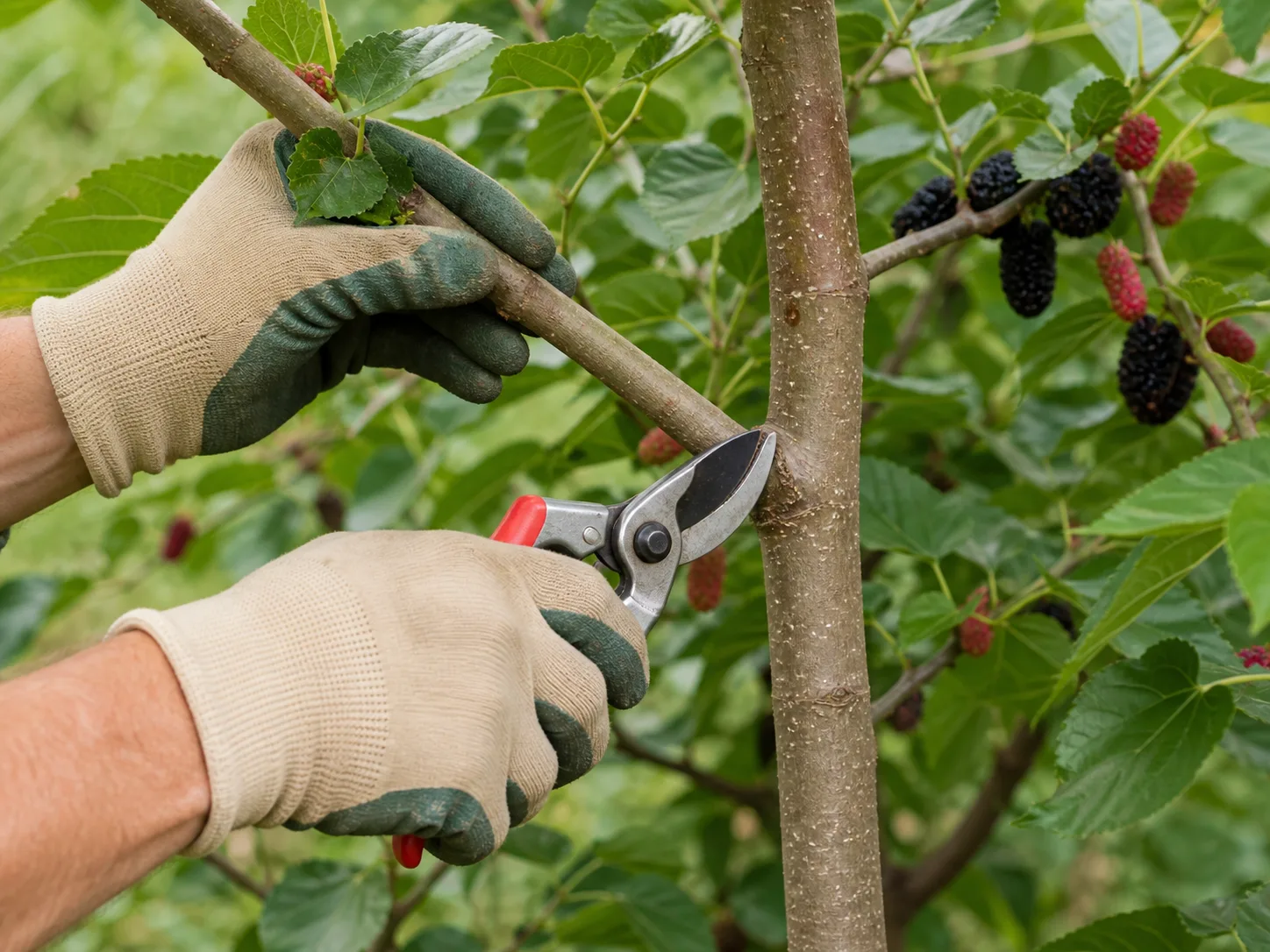
For routine maintenance, remove dead, broken, crossing, and inward-growing branches first. Make clean cuts just outside the branch collar rather than cutting flush to the trunk or leaving a long stub. Thin only enough to improve structure and airflow; removing too much foliage at once can trigger vigorous regrowth and reduce fruiting wood. If a large limb is cracked, hangs over a building, or needs a cut beyond your reach, have a qualified arborist assess it.
Avoid topping the tree to force it under a roof or wire. Heading every branch back to stubs creates weak shoots and large wounds, then leaves you with a tree that needs more severe pruning later. If the canopy is already too big for its site, ask an arborist about staged reduction or consider replacing it with a tree that fits the space. No dormant pruning plan can make an oversized tree permanently small without ongoing work.
Shape a young tree before it gets large
A young tree is easier to guide than a mature one. Choose a central leader or a balanced open framework with well-spaced main branches, then remove competing leaders and branches that rub. Keep the strongest limbs distributed around the trunk instead of allowing all the weight to collect on one side. If you want to harvest by hand, set the first permanent branches at a reachable height while they are still small.
Do not rush to remove every low branch in the first year. Leaves make food that supports root establishment, and a young trunk benefits from a gradually developed canopy. Make a few purposeful cuts each dormant season, then pause to observe how the tree responds. For mature structural changes, consult an arborist rather than copying orchard-pruning cuts intended for a different species or training system.
Propagate from seed or cuttings
Choose seed if you are experimenting and can accept variation; choose a cutting if you want a clone of a particular parent tree. North Carolina State Extension lists both seed and stem cuttings as propagation methods for red mulberry. Seedlings may differ from the parent in fruit, growth, and sex, and a seed from a tree with uncertain identity may not produce a true red mulberry.
To try seed, collect fully ripe berries and remove the fleshy pulp so it does not mold around the seed. Sow more than one seed in a clean, free-draining seed mix and keep the medium lightly moist, not waterlogged. Germination can be uneven; Epic Gardening’s broader mulberry propagation guide reports that a cold-moist period can improve germination for mulberry seed, but duration can vary. Follow a regional nursery or extension propagation protocol if the seed is valuable, then pot up seedlings individually once they are large enough to handle.
A cutting is the better home route when the parent tree is healthy and identified. The RHS propagation guide for mulberries recommends hardwood cuttings during the dormant season. Take several healthy pieces rather than relying on one, insert them into a clean, free-draining propagation medium, and keep them evenly moist in a sheltered location. Rooting success is not guaranteed, so leave a cutting in place until it resists a gentle tug or shows sustained new growth. Grow the young plant on until it can form a stable root ball before moving it to its permanent site.
Troubleshoot pests, diseases, and stress
Red mulberry is generally a tough landscape tree, but it is not immune to problems. NC State lists borers, whiteflies, scale, mites, mealybugs, bacterial blight, bacterial leaf scorch, powdery mildew, root rot, coral spot cankers, and witches’ broom among possible issues. The presence of one discolored leaf does not identify a disease, so look for a pattern: whether symptoms affect one branch or the whole canopy, whether the soil is dry or saturated, and whether there are visible insects, holes, or cankers.
Borers are more concerning when a tree is already stressed or has bark wounds. Protect the trunk from mower and string-trimmer injury, maintain soil moisture during establishment, and have persistent dieback or suspicious holes identified by a local extension office or arborist. Whiteflies, scales, and mites may be visible on leaf undersides or twigs; confirm the pest before using any treatment, especially on a large tree where spraying the entire canopy may be impractical.
Root rot risk rises in persistently wet soil. If leaves yellow while the ground stays saturated, correct drainage and reduce irrigation rather than adding fertilizer. Powdery mildew can appear as a pale coating on leaves; improve airflow and avoid keeping foliage wet late in the day. Bacterial spotting or cankers with branch dieback need more careful diagnosis, because pruning alone may not solve the cause.
Separate drought symptoms from disease
Brown leaf edges during hot, dry weather often point first to water stress, especially on a recently planted tree. Check moisture several inches down around the root ball and water slowly if that layer is dry. If soil is already wet, do not add more water; inspect drainage and roots instead.
A cluster of short, crowded shoots may resemble witches’ broom, but there can be more than one cause. Mark the affected branch, photograph the pattern, and ask a local extension office to review it before making heavy cuts. For any confirmed dead or diseased branch, prune during dry weather with clean tools and remove the debris from the site. Avoid routine pesticide or fungicide sprays without a specific diagnosis and label-based recommendation.
Manage seedlings and wildlife around the tree
Red mulberry belongs in its native range, but it can still produce volunteer seedlings. Birds eat the berries and distribute seed, so check nearby beds, fence lines, and mulched areas during the growing season. Pull seedlings while they are small and the soil is damp; waiting until their stems harden makes removal more difficult. NC State notes that hand-pulling young seedlings is the practical management approach and that herbicides are not effective for this problem.
White mulberry deserves extra care because it has naturalized broadly and can hybridize with native red mulberry. If conserving local red mulberry populations is part of your goal, choose documented M. rubra stock and avoid spreading unknown seed or moving volunteer trees. The NC State profile for white mulberry explains its naturalization and hybridization concerns.
A red mulberry can support birds and other wildlife, but fruit, seeds, and droppings are part of the bargain. Remove rotting fruit from frequently used paths and keep seedlings from taking over garden beds. If you decide you cannot live with the seasonal mess, do not try to solve it by repeatedly cutting the canopy; replace or relocate the tree while it is still manageable.
Conclusion
Red mulberry is most rewarding when the site fits the whole tree: open sun, moisture-retentive but well-drained soil, room for a broad crown, and ground beneath it where fruit can fall. Buy a tree clearly labeled Morus rubra, ask about pollination before paying for a fruiting plant, and water consistently while its roots establish. From there, dormant pruning, restrained feeding, timely harvest, and early seedling removal keep the work manageable.
Before planting, stand where the trunk would go and picture both the mature canopy and the ripening fruit below it. If the shade and wildlife are worth the cleanup, red mulberry can be a useful native tree for decades. If berries over a driveway would frustrate you, choose another location or another tree now, while the decision is still easy.



