Best Time to Prune Evergreen Shrubs by Plant Type
The best time to prune evergreen shrubs depends on whether they flower, carry needles, or form a hedge. Choose the right window and avoid bare patches.
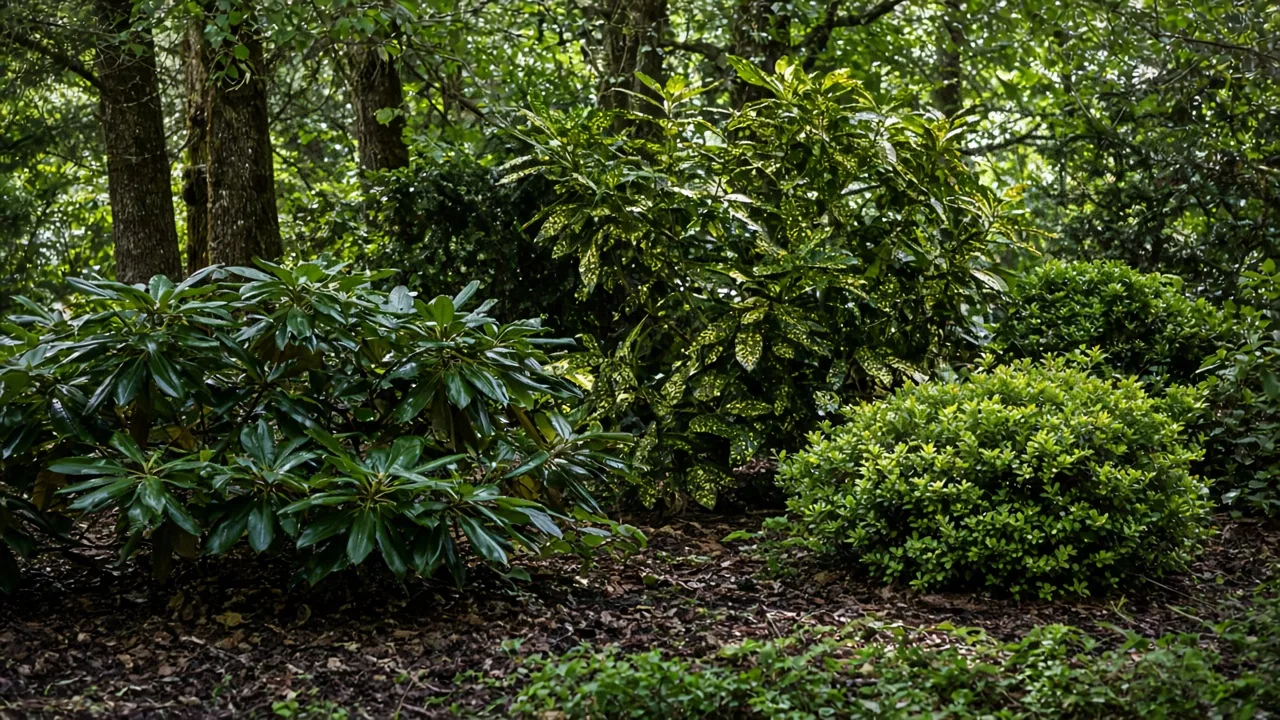
For most evergreen shrubs, late winter through spring is the main pruning window, but the exact timing depends on the plant and the cut you need to make. Prune a flowering broadleaf shrub just after it blooms, shape many needled evergreens before spring growth begins, and wait until pine candles are expanding before shortening them. Formal hedges are usually clipped lightly after their spring flush.
That sounds less tidy than a single month, but it prevents the two mistakes that cost gardeners the most: removing next year’s flower buds and cutting into old, bare wood that cannot fill back in. First identify the shrub; then match the cut to its growth habit, flower schedule, and the weather where you garden.
Most established evergreens need little routine pruning. If a shrub is the right size for its site, removing dead, damaged, or crossing branches may be all it needs. Pruning is a maintenance choice, not a yearly requirement.
The short answer: prune by growth habit, not the calendar
Use mid- to late spring as a starting point for routine shaping of many broadleaf evergreens after the risk of hard frost has eased. But do not use that window automatically for every evergreen. A camellia that has just bloomed, a yew hedge, a juniper with a brown center, and a mugo pine with soft candles need different decisions.
For structural pruning of many needled shrubs, early spring before new growth starts is easier to plan around: the branch framework is visible, and new growth can soften the cuts. Pines are the important exception. They are usually pinched or shortened while the new candles are elongating, before the needles harden, rather than cut back into old wood. A late-flowering broadleaf shrub may also be shaped in spring, while an early-flowering one should wait until flowering is over. Guidance from The Morton Arboretum and Penn State Extension makes clear that evergreen groups differ in both growth pattern and pruning window.
Climate shifts the date. “Early spring” in a cold inland garden may arrive weeks after it does in a mild coastal climate; use bud swell, the end of hard freezes, and the plant’s own growth stage as cues. If you do not know the species, postpone substantial shaping until you identify it and check its flowering habit.
Identify what kind of evergreen you have
“Evergreen” describes a plant that keeps foliage through winter, not one uniform pruning group. The first useful distinction is broadleaf versus needle-leaved. Next ask whether the shrub flowers, whether it is a formal hedge, and whether new shoots emerge from old wood or only from the tips.
Look at the plant before reaching for shears. A broadleaf shrub has flat leaves; a needle-leaved shrub has needles or scale-like foliage. Then note whether it flowered last season, whether buds are already visible, and whether the inside of the canopy is green or mostly brown. Those clues determine whether a cut can be hidden by new growth or may leave a lasting gap.
Broadleaf evergreens and old flower buds
Broadleaf evergreens include rhododendrons, azaleas, camellias, hollies, boxwood, and many laurels. They do not all flower at the same time or respond to pruning in the same way. An early-flowering shrub may already have formed the buds for next spring by the time summer arrives, so a late trim can remove that display.
If your plant flowers, note when it blooms and whether you want berries or seedheads afterward. A light cut immediately after flowering generally gives the shrub the longest time to make new growth and set buds for the next cycle. If flowers or berries are an important part of the plant’s value, remove only dead, damaged, or badly placed shoots and skip routine shearing. The RHS evergreen pruning guide groups shrubs by flowering and growth habit rather than giving every evergreen one date.
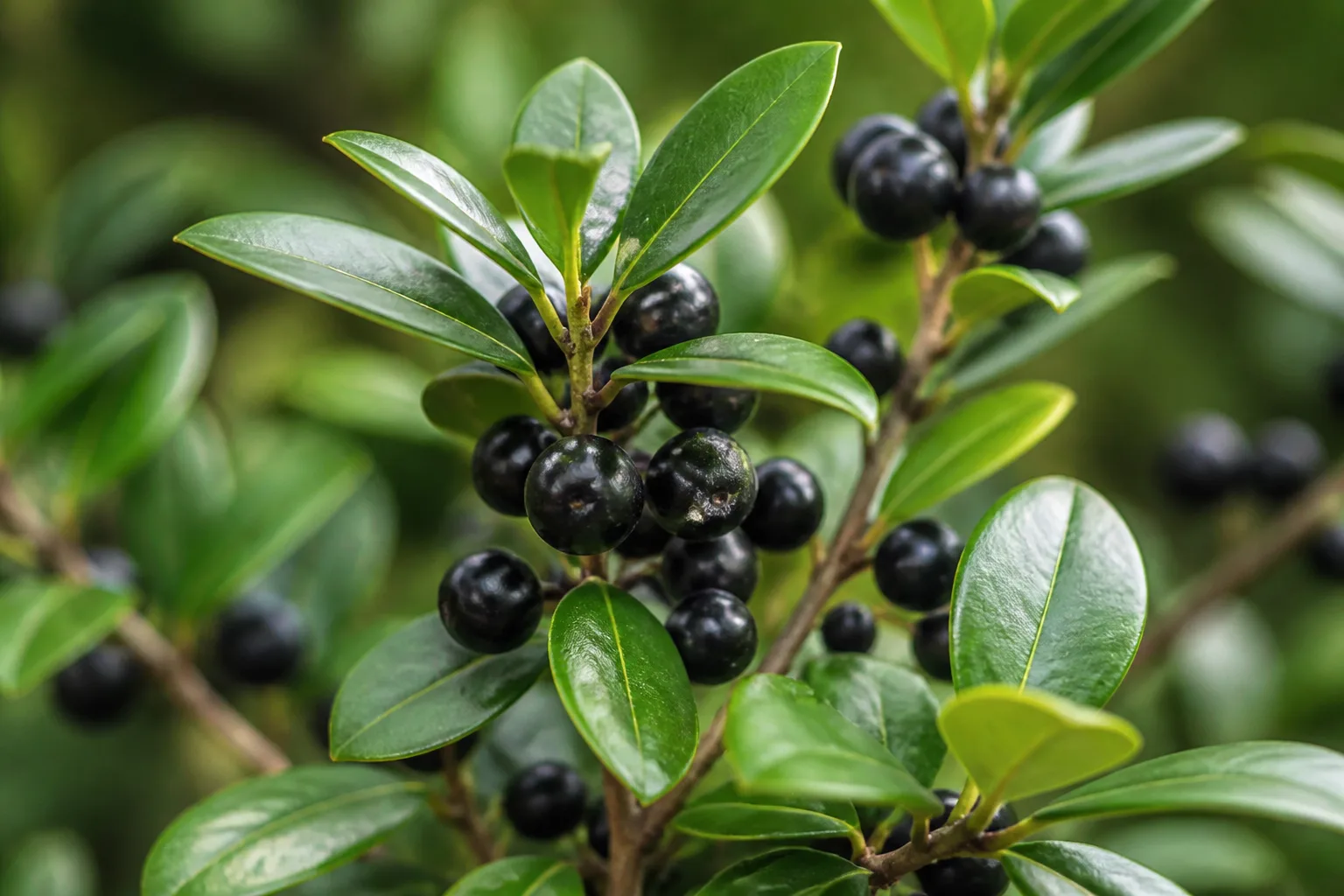
Needled evergreens and where new growth appears
Needled evergreens include pine, spruce, fir, yew, juniper, arborvitae, and hemlock. Their branching pattern matters because some can produce buds along a young twig while others rely heavily on the growing tip. Pines, spruces, firs, and Douglas-firs have a whorled pattern; yews, junipers, and arborvitae have a more irregular branching pattern, although a plant’s cultivar and condition still matter.
A practical check is to find green growth beyond the point where you plan to cut. Many junipers and arborvitae will not sprout from old brown interior wood, so a cut into that “dead zone” can leave a permanent hole. Yews are more forgiving and can produce growth from older wood, but even a yew should be renovated with a plan rather than hacked down indiscriminately. Colorado State University Extension and the Morton Arboretum explain why the green-to-brown boundary is a critical limit for many conifers.
Timing guide by shrub group
Use this as a working calendar, then check the exact species and local conditions. Months are deliberately broad: the same pruning stage can land in different weeks across climate zones and years.
| Shrub group | Practical timing | Main caution |
|---|---|---|
| Early-flowering broadleaf evergreens, such as camellia or rhododendron | Immediately after flowering, if shaping is needed | Later cuts may remove next season’s flower buds |
| Late-flowering or non-flowering broadleaf evergreens | Mid- to late spring after severe frost risk, before or as growth begins | Avoid pruning away flowers or berries you want to keep |
| Yew | Late winter or early spring before active growth; a light second trim may suit a formal hedge | Avoid late-season pruning that prompts tender growth |
| Juniper and arborvitae | Early spring before new growth, with selective cuts to green side shoots | Do not cut into brown, needleless wood |
| Pine shrubs | During the spring candle stage, when new shoots are lengthening | Do not shear old needles or cut into bare wood |
| Formal evergreen hedge | Usually late spring or early summer after the soft flush; a second light trim depends on species and vigor | Keep the base wider than the top and avoid late hard cuts |
The University of Wisconsin–Madison Division of Extension gives especially useful examples: yews tolerate more correction than junipers and arborvitae, while mugo pines are timed by their candles. Its month references are regional, so use the growth-stage descriptions rather than copying a Wisconsin date into a different climate.
Prune flowering broadleaf evergreens just after bloom
For a broadleaf evergreen grown for flowers, wait until its main bloom has finished before shaping it. This is especially important when the shrub blooms on growth formed in the previous season. Pruning before flowering can remove buds; pruning much later may remove the buds the plant is forming for next year.
Keep the cut modest. Remove dead or damaged stems first, then shorten only the shoots that break the plant’s natural outline. Cut just above a healthy leaf, bud, or side branch that points in a useful direction. If the shrub is naturally rounded, do not turn it into a box simply because hedge shears make the job faster.
There are exceptions. Some compact heathers and similar low shrubs benefit from a light annual trim after flowering to prevent woody, leggy growth, while larger rhododendrons often need little beyond selective cleanup. Some hollies are grown for fruit, so shearing them at the wrong time can remove flowers or berries as well as change the shape. The RHS pruning groups are useful when the common name is not enough to tell you whether a shrub flowers on old or current growth.
If you have inherited an overgrown flowering evergreen, do not assume that a severe spring cut is safe just because some broadleaf species tolerate renovation. Confirm the species and its response first. Renovate gradually when possible, and accept that a hard reset can reduce flowering for a season or longer.
Prune needle-leaved shrubs during the right growth stage
For many junipers and arborvitae, do selective maintenance pruning in early spring before the new flush begins. Follow a branch to a visible green side shoot or a branch junction, then shorten it there. This lets the remaining foliage hide the cut and avoids exposing the dry, shaded interior. If a branch is brown and dead, remove it back to its origin; if it is alive but brown only inside, do not treat that inner zone as a place where new foliage will reliably appear.
Yews are more tolerant. A well-established yew can be shaped in late winter or early spring, and a formal hedge may take a light second trim in early summer. Yews can break from older wood more readily than many other needled evergreens, but heavy renovation still works best when you preserve green shoots and spread the work if the plant is large. Keep clippings away from children and pets: yew foliage and seeds are poisonous, as Penn State Extension notes.
Pines follow a different rhythm. Their candles are the soft new shoots that emerge at branch tips in spring. When the candles are elongated but the needles have not fully expanded, gardeners can shorten them to encourage a denser, more compact shape. The correct amount varies with the species and goal; Penn State Extension and Wisconsin Extension describe slightly different local timing cues, so watch the candle rather than relying on a fixed date. Do not shear mature pine needles or cut a branch back to bare wood: those needles do not grow back.
Spruce and fir generally need little pruning. If a young plant needs shaping, make the cut in spring to a side bud or lateral branch that can take over as the tip. Avoid routine size-reduction cuts that remove all green growth from a branch. Most conifers are poor candidates for being kept artificially smaller than their mature size; if the plant repeatedly outgrows its location, replacement with a more compact cultivar may be kinder and less work.
Keep evergreen hedges light, frequent, and wider at the base
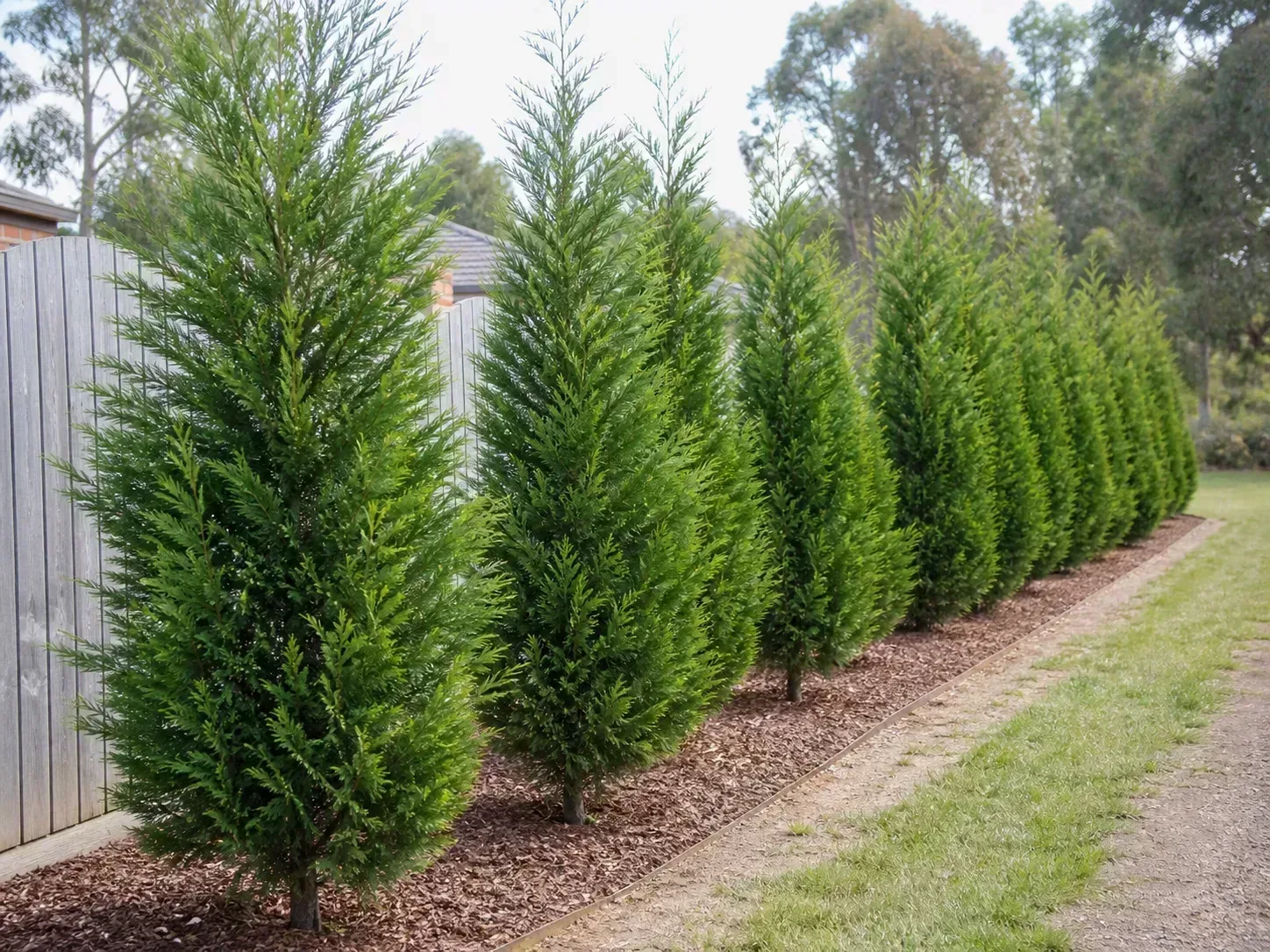
A formal hedge has a different goal from a specimen shrub. It can be clipped for a straight surface, but the best timing depends on the species and how much growth it makes. For many evergreen hedges, a light trim in late spring or early summer—after the first soft flush—removes tender extension growth while leaving time for the surface to fill. Vigorous hedges may need another light trim, but frequent shearing is not automatically healthier.
Make the hedge slightly wider at the bottom than at the top. This taper lets lower foliage receive light; a hedge that flares outward at the top shades its own base and gradually becomes thin near the ground. The BBC Gardeners’ World hedge guide recommends trimming the soft new growth and keeping sides sloped so light reaches the base. A straight string line helps with a long formal run, but stop periodically and inspect the whole profile rather than following the line blindly.
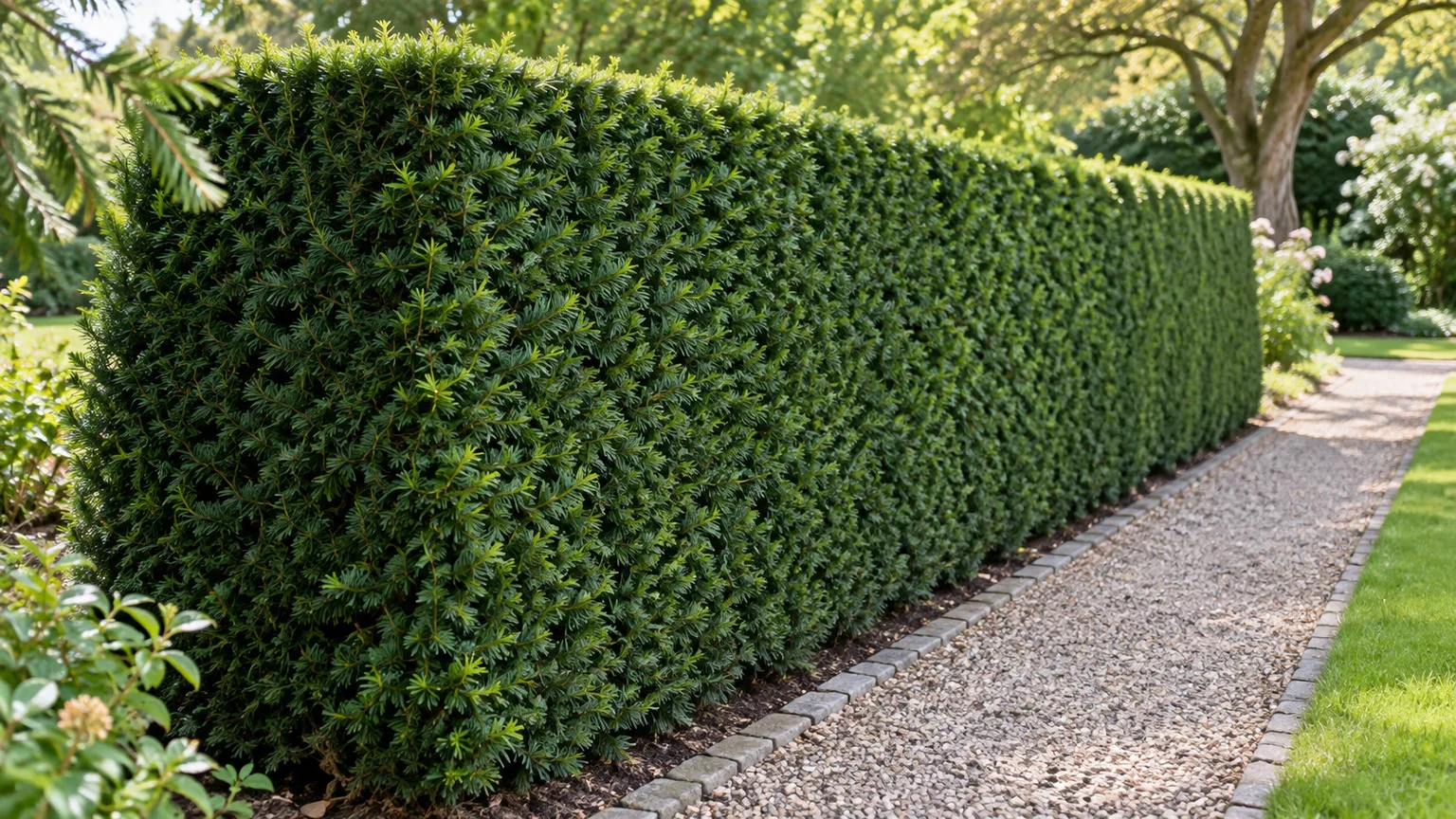
For a natural-looking screen, use hand pruners or loppers to shorten selected branches at different depths instead of cutting the whole outer surface. A hedge trimmer is useful when a formal finish is intentional, but repeated shearing creates a dense outer shell that can shade the interior and make future correction harder. Dennis Patton’s practical Kansas City Star garden column makes the useful distinction: selective cuts preserve the plant’s form, while a formal clipped surface is a separate design choice.
Do not trim simply because the calendar says it is hedge day. Check for active nests and follow local wildlife guidance before substantial hedge work. Also avoid a late-season hard trim that could stimulate soft growth just as the shrub should be slowing down for winter.
What to prune at any time—and what can wait
Dead, broken, or clearly diseased branches can usually be removed when you notice them, provided weather and access make the work safe. Waiting for a calendar date does not help a broken branch that is rubbing against healthy stems. Make a clean cut back to a healthy lateral or the branch collar; do not leave a long stub that can die back and spoil the outline.
“Any time” does not mean pruning in every condition. If the shrub is frozen, drought-stressed, or facing extreme heat, postpone non-urgent shaping. A stressed plant has less capacity to replace foliage, and a rushed cut can expose inner branches to sun or wind. If disease is suspected, remove only what you can identify confidently, clean tools between plants, and avoid scattering infected clippings around the bed.
Large limbs, overhead cuts, or work near utility lines belong to a qualified arborist. Shrubs can conceal heavy branches and springy stems, and a ladder plus a powered trimmer creates avoidable risk. If a cut requires a saw beyond comfortable shoulder height, pause and get help rather than trying to finish it from an unstable position.
A safe sequence for pruning shrubs
A good pruning session starts with observation, not cutting. Walk around the entire shrub and decide whether the goal is deadwood removal, light shaping, flower preservation, hedge maintenance, or size reduction. If the plant needs a major renovation, stop and confirm the species and its tolerance before you begin.
Then work in this order: remove dead or broken wood; remove crossing or rubbing branches; shorten only the shoots that disrupt the natural shape; step back often; and stop when the plant looks balanced. Do not remove a fixed percentage simply to make the shrub “tidy.” The right amount is the minimum needed to meet the goal while preserving a healthy framework.
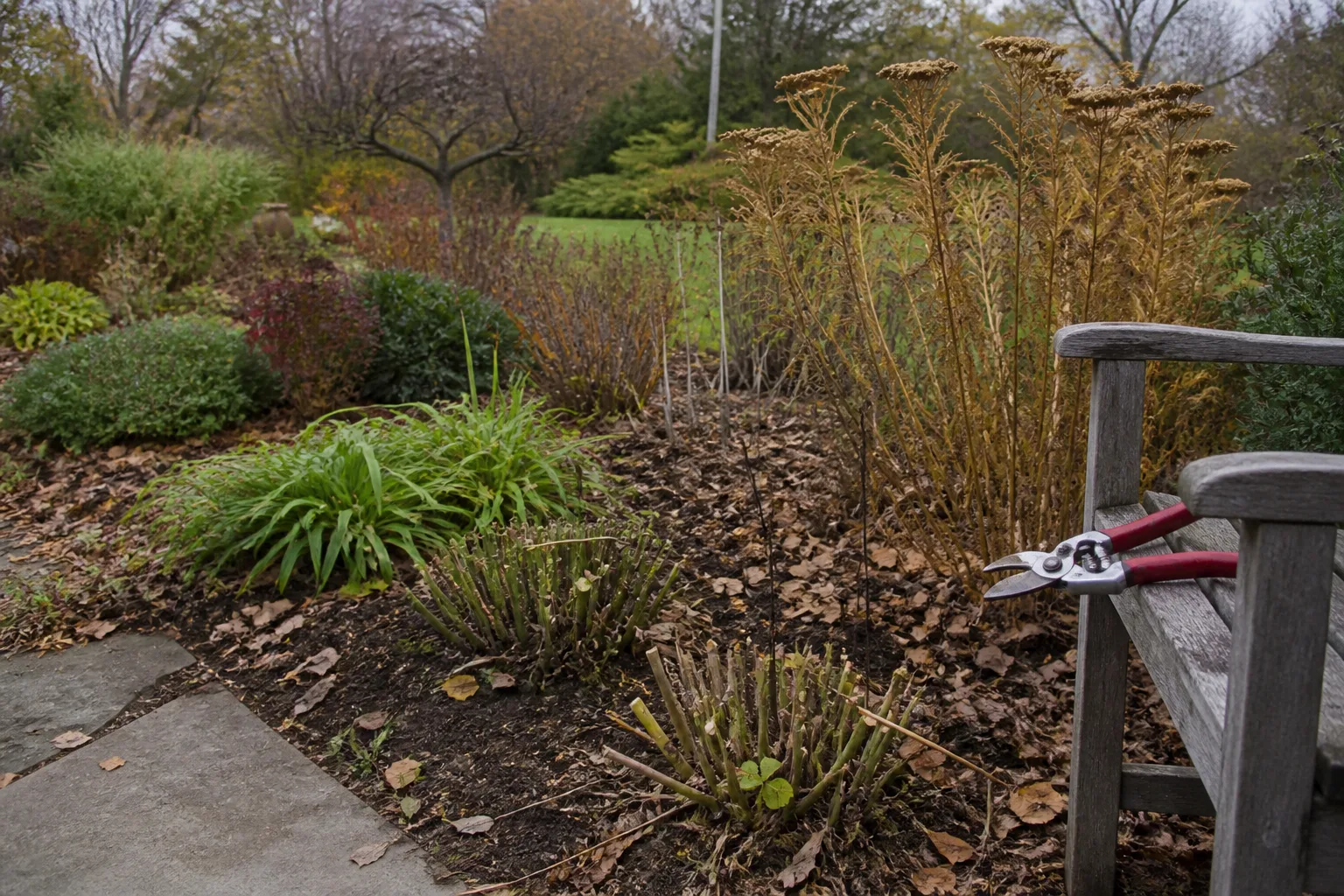
Choose the right tool for each cut
Use clean bypass hand pruners for small stems, loppers for branches too thick for hand pruners, and a pruning saw for larger branches you can safely reach. Hedge shears or a powered trimmer are for a formal surface, not for correcting a crowded interior. Sharp blades make cleaner cuts and reduce crushing; wipe soil and sap from tools, and disinfect them between plants when disease is a concern. Penn State Extension lists the same basic tool distinction and advises leaving chainsaw-scale work to professionals.
Make cuts without leaving stubs or bare holes
For a small shaping cut, shorten a shoot just above a healthy bud or side branch, angled so water does not sit on the cut. For a larger branch, cut just outside the branch collar without cutting into it. A three-cut method prevents a heavy limb from tearing bark as it falls; Colorado State University Extension explains that method for larger evergreen branches.
On juniper and arborvitae, place each cut where green foliage remains beyond it. Before removing a branch from a dense shrub, separate the outer growth and look at the interior. If the point you are considering is surrounded by brown, needleless wood, that is a warning to move the cut outward or leave the branch alone. The Kansas City garden column offers a simple natural-shape test: shorten the branch while preserving its direction and form, then step back to see whether the shrub still looks like itself.
When to postpone pruning
Wait until after bloom when a broadleaf evergreen is flowering or carrying buds you want to keep. Delay routine shaping during a hard freeze, severe heat, or drought. Avoid late summer and fall pruning of many evergreens because a flush of tender growth may not harden before cold weather; the Morton Arboretum advises against late-season pruning for this reason.
Postpone heavy renovation until you know the species can recover from it. Yews and some broadleaf evergreens can tolerate severe pruning under suitable conditions, while junipers and arborvitae often cannot replace foliage from bare inner wood. A plant that is badly oversized, shaded, or repeatedly sheared back to dead wood may be a better candidate for replacement than a series of increasingly harsh cuts.
If the shrub is close to a walk or doorway, you can remove a small obstructing shoot sooner if the cut can be made safely and without ruining its form. Otherwise, mark the problem and wait for the correct window. A few weeks of inconvenience is easier to fix than a permanent bare patch.
Common mistakes that make evergreens sparse
Treating every evergreen like a hedge is the fastest way to lose the natural shape. A specimen shrub usually looks better with selective cuts that follow its branching pattern; use a trimmer only when a clipped outline is part of the design. Even a hedge should not be sheared so deeply that its green outer shell disappears.
Cutting too far into old wood is especially damaging on juniper, arborvitae, and pine. If there is no green shoot or visible bud beyond the cut, the gap may not fill. Pruning a flowering shrub before bloom can remove the display, while pruning it long after flowering can remove next year’s buds; let the bloom cycle set the timing.
Another common error is trying to solve a site problem with repeated pruning. If an evergreen is too large for its planting space, clipping it several times a year will not change its mature size or light needs. CSU Extension recommends selecting plants for mature dimensions and notes that frequent pruning is a sign that a replacement may be worth considering. Choose a naturally smaller cultivar when replanting, and allow adequate room for the size it will actually reach.
Finally, do not remove too much in one session just because the shrub has been neglected. Thin gradually, preserve green growth, and reassess after the plant has had a growing season to respond. The right repair may take more than one year.
Conclusion
For most evergreen shrubs, plan on a spring pruning window, then adjust it to the plant: after flowering for bloom-dependent broadleaf shrubs, before the new flush for many yews, junipers, and arborvitae, and during the candle stage for pines. Formal hedges can be trimmed after soft spring growth, provided the species and local conditions allow it.
Before each cut, ask two questions: what growth will this branch produce from, and what will the cut expose? Keep green growth beyond cuts on plants that do not sprout from bare wood, preserve flower buds when blooms matter, and prune only as much as the plant needs. That small pause is what keeps a quick tidy-up from becoming a permanent hole.