Difference Between Shrubs and Bushes: A Clear Guide
Shrubs and bushes usually mean the same plant. Compare stem form, common names, and hedges, then check the full plant label before you buy or prune for fit.
The direct answer: usually, no botanical divide
In ordinary gardening, shrub and bush often refer to the same kind of plant: a woody perennial that branches low and grows as a compact or multi-stemmed plant. “Shrub” is the more precise horticultural term for a growth form; “bush” is a familiar everyday word that can also suggest a dense, low shape or a clump of shrubs.
The terms do not name two separate botanical groups, and there is no universal rule that turns a plant from a bush into a shrub at a particular height, foliage density, or distance from a house. The Royal Horticultural Society describes shrubs as more familiarly known as bushes. If someone says “rose bush” or “blueberry bush,” they are not identifying a different kind of plant from a rose or blueberry described as a shrub.
The distinction is useful only when you know which sense the speaker intends. In a plant reference, shrub usually points to a woody growth habit. In conversation, bush may simply be a synonym, a description of a plant’s dense outline, or—depending on the setting—a word for a close group of shrubs. Neither word tells you the plant’s species, exact mature size, or care requirements.
What horticulturists mean by shrub
A shrub is generally a woody perennial with a persistent framework of branches, often with several stems arising near the ground rather than one dominant trunk. That form is the easiest field clue: stand back and look for the main stems, not just the leafy outline. The RHS describes the usual near-ground, several-stem structure, while the National Park Service contrasts shrubs’ smaller stems with the single larger bole typical of trees.
“Usually” matters. A shrub may be pruned into a single-stem standard, while some tree species naturally grow with several trunks. The descriptor is about a plant’s overall growth form, so no single visual feature is a reliable pass-or-fail test by itself. Merriam-Webster’s concise definition of a shrub—“a low usually several-stemmed woody plant”—also leaves room for variation rather than claiming that every shrub has the same architecture.
A shrub is not a taxonomic rank like genus or species. It is a practical description used in horticulture, botany, ecology, and landscape design. The same plant can be identified by its scientific name, classified within a plant family, and described as a shrub at the same time; those labels answer different questions.
Woody growth is also different from leaf retention. A deciduous shrub may lose every leaf in autumn while its woody branches remain alive; “evergreen” and “deciduous” describe what happens to foliage, not whether the plant is a shrub or bush. By contrast, many herbaceous perennials lose their aboveground stems seasonally and regrow from living crowns or roots. Some plants sit between those familiar forms: botanical sources sometimes call them subshrubs when the lower stems are woody but upper shoots are softer. Those edge cases are another reason a garden label cannot be reduced to whether a plant looks leafy or bare in one season.
Likewise, low foliage does not create a separate category. A shrub may grow close to the ground because it is a naturally prostrate species, a compact cultivar, or has been clipped; its height alone does not turn it into a bush. Dense foliage can come from age, growing conditions, or pruning and can conceal the framework you would need to inspect for identification.
Stems are a clue, not an infallible test
When you are identifying an unfamiliar plant, count where its major woody stems begin. Several substantial stems that emerge from the crown or from close to soil level point toward a shrub habit; one clear trunk that rises before branching points toward a tree habit. Look at the plant before it is hidden by leaves if possible, and distinguish main stems from thin shoots or suckers that have emerged around a trunk.
That quick check works best as a description, not as a verdict. A young tree can still look like a cluster of stems before it develops a pronounced trunk, and an older shrub can have one thick stem after pruning or natural dieback. The National Park Service uses stem number and size to explain the general contrast while showing that shrub forms range from a willow only inches tall to willows that reach many feet.
Why height cutoffs change by context
Some field guides and agencies use a height or trunk-diameter threshold so different people can classify vegetation consistently. Those thresholds serve a particular survey, habitat map, or local convention; they are not a worldwide botanical border. The Vermont Department of Environmental Conservation, for example, describes shrubs in the context of wetland communities as relatively short woody plants with multiple stems. That is a useful ecological category for a wetland inventory, not a rule every gardener must apply to a specimen in a border.
Actual size varies with species, cultivar, age, climate, soil moisture, exposure, and management. The RHS notes that shrubs range from ground covers around 30 centimeters tall to substantial plants that eventually exceed 4 meters. Better Homes & Gardens also points out that common boxwood can reach around 20 feet, although many cultivars stay smaller. A hard cutoff would mislabel real plants simply because they grew in a different region or belong to a different cultivar.
One peer-reviewed model of shrub growth proposes a useful simplified contrast—multiple self-supporting woody stems near the ground for shrubs, versus one tall woody stem for trees—but its authors present that as a basic model for studying shrub life forms, not an all-purpose gardening code. Treat height and stems as clues that help you describe a plant. For a particular specimen, its identity and expected growth are more reliable than a number borrowed from a different field or region.
What bush means in everyday gardening
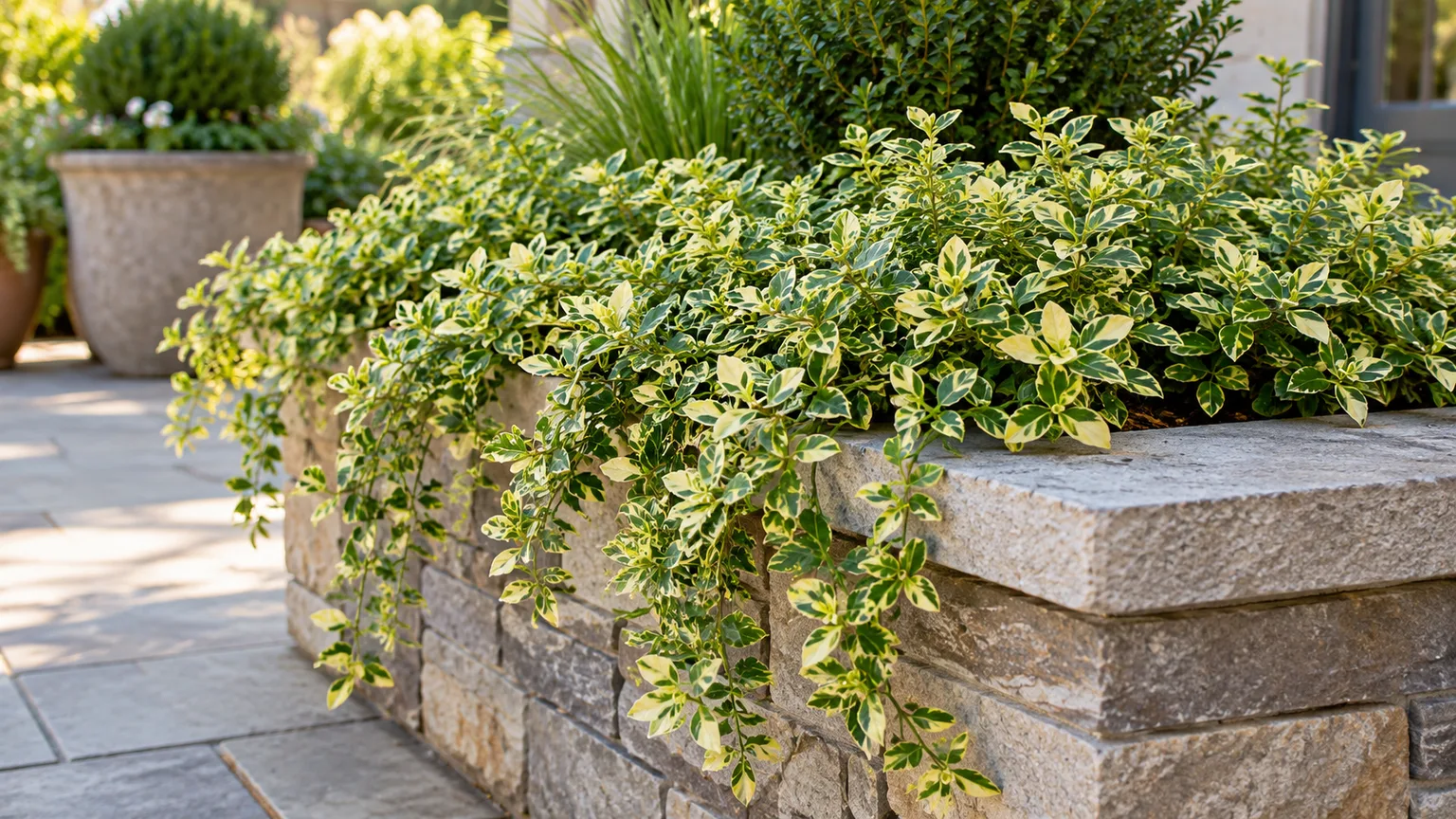
In everyday English, a bush is often just a shrub with a compact, rounded, or densely branched outline. Merriam-Webster’s definition of bush includes a shrub—especially a low, densely branched one—and a close thicket of shrubs that looks like one plant. That range helps explain why gardeners may call one plant a bush and call a mass of plants a bush without using the word in exactly the same way.
The informal term is not wrong. Gardeners say “butterfly bush,” “rose bush,” and “blueberry bush” because common names grow out of everyday use, not from a strict system that reserves “bush” for one branch structure. A plant catalogue may group those same plants under shrubs. The two descriptions can coexist: one is a widely used name, the other is a horticultural category.
One plant, a dense growth habit, or a thicket
If a neighbor points to a single rounded plant and calls it “the bush by the gate,” the word is describing the plant as a familiar object in the landscape. If a field guide calls a dense patch a thicket, it is describing a group or community, not a new type of plant. In some dictionaries, “bush” also has a regional meaning for a large, sparsely settled, wooded area; that geographic use is separate from the garden meaning.
This is why context matters more than trying to police the noun. In a planting plan, “one shrub at the corner” and “a low bush beside the path” may mean the same specimen. In ecology, a shrubland or shrub swamp describes a landscape where shrubs dominate. In a nursery, “bush” in a common name may be printed beside the scientific name of a plant formally described as a shrub.
Shrub versus tree: where the boundary blurs
The typical distinction is structural, not a neat division by height. Trees generally develop a dominant trunk or a small number of trunks that carry a higher canopy; shrubs generally branch closer to the ground and retain several main stems. But both terms describe growth forms that overlap, and sources may use different thresholds for the same borderline species.
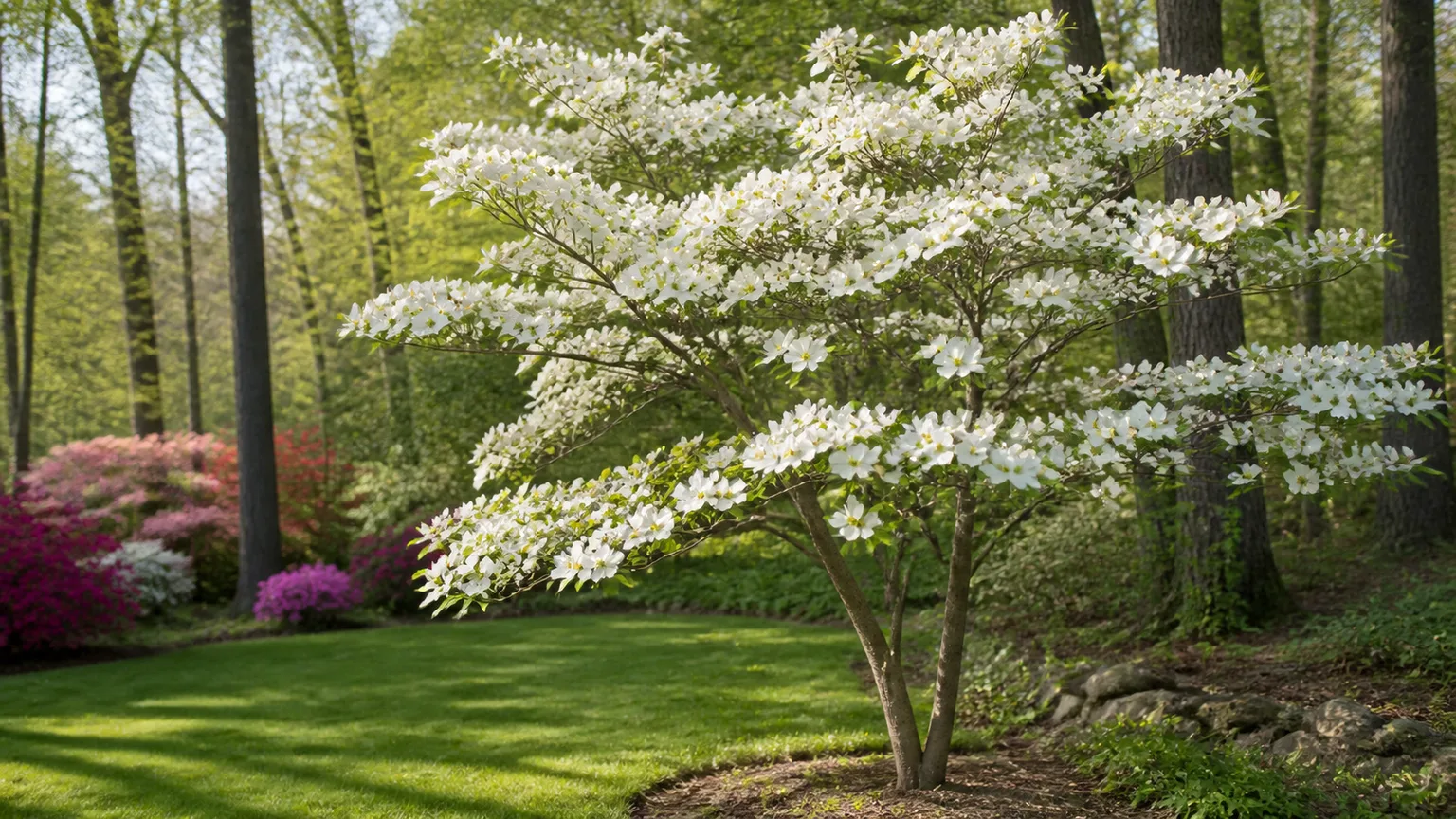
Flowering dogwoods and lilacs are common examples of plants that may be described as large shrubs or small trees, depending on the species, cultivar, age, and form. Gardens Illustrated describes some Cornus as large shrubs or small trees and notes that lilacs can fall into either description. That is not a contradiction to resolve by measuring one branch: it reflects a real continuum between low, multi-stemmed growth and an elevated tree-like framework.
The same species can take more than one form
Nurseries often sell plants in more than one trained shape. A multi-stem specimen may be grown as a shrub, while a plant trained with one clear stem and a raised crown may be sold as a standard or tree form. Training changes the visible architecture and its use in a garden, but it does not automatically change the plant’s scientific identity or make the species’ usual habits disappear.
Pruning can also make a shrub look more tree-like by removing lower branches over time. Conversely, a tree that sends up basal shoots may look bushy or multi-stemmed, especially when it is young or has been cut back. If the form matters to your design, buy the form you actually want or ask whether the plant is trained as a standard; do not assume that a label saying “shrub” guarantees a low, round silhouette.
Shrub, hedge, and thicket describe different things
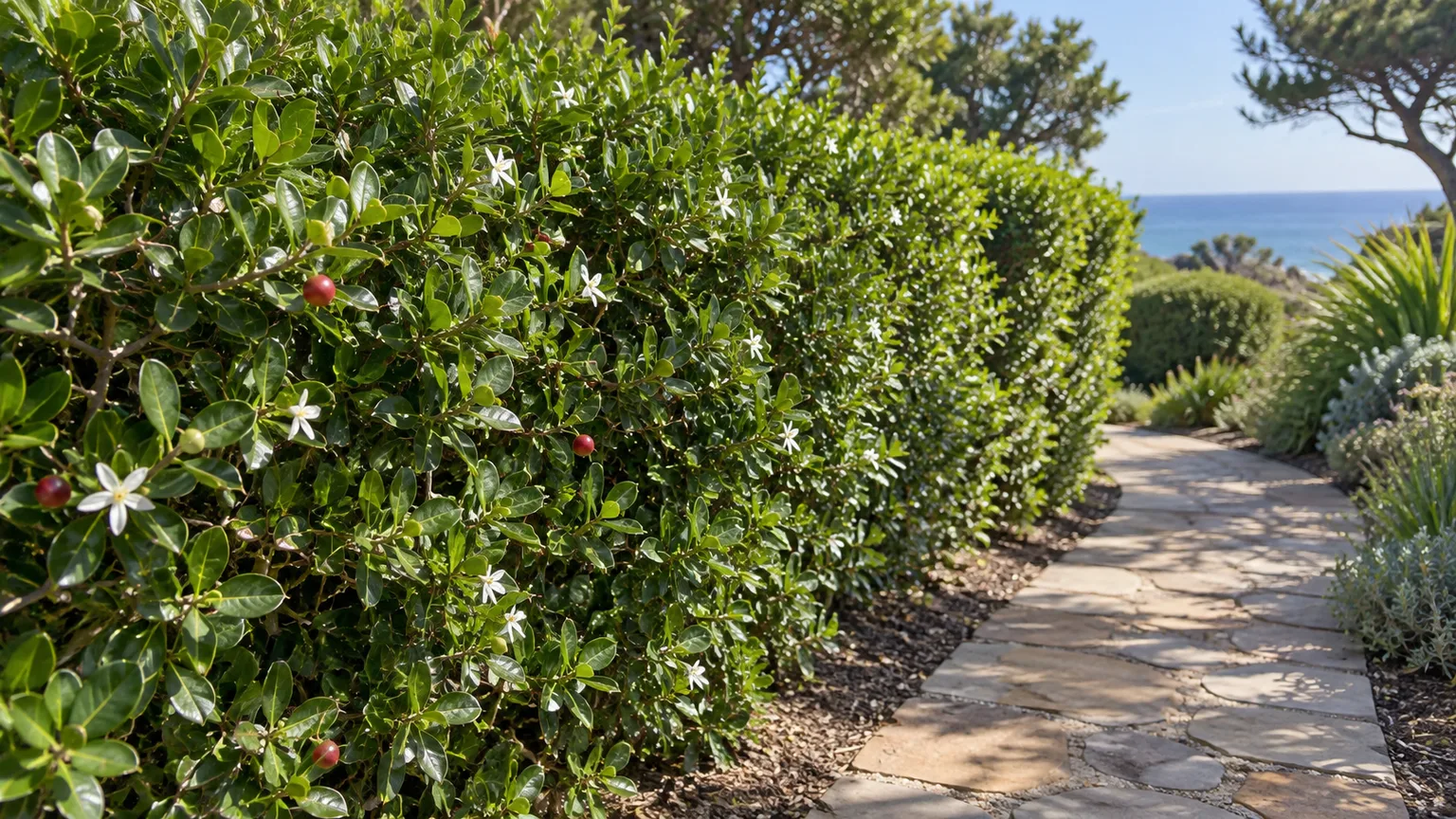
A shrub describes an individual plant’s growth form. A hedge describes a row or group of plants managed to form a boundary, screen, or edge. A thicket usually describes a dense growth of shrubs, often with a more natural or unmanaged character. These terms can overlap—a hedge is often made of shrubs, and a thicket can be made of shrubs—but they do not mean the same thing.
Whether a shrub is planted in a formal garden, a wild hedgerow, or a natural area does not determine whether it is a shrub. The location may affect the word people choose, the way the plant is managed, or how ecologists classify a habitat. It does not change the plant’s identity. Calling a garden plant a shrub and a wild plant a bush is a local habit of speech, not a botanical law.
A hedge is a planting design, not a plant type
A hedge can contain one species or a mix, and it can be clipped into a formal wall or left as a broader, informal screen. Individual shrubs retain their own identity inside the hedge. The Royal Horticultural Society’s hedging guidance lists informal or formal styles and a wide range of heights among hedging choices, and Gardens Illustrated gives examples of shrubs that can be grown as an informal hedge, trained against a wall, or left as large shrubs.
That difference changes how you plan maintenance. A specimen shrub can be allowed to show its natural outline; a formal hedge is cut to maintain a shared surface and a chosen boundary. A row of plants does not become a hedge merely because its leaves touch, and shearing a shrub into a ball does not make it a different botanical kind. In both cases, the intended design—not the word “bush”—determines the pruning goal.
Common names do not settle the question
Common names are convenient but inconsistent. One species can have several local names, and names using “bush” can persist even when gardening references classify the plant as a shrub. “Smoke bush” is a familiar name for Cotinus, while horticulture writers may discuss it as a large shrub; butterfly bush is another common-name example. The noun in a common name does not tell you whether a plant is native, wild, evergreen, or small.
Scientific names help when two plants share a common name or one plant has several names. The genus and species identify the plant more precisely; a cultivar name can then distinguish a selected garden form with particular size, flower, or foliage traits. For instance, a compact cultivar and a full-sized form of the same species may both be shrubs, yet demand very different amounts of space.
If you hear “bush” from a family member or nursery employee, you do not need to correct the word before you can get useful advice. Ask for the plant’s full name and the trait you need to know: ultimate size, flowering time, evergreen habit, soil preference, or pruning method. That moves the conversation from an ambiguous common term to information you can act on.
What to do with a nursery label
The label’s word “shrub” or “bush” is less useful than the information beside it. Before you buy, find the scientific name and cultivar, mature height and spread, light and soil requirements, hardiness or climate range, and any note about the plant’s trained form. If the tag lists only a common name, photograph it and confirm the species with the nursery before selecting a permanent spot.
Do not choose based on the plant’s height in its pot. A small container can hold a species that eventually reaches several meters; a mature shrub may stay compact because it is a dwarf cultivar, not because shrubs are inherently small. Think about the amount of space the plant will occupy after several seasons and whether you are willing to prune it to fit. A plant that must be cut back repeatedly to remain clear of a walkway may be the wrong plant for that spot.
Check mature height, spread, and site fit
Read the label for both height and spread. Gardeners often remember height and overlook width, even though a broad shrub can push into a path, cover a window, or crowd a neighboring plant before it grows very tall. Allow for the plant’s expected mature footprint and place it where roots, branches, sunlight, and access will not conflict with buildings or utilities.
Use the stated mature dimensions as a range, not a promise for every garden. The same species grows differently with climate, soil, water, and available light, and labels sometimes give different dimensions for different cultivars. The RHS recommends matching a shrub to the site’s soil and exposure and considering the desired size, season of interest, and evergreen or deciduous character. Those are better buying criteria than whether the tag says shrub or bush.
Confirm cultivar and intended form
Ask whether the plant is a multi-stem shrub, a single-stem standard, or a cultivar selected for compact growth. Check whether its listed mature size describes the natural form or a plant kept smaller by regular pruning. If the answer is unclear, search by the complete scientific and cultivar name, because care advice for a species may not reflect the growth rate or final dimensions of every selection.
You can also ask the nursery what role the plant is best suited for: specimen, hedge, foundation planting, container, or ground cover. A plant can suit more than one role, but a hedge cultivar may respond differently to frequent clipping than a large flowering specimen that is meant to retain its arching branches. The label’s noun does not reveal those trade-offs, so ask about the plant’s actual habits.
Prune for the species and purpose, not the nickname
“Bush” is not a pruning instruction. Do not shear a plant just because someone calls it a bush, and do not assume that every shrub needs an annual trim. Some look better with a light removal of dead or crossing branches; others are intentionally clipped as hedges. The right method depends on the species, its flowering or fruiting cycle, its health, and the shape you want.
Timing can affect flowers. Many spring-flowering shrubs form buds on older wood, so a hard cut at the wrong point in the season can remove the next display; shrubs that flower on current-season growth may be handled differently. The Virginia Cooperative Extension pruning chapter explains how old-wood and new-wood flowering affect timing. Before making a major cut, identify the plant and check guidance for that species and your climate. If you do not know what it is, remove only clearly dead or damaged branches and postpone major shaping until you can identify it.
The same restraint applies when a plant has outgrown its place. Repeatedly shearing the outer surface may hide the size problem without fixing it, and some woody plants do not regrow reliably from old bare stems. Confirm whether the species tolerates renovation pruning before cutting it back hard. Often the practical choice is to move or replace a plant with one whose mature dimensions fit, rather than asking the wrong shrub to stay small forever.
A quick comparison of the terms
| Term | Usually describes | What it does not tell you |
|---|---|---|
| Shrub | A woody perennial growth form, often with several stems branching near the ground | Exact height, species, or a universal stem count |
| Bush | An everyday synonym for shrub; sometimes a dense, low shrub or a clump | A separate botanical group or a specific care routine |
| Tree | A woody growth form that usually has a dominant trunk and raised crown | A fixed height boundary that applies to every species and region |
| Hedge | A row or group of plants managed as a boundary or screen | The identity of the individual plants used to make it |
| Thicket | A dense stand or clump of shrubs, often naturalized or unmanaged | One individual plant with a distinct species name |
When someone asks whether they should say “shrub” or “bush,” the short practical answer is to use shrub when you mean the horticultural growth form and either word when speaking casually. If you are identifying a plant, buying one, or asking how to prune it, use the scientific name and cultivar instead. That is where the meaningful distinctions begin.
Conclusion
Shrub and bush are usually two ways of talking about the same kind of woody plant, not two separate botanical categories. “Shrub” is the clearer horticultural descriptor; “bush” is common everyday language that can also suggest a dense growth habit or a clump of shrubs. Stems, height, and outline help you describe the plant, but none is a universal test on its own.
For a garden decision, skip the label debate and identify the plant. Check its scientific name, cultivar, mature size, intended form, site needs, and species-specific pruning requirements. Those details tell you where a plant will fit and how to care for it; whether someone calls it a shrub or a bush rarely changes the answer.