How to Plan and Grow a Cut Flower Garden
Plan a cut flower garden around the bouquets you want. Choose productive varieties, map the bed, stagger sowings by frost, and harvest stems at the right stage.
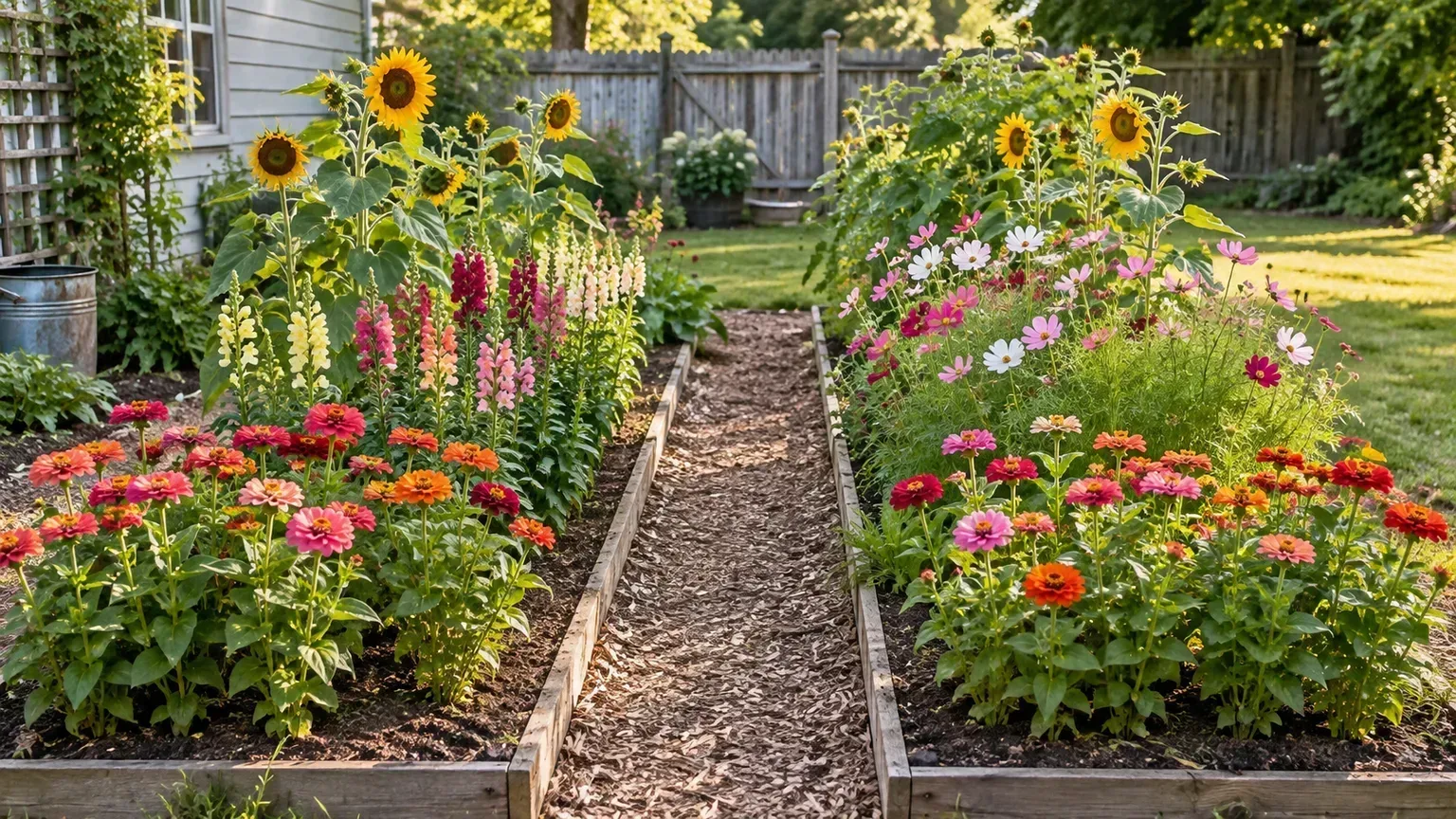
A cut flower garden is a bed, row, or group of containers grown to supply stems for bouquets and other indoor arrangements. Its job is practical: make flowers easy to reach, grow varieties that produce useful stems, and keep something coming into bloom across the part of the year your climate allows.
You do not need a large plot or a florist’s crop list. A short bed with a few flowers you love can work better than a crowded patch of many varieties, especially when you plan around when each plant blooms and whether cutting it encourages more stems or uses up that plant’s one main flower.
Start with the bouquets you actually want
Think about the arrangements you make before you buy seeds. If you usually put three stems in a small jar, you need different flowers and fewer total stems than someone who wants a large weekly bouquet; if fragrance matters more than long stems, include sweet peas or scented annuals even if they take space from a high-yield crop. Planning for the vase you use keeps the garden personal and prevents the seed catalog from setting an unrealistic scale.
A useful bouquet has a few different shapes: one or two blooms that draw the eye, upright stems for height, lighter flowers that fill spaces, and foliage or seed heads for texture. These are jobs, not rigid botanical categories—a cosmos can be an airy flower and a focal point in a small vase, while basil can provide greenery and fragrance. You can start with just three or four crops and add varieties after you see which roles are missing.
Set a useful first-year harvest goal
Set a practical goal such as “one small arrangement every week or two” instead of promising yourself armfuls all summer. Estimate the number of stems you tend to use, then choose a modest number of plants with different bloom windows; one small sowing of every variety may produce a burst followed by a quiet stretch, while a few reliable crops are easier to monitor and replant.
Also decide how much weekly work fits your life. A bed that needs daily picking, staking, watering, and conditioning is not a good match if you only garden on weekends. The first season is a trial: record when each crop first flowers, how many stems you cut, and whether you used them. That simple record makes next year’s seed order more accurate than guessing from a photograph.
Choose a site before choosing seeds
Most cut flowers perform best with abundant direct light, and many long-stemmed varieties need a sunny position to produce sturdy growth and flowers. Penn State Extension recommends a sunny location and a soil test before adding amendments; the Royal Horticultural Society likewise identifies a predominantly sunny aspect for many cutting crops. A few plants tolerate partial shade, but shade changes which crops are realistic and can reduce bloom or stem quality, so observe the spot at several times of day before committing.
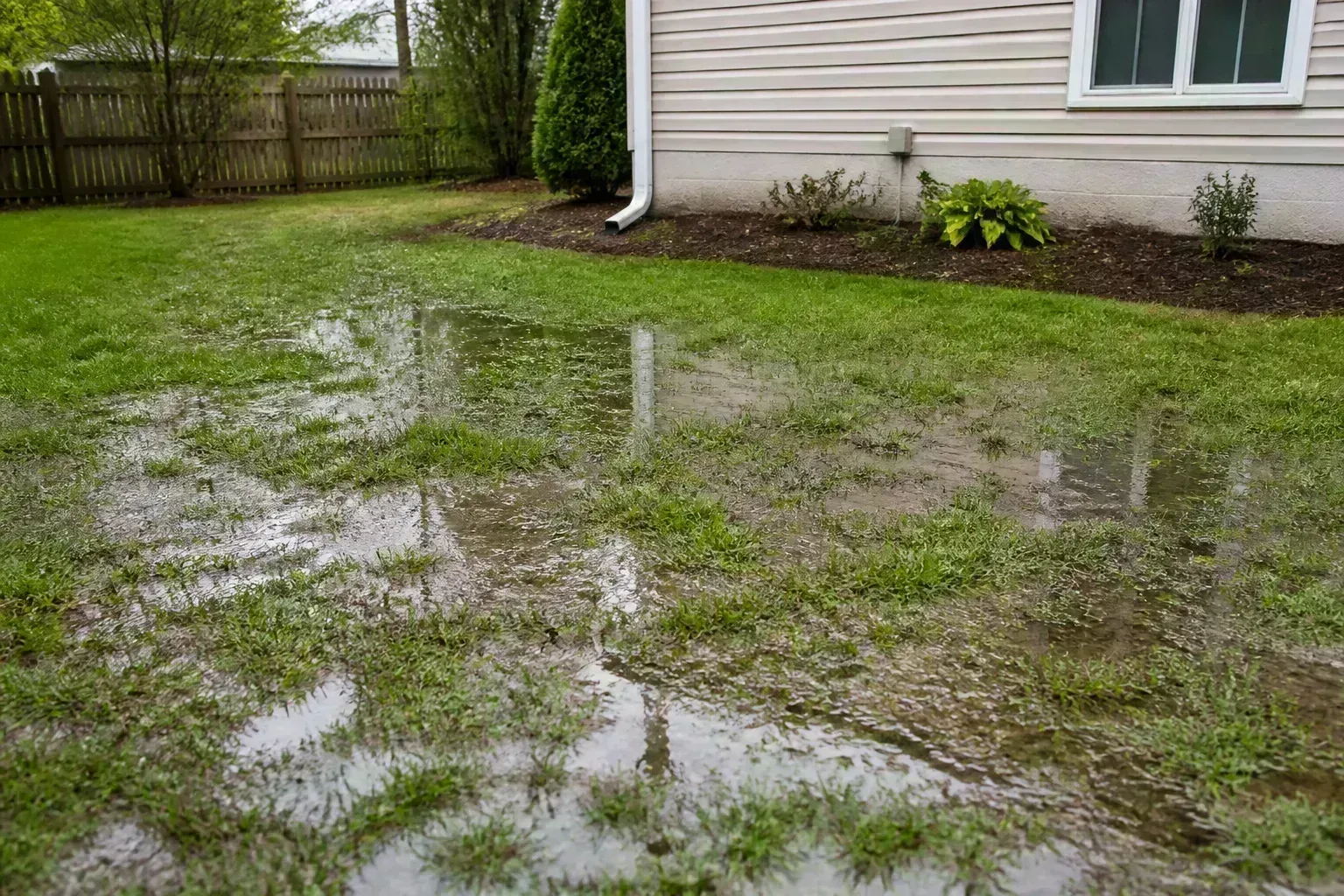
Avoid a low area where water stands after rain and a windy corridor where tall stems are constantly bent. A sheltered spot is useful, but do not put flowers so close to a wall or fence that air cannot move between plants. If you can, place the bed near a hose and the route you take to the kitchen; the closer it is, the more likely you are to harvest when flowers are ready.
Draw a bed that stays reachable
Rows are popular in cutting gardens because they make sowing, weeding, staking, and harvesting straightforward. The RHS advises allowing access between rows and accounting for mature plant spread; overcrowded flowers can tangle and become harder to cut. A bed around 3 feet wide is a manageable starting width for many gardeners because you can reach its middle from either side, but adjust the dimensions to your reach, path layout, and mobility.
Sketch the mature garden, not just the seedling stage. Put the tallest crops toward the north side in the Northern Hemisphere where that arrangement limits shade on shorter plants, then group flowers with similar light and water needs. Leave paths wide enough to carry a bucket without brushing stems, and reserve a strip or end of a row for a later sowing. In a mixed ornamental border, plant a small block of annuals you can cut freely rather than scattering single plants where each cut leaves an obvious hole.
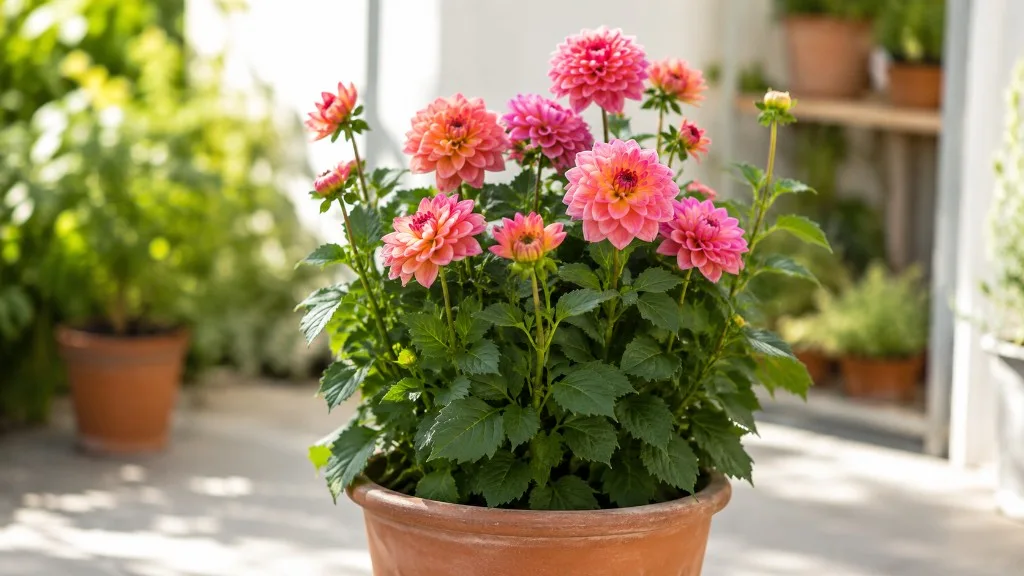
Containers can supply a few stems where there is no bed, but they are not equally suited to every crop. Large sunflowers and other tall, top-heavy plants need deep root room and may need anchoring; compact or branching annuals are easier to manage in a roomy pot with drainage. Pots also dry faster than garden soil, so choose them only if you can check moisture frequently in hot or windy weather.
Prepare soil and water access
Start with a soil test if you do not know the bed’s pH or nutrient status. Penn State Extension recommends using a test to guide amendments rather than guessing; that is especially useful in a new bed, where adding fertilizer without knowing what is already present can create lush leaves without better flowers. Follow the local lab’s directions for sampling, and do not add lime or a strong fertilizer unless the result calls for it.
Clear perennial weeds before planting, loosen compacted ground when it is not wet, and incorporate mature compost if the soil needs help with structure or organic matter. Compost can improve sandy soil’s water retention and help clay soil become easier to work, but more is not always better: a rich bed can favor leafy growth, and some flowers bloom better without heavy feeding. Use a mulch between established rows to slow evaporation and suppress weeds, keeping it away from newly sown rows until seedlings are large enough.
Work out how you will water before seeds emerge. A soaker hose or drip line can deliver water at soil level and keep paths dry, while a watering can works for a very small patch. The right interval depends on rainfall, soil, plant size, and heat; check the root zone rather than following a fixed weekly rule. Consistent moisture matters most while seeds germinate and young transplants establish, but waterlogged roots are not a shortcut to faster growth.
Build a crop palette by bouquet role and season
A strong cutting garden is a sequence of flowers, not a collection that all peaks in July. Combine a few spring or cool-season options with warm-weather annuals and at least one late-season crop that suits your climate. The Royal Horticultural Society’s selection guide includes bulbs, annuals, perennials, shrubs, and foliage, while Penn State Extension cautions that most perennials do not provide flowers throughout the season. Their range is a reminder to plan for both bloom periods and the weeks when a plant contributes only foliage.
Use this table as a starting palette, not a fixed planting recipe. The best choice depends on your region, the number of weeks between spring and fall frost, and the flowers you genuinely want to bring inside.
| Bouquet role | Possible crops | Planning note |
|---|---|---|
| Focal blooms | Zinnia, dahlia, sunflower, tulip | Single-stem sunflowers and spring bulbs have defined bloom windows; repeated supply may require new plantings. |
| Upright or line stems | Snapdragon, larkspur, gladiolus, sweet pea | Check support needs and cool- versus warm-season timing. |
| Airy filler | Cosmos, calendula, statice, ammi | Some varieties branch or self-seed; allow room for their mature habit. |
| Foliage and texture | Basil, dill, ornamental grasses, seed heads | Harvest conservatively if you want the plant to keep growing or set seed. |
Combine focal, line, filler, and foliage stems
Choose one or two dependable flowers for each role instead of trying to grow every possible shape. Zinnias can provide colorful focal blooms and repeated stems when you select a branching cut-flower variety; cosmos add an airy outline; snapdragons or larkspur make vertical accents; and basil or dill can supply useful foliage. Britney Zondlak of Two Sisters Flower Farm describes using zinnia succession sowings about four weeks apart and planting sunflowers in near-weekly successions during the farm’s frost-free season. Treat those intervals as examples from an experienced grower’s specific varieties and workload, not a universal calendar.
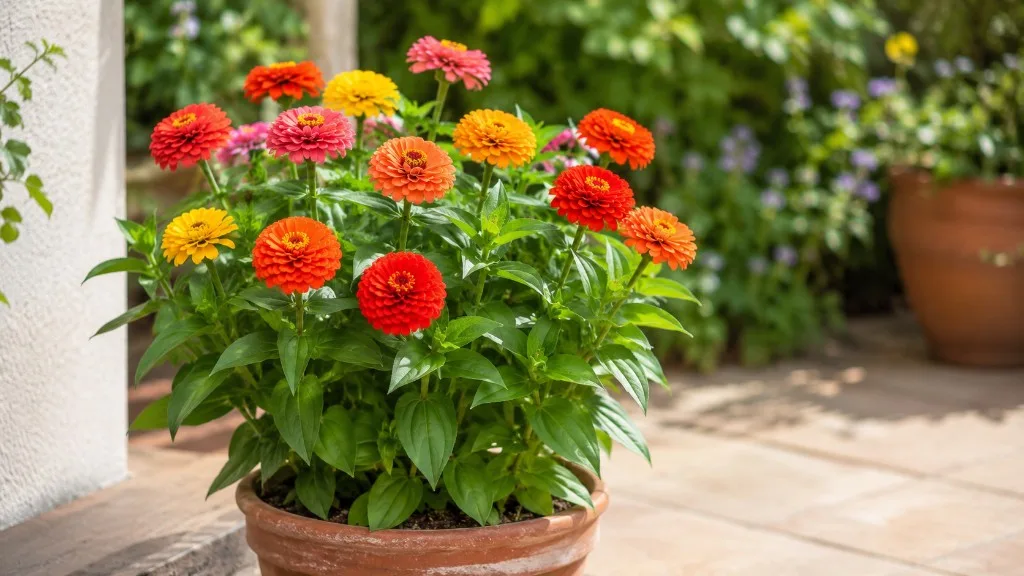
If space is tight, grow fewer varieties but enough of each to cut several stems. One or two plants of a tall focal flower may be lovely to look at but will not reliably fill a vase after repeated harvesting. A cluster gives you choices at different stages and makes it easier to see whether a crop is thriving; keeping a few flowers uncut for pollinators or seed is also easier when you have more than one plant.
Mix annuals, perennials, bulbs, and shrubs
Annuals are often the easiest way to test colors, shapes, and bloom timing because many can be grown from seed in one season. They also need replacing or resowing, and hot weather, drought, or frost may shorten their run. Perennials can return and build structure, but they need establishment time, may not flower in the first year, and should not be stripped of foliage simply to fill a vase.
Spring bulbs and cool-season flowers can start the cutting season before summer annuals are ready. Shrubs and ornamental grasses can contribute branches, foliage, or seed heads when flowers are scarce, but established woody plants need careful, species-appropriate pruning. Fine Gardening’s cutting-garden collection and the RHS selection guide both show how annuals and longer-lived plants can be combined; the RHS calendar is based on UK conditions, so use local frost dates and regional guidance for U.S. planting times.
Choose varieties for stem quality, not just color
The flower on the packet is only one part of the decision. Check whether the variety is tall enough for a vase, whether it branches after cutting, whether it produces one main stem or several, and whether it tolerates the heat, humidity, or disease pressure in your area. Penn State Extension notes that many bedding varieties are short and bushy, while cut-flower selections are bred or chosen for taller stems; a named species alone does not guarantee a useful cut stem.
Read the seed packet or plant tag for mature height, spacing, days to maturity, and whether the crop is annual, biennial, or perennial. Days to maturity are estimates, not a promise: packets may count from sowing or transplanting, and cool soil or cloudy weather can delay flowering. If you need long stems, a tall cutting variety of zinnia or snapdragon may serve you better than a compact bedding variety of the same species.
For a first-year bed, pick flowers that match your climate and harvest habits. If powdery mildew commonly affects zinnias locally, look for resistant varieties where available and avoid tight spacing; if deer browse the site, a favorite flower may be a poor investment without a dependable physical barrier. Save the packet or write down the cultivar name and its performance so that “grow again,” “trial,” and “skip” decisions are based on your own bed.
Decide what to sow outdoors and what to start inside
Direct sowing is simple for flowers that germinate and grow well in warm garden soil, while starting transplants indoors can give slow-growing or cool-season crops more time. There is no single start date for all cutting flowers: tender annuals may rot or stall in cold ground, and a plant started indoors too early can become leggy before outdoor conditions are suitable. Check each packet for temperature and transplant guidance, then count backward from your local safe planting window.
If you start seeds inside, use a clean seed-starting mix, bright light, and containers that allow drainage. Harden transplants gradually before moving them outside so leaves and stems adjust to wind and sun; a plant raised in sheltered conditions can scorch or wilt if moved directly into hot exposure. Direct-sown seeds need even moisture while they germinate, but mark each row so you do not hoe up a slow-germinating crop by mistake.
Do not buy every seed from a single list before mapping the bed. A packet may contain more seed than a small garden needs, and perennial flowers or bulbs can occupy space for years. Start with a few crops that cover different roles and flowering windows; use the first season to learn how much of each you can realistically cut.
Plan bloom windows around local frost dates
Use your average last spring frost and first fall frost as bookends, then check the temperature needs and days to maturity for each crop. A hardiness zone estimates winter survival for many perennials; it does not tell you when the ground is warm enough for a tender annual or how long that plant needs to bloom before the first fall frost. Those are separate questions, and the seed packet plus local extension calendar helps answer them.
A simple sequence might include hardy annuals or bulbs first, warm-season direct-sown flowers after the soil warms, and late-season crops early enough to mature before frost. The exact months change with latitude, elevation, microclimate, and cultivar. In a short season, transplants or earlier crops may matter more; in a hot climate, cool-season flowers may do best in autumn or winter rather than midsummer.
Keep a calendar that records sowing, transplanting, first flower, and the final useful harvest. If a crop takes longer than expected, the next planting can shift; if it flowers early, you can delay the next round. Fine Gardening’s regional cutting-garden material reinforces that climate influences crop selection, and its examples should be adapted rather than copied as a universal month-by-month plan.
Use succession planting where it can prevent a gap
Succession planting means starting a replacement planting before the previous crop stops supplying usable stems. It does not mean every flower must be sown at the same interval. A branching zinnia may keep producing after each cut, while a single-stem sunflower usually gives one principal bloom per plant; repeating the sunflower sowing can create a new wave, but another zinnia sowing may be unnecessary while existing plants are still productive.
For a home bed, divide a row into two or three short sections and sow them a few weeks apart only if your growing season is long enough for the later section to flower. The Two Sisters Flower Farm schedule—about four weeks between zinnia plantings and nearly weekly sunflower sowings—is useful as a real-world reference, but your local heat, variety, germination, and frost window may call for a different rhythm. Start with one follow-up sowing, observe the harvest, and adjust rather than committing a whole bed to weekly seed trays.
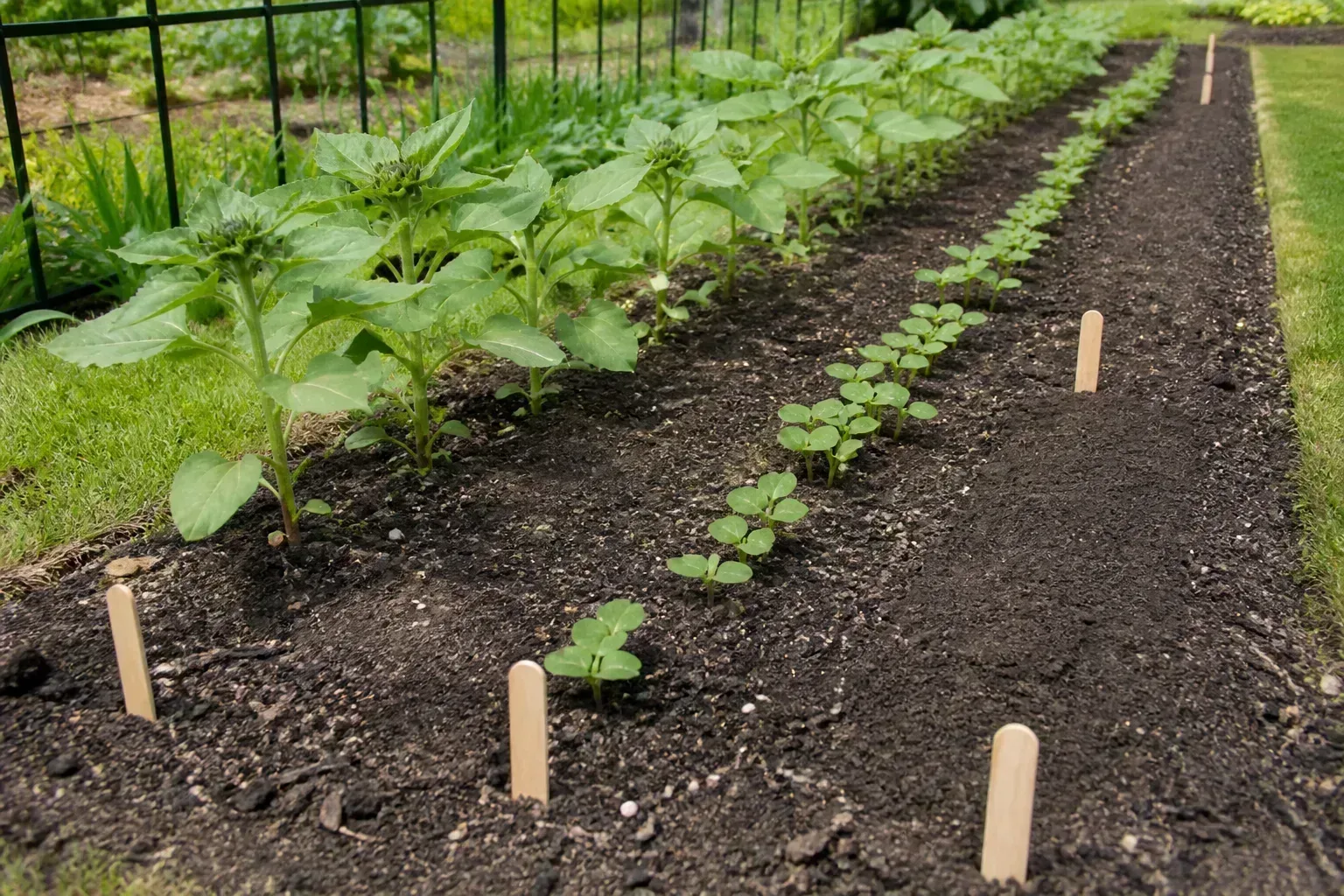
Leave room for the replacement row and keep notes on actual bloom dates. If you are already cutting more flowers than you use, delay or skip the next sowing; if the bed is emptying and a new planting can mature before frost, sow a small replacement. A succession plan should smooth out a glut, not create a weekly planting obligation.
Support and maintain the bed through the season
Install stakes or horizontal support netting while the plants are short enough to work around. Tall stems can lean or snap after wind or rain, and trying to push netting through a mature bed can damage the plants. Penn State Extension describes staking or wide-gap horizontal mesh as options for keeping stems upright; support needs depend on the crop, exposure, and bloom weight.
Water according to conditions, keep paths clear, and weed while seedlings are small. A drip line or soaker hose can reduce overhead watering and make the row easier to manage, but check whether moisture is reaching the root zone. Avoid routine heavy feeding unless a soil test or plant response shows a need; lush leaf growth is not the same as more strong flower stems.
Inspect foliage and stems when you harvest. Good spacing supports airflow, which is especially useful for zinnias susceptible to powdery mildew; remove badly affected plant material and identify a pest or disease before choosing a treatment. For pesticide decisions, follow your local extension recommendations and the product label, and do not spray flowers while pollinators are actively visiting them.
Harvest at the right stage and hydrate stems quickly
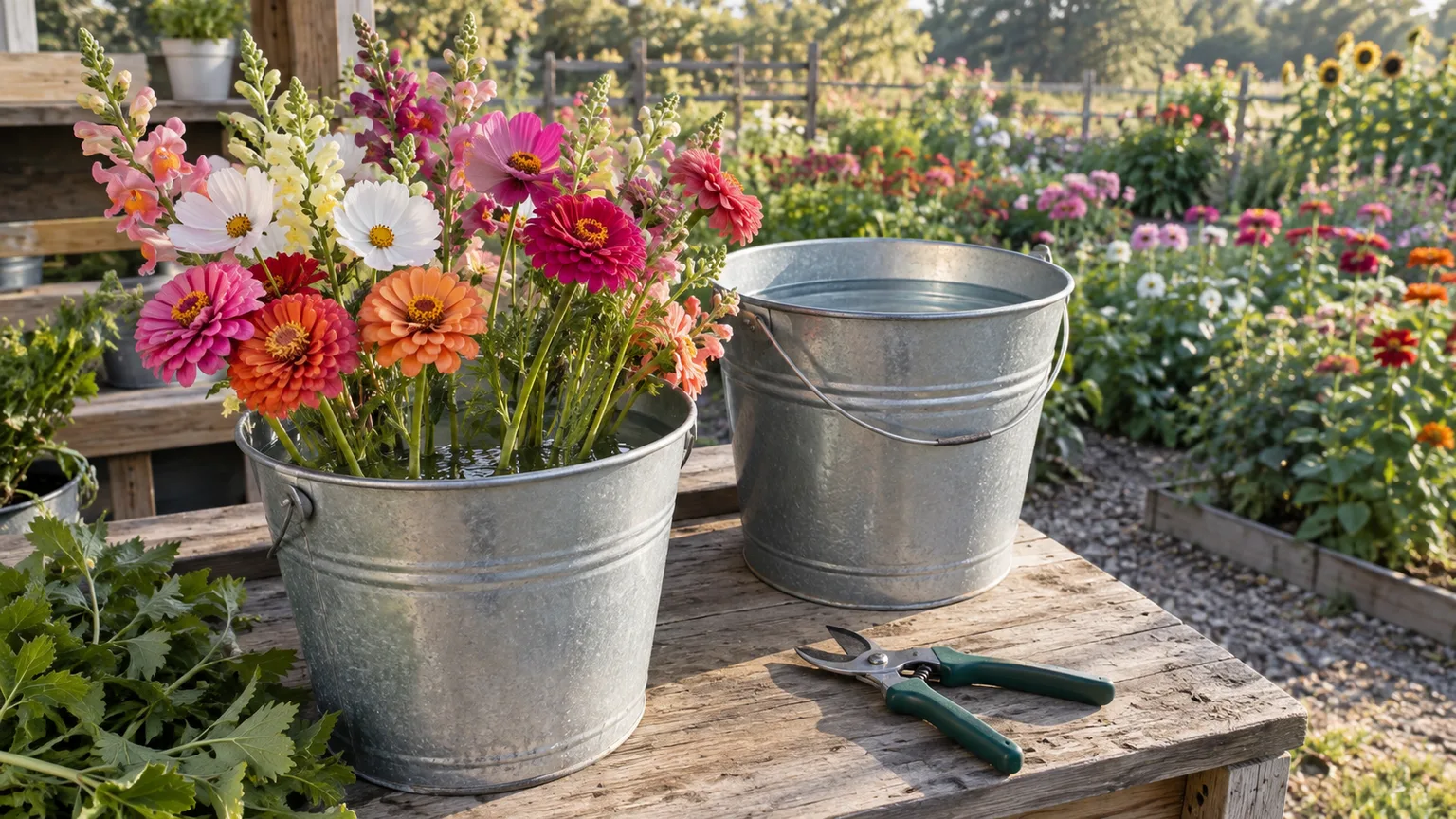
Harvest in the cool part of the day when plants are hydrated, and take a clean bucket of water to the bed. Penn State Extension advises cutting before the heat of the day and placing stems in water immediately; NC State Extension explains that water stress, heat, and microbial contamination all reduce postharvest quality. This is why walking around with a dry basket and conditioning everything hours later often produces droopier flowers.
Use sharp, clean shears and cut the longest usable stem without removing so much foliage that the plant cannot recover. For annuals that branch, cut above a leaf joint if the variety responds to that kind of pruning; with perennials and shrubs, take fewer stems and leave healthy leaves and growing points. Remove foliage that would sit below the waterline, recut the stems in a clean work area, and let them hydrate in clean water away from heat before arranging.
Use crop-specific cues instead of one universal rule
The best stage depends on how that flower opens after cutting. Some flowers continue to open in a vase; others need to be nearly or fully open on the plant. A quick first-season test—cut a few stems at different stages, label them, and compare their opening and vase life—can help you refine timing for the cultivar you actually grow.
| Crop | Practical harvest cue |
|---|---|
| Zinnia | Cut when the stem below the flower feels firm; a wobbly stem often means the bloom is not ready. |
| Sunflower | Cut when the ray petals have opened and the flower head is at the stage you want; single-stem types will not give a second main stem from that same plant. |
| Snapdragon or gladiolus | Cut a spike when lower florets are open and upper buds still show color, adjusting for how much opening you want indoors. |
| Sweet pea | Pick frequently as flowers open so pods do not take over the vine’s growth. |
| Dahlia | Cut when the flower is open; a tight bud may not develop well after cutting. |
These are starting cues, not exact rules for every cultivar. Penn State Extension notes that harvest stage differs by species and that a harvested gladiolus stem may be the plant’s only bloom stem for the season; use the seed supplier or a reliable crop-specific guide when the flower behaves differently from the general pattern.
Fix common cutting-garden problems
If stems stay short, check the variety before changing fertilizer. A compact bedding selection may never produce the length you need, and crowded plants can compete for light; choose a taller cutting variety, give it the spacing on the packet, and harvest after the stem firms up. If the crop gets enough sun but still flops, add support before the next wind event and consider whether the site is too exposed.
If the bed produces a sudden glut, too many plants probably matured together. Next season, split the sowing into smaller groups or choose crops with different bloom periods; if a crop keeps flowering after cuts, let those plants work before sowing another row. If there is a long gap, compare your calendar with actual first-bloom dates and check whether late sowings had enough warm days left to mature.
If plants grow lush leaves with few flowers, reconsider fertilizer and sunlight rather than adding more feed. If foliage develops mildew or remains wet, improve spacing and water at soil level when practical. When a variety repeatedly disappoints, replace it instead of giving it more bed space simply because the packet looked attractive.
Conclusion
Plan a cut flower garden around the flowers you want to arrange, the hours you can spend maintaining it, and the actual length of your local growing season. Start with a reachable sunny bed, a short crop palette chosen for useful stem roles, and seedings timed from packet directions and frost dates.
Then use the first harvest as feedback. Record which varieties made strong stems, when they flowered, and how quickly you used them; repeat the crops that earned their space and change the rest. That measured approach builds a cutting garden that supplies bouquets without turning the garden into a second job.