65 Dahlia Varieties for Every Garden and Color Palette
Compare 65 dahlia varieties by flower form, height, color, and garden use, then choose cultivars for a border, container, pollinator patch, or cutting bed.
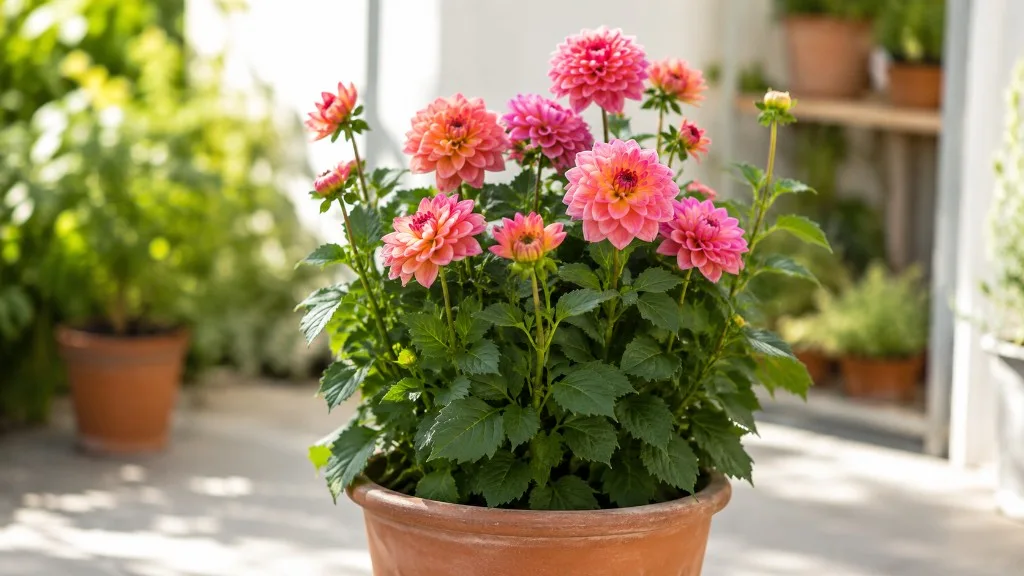
The best dahlia for your garden is not automatically the biggest or the rarest one. Start with the job you want it to do: fill a pot, hold a place at the back of a border, supply armfuls of cut flowers, or add open blooms that pollinators can reach. Then narrow the choices by mature height, flower form, and palette. The Royal Horticultural Society recommends considering plant size, foliage color, and pollinator value alongside bloom color; those details often make the difference between a cultivar that fits and one that crowds its neighbors. RHS
The 65 cultivars below are grouped by the feature that matters most in a planting plan. Heights and bloom diameters are useful starting points, not guarantees: light, soil, weather, and growing season can change the result, and sellers sometimes describe the same flower form differently.
Choose a Dahlia by Its Job in the Garden
Start with height and planting position
Check the mature height before you order. A compact 18- to 24-inch cultivar can anchor a container or the front edge of a bed; a 4-foot plant usually belongs in the middle or back; a 5- to 6-foot variety needs room, airflow, and a support plan. The RHS notes that many dahlias reach around four feet, while smaller bedding types suit pots and the front of borders. A plant’s height does not tell you how wide it will become, so leave enough space for side growth and access for cutting.
Think about where you will look at the flowers. A huge bloom is dramatic from a path or window but can dominate a narrow border; smaller ball and single flowers read as color and texture from farther away. If your site is hot, keep the most exposed afternoon position for cultivars that you are willing to water consistently, and avoid crowding plants against a wall where heat and poor airflow can stress them.
Use bloom form as a visual shortcut
Flower-form names describe the arrangement of petals; they do not tell you how tall the plant is or how large every bloom will be. The American Dahlia Society classifies forms such as decorative, cactus, ball, pompon, single, anemone, collarette, waterlily, peony, and orchid. “Dinnerplate” is commonly used for very large blooms, so treat it as a size cue rather than a separate petal shape. American Dahlia Society
A ball dahlia has a rounded, tightly arranged flower; a pompon is the smaller, compact version. Decorative dahlias have broad petals, while cactus and semi-cactus forms have narrow or rolled petals that add movement. Single and other open-centered flowers show the central disc, giving pollinators easier access than a densely petaled double. BBC Gardeners’ World notes that classifications can be complex and supplier labels may vary, so use the description and photo together rather than relying on a category name alone. BBC Gardeners’ World
8 Large-Flowered Dahlias for Focal Points
Choose one or two large-flowered cultivars as punctuation, not as a whole border plan. Heavy heads and tall stems can need staking, and the broad flowers look best where you can see them clearly rather than buried among smaller neighbors.
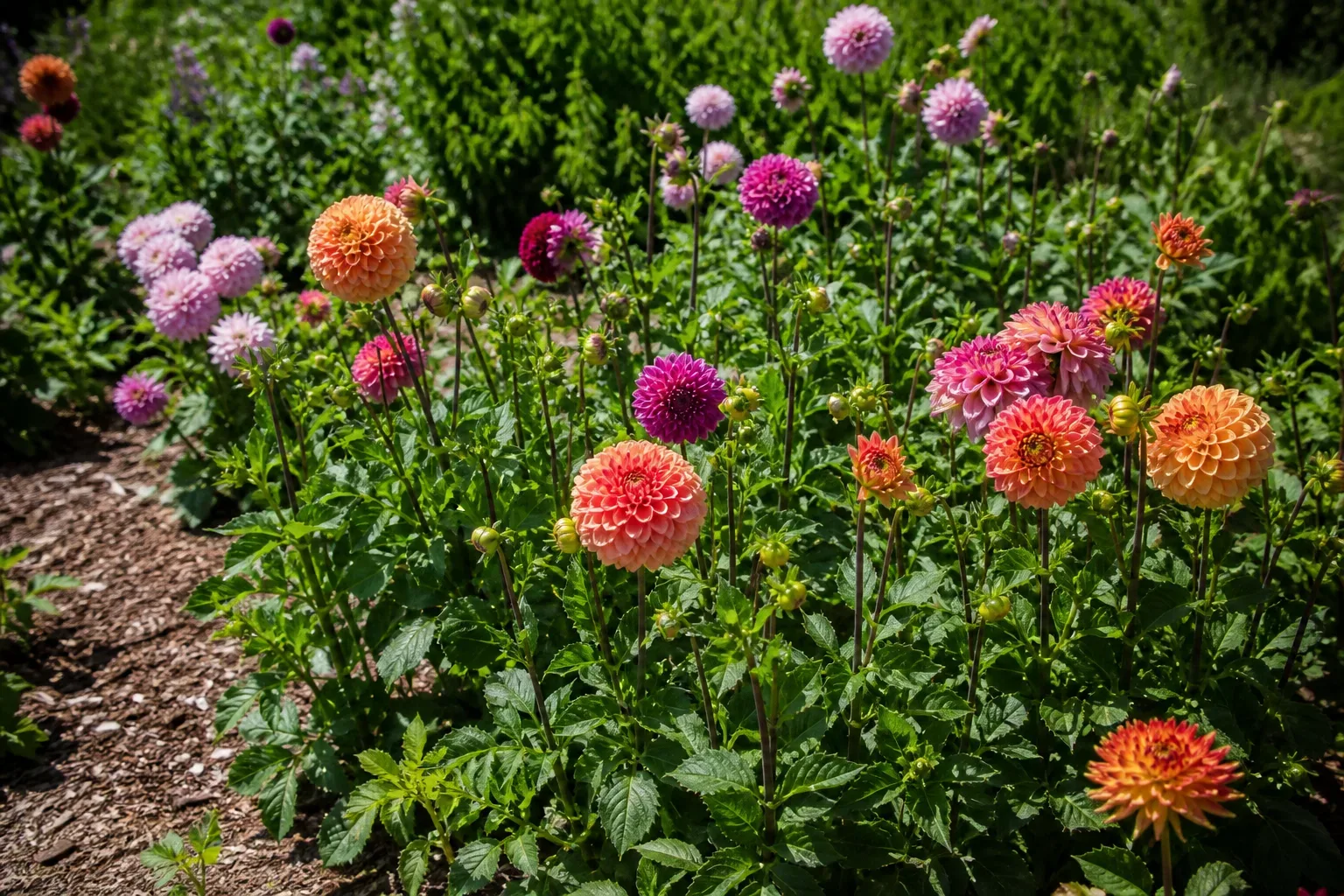
- ‘Mango Madness’ — An 11-inch pink and orange decorative bloom on a plant around 3½ feet tall; use it as a strong focal flower rather than a massed edging plant.
- ‘Penhill Watermelon’ — A 5- to 6-foot plant with shaggy flowers up to 10 inches across in pink, apricot, lavender, and yellow; give it the back of a border and a stake.
- ‘Cafe au Lait Royal’ — A roughly 10-inch decorative flower with pink petals streaked in fuchsia, purple, or white; choose it when a muted palette needs one vivid, oversized bloom.
- ‘Ace Summer Sunset’ — Orange flowers with yellow highlights reach about 6 to 9 inches; its warmer color reads well against dark leaves or deep green foliage.
- ‘Kelvin Floodlight’ — A yellow dinnerplate, often 10 to 12 inches wide, on a 3- to 4-foot plant; stake early so the heavy head does not pull the stem over.
- ‘Thomas Edison’ — Deep purple petals and an 8-inch decorative flower create a dark focal point; plant it where the velvety color will not disappear in shade.
- ‘Labyrinth’ — Large, curled flowers blend old rose, pink, and apricot; it suits a romantic border where irregular petal movement is more useful than a perfectly formal shape.
- ‘Fleurel’ — An 8-inch white dinnerplate with a soft yellow cast; use it to cool a bed full of saturated reds, pinks, and purples.
18 Decorative Dahlias for Broad Color
Decorative types are a flexible choice when you want full, layered blooms without limiting the whole planting to the largest dinnerplate size. Their broad petals make color easy to read in a border, and the cultivars below span compact plants through taller, stake-worthy varieties.
- ‘Maya’ — A compact, roughly 12-inch plant with 5- to 6-inch flowers in champagne, apricot, pink, and yellow; try it near a path where its layered petals can be seen close up.
- ‘Sincerity’ — White petals shade through pale to deeper pink around a yellow center; at about 20 to 24 inches, it can brighten a container or the front of a mixed bed.
- ‘Diva’ — Dark purple, 4- to 5-inch blooms on a plant around 4 feet tall; use it as a saturated anchor among silver, cream, or pale-pink flowers.
- ‘Blizzard’ — A tall, 5- to 6-foot plant with white flowers and yellow centers; the clean color stands out, but its height makes staking and wind shelter important.
- ‘Peaches n’ Cream’ — Peachy-orange to peachy-pink flowers with white tips vary across a plant; choose it when you want a soft, shifting palette instead of uniform color.
- ‘Golden Scepter’ — Small, sunny yellow blooms with orange hints bring bright points of color without the scale of a dinnerplate; plant several together for visibility.
- ‘Doris Duke’ — A more compact, approximately 3-foot plant with pink-peach flowers; a useful choice when you want a warm mid-border color without a towering stem.
- ‘Punkin Spice’ — Orange flowers blend yellow, gold, and red, with fringed tips; its 5- to 7-inch heads can be heavy, so add support before they lean.
- ‘Bacardi’ — Dusky rose petals deepen around a burgundy center for a vintage look; the 4- to 6-inch flowers suit bouquets and a restrained autumn palette.
- ‘Sonic Boom’ — Rose and peach petals carry fuchsia highlights and fringed tips; at about 3 to 4 feet, it adds a lively, informal texture to the middle of a bed.
- ‘Diana’s Memory’ — Shell-pink flowers with yellow centers and lavender edges sit on a compact plant around 2 feet tall; use it where pale color needs to stand against dark foliage.
- ‘Chimacun Night’ — Burgundy-purple flowers around 4 inches across make a strong cutting-garden color; its saturated blooms are easier to see against green leaves than among other dark flowers.
- ‘Perch Hill’ — Smoky crimson flowers fade toward sepia-pink, sometimes with pale tips; treat it as a subtle color bridge between burgundy and blush cultivars.
- ‘Sun Explosion’ — Red, orange, and yellow flowers on a relatively low plant, around 30 to 40 inches, give a late-season bed a warm focal patch.
- ‘Engelhardt’s Matador’ — Purple and pink blooms combine with green-bronze foliage; its 3- to 4-foot height makes it a useful middle-border plant with color in both leaves and flowers.
- ‘Melody Allegro’ — A compact, freely branching plant around 2 feet tall with orange, pink, salmon, yellow, and lilac tones; use it where one plant needs to fill a container or small gap.
- ‘Intrigue’ — Coral flowers deepen toward raspberry as they mature; a 4-foot plant gives a border a season-long color shift rather than a single flat shade.
- ‘Mystique’ — Dusky rose centers fade into coral and pale pink at the petal edges; the gentle contrast pairs well with burgundy or cream flowers.
20 Ball and Pompon Dahlias for Tidy Stems
Ball and pompon dahlias bring rounded shapes that contrast with broad decorative flowers. Many make tidy cuts and repeat well in a planting, but their size varies: pompons are the smaller, tighter forms, while ball types generally carry a larger spherical bloom. BBC Gardeners’ World
- ‘Jowey Frambo’ — Raspberry ball blooms around 4 to 6 inches wide give a bouquet a saturated, rounded focal point; the 3- to 4-foot stems are easy to cut above the foliage.
- ‘Sylvia’ — Pumpkin-orange and tangerine flowers, about 3 to 4 inches, are prolific on taller plants; use them for warm late-summer arrangements.
- ‘Burlesca’ — Small purple, pink, and yellow pompon-like flowers gather along the stems; their 2½-inch size helps them work as repeated accents rather than dominant blooms.
- ‘Eveline’ — Antique-white petals can show lilac, lavender, and yellow as they open; the roughly 3- to 3½-foot plant gives a pale ball form without a stark white finish.
- ‘Franz Kafka’ — Dark-pink pompons with yellow centers, around 2 to 3 inches, are easy to recognize in a bouquet and on a roughly 3-foot plant.
- ‘Wizard of Oz’ — Cotton-candy pink pompons add a pastel note; cut the flowers before they are fully open if you want the neatest small bouquet shape.
- ‘Cornel Bronze’ — Copper-orange ball flowers arrive later than some types but bring a rich autumn color; combine with ornamental grasses or other late-season flowers.
- ‘Crichton Honey’ — A warm mix of pale yellow, peach, and pink in 4-inch flowers makes this a gentle bridge between pink and orange beds.
- ‘Genova’ — Individual blooms shift from pale lavender to violet, often with a darker eye; use the cool color to interrupt a planting dominated by warm shades.
- ‘Jomanda’ — Coral, copper, and rusty orange flowers on a 4-foot plant bring a changing fall palette; its ball form is easy to mix with loose, open flowers.
- ‘Snoho Doris’ — Each flower blends coral, peach, apricot, and yellow in a slightly different way; plant it where a mixed pastel palette can absorb natural variation.
- ‘Linda’s Baby’ — Soft pink and peach petals, sometimes edged or centered with lavender, give this 3-foot ball dahlia a flexible pastel look.
- ‘Amber Queen’ — Bronze and golden-orange pompons, about 2 inches across, sit on a shorter plant; use the dark undersides to add depth among yellow flowers.
- ‘Small World’ — Tiny white pompons blush pink and yellow at the center; its branching habit makes it a useful filler in a cutting row or a mixed container.
- ‘Suncrest’ — Soft yellow petals tipped in raspberry surround a caramel-toned center; the color works as a warm transition between yellow and red flowers.
- ‘Bantling’ — Orange and peach flowers open from yellow centers into compact globes; at about 2 to 3 feet, it is easier to place in a patio container than a tall cultivar.
- ‘Koko Puff’ — Tiny dusky-lavender and tan pompons are a muted counterpoint to vivid flowers; use the 3-foot plant as a mid-border texture rather than a color block.
- ‘Valley Rust Bucket’ — Rust-red and orange ball blooms on straight stems are a practical choice when you want warm color for cutting without a giant head.
- ‘Boom Boom White’ — Crisp, round white flowers open from a faintly yellow center; the 4-foot plant works well as a clean visual break in a dense bed.
- ‘Bonanza’ — Purplish-red centers fade into mango and peach tones; the 3- to 4-foot plant gives a bouquet several warm shades in one rounded flower.
3 Cactus and Semi-Cactus Dahlias for Petal Movement
Cactus and semi-cactus blooms add a spiky, sculptural shape that can keep a row of rounded flowers from looking repetitive. Cactus petals are narrow and pointed; semi-cactus petals are broader at the base and roll toward the tips. The three choices here all have strong color, so let their form do some of the work.
- ‘Karma Sangria’ — Yellow at the petal bases deepens to salmon-pink tips in a 6-inch semi-cactus flower; place it beside rounded burgundy or cream blooms for contrast.
- ‘Black Narcissus’ — Dark burgundy, pointed petals form a dramatic 6- to 8-inch bloom; its dark flowers give a late-summer border a dramatic note beside pale pink or white blooms.
- ‘Terracotta’ — Peach and pale-terracotta petals curl from a dusky-rose center; its 5-foot height calls for space at the back of a border and early support.
16 Single, Anemone, Collarette, Waterlily, Peony, Orchid, and Mignon Dahlias
These forms are the best place to look when you want a flower with an open center, a flatter silhouette, or a shape that feels less like a solid ball. Single flowers expose their central disc; anemone types add a raised cushion of tubular petals, while collarettes frame the center with a short inner collar.
- ‘Miss Delilah’ — A waterlily-type flower layers pink petals around a yellow center; its relatively short, 2½- to 3-foot stems suit a front or middle border.
- ‘Richard’s Fortune’ — Burgundy buds open into lilac anemone flowers with pale tips; a raised center gives it a different silhouette from a fully double bloom.
- ‘Creme de Cassis’ — A shallow waterlily form blends lilac and deep purple; the 4- to 6-inch flowers soften the transition between blue-violet and pink plantings.
- ‘Verrone’s Obsidian’ — A compact orchid-flowered dahlia with star-shaped crimson petals around a yellow center; at about 2 feet, it can sit near the front of a bed.
- ‘Bishop of York’ — Single yellow flowers and chocolate-brown foliage make the plant as useful for leaves as for blooms; it grows to about 3 feet.
- ‘Happy Single First Love’ — Blush-pink and soft-yellow petals frame a reddish-orange ring and brown center; the dark foliage adds contrast even before the flowers open.
- ‘Mystic Spirit’ — Apricot and peach single blooms surround a dark button center; its roughly 2- to 3-foot height gives a relaxed, pollinator-friendly shape at a manageable scale.
- ‘Apple Blossom’ — A collarette form with buttercream petals, a blush-pink collar, and yellow center; use it where one flower needs a clear center and a soft palette.
- ‘Waltzing Mathilda’ — The peony-type flower blends red, orange, coral, and yellow above dark purple foliage; its looser shape makes it feel less formal than a double decorative.
- ‘Platinum Blonde’ — White-to-lemon petals surround a fuzzy buttercream center in an anemone-like form; the 4-inch flower adds a light, playful note.
- ‘Gitty Up’ — Pale orange petals encircle a cherry-red cushion; this 3-inch anemone flower holds its own in a mixed border without needing a giant bloom.
- ‘Dad’s Favorite’ — Violet petals frame a plum-and-gold center; at about 5 feet tall, it suits the back of a border and can supply long stems for cutting.
- ‘G.F. Hemerik’ — A dwarf mignon type, around 18 inches high, with coppery-orange flowers and yellow centers; plant it along the front edge or in a low container.
- ‘Twyning After Eight’ — White single flowers are set against nearly black-purple foliage; the contrast is strongest where the plant gets enough light to keep its leaves dark.
- ‘Scura’ — A compact mignon with small red to dark-orange flowers; at about 18 inches, it gives a vivid border edge without the bulk of a tall plant.
- ‘Sunshine’ — Yellow single flowers with red-orange centers pair with dark purple-green foliage; its smaller flowers bring movement to a container or mixed border.
Compact Choices for Pots and the Front of a Border
For a container, start with the plant’s mature height and branching habit, not just the diameter of the flower. Good shortlist candidates from this group include ‘Maya,’ ‘Sincerity,’ ‘Diana’s Memory,’ ‘Mystic Spirit,’ ‘Verrone’s Obsidian,’ ‘G.F. Hemerik,’ ‘Scura,’ ‘Melody Allegro,’ and ‘Bantling.’ They stay around 18 inches to 3 feet in the cited descriptions, so they are easier to place than a 5-foot variety.
A pot still needs enough root room, drainage, and regular watering; a small plant does not mean a tiny container can support it all summer. Choose one cultivar with a clear color role, put the container where it gets plenty of sun, and keep a stake or cage ready if the stems carry heavy blooms. If your priority is a full border rather than portability, use short dahlias at the front and taller choices behind them so the smaller flowers remain visible.
Build a Color Palette That Reads from a Distance
A bed with 65 different cultivars would be hard to read. For a more coherent display, pick two or three dominant colors, then use flower form and foliage as the secondary contrast. A large pale flower can separate dark reds from bright oranges; a small pompon can repeat one accent color without competing with a dinnerplate bloom.
Dark leaves are useful color, too. ‘Bishop of York,’ ‘Happy Single First Love,’ ‘Waltzing Mathilda,’ ‘Twyning After Eight,’ and ‘Sunshine’ all bring dark foliage into the composition. Use those plants where the leaves receive enough light to stay deep in color, and avoid hiding dark flowers against a dark fence or shadowed wall.
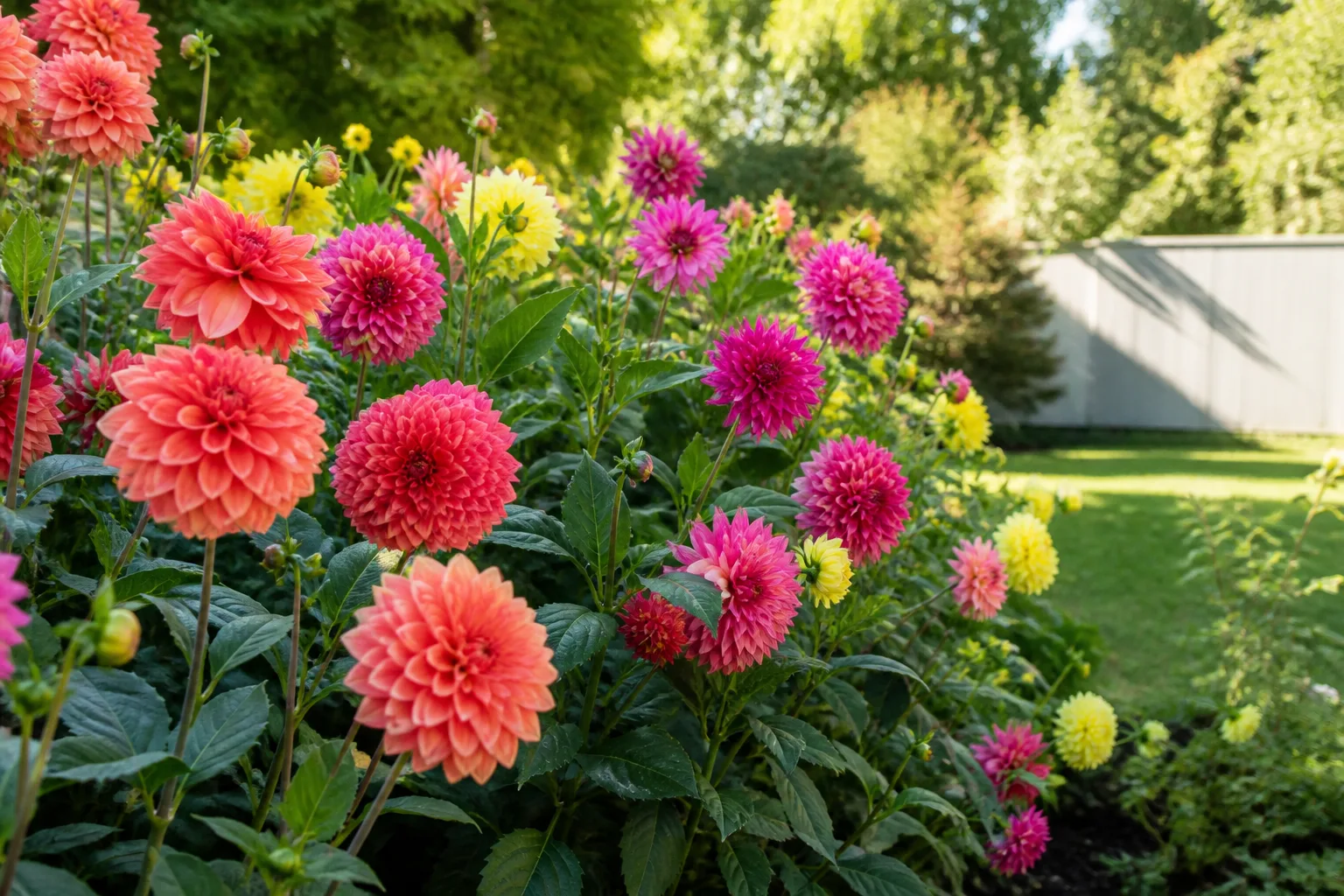
Three palettes that pair forms as well as colors
- Soft sunset: ‘Peaches n’ Cream,’ ‘Crichton Honey,’ and ‘Snoho Doris’ blend peach, pink, and apricot; add a small white pompon such as ‘Small World’ to keep the bed from feeling too warm.
- Dark and luminous: combine ‘Thomas Edison’ or ‘Diva’ with ‘Fleurel’ or ‘Boom Boom White,’ then add ‘Bishop of York’ for a yellow flower and dark-leaf contrast.
- Autumn harvest: group ‘Cornel Bronze,’ ‘Valley Rust Bucket,’ ‘Sun Explosion,’ and ‘Amber Queen’ for copper, rust, orange, and gold in several flower sizes.
Quick Comparison: Which Dahlia Group Fits Your Goal?
| Garden goal | Start with | Main trade-off |
|---|---|---|
| One dramatic focal bloom | Large-flowered decorative types such as ‘Mango Madness’ or ‘Kelvin Floodlight’ | Heavy heads usually need support and open space |
| A small pot or border edge | Compact choices such as ‘G.F. Hemerik,’ ‘Scura,’ or ‘Melody Allegro’ | Smaller mature size still needs a roomy, well-drained container |
| Repeated color and bouquet stems | Ball and pompon types such as ‘Jowey Frambo,’ ‘Franz Kafka,’ or ‘Amber Queen’ | Tight forms can look repetitive if every plant has the same color and height |
| A pollinator-friendly flower | Single/open-centered forms such as ‘Bishop of York’ or ‘Sunshine’ | Open blooms are less lush than densely petaled doubles |
| A dark foliage contrast | ‘Twyning After Eight,’ ‘Happy Single First Love,’ or ‘Waltzing Mathilda’ | Shade can make dark foliage look greener |
| Late-summer warmth | ‘Jomanda,’ ‘Cornel Bronze,’ or ‘Sun Explosion’ | Color and bloom timing still depend on local weather and planting date |
What a Cultivar Label Cannot Promise
A catalog height is an estimate, not a contract. Soil fertility, light, water, temperature, and the length of your growing season can change both plant size and flowering. If a listing gives only bloom size, look up the plant height before placing it; if it lists only a form, check the photo for the actual silhouette you want.
Color is also less fixed than a paint swatch. Several cultivars here are described as changing shades across petals or as flowers age, and the same garden can show differences between cool mornings and hot afternoons. Buy from a seller that identifies the cultivar clearly, save its label, and photograph the first bloom if you are keeping a record. If two listings give different heights or classifications, treat that as a cue to check more than one description, not proof that one plant is mislabeled.
Dahlias are also listed by ASPCA as toxic to dogs, cats, and horses; the organization notes mild gastrointestinal signs and mild dermatitis, with the toxic principle listed as unknown. If a pet chews a plant or tuber, contact a veterinarian or ASPCA Poison Control promptly rather than waiting for symptoms. ASPCA
Planting Choices That Protect the Flowers You Picked
Dahlias perform best in a sunny position with fertile, well-drained soil; persistently soggy ground can rot tubers, while dry soil and hot weather call for closer attention to watering. For a cold-winter garden, plan how you will lift and store tubers or replace them next year. The RHS describes dahlias as tender perennials that need protection from freezing conditions, with the exact overwintering choice depending on climate and soil drainage. RHS
Put a stake or cage in place when you plant a tall cultivar, before its tubers spread and become easy to damage. Tie the growing stem loosely as it gains height, and add support before a wind or rainstorm bends a heavy head. This is especially useful for giant flowers and tall varieties such as ‘Penhill Watermelon,’ ‘Blizzard,’ ‘Terracotta,’ and ‘Dad’s Favorite.’ The RHS recommends spacing plants with their mature size in mind, and Better Homes & Gardens also advises staking taller plants and setting supports before planting. Better Homes & Gardens
For the first weeks after planting dormant tubers, avoid keeping the soil saturated; wait for shoots before watering heavily. Once the plant is actively growing, water deeply when the root zone begins to dry. If the plant makes a lot of leafy growth but few blooms, check sun exposure and avoid overfeeding with nitrogen instead of immediately blaming the cultivar. A simple, well-drained site often matters more than a complicated fertilizer schedule.
Choose for Cutting, Not Just for the Bloom Photo
For bouquets, choose a plant that makes enough stems at a height you can reach, and consider the flower’s scale in a vase. Ball and pompon forms such as ‘Jowey Frambo,’ ‘Franz Kafka,’ ‘Amber Queen,’ and ‘Boom Boom White’ give arrangements a tidy, repeatable shape; mid-sized decorative types such as ‘Bacardi,’ ‘Sonic Boom,’ and ‘Peaches n’ Cream’ add softer, less formal flowers. A few open-centered dahlias can loosen a bouquet and give it a less solid silhouette.
A big bloom in a catalog is not automatically the most productive cut flower. If you want repeated stems, favor branching plants and keep cutting spent flowers; if you want a few show blooms, grow fewer large-flowered cultivars and support them well. Better Homes & Gardens recommends cutting open or nearly open flowers because unopened buds may not continue opening after harvest, and notes that regular cutting and deadheading encourage continued flowering. Better Homes & Gardens
Conclusion
Choose dahlia varieties by the space they will occupy, the flower form you want to see, and whether the plant is for a border, pot, pollinator patch, or vase. Use large-flowered cultivars sparingly for impact, repeat smaller forms for rhythm, and mix colors with foliage and bloom shape so the garden does not become a wall of identical flowers. Check mature height, drainage, and support needs before buying; those practical details let the colors you picked show at their best.