Deadheading Flowers: When and How to Prolong Blooming
Deadheading flowers can extend a display, but the right cut depends on the plant. Learn when to remove blooms, where to cut, and which seedheads to leave.
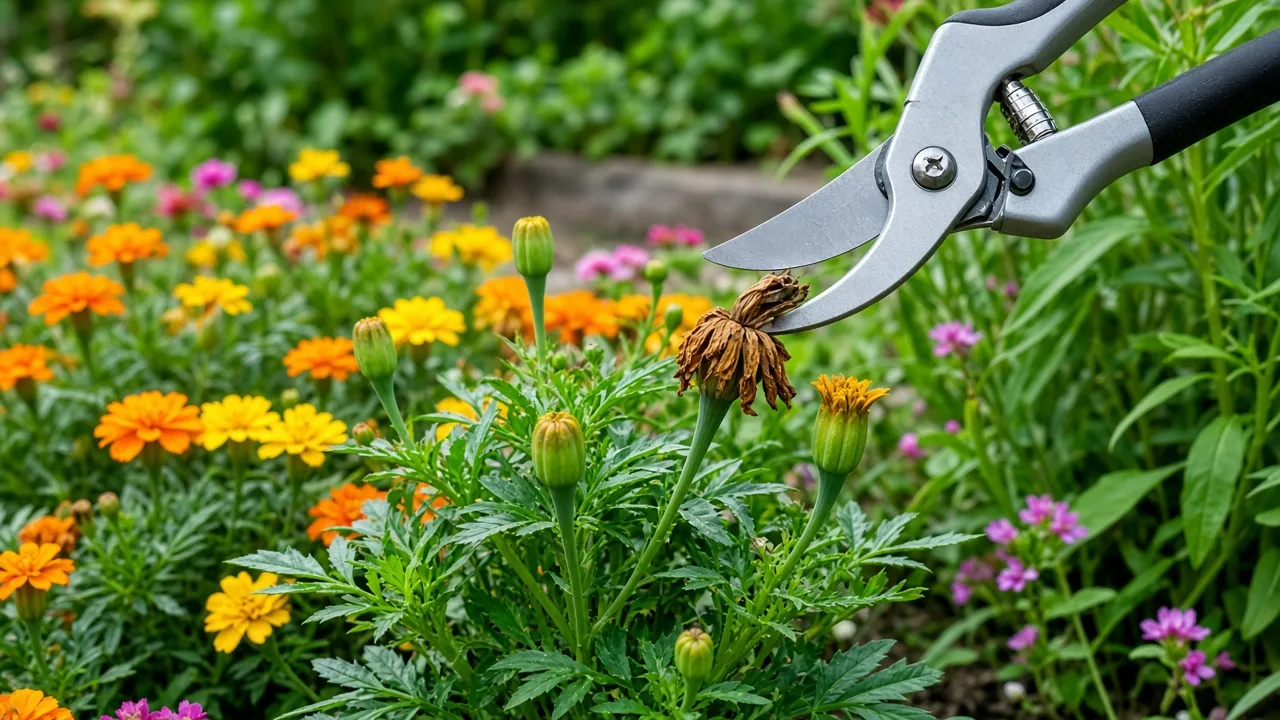
Deadheading is the removal of a flower after it fades. The useful question is not whether every spent bloom should be cut, but what you want that stem to do next: make another flower, stay tidy, form seed, feed birds, or carry its shape into winter.
For a repeat-blooming plant, remove the finished flower and follow its stem to a healthy leaf, bud, or side shoot. For a flower stalk with no leaves, such as a daylily scape, wait until the whole stalk is finished and cut it at the base. For a bulb, remove the flower or seed capsule but keep the green foliage. Those distinctions prevent the most common deadheading mistake: treating every flower like a zinnia.
What Deadheading Can—and Cannot—Do
Deadheading can keep a flowering plant from completing seed production on that stem. In plants that naturally keep making buds, that may extend the display or encourage a later flush. It also removes fading petals, reduces unwanted self-sowing, and can stop seed pods from taking over the look of a plant.
That does not mean a cut automatically creates more flowers. Some perennials have one short flowering period and will not repeat, even if their old blooms disappear. Others rebloom only when the cultivar, light, moisture, temperature, and length of the growing season support another cycle. Iowa State University Extension distinguishes plants that have a longer bloom period from perennials that may produce a second flush after flowering; both responses are plant-specific, not universal (Iowa State University Extension).
Deadheading is also not a plant-health emergency. A flower that has set seed is following its normal life cycle, not becoming diseased. Cut it if you want more blooms, a cleaner display, or fewer seedlings; leave it if seed, winter form, or wildlife value matters more. Think of deadheading as choosing where the plant spends its next effort, not as a required rescue.
Choose Your Goal Before You Cut
One plant can serve more than one purpose, so decide stem by stem. You might remove the first faded flowers from a rose to encourage another flush, then let later flowers form hips for autumn and winter interest. You might keep most coneflower heads for seed-eating birds while deadheading a few in front where brown petals bother you.
| If you want… | Do this | Trade-off |
|---|---|---|
| Another flush from a repeat-blooming plant | Remove spent blooms before mature seed forms | A second flush may be smaller, later, or absent if conditions or genetics do not support it |
| A tidier container or border | Remove faded flowers and the seed-forming base | You may lose a chance to collect seed or let the plant self-sow |
| New plants from seed | Leave selected flowers until seed is mature and dry | The parent plant may slow flowering, and seedlings may differ from hybrids |
| Food and structure for wildlife | Leave suitable seedheads and hips into the cool season | The bed may look less clipped, and some plants may spread |
| A bulb to flower again next year | Remove the spent flower or capsule, then keep green leaves | The foliage can look untidy while it finishes feeding the bulb |
This choice is not all-or-nothing. Deadhead the stems you want to keep flowering, leave a few healthy seedheads in a less visible part of the bed, and cut diseased or mushy material separately. The result can be attractive without turning the whole garden into a seed-free display.
Find the Cut Point That Matches the Flower
The common cut-point rule is just above a healthy leaf, leaf joint, bud, or side shoot. That leaves living growth below the cut and avoids a long bare stem. If a plant carries its leaves only at the base, trace the flower stalk down to that basal rosette instead of cutting at an arbitrary height.
Solitary blooms, clusters, spikes, and scapes
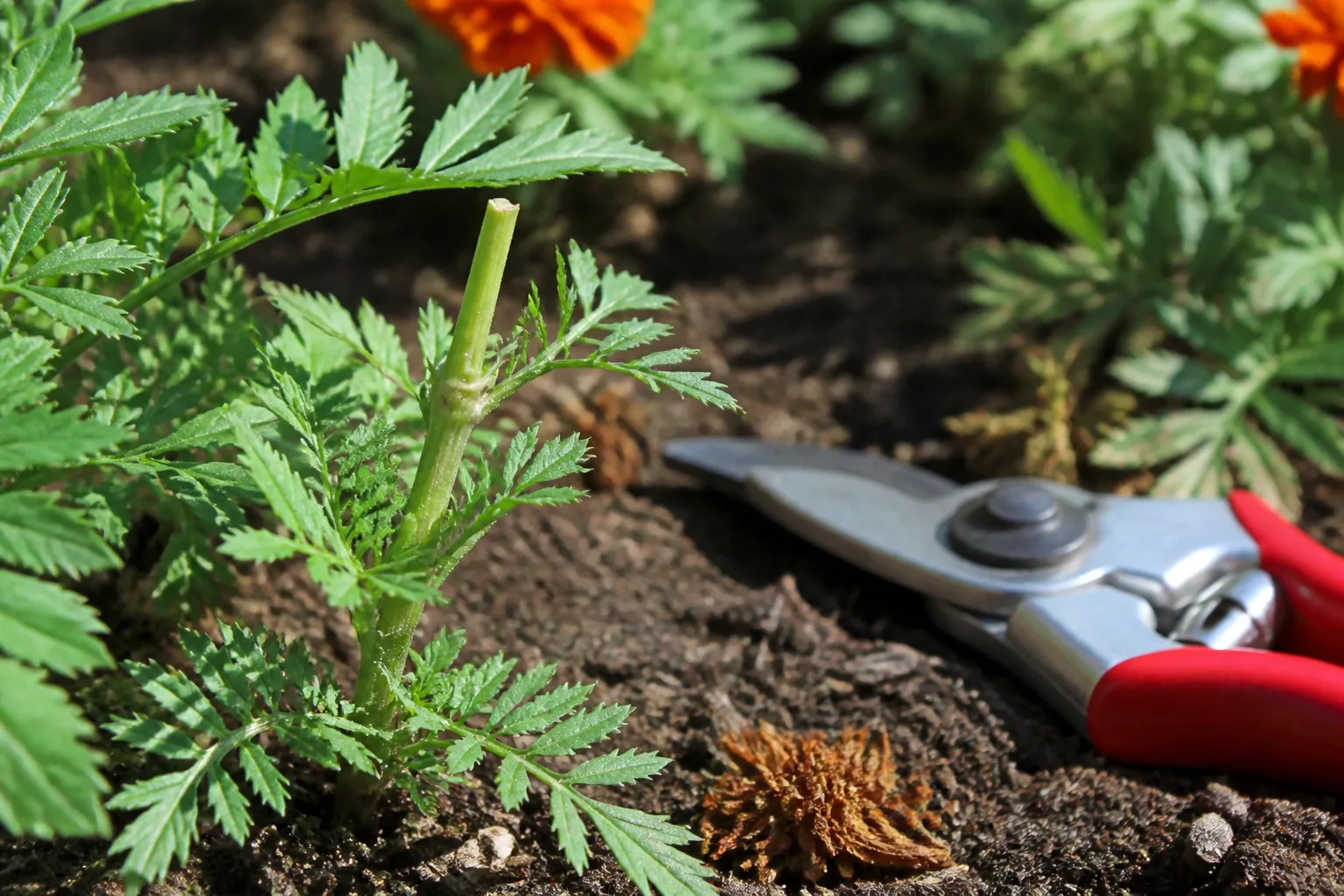
A single bloom on a leafy stem, such as a marigold or zinnia, usually goes back to the next useful leaf pair or side branch. A rose may have several flowers on a cluster; remove individual heads as they fade if others remain, then remove the finished cluster stem to the next strong leaf. On some plants, the green base behind the petals contains the developing seeds, so plucking off petals alone leaves the job unfinished.
A flower spike has several blooms arranged along one stalk. Do not cut it while unopened buds at the top are still developing. Remove individual flowers if appearance matters, or wait until the display is mostly finished, then take the stalk back to a lower bud or leafy shoot. For a bare scape—an upright flower stalk rising from a basal clump, as with daylilies—remove individual spent flowers during bloom and the empty stalk at its base after all buds have opened.
Bulbs are a separate case because the green leaves and sometimes the stalk are still doing useful work after the petals fall. Remove a seed capsule where the plant’s guidance calls for it, but do not shorten green foliage simply to make the bed look finished. The leaves are not deadheading debris; they are the plant’s food-making surface for next year.
How to Deadhead Without Removing the Next Bud
Take a few seconds to follow the flower stem before you pinch or snip. The sequence is straightforward, but the inspection is what keeps a quick tidy-up from becoming an accidental pruning job.
- Confirm the bloom is spent. Look for petals that are fading, brown, collapsing, or shedding. Leave a flower that still looks good or has active unopened buds on the same stalk.
- Trace the stem down. Find the nearest healthy leaf pair, node, side shoot, or basal foliage. On a cluster, identify which flowers are finished and which still have buds.
- Remove the seed-forming part. Take the flower and any swollen green or brown ovary beneath it when the goal is to prevent seed production. A petunia’s seed capsule is below the trumpet; removing only loose petals does not remove it.
- Make the smallest useful cut. Use fingers for soft stems or clean snips for thicker ones. Cut just above the chosen leaf or bud without cutting into it, or remove a bare flower stalk at the base when its bloom is finished.
- Collect and reassess. Gather the material, then check the plant for fresh buds, disease, drought stress, or a reason to leave some seedheads. Stop once the spent flower is gone; do not shorten healthy green stems just because the pruners are out.
If you are uncertain, remove one spent flower first and watch the plant. A small test cut is especially sensible when the plant is newly planted, the variety is unknown, or a cut would remove a large amount of foliage. Extension guidance likewise recommends checking for hidden buds and cutting above healthy leaves or buds rather than shearing first (Penn State Extension).
When to Deadhead and How Often
Deadhead when a bloom begins to decline and before its seed capsule matures if your aim is to prolong flowering or limit seedlings. This might mean checking a petunia basket every few days, removing larger rose heads about weekly, or working through perennial clumps once a week or every other week. The lifespan of the individual flower and the number of blooms on the plant matter more than a fixed schedule.
You do not have to inspect every flower daily. The Royal Horticultural Society notes that some bedding plants may need frequent attention while many border perennials can be checked weekly or less; being several days late will not usually ruin performance (RHS guidance on deadheading). After rain, remove flowers that have become mushy or stuck to fresh buds, but do not confuse weather damage to one bloom with a reason to cut the whole plant.
Timing also changes with the season. Early in the flowering period, removing spent heads can leave time for another flush. Later, ask whether you want seed, rose hips, or standing seedheads before you keep cutting. A plant near frost or the natural end of its season may not have time or suitable conditions to make new flowers; in that case, deadhead for appearance only if the tidier look is worth losing the seedhead.
Species-Specific Cut Points
Common names can hide meaningful differences. Cultivar labels are useful: a self-cleaning petunia, a once-blooming old-fashioned rose, and a repeat-flowering modern rose do not need the same routine. The following cut points work as a starting place, but keep the plant’s own growth habit in view.
Petunias, marigolds, zinnias, and cosmos
Petunias: Remove the whole faded flower down to where its short stalk joins the leafy stem, including the small seed-forming ovary behind the petals. A few modern spreading types drop flowers themselves, so hand-deadheading is optional if the plant is already tidy and blooming. For a large basket, work in sections and lift trailing stems to check beneath the canopy; that is where faded flowers and seed pods are easy to miss. Gardeners’ Path describes the same key detail: cut at the base of the flower stalk because a seed pod forms below the petals (Gardeners’ Path).
Marigolds: Pinch or snip the entire old head, including its green base, to the next healthy pair of leaves or side shoot. Leave nearby unopened buds alone; they can look small beside a large faded flower but are not spent. The leaves below the cut help the stem branch and support later flowers, so there is no benefit to cutting the whole plant down to a uniform height.
Zinnias and cosmos: Remove the flower stem to a healthy pair of leaves or a side branch. If you grow them for bouquets, make a longer cut above a branching point and bring the stem indoors; harvesting a fresh flower can accomplish the same cut more enjoyably. Leave a few strong late-season heads to mature if you want seed or food for birds. Zinnias can keep flowering in warm, bright conditions, while cosmos often self-sow; the cut is similar, but your seed-saving choice may differ.
Roses
Deadhead repeat-flowering roses during the main bloom season if you want another flush. Remove a faded flower or cluster to a healthy leaf, preserving enough foliage to support the plant. For an established hybrid tea, grandiflora, or floribunda, Iowa State Extension advises cutting above a five-leaflet leaf and retaining at least two five-leaflet leaves on each shoot; on a first-year rose, avoid a deep cut and remove the flower above the uppermost three-leaflet leaf instead. This is a useful rose-specific exception to the simple “cut back to the next leaf” rule (Iowa State University Extension).
Not every rose is a repeat bloomer. Many old-fashioned and rambler roses flower once, so removing their spent flowers will not produce a second summer flush; it may simply prevent hips from forming. Some roses are grown for showy hips, and those fruits also provide winter food for birds. The RHS recommends stopping deadheading on hip-producing roses by midsummer so the fruits have time to develop (RHS rose-growing guide).
Deadheading is lighter than rose pruning. If you are cutting a thick cane, changing the shrub’s shape, removing dead or diseased wood, or making a seasonal structural cut, pause and use rose-pruning guidance for that variety. Do not make a hard cut simply because one flower has faded.
Dahlias, salvias, snapdragons, and other perennials
Dahlias: Remove each spent head with part of its flowering stem, cutting back to a healthy leaf joint or branching point. The Royal Horticultural Society recommends cutting spent dahlia flowers back to a leaf joint; clipping only the petals can leave the seed-forming head in place (RHS dahlia-growing guide). Look closely before cutting, since new buds and old heads can be easy to confuse when the petals drop. The point is to remove the finished flower without sacrificing a neighboring bud.
Salvia and catmint: For herbaceous, repeat-flowering types, cut the finished flower spike back to a leafy side shoot or basal foliage after the first flush. Some cultivars will send up another round; others may give only fresh foliage or a smaller display. Do not apply this hard cut to every plant sold as salvia: woody shrubby salvias and herbaceous border salvias have different pruning tolerances, and a cut into bare old wood can remove growth the plant cannot replace.
Snapdragons: Remove the spent flower spike after most of its buds have opened and faded, cutting to a lower side shoot or healthy leaf. If the top still carries unopened buds, leave that portion in place. Annual snapdragons often produce more flowers when old spikes are removed, but heat, cultivar, and season set the limit.
Daylilies and other basal plants: Snap or pinch individual daylily flowers after they collapse; each flower lasts only a day, but the plant may carry other buds on the same scape. When the entire stalk is done, cut the empty scape near the ground and leave the green foliage. The University of New Hampshire Extension says a few cleanups during the bloom period are enough if the aim is to prevent mature seed pods; daily grooming is not necessary (UNH Extension).
For coneflowers, black-eyed Susans, yarrow, hardy geraniums, and similar perennials, the best response depends on the plant. Some flower longer or produce another flush after spent stems are cut; some simply look tidier; others are more valuable left to set seed. Kansas State Research and Extension lists several plants that can respond with more flowers, while noting that sedum, impatiens, and other plants may not need deadheading (Kansas State University Research and Extension).
Bulbs and daylilies
For daffodils and other spring bulbs, remove the fading flower and, when present, its swelling seed capsule. Keep the green stem and every green leaf until they yellow naturally. The leaves photosynthesize and help replenish the bulb; tying, braiding, or cutting them off early can weaken the following year’s display. On tulips, remove a seedhead just above the leaves if you do not plan to grow the plant from seed. Specialist tulip growers may leave a selected head to ripen, but most gardeners want the bulb to rebuild rather than divert effort into seed (RHS tulip-growing guide; RHS spring flower tasks).
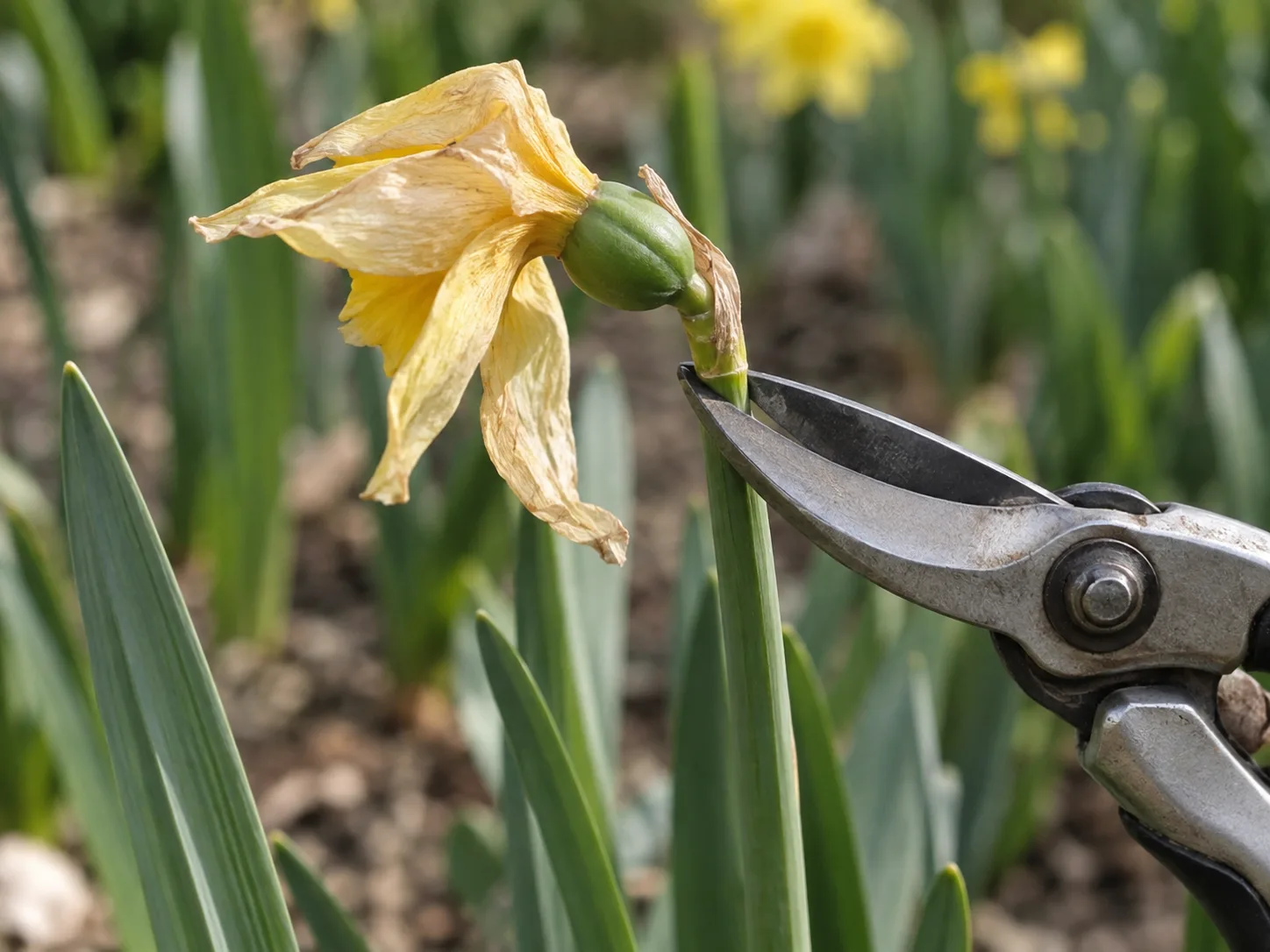
The same principle applies to lilies: remove individual flowers as they fade, but keep the leafy stalk while it is green. When all the flowers are finished, remove only the empty flower stalk if the plant’s growth habit calls for it. Green foliage is not part of the spent bloom, even when it makes a bed look less tidy.
When to Leave Seedheads in Place
Leave flowers that you want to set seed, self-sow, or provide winter shape and food. Coneflowers, Rudbeckia, sunflowers, ornamental alliums, poppies, love-in-a-mist, and some grasses can contribute seedheads or dried forms that are attractive after bloom. The Philadelphia Horticultural Society recommends keeping seedheads when you want a seed source for wildlife, including finches and sparrows, and lists coneflowers, Rudbeckia, sunflowers, asters, and blanket flowers among useful options (Philadelphia Horticultural Society).
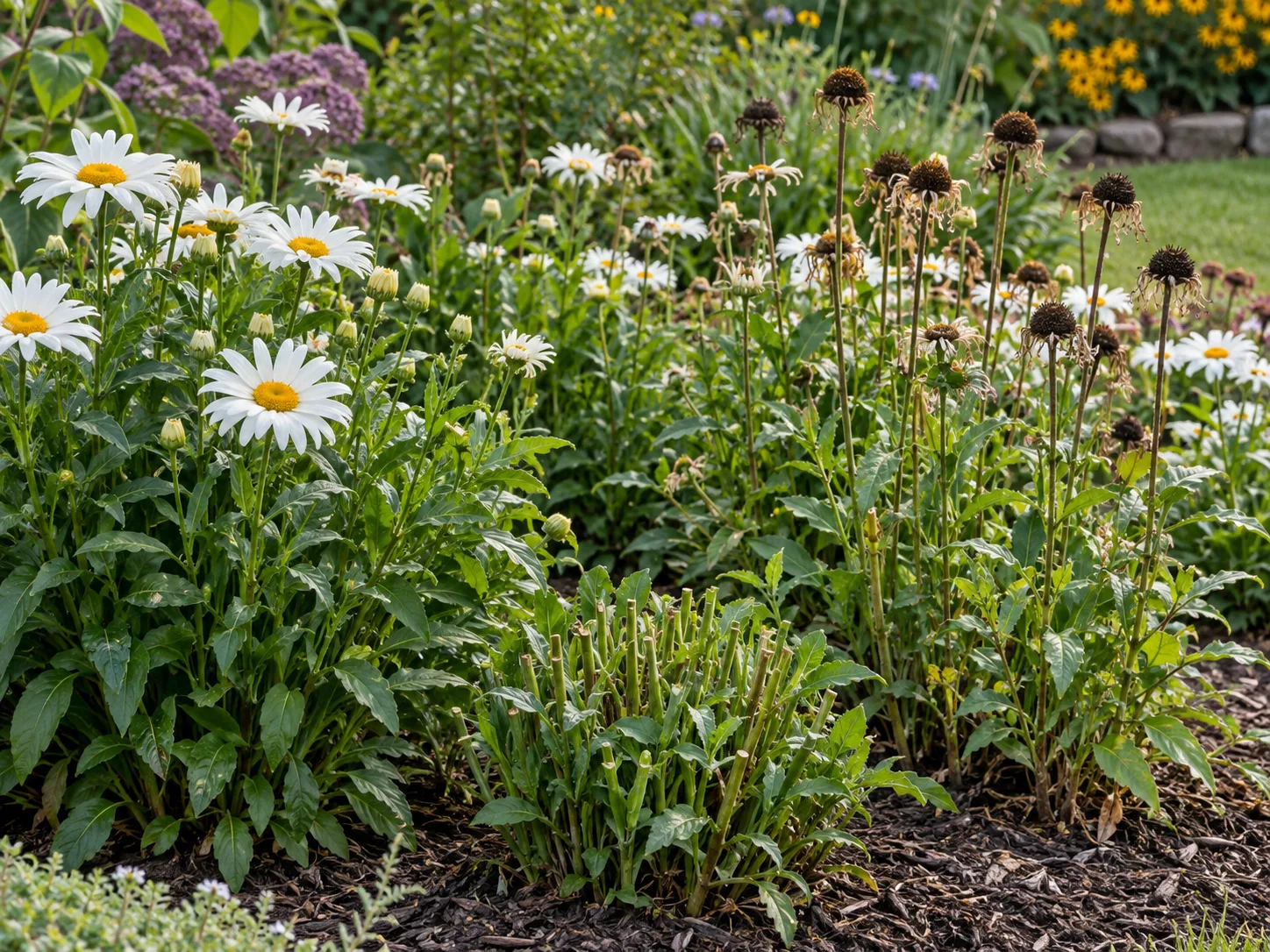
You can create a deliberate mix: remove messy flowers around the path, but leave the strongest seedheads farther back. If you are saving seed, wait until the heads are dry and mature, collect them on a dry day, and label the plant. Seeds from many named hybrids do not grow true to the parent, so a seedling may differ in color or flower shape; that can be a surprise or the point of the experiment.
Late-season decisions deserve more care than an automatic fall cleanup. Penn State Extension notes that many perennial seedpods provide food and winter structure, while the RHS advises leaving decorative or bird-friendly seeds and fruits when they are part of the garden’s purpose (Penn State Extension on fall perennial cutback; RHS guidance on deadheading). You do not have to choose between every spent bloom and no deadheading at all: stop on the stems that can serve a second purpose.
Some flowers are “self-cleaning,” dropping their old petals without much work. Impatiens, many petunias, lobelia, and some other bedding plants may need little or no deadheading, depending on cultivar and growing conditions. You can still remove a messy flower or seedpod when you want to; “does not require deadheading” means the task is optional, not that the plant is harmed by a small, appropriate cut.
Deadheading Versus Pinching, Pruning, and Cutting Back
Deadheading removes a finished flower or flower stalk. Pinching removes the growing tip of a young stem before it flowers, encouraging branching and often making a plant bushier. Pruning is a broader set of cuts that changes a plant’s size, shape, health, or branching. Cutting back removes many stems or a substantial portion of a clump, often after a flowering flush or at a seasonal transition.
The boundary matters because advice to remove one faded bloom does not authorize a large haircut. For example, removing the old top of a petunia flower is deadheading; shortening a long, bare petunia stem to restore a compact mound is pruning. Taking a finished salvia spike back to a side shoot is deadheading; cutting the entire clump close to the ground is a more substantial cutback. If your plant needs reshaping or rejuvenation, confirm the correct season and pruning depth for that plant rather than treating it as a deadheading task.
Flowers can also fade because of stress. If a plant stops blooming, check whether it has enough light, steady moisture, healthy roots, and suitable temperatures. Deadheading removes the spent flower; it does not correct drought, waterlogged soil, root crowding, pests, or the natural end of a flowering cycle.
Tools, Cleanup, and Troubleshooting
Soft annual stems can be pinched with fingers. Use small snips for crowded containers or tender stems when fingers would tug at nearby growth, and sharp bypass pruners for thicker stems such as established roses. A clean cut is easier to place accurately than a crush. There is no need to use a large pruner on every tiny bloom, and clean household scissors are adequate for thin, soft flower stems if they make a crisp cut.
Brush away debris after the task and remove diseased or mushy material from the garden rather than leaving it trapped in dense foliage. Clean a blade before moving from a plant with visible disease to a healthy one. Healthy, dry petals and small stems can usually be composted; discard suspect disease material according to local guidance, since a cool home compost pile may not destroy every plant pathogen.
If a deadheaded plant does not rebloom, check the plant’s bloom habit first. A one-time flowering perennial may be done for the season, while a repeat bloomer may need more light, water, or time to recover. If the plant looks bare after cutting, the cut probably removed too much green growth; next time, trace each flower to the nearest healthy leaf or side shoot. If a bed loses all its late-season texture, leave a few selected stems standing rather than trying to reverse every cut.
Two other problems are easy to prevent. First, do not cut a green bulb leaf or a young rose down to a generic low point. Second, do not shear all the tops of a mixed border before checking which spikes still have buds. A slow, targeted pass takes less time to repair than a fast, uniform cut that removes the flowers you were waiting for.
Conclusion
Deadheading flowers is most effective when the cut matches the plant and your goal. Remove a fading bloom above a healthy leaf or side shoot when you want a repeat-flowering plant to keep going; remove a whole scape at the base only when its flowers are finished; and take the flower or seed capsule from a bulb while keeping its green leaves.
You do not need to tidy every stem. Leave selected coneflowers, sunflowers, roses, or ornamental seedheads when seed, birds, winter form, or self-sown seedlings matter more than another flush. Check the plant, make the smallest useful cut, and let the rest of the garden finish its season on its own terms.



