32 Deer-Resistant Perennials for Sun and Shade
Choose from 32 deer-resistant perennials and herbs for sun or shade, with notes on moisture, bloom season, spread, and when a barrier matters more on your site.
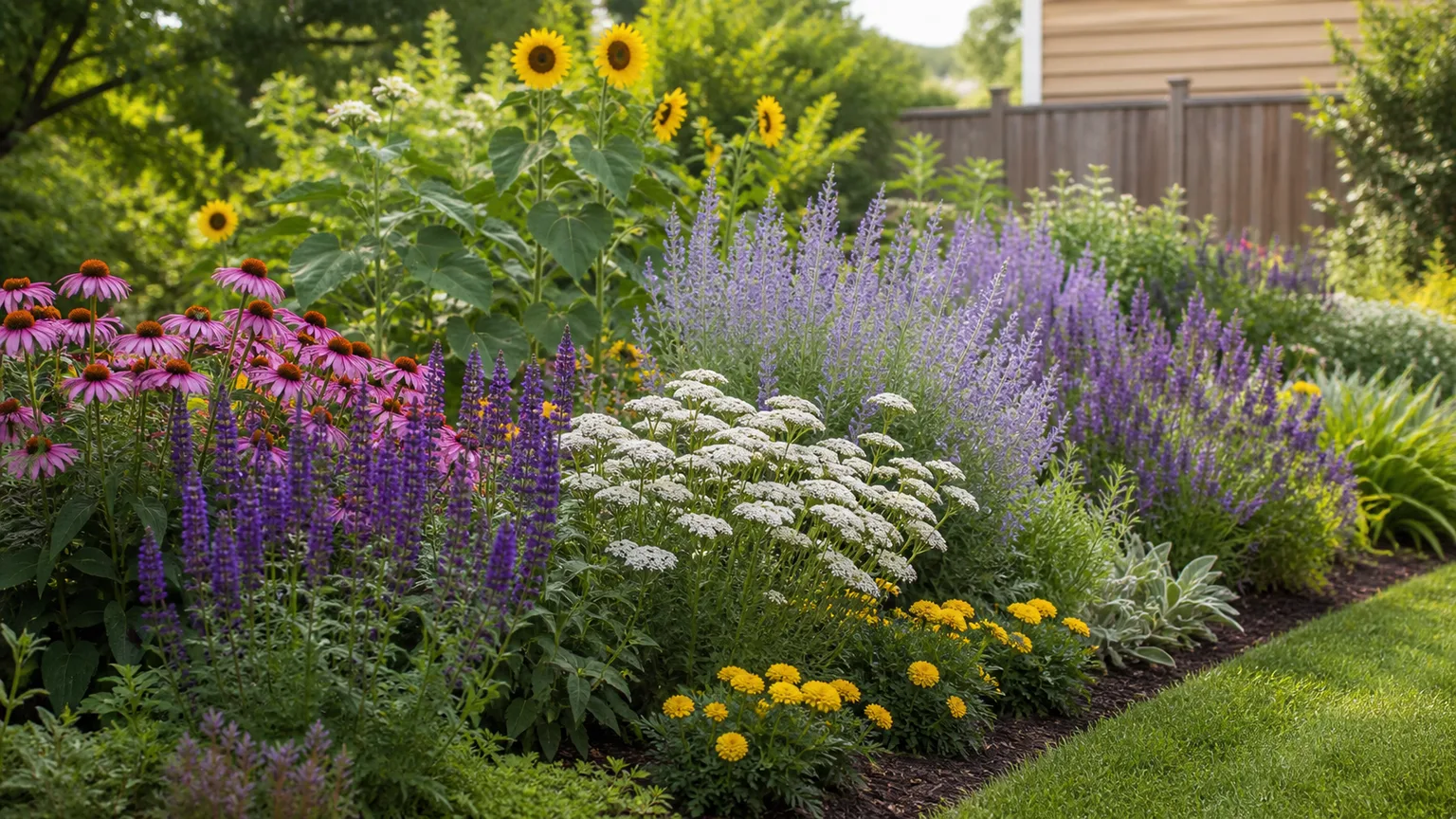
If deer browse your garden, start with plants they are less likely to choose—not with a promise that any flower is untouchable. Aromatic leaves, fuzzy or coarse foliage, and plants with an unpleasant taste can lower the odds of damage. But a hungry herd may still sample them, especially when the plants are young or other food is scarce.
The 32 plants below are grouped by the conditions where they make sense: sunny aromatic borders, woodland shade, and long-season color. Each description includes a useful reason to grow the plant and a limitation to consider, so you can choose for your soil and light as well as for deer pressure.
What “Deer-Resistant” Actually Means
Deer-resistant means a plant is usually less preferred than nearby alternatives. It does not mean deer-proof. A plant’s risk changes with the local herd, season, weather, and the availability of other forage. Tender new growth, drought-stressed landscapes, and a garden that deer already visit can all make familiar “safe” plants worth a test bite.
Extension lists reflect observations, not a universal guarantee. Cornell Cooperative Extension groups plants by how often or severely they are damaged and explicitly warns that no plant is completely deer-proof, particularly where deer densities are high. Colorado State University Extension likewise cautions that hungry animals may eat almost anything, even plants that are poisonous. Those limits are why the best planting plan uses lower-browse plants as one layer of protection, not as a substitute for a fence where repeated damage is severe. (Cornell Cooperative Extension; Colorado State University Extension)
Choose Plants for Your Site Before You Choose for Deer
Plant the species that can thrive in your conditions. A deer-resistant lavender in wet clay may fail from root problems; a moisture-loving woodland perennial in a hot, dry bed may collapse by midsummer. A stressed plant also has fewer reserves to recover after browsing. Choose by sunlight, drainage, moisture, and mature size first, then favor the options with foliage deer tend to leave alone.
Match Sun, Soil, and Moisture
Most fragrant herbs and silver-leaved border plants below need sun and drainage. Lavender, sage, Russian sage, yarrow, and basket-of-gold alyssum are poor choices for a spot that stays soggy. Bee balm and some meadow-rues prefer more even moisture. Check the plant tag for the species or cultivar you are buying; a genus can include varieties with different height, hardiness, and moisture needs.
Use Shade to Your Advantage
Tree-root shade is not one uniform condition. The area beneath a large tree can be dry, while a north-facing bed or woodland edge may stay cool and moist. Lungwort and bleeding hearts suit richer, moisture-retentive soil; brunnera and ephemerals such as Dutchman’s breeches work well in a spring woodland setting. Don’t put a moisture-loving plant in dry shade and expect shade alone to solve its needs.
Consider Local Deer Pressure and Safety
Ask a nearby extension office, public garden, or experienced nursery which plants are least browsed in your neighborhood. A regional list is more useful than a nationwide ranking because the deer population and available food differ. Better Homes & Gardens’ plant guides also emphasize the limits of resistant labels and offer choices for different sites, while PBS NC’s Almanac Gardener has featured a horticultural agent and Master Gardener discussing locally useful deer-resistant plants. (Better Homes & Gardens: deer-resistant perennials; PBS NC Almanac Gardener)
If deer browse the garden regularly, protect newly planted perennials until they establish. A cage or barrier around a small planting is often easier than trying to train deer away from every tender shoot. Also check toxicity before planting near children or pets; a plant that deer avoid is not automatically safe to touch or eat.
Aromatic or Textured Plants for Sunny Borders
These nine choices bring scent, foliage texture, or both to sunny beds. Many work as edging or mid-border plants. Space them for mature width and airflow rather than crowding them together in a tight “deer barrier”; a mixed bed looks better and gives each clump room to dry after rain. Better Homes & Gardens also groups aromatic foliage and textured leaves among the practical traits gardeners consider when selecting lower-browse plants. (Better Homes & Gardens: deer-resistant shade plants)
-
Catmint (Nepeta) — Catmint forms a soft mound of gray-green leaves and long spikes of lavender-blue flowers, often reblooming after a light trim. It suits sunny, well-drained borders and pairs neatly with roses or edging paths. Choose a compact cultivar if space is limited. It may be sampled in high-pressure gardens, so protect new transplants while they root.
-
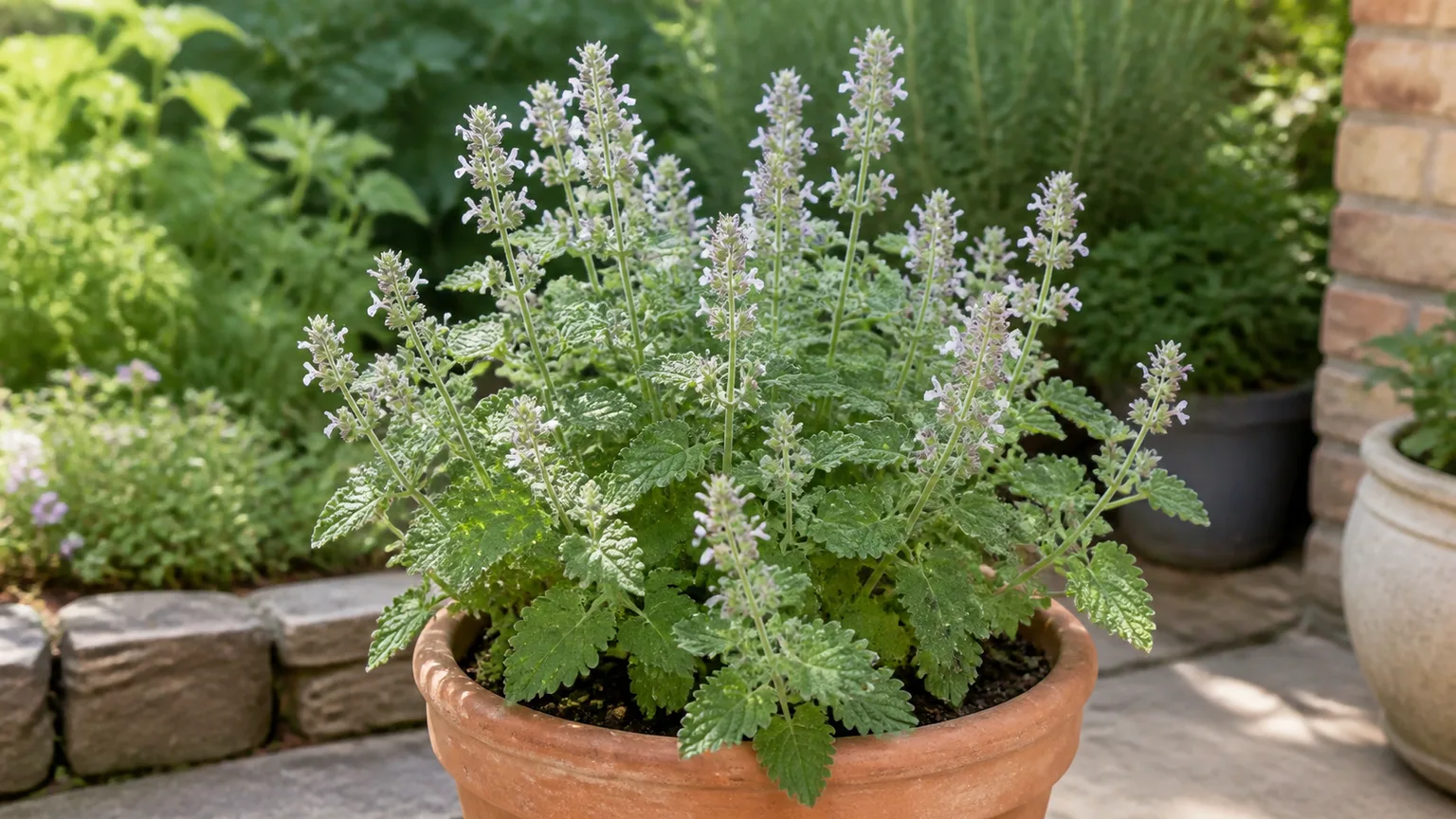
Catnip (Nepeta cataria) — Catnip is an aromatic herb with small pale flowers, but it can self-seed more freely than ornamental catmint. Grow it where volunteers are easy to remove, or deadhead the flower stems before they set seed. If neighborhood cats roll on it, a sturdy cage can protect young stems.
-
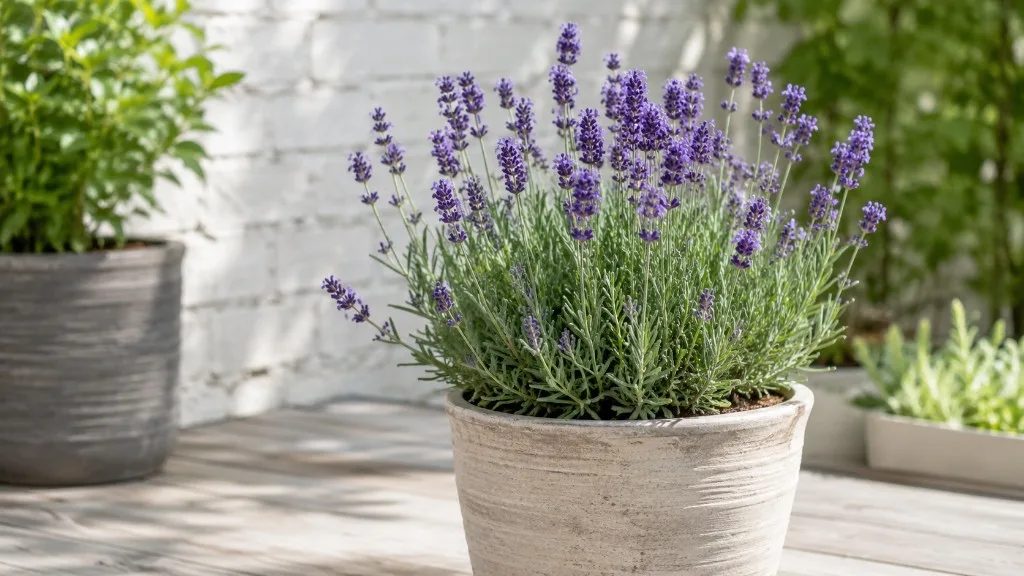
English lavender (Lavandula angustifolia) — Lavender brings strong fragrance, pollinator-friendly flowers, and silver-gray foliage to a sunny, dry border. It wants sharp drainage and good air movement; heavy soil and damp winters are common reasons it declines. Choose a type suited to your cold zone and summer humidity instead of assuming every lavender has the same hardiness.
-
Common garden sage (Salvia officinalis) — Culinary sage offers both edible leaves and a compact, fragrant shrub-like form. Give it full sun and a well-drained site, and trim it lightly to keep stems from becoming woody. Variegated cultivars add ornamental interest, though their leaf color can be less vigorous than plain green sage in a stressful site.
-
Russian sage (Salvia yangii, formerly Perovskia atriplicifolia) — This tall, airy perennial has silvery stems, aromatic foliage, and lavender-blue flowers in late summer. It needs sun, room, and drainage; the open habit is a feature, not a sign that it needs crowding. Cut it back in spring rather than into old wood during fall, and check the mature height before placing it near a walkway.
-
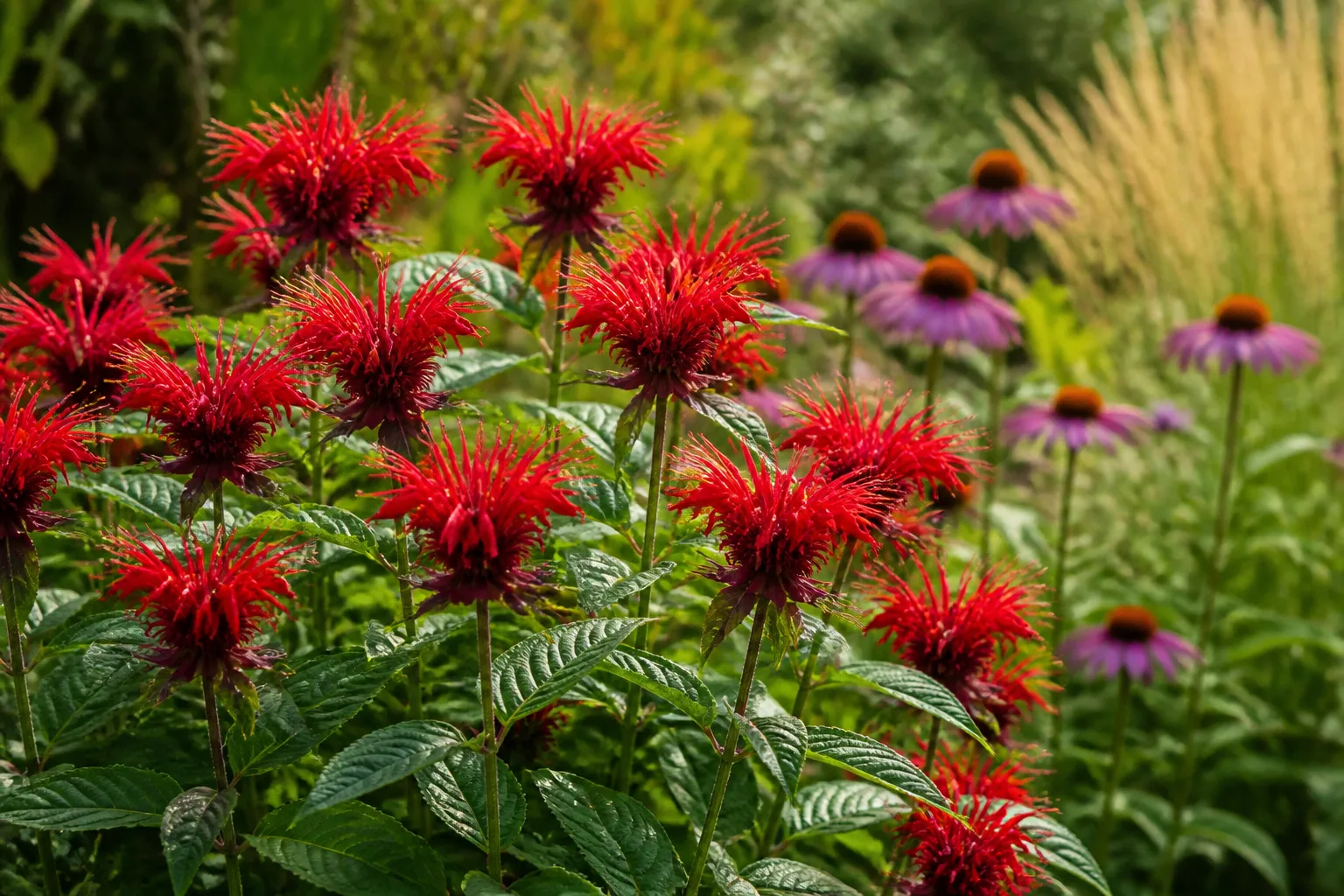
Bee balm (Monarda) — Bee balm’s minty leaves and vivid summer flower heads give a sunny or lightly shaded border a strong pollinator display. Unlike lavender, many bee balms appreciate richer soil and steady moisture. In humid climates, choose mildew-resistant cultivars and provide airflow; a dense, neglected clump can develop unattractive foliage even when deer leave it alone.
-
Perennial salvia (Salvia nemorosa and related types) — Hardy ornamental salvias provide upright flower spikes from late spring into summer, and many rebloom after deadheading. Their scented leaves and well-drained-soil preference make them useful among other sun-loving perennials. Cultivars vary widely in size and color, so use the label rather than a generic “salvia” height when planning the border.
-
Lamb’s ear (Stachys byzantina) — The silver, felted leaves add a low, soft-looking edge and create a textural contrast with upright flowers. Lamb’s ear tolerates dry spells once established, but its foliage can rot where air is still and soil stays wet. Choose a spot with sun and drainage, and remove flower stalks if you want the foliage to stay the main feature.
-
Wall germander (Teucrium chamaedrys) — This compact, woody herb makes a neat low edge for a sunny, well-drained bed and can take light shaping. Its small leaves and pink-purple flowers are less showy than lavender, so choose it for structure and a clipped border rather than a big floral display. Avoid planting it in a wet or heavily shaded location.
Woodland and Spring-Flowering Choices
These 11 options suit dappled light, woodland edges, or cool-season color. Many bloom early and then change character as summer progresses. Mark the locations of spring ephemerals so you don’t accidentally dig into their resting roots after the leaves disappear.
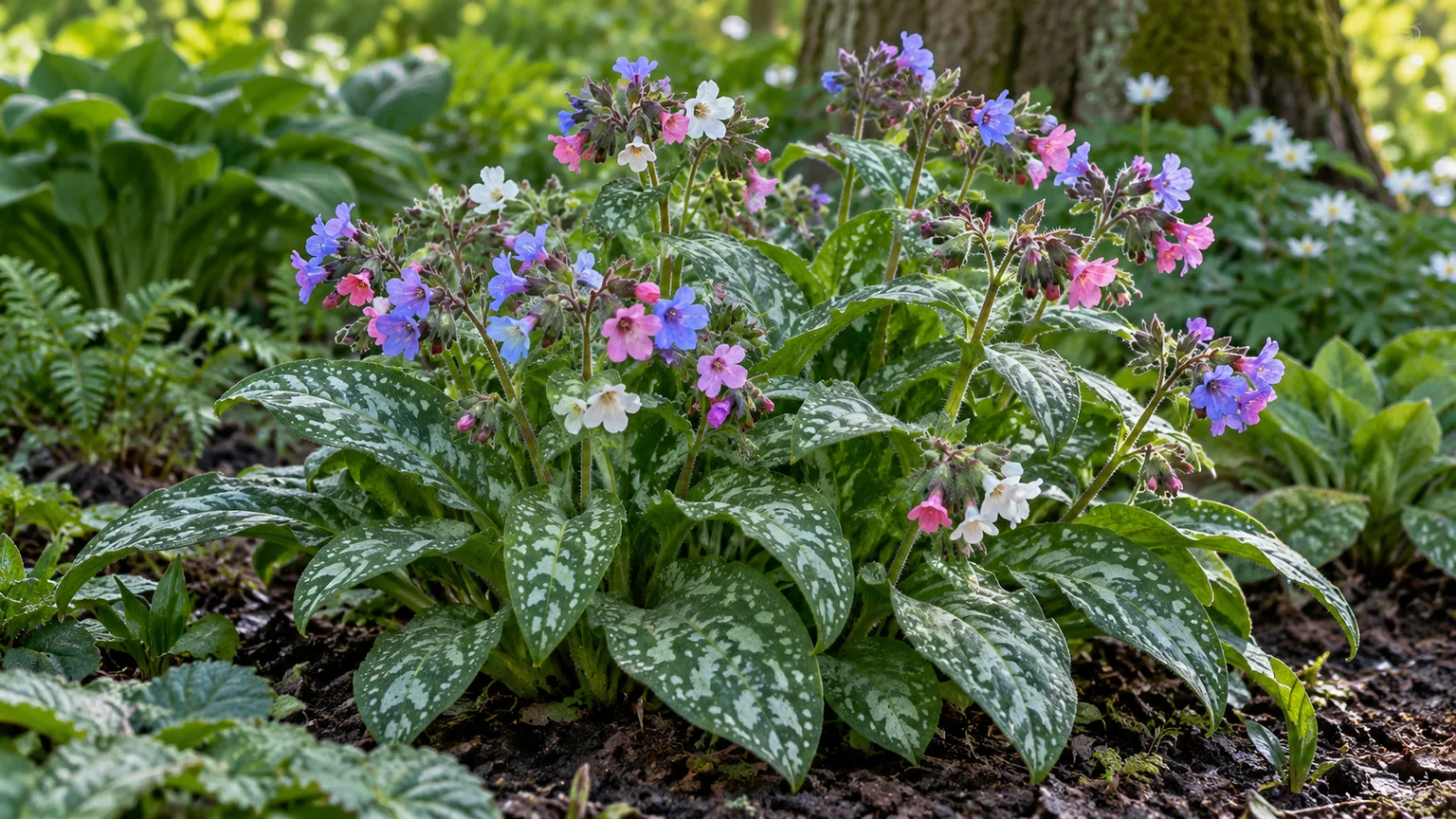
- Lungwort (Pulmonaria) — Lungwort is a low shade perennial with spotted or silver leaves and early flowers that often open pink and mature toward blue. It performs best in cool, evenly moist soil and makes a useful foreground clump beneath deciduous shrubs. In hot climates, afternoon shade and consistent moisture help prevent foliage from looking ragged by midsummer.
-
Bleeding hearts (Lamprocapnos spectabilis and Dicentra eximia) — Common bleeding heart produces arching stems of dangling spring flowers but may go dormant in summer heat; fringed bleeding heart is smaller and can hold its fernlike foliage longer. Both favor shade and humus-rich soil. Plant among later-emerging perennials so a summer gap is covered without digging up the dormant crown.
-
Dutchman’s breeches (Dicentra cucullaria) — This native spring ephemeral has finely divided foliage and distinctive white flowers. It is best for a cool woodland garden with rich soil and spring moisture, not a hot border that must look full all season. The plant naturally disappears after flowering; let its leaves replenish the underground storage organ before they die back.
-
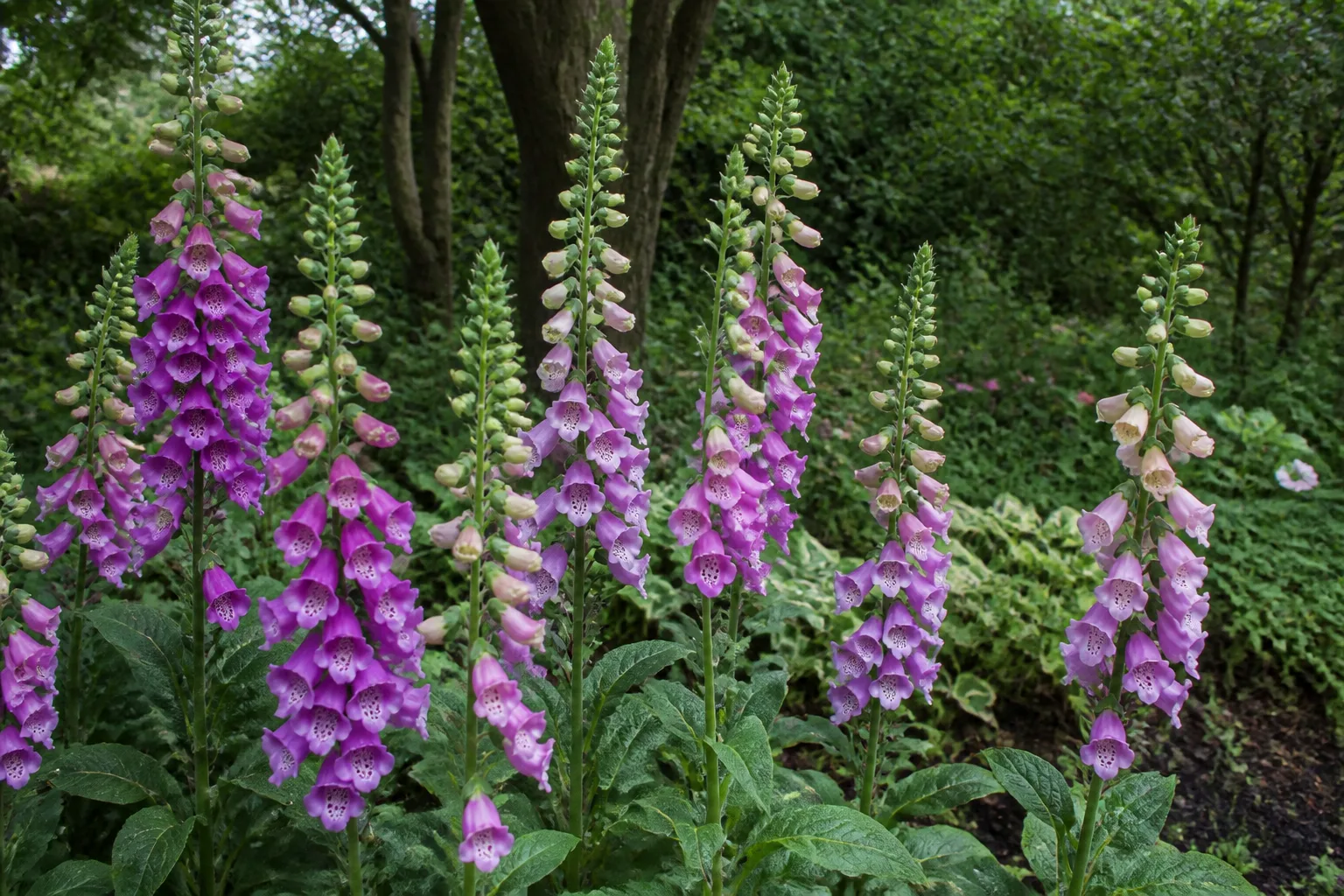
Foxglove (Digitalis) — Tall spires make foxglove a dramatic back-of-border choice for sun or light shade, and its bell-shaped flowers attract pollinators. Many garden foxgloves behave as biennials or short-lived perennials, so allow a few seedlings to replace older plants if they are wanted. Every part is toxic if eaten; place it away from children and pets and see the safety note below.
-
Lenten rose (Helleborus, often H. × hybridus) — Hellebores bring long-lasting late-winter or early-spring color to part shade, with evergreen leaves in many climates. They prefer humus-rich, well-drained soil rather than a waterlogged hollow. Their flowers nod, so place them where you can view them from a path or low window, and avoid disturbing established crowns.
-
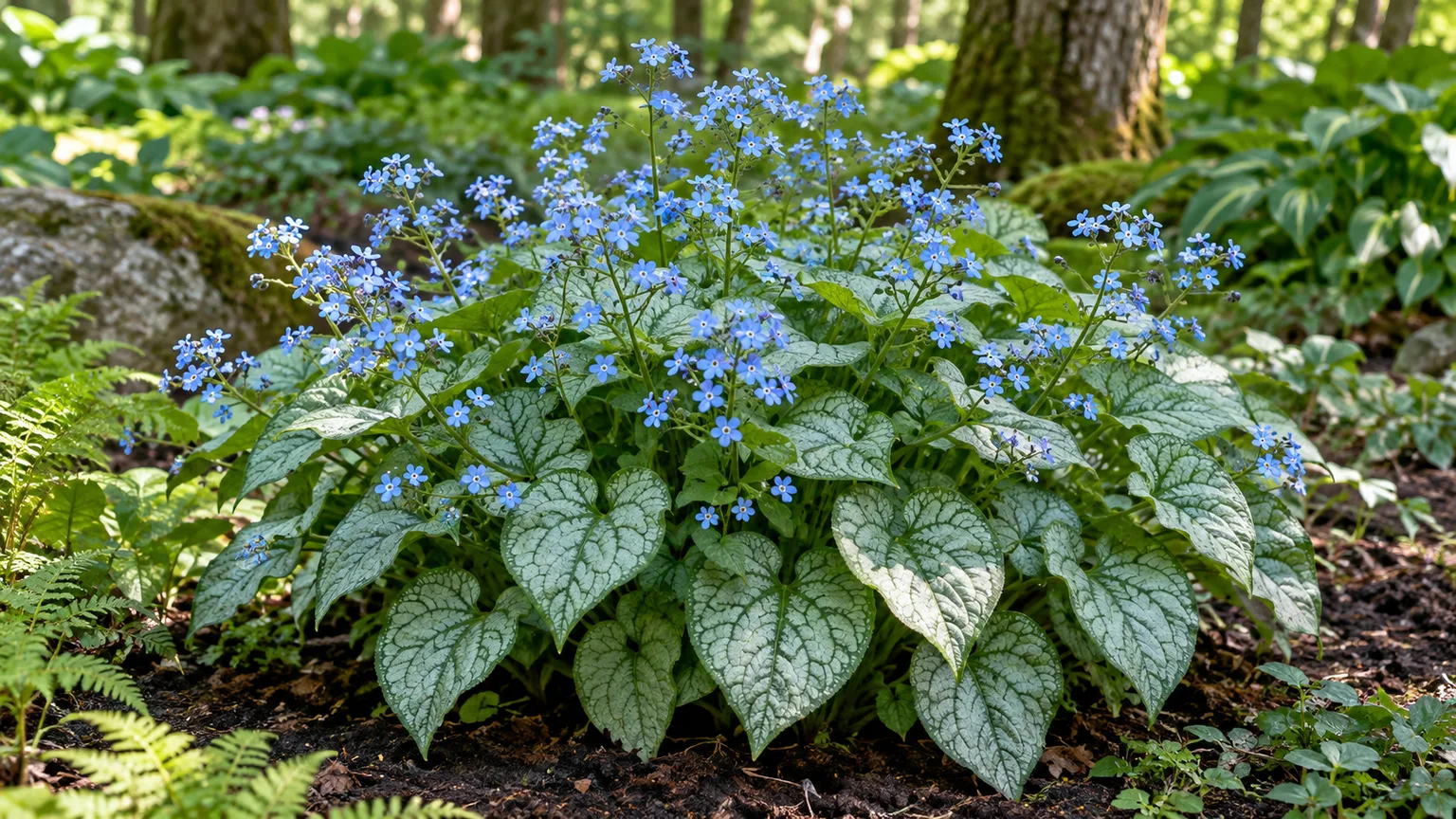
Jack Frost brunnera (Brunnera macrophylla ‘Jack Frost’) — The heart-shaped silver leaves with green veining brighten a shady border after the small blue spring flowers fade. Brunnera prefers moisture-retentive but well-drained soil and benefits from protection from harsh afternoon sun. Use it as a foliage anchor beside spring bulbs or under a deciduous shrub.
-
Columbine (Aquilegia) — Columbines bloom in spring with spurred flowers above mounded foliage, and they tolerate sun in cooler regions or part shade in warmer ones. They often self-sow, sometimes producing flower colors unlike the parent. Young leaves can be more vulnerable than mature plants, so observe your local browsing pattern before relying on columbine as a front-line barrier.
-
Columbine meadow rue (Thalictrum aquilegiifolium) — The divided leaves resemble columbine, while fine, airy flower clusters rise above them in late spring or early summer. This taller perennial suits the middle or back of a moist, partly shaded border. Give it support or neighboring plants if the site is windy, and use it where the delicate flowers can be seen against a darker background.
-
Forget-me-not (Myosotis sylvatica) — Forget-me-not is often grown as a short-lived biennial rather than a dependable clump-forming perennial. Its blue spring flowers fill moist, partly shaded gaps and it readily reseeds where conditions suit it. Use it as a temporary carpet and remove seed heads if you don’t want it spreading through the bed.
-
Rodgers flower (Rodgersia) — Rodgersia is a bold foliage plant for a large, shaded, consistently moist garden. Its broad leaves provide scale that smaller woodland perennials cannot, and plume-like flowers add summer height. It needs room and moisture; a small, dry bed is the wrong place, and drought can quickly spoil the leaf display.
-
Jack-in-the-pulpit (Arisaema triphyllum) — This native woodland plant makes an unusual spring focal point, with a hooded spathe above divided leaves. It wants rich, damp, shaded soil and goes dormant after the growing season. Plant it where its seasonal disappearance is expected, alongside later-emerging plants that can cover the bed after it goes dormant.
Long-Season Color for Sun
These 12 plants stretch the flower calendar from spring to fall. Some are bulbs, short-lived perennials, or self-seeders rather than permanent clumps, so think in terms of a changing border rather than a fixed inventory. For each one, match the soil and moisture to the plant; resistance alone will not rescue a poor site.
-
Speedwell (Veronica) — Upright speedwells produce narrow flower spikes and can bridge the gap between late spring bulbs and summer bloomers. Give them sun and well-drained soil, then shear spent spikes if you want a tidier rebloom. Varieties differ in height and spread; low groundcover veronicas and tall border types should not be treated as interchangeable.
-
Yellow alyssum or basket-of-gold (Aurinia saxatilis) — This low, mat-forming perennial lights up sunny slopes, rock gardens, and dry edges with dense yellow spring flowers. It prefers lean, sharply drained soil and may struggle in a wet, heavily fertilized bed. Trim lightly after bloom to keep the mat compact, and check whether the selected form is suited to your region.
-
Bearded iris (Iris germanica hybrids) — Bearded iris offers spring or early-summer flowers in a wide range of colors and grows from rhizomes. It needs sun and drainage; set the rhizome near the soil surface rather than burying it deeply. Divide crowded clumps when flowering declines, and don’t confuse it with moisture-loving iris types that need different conditions.
-
Peony (Paeonia) — Peonies are long-lived, large-flowered perennials for full sun and well-drained soil. Their bloom is brief, but the foliage remains useful and the clumps can stay in place for years. Plant the eyes shallowly and give each plant room for airflow. Deer may occasionally sample buds or shoots, so observe local performance before planting a prized specimen unprotected.
-
Oriental poppy (Papaver orientale) — The papery flowers make a vivid late-spring display, while the hairy leaves are often less attractive to browsers. After flowering, the foliage can yellow and disappear during summer dormancy. Plant it among later perennials, mark the crown, and avoid overwatering the resting plant.
-
Rose campion (Lychnis coronaria) — Rose campion pairs silvery leaves with bright magenta flowers in early summer and tolerates lean, sunny soil. It is often short-lived but self-sows readily, which can be useful in a naturalistic border and inconvenient in a formal one. Deadhead seed heads if you want to control the seedlings.
-
Larkspur (Delphinium) — Larkspurs create tall blue, pink, white, or purple flower spikes in a cool-season garden. Depending on species and climate, they may be annual, biennial, or perennial, and tall cultivars often need staking. Provide sun, fertile soil, and consistent moisture without waterlogging. Because plants are tall and brittle, place them where wind and foot traffic are limited.
-
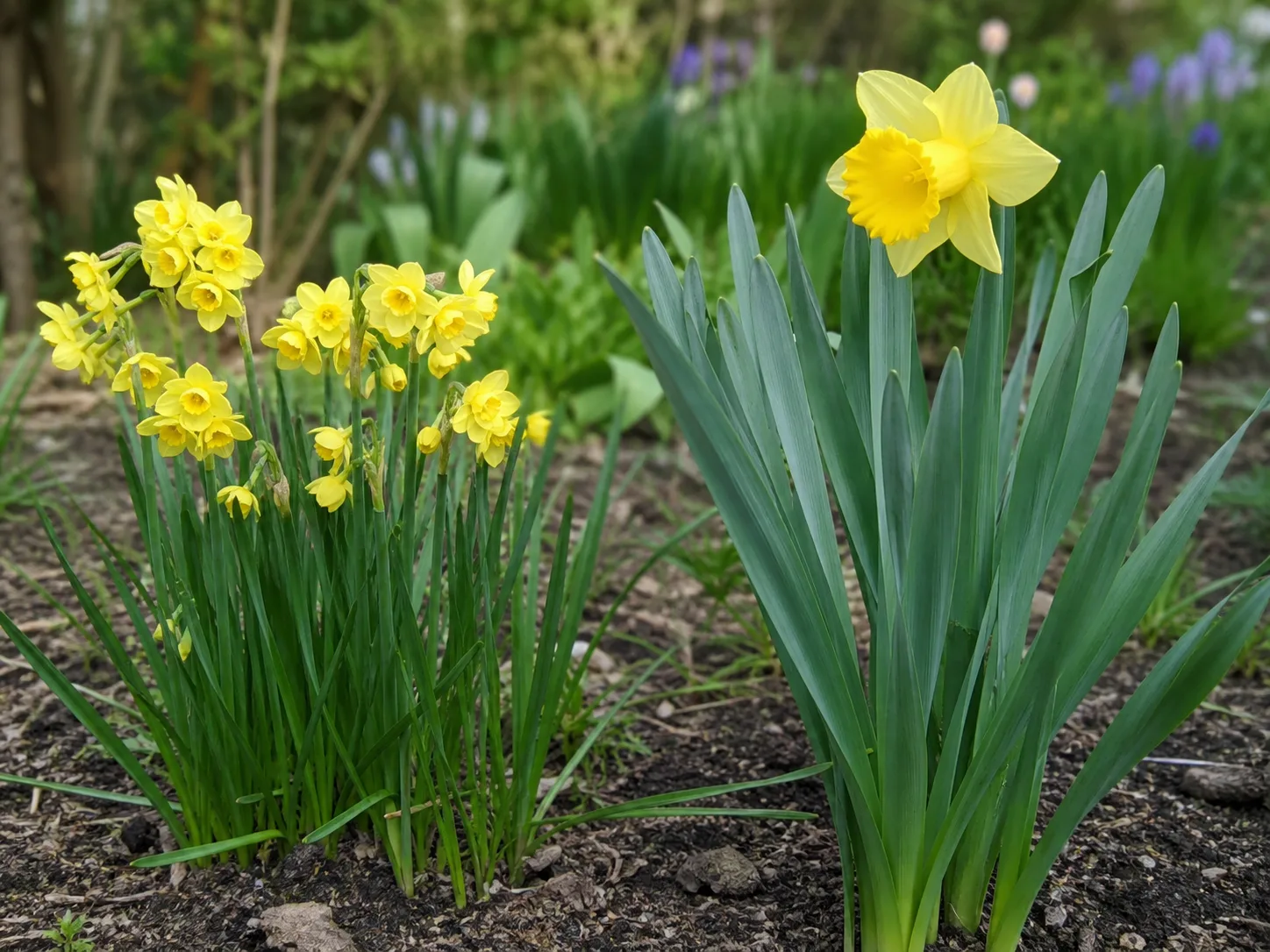
Daffodil (Narcissus) — Daffodils return from bulbs and provide early spring color before many perennials wake up. Plant them in fall in a sunny or lightly shaded spot with good drainage, then leave the foliage until it yellows so the bulbs can replenish. They are a strong choice where deer browse tulips, but the bulbs are especially poisonous to pets; keep dug-up bulbs and plant debris out of reach. The ASPCA lists daffodils as toxic to dogs, cats, and horses, with bulbs the most poisonous part. (ASPCA Animal Poison Control: Daffodil)
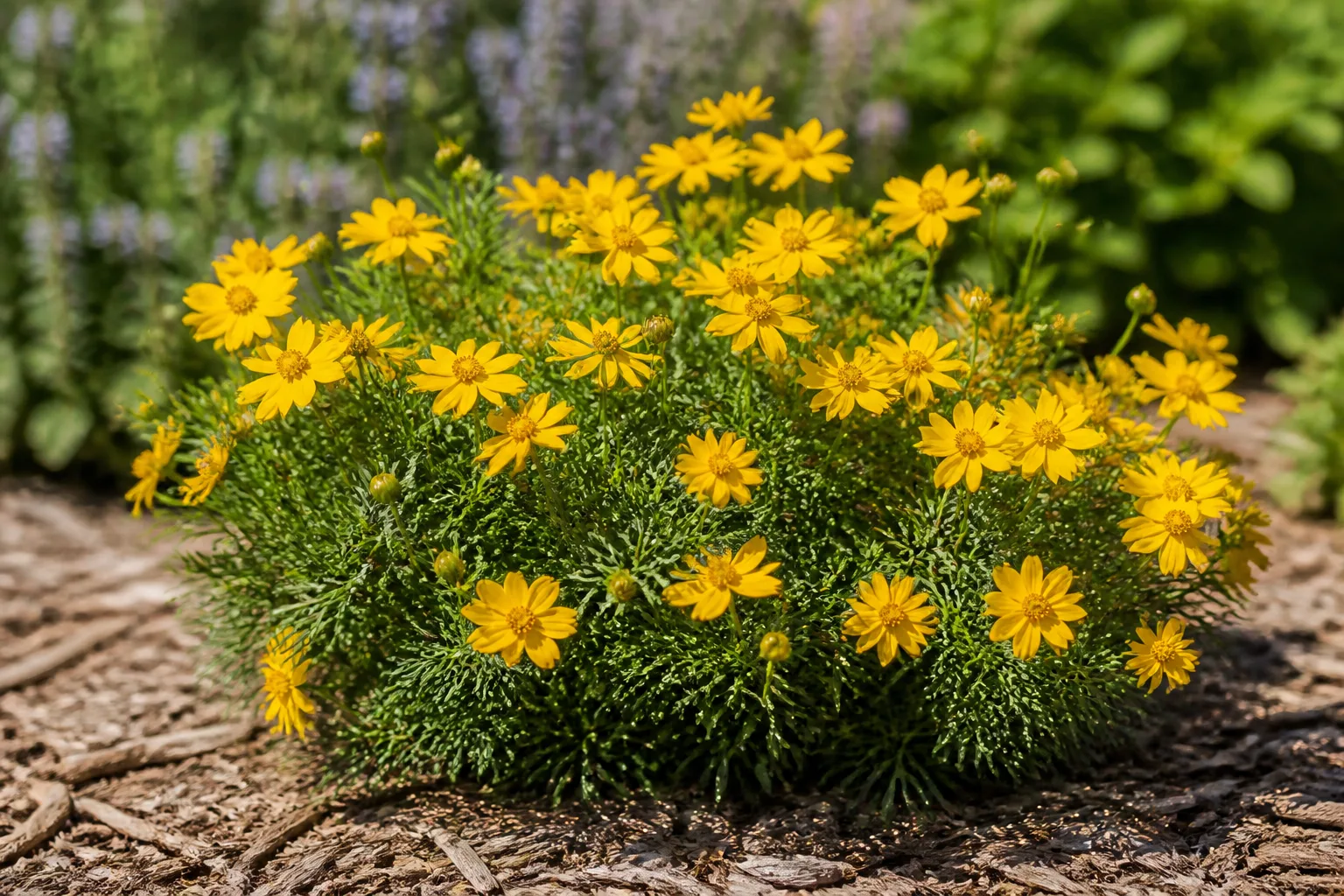
- Tickseed (Coreopsis) — Coreopsis provides a long run of daisy-like flowers in yellow, orange, pink, or red, depending on species and cultivar. Most do best in sun and well-drained soil; some spread by rhizomes while others form neater clumps. Remove faded blooms to extend the display, but leave a few seed heads if you want birds to forage.
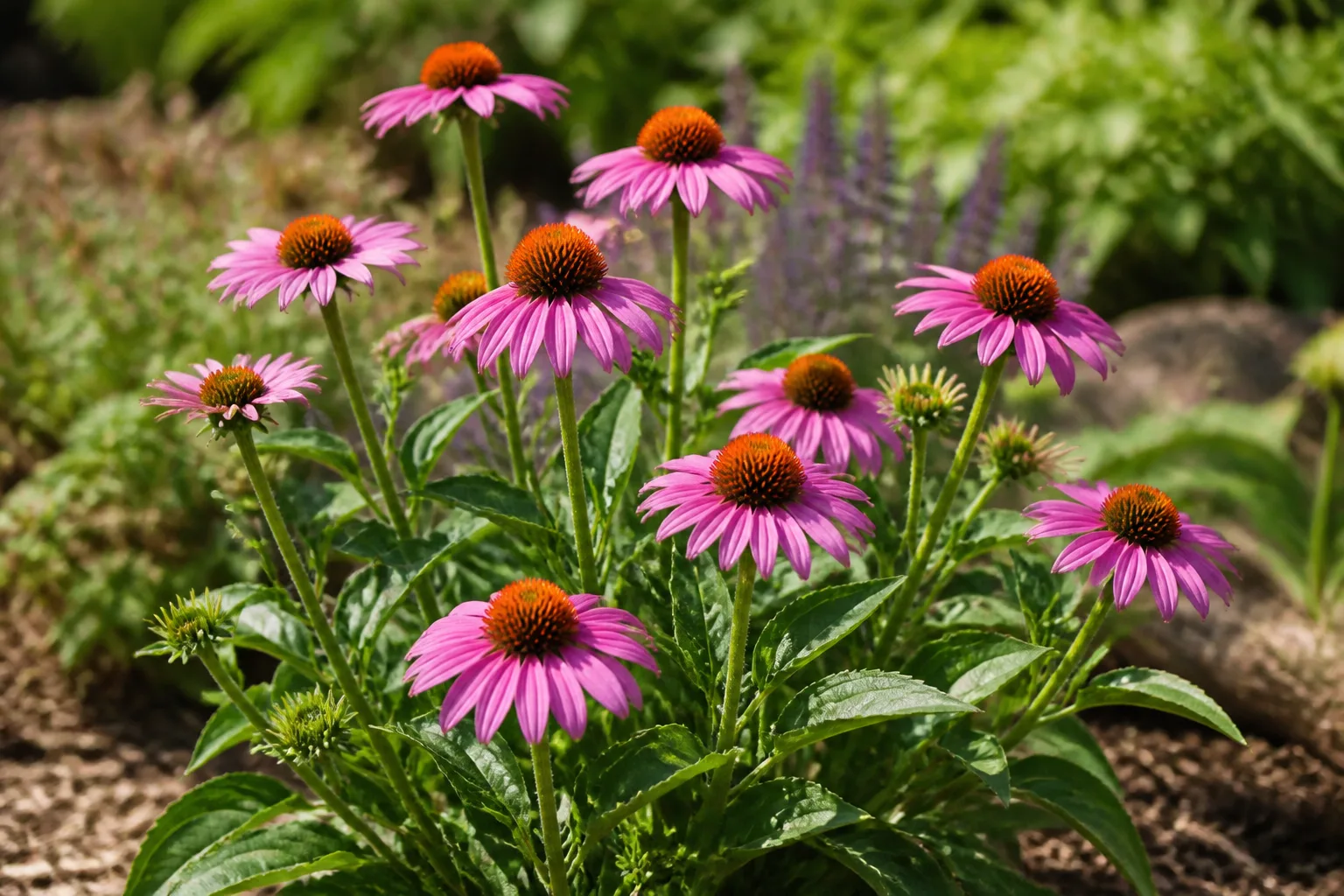
- Coneflower (Echinacea) — Coneflowers are sturdy summer perennials with daisy-like flowers and raised central cones that persist into fall. They suit sunny, well-drained beds and support pollinators; seed heads also attract birds. Young shoots or flowers may still be sampled in a heavily browsed garden, so protect new plants until they establish and watch what happens locally.
-
Sneezeweed (Helenium autumnale) — Sneezeweed fills the late-summer and fall gap with warm-colored flowers on tall stems. It grows best in sun and soil that does not dry out completely. Pinching early in the season can make plants bushier and shorter; use supports if the site is windy or the cultivar grows tall.
-
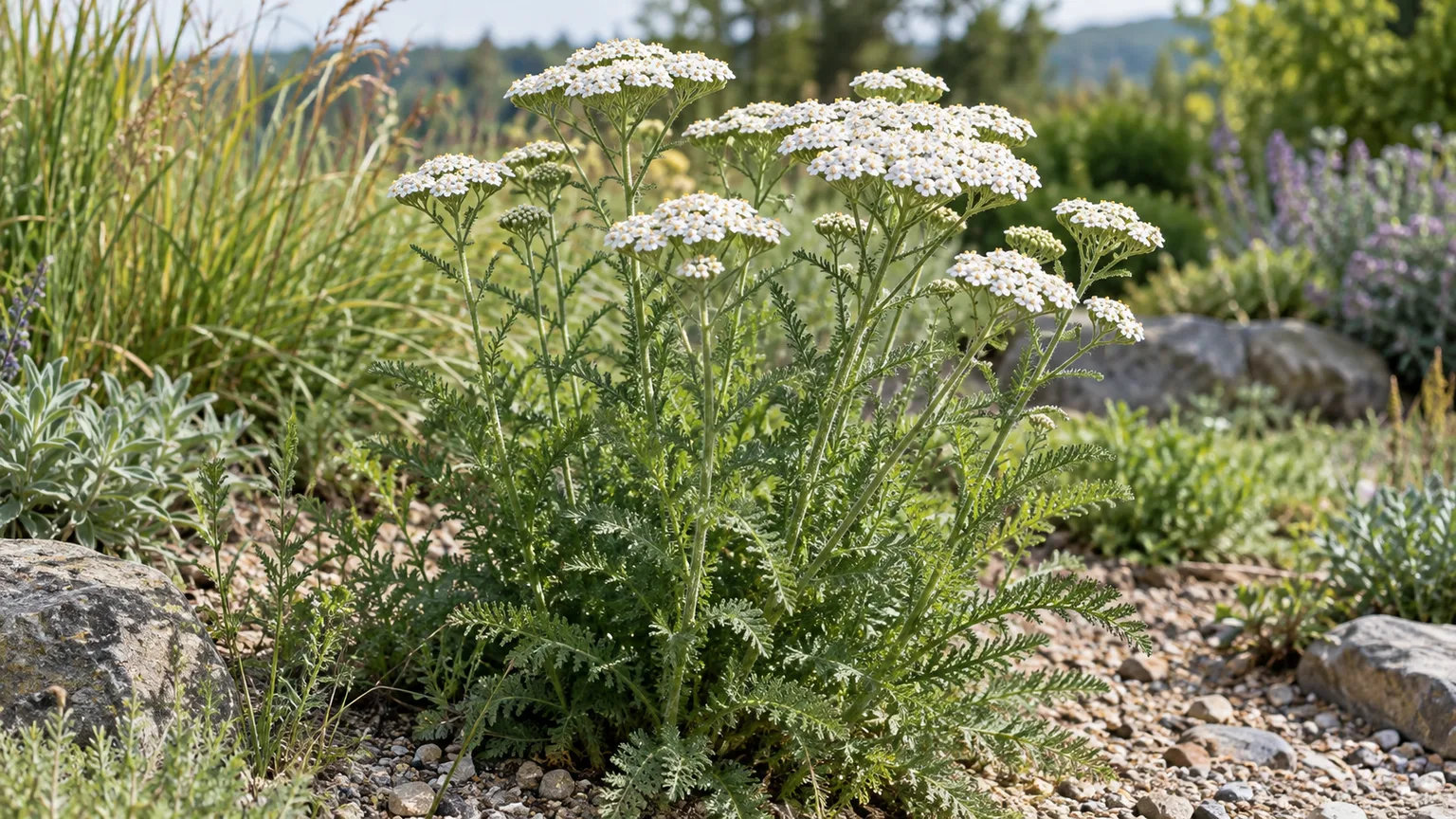
Yarrow (Achillea millefolium and hybrids) — Yarrow’s flat flower clusters and fernlike leaves suit sunny, dry borders and pollinator plantings. It tolerates poor soil and drought once established, but can spread by rhizomes and may flop in rich, wet ground. Choose a cultivar suited to your preferred color and leave space around it for expansion.
Arrange the 32 Plants Into a Garden That Works
Don’t plant all 32 together. Start with the conditions you have, then choose three to five plants that share the same moisture and light needs. Repeat each selection in small groups rather than making a single-specimen checkerboard; repeated drifts look intentional and let you see whether deer are actually avoiding the plants.
Dry, Sunny Border
For a sunny bed with quick-draining soil, combine lavender, Russian sage, lamb’s ear, basket-of-gold, yarrow, and bearded iris. Use the silver plants as a visual thread, then add coneflower or coreopsis for longer summer color. Keep the thirsty plants out of this mix: bee balm and moisture-loving meadow rue will need a different bed or regular irrigation.
Shady Woodland Edge
In part shade with richer soil, start with lungwort, brunnera, columbine, and bleeding hearts. Add Dutchman’s breeches or Jack-in-the-pulpit where spring ephemerals can disappear without leaving an obvious hole. If the site stays damp, Rodgersia can supply a larger backdrop, but leave it enough space to show its leaves.
Color From Spring Into Fall
Build a succession rather than asking one plant to flower all season. Daffodils and bleeding hearts open the spring; columbine, iris, and peony follow; catmint, salvia, coneflower, and tickseed carry summer; bee balm, sneezeweed, and yarrow can extend color toward fall. Check bloom timing in your climate and choose cultivars that overlap rather than leaving a bare month between waves.
Planting a variety of foliage, flower shapes, and bloom times also keeps the border useful to pollinators. Better Homes & Gardens’ perennial guide gives separate sun and soil conditions for its choices, a useful reminder to match the list to your exposure and drainage. It includes plants for both sunny and shaded sites. (Better Homes & Gardens: deer-resistant perennials)
What to Do When Deer Browse a “Resistant” Plant
First, identify whether the damage is a one-time sample or a repeated route through the bed. A few clipped tips on a new plant call for monitoring and temporary protection; repeated browsing of new growth means plant choice alone is not enough. Look at the height and pattern of damage, check for tracks or droppings, and note which plants remain untouched nearby.
Next, protect the plant that matters. A small cage can shield an individual perennial while it establishes. For a bed that loses new growth repeatedly, use a barrier designed for local deer pressure; plant lists and scent-based tricks cannot make access impossible. If you test a commercial repellent, select one labeled for the site and plants involved and follow its directions, including any reapplication interval.
Finally, update your own shortlist. Write down the species and cultivar that were browsed, the time of year, and whether the plant was newly installed. Local observations are more valuable than a general list after a few seasons. Replace repeatedly damaged favorites with alternatives that have performed well nearby, and reserve vulnerable plants for protected beds or containers.
A Note on Toxic Plants and Pets
Some plants deer avoid because they are toxic or otherwise unpalatable. That does not make them a safe repellent strategy: pets, livestock, and children can encounter a plant differently from deer. All parts of foxglove are poisonous if swallowed, so avoid planting it where children or pets play. Poison Control recommends calling a poison center if someone may have eaten it; the ASPCA lists foxglove as toxic to dogs, cats, and horses and advises contacting a veterinarian after a suspected pet ingestion. (Poison Control: Foxglove; ASPCA Animal Poison Control: Foxglove)
Apply the same caution before growing any unfamiliar ornamental near a play area or grazing animal. Verify the plant’s botanical identity, not just its common name, and check a reliable poison-control or extension reference. If safety is a concern, prioritize aromatic or textured options and physical barriers rather than plants chosen for toxicity.
Conclusion
Choose deer-resistant perennials by matching their light, drainage, and moisture needs to your garden, then use aroma and foliage texture to lower the chance of browsing. The list gives you options for sunny dry beds, woodland shade, spring bulbs, and long-season color, but no plant label can promise untouched growth. Where deer pressure is high, protect new plants and use a physical barrier for reliable exclusion.



