Daisy Care Guide: Grow English Daisy (Bellis perennis)
Bellis perennis
Learn how to grow English daisy (Bellis perennis): cool-season light, moist soil, watering, container care, summer heat, and seed spread.
English Daisy Care Guide
Start with wateringThe most common care mistake for DaisyWatering guide →Daisy care essentials
Light
Full sun to partial shade; afternoon shade helps in hot-summer locations
Water
Keep the root zone evenly moist during active growth, but let excess water drain freely. English daisy is not drought tolerant; check the soil during dry weather and water when the upper layer begins to dry. In hot weather, a plant may be declining from heat rather than asking for extra water, so check the soil before watering again.
Soil
Use cool, moisture-retentive but well-drained soil. English daisy grows in several soil textures; a moderately fertile loam with organic matter is a practical choice. Avoid both persistently waterlogged ground and a mix that dries completely between checks.
Humidity
Temperature
Fertilizer
About Daisy
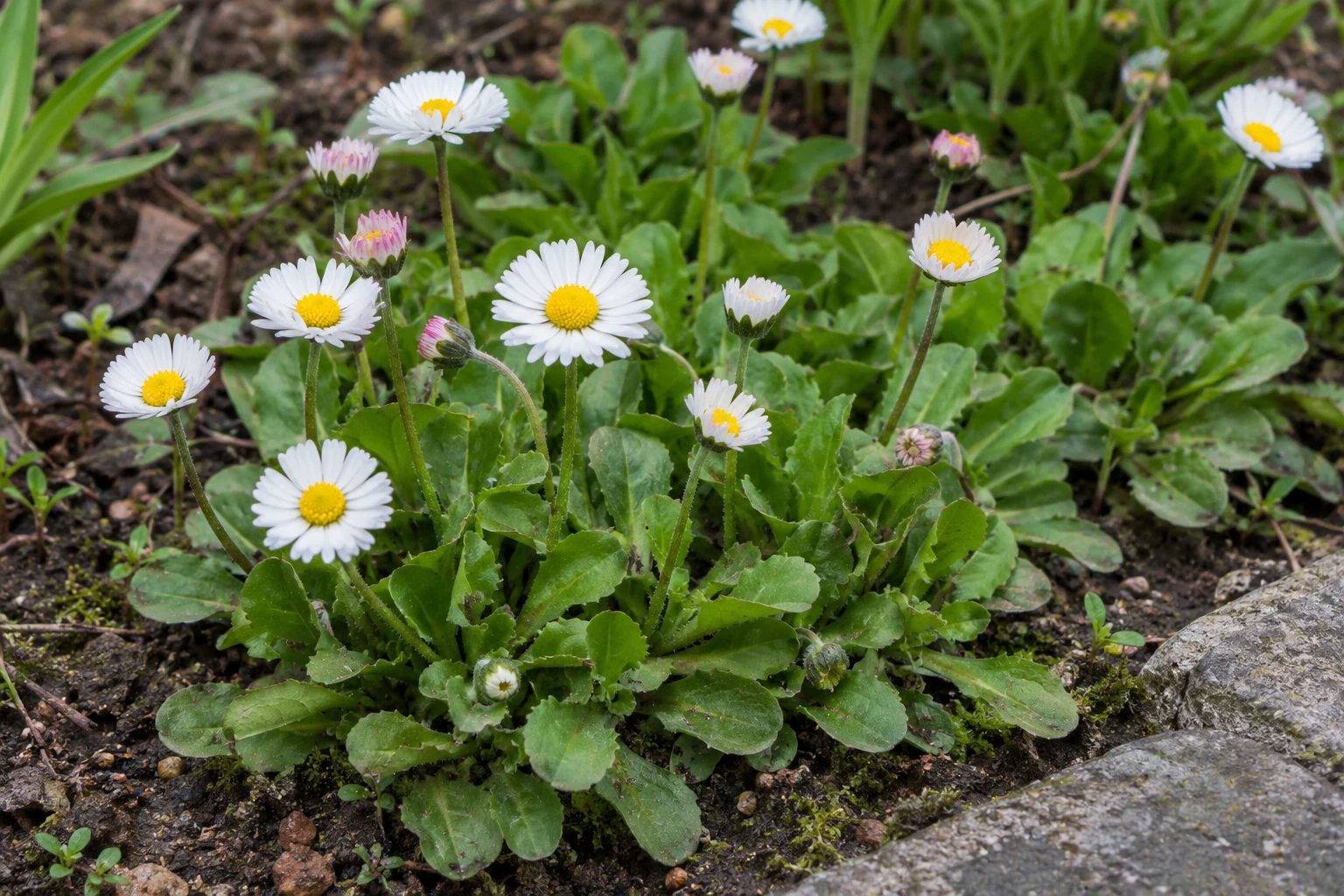
Daisy is native to Europe, typically reaches 3–6 in (8–15 cm) tall and 3–9 in (8–23 cm) wide; named cultivars vary indoors, with slow to establish, then capable of spreading quickly where conditions suit it growth. Daisy has a low, rosette forming herbaceous perennial; often grown as a seasonal annual or biennial in hot summer climates growth habit and part of the Asteraceae family. It is also known as English Daisy, Common Daisy, Lawn Daisy, and European Daisy.
| Detail | Information |
|---|---|
| Also known as | English Daisy, Common Daisy, Lawn Daisy, European Daisy |
| Native region | Europe |
| Mature size | 3–6 in (8–15 cm) tall and 3–9 in (8–23 cm) wide; named cultivars vary |
| Growth rate | Slow to establish, then capable of spreading quickly where conditions suit it |
| Growth habit | Low, Rosette Forming Herbaceous Perennial; Often Grown As A Seasonal Annual Or Biennial In Hot Summer Climates |
| Scientific name | Bellis perennis |
| Family | Asteraceae |
How to care for Daisy?
How much light does Daisy need?
Full sun to partial shade; afternoon shade helps in hot-summer locations. Full sun in cool conditions. Partial shade. Light afternoon shade. direct sun
- Full sun to partial shade; afternoon shade helps in hot-summer locations - Full sun to partial shade; afternoon shade helps in hot-summer locations.
- Full sun in cool conditions - Full sun in cool conditions.
- Partial shade - Partial shade.
- Light afternoon shade - Light afternoon shade.
- direct sun - direct sun.
When should you water Daisy?
Keep the root zone evenly moist during active growth, but let excess water drain freely. English daisy is not drought tolerant; check the soil during dry weather and water when the upper layer begins to dry. In hot weather, a plant may be declining from heat rather than asking for extra water, so check the soil before watering again.
- Feel the soil about 1–2 in (2.5–5 cm) below the surface. Water the root zone when that layer is drying - English daisy is not drought tolerant; check the soil during dry weather and water when the upper layer begins to dry.
- then allow the pot or bed to drain - Keep the root zone evenly moist during active growth, but let excess water drain freely.
- Drain excess water - Keep the root zone evenly moist during active growth, but let excess water drain freely.
What soil works best for Daisy?
Use cool, moisture-retentive but well-drained soil. English daisy grows in several soil textures; a moderately fertile loam with organic matter is a practical choice. Avoid both persistently waterlogged ground and a mix that dries completely between checks.
- For containers
- choose a quality potting mix that holds some moisture but drains freely - Use cool, moisture-retentive but well-drained soil.
- Use a container with open drainage holes and empty the saucer after watering. - Use cool, moisture-retentive but well-drained soil.
Grower notes for Daisy
Check the botanical name on the plant label
This hub covers English daisy, Bellis perennis, also called common or lawn daisy. The word daisy is used for many unrelated garden plants, including Shasta daisy, Gerbera daisy, and mums. Confirm the scientific name before applying this profile to another plant.
Plan for a cool-season display
Bellis perennis flowers best when conditions are cool and moist. It can flower from spring into summer in mild climates, but NC State Extension notes that it declines in summer heat. In a hot-summer region, grow it for the cool season and expect it to behave like seasonal bedding rather than a permanent flowering perennial.
Keep moisture steady without waterlogging the crown
English daisy is not drought tolerant, so check the root zone during dry weather. Keep the soil moist, not stagnant; containers need drainage holes and may dry faster than beds. Use the soil check, not a rigid weekly schedule, to decide when to water.
Give it sun, then protect it from harsh afternoon heat
Full sun to partial shade suits the plant, and RHS lists both exposures for Bellis cultivars. Where spring afternoons become hot, partial shade can help preserve the display. Deep shade is a poor choice for a compact flowering plant.
Manage seedlings before they spread
English daisies can self-seed and may escape into lawns or nearby beds. Check local extension guidance before planting where it may spread beyond the garden. Remove fading flower heads before seed ripens if you want to limit volunteers, or grow the plant in a container where local rules allow.
Treat pet safety as unresolved for this species
NC State Extension records poison characteristics for Bellis perennis in humans. ASPCA's page titled Daisy identifies Chrysanthemum species, not Bellis perennis, so it does not establish the English daisy's pet status. Prevent chewing and ask a veterinarian about any ingestion.
Is English daisy safe for pets?
Pet safety for Bellis perennis was not confirmed in the sources reviewed. NC State Extension reports poison characteristics for people, while ASPCA's common-name Daisy page identifies Chrysanthemum species rather than Bellis perennis. Do not treat that ASPCA listing as a classification for English daisy. Prevent pets from chewing it and contact a veterinarian if ingestion occurs.
Keep Bellis perennis distinct from mums and other plants sold as daisy. The ASPCA Daisy entry names Chrysanthemum species, not Bellis perennis, and cannot be transferred to this plant. Pet toxicity remains unverified in this review; prevent chewing and seek veterinary advice after exposure. Do not eat this plant based on its common name: NC State Extension records poison characteristics in humans.
Watering Daisy
For Daisy, feel the soil about 1–2 in (2.5–5 cm) below the surface. Water the root zone when that layer is drying, then allow the pot or bed to drain. and water water according to rainfall, temperature, and the container's drying rate rather than a fixed calendar. Garden beds need a drink when the soil begins drying in the upper 1–2 in (2.5–5 cm); pots usually need more frequent checks. Cool, rainy spring weather may provide most of the moisture needed. Check beds and containers more often during dry spells, then reduce watering when cool growth slows. Do not try to overcome summer heat decline by keeping the soil saturated.
| Detail | Information |
|---|---|
| How often | Water according to rainfall, temperature, and the container's drying rate rather than a fixed calendar. Garden beds need a drink when the soil begins drying in the upper 1–2 in (2.5–5 cm); pots usually need more frequent checks. |
| How to check | Feel the soil about 1–2 in (2.5–5 cm) below the surface. Water the root zone when that layer is drying, then allow the pot or bed to drain. |
| Seasonal changes | Cool, rainy spring weather may provide most of the moisture needed. Check beds and containers more often during dry spells, then reduce watering when cool growth slows. Do not try to overcome summer heat decline by keeping the soil saturated. |
Signs of overwatering
- Soil stays saturated or water stands around the crown after rain or watering.
- The container drains slowly or has no open drainage holes.
Signs of underwatering
- The root zone is dry and leaves lose firmness during a dry spell.
- Plants in containers dry much faster than nearby garden beds.
Soil & potting for Daisy
Use a mix of For containers, choose a quality potting mix that holds some moisture but drains freely., Use a container with open drainage holes and empty the saucer after watering. for Daisy. Moist, fertile soil with reliable drainage. Target soil pH around Tolerates a broad soil pH range; adjust only if a soil test shows a specific need. Repot repot or divide only when a container clump becomes crowded or its roots fill the pot. English daisy is often treated as seasonal bedding, so routine annual repotting is unnecessary., ideally in early spring, or after flowering when dividing an established clump.
| Detail | Information |
|---|---|
| Recommended mix | For containers, choose a quality potting mix that holds some moisture but drains freely., Use a container with open drainage holes and empty the saucer after watering. |
| Drainage | Moist, fertile soil with reliable drainage |
| Soil pH | Tolerates a broad soil pH range; adjust only if a soil test shows a specific need |
| Repotting frequency | Repot or divide only when a container clump becomes crowded or its roots fill the pot. English daisy is often treated as seasonal bedding, so routine annual repotting is unnecessary. |
| Best season to repot | Early spring, or after flowering when dividing an established clump |
Signs it needs repotting
- Roots fill the container or emerge through its drainage holes.
- A crowded clump has little room for new rosette growth.
- The pot dries unusually quickly despite thorough watering.