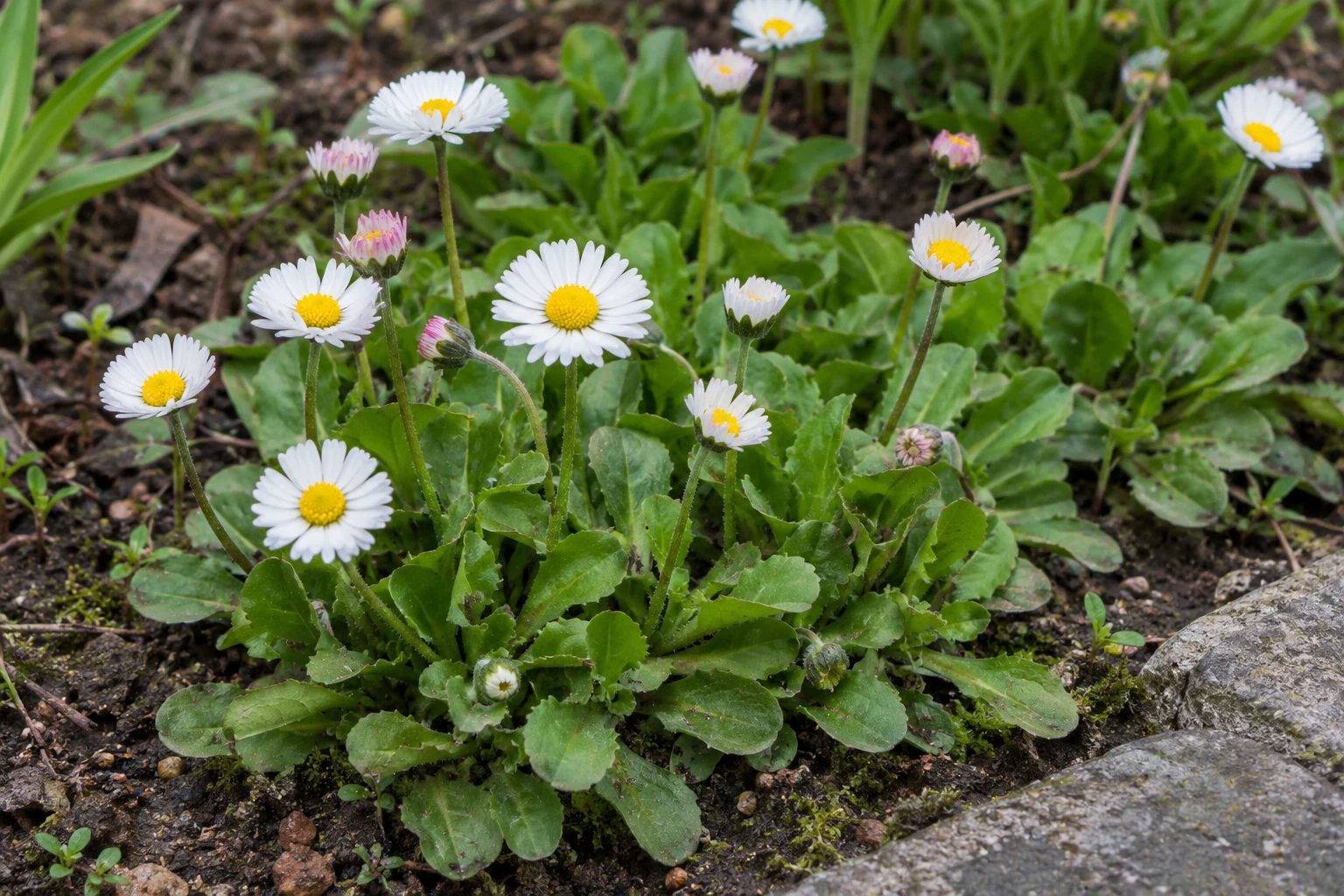
It covers English daisy, Bellis perennis, also known as common or lawn daisy. The name daisy is also used for many other species; check the scientific name before using this care advice for mums, Gerbera daisies, or Shasta daisies.
Is English daisy an annual or a perennial?
Bellis perennis is a herbaceous perennial, but summer heat can shorten its display. In hot-summer climates it is often grown as cool-season bedding and may behave like an annual or biennial in cultivation.
How much sun does Bellis perennis need?
Grow it in full sun or partial shade. In a warm spring climate, afternoon shade can reduce heat stress and help the flowers last longer.
How often should I water English daisy?
Keep the soil moist but well drained. Check the upper 1–2 inches and water when that layer begins to dry, with more frequent checks for containers during dry weather.
Is English daisy toxic to pets?
Pet safety for Bellis perennis was not confirmed in this review. ASPCA’s Daisy page names Chrysanthemum species, which is a different plant. Keep pets from chewing English daisy and contact a veterinarian if they eat it.
What light does Daisy need?
Daisy grows best in full sun to partial shade; afternoon shade helps in hot-summer locations. It also tolerates Full sun in cool conditions, Partial shade, Light afternoon shade. Avoid prolonged intense summer heat and deep shade.
How do I propagate Daisy?
Propagate Daisy from healthy stem or root divisions during active growth.
Written by Sai AnanthLead content writer at LeafyPixels. B.Pharmacy graduate from Andhra University with a background in pharmacognosy, turned indoor gardening writer after a long-time plant hobby became a research-led resource for home growers.View Sai Ananth's profile · Reviewed by LeafyPixels Review Board
This Daisy problems problem guide was researched and written by Sai AnanthLead content writer at LeafyPixels. B.Pharmacy graduate from Andhra University with a background in pharmacognosy, turned indoor gardening writer after a long-time plant hobby became a research-led resource for home growers.View Sai Ananth's profile. Problems symptoms on Daisy, lookalike causes, and step-by-step fixes are cross-checked against extension pest, disease, and care references before publication.
We prioritize sources that hold up under scrutiny:
University cooperative extension bulletins and fact sheets (Penn State, Clemson, UMD, NC State, and similar programs)
Botanical garden and horticultural society publications
Peer-reviewed plant science and veterinary toxicology references where pet safety matters (including ASPCA Animal Poison Control)
Established reference works on indoor plant culture
The LeafyPixels editorial team then reviews the draft for clarity, step-by-step usefulness, and fit with real apartment and home conditions-not ideal greenhouse setups. When guidance changes materially, we update the page and note the revision date.
Gardening Channel — How to Grow Common Daisy Flowers (n.d.) English daisy identity, exposed seed sowing, moisture checks, transplant care, and practical management of vigorous volunteers. [Online]. Available at: https://www.gardeningchannel.com/grow-common-english-daisy-bellis-perennis/ (Accessed: 1 March 2024).
NC State Extension Plant Toolbox — English Daisy (n.d.) Scientific identity, Asteraceae family, European origin, rosette habit, mature size, light, cool moist soil, summer heat response, naturalizing, growth habit, and human poison characteristics. [Online]. Available at: https://plants.ces.ncsu.edu/plants/bellis-perennis/ (Accessed: 1 March 2024).
Royal Horticultural Society — Bellis perennis Bellissima Series (n.d.) Bellis perennial habit, rosette foliage, cultivar size, spring flowers, full sun or partial shade, moderately fertile well-drained soil, and division timing. [Online]. Available at: https://www.rhs.org.uk/plants/322236/bellis-perennis-bellissima-series/details (Accessed: 1 March 2024).
The Spruce — How to Grow and Care for English Daisy, by Jamie McIntosh (n.d.) Cool-season care, light and afternoon shade, regular moisture, container drainage, heat response, surface-sown seed, and local-spread caution. [Online]. Available at: https://www.thespruce.com/english-daisy-plant-overview-4767251 (Accessed: 1 March 2024).