Should You Deadhead Daisies? When and How to Do It
Should you deadhead daisies? Learn when it helps rebloom or limits seedlings, where to cut different daisy types, and when to leave flowers for seed.
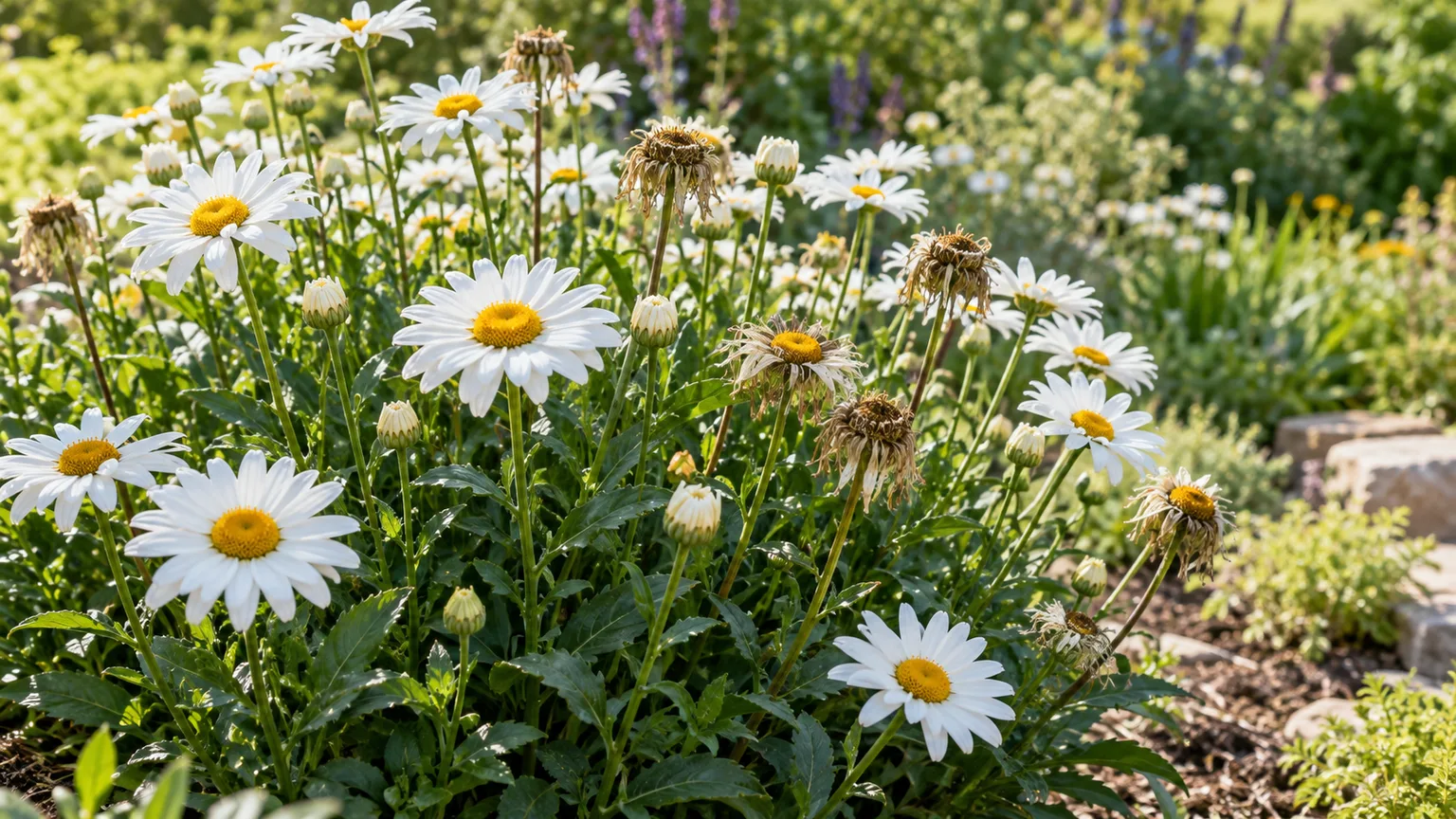
Most daisies are worth deadheading when you want a tidier plant, fewer volunteer seedlings, or a chance at more flowers. But “daisy” covers plants with different growth habits and bloom cycles, so there is no universal rule to cut every faded flower to the same height—or to remove every last head before fall.
The useful first question is not simply whether deadheading is good. It is what kind of daisy you have, whether fresh buds are still forming, and whether you want another flush, saved seed, or a little less garden maintenance.
A small cut above the right leaf joint can keep a branching Shasta daisy flowering; on a Gerbera, the whole individual stalk often comes out from the basal foliage. A final flowerhead may be better left in place if you want seedlings or seed for wildlife.
The Short Answer: Deadhead Selectively
Yes, deadhead a daisy if removing its faded blooms will improve the display, stop unwanted self-sowing, or support a repeat-blooming variety while it still has time to flower. Start when petals lose color, curl, or droop; follow the stalk down and cut just above a healthy side shoot or leaf joint. For a flower stalk with no useful growth point, remove that stalk close to the foliage without nicking the crown.
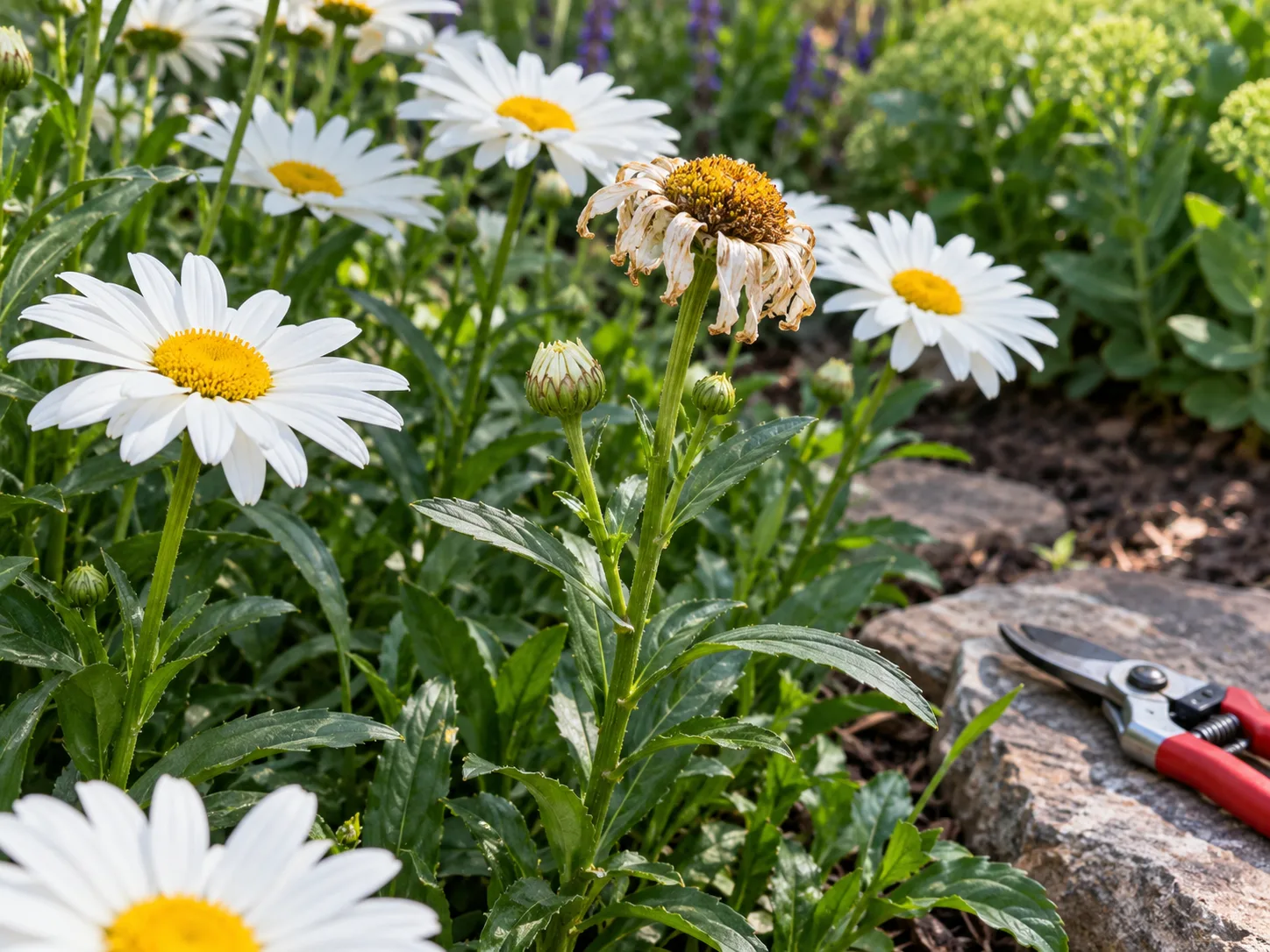
You can also skip the task. A healthy daisy will not collapse because you leave a few spent heads, and deadheading does not force every cultivar to bloom again.
It is a choice with several possible benefits, not a requirement for keeping daisies alive. The University of Illinois Extension profile for Shasta daisy says deadheading can prolong bloom, while NC State Extension identifies Shasta as a perennial that attracts bees, butterflies, and other insects; neither fact means every daisy responds identically or that all flowers should be removed all season (University of Illinois Extension; NC State Extension).
A practical rule is to deadhead in the middle of the bloom season when you see more buds coming, then become selective as flowering slows. Remove the brown heads that look untidy or are likely to seed where you do not want them. Leave some late flowers if you want seed, natural spread, or a less clipped garden.
Start With the Name on the Label
The word “daisy” describes a familiar flower shape, not one pruning habit. A Shasta daisy, English daisy, Gerbera, Marguerite, oxeye, and painted daisy can differ in height, lifespan, flowering season, and whether each stalk branches or rises alone from a low rosette. Even within Shasta daisies, compact and tall cultivars do not have identical architecture or timing.
If you still have the nursery tag, use its botanical name and cultivar to look up the plant’s normal bloom period and growth form. Without a tag, observe the base: do flower stalks emerge one at a time from a tight mound of leaves, or do they branch above the mound and carry several buds? That quick inspection is more useful than guessing from the flower color.
Daisy Forms Vary More Than Their Names Suggest
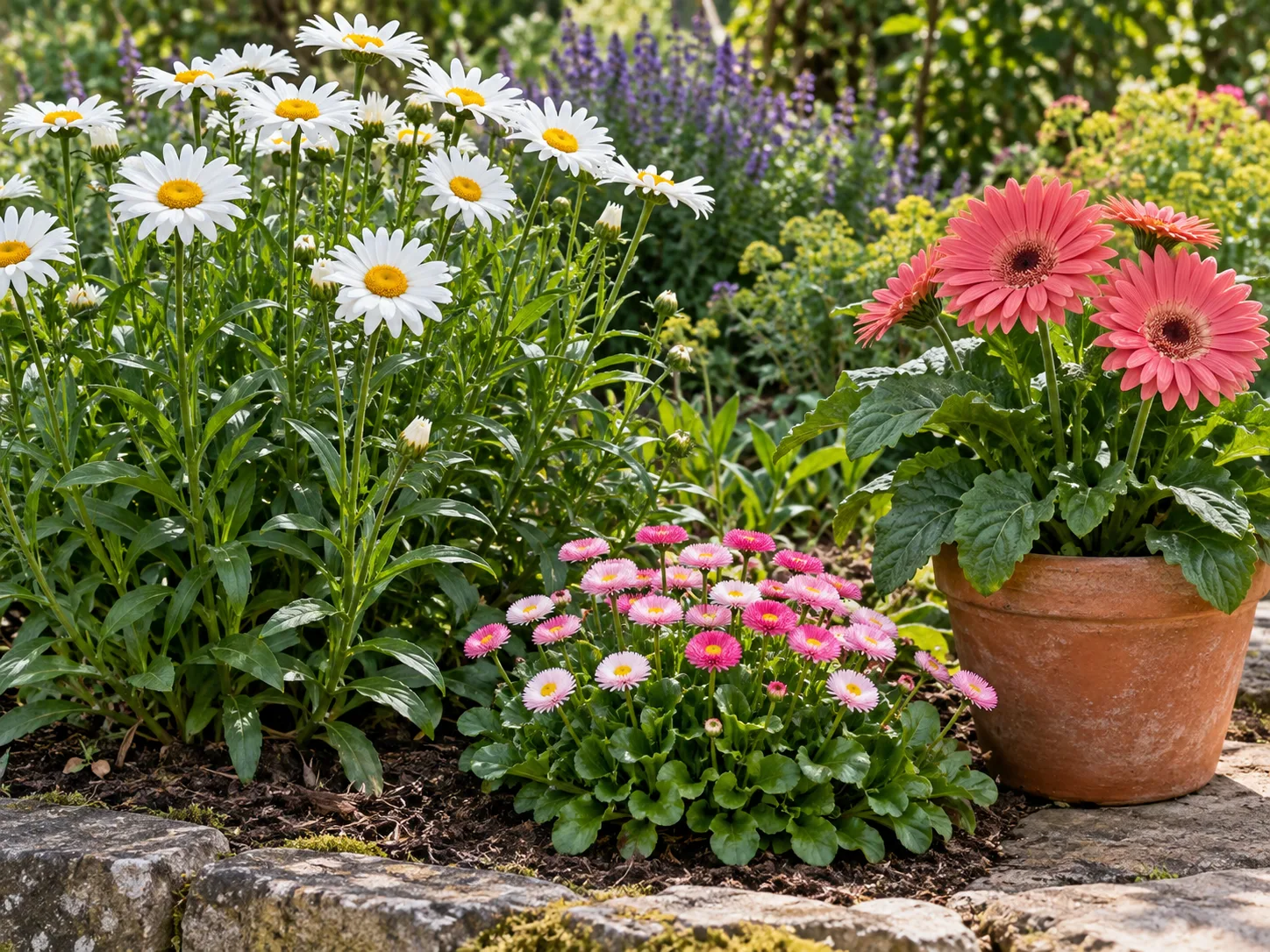
A daisy flowerhead is a cluster of small florets, but the visible stalk below it can be solitary, branched, or part of a cluster. Shasta daisies are clumping, herbaceous perennials; their main stems may carry a first flower and later side buds, so there can be more to save below a spent head. NC State Extension’s profile also lists many named Shasta cultivars with different mature sizes, which is a reminder to follow the plant in front of you rather than relying on a single height or pruning schedule (NC State Extension).
By contrast, Gerbera and English daisies often send separate flower stalks from foliage near the soil. The old bloom may have no side bud on that stalk, but another unopened stalk can be rising nearby. A few other daisy-like plants carry several smaller flowers along one stem, which means you may remove only the oldest bloom first and wait for the rest of the cluster to finish.
What Deadheading Can and Cannot Do
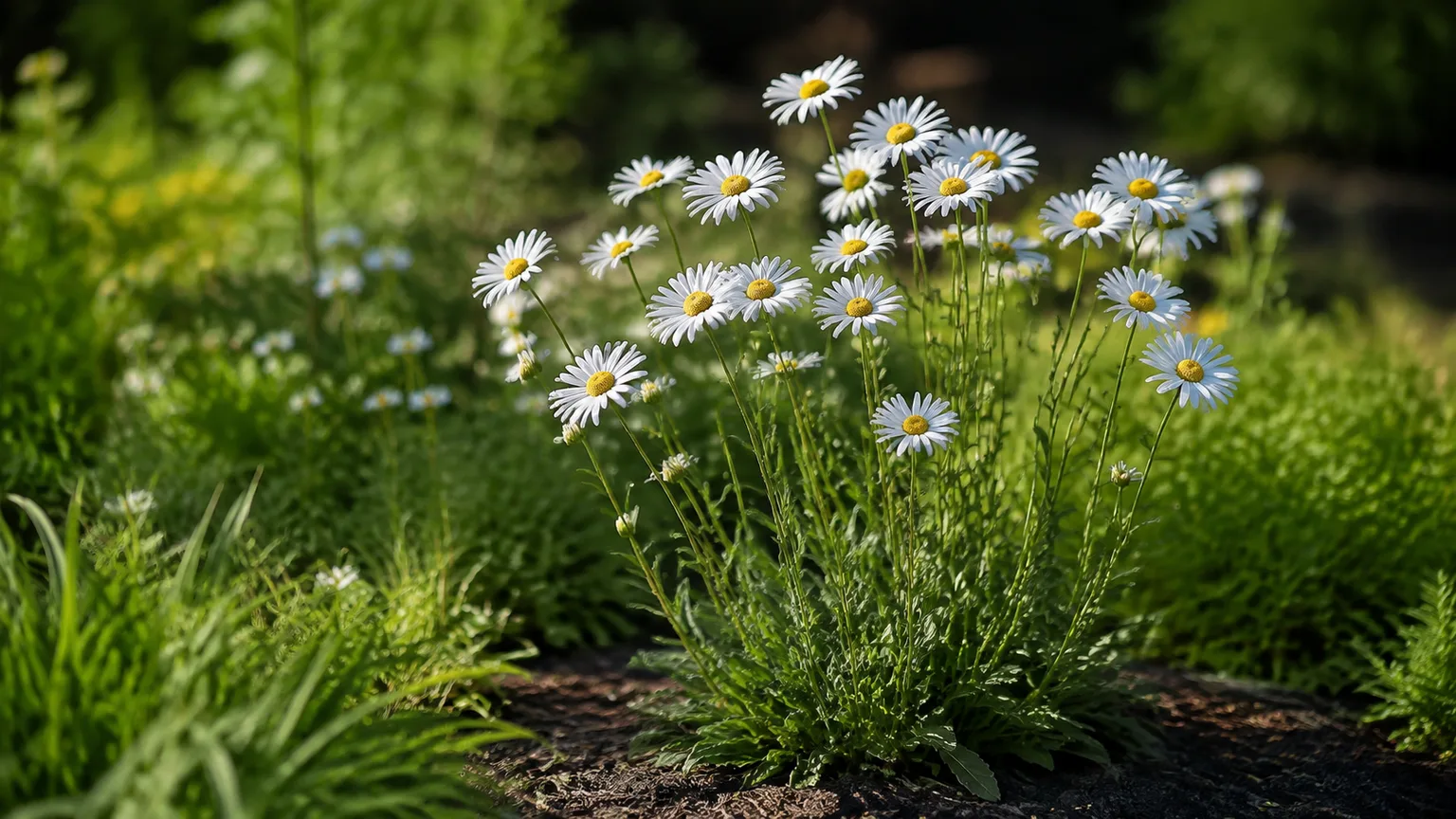
Deadheading removes a fading flower before it finishes making seed. On some repeat-blooming perennials, this can keep the plant producing more buds; on others, the main value is cleaner appearance or fewer seedlings.
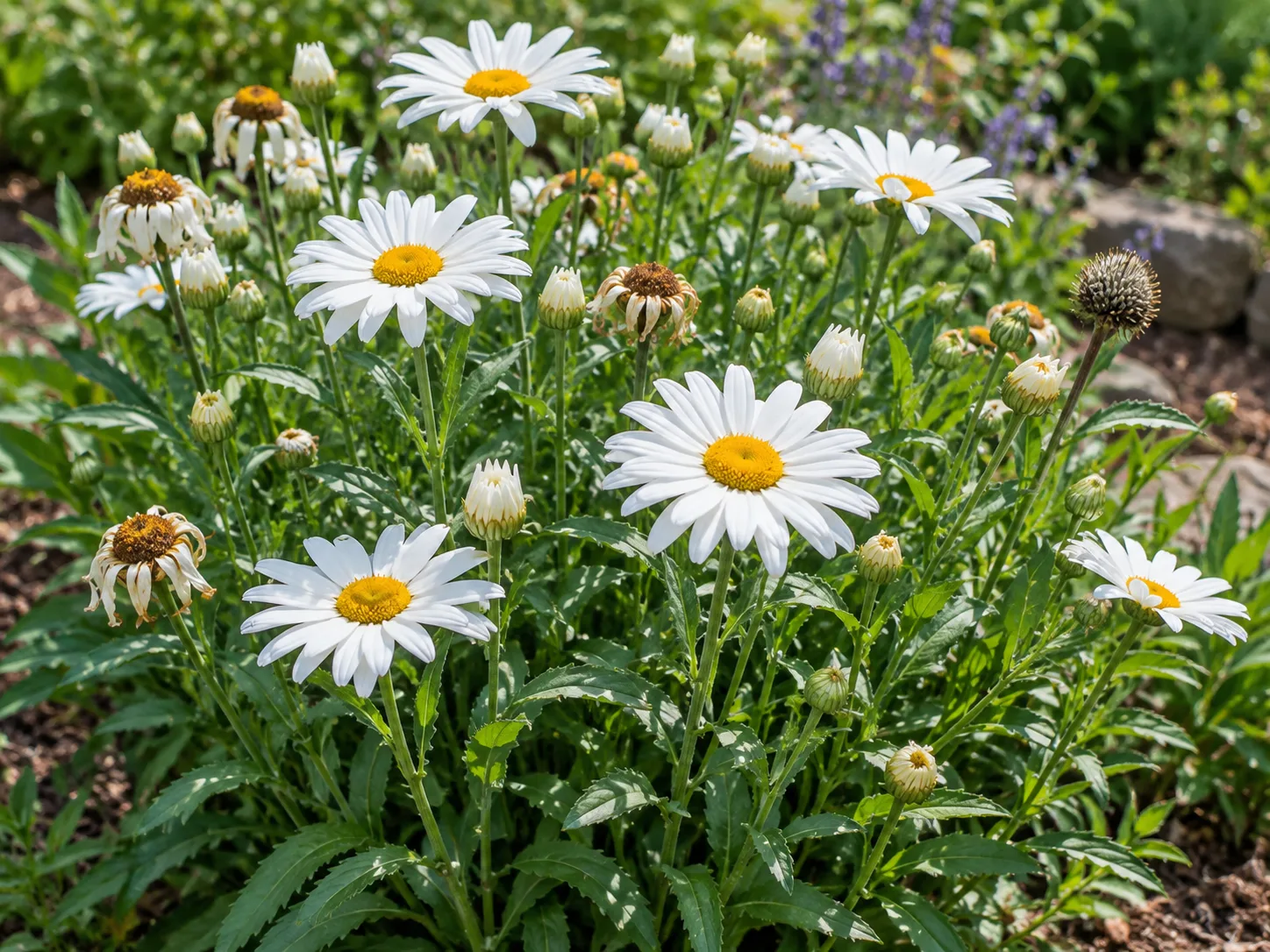
Garden Gate’s perennial guide marks Shasta daisy as a plant that can keep flowering when spent blooms are cut to side shoots, while also noting that some perennials do not rebloom after deadheading. Treat that as a plant-specific possibility, not a promise of a second flush on every daisy in every climate (Garden Gate).
Removing old heads can also reduce self-sowing. If seedlings are welcome, leave a portion of flowers to mature instead of cutting the entire clump clean. Hybrid cultivars may not produce seedlings that look exactly like the parent, so seed saving is most predictable when you know the plant and its pollination history.
Deadheading will not repair a plant that is struggling from shade, drought, poor drainage, root competition, or disease. It cannot make a one-time bloomer repeat, and cutting foliage for the sake of a bare-looking bed can remove the leaves a perennial still needs. If a daisy has stopped flowering, check its light, moisture, age, and cultivar before blaming missed snips.
It is also not a guaranteed pest or disease treatment. Removing collapsed, diseased flower material can improve cleanup, but routine deadheading does not substitute for identifying a problem, improving airflow, or disposing of infected debris appropriately. Keep the claim narrow: deadheading manages spent flowers and seed formation; it is not a cure-all.
When to Deadhead During the Growing Season
Begin when a meaningful number of flowers are fading and the plant has active buds or enough growing season left to use another flush. For a Shasta daisy in its main bloom period, check the clump about once a week, or more often after hot weather and rain make flowers collapse quickly. Remove only the blooms that are truly past their best; buds that are still tight and fresh flowers are not candidates for the shears.
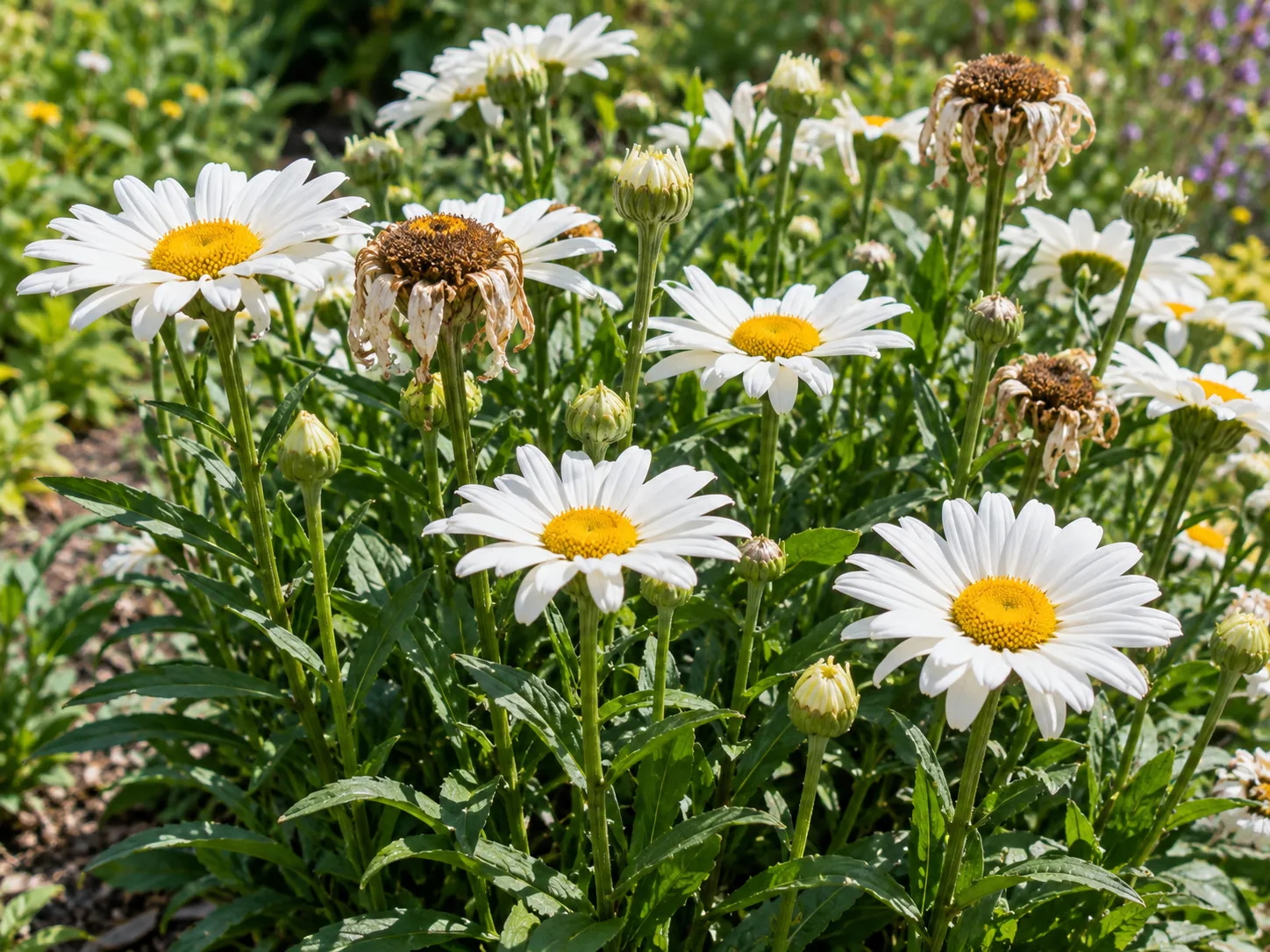
There is no need to inspect every daisy every morning. A weekly walk works for many beds, while plants with short-lived flowers or a formal display may need a quicker check every few days. The right interval is the one that lets you catch old heads without taking a large section of healthy stems and buds at once.
Read the Flower, Weather, and New Buds
A faded flower usually has petals that are papery, brown, curled, or dropping, and its center may be drying or swelling as seed develops. Look along the same stem before cutting. If a strong side bud remains below the old bloom, take the old head above that bud or above the leaf joint that supports the next shoot; do not shear across the top of the plant and remove both.
Rain and heat can change how quickly a clump looks worn. After a storm, a few heads may flatten even while the plant has many new buds; after a hot dry stretch, flowers may fade faster than usual. Adjust how often you inspect the bed, but do not use a calendar date as a reason to cut when the bloom is still attractive or the plant is under stress.
Late-season timing is a separate decision. When nights cool and new buds stop appearing, there may be little chance of another flush. At that point, leave heads if you want seed or winter structure, or remove only the ones that are messy or self-seeding in the wrong place.
How to Deadhead Without Cutting Too Much
Use clean, sharp bypass pruners for firm stems and fine snips for thin flower stalks. Follow one spent flower down to the first healthy growth point that makes sense for that plant: a side shoot, a pair of leaves, or the basal foliage. Make a small cut just above the node so the remaining stem is not a long stub, while keeping the bud and leaves intact.
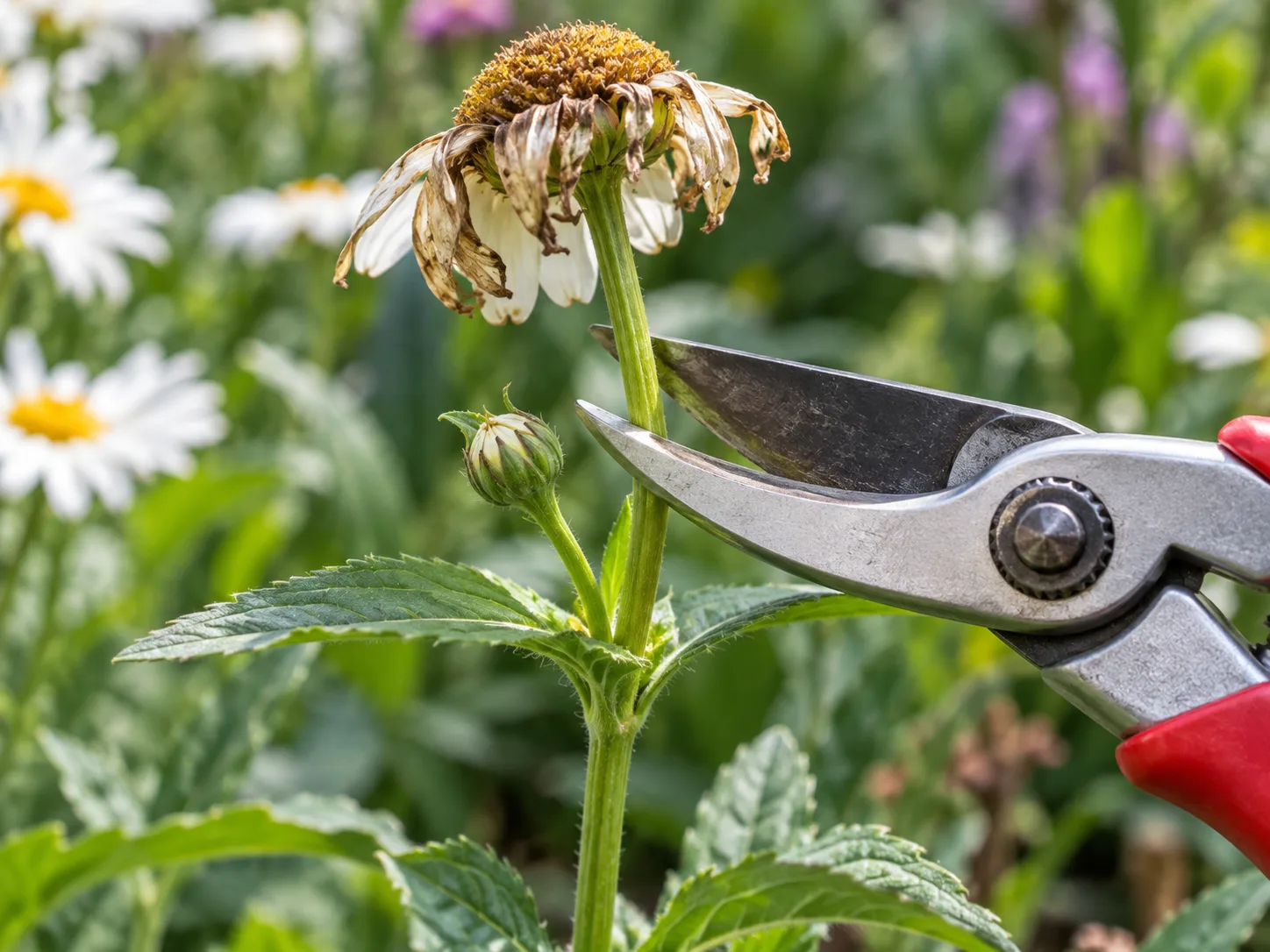
A useful sequence is simple: identify the old head, trace its own stalk with your eyes, check for buds and leaves, then cut. Before moving to the next stem, make sure you have not followed a neighboring bud by mistake; daisy clumps often have stems crossing one another. If the clump is dense, hold a stem gently aside and cut from the outside toward the center rather than grabbing and shearing the whole top.
Single Stalks From a Basal Rosette
When one flower grows on its own leafless or nearly leafless stalk from a low mound, remove that entire spent stalk. Follow it to where it emerges from the rosette and cut low enough to remove the empty stem, but high enough to avoid slicing into the crown or healthy leaves. Fresh flower stalks usually come from elsewhere in the same foliage mound, so you do not need to cut the whole plant to encourage those buds.
This is often the clean approach for Gerbera and English daisy types, though plants and cultivars vary. If the stalk has a healthy side bud or branch, preserve that instead of defaulting to a cut at the base. The visible plant structure should decide the cut, not a simplified “single-stem daisies always work this way” rule.
Branching Stems and Flower Clusters
On a branching stem, remove only the flower or side branch that has finished. Follow it downward to a leaf pair, side shoot, or healthy bud and cut just above that point. A short remaining branch with a live bud can continue flowering; cutting below it would remove that opportunity.
If the main stem has finished all its buds, cut the spent stem down to the next healthy branching point or to the foliage mound, depending on how the plant grows. Gardeners’ Path notes that Shasta and other daisy forms can differ: Shasta may have side buds, while some basal-rosette forms carry a single flower per stalk. Its general method—trace the fading stalk to a leaf, side branch, or basal mound—works because it leaves the decision tied to the plant’s structure (Gardeners’ Path).
Deadheading, Cutting Back, and Leaving Seedheads
Deadheading is a small, selective removal of finished flowers. Cutting back means taking down a larger portion of stems or the entire flowering stalk after its bloom cycle is over. Those jobs can happen at different times: you might deadhead individual Shasta flowers through summer, then remove the remaining spent stalks later while leaving the green basal leaves alone.
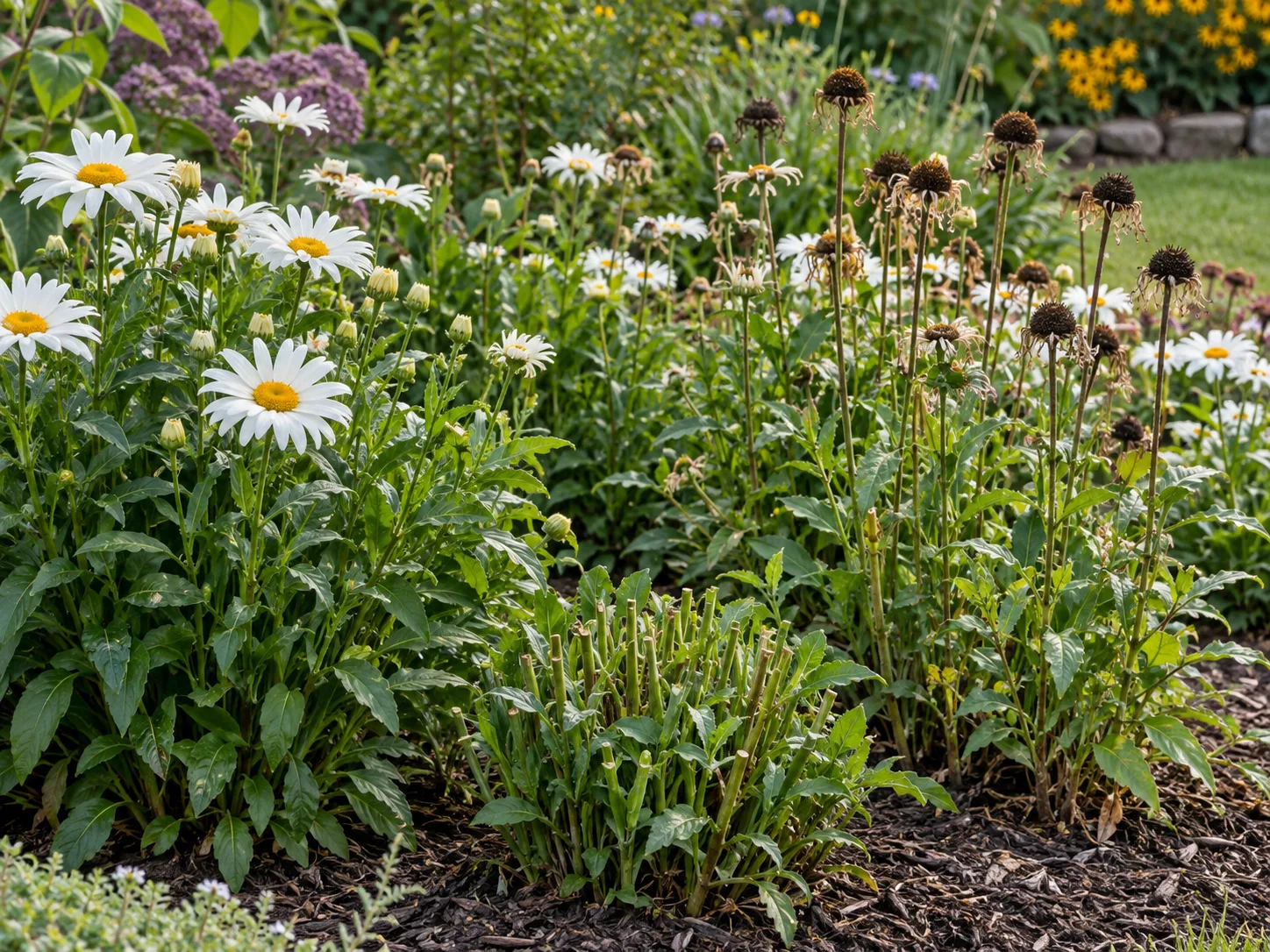
Do not treat “cut daisies back after flowering” as an instruction to mow every daisy clump to the soil as soon as the last petal drops. A full cut may be useful when all stems are finished and the plant is entering dormancy, but it can also remove healthy leaves, late buds, seed, and the shape of a plant that remains attractive. Some Shasta cultivars are semi-evergreen in mild conditions, so local winter behavior matters; remove damaged or diseased material while allowing healthy foliage to decline naturally unless the cultivar’s care guidance says otherwise.
Seedheads deserve their own choice. If you want daisies to self-sow, mark a few sturdy final stems and let the centers dry and mature; if you want a tidier bed or fewer seedlings, remove them before seed falls.
If you want to save seed, collect mature heads into a paper bag once they are dry, then label the plant and date. Seedlings from a hybrid or cross-pollinated flower may not match the parent.
Adjust the Cut for Common Daisy Types
The examples below are starting points. Check the cultivar label where possible, because bloom windows and the tendency to branch can change within the same common name. If you cannot identify the daisy, wait until the head fades and let the leaves and stalk pattern tell you where the next growth point sits.
Shasta and Other Branching Daisies
Shasta daisies (Leucanthemum × superbum) are the clearest case for selective deadheading when fresh side buds are still forming. Cut a finished flower just above the nearest healthy side shoot or leaf joint; when the entire stem has finished, remove that stalk down toward the clump without cutting into the crown. The University of Illinois Extension says deadheading can prolong Shasta bloom, and Garden Gate describes cutting the spent flower back to side shoots for a longer display (University of Illinois Extension; Garden Gate).
Marguerite daisies and some other branching forms may also carry multiple heads or side shoots, but their season and repeat-flowering response depend on variety and climate. Do not cut the entire stem while lower buds remain. For oxeye or painted daisies, inspect a stem individually: remove its spent stalk when it has finished, and leave selected flowers to seed if you want natural spread.
Gerbera, English, and Other Basal Daisies
Gerbera daisies often send individual flowering stems up from a basal clump. When a flower is done, trace that one stem down and remove it near the foliage, taking care not to injure the crown; there may be no useful node midway up the stalk. English daisies also form low foliage with separate flowers, but climate and cultivar can affect whether a plant behaves as a short-lived perennial, biennial, or self-seeder in a particular garden.
Some daisy-like plants produce many small blooms on one branched stem. With those, wait until the cluster or branch has mostly finished, then cut the spent portion back to a leaf or side branch. A one-size cut to the basal rosette would remove any fresh flowers lower on that stem, while pinching every tiny flower individually can create unnecessary work.
Pollinators, Seed, and the End of the Season
A live daisy bloom can be part of a pollinator planting: NC State Extension lists Shasta daisies as attracting butterflies, bees, and other insects. During the main season, you can keep a clump flowering while still leaving a few open blooms for visitors by removing only the faded heads and preserving buds. Deadheading every flower the moment it starts to fade is not the only way to maintain a useful pollinator bed (NC State Extension).
As the season ends, balance neatness with seed and habitat goals. Mature seedheads can support natural reseeding, and some perennial seeds are available to birds. Epic Gardening describes several perennial seedheads used by winter birds, though the value of a particular daisy depends on its seed and the wildlife in your region (Epic Gardening).
If you want to provision wildlife, leave a portion of mature heads and avoid a blanket fall cleanup across the entire bed. You can still remove moldy, broken, or unwanted heads and cut back the rest later.
If seedlings would be a nuisance, deadhead before the center dries and seeds disperse. If you are unsure, leave a small marked patch for a season and see whether seedlings appear where you can manage them. That gives you a low-risk way to learn the behavior of your specific cultivar rather than stripping every head based on a general rule.
Clean Tools and Safe Handling
For soft daisy stems, clean hand snips or small bypass pruners are enough; avoid crushing or tearing stalks with blunt blades. Brush off soil and plant residue, wash blades with soap and water when needed, and dry them before storage so they stay clean and do not rust. If you have been cutting visibly diseased tissue, clean the blades before moving to another plant and follow your local extension’s plant-disease sanitation guidance.
You do not need to disinfect tools between every healthy flower in an ordinary garden pass. Do make a habit of cleaning them after handling diseased material, and do not leave wet clippings trapped in the center of a dense clump. Gloves are optional for most people, but wear them if daisy-family plants irritate your skin; avoid touching your eyes and wash your hands after pruning.
Mistakes That Cause Extra Work or Lost Blooms
The most common mistake is cutting by flower color alone. A brown head may sit above a healthy side bud, and a green-looking head may already be done; trace the stalk and inspect the next node before choosing the cut. This small pause prevents you from removing unopened buds or leaving a long bare stem.
Another mistake is deadheading for a rebloom that the plant cannot produce. Some daisies flower in one main flush, some repeat under favorable conditions, and some keep opening side buds for weeks. If removing old flowers does not lead to another flush, that does not mean the cut was wrong; it may simply be the plant’s normal schedule or the end of its growing season.
Do not shear all daisies into one flat shape just because the clump looks messy. Shearing can remove buds, foliage, and seedheads together, and it may not improve the form of a plant with separate stalks. Remove only spent stems unless you have identified a cultivar and a post-flush cutback method that fits it.
Finally, do not automatically remove all green leaves along with old flowers. The job is to remove the spent flower stalk or finished branch, not to strip the living mound at the base. If the foliage is still green and healthy, leave it to support the perennial; tidy it separately when it naturally declines or when a plant-specific care guide calls for a seasonal cut.
Conclusion
Deadhead daisies when you want a cleaner display, fewer unwanted seedlings, or to help a variety that can keep flowering. Let the plant’s structure set the cut: above a live side shoot on a branching stem, or low on an individual stalk that rises from a basal rosette. Check the cultivar and leave fresh buds and healthy leaves in place.
You can stop when flowering slows, leave selected heads for seed or wildlife, and handle larger cutback as a separate seasonal task. If you are uncertain, remove only a few clearly spent flowers first; the way the plant responds will tell you whether more frequent deadheading is worth your time.



