26 Types of Daisies to Grow in Your Garden
Compare 26 daisy types—from Shasta and gerbera to coneflowers and asters—with zones, sun needs, invasive warnings, and care rules so you pick plants that actually thrive.
Walk into any nursery in May and you will see a wall of cheerful daisy flowers—white rays, yellow centers, sometimes neon gerbera hues that look more like candy than countryside. The problem is not finding a daisy. It is picking a daisy that still looks good in your soil, your winter, and your garden style six months from now. This guide walks through 26 daisy types gardeners actually grow, grouped by how they behave—not just how pretty the catalog photo is.
What Counts as a Daisy in the Garden
The common name daisy does not describe one species. It is a loose label for plants in the Asteraceae family (also called Compositae) whose flowers share a composite structure: tiny florets packed into a central disc, surrounded by petal-like ray florets. Sunflowers, zinnias, asters, chrysanthemums, and dandelions all belong here—which is why “daisy” can mean a tidy Shasta hybrid or a roadside oxeye that seeds into your lawn.
For garden planning, think in three buckets: hardy perennials that return in cold climates, tender perennials grown as annuals outside warm zones, and true annuals that complete their life in one season. Bloom shape alone will not tell you which bucket a plant falls into. Gerbera jamesonii looks like a classic daisy but behaves like a fussy houseplant north of zone 8. Rudbeckia hirta looks equally iconic and shrugs off drought once established in zone 3. Start with climate and drainage; let color be the reward.
How to Choose the Right Daisy for Your Space
Before you fall for a flat of osteospermum, run a quick site audit. Most daisy failures trace back to three mismatches: too much winter moisture, not enough sun, or choosing a spreader where you wanted a clumper.
Match Zone, Drainage, and Frost Before Flower Color
Pull your USDA Plant Hardiness Zone and note whether the planting spot holds water after rain. Shasta daisy (Leucanthemum × superbum) is hardy in zones 4–9 according to NC State Extension, but it is intolerant of winter wet—roots rot in heavy clay that freezes sodden. Gerbera daisies need warmth: the RHS advises keeping tender types above 5°C (41°F) and flowering best between 10–20°C (50–68°F).
If your yard is soggy, prioritize raised beds, grit amendment, or species that tolerate dry spells—coneflower, gloriosa daisy, damianita—rather than forcing Shasta into clay low spots.
Border, Cutting Garden, Meadow, or Container?
Border daisies need tidy habits or easy deadheading: Shasta cultivars like ‘Becky’, painted daisy, golden marguerite. Cutting-garden daisies need sturdy stems and long vase life: Shasta, gerbera, painted daisy, florist chrysanthemum. Meadow-style plantings can host oxeye (where legal), rudbeckia, and native asters—but check invasive lists first. Container daisies suit tender types: gerbera, marguerite, osteospermum, euryops, and swan river daisy trailing over pot rims.
Invasive and Weedy Daisies to Verify Locally
Several popular “daisies” are ecological headaches in parts of North America. Oxeye daisy (Leucanthemum vulgare) spreads by seed and rhizomes; multiple U.S. states list it as invasive or noxious. English daisy (Bellis perennis) self-sows aggressively in cool, moist lawns and is restricted in some western states. Even well-behaved garden daisies can escape if you let seedheads stand on gravel paths.
Before planting, search your state noxious-weed list and ask your county extension office—especially for wildflower mixes that hide oxeye seed. If you want the look without the risk, choose non-invasive Shasta cultivars or native black-eyed Susan instead of wild oxeye.
Classic Hardy Perennials: Shasta, Rudbeckia, Echinacea, and Kin
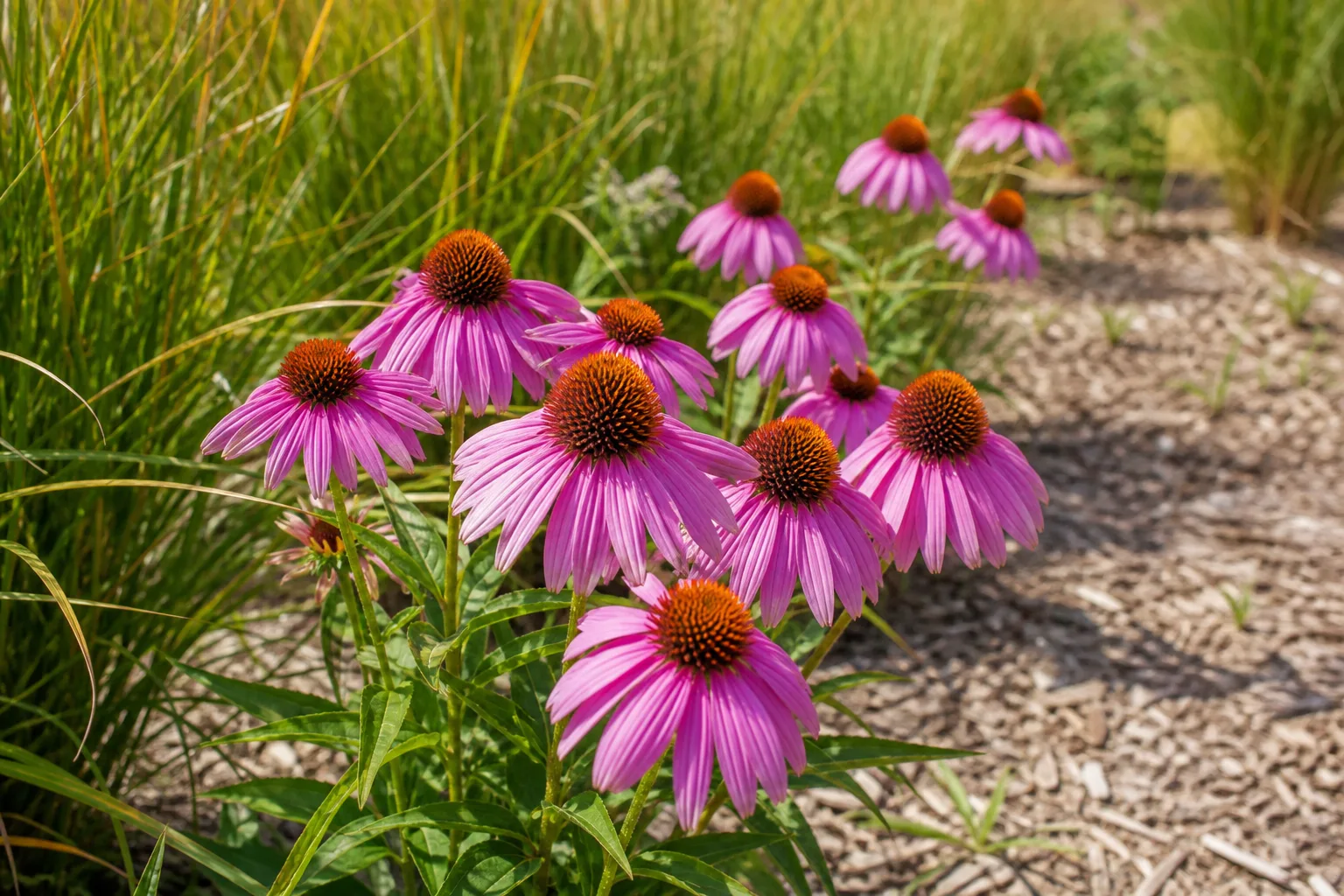
These are the backbone daisies for sunny perennial borders in zones 3–9—provided drainage is decent.
Shasta daisy (Leucanthemum × superbum) is a hybrid group bred from wild daisies, named for Mount Shasta’s snow-white peaks. Plants reach 1–4 feet with 2–3 inch white-and-gold blooms from June through August, sometimes longer with deadheading. NC State recommends dividing every 2–3 years in spring or fall to prevent overcrowding and loss after wet winters. Cultivar ‘Becky’ is prized for stiff stems and extended bloom.
Gloriosa daisy—the common name for black-eyed Susan (Rudbeckia hirta)—is a North American native with golden rays and a dark central cone. It blooms summer into fall, feeds pollinators, and reseeds politely in some gardens (aggressively in others). Heights run 2–3 feet; full sun to light shade.
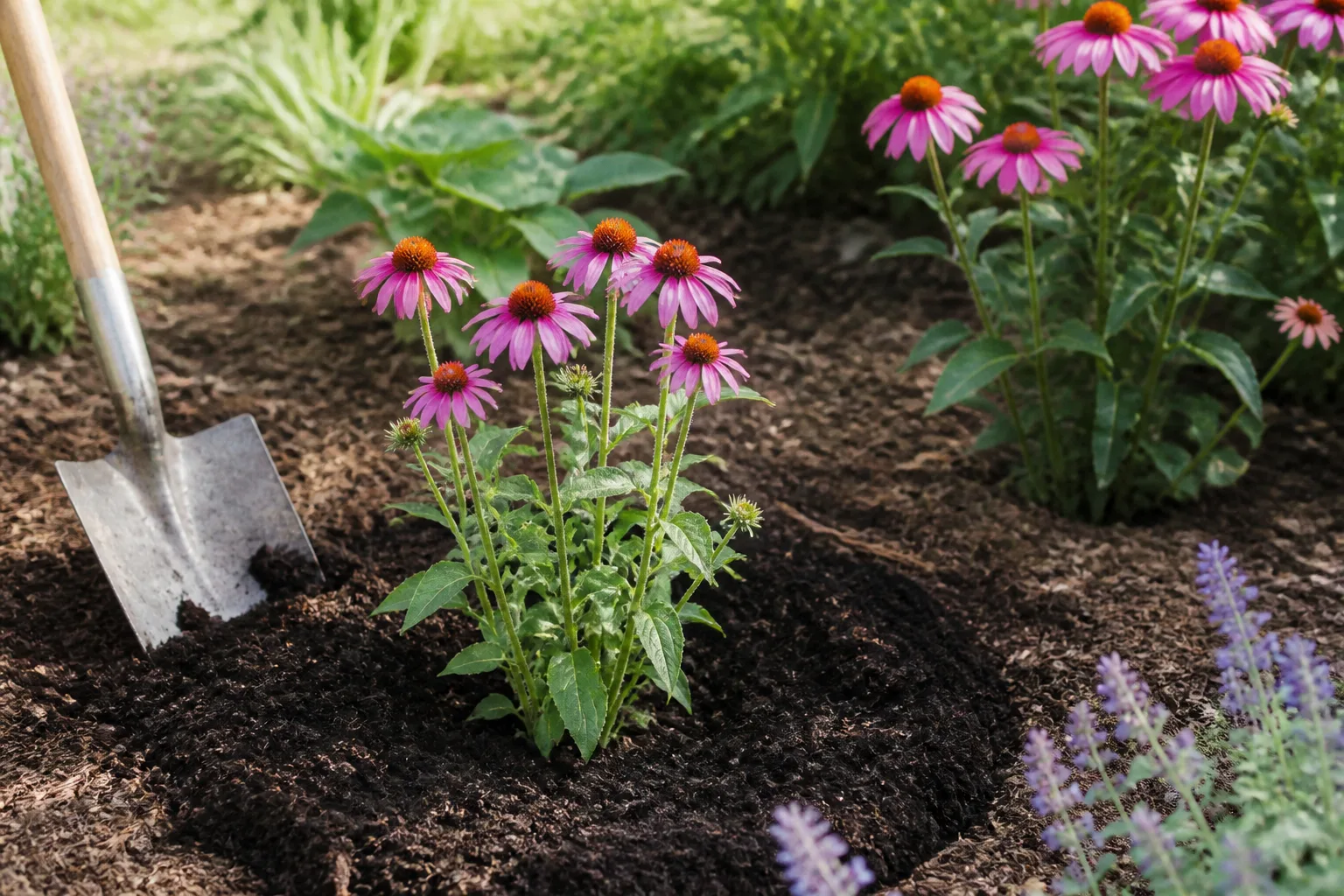
Purple coneflower (Echinacea purpurea) is the daisy cousin behind every native pollinator border. Lavender-pink rays surround a spiny orange cone; plants hit 2–4 feet in zones 3–8. First-year plants may bloom lightly—full display often comes year two. University of Minnesota Extension notes coneflowers prefer full sun and tolerate drought once established. For cultivar depth and troubleshooting, see our purple coneflower guide.
Painted daisy (Tanacetum coccineum, formerly Chrysanthemum coccineum) delivers crimson, pink, and white blooms in early summer on ferny foliage 2–3 feet tall. It likes zones 3–7 and full sun to part shade. Heat and humidity can make plants wilt midday—they prefer dry heat to muggy sog. Watch for aphids on new spring growth.
Golden marguerite (Anthemis tinctoria) covers itself in yellow daisy flowers all summer, smelling faintly of chamomile. Fast-growing and fine in poor soil, it reaches 2–3 feet in zones 3–8. Shear lightly after the first flush to keep compact. Cultivars like ‘Kelwayi Gold’ stay shorter than the species and work well at the front of a hot, dry border beside lavender or Russian sage.
Cottage and Cool-Season Daisies: English and Oxeye
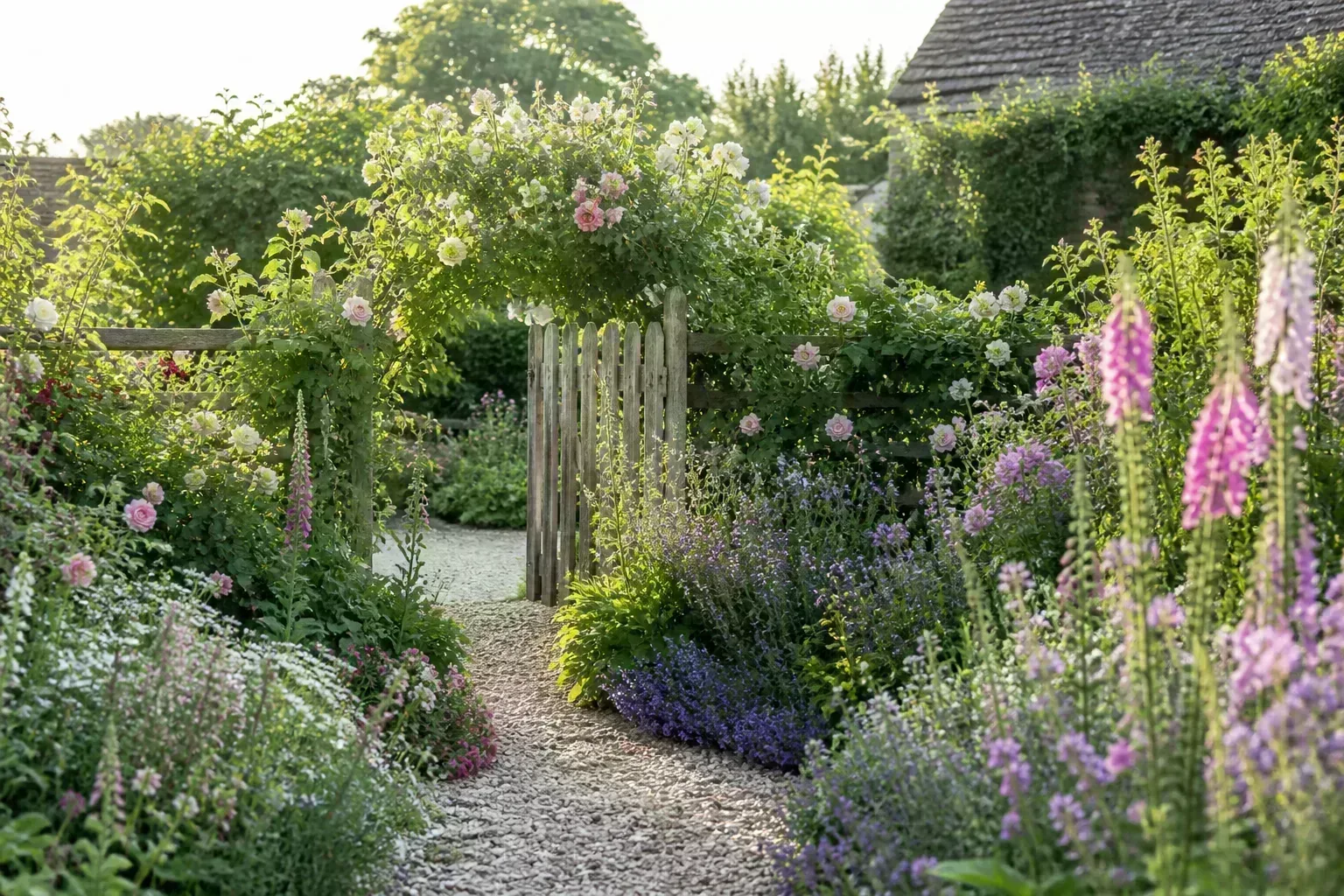
English daisy (Bellis perennis) is the low 3–6 inch lawn daisy of storybooks—white, pink, or red button blooms on short stems. Hardy in zones 4–8, it often behaves as a biennial or short-lived perennial, reseeding in cool, moist turf. Showy doubles like ‘Galaxy Red’ stay more contained than the species. English daisy works as spring edging or container filler where summers stay mild; it struggles in hot, humid South summers.
Oxeye daisy (Leucanthemum vulgare) looks like a skinny wild Shasta—1–3 feet, white rays, yellow eye, blooming roughly three months. It naturalizes in meadows and roadsides, which is exactly why many gardeners should skip it. Where allowed, confine oxeye to managed wildflower patches and deadhead before seed spread. Never confuse oxeye with Shasta at the nursery: check the label for L. vulgare versus L. × superbum, and reject wildflower mixes that list oxeye unless you intend a managed meadow you can mow before seed set.
Tender Daisies for Warm Zones and Containers
These types shine on patios and in frost-free gardens; elsewhere, treat them as seasonal annuals or houseplants.
Gerbera daisy (Gerbera jamesonii) produces the boldest cut-flower heads—red, orange, pink, yellow, cream, and bicolor—on 12–18 inch plants. Native to South Africa, it wants morning sun, well-drained soil, and irrigation at soil level to keep foliage dry. The RHS classifies most gerberas as tender; newer Garvinea and Everlast series extend hardiness in mild, sheltered zone-8 gardens with winter mulch. Everywhere else, pot them and move indoors before nights drop below 41°F.
Marguerite daisy (Argyranthemum frutescens) is the shrubby 2–3 foot patio daisy in yellow, white, or pink. It peaks in cool spring and fall when nights stay below 75°F; summer heat pauses bloom until you shear plants back and autumn rains return. Hardy only in zones 10–11; annual elsewhere.
Cape daisy (Osteospermum spp.), also sold as African daisy, opens striking two-tone petals that close at night. Colors span purple, pink, white, yellow, and blue. Zones 10–11 perennial; annual in colder regions. Blooms heavily from spring to frost in full sun.
Bush daisy (Euryops pectinatus) forms a rounded 2–3 foot mound of bright yellow daisies on fine foliage. Evergreen in zones 9b–11; dies to the ground in light frost and resprouts in warm climates. In containers, pair euryops with trailing verbena or calibrachoa for a long-season patio display; refresh compost each spring because heavy feeders in pots exhaust nutrients faster than in-ground plantings.
For patio success with any tender daisy, use pots 12 inches or wider with drainage holes, a peat-free container mix, and a saucer you empty after watering. Group pots on wheeled caddies if you need to roll gerberas and osteospermum indoors on the first frost warning.
Annual Quick-Color Daisies for Beds and Edges
When you need flowers in six to eight weeks from seed, annual daisies beat most perennials on speed.
Butter daisy (Melampodium divaricatum) covers itself in small golden blooms from May to frost on 6–24 inch plants. It tolerates heat and neglect—ideal for edging and filler.
Livingstone daisy (Mesembryanthemum / Dorotheanthus bellidiformis) forms a 6 inch carpet of jewel-tone flowers in poor, sandy soil. Best in cool coastal or spring weather before intense summer heat.
Dahlberg daisy (Thymophylla tenuiloba) spreads 6–12 inch mounds of tiny yellow-gold flowers, thriving in heat and drought. Often grown as an annual even where zones allow perennial survival.
Swan river daisy (Brachyscome iberidifolia) trails lavender, blue, white, or yellow inch-wide blooms on soft gray-green foliage. Excellent in hanging baskets; perennial in zones 9–11, annual northward. Start seeds indoors 8–10 weeks before last frost for early baskets, or buy plugs in spring. Swan river daisy pairs beautifully with calibrachoa and sweet alyssum in mixed containers where its fine texture softens bolder blooms.
Fall Mums, Gaillardia, and Florist Daisies
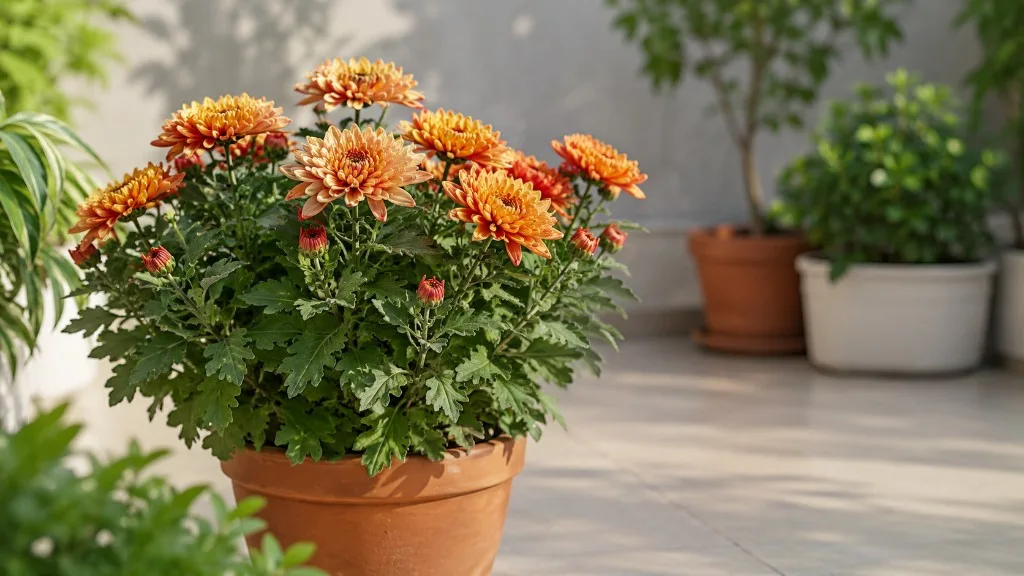
Garden chrysanthemums (Chrysanthemum × morifolium and related hybrids) are the domed fall daisies sold by the millions each September. Technically Asteraceae daisies, they differ in culture: mums want consistent moisture, full sun, and pinching through summer for compact bloom. Hardy cultivars survive zones 3–9 if planted early enough to root before winter; gift pots often die because they arrived too late and too dry.
Florist’s daisy refers to exhibition-style chrysanthemums bred for enormous disbudded blooms—wonderful for arrangements, demanding for beginners.
Blanket flower (Gaillardia spp.) brings red-and-yellow pinwheel daisies on 2–3 foot plants zones 3–10. Drought-tolerant and long-blooming; some cultivars are short-lived perennials, so divide or replace every few years. Seed-grown plants may bloom year two. Series like ‘Arizona Sun’ and ‘Mesa’ offer compact habits for smaller beds; deadhead to keep color coming, but leave a few seedheads if you want volunteers in gravel paths.
Asters and Other Late-Season Daisy Flowers
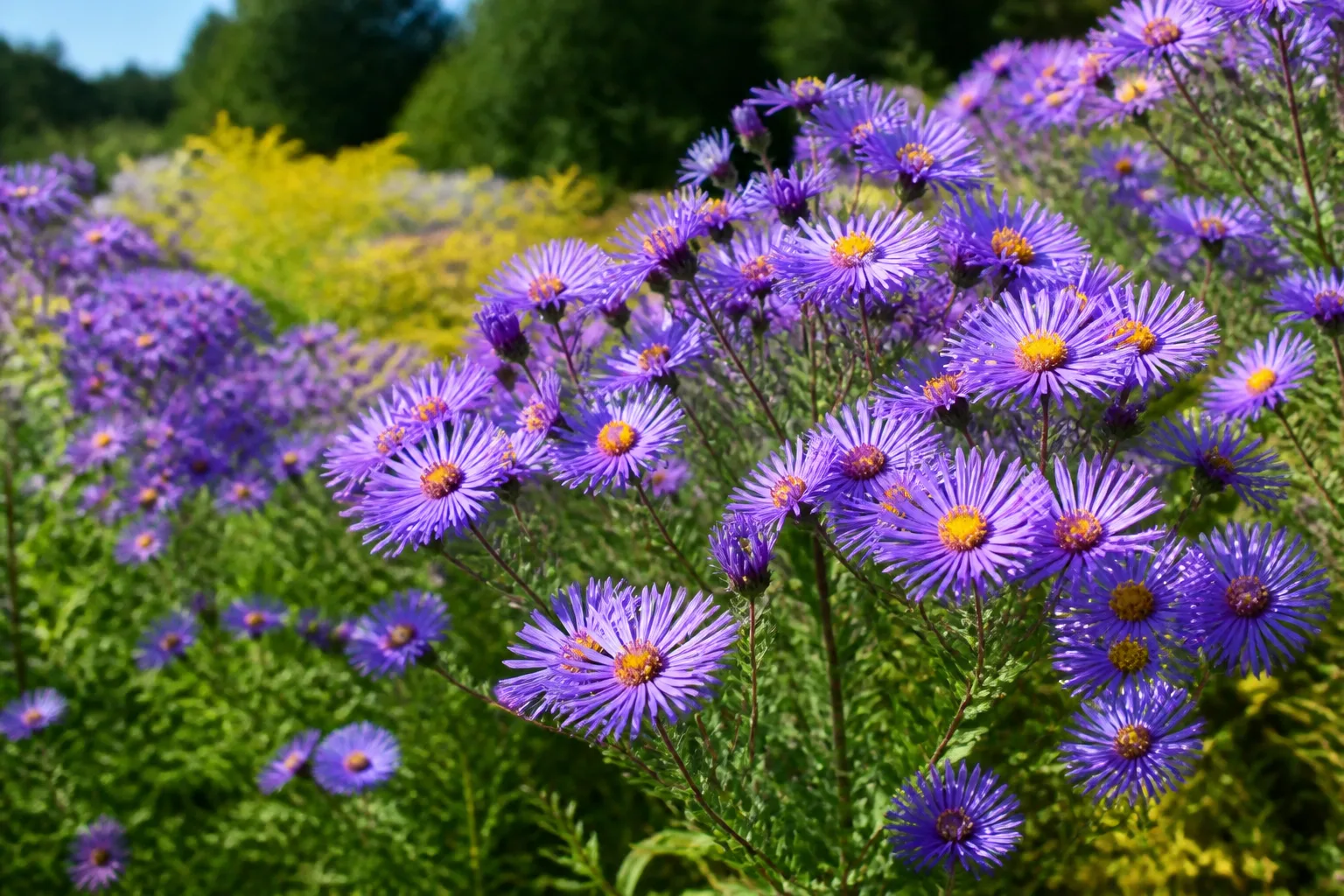
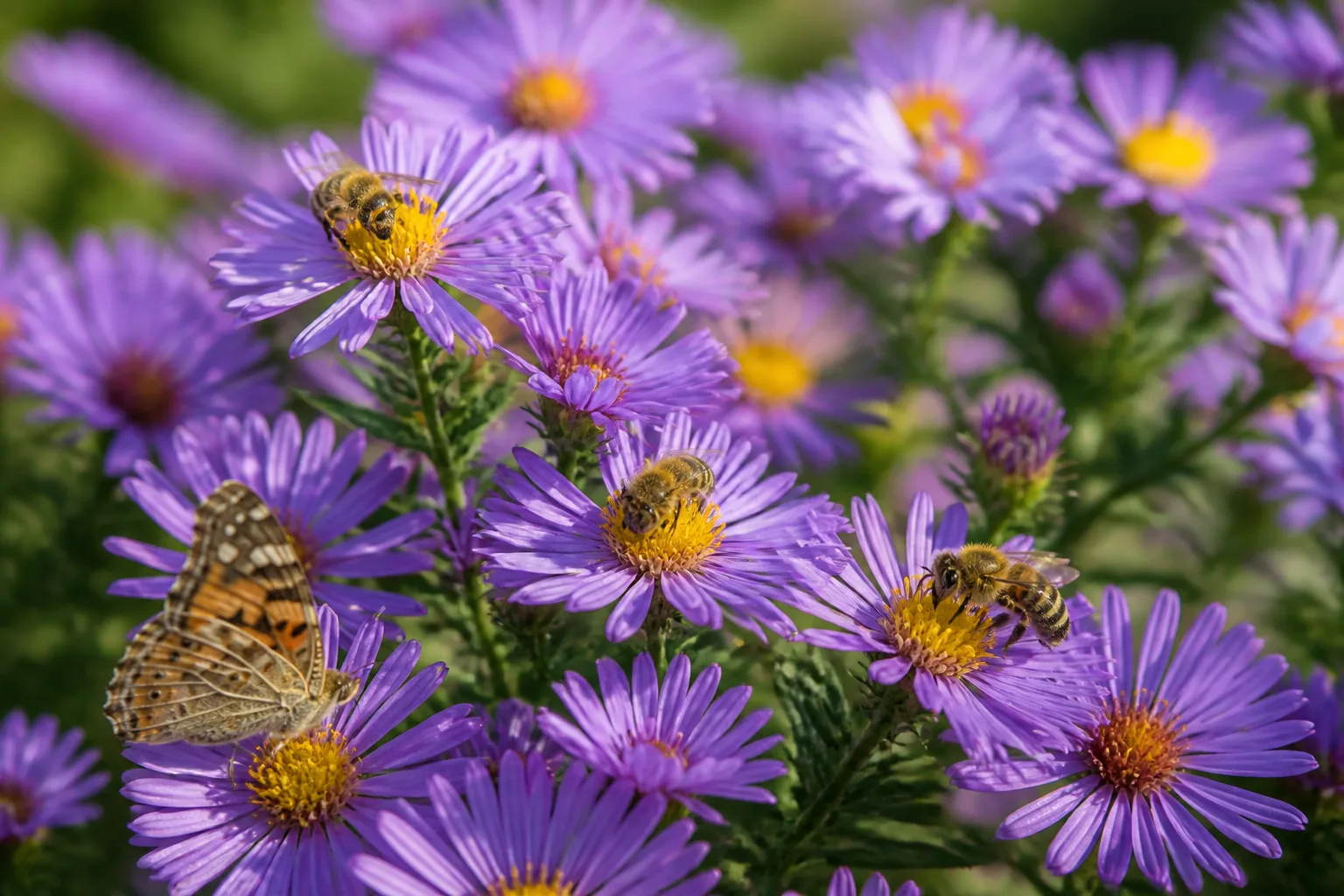
New England aster and kin (Symphyotrichum spp., formerly Aster) supply lavender, purple, pink, or white daisy flowers when summer perennials fade. Heights range 1–4+ feet; zones 4–8 for many species. They are pollinator magnets but need full sun and good air flow to avoid powdery mildew in humid summers. Stake tall varieties like ‘Alma Potschke’ or pinch back before July 4 in the North to encourage bushier, later bloom. For species selection and division timing, see our perennial aster guide.
Blue, Fragrant, and Desert Daisies
Not every daisy follows the white-and-yellow script.
Blue daisy (Felicia amelloides) offers true periwinkle blue petals with yellow centers on 1–2 foot shrubs. Zones 8–11; treat as annual or houseplant elsewhere.
Chocolate daisy (Berlandiera lyrata) smells like cocoa in morning sun—yellow rays with a maroon center on 12–15 inch plants. Native to the southwestern U.S. and Mexico; hardy zones 4–9 with sharp drainage.
Damianita (Chrysactinia mexicana) is a 1–2 foot mound of fragrant yellow daisies for zones 7–11, thriving in rock gardens with minimal water and deer resistance.
Desert star (Monoptilon bellidiforme) is a tiny 3 inch Mojave annual/perennial with white or pink-tinged blooms—specialty choice for dry rock gardens in zones 9a–10b. Combine desert star with damianita and chocolate daisy in a southwest-facing scree bed where irrigation is rare and winter drainage is sharp.
Crown Daisy and Other Edible Daisy Flowers
Crown daisy (Glebionis coronaria, formerly Chrysanthemum coronarium) grows 2–4 feet with edible leaves and yellow-centered white flowers used in Asian cooking. Sow in cool weather; plants bolt in heat. Zones 5–9 as a cool-season annual in many climates. Harvest young leaves for salads and stir-fries before flowering; older foliage turns bitter. Crown daisy self-sows in mild climates—pull volunteers if you do not want it everywhere.
Petals of some daisies are edible, but never eat flowers from nursery stock unless you know pesticide history. Stick to crown daisy and greens you grow yourself for food.
African Daisies: Curly Leaf and Blue-Eyed Types
Curly leaf daisy (Arctotis revoluta) and related Arctotis hybrids deliver silvery foliage with yellow or orange daisy blooms in zones 9–11, loving heat and sharp drainage. Blue-eyed daisy (Arctotis stoechadifolia) shows white rays around a violet-blue eye, closing each evening to reveal lavender undersides on 1–2 foot plants. These are often sold beside osteospermum as “African daisies”—check tags for genus so you match watering needs; Arctotis wants drier soil than osteospermum and excellent winter drainage in pots.
Sun, Soil, Water, and Deadheading Basics
Most daisies want full sun—at least six hours of direct light daily. Exceptions tolerate part shade: English daisy, some asters, painted daisy in hot climates. Soil should be well-drained and moderately fertile; heavy clay needs compost and grit, not raw manure.
Water newly planted daisies weekly until roots establish. Mature Shasta, rudbeckia, and echinacea tolerate dry spells; gerbera and marguerite need steadier moisture without soggy crowns. Mulch in spring to suppress weeds, keeping material off gerbera crowns.
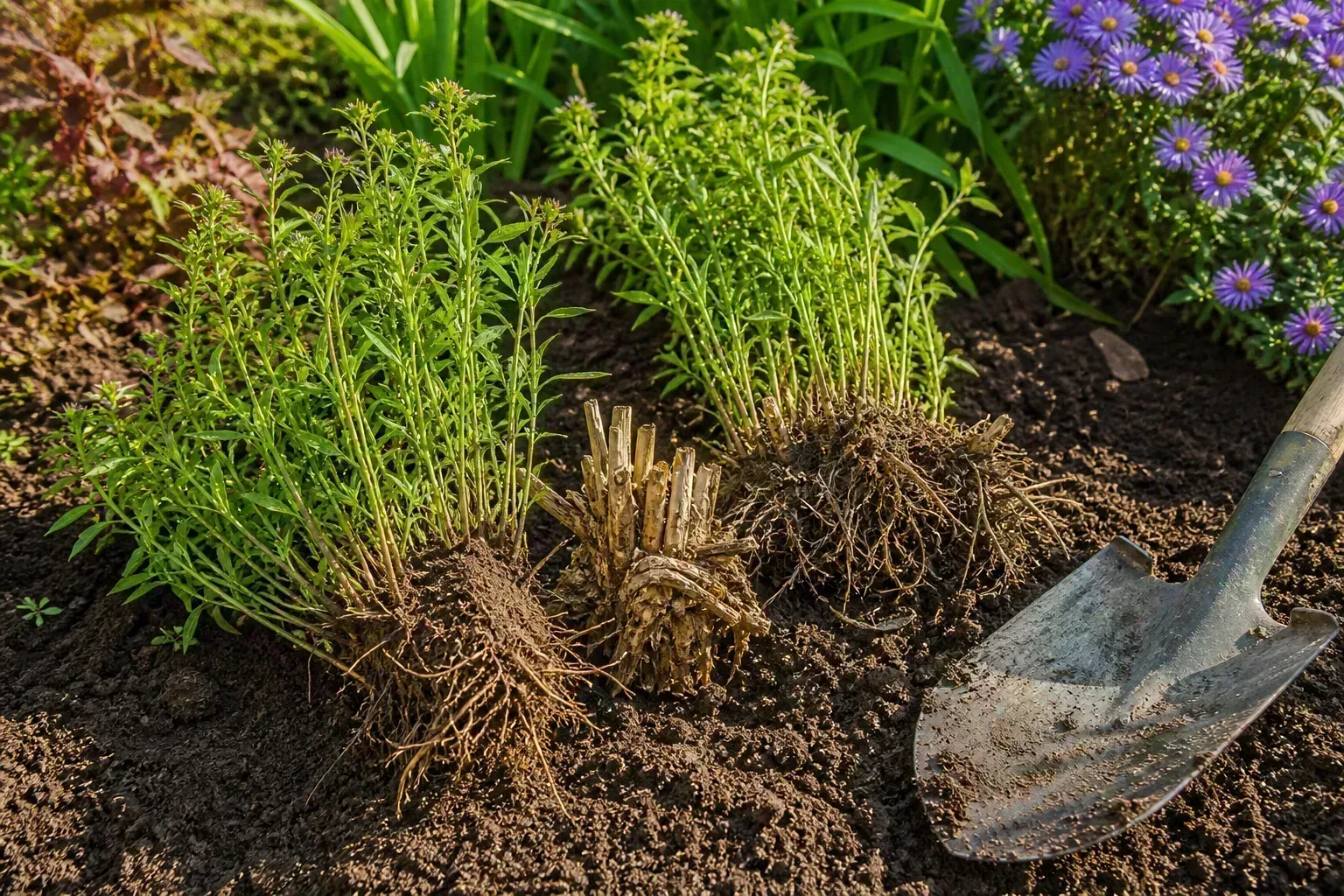
Deadheading spent flowers extends bloom on Shasta, painted daisy, gerbera, and marguerite. Cut stems back to a leaf node or side bud, not bare twigs. Divide Shasta and asters every few years when centers die out. Leave some coneflower and rudbeckia seedheads for goldfinches if you want winter wildlife food.
Designing Beds, Borders, and Cutting Gardens with Daisies
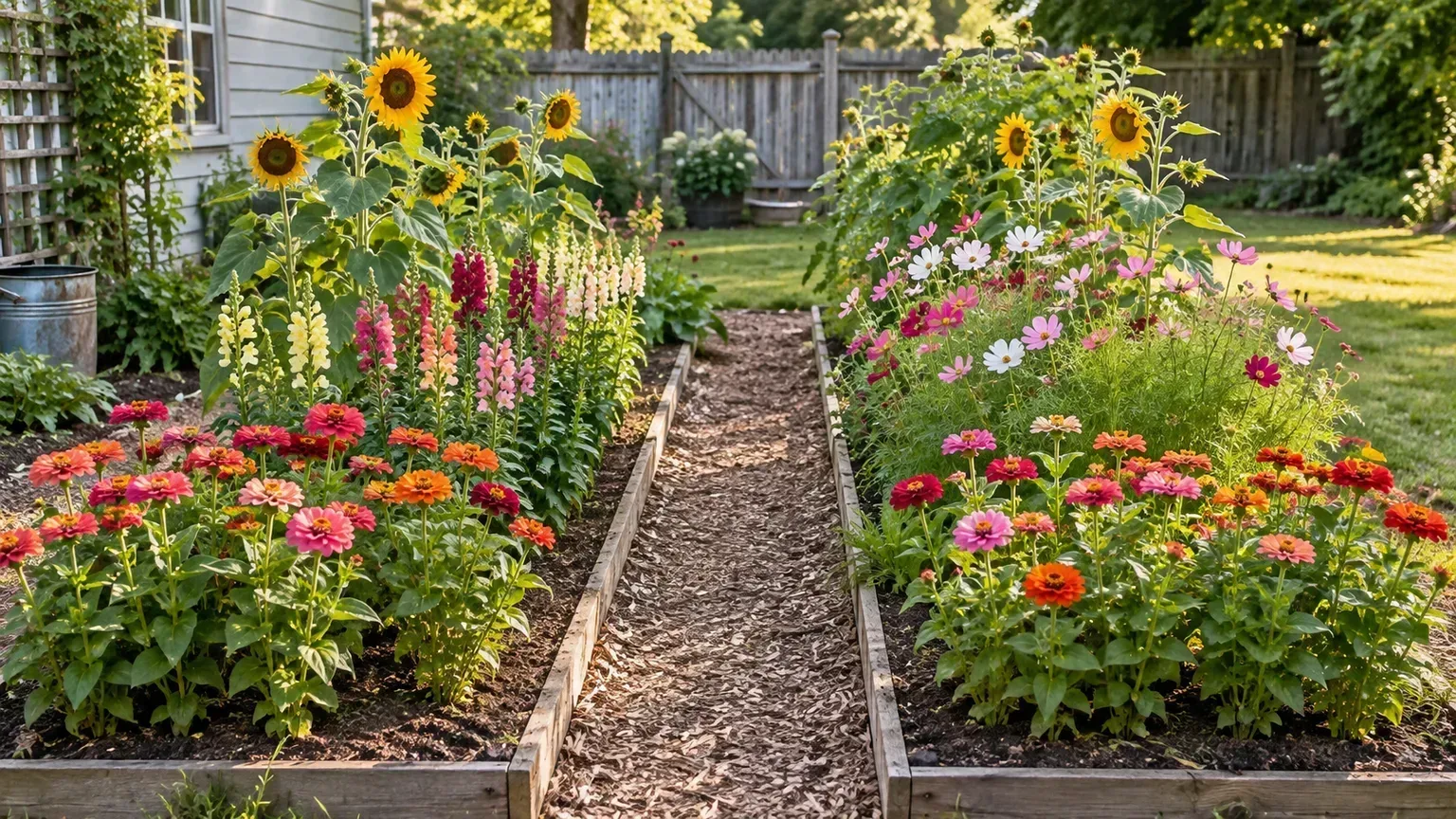
Layer heights: rudbeckia and tall asters at the back, Shasta and painted daisy mid-border, English daisy or swan river at edges. Repeat one color through the bed so the border reads intentional, not catalog-random.
For cutting gardens, plant in rows with support netting for tall Shasta and mums. Pick flowers in early morning when petals are fully open. Gerbera and painted daisy last longest when stems are seared briefly in hot water after cutting.
Pair daisies with grasses and spiky salvia for contrast, or weave them through cottage-garden perennials like salvia, catmint, and penstemon. Avoid planting invasive oxeye near open fields or prairies you do not mow.
Conclusion
The right daisy for your garden is less about counting petals and more about matching hardiness, drainage, and self-sowing habit to your site. Hardy Shasta, rudbeckia, and echinacea carry sunny borders for years with modest care. Gerbera, osteospermum, and marguerite deliver patio color if you accept seasonal replanting or winter protection. Annual butter and swan river daisies fill gaps fast. Screen oxeye and English daisy against local invasive rules before you plant. Run through those filters once, and the cheerful part—choosing among two dozen honest bloomers—gets a lot easier.