How to Grow and Care for Asters
Learn how to grow perennial asters (Symphyotrichum spp.) for late-summer and fall color. Planting windows, pinching, division, mildew prevention, and top cultivars.
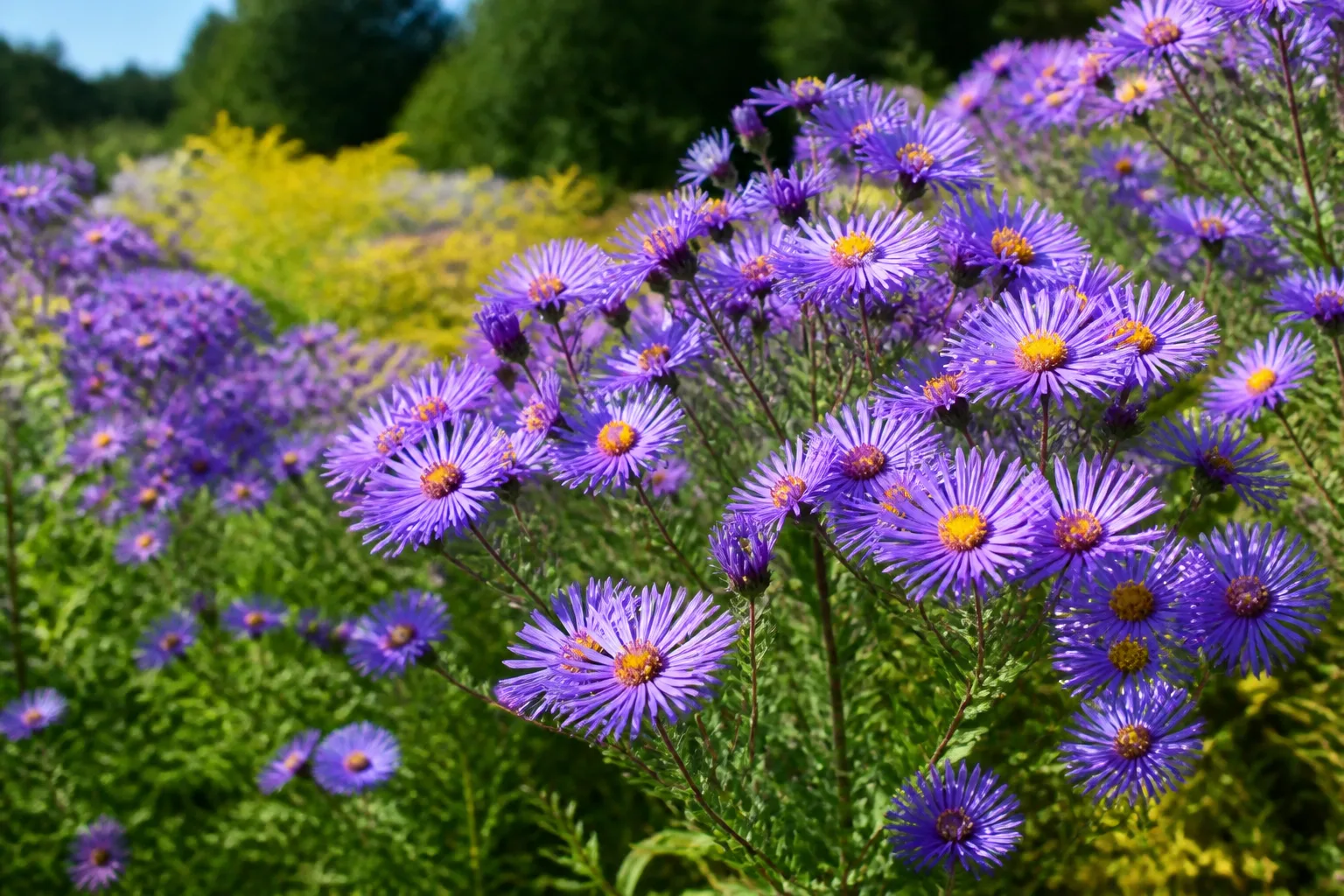
Asters are the perennial that answers when your summer border goes quiet. Botanists now classify most North American “asters” under Symphyotrichum, but nurseries still sell them under the familiar common name — daisy-like rays in purple, blue, pink, and white around yellow centers, opening as days shorten from late summer through fall. Get the genus right, match the species to your sun and height budget, and a single planting can anchor a pollinator strip for a decade. Skip division, overfeed in August, or splash water on foliage every week, and you get leggy stems, powdery leaves, and a hollow center that stops blooming.
This guide covers species choice, planting windows, pinching trade-offs, division timing, container rules, and the mildew-prevention habits that separate a reliable fall display from a one-season disappointment.
Why Asters Belong in a Fall Garden
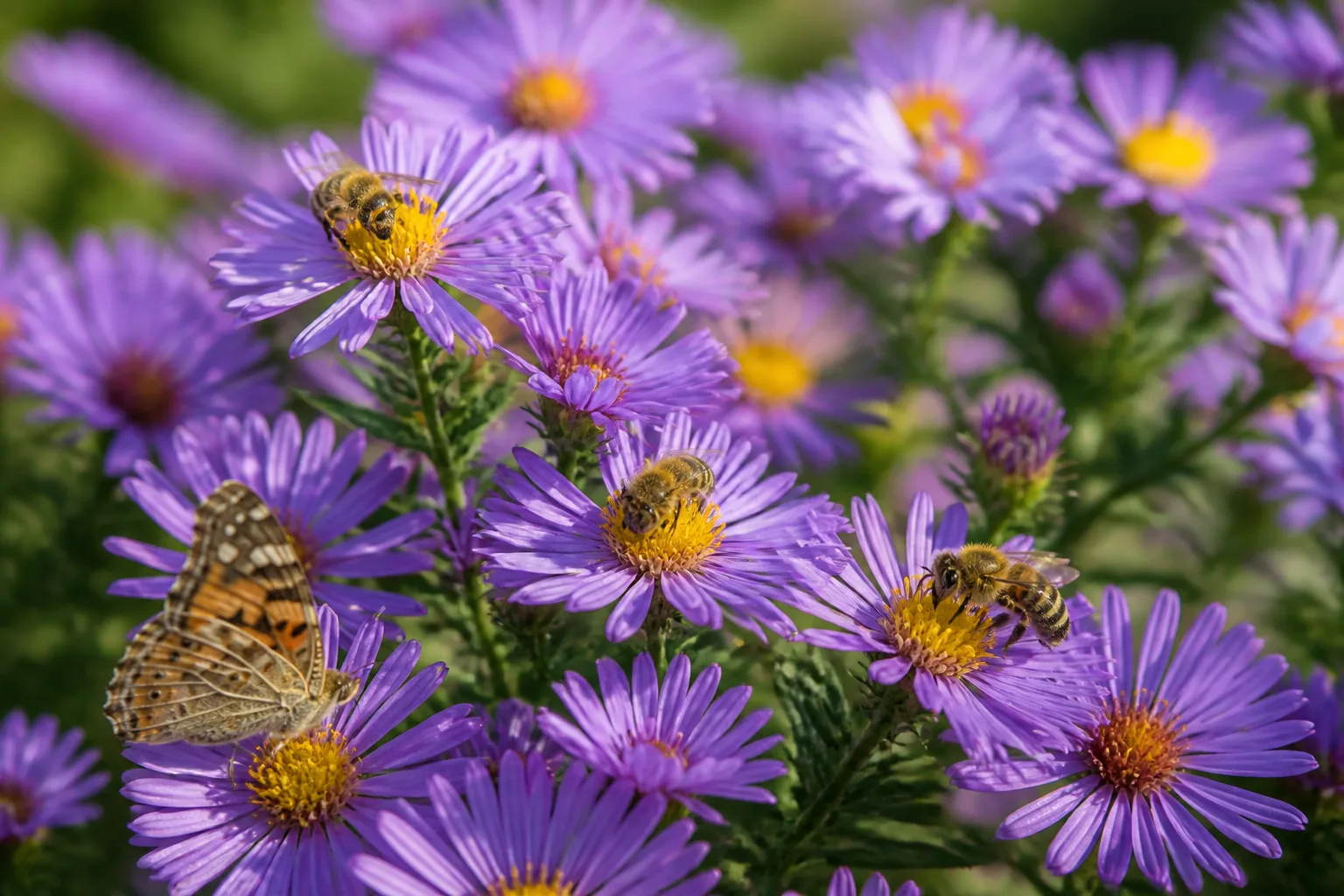
Asters are short-day bloomers — flower initiation tracks declining daylight, which is why they peak when zinnias and daylilies are finished. That timing makes them one of the most valuable late-season nectar sources for bees, butterflies, and specialized native pollinators. NC State Extension lists New England aster among top plants for honey bees, native bees, and butterflies in pollinator and rain gardens.
Unlike potted garden mums sold for one burst of color, perennial asters return from the same root crown year after year when sited in well-drained soil. Pair them with goldenrod (Solidago) for a native fall palette that does not need replacing each autumn. If you are sketching beds, a perennial flower garden layout that reserves the back third for 3- to 6-foot fall performers keeps asters from shading shorter summer flowers.
Asters at a Glance
| Feature | Details |
|---|---|
| Common names | Aster, New England aster, Michaelmas daisy, frost flower |
| Botanical name | Symphyotrichum spp. (formerly many were Aster spp.) |
| Family | Asteraceae (daisy family) |
| Plant type | Herbaceous perennial |
| Height | 1–6 ft depending on species and cultivar |
| Spread | 1–4 ft; clumps widen with age |
| Sun | Full sun (6+ hours); some native species tolerate partial shade |
| Soil | Loamy, fertile, well-drained; tolerates clay if drainage is good |
| Soil pH | Slightly acidic to neutral |
| Bloom time | Late summer through fall (August–October in most zones) |
| Flower colors | Purple, blue, pink, white |
| Hardiness | USDA zones 3–8 (species-dependent; verify the label) |
| Native range | North America (most garden species and cultivars) |
One label warning: “aster” on a pot does not tell you height, mildew resistance, or whether the plant wants a meadow edge or a formal border. Read the tag for species or series name before you dig.
Know Your Aster: Native Species Versus Garden Cultivars
Taxonomy shifted when botanists split the old Aster genus. Most North American perennial asters you buy today are Symphyotrichum; European types often land in Aster or Eurybia. For gardeners the practical split is simpler: how tall, how mildew-prone, and how much sun the plant wants — not the Latin footnote on the tag.
Tall Border Types for Maximum Fall Color
New England aster (Symphyotrichum novae-angliae) is the classic 3- to 6-foot purple powerhouse. NC State Extension notes clumps reach 1–3 feet wide and benefit from spring pinching for bushier form. Cultivar ‘Purple Dome’ stays near 18 inches and resists lodging better than species forms — a strong choice when you want New England color without staking.
Smooth blue aster (S. laeve) offers powder-blue flowers on waxy, mildew-resistant foliage — often a better pick in humid regions where tall New England types white out by September. Aromatic aster (S. oblongifolium) blooms late with fragrant foliage and stays in the 2- to 3-foot range; Jenkins Arboretum highlights its value in dry, sunny borders.
Popular nursery series include ‘Celeste’ (early dark blue), ‘Hazy’ (raspberry-pink), and ‘Puff’ (hardy white, early blooming). Treat these as garden cultivars selected for color and timing — not as wild-collected natives — when planning habitat strips.
Compact and Shade-Tolerant Options
Some native woodland asters (S. cordifolium, S. divaricatus, and related species) accept partial shade and stay under 3 feet. They spread more modestly than New England types and suit edges under deciduous trees where sun reaches the ground before leaves fill in. Trade-off: fewer flowers per square foot than full-sun cultivars, but far less staking and often less mildew pressure.
If your site gets fewer than six hours of direct sun, choose a labeled shade-tolerant species rather than forcing a sun-hungry New England aster into dim light — you will get stretchy stems and sparse bloom every year.
Where and When to Plant Asters
Nursery pots are the reliable starting point. Seed-grown asters can take several years to reach full size, and open-pollinated seedlings may not match the parent cultivar’s color or height. Gardening Know How recommends spring or fall planting for perennials; both work when soil is workable and you can keep roots moist during establishment.
Space plants for mature width — typically 18 to 36 inches apart for medium cultivars, more for tall species. Crowding is a direct line to powdery mildew because airflow never dries leaf surfaces after rain or irrigation.
Spring Versus Fall Planting Windows
Spring planting (after last frost, as soil warms) gives roots a full season to anchor before winter — ideal in zones 3–5 and for mail-order bare-root divisions that arrive dormant.
Fall planting six to eight weeks before your first hard freeze lets asters establish in cool, moist soil — excellent in zones 6–8 where autumns stay mild. In hot-summer regions, avoid planting into baked August soil; wait for September cooling or plant in spring instead.
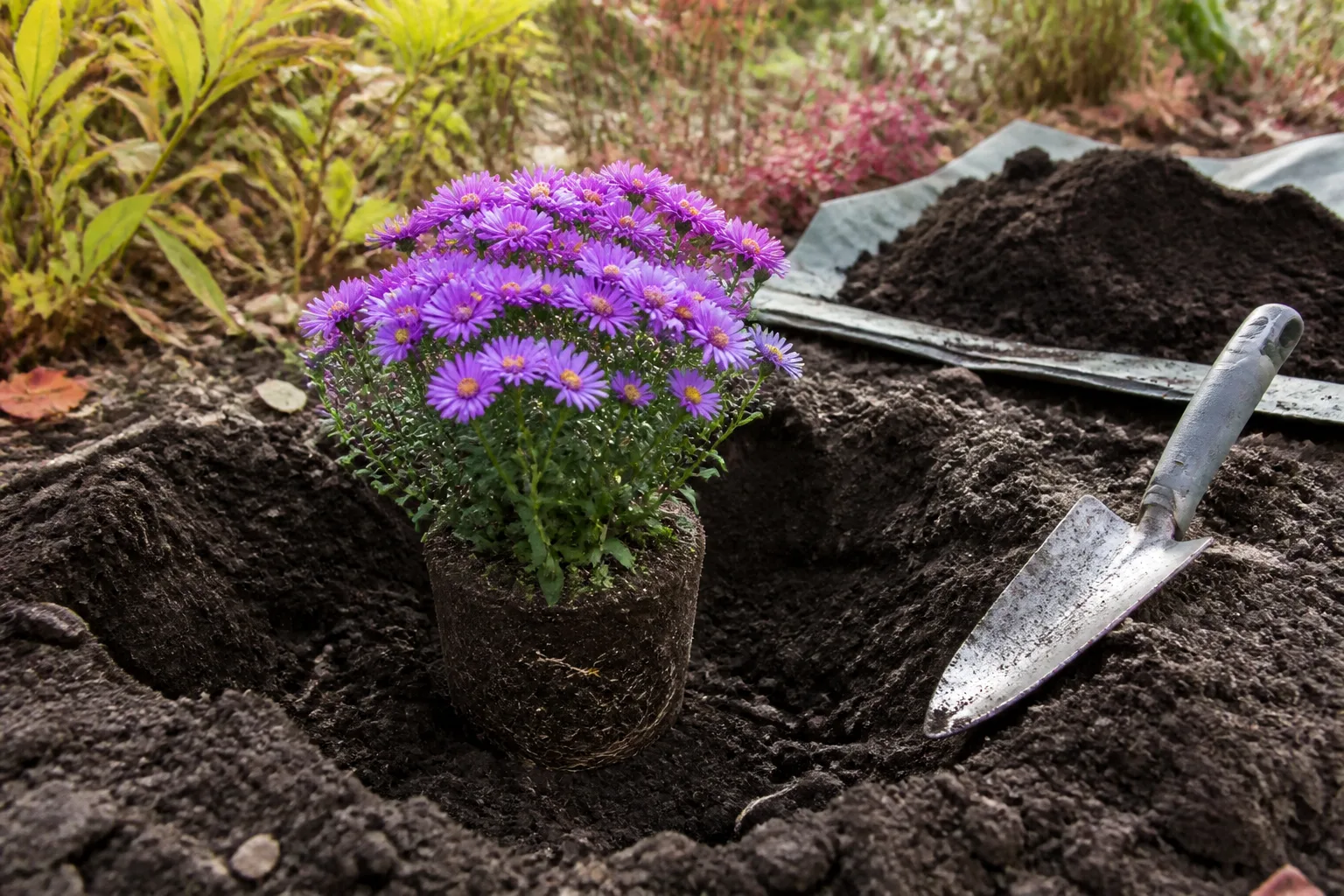
Set the crown at the same depth it grew in the pot. Buried stems rot; exposed roots dry out. Water in thoroughly and mulch lightly, keeping mulch off the crown.
Light, Soil, and Site Preparation
Asters are full-sun perennials for best bloom density. Gardening Know How puts the minimum at six to eight hours of direct light daily. Partial shade is tolerable only for species bred or native to woodland edges; hybrid border asters in shade become leggy and flower-shy.
Soil should be moist, fertile, and well-drained. Asters accept clay loam when drainage is real — not merely “clay with hope.” Work 2 to 3 inches of compost into the planting zone to improve structure and slightly acidify alkaline beds. If a percolation test shows water pooling after an hour, raise the bed or choose another site; wet winter crowns kill asters faster than cold.
Avoid planting directly against a north-facing wall or under evergreen shade where winter light never reaches foliage — stress accumulates across seasons even if the plant limps along.
Watering Asters Without Inviting Mildew
New plantings need consistent moisture through their first bloom cycle. Once established, asters tolerate brief dry spells, but peak bloom still depends on steady soil moisture — roughly one inch of water per week from rain or irrigation, including hot stretches when petals are forming.
The critical habit: water at the base, not over the foliage. Splash on leaves fuels powdery mildew and rust in humid summers. Drip lines, soaker hoses, or a slow root-zone soak beat overhead sprinklers for this genus.
Morning watering lets any accidental leaf wetness dry before night. If your only option is overhead irrigation, run it early and accept that mildew-prone cultivars may need replacing with resistant species over time.
Fertilizing for Steady Blooms, Not Leafy Sprawl
Asters are moderate feeders. A balanced slow-release fertilizer or compost top-dress in spring supports vegetative growth and bud formation. Gardening Know How suggests feeding through summer until bloom opens.
Stop high-nitrogen feeding by August in most zones. Late nitrogen pushes soft foliage when the plant should be channeling energy into flowers — and can shorten the display. A single spring compost application alone is enough on rich garden soil; fertilize only when growth looks pale or last year’s performance was thin.
After division, a phosphorus-forward starter such as bone meal at label rates helps root establishment. Avoid burning fresh cuts with fresh manure or full-strength synthetic feeds.
Pinching, Staking, and Deadheading
Pinching — removing the top inch or two of new spring growth every few weeks until early July — produces bushier plants with more flower branches. NC State Extension notes pinching delays bloom slightly; skip it if you need the earliest possible fall color or if you grow a compact cultivar like ‘Purple Dome’ that already branches well.
Staking matters for 4- to 6-foot New England asters in exposed sites. Install grow-through grids or bamboo stakes when plants reach half height — retrofitting after a windstorm bends stems at the base. Smooth and aromatic types rarely need support if sited out of strong wind tunnels.
Deadheading spent flowers keeps beds tidy and can extend side-bloom on some cultivars. For cut flowers, harvest stems when roughly half the rays have opened; they last well in vases. Leave late-season seed heads if you want finches and chickadees to forage — or remove them if mildew already infected the foliage.
Dividing Asters Every Three Years
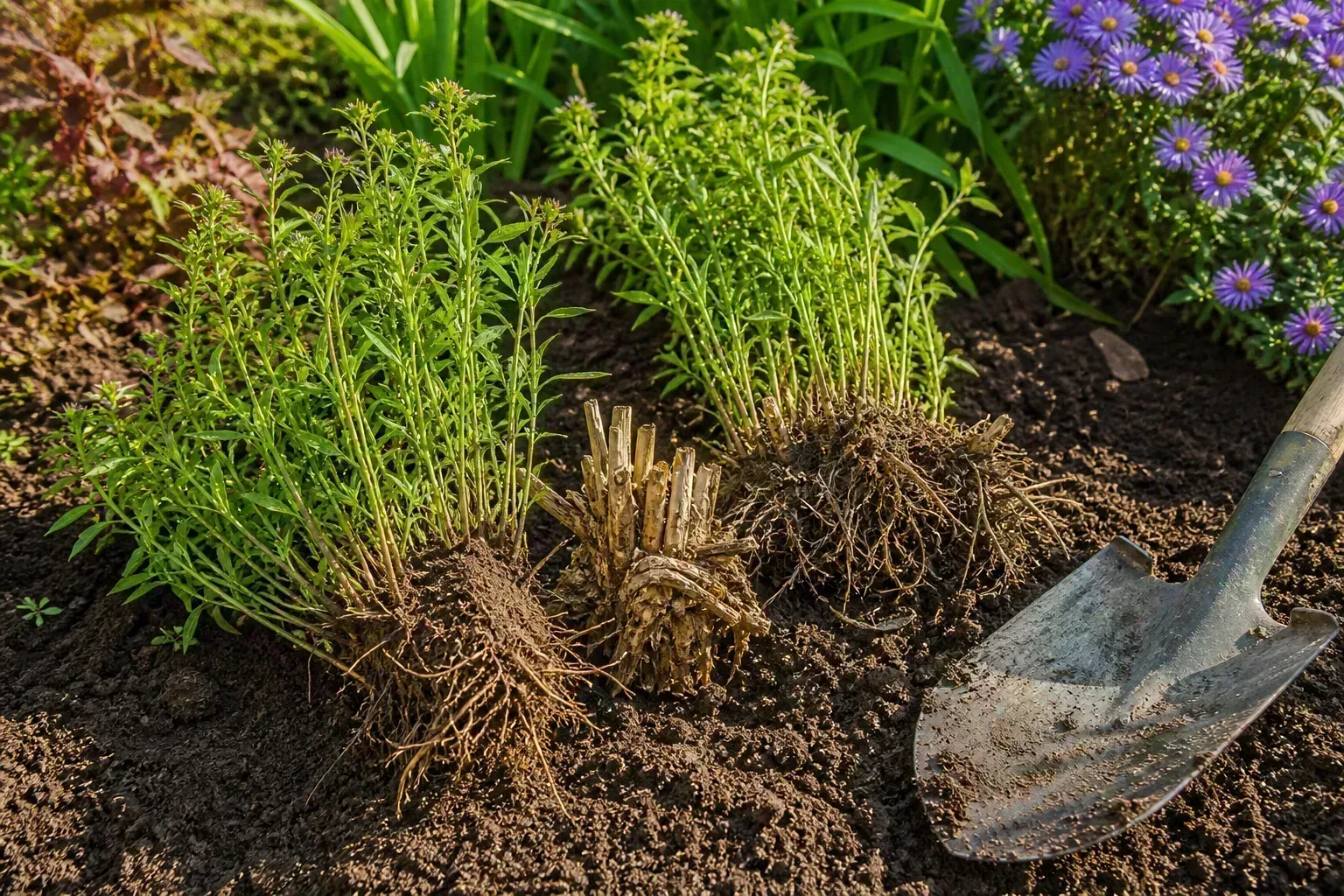
Undivided clumps develop woody, hollow centers with live growth only at the edges — fewer flowers, more lodging, and a magnet for disease. Plan to divide every three years, or sooner if bloom count drops sharply.
Best timing: early spring as new shoots emerge, or fall after flowering finishes. Spring divisions settle before summer heat; fall divisions need six weeks before freeze to root in.
Steps:
- Dig the entire clump with a sharp spade, keeping as many roots intact as possible.
- Split the crown with a spade or knife. Aster roots are tough — expect resistance.
- Discard the woody center; replant only vigorous outer sections with white roots and fresh shoots.
- Replant divisions at the original depth, 18–36 inches apart depending on mature size.
- Water deeply, mulch lightly, and keep soil evenly moist until new growth is obvious.
- Optional: dust cuts with bone meal or mycorrhizae inoculant; skip heavy nitrogen for six weeks.
Divisions from named cultivars are clones — the reliable propagation path. Seed saves money but not predictability.
Growing Asters in Containers
Asters work in large containers when you can deliver sun and drainage. Use a pot at least twice the width and depth of the root ball with multiple drainage holes. High-quality potting mix — not garden soil — prevents compaction.
Place pots where they receive six or more hours of direct sun daily; you may need to rotate containers on patios as the sun angle shifts. Water more often than in-ground plants — potting mix dries faster — but never leave saucers full of standing water.
Repot or divide every two to three years before roots circle and water runs straight through. Overwinter containers in zones 5 and colder by moving them to an unheated garage or burying the pot to the rim in mulch after the first hard freeze.
Overwintering and End-of-Season Cleanup
After flowering, give asters a deep soak if fall has been dry — hydrated roots survive freeze-thaw cycles better than desiccated ones.
Cleanup choice:
- Fall cutback after frost removes mildew-infected foliage and tidies beds. Cut stems to 1–2 inches above soil with clean pruners.
- Spring cutback leaves seed heads for birds and adds winter texture. Remove mushy frost-killed foliage before new growth appears to limit disease carryover.
Apply 2–3 inches of shredded leaf or straw mulch after the ground freezes in cold zones — not before, or mice may nest in warm, wet mulch against the crown. Pull mulch back slightly in spring as shoots emerge.
Pests and Diseases: What to Watch For
Good spacing, base watering, and cultivar choice prevent most problems. When symptoms appear, diagnose before spraying — asters recover slowly from unnecessary chemicals during bloom.
Powdery Mildew, Rust, and Wilt
Powdery mildew shows as white dusty patches on leaves, often in late summer when nights cool and humidity stays high. NC State Extension lists mildew, aster wilt, and stem rot as primary disease concerns. Fix airflow first: divide crowded clumps, replace the most susceptible cultivars with smooth or aromatic species, and stop overhead water.
Rust causes orange pustules on leaf undersides. Remove infected leaves; do not compost them. Severe cases may warrant fungicide labeled for ornamentals — follow label timing so pollinators are not active on open flowers.
Aster wilt collapses stems suddenly; infected plants should be removed entirely — do not divide and replant diseased tissue.
Lace Bugs and Other Insects
Lace bugs cause stippled, yellowing foliage in summer, often before bloom peaks. Insects are small and easy to miss; damage is not. Insecticidal soap on leaf undersides works when caught early; outbreaks often finish before flowers open, limiting pollinator exposure.
Aphids, spider mites, and leaf miners appear occasionally. Blast aphids with water on a calm morning, or use soap. Mites signal drought stress — increase consistent moisture before reaching for miticides.
Troubleshooting Weak or Missing Blooms
If asters grow but refuse to flower, work through this sequence:
- Sun audit — fewer than six hours of direct light is the most common cause of tall, bloom-free plants.
- Age and division — old, hollow-centered clumps flower only at the rim. Divide this spring.
- Late pinching — pinching after early July can push bloom so late that frost arrives first.
- Over-fertilization — especially late nitrogen. Flush with water only if salts are suspected; otherwise stop feeding and wait a year.
- Drought at bud set — midsummer dry spells abort buds silently. Water deeply during July and August heat.
- Wrong species for the site — a sun cultivar in shade will never perform; relocate in spring.
For flopping stems, stake earlier next year or switch to a shorter cultivar. For fewer flowers every year, divide and refresh soil with compost rather than doubling fertilizer.
Pair asters with other late performers — anemone windflowers for shade-to-part-sun transitions, or purple coneflower for midsummer bridge color before aster week arrives.
Conclusion
Perennial asters reward gardeners who treat them as long-term clump formers, not disposable fall décor. Choose the right Symphyotrichum for your sun and humidity, plant at the correct depth with real spacing, water at the root zone, pinch only when you accept a slightly later show, and divide before the center goes woody. Stop chasing blooms with August nitrogen, stake the tall types before storms arrive, and swap mildew magnets for smooth or aromatic species when white foliage becomes annual. Do that, and asters return each autumn with the daisy-like color and pollinator traffic that make them one of North America’s best native perennial values — no pumpkin-patch pot required.