10 Ways to Reuse Leftover Coffee Grounds Safely
Reuse leftover coffee grounds in the fridge, compost, garden, crafts, and more. Learn when to dry them, what to avoid, and how to deter pests safely.
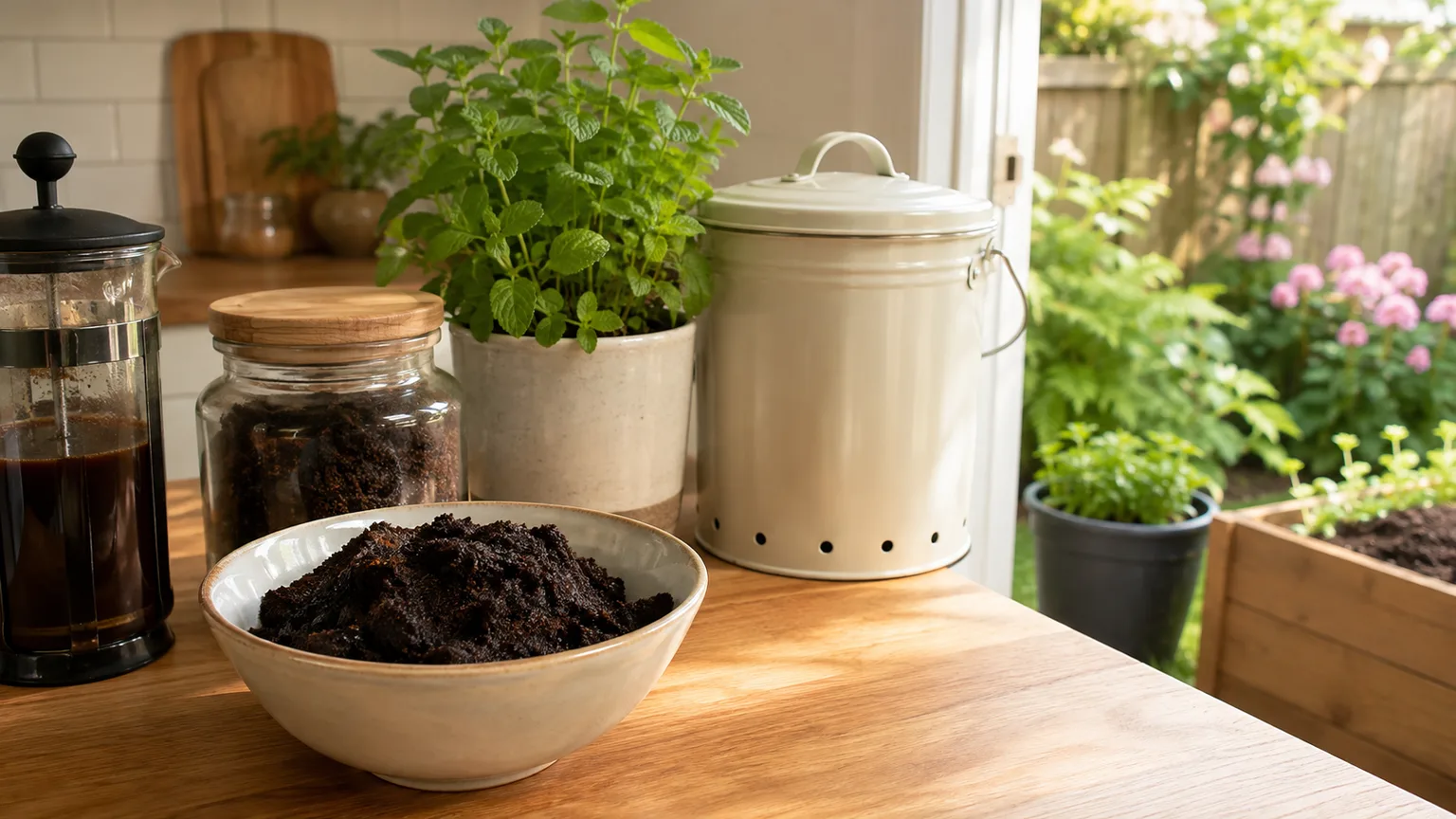
Leftover coffee grounds are most useful when you match their texture and moisture to the job. Dry grounds can sit in a ventilated jar, fill a sachet, tint paper, or help disguise a small mark on dark wood. Fresh, still-moist grounds belong in the compost pile or an immediate cleaning project, not in a sealed cupboard where they can turn sour or moldy.
The ten ideas below cover the practical second lives for grounds around a home, garden, and craft table. The important distinction is that “natural” does not mean universal: grounds can clog drains, scratch delicate finishes, inhibit seed germination when overused, and pose a caffeine risk if a pet eats a pile. Treat them as a useful leftover, not a miracle ingredient.
Start by sorting the grounds you have
Before choosing a use, look at the grounds rather than reaching for the most enthusiastic internet claim. A filter full of damp brewed grounds, a scoop of fresh unbrewed grounds, and a tray of grounds dried until crumbly will behave differently because their moisture, aroma, oils, and caffeine content are different.
Fresh, brewed, and completely dry grounds are not interchangeable
Spent brewed grounds are the best all-purpose material for compost, a thin garden trial, odor control, and most crafts. Brewing has removed much of the soluble coffee material, but the grounds are still damp and can support mold if stored in a closed container. Spread them in a thin layer on a baking sheet or plate when a project needs dry granules.
Fresh, unbrewed grounds have a stronger smell and more soluble compounds. Reserve them for a small deodorizing container or a craft dye test rather than scattering them around plants. If you are saving grounds for more than a day, let them dry fully, cool them, and store them in a breathable paper bag or a jar with a loose or perforated lid.
Use the quickest safe destination
Use this simple sorting rule:
- Need to use the grounds today? Choose hand deodorizing, cookware scrubbing, compost, or a small pest trial.
- Need to store them for a week or longer? Dry them completely first, then choose a sachet, craft dye, wood test, or fridge container.
- Have more grounds than you can use? Composting is the dependable bulk option; it keeps damp grounds out of the cupboard and turns a small kitchen leftover into a broader soil amendment.
The practical reuse coverage in The Guardian’s guide to leftover coffee grounds includes household deodorizing, cleaning, soap, crafts, and garden ideas. The useful upgrade is to decide what the grounds need before you use them: dry for storage and stain-making, fresh for compost, and sparing everywhere they might clump.
1. Deodorize the refrigerator
Coffee grounds can make a pleasant fridge freshener when you prefer their roasted smell to the neutral scent of baking soda. The effect is modest: grounds can help tame ordinary food odors, but they will not fix a spoiled item, a dirty gasket, or a spill hidden under a drawer.
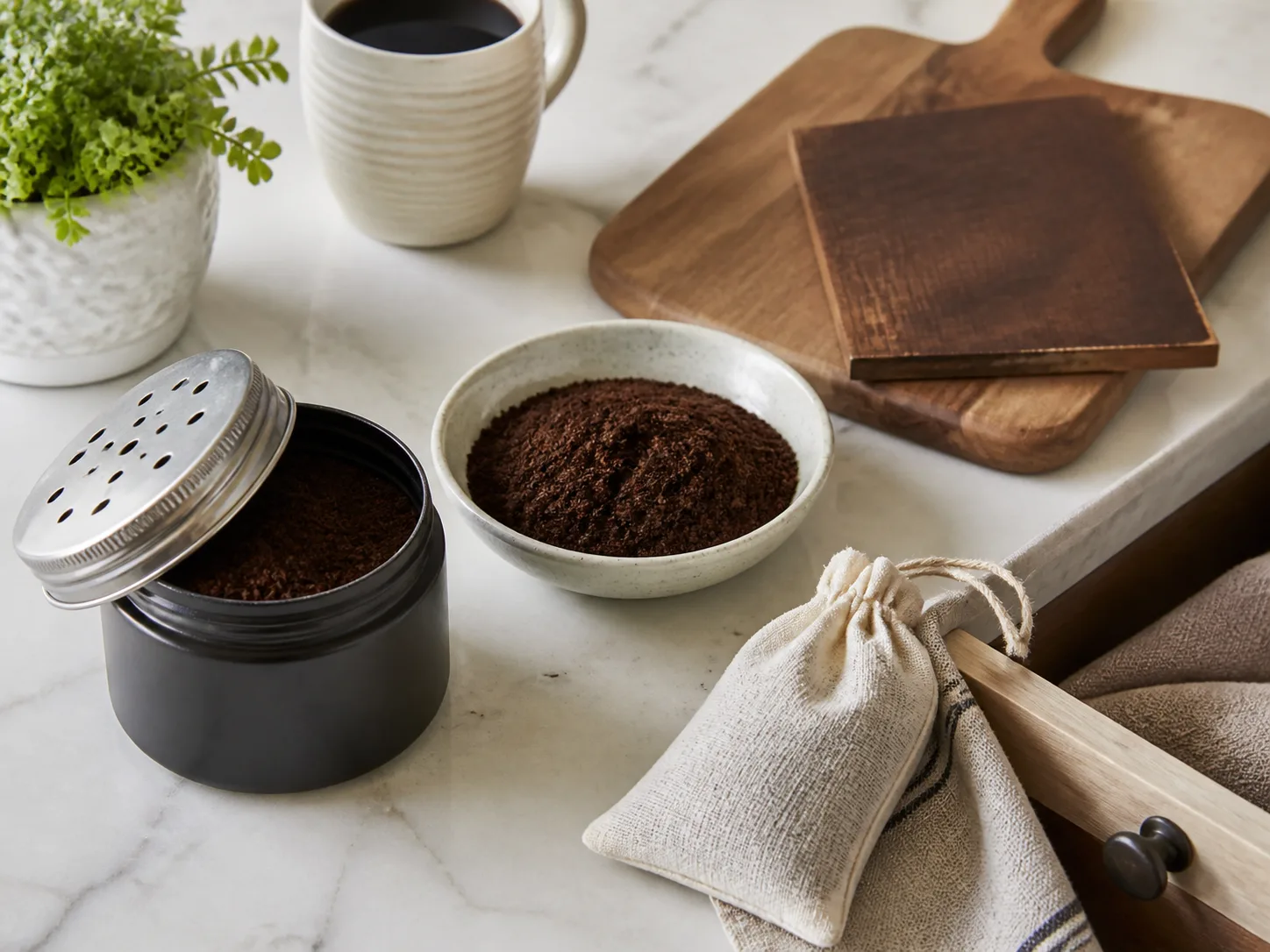
To try it, dry used grounds until they feel loose rather than tacky. Put a half cup or so in a shallow, stable container, or use a small jar with several holes punched in its lid. Place it toward the back of a refrigerator shelf where it cannot tip into food, and replace it when the aroma fades or the grounds begin to look damp.
Do not put wet grounds in an airtight jar and forget them. Condensation turns a deodorizer into a mold experiment, and loose grounds are frustrating to clean from refrigerator rails. If the fridge still smells after the container is removed, clean the spill and wash the removable parts; the grounds are a finishing aid, not the underlying fix.
2. Freshen drawers, closets, and shoes
Dry grounds work as a low-cost sachet for a musty drawer, coat closet, or pair of work shoes. Their smell is strongest at first, so this use is better for a small enclosed space than a whole room. It also avoids the mess of leaving a bowl where a sleeve, pet, or child can knock it over.
Fill a small cotton or paper sachet with fully dry grounds and tie it closed. Set the sachet inside a drawer or on a closet shelf, or place it near—but not inside—a shoe. Check it every few days at first; if the grounds feel humid, clump, or smell sour, remove the sachet and replace the filling.
Keep the packet away from light-colored fabric because coffee dust can stain. Never treat it as a substitute for addressing water damage or persistent mildew. A sachet can cover a mild stale smell while you ventilate and clean; it cannot make damp building materials dry.
3. Remove onion and garlic odors from your hands
This is one of the easiest immediate uses because you do not need to dry the grounds. After chopping onions or garlic, wet your hands, place about a teaspoon of used grounds in your palms, and rub gently over the fingers, fingertips, and around the nails. Rinse thoroughly with soap and water, then clean the sink so the grounds do not collect in the drain.
The grounds provide fine physical grit and a strong roasted aroma that can help lift or mask lingering food smells. They are not a disinfectant, so wash your hands normally afterward, especially before touching ready-to-eat food. If you have cuts, eczema, or irritated skin, skip the abrasion and use soap, a stainless-steel odor bar, or lemon-free handwashing instead.
Use a small amount. A tablespoon does not remove odor three times better; it only leaves more grit in the basin. This is also a good use for grounds that are still damp from the morning brew and would otherwise be difficult to store.
4. Scrub sturdy cookware and garden tools
Coffee grounds can act as a mild abrasive for baked-on residue on durable cookware, a grill grate, or muddy hand tools. Sprinkle a spoonful onto a wet cloth or soft scrub brush, work on the dirty area, and rinse before washing normally. The grounds are most useful for texture, not chemistry: they help loosen residue that already needs scrubbing.
Avoid this method on nonstick coatings, polished stone, delicate enamel, soft plastic, knife blades, and any finish the manufacturer says to treat gently. Coffee can stain porous grout, pale ceramics, unfinished wood, and light-colored silicone. When you are unsure, test the least visible spot first and use a soft sponge with dish soap instead.
Never send a mound of grounds down the sink or garbage disposal. The particles settle and pack together in plumbing, where they can contribute to clogs. Wipe the scrubbed item into the trash or compost container before rinsing, and use a drain strainer if you are cleaning a particularly gritty tool.
5. Camouflage minor scratches on dark wood
Coffee grounds can temporarily darken a shallow scuff on walnut-toned or other dark wood, making the mark less obvious until the surface is refinished. This is camouflage, not repair: it does not rebuild missing finish, close a gouge, or correct a scratch that catches a fingernail.
Dry the grounds, then mix a pinch with a few drops of neutral cooking oil to make a thin paste. Dab it onto the scratch with a cotton swab, leave it briefly, and buff away all residue with a soft cloth. Start with the smallest amount possible and compare the treated mark with the surrounding wood after it dries.
Test on an unseen edge first. Fresh grounds, dark roasts, oil, and wood finishes vary enough that a “matching” fix can leave a muddy stripe. Do not use the mixture on pale wood, lacquer you cannot test, antique furniture, or a food-preparation surface unless you know the finish is compatible; a proper touch-up marker or refinishing product is safer there.
6. Make a warm brown dye for paper and fabric
Coffee is an approachable natural dye for paper, cotton scraps, plain muslin, and other small craft projects. The color usually ranges from beige to warm brown rather than producing a lightfast textile dye, so think of it as an intentionally variable wash. Used grounds can be simmered in water, or you can use brewed coffee saved for the project and strain it well.
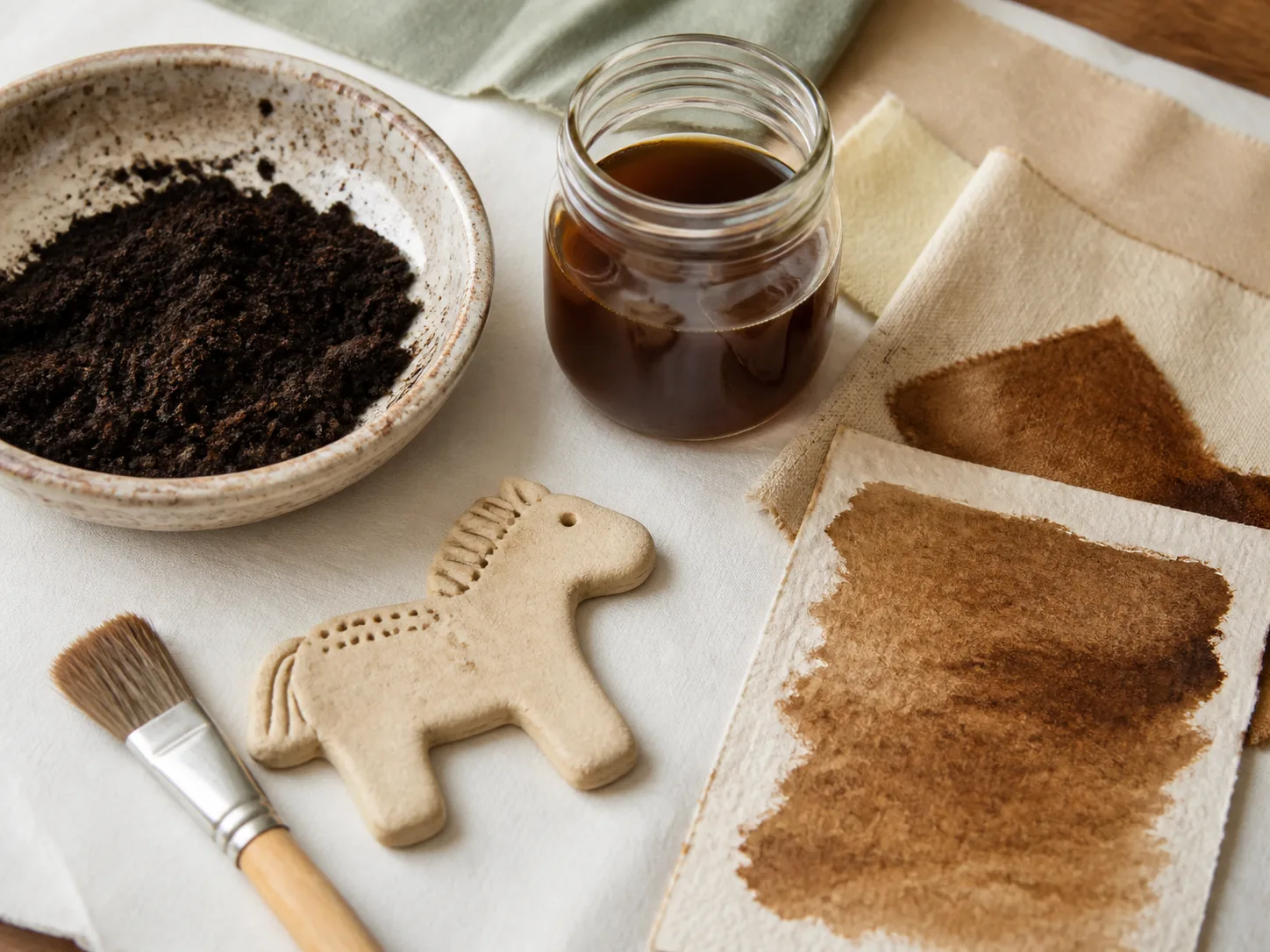
For a small batch, cover a cup or two of grounds with water in a saucepan, heat gently, and let the liquid steep before straining through a fine sieve or cloth. Dip a scrap first, let it dry completely, and judge the dry color before committing to a larger piece. More time in the bath generally deepens the tone, but fabric fiber, roast, concentration, and drying method all change the result.
For a mottled paper effect, brush strained coffee over watercolor paper and let each coat dry before adding another. Keep the grounds themselves out of the final liquid if you want an even wash. Protect counters and wear an apron because tannin-rich color is charming on craft paper and much less charming on a pale countertop.
7. Add texture to play clay and nature crafts
Dried grounds add brown color, a coffee scent, and a sandy texture to homemade salt dough or play clay. Work in a tablespoon at a time until the clay has the texture you want, then knead thoroughly so there are no wet pockets. The result is useful for pretend soil, animal tracks, fossil impressions, and simple nature-themed shapes.
Use a plain flour-and-salt dough or a purchased nonfood craft clay, and label the finished material as a craft rather than a snack. Coffee grounds make the dough less smooth and can shed particles, so they are not ideal for very young children who mouth materials. Supervise the project, wash hands afterward, and keep the clay in a sealed container only after it has cooled and dried enough that condensation will not build up.
You can also press a thin layer of damp grounds into air-dry clay or paper for texture, then brush off the loose material once the surface sets. The goal is an interesting surface, not a durable coffee coating. If the craft will be handled often, use acrylic or watercolor paint for the final color and reserve grounds for the temporary texture.
8. Make an occasional body scrub
The rounded grit of used grounds can make a simple body scrub for elbows, knees, or the soles of feet. Mix a small amount with an unscented cleanser or a plain oil, massage it lightly over damp skin for a few seconds, and rinse completely. Use it occasionally rather than daily; more scrubbing is not the same as better skin care.
Keep the mixture off the face, eyelids, freshly shaved skin, broken skin, and any rash or active irritation. Coffee grounds are physically rough enough to aggravate sensitive areas, and oil can make a shower floor slippery. Stop if the skin stings, turns red, or feels unusually tight, and use a softer washcloth instead if exfoliation is not comfortable.
Make only what you will use immediately. A jar of wet grounds and oil is a short-lived food-like mixture that can spoil, smell stale, or grow microbes. Rinse the tub or shower drain with plenty of water after collecting the grounds in a bin; the same particles that feel useful on skin can settle in plumbing.
9. Feed a compost pile, then use the finished compost
For most households, composting is the best use for a larger quantity of leftover grounds. Coffee grounds count as a nitrogen-containing “green” ingredient even though they look brown, while dry leaves, shredded cardboard, and paper provide carbon-rich “brown” material. The pile also needs oxygen and moisture, so a heap of grounds by itself is neither balanced compost nor a plant fertilizer.
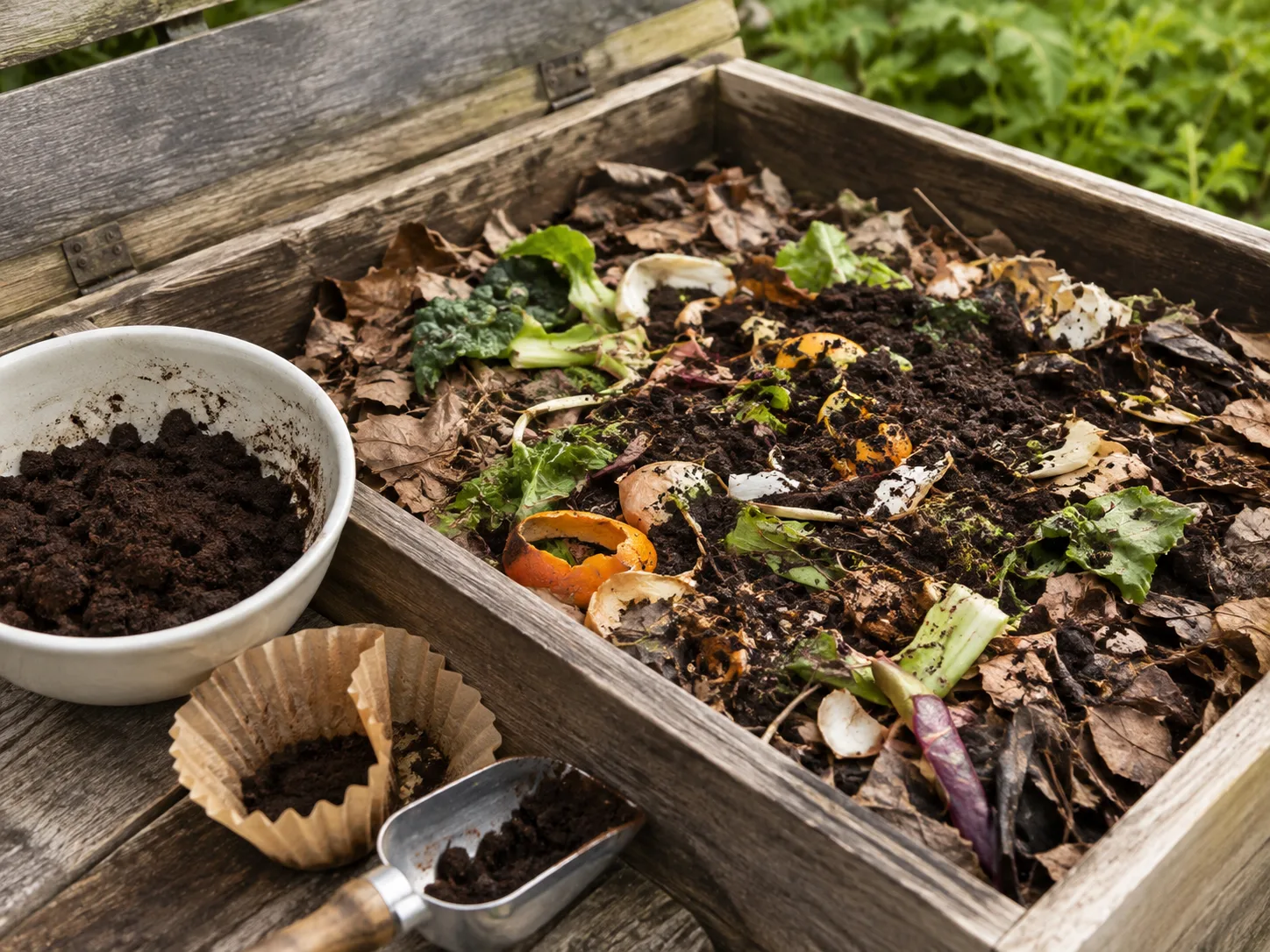
The Alabama Cooperative Extension System’s backyard composting guidance lists coffee grounds among kitchen scraps that can go into a pile and explains why air, water, carbon, and nitrogen all matter. It also notes that coffee grounds have a carbon-to-nitrogen ratio around 20:1, while a working pile needs a broader mix near the commonly used 30:1 balance.
Balance grounds with brown material
Mix the grounds through shredded leaves, dry grass, torn uncoated cardboard, or other accepted brown material instead of dumping them in a thick layer. A practical household rhythm is a thin layer of grounds followed by several handfuls of browns, then a light mix with a fork or compost tool. The pile should feel like a wrung-out sponge: moist enough for microbes, not wet enough to lose air.
If the pile smells sour, looks slimy, or forms a dense black cake, add more dry browns and turn it. If it is dusty and inactive, add a little water while mixing. Bury fresh kitchen additions inside the pile to discourage animals, and avoid grounds contaminated with flavored syrups, dairy, or other ingredients that do not belong in your compost system.
Small worm bins can also accept coffee grounds, but moderation matters. The extension guide on vermicomposting from Alabama Cooperative Extension System describes coffee grounds as a fine grit that can be added in small amounts while emphasizing gradual feeding and correct moisture. If worms slow down, the bin smells, or food sits untouched, stop adding grounds until the bedding and moisture are corrected.
Why finished compost is safer for beds and pots
Composted grounds are more forgiving than a thick layer of raw grounds because microbes have already broken down much of the material and mixed it with other ingredients. Work finished compost into the top layer of garden soil or use it as part of a broader potting or bed-building mix, rather than treating it as a concentrated fertilizer.
The common claim that coffee grounds automatically acidify every garden is too simple. Research summaries collected by horticulturist Linda Chalker-Scott and published by Planet Natural explain that acidity varies by coffee and by composting stage, and that pure grounds can compact into a barrier that interferes with water and air. The same summary recommends keeping grounds to a minority of the total compost volume and avoiding pure-ground mulch.
If you have only a small amount, sprinkle it thinly over a compost pile or mix it thoroughly into existing compost. Do not use grounds as a replacement for a soil test, lime, sulfur, or a complete fertilizer. The right amendment depends on the crop, the native soil, and what your test says is missing.
10. Try a cautious garden pest barrier
A thin ring of used grounds around a vulnerable plant is a reasonable experiment when you are curious whether the smell or texture changes a small pest problem. It is not a reliable pesticide. Grounds dry out, wash away, become buried in mulch, and may fail completely when the animal has strong feeding pressure or another route to the plant.
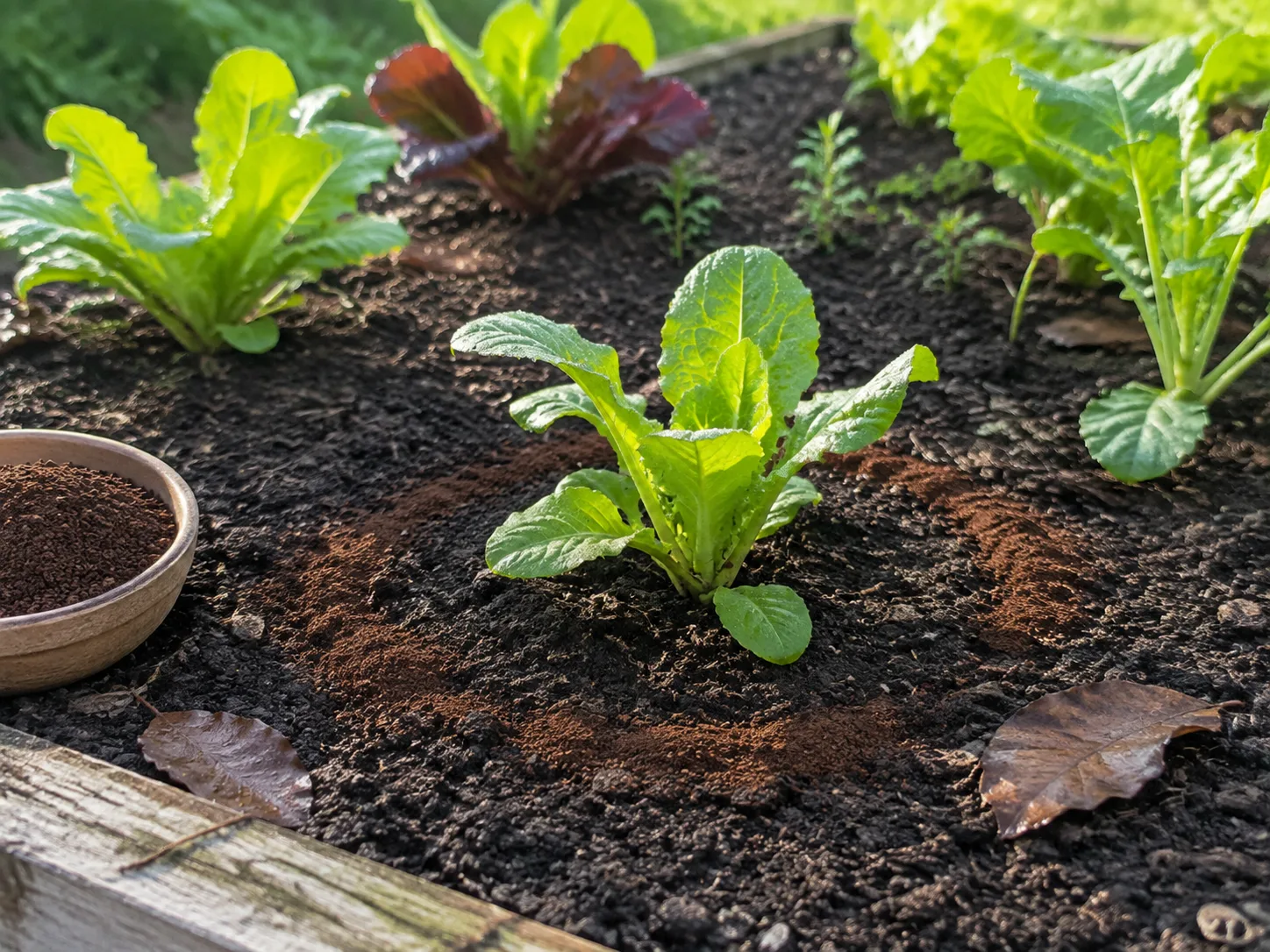
For a trial, clear the immediate soil surface, lay down a sparse ring rather than a thick mound, and observe the plant for several days. Reapply only after rain if you are seeing a meaningful difference. Keep the ring away from stems, do not cover the root zone with a compact layer, and stop if the plant wilts, seedlings fail to emerge, or the grounds attract unwanted moisture and mold.
What coffee grounds can and cannot deter
Slugs and snails may dislike a dry, gritty surface, but garden anecdotes are not the same as dependable control. A practical guide from Lawn Love acknowledges that evidence for a grounds barrier is limited and recommends using a thin layer rather than a heavy mat. If chewing continues, use hand-picking, a physical barrier, habitat reduction, or a control labeled for the pest and crop.
Ants may avoid a strongly scented patch temporarily, and some cats may choose a different digging spot, but neither response is guaranteed. Grounds do not stop rabbits, deer, caterpillars, or a determined slug population. For animal browse, fencing and netting usually outlast a pantry remedy; for insects, identify the pest first and use integrated pest management rather than scattering grounds across every leaf.
Never mix coffee grounds with pesticides, essential oils, or homemade sprays because “natural” ingredients can still injure foliage, beneficial insects, pets, or people. A small garden trial has a place; replacing observation and exclusion with repeated coffee applications does not.
Safety and cleanup rules that prevent the common failures
Keep these rules beside the coffee maker:
- Do not pour grounds into a sink, toilet, or garbage disposal. Collect them in the trash or compost bin.
- Dry grounds completely before putting them in a closed craft, sachet, or refrigerator container.
- Keep grounds away from pale fabric, porous stone, nonstick coatings, and untested wood finishes.
- Avoid thick layers on soil and never mix grounds into seed-starting mix unless a reliable crop-specific recommendation supports it.
- Wash hands after using grounds for crafts or cleaning, and do not use a scratchy scrub on broken or sensitive skin.
- Store grounds and finished projects where children and pets cannot eat them.
The pet rule deserves extra attention because a little scattered coffee can look harmless. ASPCA Poison Control lists coffee and caffeine among foods that can cause serious signs in pets, and VCA Animal Hospitals specifically identifies coffee grounds as a common caffeine source. Keep bowls, drying trays, compost additions, and garden rings inaccessible to dogs and cats; if a pet eats grounds, call your veterinarian or an animal poison service promptly rather than waiting for symptoms.
Finally, remember that reuse is not a competition. If today’s grounds are too wet for a sachet, too fine for a finish, or too abundant for a small craft, compost them. A clean, well-aerated pile is a more useful second life than forcing a kitchen hack that creates a bigger cleanup problem.
Conclusion
The best ways to reuse leftover coffee grounds are the ones that fit their condition. Dry grounds suit the fridge, drawers, wood tests, dye, clay, and a small body scrub; fresh spent grounds suit hands, sturdy scrubbing, and compost; finished compost is safer for garden soil than a thick layer of raw grounds.
Use coffee grounds as a modest tool with clear limits. Keep them out of plumbing, keep them away from pets, test anything that can stain or scratch, and treat pest rings as short experiments rather than promises. When you are not sure what to do, add the grounds to a balanced compost pile and let the microbes—not a miracle claim—do the work.