How to Start and Plan a Garden From Scratch
Plan your first garden bed step by step—sun mapping, soil tests, grass removal, plant picks, and a year-one maintenance rhythm that avoids rookie overwhelm.
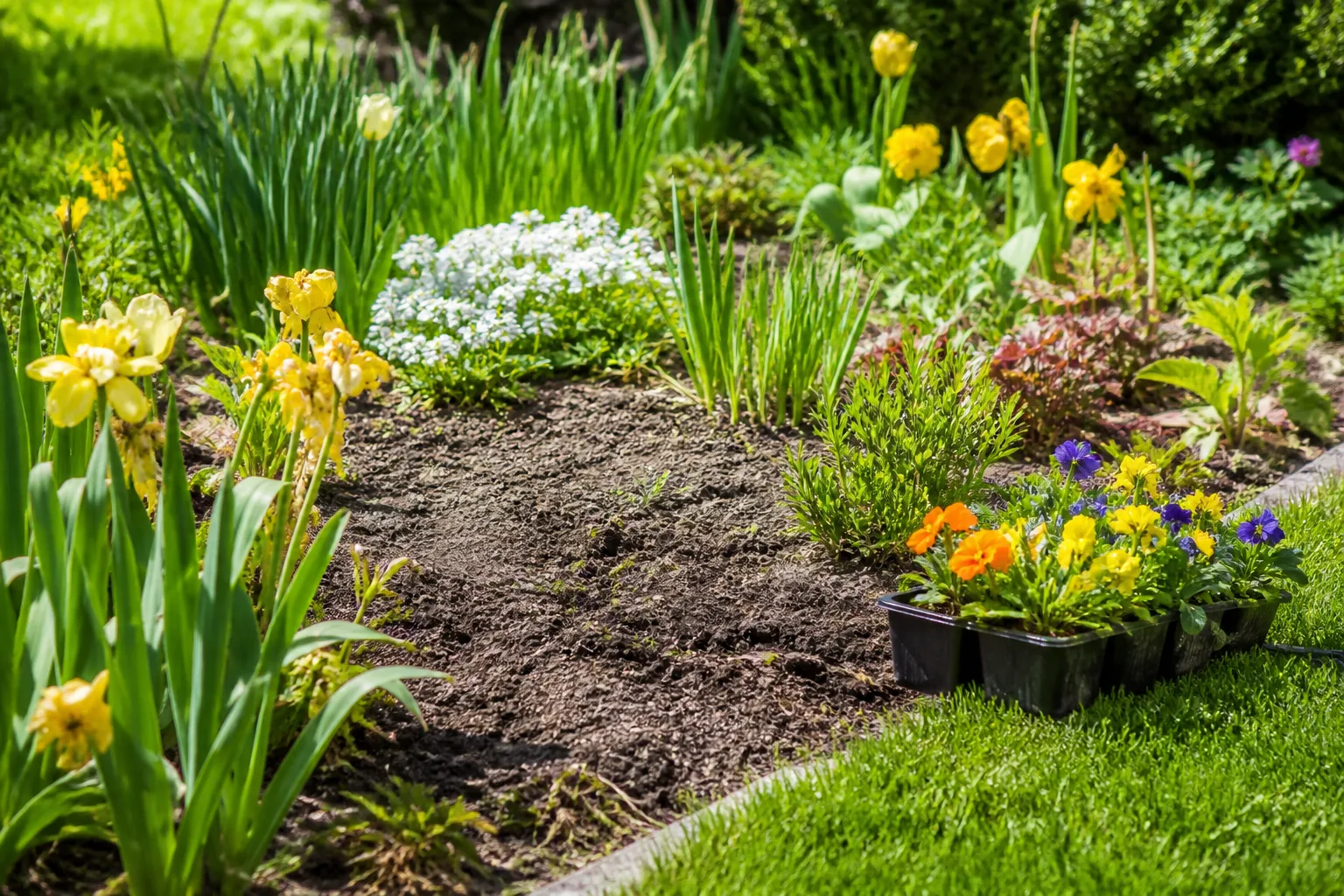
You do not need a landscape degree to grow your first bed. You do need a sequence—because most first gardens fail in the planning phase, not the planting phase. People buy flats of tomatoes for a shady side yard, dig through compacted lawn without testing soil, or plant everything the first warm weekend and wonder why half the patch sits yellow all summer.
This guide walks you through starting a garden from scratch in the order that actually works: decide what you want, read your site, choose a bed type, clear grass the smart way, fix soil, pick forgiving plants, plant on time, and maintain through year one. Follow the steps and you will have a bed that produces—not a Pinterest board that quits by August.
Start With a Goal, Not a Seed Catalog
Before you touch a shovel, answer one question: What job should this garden do? A cutting garden, a butterfly border, a small vegetable patch, and a mixed herb-and-flower bed all need different sun, spacing, and maintenance. Picking plants first and forcing them into whatever spot you have left is the fastest route to frustration.
Use this quick filter:
| Garden goal | Minimum sun | Best first-year size | Typical payoff |
|---|---|---|---|
| Salad and snacking vegetables | 6–8+ hours direct | 4×8 ft raised or in-ground | Weekly harvest mid-summer |
| Cut flowers | 6+ hours for most blooms | 3×10 ft border | Bouquets from July onward |
| Mixed ornamental border | Match plants to mapped light | One curved 5×12 ft bed | Color spring through fall |
| Herbs for cooking | 4–6 hours (many herbs tolerate partial sun) | 3×3 ft or containers | Weekly clipping |
| Pollinator patch | 6+ hours | 4×6 ft | Bees and butterflies all season |
If you are still deciding between food and flowers, start small and mixed: one 4×8 ft bed with lettuce and radishes in front, zinnias or marigolds in the middle, and one tomato or pepper in the back. You learn watering, weeding, and harvest timing on one manageable canvas. Our easy vegetables to grow list pairs well with that first bed if food is the priority.
Write your goal in one sentence on paper: “This bed feeds two people salads twice a week” or “This border looks good from the kitchen window.” That sentence becomes your filter when seed catalogs tempt you with twenty more varieties.
Map Sun, Drainage, and Access Before You Dig
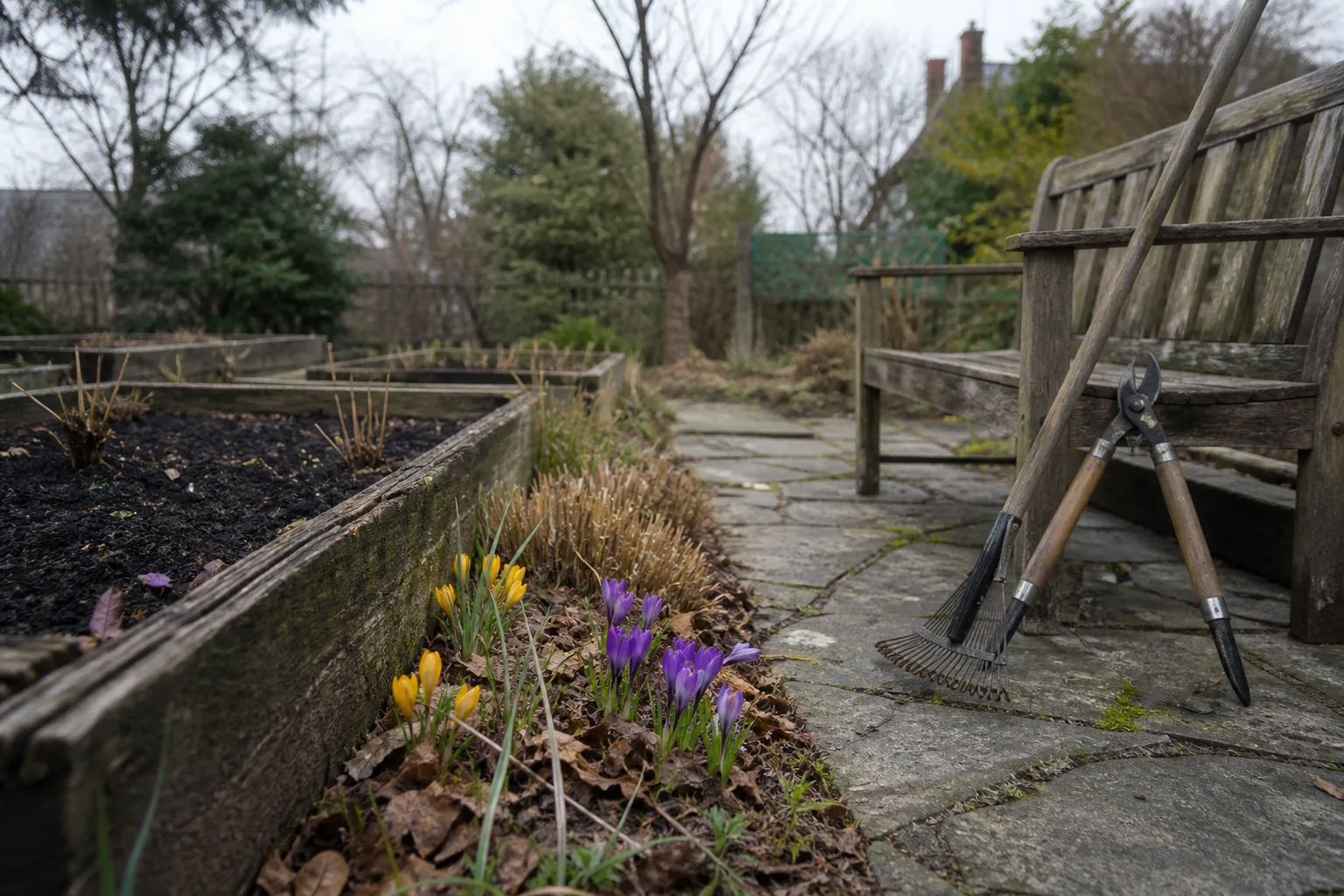
Site beats species every time. A perfect tomato plant in four hours of dappled shade will still underperform. Before you mark a bed outline, spend one full day watching candidate spots—morning, midday, and late afternoon. Note where shadow from the house, fences, or trees falls.
How to Read Light in a New Yard
Extension services and experienced gardeners use simple thresholds:
- Full sun: 6–8+ hours of direct light on the growing area during the growing season. Required for tomatoes, peppers, zinnias, and most vegetables.
- Partial sun / partial shade: About 4–6 hours of direct light, or dappled light all day. Fine for lettuce, many herbs, impatiens, and coral bells.
- Full shade: Less than 4 hours of direct sun. Limited to shade-tolerant species—do not force sun lovers here.
Also check drainage. Dig a hole 12 inches deep after rain (or fill it with water and wait). If water sits for more than a few hours, you need raised beds or soil amendment before planting water-sensitive crops. Finally, plan access: you should reach every plant without stepping on the bed (compaction kills roots) and get a hose or watering can to the site without dragging it across the lawn daily.
Know Your Zone and the Plant Words You Will See Everywhere
USDA Plant Hardiness Zones map average annual minimum winter temperatures. They tell you which perennials, shrubs, and trees survive your winters—not how hot your summers get. Look up your zone through your state cooperative extension or the USDA map, then read plant tags for “hardy in zones X–Y.”
Three words appear on every label:
- Annual: Completes its life cycle in one growing season. Frost kills it. Examples: marigolds, zinnias, basil, most tomatoes grown as annuals in cold climates.
- Perennial: Lives multiple years; tops may die back in winter while roots persist. Examples: peonies, daylilies, asparagus, many herbs like rosemary in warm zones.
- Biennial: Vegetative year one, flowers and sets seed year two, then dies. Examples: foxglove, parsley, some hollyhocks.
Mixing these types is normal in one bed—just know which plants you must replant each spring versus which return on their own. That distinction drives your budget and your fall cleanup plan.
Pick the Right Month and Frost Window
Timing is not “when the garden center opens.” It is when your soil and air match what you are planting. Two dates anchor spring planting:
- Average last frost date — the point when tender annuals and warm-season vegetables are safe outdoors in most years (not every year).
- Soil temperature — many seeds refuse to germinate in cold, wet soil even if the air feels warm.
Cool-season crops—lettuce, peas, spinach, radishes—often go in two to four weeks before your last frost when soil can be worked (not a muddy sponge). Warm-season crops—tomatoes, peppers, basil, cucumbers—wait until after last frost and often until soil reaches roughly 60°F (16°C) at planting depth. If you want a head start, sow indoors using our how to start seeds indoors guide, then transplant after hardening off.
Fall planting matters too: garlic, spring bulbs, and many trees/shrubs prefer autumn installs in many regions. If you are reading this in summer, you can still sheet-mulch now for a spring bed—planning and prep do not require warm weather.
Choose Raised Beds, In-Ground Beds, or Containers
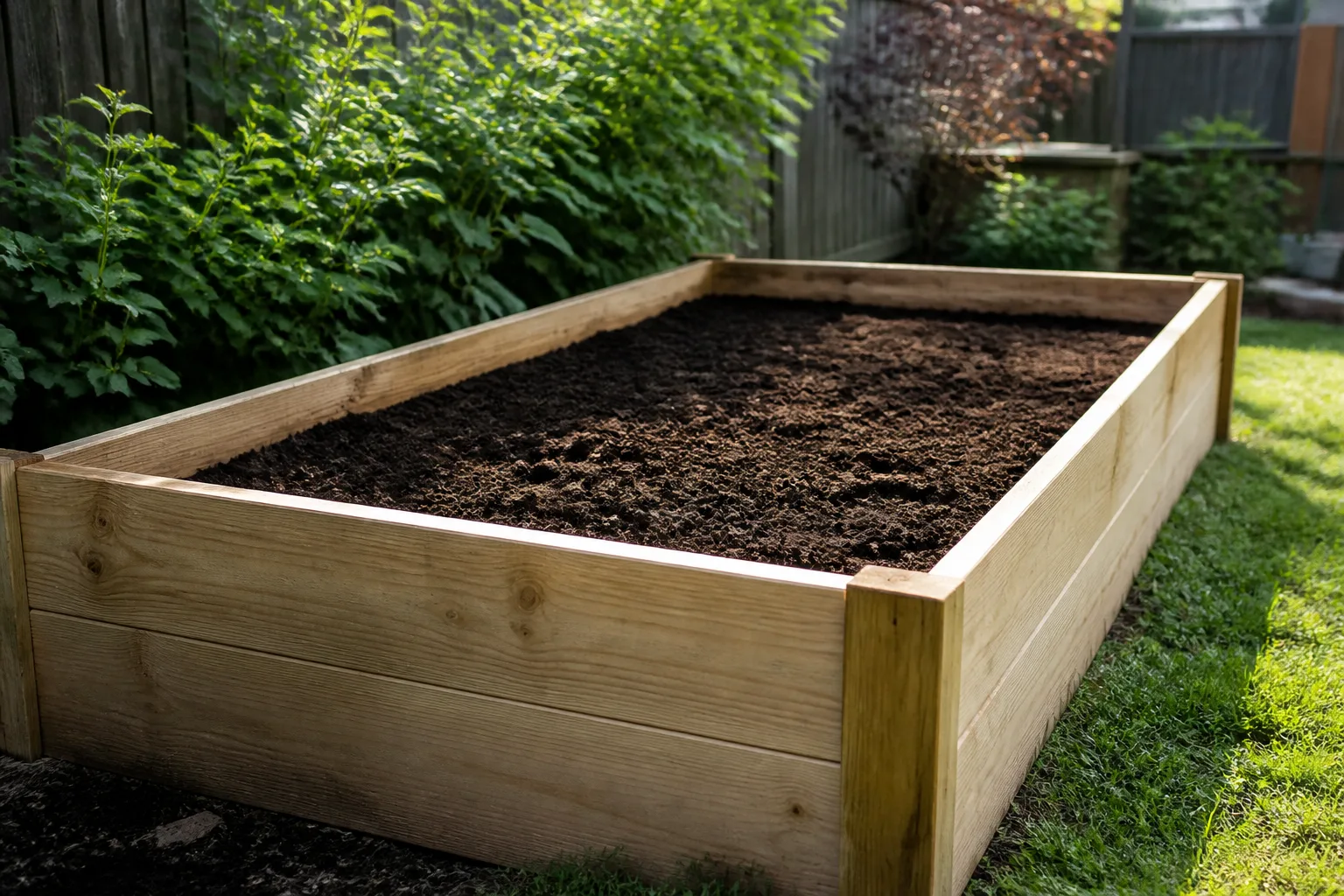
All three work. The right choice depends on your body, your soil, and your patience.
Raised beds lift soil above grade in frames or mounded rows. University of Minnesota Extension notes advantages: improved drainage on heavy clay, less compaction because you do not walk on the growing surface, and faster warm-up in spring. Trade-offs: they dry out faster (more watering), cost materials to build, and need quality fill—not plain topsoil alone. See our raised garden bed layouts and raised garden bed depth guides when you are ready to build.
In-ground beds are the classic approach: amend native soil and plant at grade. Lower cost, less watering once established, and better for large plots—but more weeds, more bending, and poor native soil must be fixed first.
Containers and vertical setups suit patios, balconies, and rental yards. Pots drain fast and need daily checks in heat. Vertical gardens (trellises, wall pockets, stackable planters) expand surface area when footprint is tiny. Pair with container garden tips for beginners if pots are your main venue.
Decision Rules That Save Regret
Choose raised beds if native soil is heavy clay, contaminated, or compacted, or if bending is difficult. Choose in-ground if drainage is good, soil tests come back reasonable, and you want the lowest ongoing water bill. Choose containers if you lack yard access or need to move plants with the sun. When in doubt, start with one raised 4×8 ft bed—it is the most forgiving beginner laboratory.
Clear Grass and Build Your First Bed
Empty lawn space is rare in suburban yards. Converting turf to garden is physical work; pick a method that matches your timeline and back.
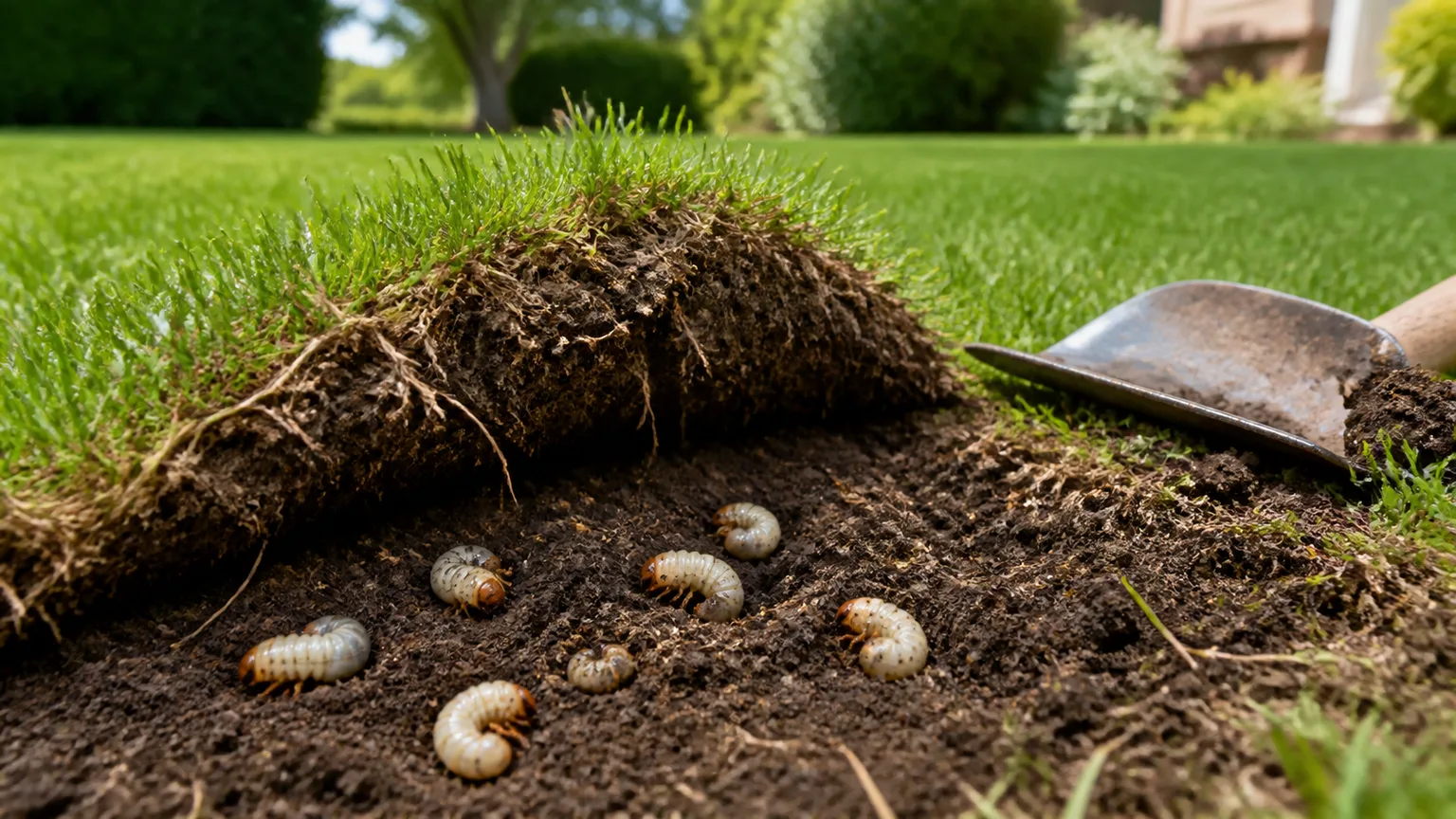
Sheet mulching (lasagna gardening) smothers grass with cardboard or newspaper layered with compost and mulch. Oregon State University Extension describes it as a way to build soil while killing turf—ideal if you can wait several months before planting. Start in summer or fall for a spring bed.
Solarization covers mowed, moist turf with clear plastic for four to six sunny weeks. Heat kills grass and many weed seeds. Works best in full sun during hot months; weak in cool or cloudy climates.
Manual removal cuts turf with a sharp spade or sod cutter, strips the grass, then loosens the soil beneath. Fastest planting timeline, hardest on the body. Rent a sod cutter for large rectangles.
Whichever method you use, edge the bed after clearing. A clean edge stops lawn grass from creeping back into your planting zone.
Sheet Mulching, Solarization, or Manual Removal
| Method | Best when | Time until planting | Labor |
|---|---|---|---|
| Sheet mulch | You can wait; want better soil | 3–6+ months | Low day-of, patience required |
| Solarization | Hot sunny season; weed seed issue | 4–6 weeks | Medium |
| Manual strip | You want to plant this month | Days | High |
Mark the bed shape first with a hose or rope, measure it, and only then start clearing. A bed you can weed in twenty minutes beats a ambitious patch that becomes a jungle by July.
Test and Fix Soil Before You Plant
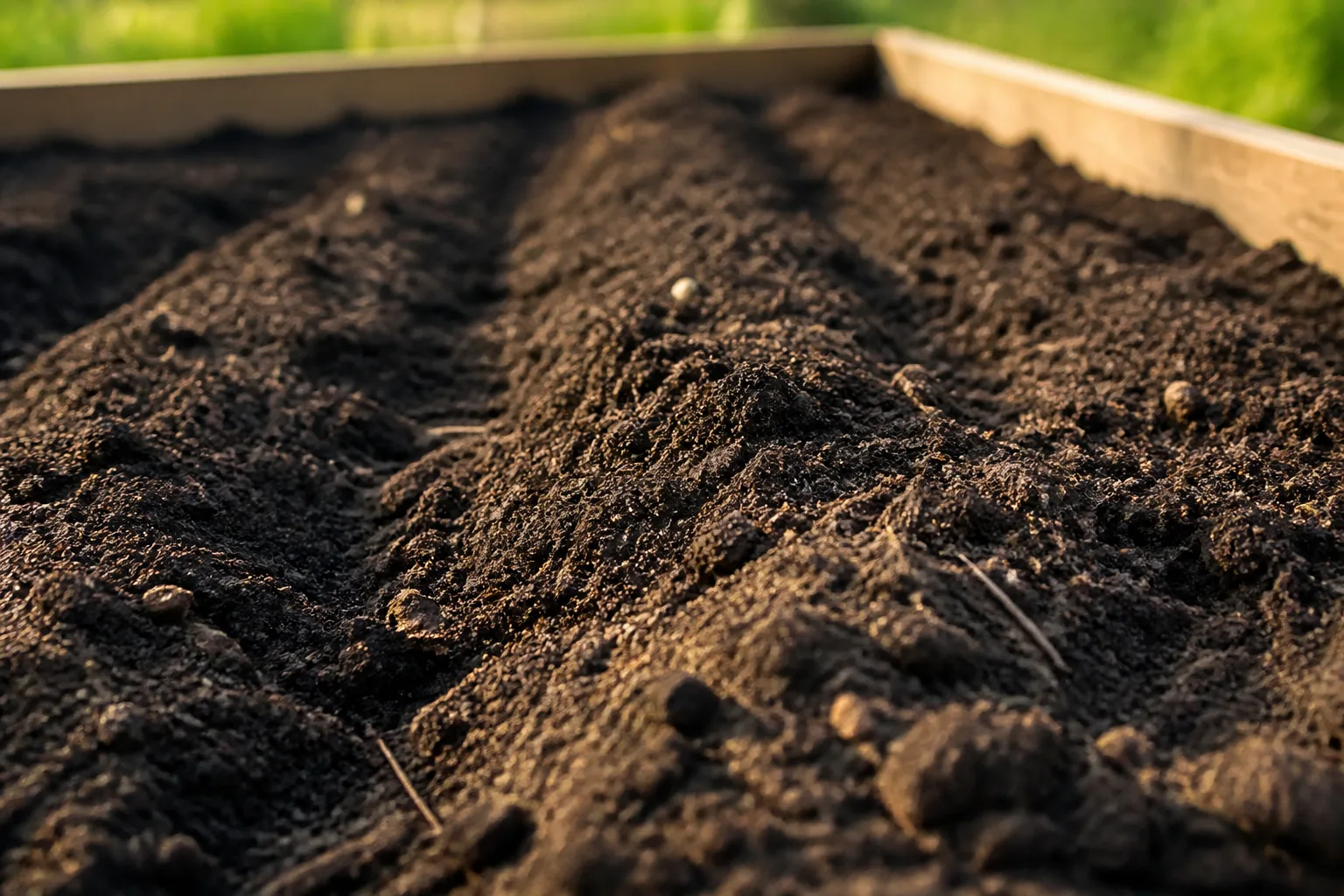
Healthy plants start below ground. University of Minnesota Extension recommends a soil test before major planting or amendment—especially in new beds where you do not know pH, organic matter, or nutrient levels. Contact your county cooperative extension; kits are inexpensive and results tell you exactly what to add (and what to skip).
Common issues in new gardens:
- Low organic matter: Water runs off or drains too fast; plants look hungry despite feeding. Fix with compost worked into the top 6–8 inches.
- Wrong pH: Nutrients lock up when soil is too acid or too alkaline. Lime raises pH; sulfur lowers it—only after a test confirms need.
- Heavy clay: Drains slowly, sets like brick when dry. Compost plus raised beds beat rototilling clay into concrete when wet.
- Sandy soil: Drains fast, low fertility. Compost and mulch build structure over time.
Our signs of good quality soil guide helps you interpret what you see before results return from the lab. While waiting, you can still sheet-mulch or build frames—just hold off on bulk lime or fertilizer until numbers arrive.
Amend With Compost—and Know When Shortcuts Backfire
Compost is the safest first amendment: it improves drainage in clay, water retention in sand, and feeds soil biology. Work 2–4 inches of finished compost into the top 6–8 inches of a new in-ground bed, or use a quality raised-bed mix that already contains compost and coarse material for drainage. NRCS soil health guidance emphasizes organic matter and living soil as the foundation of productive ground—not a single N-P-K spike.
Rake the surface level before planting. Avoid “double digging” entire yards unless you enjoy unnecessary labor; targeted amendment plus mulch outperforms random deep tilling that brings weed seeds to the surface.
When Landscape Fabric Helps—and When It Hurts
Landscape fabric blocks light so weed seeds cannot germinate. University of Minnesota Extension notes it can work under mulch around shrubs and trees where you rarely dig. In mixed flower and vegetable beds, fabric causes problems: you cannot easily add compost, perennial spreaders get trapped, earthworms and soil structure suffer, and fabric often surfaces looking ugly as mulch decomposes.
For a first-year mixed bed, skip fabric. Use 3 inches of shredded bark, straw, or leaf mulch after planting instead. If weeds overwhelm you, that is a sign to mulch thicker—not to lock the soil under plastic.
Select Beginner-Proof Plants for Year One
Choose plants that forgive uneven watering and teach you harvest timing without exotic care. Build a short list before you enter the nursery.
Fast cool-season wins (direct sow): lettuce, radishes, spinach, peas. Radishes can ready in 25–30 days—proof that the bed works.
Warm-season staples (starts or indoor sowing): bush beans, zucchini, cucumbers, cherry tomatoes, peppers. Buy small nursery starts if seed starting feels like too much year one.
Easy flowers: marigolds, zinnias, sunflowers, cosmos. Large seeds, quick germination, constant color.
Herbs: basil, chives, parsley. Snip often; they tell you when you forget water.
Avoid year-one ego purchases: finicky delphinium, large fruit trees without pollination research, or ten tomato varieties in one bed. One cherry tomato, one slicing tomato, and one pepper teach more than a crowded experiment.
Match every plant to the sun map you drew earlier. Shade lovers (lettuce, cilantro) on the east or north edge; sun hogs (tomatoes, zinnias) in the brightest block.
Design Layout, Height, and Color Without Overthinking
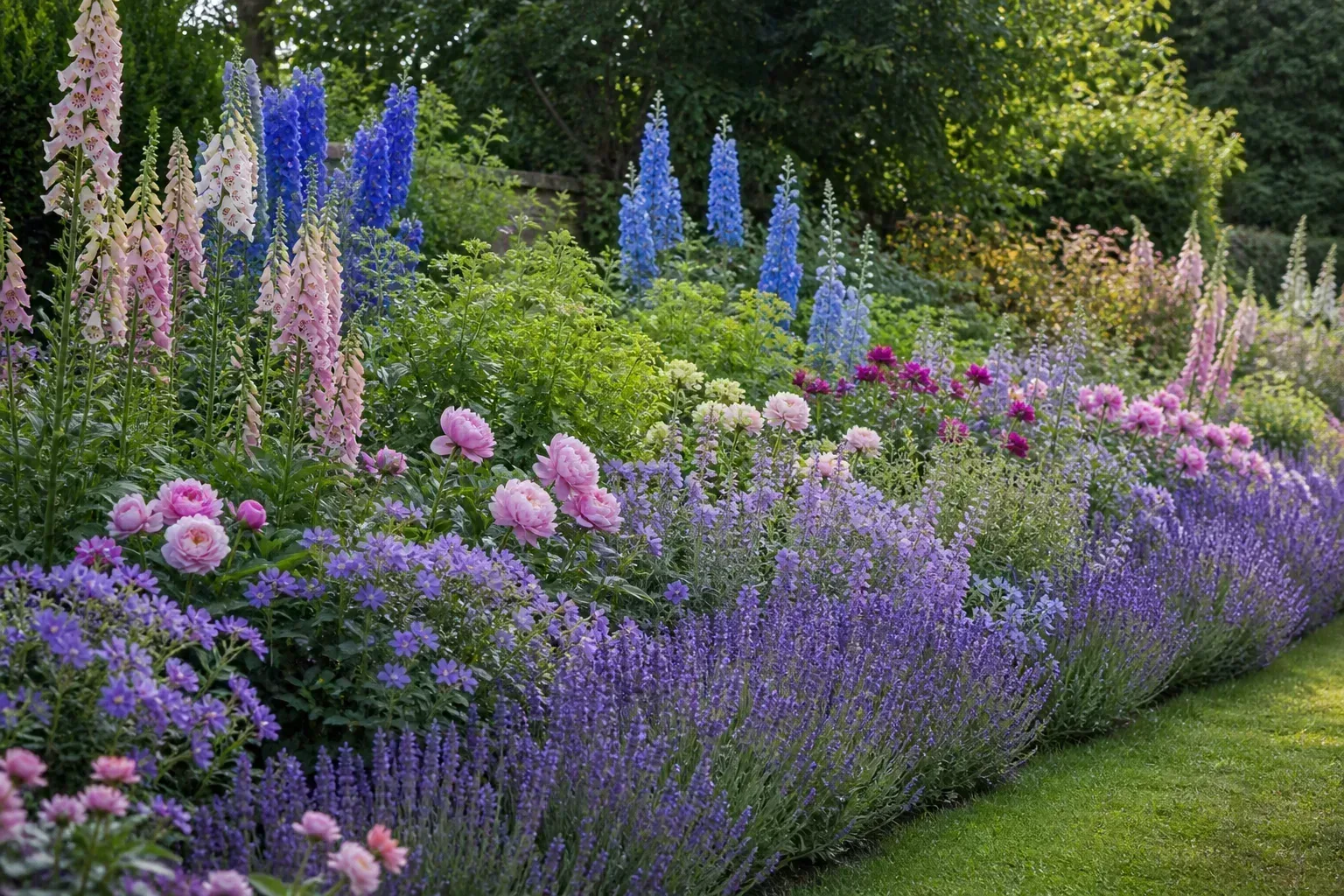
University of Minnesota Extension landscape design guidance boils down to a few practical rules beginners can use without drafting blueprints:
- Height: Short plants forward (south or street side in northern hemisphere beds), medium in the middle, tall in back—unless the bed is viewed from all sides, then put tall plants in the center.
- Spacing: Read mature width on tags. That empty soil is not wasted; it is air for growth and weeding access.
- Form and texture: Mix feathery foliage (carrots, dill) with bold leaves (squash, cannas) so the bed does not look flat.
- Color: Pick one warm or cool palette for unity, or one complementary pair (purple and yellow) for punch. You do not need a designer color wheel—just avoid one-of-everything chaos unless cottage chaos is the goal.
Draw a simple rectangle on paper, label north, and pencil circles where each plant goes. Take a photo after planting—you will forget by midsummer.
Plant Correctly: Seeds, Starts, and Spacing
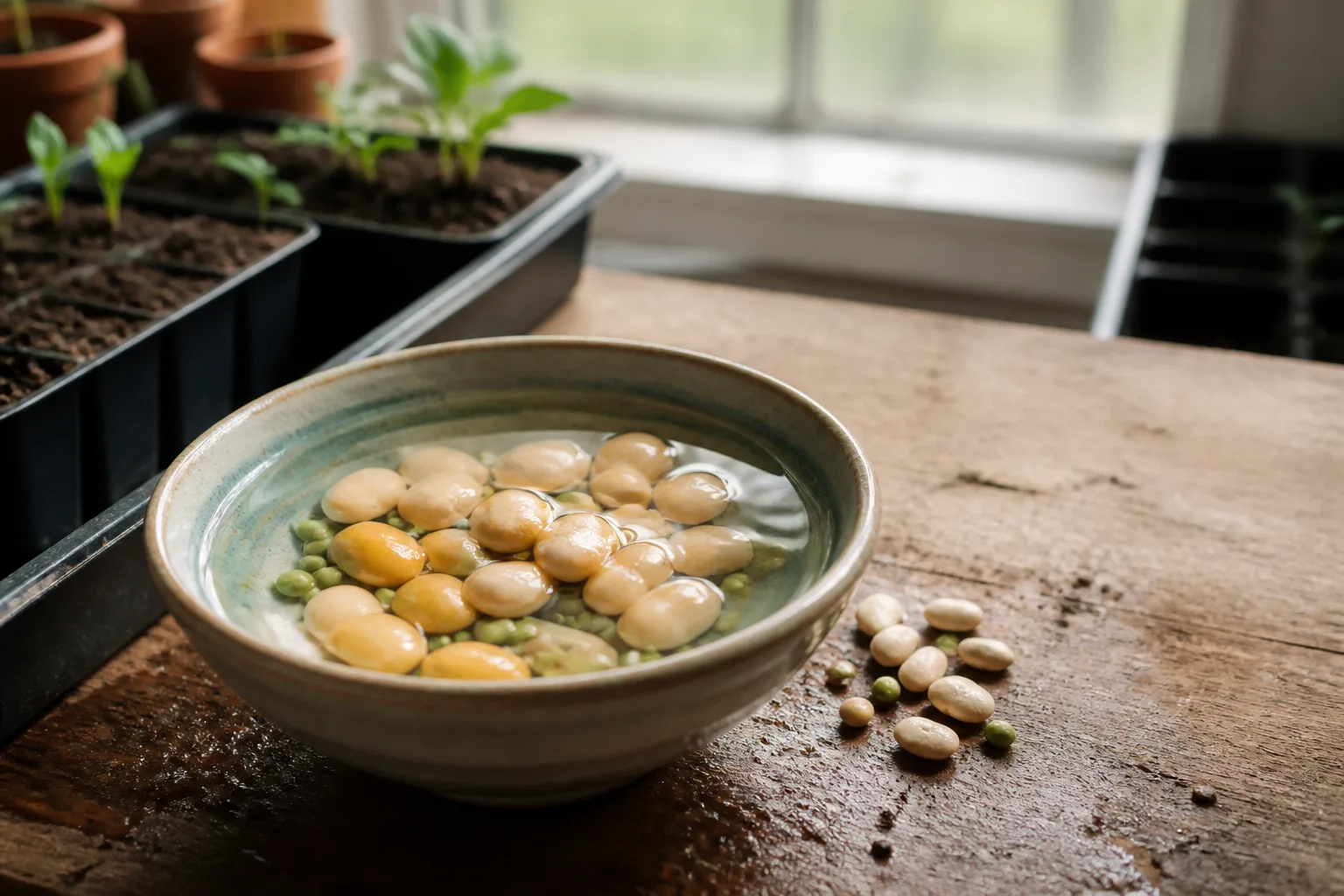
Seeds: Follow packet depth and spacing. Small seeds barely covered; large seeds (beans, squash) deeper. Water gently so they do not wash away.
Transplants: Dig a hole twice the root ball width, plant at the same depth as the pot (tomatoes are a famous exception—bury stem to first leaves for extra roots). Water deeply at planting; check daily for the first week.
Soil temperature: Warm-season seeds sit idle in cold mud. A cheap soil thermometer saves replanting. If you are unsure, wait one week—patience beats replanting.
Companion basics: Group plants with similar sun and water needs. In vegetables, basil near tomatoes is classic; tall sunflowers shade lettuce if placed wrong—pay attention to mature height, not seedling size. Deeper companion charts can wait until year two.
Water, Mulch, and Weed Like a First-Year Gardener
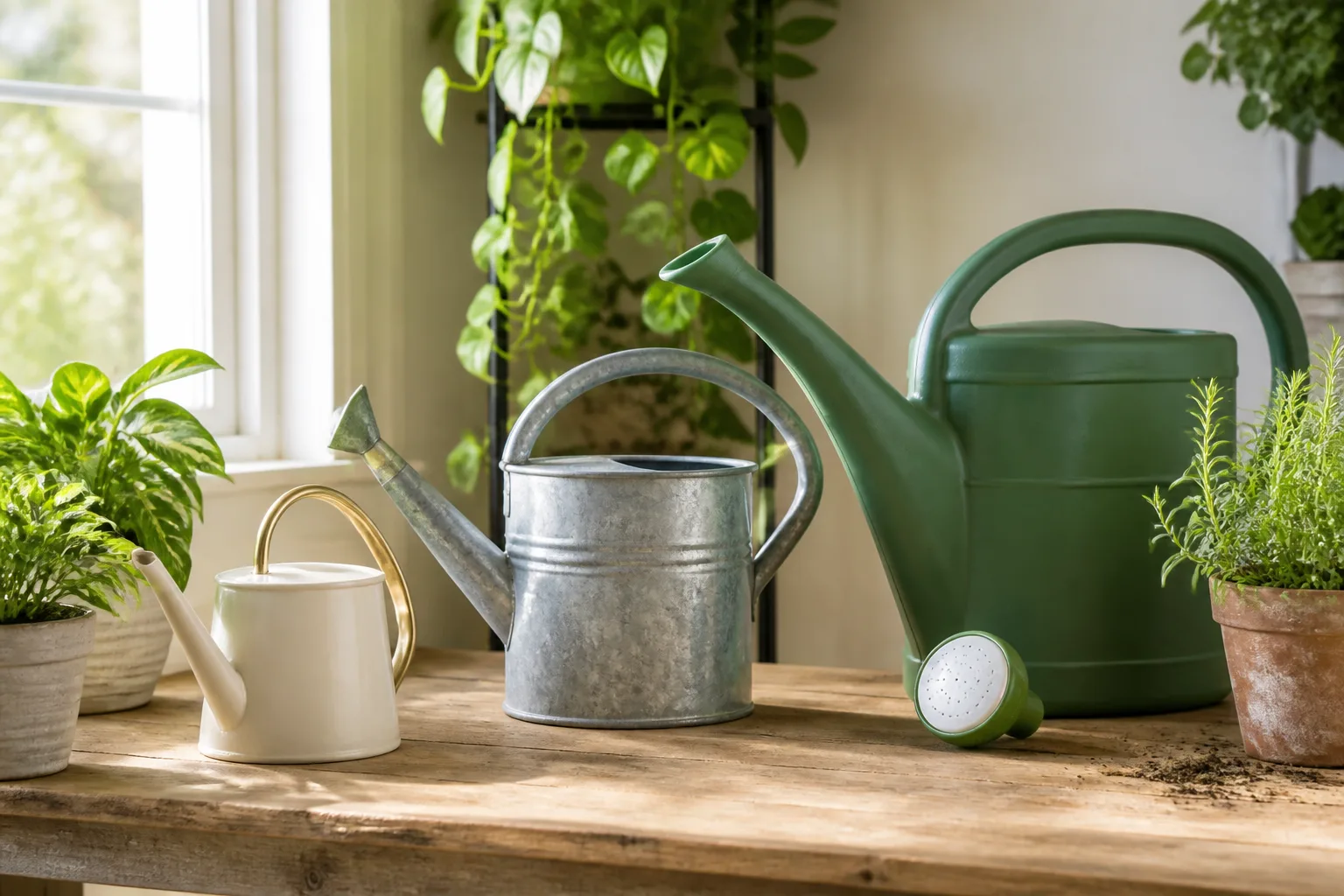
New beds need consistent moisture while roots establish. Check soil with your finger: dry an inch down, water. Morning watering reduces evaporation and foliar disease. Raised beds and containers dry faster than in-ground beds—adjust frequency, not volume, on hot weeks.
Mulch immediately after planting. 2–3 inches of organic mulch cools soil, holds moisture, and blocks weeds. Keep mulch an inch away from seedling stems to prevent rot.
Weeds will appear. Pull them young weekly—ten minutes beats an hour once they seed. Learn a few common weeds versus self-sown flowers you want (volunteer cosmos and marigolds are gifts, not enemies). When in doubt, wait until a seedling is identifiable before yanking.
Manage Pests Without Wrecking the Whole Ecosystem
Expect some chewing. A healthy garden tolerates minor damage. Start with prevention: pick deer-resistant plants if deer visit, fence rabbit favorites, rotate crops year to year in vegetable beds, and hand-pick caterpillars and slugs in small beds.
If damage spikes, identify the pest before spraying. Broad pesticides kill pollinators and predators that would help you next month. Targeted soap sprays, row cover on brassicas, and timing (planting after pest peak) beat calendar spraying. Your goal is balance, not a sterile yard.
Track What You Planted So Year Two Gets Easier
Buy a notebook or use your phone. Record:
- Plant names and locations (draw a map)
- Planting dates and source (seed or start)
- First harvest dates
- Problems (shade too deep, powdery mildew, drought stress)
That log turns guesswork into improvement. You will know the tomato that actually thrived, the corner that stays wet, and whether to expand or shrink next spring. Review it in winter with our garden chores before the first day of spring checklist to plan season two.
Conclusion
Starting a garden from scratch is a planning problem dressed as a planting problem. Decide what the bed should do, map sun and drainage, choose raised or in-ground, clear grass with the timeline you actually have, test soil before dumping amendments, plant a short beginner list on the right frost schedule, mulch deeply, and write down what happens. One modest bed mastered beats a quarter-acre abandoned by August.
Your first season’s job is not perfection—it is proof of concept. Get one salad bowl, one bouquet, or one week of herbs from your own ground. Everything else—design finesse, rare varieties, preserver’s harvest—builds on that proof in year two.