How to Protect Roses From Frost and Winter Damage
Protect roses from frost with a rose-specific plan for grafted, own-root, climbing, container, and tree roses in cold or windy gardens.
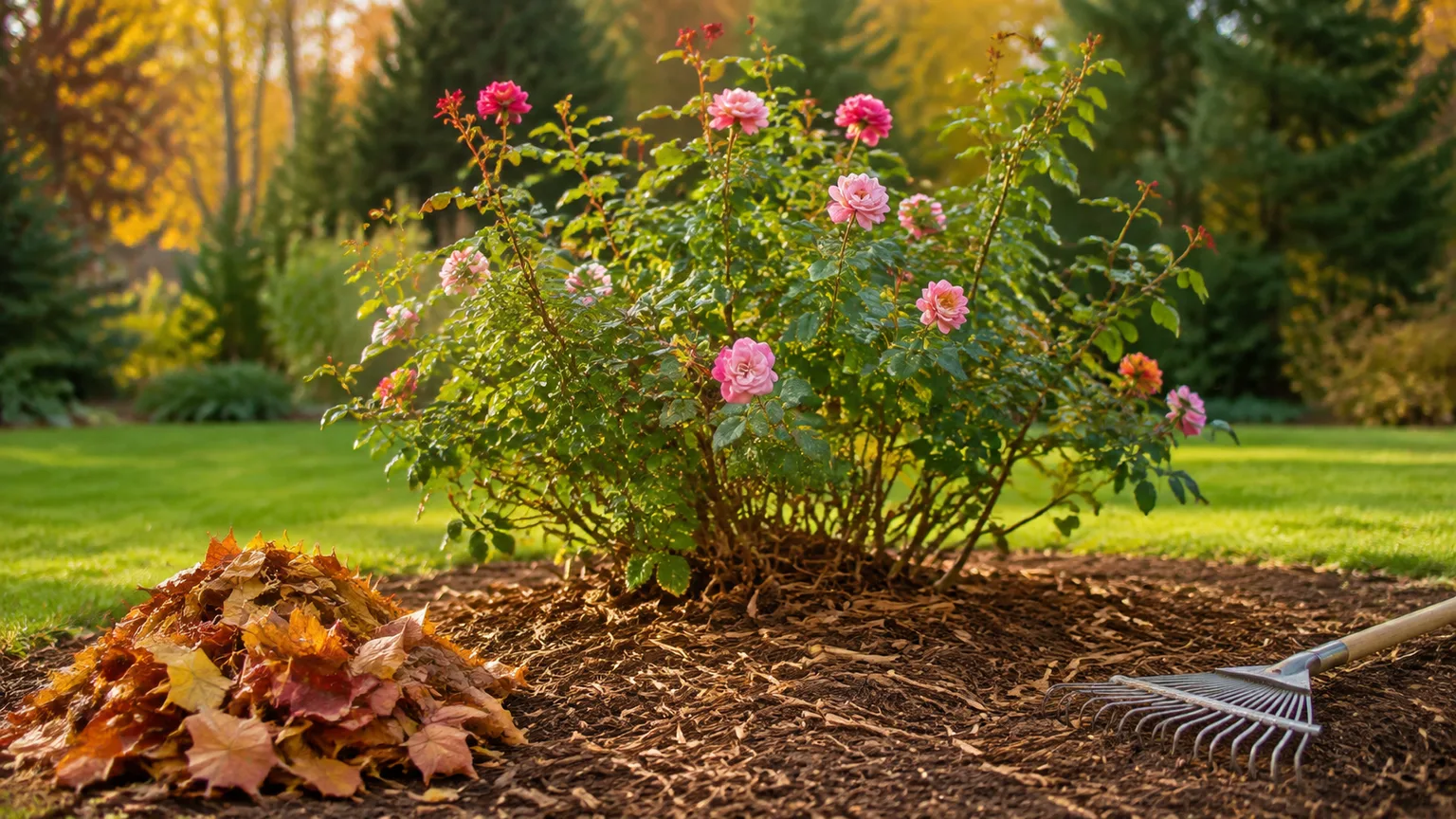
Most established shrub roses do not need a full winter costume. The right question is not “How cold will it get?” but “What part of this rose is vulnerable here?” A hardy, own-root rose in a sheltered bed may need only a clean crown and an even mulch layer, while a grafted hybrid tea in an exposed cold garden may need a soil mound, tied canes, and a breathable windbreak.
Winter protection keeps the root zone and crown from repeated freezing and thawing, reduces drying wind, and shields a vulnerable graft union. It is not about keeping the plant warm or forcing growth; the goal is stable dormancy and enough healthy wood to rebuild in spring.
Should Every Rose Be Covered?
No. Covering a rose that is already hardy for your climate can create new problems if the material holds moisture against the canes, blocks airflow, or encourages the plant to break dormancy during a warm spell. Penn State Extension notes that rose survival depends on the plant’s health, its exposure, and its type—not just the winter minimum printed on a zone map.
Use the lightest effective method. A sheltered shrub rose in a suitable hardiness zone may need fall cleanup, a thorough drink before the ground freezes, and a loose mulch layer. A recently planted rose, a grafted rose, a tender modern cultivar, a rose on a windy trellis, a tree rose, or any rose in a container deserves closer attention because its roots, graft, or canes are more exposed than those of a settled shrub.
There is also a difference between overnight frost protection and winterization. If a rose is still leafy and flowering and the forecast calls for one light frost, a temporary fabric cover supported above the plant can save open flowers and tender tips. If the plant has experienced several hard frosts and is entering dormancy, the task changes to crown insulation, wind reduction, and protection from freeze-thaw cycles.
What Winter Actually Damages on a Rose
Cold can injure rose tissue, but the most troublesome damage often comes from the combination of cold, wind, moisture, and sudden temperature changes. The Royal Horticultural Society explains that repeated freezing and thawing, rapid thawing, and strong wind can make frost damage worse; cold wind also pulls moisture from plant tissues and soil. That is why a rose in a wind tunnel can suffer more than one in a colder but protected corner.
The crown is the point where the canes meet the root system. In a grafted rose, the bud union or graft union is the junction between the desired flowering rose and its rootstock. If that junction is killed, the rootstock may survive while the named rose above it dies. Protecting the crown is therefore more important than wrapping every last cane.
Roots face a different risk. A well-drained bed with an even insulating layer stays more stable than bare soil that freezes deeply, thaws in a January warm spell, and freezes again. Container roots are especially vulnerable because the pot has less surrounding soil to buffer temperature changes.
Finally, late-season soft growth is easy to damage. Nitrogen fertilizer, aggressive pruning, or continued deadheading can encourage tender shoots when the plant should be slowing down. RHS winter-damage guidance specifically cautions against nitrogen-rich fertilizer late in the season because it stimulates sappy growth that is more vulnerable to cold.
Identify the Rose, Hardiness, and Exposure
Before choosing a cover, identify what you are protecting. Look at the plant tag, the cultivar name, or the nursery record and find the recommended hardiness range. Then inspect the planting site. A rose against a house, fence, or dense hedge may be buffered from wind, while the same cultivar on a freestanding trellis or raised terrace can experience more drying and mechanical stress.
Grafted hybrid teas, floribundas, and grandifloras commonly need more crown protection in cold gardens than hardy shrub or rugosa types. Own-root roses have no graft union to protect, but that does not make them invulnerable; their canes can still die back in an exposed winter, and young plants can still heave or dry out. The advantage is that new canes can often emerge from the plant’s own root system if the top dies back.
Climbing roses have long canes that act like levers in wind and may flower on older wood that you want to preserve. Rose standards or tree roses are trickier because their graft union sits high above the soil. A pot-grown rose has a smaller, more exposed root mass than one planted in the ground, even if both are the same cultivar.
Choose the Smallest Protection That Solves the Risk
Think in layers, adding only what your situation calls for:
| Situation | Usually start with | Add more when… |
|---|---|---|
| Hardy shrub rose in a sheltered in-ground bed | Cleanup, moisture check, and 2–4 inches of loose mulch | The rose is young, grafted, or the site has severe freeze-thaw or wind. |
| Grafted rose in a cold or exposed garden | 8–12 inch soil mound over the graft union, then mulch after the ground freezes | The cultivar is tender, the graft is high, or canes whip in winter wind. |
| Climbing rose on an exposed support | Tie canes securely and protect the crown | Move canes off the support and insulate them if the cultivar is tender or winters are severe. |
| Rose in a container | Move to an unheated garage or shelter; insulate the pot | The pot must remain outdoors in a hard-freezing climate. |
| Tree rose or standard | Protect the high graft and stem, or lay the plant down if appropriate | Severe cold, repeated freeze-thaw, or strong wind threatens the whole structure. |
Use the table as a starting point, then check the cultivar and local extension guidance. A damp bed may need better drainage, not more organic material.
Prepare Roses Before the First Hard Freeze
Preparation begins while the rose is still easy to inspect. Remove dead, diseased, or broken wood, check that the plant is anchored, and gather the soil, mulch, ties, stakes, and cover before the ground becomes difficult to work.
Water deeply, but do not create a wet winter bed
Check the root zone a few inches below the surface. If it is dry and the ground is still workable, water slowly at the base of the rose so moisture reaches the roots without keeping the foliage wet. Penn State Extension recommends thorough late-season watering after the first frost but before the ground freezes, while Gardening Know How also notes that winter can be cold and dry and that dormant roses may need water during mild, unfrozen periods.
One deep watering is more useful than several quick splashes. Let it soak in and check drainage. Do not water frozen or saturated ground; during winter, water only in a thaw when the soil is open and dry below the surface.
Clean debris and stop feeding for the season
Pick up fallen leaves, spent blooms, and visibly diseased plant material from beneath the rose. Diseased leaves should go in household waste rather than the compost pile, because a home compost heap may not reach conditions that reliably destroy the pathogen. Cleaning also gives you a chance to see whether rodents are nesting in the mulch or whether the crown has been exposed by rain and settling soil.
Stop nitrogen-heavy feeding well before winter. The exact calendar cutoff varies with climate and fertilizer type, but the consistent principle is to avoid pushing soft new growth as cold approaches. If a soil test or local extension recommendation calls for a fall amendment, follow that advice and the label rate rather than improvising.
Stop routine deadheading in late summer or early fall so final flowers can form hips. Rural Sprout recommends shifting from bloom production toward dormancy; the practical takeaway is to stop encouraging another flush of tender growth.
Prune for Wind, Not for Spring Shape
Fall is not the time for a dramatic reshaping prune. Major structural pruning is usually better saved for late winter or early spring, when you can see winter dieback and reduce the plant according to its type. An unnecessary fall cut creates fresh wounds and can stimulate growth at the wrong time.
Do remove dead, diseased, broken, crossing, or dangerously weak canes with clean, sharp pruners. If a tall rose is exposed to strong wind and the upper canes are rocking the whole plant, a modest reduction of the most wind-catching growth can be sensible. This is protective pruning, not an attempt to make the shrub look finished for winter.
For a grafted shrub that will be mounded, leave enough manageable cane length to tie the plant loosely and keep it from whipping. Kansas State University Extension recommends pruning canes to about 36 inches and tying them loosely for windy conditions, while Purdue Extension advises saving routine pruning until late winter or early spring because fall-cut branches can die back from the cut. Use those recommendations as a range of approaches: shorten only what is needed for stability or the chosen cover, and do not shear a healthy rose down by habit.
Climbers need even more restraint because their long canes may carry next year’s flowers. Remove only damaged or clearly unmanageable growth in fall unless a local rose specialist gives you a cultivar-specific reason to do more.
Mound the Crown and Graft Union
For many grafted roses, a soil mound is the most reliable winter protection. The mound insulates the crown, helps hold the plant in a stable cold state, and keeps the bud union from sitting in exposed air during the harshest part of winter. Penn State, Purdue, and Kansas State all describe soil mounding as a central protection method, with common mound heights ranging from about 8 to 12 inches.
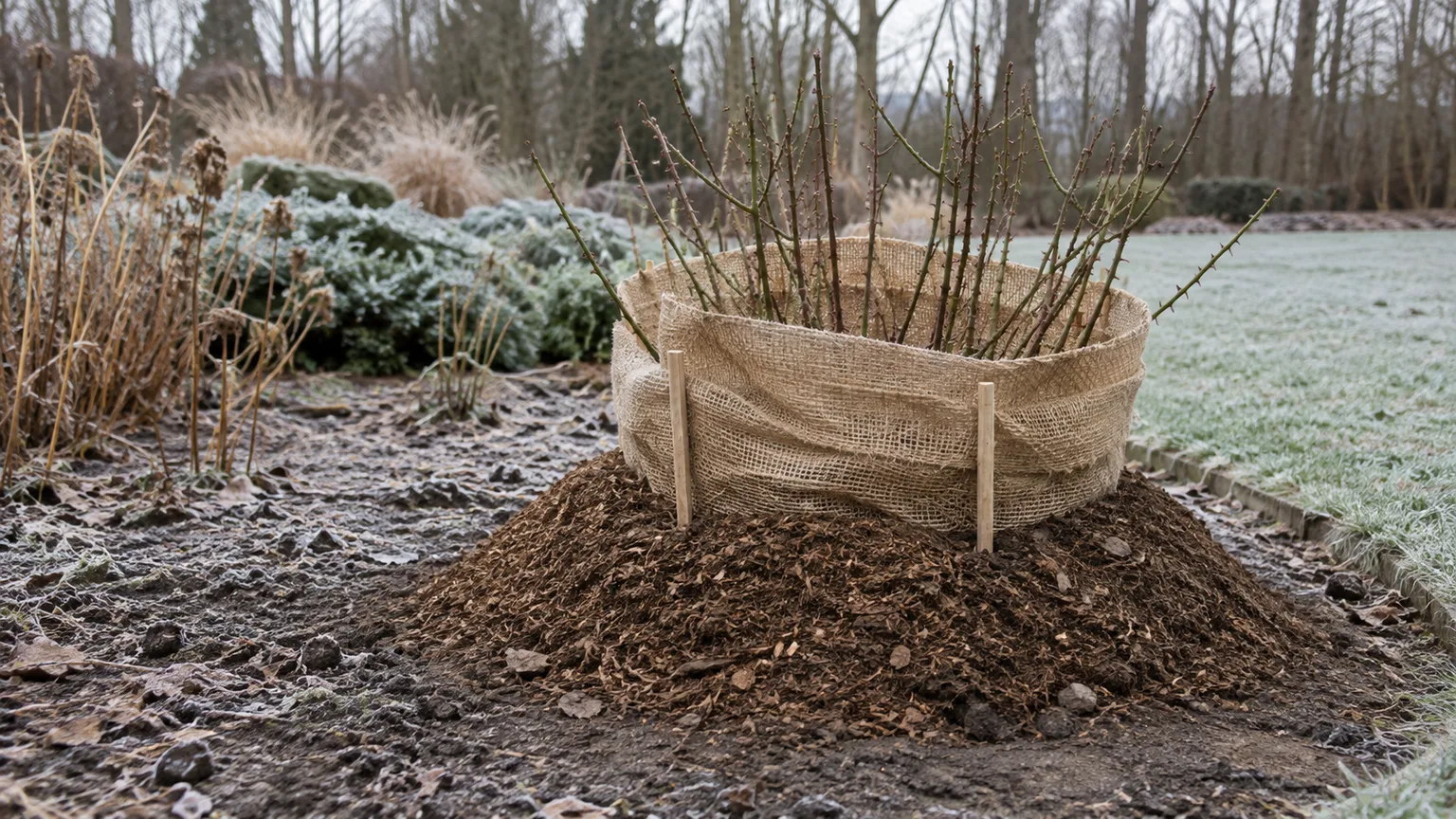
Use clean, well-draining soil, finished compost, or a suitable planting mix brought from another part of the garden. Do not scrape soil from immediately around the rose to build the mound; doing so can expose feeder roots and lower the plant’s root-zone insulation. Kansas State specifically advises bringing in new soil rather than digging around the rose.
After several hard frosts have caused the plant to slow down, pull the material around the base and over the graft union. Shape it like a broad, stable hill rather than a narrow pile that sheds rain and collapses. Cover the graft union by the depth your cultivar and local guidance call for; around a foot is a common high-protection target for grafted roses in cold regions, while a smaller mound may be enough for a hardier rose in a milder site.
Do not mix fresh fertilizer into the mound. Fertilizer is not insulation, and readily available nitrogen can encourage growth during a temporary winter thaw. Do not pack the soil into a wet, airless mass against the stems either. The material should insulate the crown while draining excess water.
When the ground itself has frozen, add a loose outer layer of straw, shredded leaves, pine bark, or clean wood chips. This top layer slows thawing and helps keep the mound in place. The timing matters: putting a thick, wet blanket over warm soil too early can hold moisture around the crown and delay dormancy.
Cover and Secure Canes Without Trapping Moisture
Burlap, horticultural fleece, and a properly ventilated rose cone can reduce drying wind and protect exposed canes from abrupt weather. They do not make a dormant rose tropical. RHS guidance on frost damage notes that heavier fleece provides only a modest frost buffer, so treat fabric as a windbreak and short cold-snap measure rather than a guarantee.
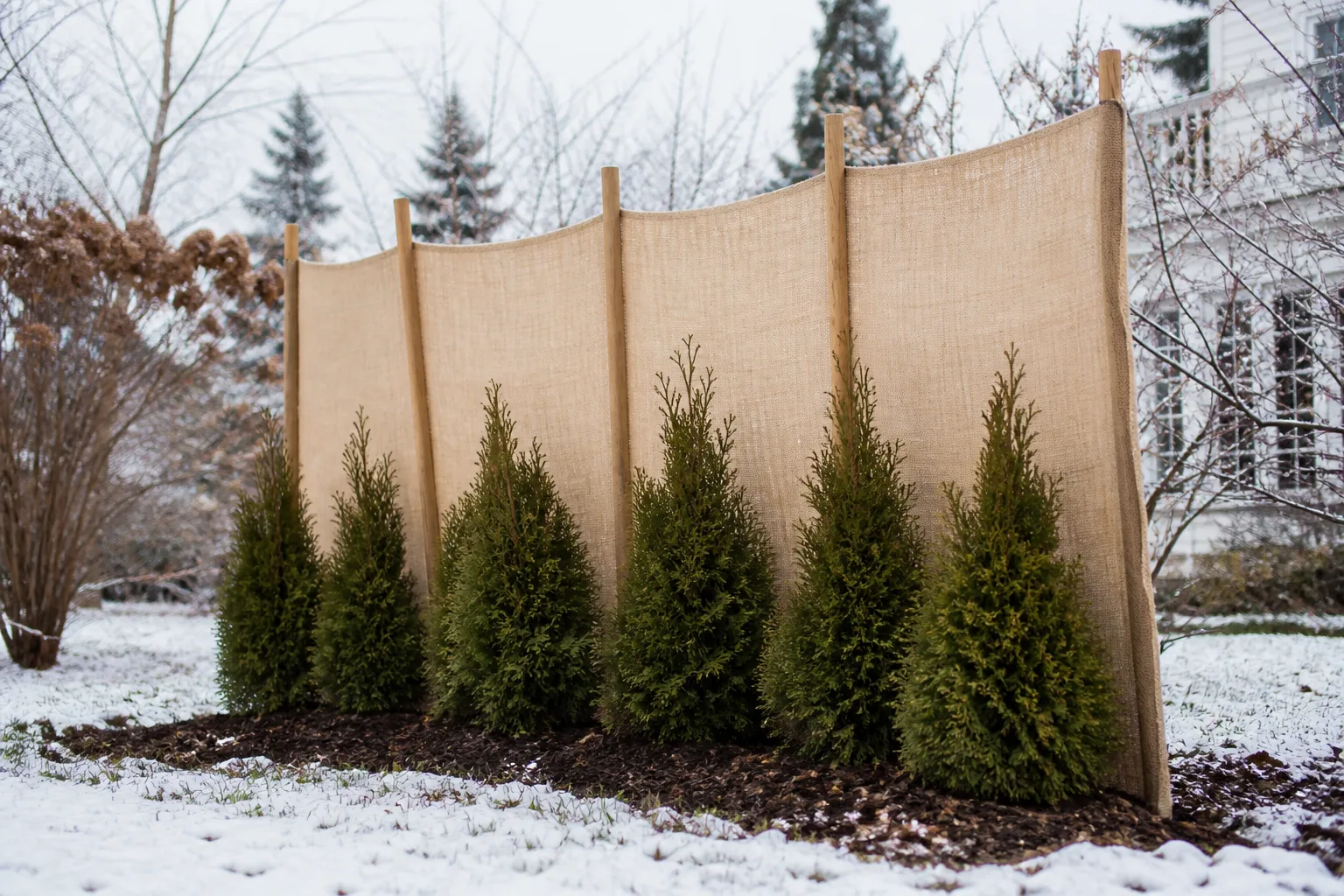
Build a simple frame from stakes, a small fence, or a sturdy cage so the burlap does not rest tightly against every cane. Wrap or drape the material around the outside, leave the top and sides breathable unless your local conditions require a more enclosed structure, and anchor it well enough that a gust cannot turn it into a sail. Tie canes loosely before adding the barrier so the wind moves the group rather than each cane independently.
If you use a rose cone, it should be large enough that the plant is not crushed. Mound soil around the base first, secure the cone against wind, and provide ventilation through the manufacturer’s openings or carefully made vents. Purdue Extension warns that moisture buildup inside an unventilated cone encourages fungal growth. A cone that fills with condensation can be more damaging than a light frost.
Never wrap a rose in airtight plastic. Plastic can be used as a rain shield over a supported structure, but it should not touch the canes or seal the plant in a humid pocket. Remove or open temporary frost covers in the morning after a one-night event, especially when the sun returns. For long-term winter protection, inspect the cover after storms and during thaws; reset it if it has collapsed, filled with wet leaves, or rubbed the canes.
Protect Climbing Roses
Climbing roses require a decision about the canes, not just the roots. A healthy climber against a protected wall in a moderate climate may need only a secure tie-in and crown mulch. A tender climber on an exposed freestanding trellis may need the canes insulated as well.
Start by securing the canes to their support with soft ties, checking that they cannot whip against the trellis or each other. If in-place protection is enough, loosely bundle the canes, mound the crown, and surround the bundle with burlap or another breathable material. Leave room for airflow and avoid bending stiff old canes sharply in cold weather, when they are less flexible.
For harsher conditions, remove the canes from the trellis after the plant is dormant. Lay them into a shallow trench beside the rose, secure them so they cannot spring back, and cover them with several inches of soil followed by a loose mulch layer. This is a major operation: mark the canes, protect your hands and eyes from thorns, and do not attempt it on a brittle, frozen day. The exact depth and covering materials should follow the cultivar’s hardiness and local extension guidance.
The reason to protect more of a climber is that its old canes may be the framework for next year’s flowers. Do not apply a blanket rule that all climbers must be buried, though. Penn State’s guidance emphasizes that exposure and the gap between the rose’s hardiness and the garden’s winter conditions determine how much protection is warranted.
Protect Container and Tree Roses
Container roses cannot borrow as much insulation from the earth. In a cold climate, move the dormant pot into an unheated garage, shed, or similarly cold but sheltered space; a heated living room can push weak growth in low light.
If the pot must stay outdoors, place it in the most sheltered spot available, away from wind tunnels and reflected heat. Insulate the container—not just the canes—with breathable or purpose-made material, keep drainage holes open, and consider placing a small pot in the ground before it freezes. A box or wire enclosure filled with dry leaves or straw can add insulation if it stays airy and dry. Penn State describes wrapping the pot and several inches above its rim as another option.
Mound the base inside the container as you would an in-ground graft union, but do not bury the pot in a waterlogged hole. Check it during thaws; a small container can dry out, but watering frozen soil or a pot sitting in ice is unsafe.
Tree roses are a special case because the bud union is high on the stem. Protect the head, stem, and graft rather than assuming a ground-level mound can reach the vulnerable point. In a suitable location, a cage of stakes filled with dry leaves and wrapped with burlap can protect the elevated graft. In very cold gardens, some gardeners lay the standard down and cover the whole plant; this requires loosening part of the root ball carefully and is not appropriate in every mixed border.
Use the Minnesota Tip Method in Severe Cold
The Minnesota tip method is a full-plant strategy for a tender or exposed rose when ordinary crown mounding is not enough. It is most often considered for climbers, standards, or cultivars whose canes are unlikely to survive the local winter without insulation.
Wait until the rose is dormant. Dig a trench beside the plant that is long enough for the canes, remove the canes from the trellis, and bend them down gradually. Pin or stake them in the trench, then cover them with soil and an insulating layer of leaves, straw, or other dry material. Keep the root crown protected as well.
The method takes planning and can injure a plant if you force stiff canes, sever roots, or work when the soil is frozen. Do not use it as a reflex for a hardy shrub rose. Compare the rose’s hardiness, age, exposure, and replacement value first. For a young tender climber in an open cold garden, though, burying the canes can preserve living wood that a burlap wrap would leave exposed.
Water and Inspect Through Winter
Once winter protection is in place, the rose still needs occasional attention. Check that ties have not loosened, covers have not blown into the branches, and mulch has not collapsed into a wet crown. A heavy snow layer can insulate soil, but excess weight on tied or brittle canes may cause breakage; brush snow away gently if it is accumulating heavily and the branches are bending.
During a prolonged thaw, test the soil rather than watering by calendar. If the root zone is open and dry, water early enough in the day for excess moisture to drain before night. Skip watering when the ground is frozen, saturated, or temperatures will remain below freezing.
Do not unwrap for one warm afternoon; open or remove a cover when it is acting like a warm, wet greenhouse or when reliable spring growth begins.
Remove Protection in Spring
Spring removal is part of winter protection, not an optional afterthought. Leave a soil mound or sealed cover in place too long and new shoots can grow into darkness, warmth, and wet material; remove it too early and a late freeze can injure the first new growth.
Begin when the soil has thawed and the forecast shows that the worst winter lows have passed, then uncover in stages. Penn State Extension recommends starting when early-spring lows are no longer expected to drop severely and notes that frozen lower layers may need time to thaw before removal. Purdue likewise says to remove mounds and cones as soon as plants begin new growth.
Pull back the outer mulch first, then remove the soil mound gradually rather than yanking it against tender shoots. Return the soil to another part of the garden so the rose’s crown ends up at its normal level. Untie the canes, inspect the base for rot or rodent damage, and clean away wet debris.
Do not rush into final spring pruning on the first warm day. Wait until you can distinguish live wood from winter-killed wood and until a damaging freeze is less likely for your area. Once the plant is actively growing, resume feeding according to the rose’s normal schedule and local guidance—not as an emergency response to blackened tips.
Assess and Repair Frost Damage
Blackened tips, brown buds, or leafless canes do not prove that the whole rose is dead. Frost damage can show immediately or become clearer later, and plants may reshoot from lower buds or the roots. The RHS advises waiting when recovery is possible because some woody plants do not show new growth until well into the season.
Use a clean pruner to scratch or lightly nick the outer bark of a questionable cane only when the plant is waking up. Green, moist tissue below the bark suggests living wood; dry brown tissue suggests dieback. Cut back in stages to a healthy outward-facing bud or living side shoot, sterilizing the blade between suspicious cuts. If the entire cane is dead, remove it at its base without tearing the crown.
Check the graft union separately. If growth emerges from below the graft, it is likely rootstock growth rather than the named rose; remove it from its origin rather than letting it take over. If an own-root rose dies back to soil level but produces strong basal shoots, give it time and avoid piling on fertilizer while the root system recovers.
Frost injury can resemble disease, and winter-wet conditions can cause rot. Look for soft, foul-smelling crown tissue, persistent cankers, or dieback that continues after healthy spring growth begins. When the diagnosis is unclear or a valuable rose is declining at the graft, contact a local extension service or qualified rosarian rather than treating blindly.
Common Winter-Protection Mistakes
The most common mistakes come from applying a sound method at the wrong time or to the wrong rose:
- Covering too early: Warm, damp material around an active rose can encourage mold and delay dormancy. Wait for the plant to slow after several hard frosts unless you are placing a removable overnight cover for a specific frost.
- Using the calendar instead of the plant: “After Thanksgiving” or “after the first frost” is only a clue. A warm fall, early freeze, sheltered wall, or cold exposed ridge can shift the correct window.
- Pruning hard in fall: Shortening every cane because winter is coming can remove living wood and create wounds. Prune for health and wind stability; reshape in late winter or early spring.
- Digging soil from the root zone: Scraping soil from the rose’s base exposes roots. Bring clean soil from elsewhere in the garden.
- Using wet or fresh material: Fresh manure, soggy leaves, or compacted mulch can heat, mat, or rot around the crown. Use clean soil and loose, reasonably dry mulch.
- Sealing the plant in plastic: A plastic bag or tight film traps condensation and can rub or freeze against canes. Use a supported, breathable cover with ventilation.
- Ignoring wind: A cover that flaps, or canes that whip against a trellis, can cause more injury than a short frost. Anchor the structure and tie canes loosely.
- Forgetting container roots: Wrapping the top while leaving the pot exposed on a frozen deck does not protect the root ball. Move or insulate the container and keep drainage open.
- Forgetting spring removal: Protection that collapses into wet debris can damage the crown. Inspect after storms and remove it in stages as growth begins.
Conclusion
Protecting roses from frost is a matching exercise. Start with the vulnerable part: the graft union on a grafted rose, the root ball in a container, the long canes on an exposed climber, or the whole plant when a tender cultivar faces a severe winter. Then choose the smallest layer that solves that risk—clean soil, loose mulch, secure ties, a breathable windbreak, or full burial where the climate truly demands it.
The reliable sequence is simple: let the rose enter dormancy, water the root zone before the ground freezes if it is dry, clean away disease-holding debris, avoid late nitrogen and unnecessary hard pruning, protect the crown, and keep covers dry and ventilated. In spring, uncover gradually, wait before cutting live-looking wood, and give a damaged rose time to show whether its roots still have the strength to push new canes.



