Climbing Rose Care Guide: Training, Watering, and Pruning
Rosa spp. (cultivated climbing roses)
Learn how to support and train climbing roses, water the root zone beside walls, and prune climbers differently from ramblers.
Climbing Rose Care Guide: Support, Watering, and Pruning
Start with wateringThe most common care mistake for Climbing RoseWatering guide →Climbing Rose care essentials
Light
Sun or light shade; choose the position for the cultivar, since some climbing roses tolerate a shadier wall.
Water
Keep newly planted roses evenly moist while they establish. Once established, water deeply during extended dry spells, especially in summer and beside walls where the rain shadow can leave the root zone dry. Let excess water drain; climbing roses dislike waterlogged soil.
Soil
Use fertile, moisture-retentive but well-drained garden soil. Improve poor soil with well-rotted organic matter and mulch the root zone, keeping material away from the base of the stems. Sun or light shade can suit climbing roses, but avoid both persistently wet ground and very dry, poor soil.
Humidity
Temperature
Fertilizer
About Climbing Rose
Climbing Rose is native to Cultivated climbing roses have diverse parent species and hybrid ancestry; there is no single native region for this growth group., typically reaches Varies by cultivar and support. RHS-listed examples range from about 1.5–2.5 m to 4–8 m tall, so check the plant label before choosing a wall, trellis, arch, or container. indoors, with many cultivars are vigorous once established; compact and less vigorous forms are also sold as climbers. growth. Climbing Rose has a woody rose shrub with long canes trained onto a support; it does not cling or twine by itself. cultivars vary in vigour, flowering season, and cane flexibility. growth habit and part of the Rosaceae family. It is also known as Climbing roses and Rose climber.
| Detail | Information |
|---|---|
| Also known as | Climbing roses, Rose climber |
| Native region | Cultivated climbing roses have diverse parent species and hybrid ancestry; there is no single native region for this growth group. |
| Mature size | Varies by cultivar and support. RHS-listed examples range from about 1.5–2.5 m to 4–8 m tall, so check the plant label before choosing a wall, trellis, arch, or container. |
| Growth rate | Many cultivars are vigorous once established; compact and less vigorous forms are also sold as climbers. |
| Growth habit | Woody Rose Shrub With Long Canes Trained Onto A Support; It Does Not Cling Or Twine By Itself. Cultivars Vary In Vigour, Flowering Season, And Cane Flexibility. |
| Scientific name | Rosa spp. (cultivated climbing roses) |
| Family | Rosaceae |
How to care for Climbing Rose?
How much light does Climbing Rose need?
Sun or light shade; choose the position for the cultivar, since some climbing roses tolerate a shadier wall.. Light shade. Partial shade for shade-tolerant cultivars. direct sun
- Sun or light shade - Sun or light shade; choose the position for the cultivar, since some climbing roses tolerate a shadier wall..
- choose the position for the cultivar - Sun or light shade; choose the position for the cultivar, since some climbing roses tolerate a shadier wall..
- since some climbing roses tolerate a shadier wall - Sun or light shade; choose the position for the cultivar, since some climbing roses tolerate a shadier wall..
- Light shade - Light shade.
- Partial shade for shade-tolerant cultivars - Partial shade for shade-tolerant cultivars.
- direct sun - direct sun.
When should you water Climbing Rose?
Keep newly planted roses evenly moist while they establish. Once established, water deeply during extended dry spells, especially in summer and beside walls where the rain shadow can leave the root zone dry. Let excess water drain; climbing roses dislike waterlogged soil.
- Check the soil several centimeters below the surface near the root zone. If it is dry - Once established, water deeply during extended dry spells, especially in summer and beside walls where the rain shadow can leave the root zone dry.
- water slowly and deeply - Once established, water deeply during extended dry spells, especially in summer and beside walls where the rain shadow can leave the root zone dry.
- if it is still damp or saturated - Keep newly planted roses evenly moist while they establish.
- wait and check drainage before watering again - Let excess water drain; climbing roses dislike waterlogged soil.
- Drain excess water - Let excess water drain; climbing roses dislike waterlogged soil.
What soil works best for Climbing Rose?
Use fertile, moisture-retentive but well-drained garden soil. Improve poor soil with well-rotted organic matter and mulch the root zone, keeping material away from the base of the stems. Sun or light shade can suit climbing roses, but avoid both persistently wet ground and very dry, poor soil.
- For beds
- improve poor soil with well-rotted organic matter before planting - Improve poor soil with well-rotted organic matter and mulch the root zone, keeping material away from the base of the stems.
- For compact climbers in containers - Use fertile, moisture-retentive but well-drained garden soil.
- choose a large - Use fertile, moisture-retentive but well-drained garden soil.
- stable pot with open drainage and a suitable rose compost - Improve poor soil with well-rotted organic matter and mulch the root zone, keeping material away from the base of the stems.
- check the cultivar label before growing a vigorous type in a pot - Improve poor soil with well-rotted organic matter and mulch the root zone, keeping material away from the base of the stems.
Grower notes for Climbing Rose
Check whether the label says climber or rambler
Climbing rose describes a growth habit across many Rosa species and cultivars, not one botanical species. Many climbers repeat flower through summer, while ramblers often make one large early-season display and need different pruning timing. Verify the plant label before pruning.
Give long canes something sturdy to hold
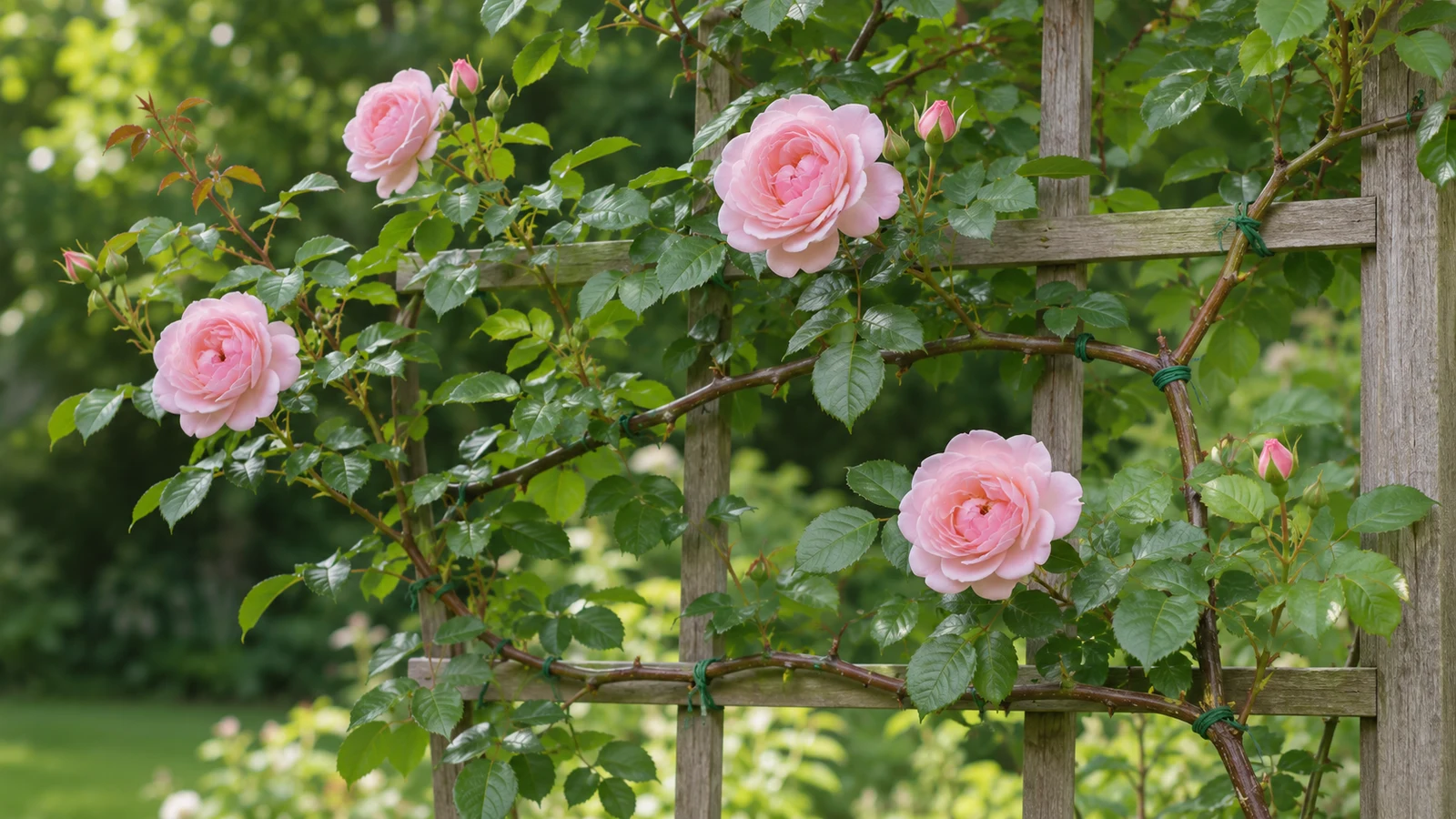
Climbing roses do not cling to a wall or wind around supports on their own. Install a strong trellis, wires, or another anchored structure before or at planting, then loosely tie flexible canes as they grow. Plan for the mature size on the cultivar label; a small decorative arch may not support a vigorous rose.
Train main canes across the support
Once the canes are flexible enough to guide, arrange them as close to horizontal as the support allows. RHS and Oregon State Extension explain that horizontal main canes encourage flowering laterals along their length, rather than concentrating flowers only at the tips.
Water the wall-side root zone deliberately
A rose beside a house or masonry wall may sit in a rain shadow. RHS notes that this soil can dry in summer even when nearby beds receive rain. Check the root zone itself, give a deep soak during a dry spell, and keep the soil draining freely.
Match pruning to the rose's flowering habit
Repeat-flowering climbing roses are generally pruned in late autumn or winter after flowering, with dead or damaged growth removed and side shoots shortened. Ramblers commonly flower once on older growth and are pruned after their summer display. Do not apply a rambler schedule to a repeat- flowering climber without checking its cultivar.
Protect hands, pets, and the plant's surface
Many climbing roses have prickles, although thornless cultivars exist. Wear sturdy gloves for tying and pruning, keep cut canes out of walkways, and discourage pets from chewing treated foliage. ASPCA lists Rosa species as non-toxic to cats, dogs, and horses, but thorns and garden chemicals remain separate hazards.
Are climbing roses safe around pets?
ASPCA lists Rosa species as non-toxic to cats, dogs, and horses. That does not make thorny stems or pesticide-treated foliage safe to chew; supervise pets, clear cuttings promptly, and verify the plant's identity.
The ASPCA Rose listing identifies Rosa species as non-toxic to cats, dogs, and horses. Climbing roses are cultivated Rosa plants, but their prickles can injure mouths or paws and any garden treatments carry separate label-specific risks. The ASPCA listing does not establish rabbit or bird safety, so those entries remain under review.
Watering Climbing Rose
For Climbing Rose, check the soil several centimeters below the surface near the root zone. If it is dry, water slowly and deeply; if it is still damp or saturated, wait and check drainage before watering again. and water check the soil rather than following a fixed calendar. Water during warm, dry weather when the root zone is drying, and check wall-planted roses more often because eaves and masonry can block rainfall. Expect more frequent checks in summer and during long dry periods. Reduce supplemental water in cool or rainy weather, while keeping newly planted roses from drying out as roots establish.
| Detail | Information |
|---|---|
| How often | Check the soil rather than following a fixed calendar. Water during warm, dry weather when the root zone is drying, and check wall-planted roses more often because eaves and masonry can block rainfall. |
| How to check | Check the soil several centimeters below the surface near the root zone. If it is dry, water slowly and deeply; if it is still damp or saturated, wait and check drainage before watering again. |
| Seasonal changes | Expect more frequent checks in summer and during long dry periods. Reduce supplemental water in cool or rainy weather, while keeping newly planted roses from drying out as roots establish. |
Signs of overwatering
- The soil remains saturated or water pools around the base after rain or irrigation.
- The plant wilts while the root zone is still wet; check drainage before adding more water.
- Pot-grown roses stay heavy and wet for several days after watering.
Signs of underwatering
- The root zone is dry and foliage loses firmness during warm weather.
- A wall-planted rose dries much faster than the surrounding bed.
- Late-season flowering weakens during a dry spell; RHS notes that drought beside walls can reduce later flowering.
Soil & potting for Climbing Rose
Use a mix of For beds, improve poor soil with well-rotted organic matter before planting., For compact climbers in containers, choose a large, stable pot with open drainage and a suitable rose compost; check the cultivar label before growing a vigorous type in a pot. for Climbing Rose. Good drainage is essential. Climbing roses dislike waterlogged soil, and a wall-side rain shadow can create the opposite problem by drying the bed too quickly. Target soil pH around Cultivar and site needs vary across this broad Rosa group; prioritize fertile, well-drained soil and follow the specific cultivar label for any pH guidance. Repot in-ground climbing roses do not need routine repotting. For compact climbers in containers, repot only when roots crowd the pot or the compost no longer drains freely; many vigorous cultivars are better planted in the ground., ideally in in-ground roses are not repotted. For a compact container-grown cultivar, pot on when roots crowd the container during a locally suitable mild planting window; avoid frozen, waterlogged, or heat-stressed conditions.
| Detail | Information |
|---|---|
| Recommended mix | For beds, improve poor soil with well-rotted organic matter before planting., For compact climbers in containers, choose a large, stable pot with open drainage and a suitable rose compost; check the cultivar label before growing a vigorous type in a pot. |
| Drainage | Good drainage is essential. Climbing roses dislike waterlogged soil, and a wall-side rain shadow can create the opposite problem by drying the bed too quickly. |
| Soil pH | Cultivar and site needs vary across this broad Rosa group; prioritize fertile, well-drained soil and follow the specific cultivar label for any pH guidance. |
| Repotting frequency | In-ground climbing roses do not need routine repotting. For compact climbers in containers, repot only when roots crowd the pot or the compost no longer drains freely; many vigorous cultivars are better planted in the ground. |
| Best season to repot | In-ground roses are not repotted. For a compact container-grown cultivar, pot on when roots crowd the container during a locally suitable mild planting window; avoid frozen, waterlogged, or heat-stressed conditions. |
Signs it needs repotting
- Roots densely fill the container or emerge through its drainage holes.
- The pot dries unusually quickly despite thorough watering.
- The compost has compacted and no longer drains freely.