10 Fast-Growing Flowering Vines to Grow on a Trellis
Find a fast-growing vine for your trellis, from coral honeysuckle to mandevilla. Compare bloom color, hardiness, climbing style, and the control each needs.
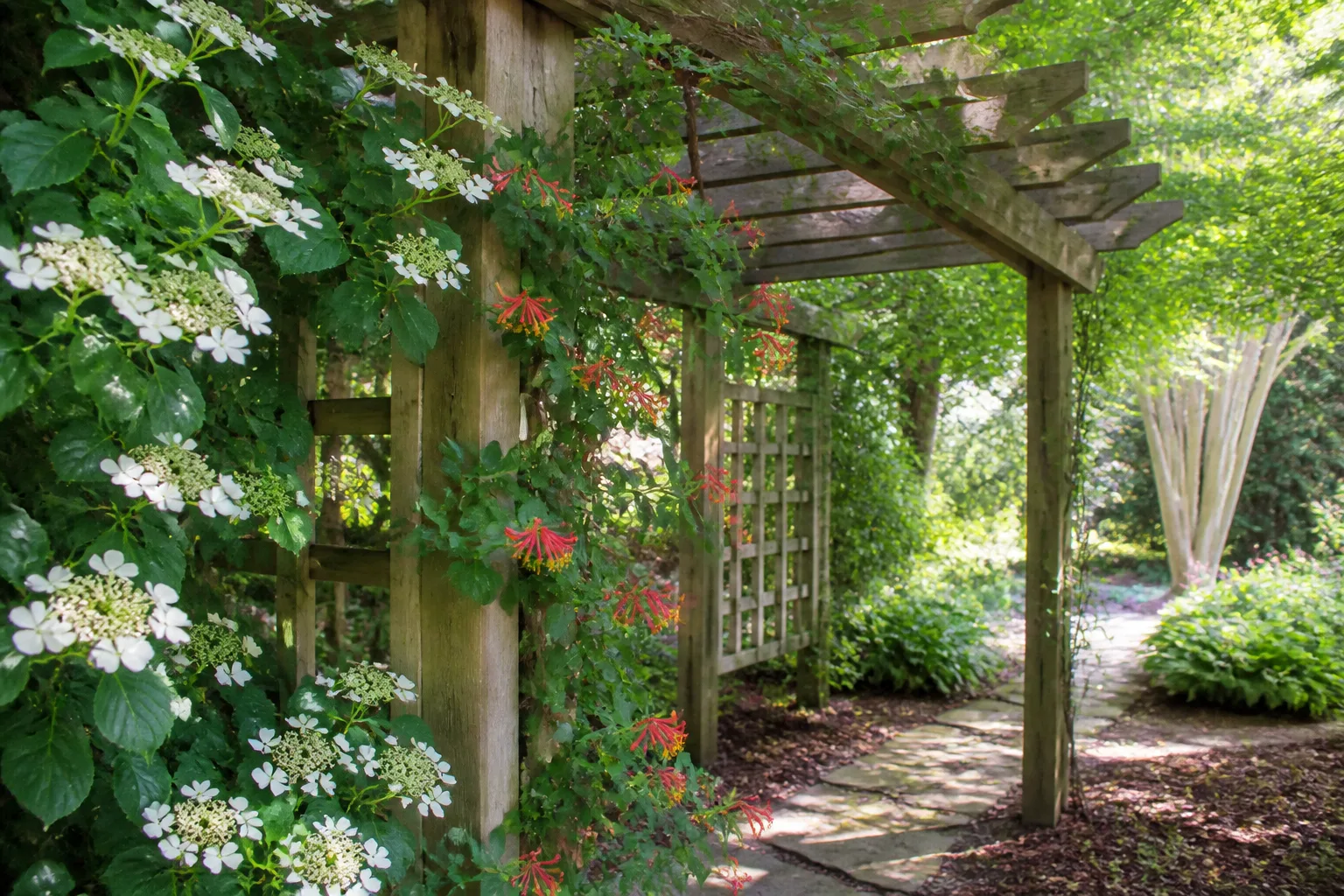
For quick, colorful coverage on a trellis, start with the site and support, not the flower photo. A frost-free patio may suit bougainvillea; a cold-winter fence in the eastern United States may be better for coral honeysuckle or clematis. A fast annual can cover space in one summer, while a perennial needs time to root and branch.
This list includes vigorous growers and slower starters worth choosing for shade, fragrance, or flowers. Climbing hydrangea can become a large plant but is slow to establish, so it is a poor pick if “fast” means flowers next spring. Match your vine to hardiness, light, support strength, and tolerance for pruning.
Before You Choose, Separate a Climbing Vine From a Clinging Vine
A plant labeled a vine does not automatically know how to grow up a trellis. Some wrap stems around a support; others use tendrils, leaf stalks, or aerial rootlets, while scramblers need their stems tied in place. The wrong structure can leave a vine flopping or pull a lightweight frame out of alignment.
Think about access as well as weight. You may need to reach through the trellis to prune, clear gutters, paint a fence, harvest fruit, or keep shoots away from a window. A vine that is easy to train while young can be difficult to disentangle after several seasons.
Identify the Support the Plant Needs
A twining vine, such as coral honeysuckle or American wisteria, wraps flexible stems around posts, wires, or lattice. Give it poles or horizontal wires that are narrow enough for the stems to circle; a broad, flat plank may be difficult to grip. As the stems age and thicken, their force can place pressure on the structure, particularly with a large wisteria.
A tendril climber reaches out with slender coils and catches a wire, mesh, or small-diameter trellis member. Maypop passionflower uses tendrils, while clematis climbs mainly by wrapping its leaf stalks around narrow supports.
A fine grid or wire panel is more useful for these plants than thick, widely spaced beams. Clematis stems are fragile, so guide young shoots gently instead of tugging them into place.
A clinging vine attaches to a surface with aerial rootlets or adhesive pads. Climbing hydrangea can grip masonry after it establishes; trumpet vine also uses aerial rootlets.
Self-clinging can be convenient, but rootlets and woody stems can be awkward to remove and may mark or exploit weak mortar, damaged siding, or old paint. If you want to protect a wall, install a freestanding trellis a few inches in front of it and train the plant on that.
A scrambler does not reliably climb without help. Bougainvillea and climbing roses have arching or long canes that need tying to wires or a trellis.
Use soft ties, leave room for the stem to thicken, and check the ties during the season. Roses also have prickles, and bougainvillea has thorns, so wear gloves and plan the frame where you can work safely.
Treat Fast Growth as a Trade-Off
“Fast-growing” can describe a vigorous established perennial, the quick germination of an annual, or a plant that spreads beyond its trellis. It does not promise instant flowers. The first season after planting may go mostly into roots, and cold, drought, poor drainage, excess shade, or a young plant can delay flowering even if the species is known for rapid growth.
Growth rate is not the same as usefulness. Trumpet vine can rush upward and send suckers across a lawn; a restrained coral honeysuckle may cover a small trellis more neatly. For one-season coverage, consider a locally suitable annual such as black-eyed Susan vine or hyacinth bean beside a slower perennial; confirm the annual is non-invasive and remove it before unwanted seed dispersal.
Before planting a perennial, check your state or regional invasive-plant list and identify the species, not just the common name. “Honeysuckle” can mean a desirable native vine or Japanese honeysuckle, which spreads aggressively in many parts of the United States. The University of Georgia Cooperative Extension’s woody-vine guide profiles native choices such as trumpet honeysuckle and American wisteria; local advice still matters outside the species’ native range.
Pick for Climate, Sun, and How Soon You Want Flowers
Use the USDA hardiness zone as a first screen, then confirm the cultivar’s tag. A “zone 5” label does not tell you whether a plant will like humid summers, reflected heat, coastal wind, or dry soil beside a wall. A container may expose roots to colder winter temperatures than the same plant would face in the ground.
Light affects flowers as much as survival. “Full sun” generally means at least six hours of direct sun, but hot afternoon sun can stress some vines even when they need bright exposure to bloom.
Dappled light beneath trees is different from deep shade on the north side of a building, and a vine that tolerates shade may produce fewer flowers there. Measure sun at the trellis during the growing season rather than relying on a winter glance.
Quick Comparison: Time, Support, and Containment
| Vine | Best starting fit | How it climbs | Main caution |
|---|---|---|---|
| Coral honeysuckle | Cold-hardy native trellis; sun to part shade | Twining stems | Choose Lonicera sempervirens, not an invasive look-alike |
| American wisteria | Sunny, sturdy arbor or pergola | Heavy twining stems | Woody weight, regular pruning, toxic seeds and pods |
| Bougainvillea | Hot, frost-free site or movable container | Scrambling; tie to support | Frost-sensitive, thorny, needs strong sun |
| Climbing hydrangea | Moist, shaded wall or sturdy freestanding support | Aerial rootlets | Slow establishment; too large for a light trellis |
| Clematis | Narrow-grid trellis; sun with cool roots | Leaf stalks | Pruning group controls when to cut |
| Maypop passionflower | Sunny native-garden fence or strong trellis | Tendrils | Root suckers can spread beyond the frame |
| Trumpet vine | Large, sunny site with a very strong structure | Aerial rootlets | Aggressive suckering and self-seeding |
| Carolina jessamine | Mild-winter trellis; sun or light shade | Twining stems | All parts are poisonous; modest until established |
| Mandevilla | Patio pot with a small trellis | Twining or climbing stems, cultivar-dependent | Must be protected from frost |
| Climbing rose | Fence, arch, or wires with room to tie canes | Scrambling canes | Thorns and training; flowering varies by cultivar |
For a small trellis in much of the eastern United States, begin with coral honeysuckle. For a warm-region pergola, consider American wisteria only if you can prune it. A shaded wall with a long time horizon may suit climbing hydrangea; a movable patio pot may suit mandevilla or bougainvillea.
10 Flowering Vines for a Trellis
These choices are not interchangeable, and their hardiness and growth rate vary by species and cultivar. Treat the dimensions below as mature potential rather than a first-season guarantee. Before buying, confirm the botanical name, mature size, bloom timing, and local invasive status on the nursery label or an extension reference.
Coral Honeysuckle Brings Native Color Without a Bully’s Habit
Coral honeysuckle, trumpet honeysuckle, or woodbine (Lonicera sempervirens) is a perennial twiner native to the eastern United States. It typically reaches about 10 to 20 feet, has tubular flowers in red, orange, or yellow tones, and can flower from spring into summer.
It tolerates full sun to partial shade, though it generally flowers best with good light. North Carolina State Extension lists it as rapid-growing and hardy across a broad regional range, while noting that it twines and benefits from support.
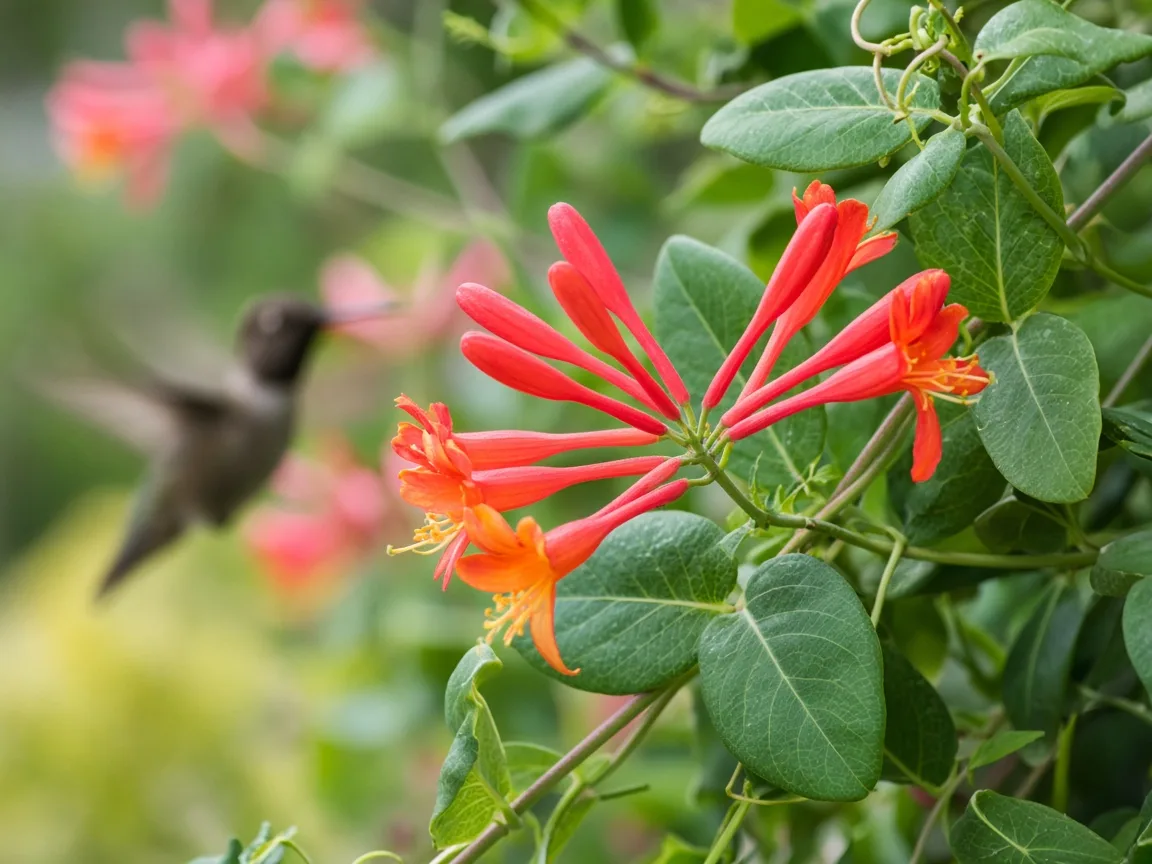
This is a better starting point than buying an unidentified honeysuckle for a North American yard. Japanese honeysuckle (Lonicera japonica) is a different species that can form dense mats and smother vegetation; the name on the plant tag matters. A native plant is not maintenance-free, but coral honeysuckle is usually far easier to keep on a garden structure than an invasive species.
Its berries are for wildlife, not a snack, and some cultivars are evergreen or semi-evergreen only in mild climates. See the NC State profile for coral honeysuckle for regional traits and cultivar choices.
American Wisteria Covers a Strong Arbor
American wisteria (Wisteria frutescens) is the North American alternative to the familiar, often more aggressive Asian wisterias. It is a deciduous woody twiner that may reach 30 to 40 feet or more, with drooping clusters of lavender or purple flowers in spring. Full sun encourages the best bloom; give it moist but well-drained soil and a strong structure designed for a mature woody vine, not a small decorative trellis.
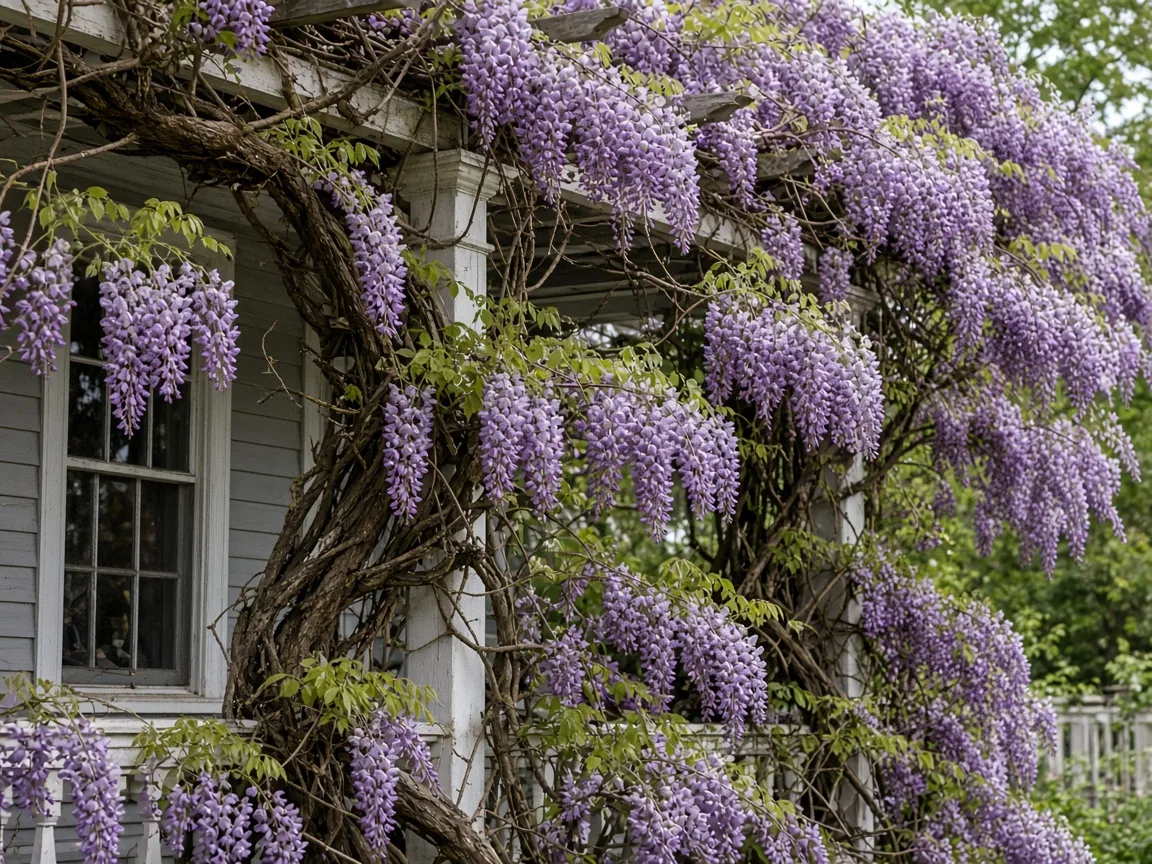
Choose a named American cultivar from a reputable nursery, and do not interpret “less aggressive” as “small.” The vine still needs pruning to keep it within bounds, and seed-grown plants can take longer to flower than selected cultivars.
The NC State Extension profile notes that American wisteria is less aggressive than Chinese wisteria but can still grow to 40 feet or more; UGA Extension advises against Chinese and Japanese wisteria in landscapes where they are invasive. Wisteria seeds and other plant parts can be toxic if eaten, so keep pods away from children and pets and verify cultivar identity before planting.
Bougainvillea Delivers Tropical Color in Heat
Bougainvillea can cover a sunny fence or patio trellis with striking pink, magenta, red, orange, purple, or white bracts. The conspicuous color is not the flower itself: each small flower is surrounded by papery bracts. The plant is a woody, scrambling vine native to South America; it needs full sun, good drainage, and manual training because its arching stems do not behave like a neat twining clematis.
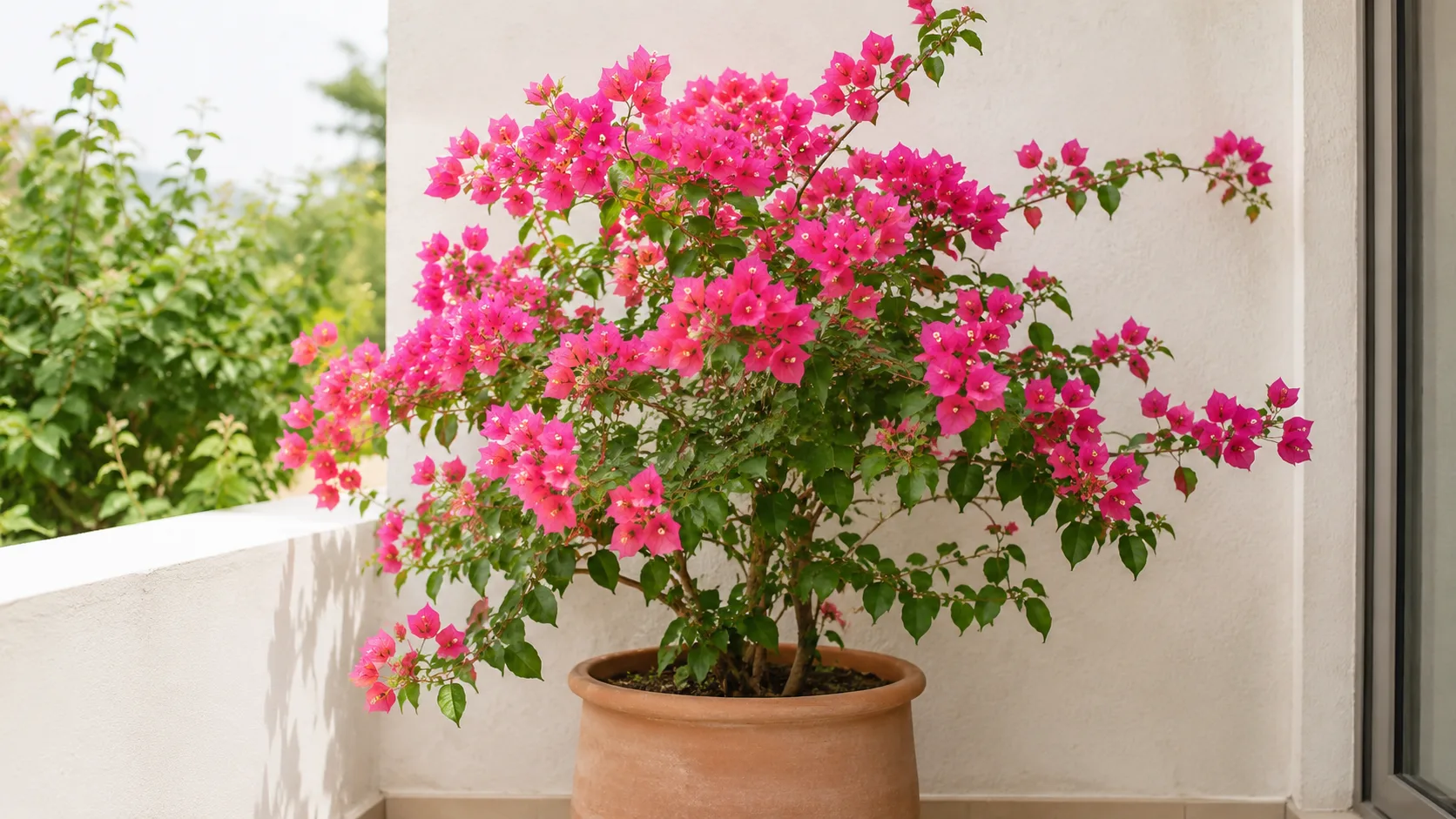
In frost-free climates, bougainvillea can grow into a large shrub-vine, while in cooler areas it is more practical in a container that can be sheltered or moved indoors. North Carolina State Extension’s bougainvillea profile notes its thorns, full-sun requirement, drought and heat tolerance, and use as a trellis or fence plant.
Do not place it where thorny stems will catch a walkway or block a gate. Train a few sturdy shoots to the frame and shorten side shoots after the main flush rather than cutting the plant into a bare shape; pruning can remove developing bloom wood, so check the cultivar’s growing guidance.
Climbing Hydrangea Rewards a Shady, Patient Gardener
Climbing hydrangea (Hydrangea anomala subsp. petiolaris) has glossy leaves, lacecap-like white flower clusters, yellow fall color, and peeling winter bark.
It tolerates shade better than many flowering vines and can eventually cover a tall wall or arbor. It climbs with aerial rootlets and can grow dozens of feet long, so its mature scale belongs on masonry, a sturdy fence, or a substantial support rather than a lightweight garden trellis.
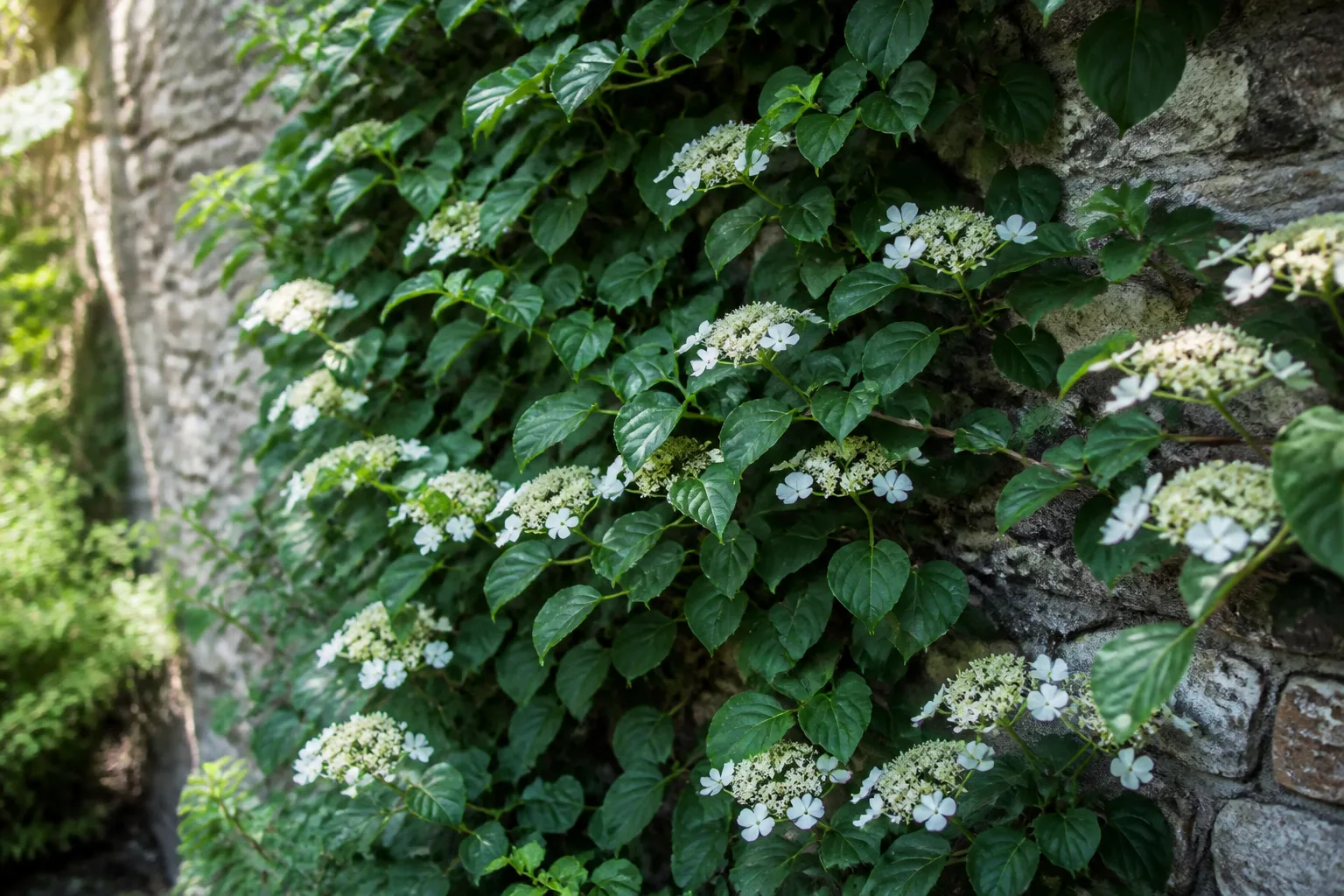
This is a deliberate exception to “fast.” North Carolina State Extension calls it slow to establish and slow to begin flowering after transplanting, even though its eventual size and established growth can be impressive. Give it moist, well-drained soil and patience; do not replace it just because the first year looks uneventful.
It flowers on older growth, so heavy pruning at the wrong time can remove next year’s buds. The NC State guide recommends pruning after bloom, and Fine Gardening’s pruning advice explains why shaping soon after flowering leaves time for new shoots to mature.
Clematis Gives You Many Flower Shapes and Seasons
“Clematis” covers hundreds of species and thousands of cultivars, so there is no single speed, size, or bloom season to promise. Some species and cultivars grow only a few feet; vigorous ones can climb much farther.
Choose the cultivar for your climate, color, and flowering time, and inspect the tag for its pruning group before you buy. Large-flowered hybrids offer dramatic blooms, while native species such as virgin’s bower may suit a regional wildlife garden, though it can self-seed freely and needs room.
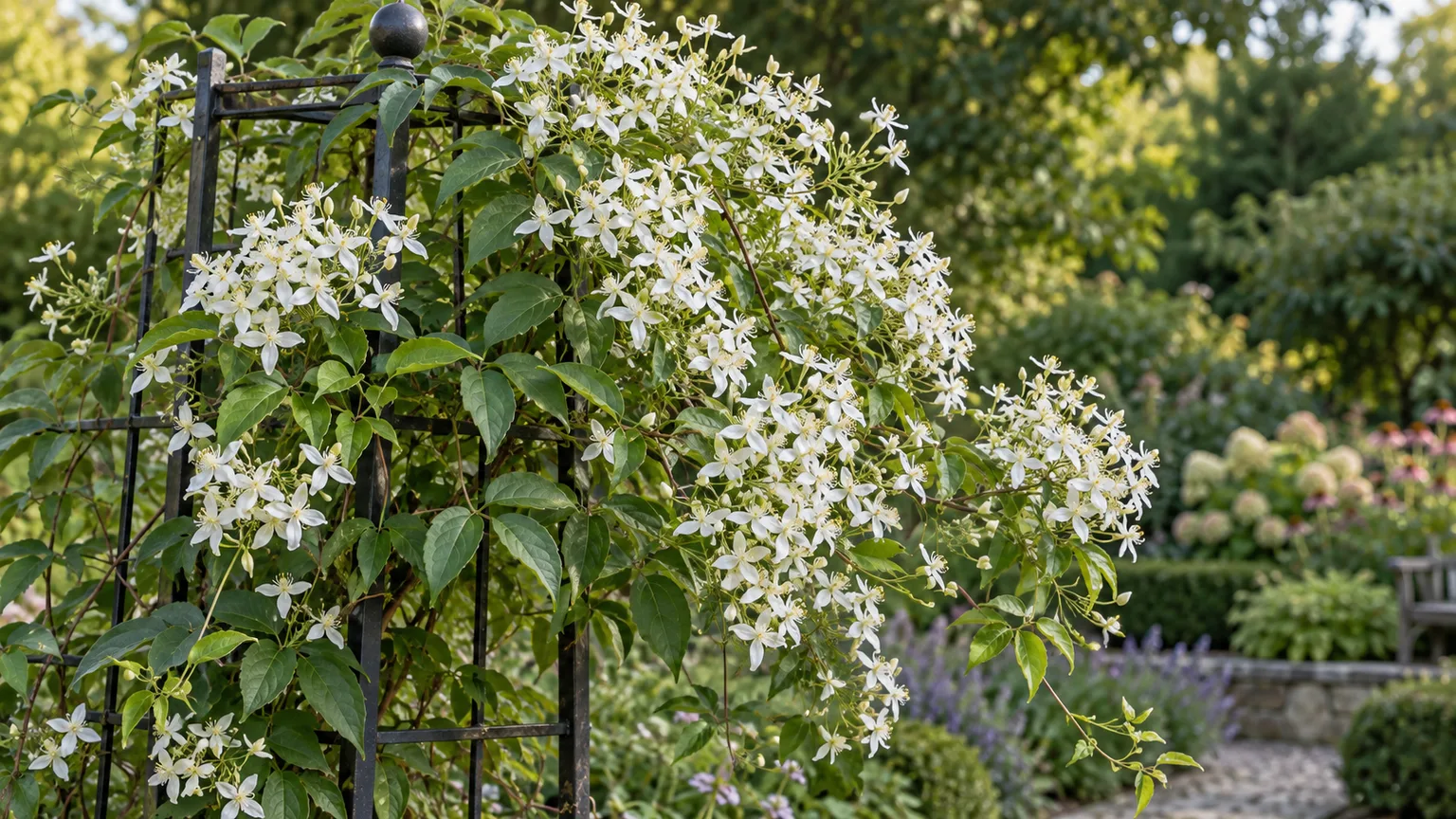
Clematis is a leaf-stalk climber, so provide a narrow mesh, netting, or slender trellis bars for its petioles to wrap around. Keep the roots cool with mulch or a low groundcover, but give the upper stems enough sun for flowering.
The key care mistake is pruning by guesswork: some clematis flower on old wood, some on both old and new, and others on new growth. The NC State clematis guidance outlines the three pruning groups; make a note of the group when you plant, before winter arrives and the stems look alike.
Maypop Passionflower Fills Summer Space Fast
Maypop (Passiflora incarnata), also called purple passionflower, is a fast-growing native vine with tendrils, three-lobed leaves, and intricate white-and-purple flowers. It thrives in sun to partial shade and well-drained soil; in cold-winter areas, its top may die back while the roots return in spring. Its unusual blooms are short-lived, but the plant can keep producing flowers through summer, and pollinators use them.
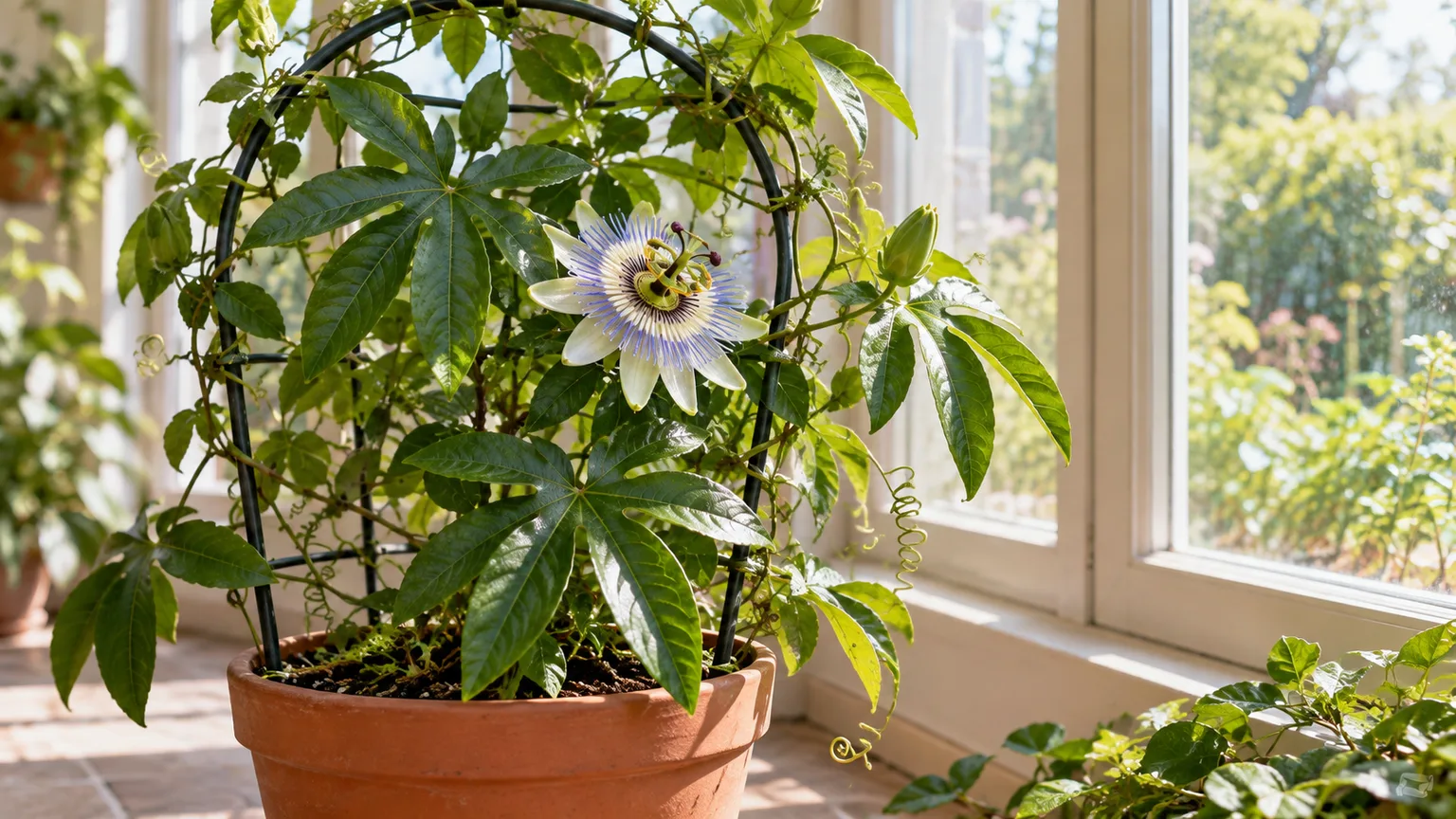
The trade-off is spread. Maypop can send root suckers well beyond the base, so give it room or install a root barrier if you need to keep it out of nearby beds.
North Carolina State Extension describes maypop as rapidly growing and warns that suckering roots can cover large areas under favorable conditions. It bears edible ripe fruit in suitable climates, but do not assume every passionflower species has the same fruit or hardiness.
If you want fruit, verify the species and wait until fruit is fully ripe; do not eat leaves or other parts as a substitute for food. This vine is best for a gardener who wants a native pollinator plant and can manage its horizontal spread as well as its vertical climb.
Trumpet Vine Is a High-Speed Choice for Large Sites
Trumpet vine (Campsis radicans) is a powerful option for a sunny, spacious garden where orange or red summer flowers can be seen from a distance. It can reach 30 to 40 feet and uses aerial rootlets to climb. The tubular flowers attract hummingbirds, and established plants tolerate heat, drought, and a range of soils better than many ornamental vines.
But the vigor is a real management cost, not an incidental note. Trumpet vine sends underground runners, produces suckers, and may self-seed; shoots can emerge several feet away from the trellis. It can also feel heavy on a small frame and attach to surfaces you might prefer to keep clear.
The NC State profile for trumpet vine recommends sturdy support and explains that mowing nearby suckers can help discourage spread. Plant it only where you can remove unwanted shoots regularly, away from delicate fences, narrow beds, and neighboring property. Some people experience skin irritation from its sap or foliage, so wear gloves when pruning.
Carolina Jessamine Adds Evergreen Spring Color in Mild Climates
Carolina jessamine (Gelsemium sempervirens) is an evergreen or semi-evergreen twiner with glossy foliage and fragrant yellow trumpet-shaped flowers in late winter or spring. It is useful where winter-green coverage matters and suits mild climates in the southeastern United States. Full sun to light shade works, but it is not the quickest route to a filled trellis: North Carolina State Extension describes modest growth until establishment and notes that a plant can take three or four growing seasons to reach a substantial trained height.
The caution is serious: every part is poisonous if eaten. Keep it away from curious children and pets, do not mistake it for edible jasmine, and use gloves if sap irritates your skin. North Carolina State Extension also warns that its pollen can be harmful to honeybee colonies, so it is not a suitable choice for beekeepers.
This makes jessamine a specialized pick: beautiful and evergreen in the right region, but not an uncomplicated family or pollinator-garden vine. If winter lows fall below your cultivar’s range, expect damage or choose a hardier native alternative.
Mandevilla Makes a Flexible Container Trellis Vine
Mandevilla gives a patio pot a tropical display of large pink, red, or white trumpet flowers and glossy leaves. It suits warm summers, bright light, and a compact support; many nursery cultivars have been bred to stay bushier than older climbing forms, so check whether the plant tag describes a true vining cultivar. With a pot and a small trellis, you can move it to shelter before frost instead of gambling on an outdoor winter.
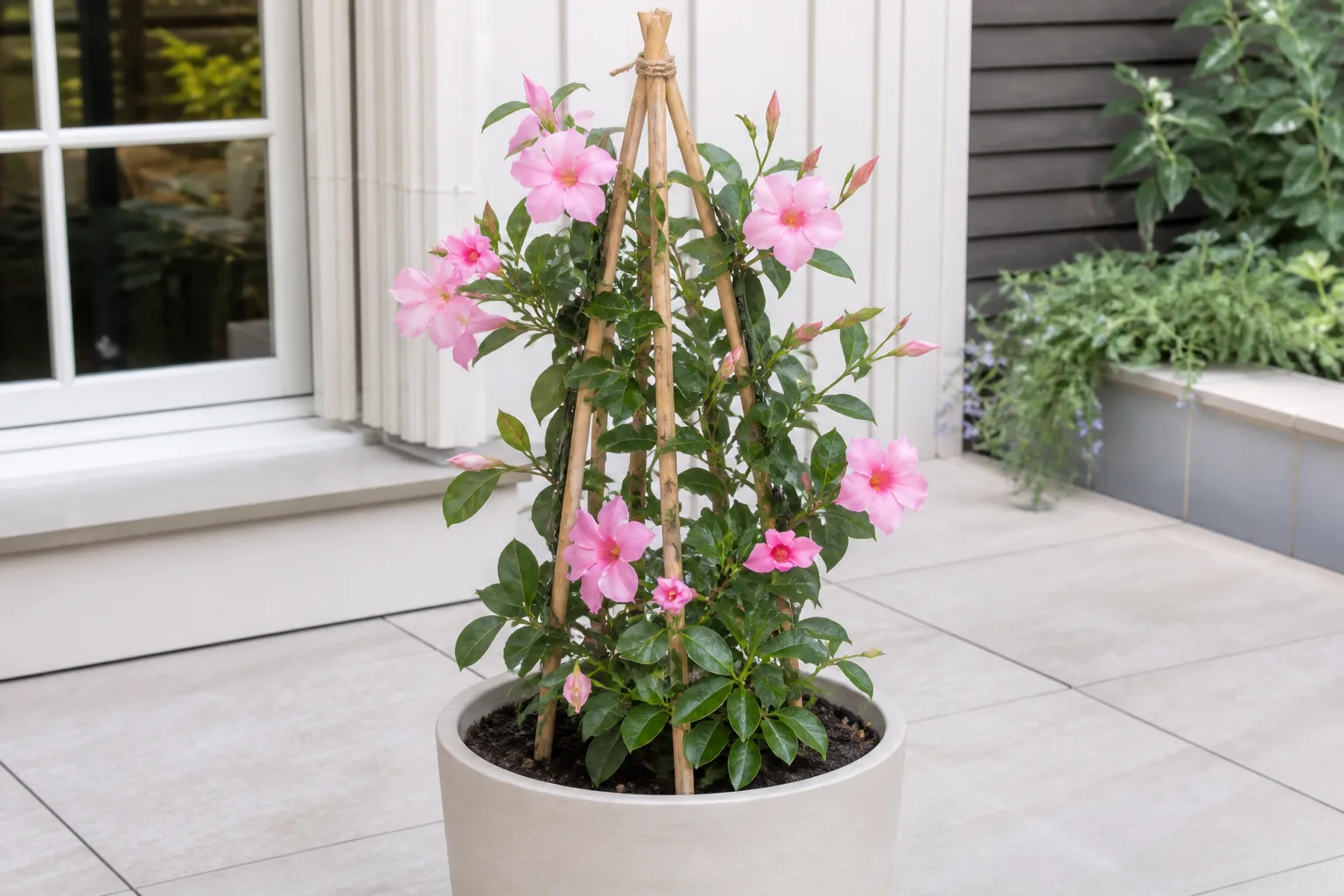
Treat mandevilla as a tender tropical, not as a cold-hardy perennial in most of the country. The NC State Extension overview recommends container culture where frost occurs and a bright, warm growing place; it also advises letting the soil dry more during winter dormancy. During summer, water when the top layer begins to dry, but avoid leaving the pot standing in water.
Bring the plant indoors before a frost, inspect it for pests, and reduce watering while it rests. It is the fastest practical option here if your goal is a colorful, movable patio accent rather than a permanent fence screen.
Climbing Roses Bring Vertical Color With Hands-On Training
A climbing rose can turn a fence, arch, or pergola into a long-flowering focal point, but “climbing” does not mean the plant twines by itself. Climbing roses produce long canes that you need to tie to horizontal wires or a trellis. Cultivars vary widely in mature height, hardiness, fragrance, thorniness, and whether they flower once or repeat through the season, so buy by cultivar rather than by the generic phrase “climbing rose.”
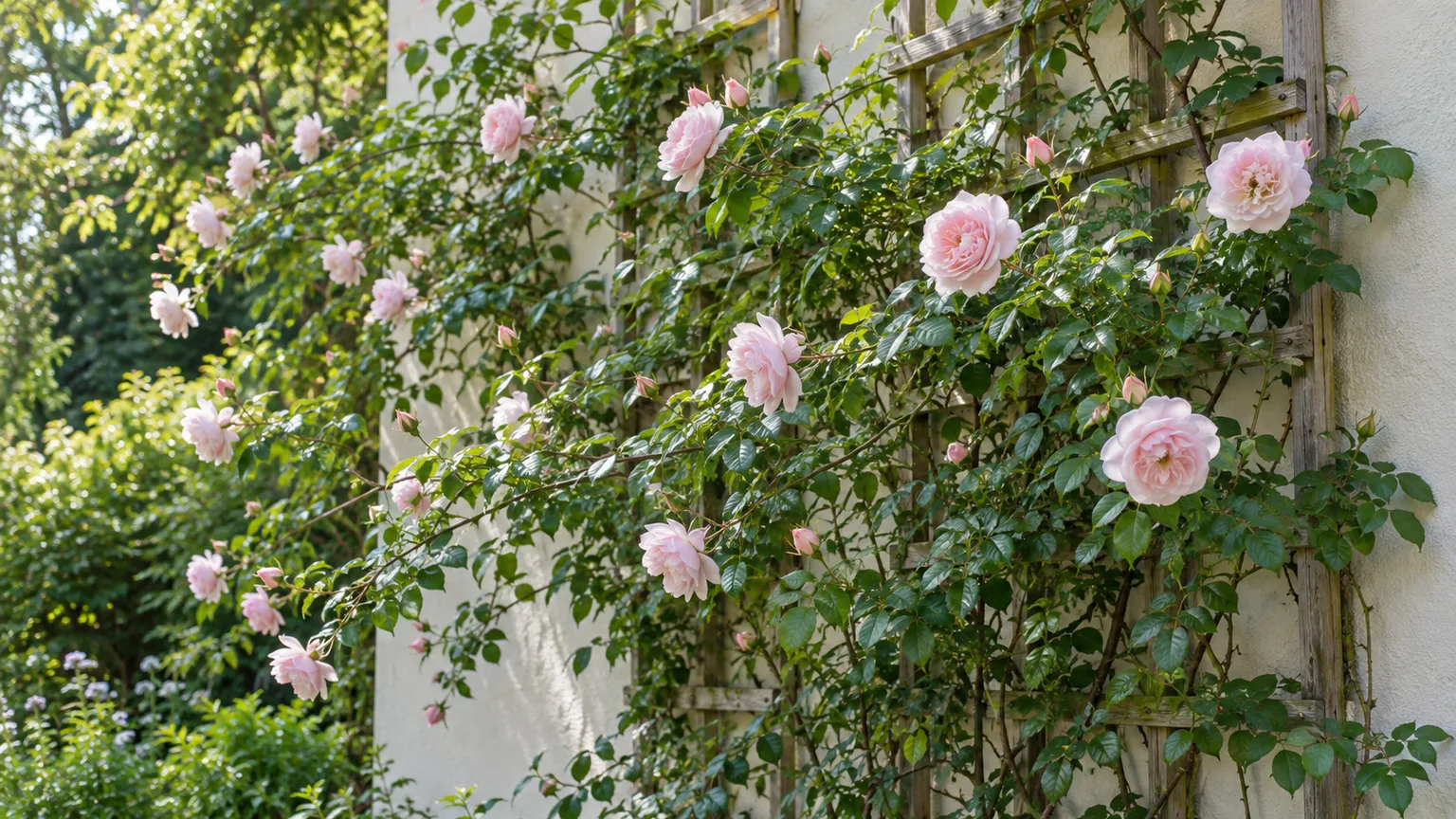
For more flowers down the length of each cane, train the main stems as close to horizontal as the support allows; that encourages flowering side shoots instead of concentrating growth at the top. The RHS climbing-rose guide recommends tying stems to wires and notes that many repeat-flowering types bloom from early summer into autumn.
Roses appreciate fertile, well-drained soil and regular watering in dry weather. Their thorns make access and pruning part of the design decision: leave room to reach behind the trellis and choose a thornless or less thorny cultivar if the vine will grow beside a frequently used path.
Plant and Train a Young Vine for Fast, Even Coverage
First, install the support before planting. Anchor posts securely, check that the trellis will carry the mature plant’s weight, and leave space for stems to reach the structure without rubbing on siding.
For aerial-rootlet climbers, a freestanding support can protect a wall; twining plants need wires or narrow crosspieces, and clematis needs a finer grid. Do not rely on a thin temporary stake for a woody vine.
Plant with the root ball at the depth specified by the nursery or species guidance, then water the root zone thoroughly. Keep the soil evenly moist while the roots establish, not waterlogged.
A 2- to 3-inch mulch layer helps reduce evaporation, but keep it a few inches away from the stem so the crown does not stay wet. If the plant is drought-stressed, it may drop buds or pause growth; if it is constantly saturated, roots can decline before you notice symptoms above ground.
During the first growing season, choose two or three strong shoots and guide them in different directions across the trellis rather than letting every cane race vertically. Use soft ties in a loose figure eight so the tie does not cut into expanding stems.
Recheck after each burst of growth, because a stem may cross the frame quickly and become woody before you can redirect it. Pinching or shortening a wayward tip can prompt branching in some plants, but do not pinch a clematis or prune a spring-flowering vine without checking its bloom cycle first.
A single large vine often covers a support more effectively than multiple crowded plants. If you plant two, account for mature widths and root competition; pair different bloom seasons only when water, sun, and pruning needs are compatible.
A fast annual can fill a gap while a slower perennial establishes, but remove it before it smothers the perennial or seeds unwanted seedlings. For a quick screen this year, choose a locally appropriate annual from a reputable seed source and treat the perennial as the long-term structure.
Maintain the Vine Without Sacrificing Blooms
Pruning should solve a specific problem: remove dead or damaged wood, restore access, control spread, renew flowering shoots, or train a stem into an open framework. It is not a way to make every vine flower more.
Wisteria benefits from regular pruning to maintain its shape and flowering; trumpet vine needs repeated removal of suckers and seed pods; climbing hydrangea and some clematis can lose next season’s flowers if cut at the wrong time. Write the cultivar and pruning group on a label when you plant it, because remembering the details several years later is harder than it sounds.
Do not fertilize a vine heavily to force speed. Excess nitrogen can push leaves and stems at the expense of flowers, and a well-established vine may already have all the nutrients it needs.
Start with a soil test if growth is poor, water deeply during dry spells, and correct drainage or light before reaching for fertilizer. If the foliage is lush but flowers are scarce, check for too much shade, a young or seed-grown plant, frost-damaged buds, pruning at the wrong season, or a variety whose flowering habit does not match your expectations.
Inspect the frame at least once each growing season. Tighten loose fixings, replace ties that are cutting into stems, and separate tangled shoots while they are still flexible. Keep woody vines away from rooflines, gutters, vents, utility wires, and windows, and do not let suckers root beneath a neighboring shrub.
Check the local invasive-plant guidance before allowing seed heads or berries to disperse. Responsible containment protects your own garden and the habitats around it.
If you have children, pets, or pollinator hives, account for safety. Wisteria and Carolina jessamine are poisonous if eaten; trumpet vine may irritate skin; roses and bougainvillea are thorny. Place them thoughtfully, wear gloves for pruning, keep cuttings and seed pods out of reach, and contact a veterinarian or poison-control service after a suspected ingestion.
Conclusion
The best fast-growing vine is the one that fits the climate, light, support, and amount of maintenance you can actually provide. Coral honeysuckle is a strong first choice for many gardeners who want a native, manageable trellis vine; clematis offers more bloom-season variety; mandevilla and bougainvillea work well when containers can be protected from cold. American wisteria, trumpet vine, maypop, and climbing hydrangea reward the right site, but their size, spread, or slow establishment deserves an honest plan.
Before you buy, read the botanical name, confirm the cultivar’s hardiness and mature size, and match its climbing method to the trellis. Install a support with room to spare, train young shoots sideways, and prune according to the plant’s flowering cycle. That small amount of planning is what turns fast growth into a season of color instead of a tangle you have to undo.



