Passion Flower Care: Passiflora Light, Water and Pruning
Passiflora spp.
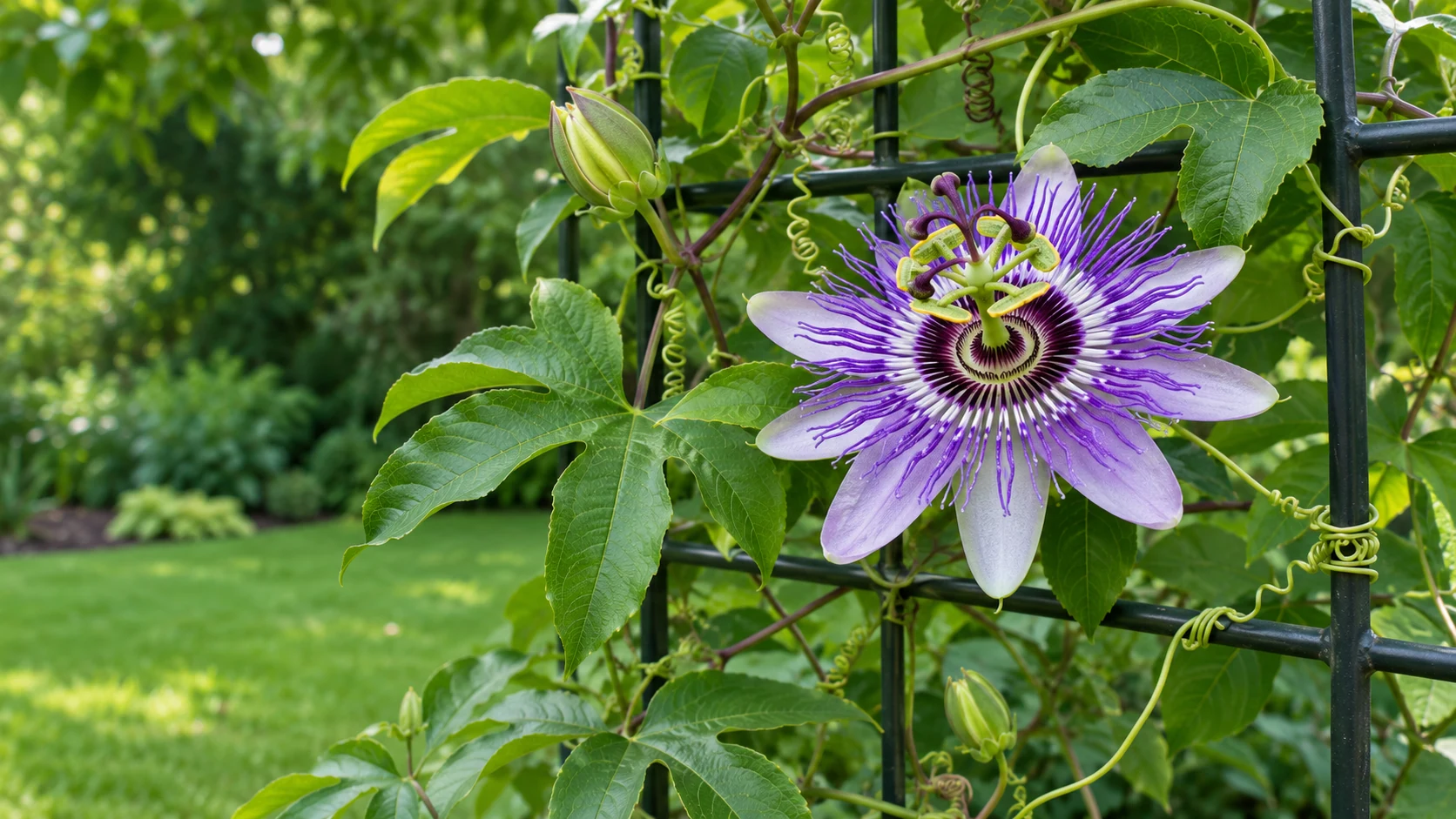
Grow passion flowers on a sturdy trellis in a sunny, sheltered place. Learn how to water, prune, overwinter hardy and tender Passiflora, and manage species-specific pet risks.
Passion Flower Care Guide: Growing Passiflora Vines
Start with wateringThe most common care mistake for Passion FlowerWatering guide →Passion Flower care essentials
Light
Water
Keep the root zone evenly moist during active summer growth without leaving it waterlogged. Water outdoor vines during dry spells and container plants when the surface of the mix begins to dry. Reduce watering in winter, especially for cool or dormant plants, because cold, wet compost can lead to root rot.
Soil
Grow passion flowers in fertile, free-draining soil. For tender types in a conservatory, use a peat-free loam-based container compost and a pot with drainage holes.
Humidity
Temperature
Fertilizer
About Passion Flower
Passion Flower is native to The Americas; native range varies by species, typically reaches Vigorous tendril climbers; many need at least 3 m (10 ft) of support. RHS reports that Passiflora caerulea can reach 10 m (33 ft), while some tender conservatory species can grow taller. indoors, with rapid in favorable growing conditions; varies by species and climate growth. Passion Flower has a tendril climbing vines; some are herbaceous perennials, while others become woody or evergreen in warm climates. growth habit and part of the Passifloraceae family. It is also known as Passionflower and Passion Vine.
| Detail | Information |
|---|---|
| Also known as | Passionflower, Passion Vine |
| Native region | The Americas; native range varies by species |
| Mature size | Vigorous tendril climbers; many need at least 3 m (10 ft) of support. RHS reports that Passiflora caerulea can reach 10 m (33 ft), while some tender conservatory species can grow taller. |
| Growth rate | Rapid in favorable growing conditions; varies by species and climate |
| Growth habit | Tendril Climbing Vines; Some Are Herbaceous Perennials, While Others Become Woody Or Evergreen In Warm Climates. |
| Scientific name | Passiflora spp. |
| Family | Passifloraceae |
How to care for Passion Flower?
When should you water Passion Flower?
Keep the root zone evenly moist during active summer growth without leaving it waterlogged. Water outdoor vines during dry spells and container plants when the surface of the mix begins to dry. Reduce watering in winter, especially for cool or dormant plants, because cold, wet compost can lead to root rot.
- Check the container surface and the root zone before watering. Water thoroughly when the mix has begun to dry - Water outdoor vines during dry spells and container plants when the surface of the mix begins to dry.
- then let excess water drain freely - Keep the root zone evenly moist during active summer growth without leaving it waterlogged.
- Drain excess water - Keep the root zone evenly moist during active summer growth without leaving it waterlogged.
What soil works best for Passion Flower?
Grow passion flowers in fertile, free-draining soil. For tender types in a conservatory, use a peat-free loam-based container compost and a pot with drainage holes.
- For hardy garden species - For tender types in a conservatory, use a peat-free loam-based container compost and a pot with drainage holes.
- use fertile soil that drains freely and choose a sunny - Grow passion flowers in fertile, free-draining soil.
- sheltered site
- For tender greenhouse species - For tender types in a conservatory, use a peat-free loam-based container compost and a pot with drainage holes.
- use a peat-free loam-based compost in a large container with open drainage - For tender types in a conservatory, use a peat-free loam-based container compost and a pot with drainage holes.
Grower notes for Passion Flower
Check the species before choosing a spot
Passion flower is a large genus, not one uniform plant. Hardy garden choices such as Passiflora caerulea suit sunny, sheltered outdoor sites in mild climates, while many tropical species need a heated greenhouse or conservatory. Passion Fruit is a separate hub for the edible P. edulis.
Give its tendrils a sturdy framework
Passion flowers climb with tendrils, so train them on a firm trellis, fence, or horizontal wires rather than leaving a vigorous vine to scramble. Some types reach 10 m (33 ft), and tender conservatory species can grow even taller.
Balance sun with shelter
Hardy passion flowers grow and flower best in a sunny, sheltered position away from cold, drying winds. If growing a tender type under glass, give it light shade during hot weather to reduce the risk of scorched foliage.
Adjust water for containers and winter
Water outdoor vines in dry spells and container-grown plants when the compost surface looks dry. Reduce winter watering so cool soil does not stay wet around the roots.
Prune to keep a clear framework
Passion flowers bloom on new growth. If the vine needs tidying, prune in early spring by removing old flowered stems while keeping a framework of healthy stems; avoid cutting the whole vine back every year.
Treat pet risk as species-specific
NC State Extension flags P. incarnata and P. caerulea as problems for cats, dogs, and horses, and records cyanogenic glycosides in the leaves and stems. Those records do not establish the same risk for every Passiflora or hybrid. Keep pets from chewing an unidentified vine and check its botanical label.
Are passion flowers safe for pets?
NC State Extension lists P. incarnata and P. caerulea as problems for cats, dogs, and horses. It records cyanogenic glycosides in leaves and stems, but these examples do not verify the risk for every Passiflora species or hybrid. Keep pets from chewing unidentified vines, check the botanical name, and contact a veterinarian after a suspected ingestion.
Species-specific caution: NC State Extension identifies P. incarnata and P. caerulea as problems for cats, dogs, and horses, and reports medium-severity poisoning to humans from cyanogenic glycosides in leaves and stems. The consulted sources do not establish that every Passiflora species or hybrid has identical toxicity or pet symptoms. Treat this genus-level hub as needs-review until the exact plant is identified. Do not infer pet safety from edible fruit claims; fruit edibility also varies by species and does not make the foliage safe to chew.
Watering Passion Flower
For Passion Flower, check the container surface and the root zone before watering. Water thoroughly when the mix has begun to dry, then let excess water drain freely. and water during dry weather, established garden vines generally need a thorough watering about once a week. Check containers more often and water when the surface of the mix looks dry; the interval changes with pot size, species, temperature, and light. Water freely through warm-season growth and flowering, then water less often in winter. Tender greenhouse plants and hardy outdoor species have different winter needs, so follow the exact plant label and avoid keeping a cool pot wet.
| Detail | Information |
|---|---|
| How often | During dry weather, established garden vines generally need a thorough watering about once a week. Check containers more often and water when the surface of the mix looks dry; the interval changes with pot size, species, temperature, and light. |
| How to check | Check the container surface and the root zone before watering. Water thoroughly when the mix has begun to dry, then let excess water drain freely. |
| Seasonal changes | Water freely through warm-season growth and flowering, then water less often in winter. Tender greenhouse plants and hardy outdoor species have different winter needs, so follow the exact plant label and avoid keeping a cool pot wet. |
Signs of overwatering
- The potting mix remains wet between winter waterings.
- Water drains slowly or stands in the outer pot or saucer.
Signs of underwatering
- The vine wilts after the root zone dries.
- Flower buds may drop when the soil is too dry and the plant wilts.
Soil & potting for Passion Flower
Use a mix of For hardy garden species, use fertile soil that drains freely and choose a sunny, sheltered site., For tender greenhouse species, use a peat-free loam-based compost in a large container with open drainage. for Passion Flower. Keep moisture available during active growth while letting excess water drain away. Avoid waterlogged containers, particularly during cool winter rest. Repot repot container-grown passion flowers about every two to three years, as recommended by the RHS. Species differ in vigor and in the space they need., ideally in spring is a practical time to refresh a container as growth resumes. Protect tender species from cold while moving them, and use a pot with free drainage.
| Detail | Information |
|---|---|
| Recommended mix | For hardy garden species, use fertile soil that drains freely and choose a sunny, sheltered site., For tender greenhouse species, use a peat-free loam-based compost in a large container with open drainage. |
| Drainage | Keep moisture available during active growth while letting excess water drain away. Avoid waterlogged containers, particularly during cool winter rest. |
| Repotting frequency | Repot container-grown passion flowers about every two to three years, as recommended by the RHS. Species differ in vigor and in the space they need. |
| Best season to repot | Spring is a practical time to refresh a container as growth resumes. Protect tender species from cold while moving them, and use a pot with free drainage. |
Signs it needs repotting
- Roots fill the container or emerge from its drainage holes.
- The mix dries unusually quickly after a thorough watering.
- The vine has outgrown its support or container.