Honeysuckle Care: Light, Water, Pruning and Support
Lonicera spp. (ornamental honeysuckles)
Grow climbing honeysuckle with suitable light, steady establishment watering, sturdy support, and pruning timed to its flowering habit. Learn why species identification matters for berries and invasive-plant concerns.
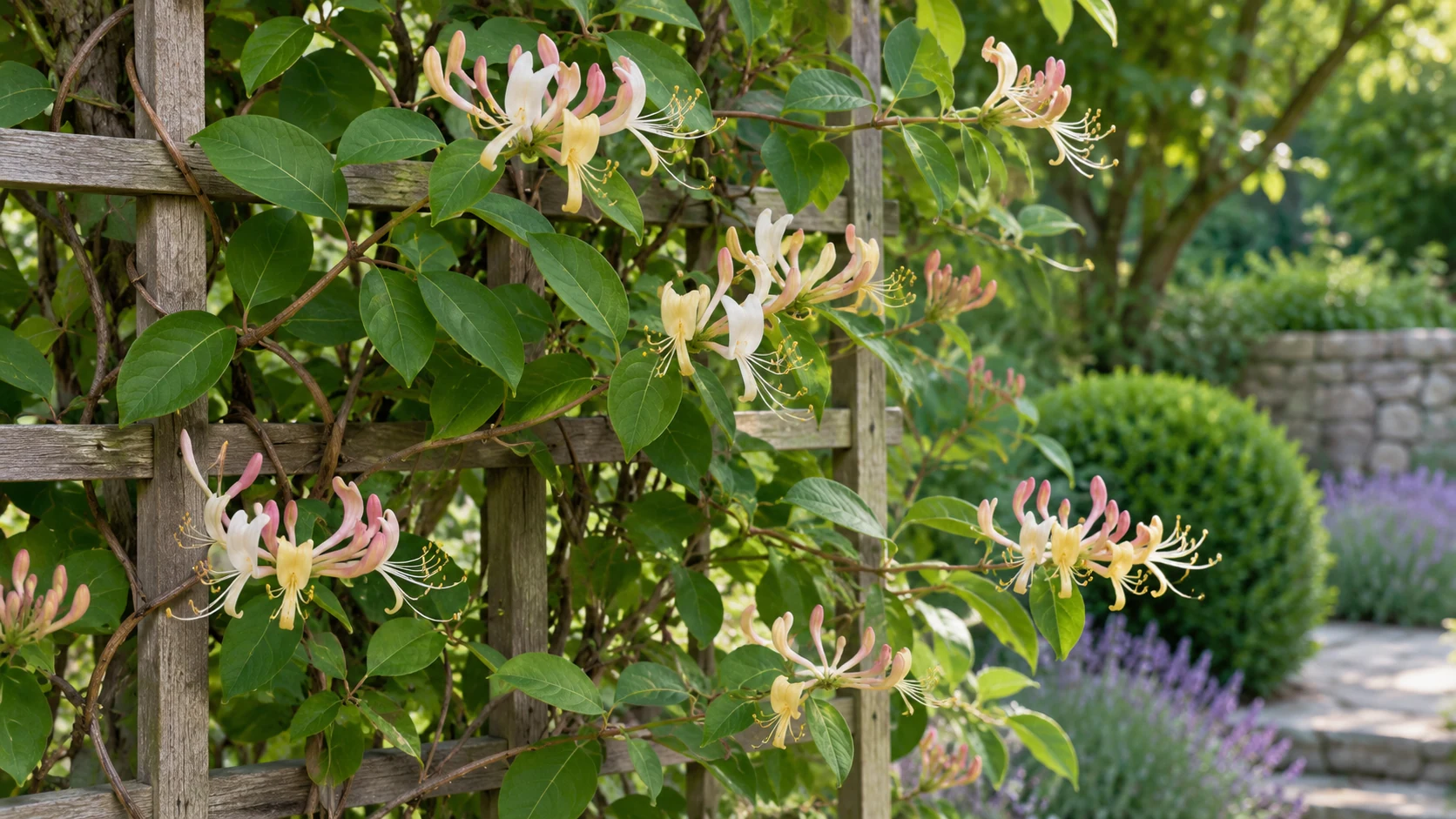
Honeysuckle Care Guide: Growing and Pruning Lonicera
Start with wateringThe most common care mistake for HoneysuckleWatering guide →Honeysuckle care essentials
Light
Dappled or partial shade, with enough light for flowering
Water
Water regularly through the first spring and summer after planting so the roots can establish. Once established, most climbing honeysuckles need an occasional deep soak during hot, dry weather. Check soil beside walls and fences even after rain because those spots can sit in a rain shadow.
Soil
Use fertile, humus-rich soil that holds some moisture but drains freely. Honeysuckles dislike persistently waterlogged ground and very dry sites.
Humidity
Temperature
Fertilizer
About Honeysuckle
Honeysuckle is native to Species-dependent across the Northern Hemisphere. Examples include the British and Irish native Lonicera periclymenum and East Asian Lonicera japonica., typically reaches Species-dependent. Many climbing forms reach about 3–7 m (10–23 ft); shrubby species are usually shorter. indoors, with moderate to vigorous in the growing season; japanese honeysuckle can spread especially aggressively where it is invasive. growth. Honeysuckle has a a diverse genus of twining climbers and upright shrubs. this profile focuses on ornamental climbing honeysuckles and notes where species differ. growth habit and part of the Caprifoliaceae family.
| Detail | Information |
|---|---|
| Native region | Species-dependent across the Northern Hemisphere. Examples include the British and Irish native Lonicera periclymenum and East Asian Lonicera japonica. |
| Mature size | Species-dependent. Many climbing forms reach about 3–7 m (10–23 ft); shrubby species are usually shorter. |
| Growth rate | Moderate to vigorous in the growing season; Japanese honeysuckle can spread especially aggressively where it is invasive. |
| Growth habit | A Diverse Genus Of Twining Climbers And Upright Shrubs. This Profile Focuses On Ornamental Climbing Honeysuckles And Notes Where Species Differ. |
| Scientific name | Lonicera spp. (ornamental honeysuckles) |
| Family | Caprifoliaceae |
How to care for Honeysuckle?
How much light does Honeysuckle need?
Dappled or partial shade, with enough light for flowering. Full sun when the root zone stays cool and evenly moist. Light shade. direct sun
- Dappled or partial shade, with enough light for flowering - Dappled or partial shade, with enough light for flowering.
- Full sun when the root zone stays cool and evenly moist - Full sun when the root zone stays cool and evenly moist.
- Light shade - Light shade.
- direct sun - direct sun.
When should you water Honeysuckle?
Water regularly through the first spring and summer after planting so the roots can establish. Once established, most climbing honeysuckles need an occasional deep soak during hot, dry weather. Check soil beside walls and fences even after rain because those spots can sit in a rain shadow.
- Check the soil several centimeters below the surface near the root zone. If it is dry during active growth - Check soil beside walls and fences even after rain because those spots can sit in a rain shadow.
- water slowly and thoroughly - Water regularly through the first spring and summer after planting so the roots can establish.
- then let excess drain
- Drain excess water - Water regularly through the first spring and summer after planting so the roots can establish.
What soil works best for Honeysuckle?
Use fertile, humus-rich soil that holds some moisture but drains freely. Honeysuckles dislike persistently waterlogged ground and very dry sites.
- For a container - Use fertile, humus-rich soil that holds some moisture but drains freely.
- use a large pot with open drainage holes and a quality loam-based mix - Use fertile, humus-rich soil that holds some moisture but drains freely.
- Add compost for organic matter and coarse perlite or fine bark if the mix stays wet. - Honeysuckles dislike persistently waterlogged ground and very dry sites.
- Mulch the root zone while keeping the crown and stems clear. - Honeysuckles dislike persistently waterlogged ground and very dry sites.
Grower notes for Honeysuckle
Check whether your honeysuckle climbs or grows as a shrub
Lonicera is a large genus, not one uniform vine. This hub focuses on ornamental climbing types; shrubby honeysuckles and edible honeyberries have different shapes and uses. Read the botanical name on the plant tag before choosing a support or pruning schedule. Only particular species, such as Lonicera caerulea, are cultivated for edible fruit; do not assume ornamental berries are food.
Give a twining vine a sturdy support early
Climbing honeysuckles wrap their stems around a support rather than attaching with adhesive pads. Install a strong trellis, wires, or pergola before the vine becomes heavy, and leave room behind the support for airflow and pruning access.
Keep the base cooler than the flowering canopy
Dappled shade suits many climbing honeysuckles. They can flower in brighter positions when the roots do not dry out, but a hot wall can scorch foliage or increase mildew pressure. Mulch around the root zone without piling it against stems.
Water young vines and check wall rain shadows
Water through the first growing season, then give established plants a deep soak during long hot spells if the soil is dry. Walls and fences often intercept rainfall, so check the ground at the plant rather than assuming nearby wet soil means the roots received water.
Prune according to when the vine flowers
Early-flowering types often bloom on growth made the previous season and are pruned after flowering. Later-flowering types bloom on current-season growth and are generally tidied in spring. Remove damaged and congested stems first, and verify the cultivar's timing before a hard cutback.
Check local rules before planting Japanese honeysuckle
Japanese honeysuckle (Lonicera japonica) is invasive in parts of the United States, including Tennessee. That warning does not apply automatically to every Lonicera species. Check your regional invasive-plant guidance and choose a locally appropriate species or cultivar.
Confirm the species before pets chew it
RHS profiles for Lonicera periclymenum and L. sempervirens label their berries ornamental and not to be eaten, and note a pet caution. Those entries do not establish toxicity across all Lonicera species or plant parts. Keep pets from eating honeysuckle berries, identify the exact species, and contact a veterinarian if ingestion occurs.
RHS warns that berries of Lonicera periclymenum and L. sempervirens are ornamental and not to be eaten, but does not provide a severity or symptom profile and this cannot be generalized to every Lonicera. Confirm the exact species and contact a veterinarian about a suspected ingestion.
Watering Honeysuckle
For Honeysuckle, check the soil several centimeters below the surface near the root zone. If it is dry during active growth, water slowly and thoroughly, then let excess drain. and water do not use a fixed calendar. Keep new plantings evenly moist while they root; for established vines, water deeply when the root zone is drying during a hot spell. Container-grown plants and vines under eaves need more frequent checks. Check more often during warm, dry growing weather and less often in cool or rainy periods. Plants beside walls may need watering when the rest of the bed has received enough rain.
| Detail | Information |
|---|---|
| How often | Do not use a fixed calendar. Keep new plantings evenly moist while they root; for established vines, water deeply when the root zone is drying during a hot spell. Container-grown plants and vines under eaves need more frequent checks. |
| How to check | Check the soil several centimeters below the surface near the root zone. If it is dry during active growth, water slowly and thoroughly, then let excess drain. |
| Seasonal changes | Check more often during warm, dry growing weather and less often in cool or rainy periods. Plants beside walls may need watering when the rest of the bed has received enough rain. |
Signs of overwatering
- The root zone stays saturated between waterings.
- Leaves yellow or growth declines while the soil remains wet.
- A container has standing water or blocked drainage holes.
Signs of underwatering
- The root zone is dry several centimeters down during active growth.
- Leaves wilt or new growth slows during a hot, dry spell.
- The vine flowers poorly after repeated dry periods.
Soil & potting for Honeysuckle
Use a mix of For a container, use a large pot with open drainage holes and a quality loam-based mix., Add compost for organic matter and coarse perlite or fine bark if the mix stays wet., Mulch the root zone while keeping the crown and stems clear. for Honeysuckle. Good drainage with steady, moderate moisture; add organic mulch to limit drying. Target soil pH around No single pH range applies across the genus; prioritize fertile, well-drained soil. Repot repot container-grown vines when roots fill the pot or the mix has broken down, usually every few years; size needs vary by species and cultivar., ideally in repot in early spring before strong new growth, avoiding frozen or very hot, dry conditions.
| Detail | Information |
|---|---|
| Recommended mix | For a container, use a large pot with open drainage holes and a quality loam-based mix., Add compost for organic matter and coarse perlite or fine bark if the mix stays wet., Mulch the root zone while keeping the crown and stems clear. |
| Drainage | Good drainage with steady, moderate moisture; add organic mulch to limit drying. |
| Soil pH | No single pH range applies across the genus; prioritize fertile, well-drained soil. |
| Repotting frequency | Repot container-grown vines when roots fill the pot or the mix has broken down, usually every few years; size needs vary by species and cultivar. |
| Best season to repot | Repot in early spring before strong new growth, avoiding frozen or very hot, dry conditions. |
Signs it needs repotting
- Roots circle the pot or emerge from drainage holes.
- The container dries unusually fast after a thorough watering.
- The plant is unstable because the rootball has outgrown the pot.