Cape Honeysuckle Care: How to Grow, Train, and Prune
Learn how to grow Cape honeysuckle in sun and well-drained soil, train it as a shrub or vine, prune for shape, and protect it from cold and overgrowth.
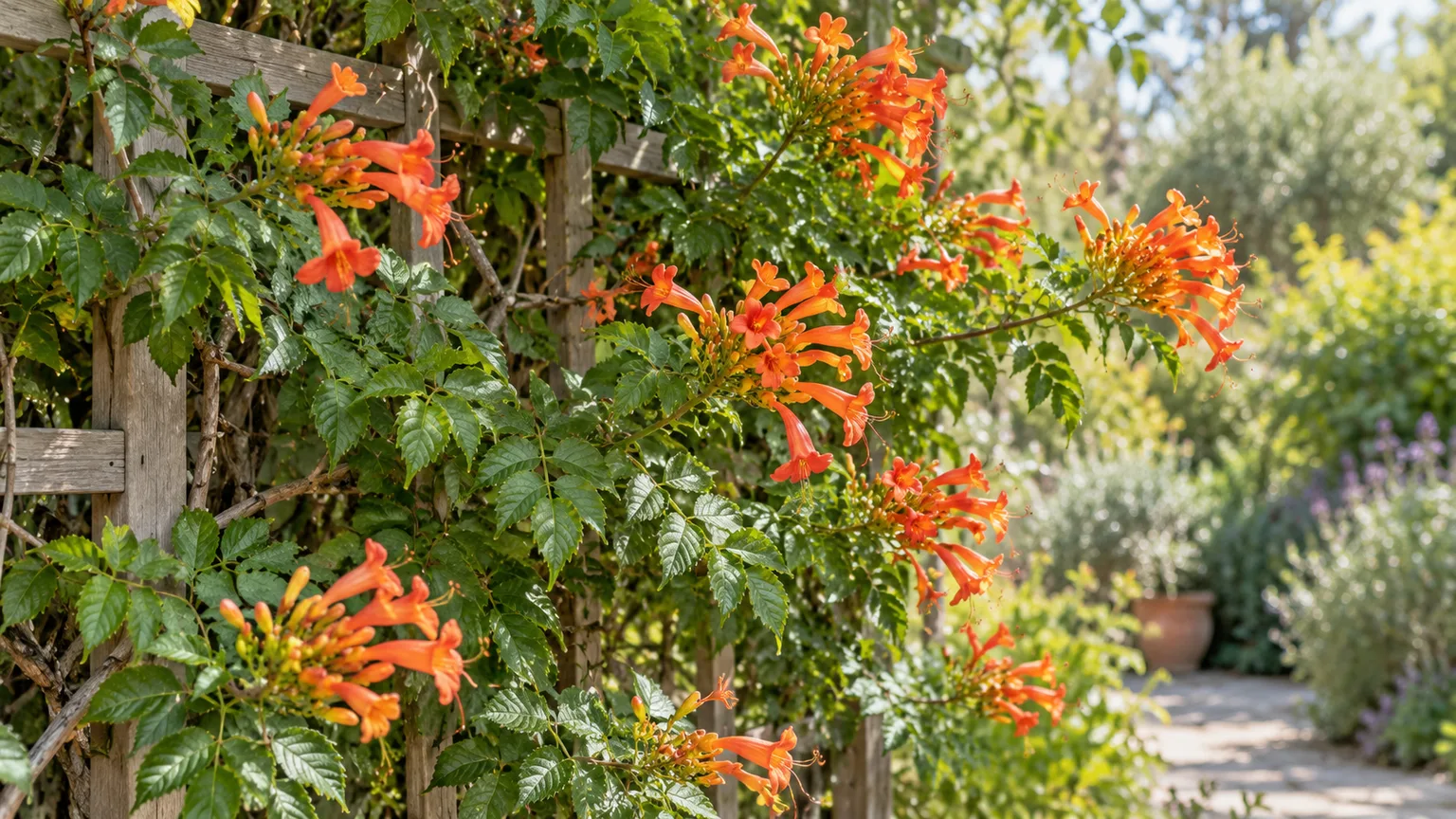
Cape honeysuckle (Tecomaria capensis, often sold as Tecoma capensis) can be a clipped flowering shrub, a sprawling slope cover, or a long, loose vine. The form is not fixed: choose it by the space you have, then prune and support the stems to keep it there.
Before planting, check two things that routine care advice often skips: how cold your garden gets and whether the plant is recommended in your region. Cape honeysuckle is frost-sensitive, grows vigorously in warm climates, and is rated high invasion risk by UF/IFAS in Florida.
At a glance: what to expect from Cape honeysuckle
This South African member of the Bignoniaceae is not a true honeysuckle (Lonicera). Its glossy leaves are pinnately compound, usually with five to nine toothed oval leaflets, and its orange, red, apricot, or yellow flowers appear in clusters of narrow trumpets. If a nursery tag gives only “honeysuckle,” confirm the botanical name before you buy; yellow elder (Tecoma stans) is another trumpet-flowered relative with a different growth habit. NC State Extension describes the identifying leaves and flowers, while San Diego Zoo’s plant profile clarifies that Cape honeysuckle belongs to a different family from true honeysuckle.
| Detail | What to plan for |
|---|---|
| Growth habit | Scrambling, multi-stemmed shrub; can be trained along a support or clipped as a hedge |
| Typical climate | Often listed for USDA Zones 9–11; marginal sites need winter protection |
| Mature scale | Commonly several feet tall and wide; untended stems can extend much farther |
| Light | Full sun gives the best flowering; partial shade is useful in very hot locations |
| Soil | Moisture-retentive but well-drained; avoid persistently wet ground |
| Bloom season | Often fall through spring, but local seasons and warmth shift the cycle |
| Main upkeep | Choose a form, tie stems if climbing, and prune to control the spread |
The table is a planning guide, not a guarantee that every cultivar or microclimate behaves identically. UC Cooperative Extension Master Gardeners report plants 7 to 10 feet tall or more when left unpruned, and note that the plant can also work as a shrub, hedge, supported vine, container specimen, or slope cover.
Check climate and regional spread risk before planting
Many references place Cape honeysuckle in USDA Zones 9 through 11, but the lower edge of that range is not dependable in every garden. NC State says leaves and branches die back at about 25°F and below; the UF/IFAS Nassau County Extension notes that 9b–11 is a safer expectation for its area, which can dip into Zones 8b–9a. Costa Farms takes a more conservative position and lists it as reliably hardy outdoors only in Zone 10. These ratings describe different levels of caution, not a promise that an exposed Zone 9 plant will keep its foliage. NC State Extension, UF/IFAS Extension Nassau County, and Costa Farms show why borderline gardeners should judge the winter minimum, exposure, and root protection together.
If your winter routinely falls below the mid-20s°F, plan for top growth to be damaged or killed. An established crown may resprout after a brief cold event, but a prolonged freeze, wet soil, or a young plant can turn dieback into total loss. In Zones 8b or 9a, treat Cape honeysuckle as a protected experiment or a container plant rather than an evergreen screen; a warm south-facing wall helps, but it does not change the local hardiness zone.
Regional escape risk deserves equal weight. The current UF/IFAS Assessment marks Tecomaria capensis as high invasion risk and not recommended across Florida’s north, central, and south zones; gardeners there should choose a locally recommended alternative rather than relying on pruning alone. San Diego Zoo also reports escape and naturalization in parts of Hawaii, Australia, and Central Florida. That does not establish a blanket legal status everywhere, so check your state or local invasive-plant guidance before buying. In places where it is permitted, remove wind-dispersed seed capsules and stems that root where they touch soil, and keep clippings out of wild areas. UF/IFAS Assessment and NC State Extension document the Florida rating and seed behavior.
Choose a bright site with room for the plant’s mature shape
Cape honeysuckle flowers most heavily in full sun, though it tolerates partial shade. In a scorching inland or desert garden, light afternoon shade can reduce heat stress; expect fewer blooms if the site stays shaded for much of the day. NC State Extension gives the full-sun-to-partial-shade range, and University of Arizona Cooperative Extension specifically notes that low-desert exposures may need shade protection.
Give it room to spread before you plant. A clipped hedge belongs where repeated trimming is practical, while an unsupported shrub needs enough width for arching stems; a trellis vine needs a structure sized for a woody plant, not a temporary tomato cage. Do not place it where branches can tangle with gutters, block a narrow path, or root unnoticed along a property line.
The soil should drain after heavy rain but should not bake completely dry while a new planting is rooting. Cape honeysuckle tolerates sand and some clay, yet persistently flooded soil is a poor fit; if water stands after storms, improve the grade or choose another plant instead of setting the root ball into a wet pocket. UC Cooperative Extension and UF/IFAS Extension Nassau County both flag drainage as essential.
Decide whether you want a shrub, hedge, or climbing mass
This is a versatile plant, but each shape takes a different amount of work. A shrub needs occasional shaping; a formal hedge needs repeated trimming; and a vine needs a support plus ties to direct its stems. In warm, wet regions, the same vigor that makes it useful for a slope or screen also makes it easy to outgrow a small bed.
Train a vine on a support that can carry its stems
Cape honeysuckle is often called a vine, but it is not a self-climber with gripping tendrils or adhesive pads. It has stout upright and arching stems that need to be tied to a sturdy trellis, fence framework, or wires anchored to posts; leave space behind the stems so you can inspect, tie, and prune them. The University of Arizona Extension lists it as a non-climber and says to tie the stems to develop the vine form. Its landscape-vines guide also cautions that it grows large in mild areas.
Use soft, adjustable ties and fasten each main stem loosely enough to allow for thickening. Spread the first framework stems in different directions instead of allowing several to bunch at the top; this distributes weight and helps fill the support evenly. Do not assume a bare masonry wall will hold the plant in place, and avoid training it into a tree where woody growth will be difficult to remove.
Keep shrub and hedge forms dense without constant shearing
As a shrub, let several main stems form a broad, naturally rounded outline, then shorten the longest shoots before they become heavy and leggy. As a hedge, space plants for the eventual width and plan to prune more often; shear lightly after a flush of growth instead of waiting until the hedge has become a tall wall of bare wood. Horticulturist Justin Hancock and grower Tom Foley, quoted by Homes & Gardens, describe its upright but sprawling habit and its ability to take shearing in warm-climate screens.
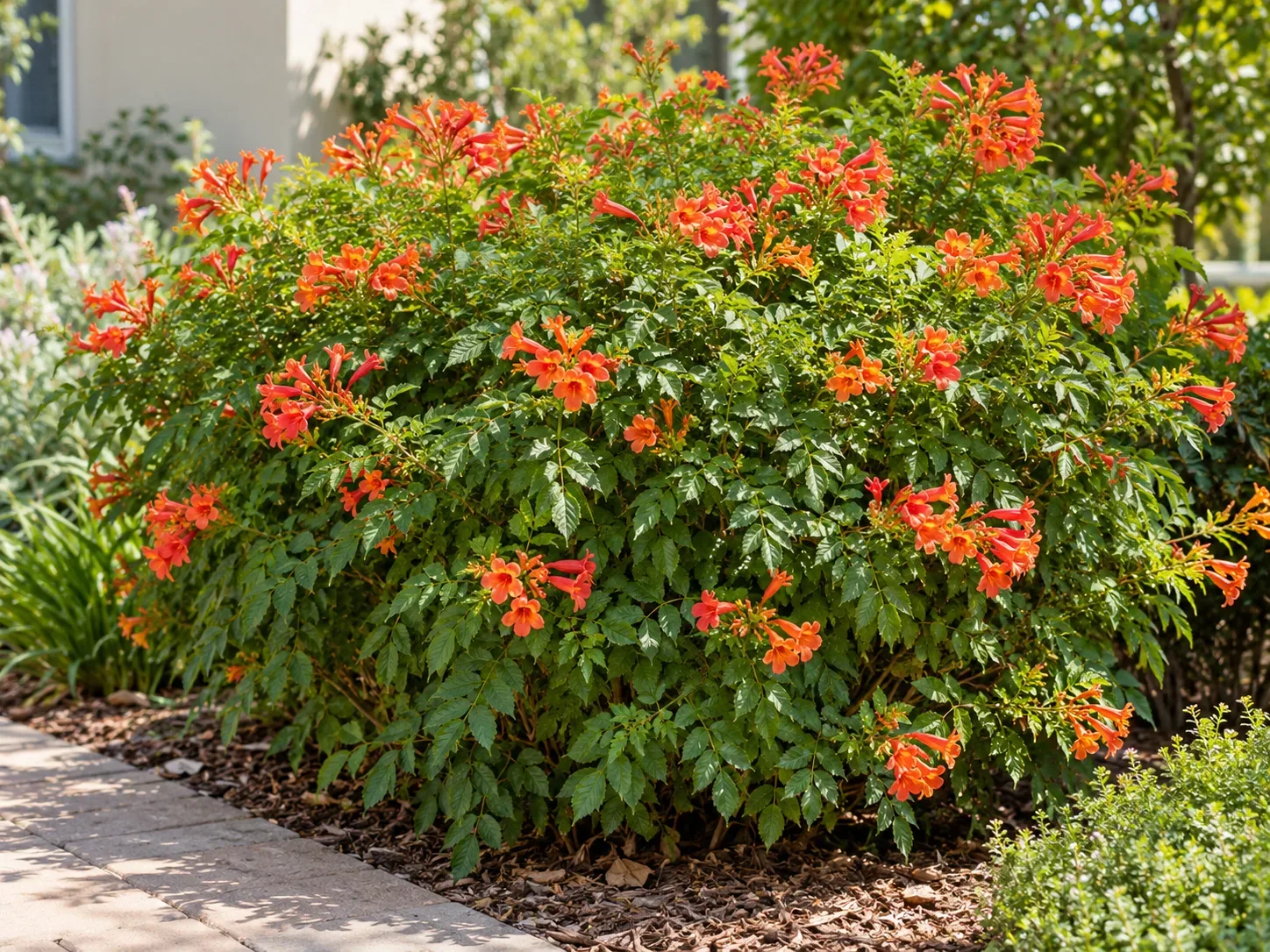
For a groundcover effect, guide branches outward across an open bank and trim back any stems that creep into neighboring beds. Branches that touch soil can root, so a sprawling planting is not a low-maintenance substitute for an edging strip. Use this form only where you can keep the perimeter visible and the site is not near natural habitat.
Plant Cape honeysuckle without burying the crown
Plant during mild weather after the threat of hard frost has passed, especially in marginal climates where a young plant has not yet built a substantial root system. Water the nursery pot first, dig a hole about as deep as the root ball and wider than it, and set the crown level with the surrounding soil. Backfill with the native soil unless it is severely compacted; adding a small pocket of rich compost can create a moisture-retaining bowl inside a drier bed.
Water slowly after planting so the root ball and surrounding soil make contact, then add a thin mulch layer over the root zone while keeping it away from the stems. In a windy or exposed site, tie young upright shoots before they lean or split. If you are planting several for a screen, leave enough space for air and access between mature plants instead of crowding them to get instant coverage.
Water by establishment stage and season
Keep a new planting evenly moist while it is making roots, but let the soil drain between waterings. In full sun and dry weather, a deep weekly soak can be a useful first-season starting point, as UC Master Gardeners suggest for their coastal California conditions; reduce the frequency when rain or shade keeps the root zone damp. Check soil a few inches down before watering rather than following a calendar through a rainy week.
Once established, Cape honeysuckle tolerates dry spells, especially in the ground. It will still grow and flower better with occasional deep water during prolonged heat, and container plants dry faster because their roots have less soil around them. Costa Farms’ grower guidance recommends regular moisture for containers and watering when the top inch dries; in outdoor beds, use deeper soil dryness and recent rainfall as your cue.
Do not try to control overgrowth by keeping the plant chronically thirsty. Drought may slow new shoots, but repeated severe stress can also reduce flowering and weaken a new planting. If a mature plant is too vigorous, prune its stems and remove unwanted rooted layers rather than withholding the water needed for healthy roots.
Feed lightly so leafy growth does not outrun flowers
Cape honeysuckle is naturally vigorous, so fertilizer is not an automatic annual requirement. If the leaves are a healthy green and the plant is growing and blooming normally, skip routine feeding; if growth is pale or weak, test the soil or use a modest, balanced product at the label rate during active growth. Do not apply fertilizer to dry roots or feed late in the season when a cold-climate container should be slowing down.
Too much nitrogen can produce a mass of soft shoots that needs more pruning and fewer flowers. The University of Arizona Extension warns that overfertilizing and overwatering can discourage flowering in cape honeysuckle and other flowering vines. Its care guidance supports a restrained approach: correct the soil only when there is a reason, not because a fast grower looks hungry.
Prune for the shape you want
Use clean, sharp pruners and decide what you want to preserve before cutting. For routine control, remove dead, crossing, damaged, or misplaced stems first, then shorten the longest live shoots to a side branch or strong bud. This opens the plant without turning every cut into a hard reset.
In frost-free or mild-winter gardens, late winter to early spring is a practical window for a larger shape correction, just before the next strong flush of growth. The RHS lists early spring pruning for this plant, and SANBI’s PlantZAfrica profile recommends late-winter pruning to keep the shrub tidy and encourage new growth and flowers. If your plant has just been hit by frost, wait until the danger has passed and new buds reveal which stems are truly dead before cutting them away. RHS and SANBI support the timing, but your local freeze pattern should control the exact date.
Refresh a shrub or hedge
For a shrub, remove one or two of the oldest stems near the base when the center becomes congested, then shorten selected outer shoots to keep the plant in scale. This staged renewal keeps some foliage in place while new branches develop. If you need to reduce height or width drastically, do it when the plant is healthy and actively able to recover; a hard cut on a frost-weakened plant can leave it exposed to another winter.
For a hedge, light trims can follow the growth flush, but avoid shearing repeatedly into leafless old wood. Make the top slightly narrower than the base so lower foliage receives sun, and take out a few individual stems when the inside becomes dense instead of clipping only the surface. UC Cooperative Extension notes that Cape honeysuckle tolerates aggressive pruning when its size needs control, while Homes & Gardens reports that warm-region growers shear it successfully as a hedge.
Control long vine stems and groundcover spread
On a trellis, keep a small framework of well-placed main stems and shorten lateral growth that reaches beyond the support. Untie and reposition stems before they become woody; once a thick branch has grown across the structure, removing it may leave a large gap. Keep the base open enough to see new suckers and inspect ties.
On a slope, trim stems back from paths, fences, and neighboring shrubs before they root at the edge. Remove seed capsules if your area has documented escape risk, and dispose of rooted pieces where they cannot re-establish. Do not let a pile of cut stems sit in contact with damp soil; the easiest time to stop spread is while the pieces are still visible and small.
Encourage bloom by correcting the cause of sparse flowers
Start with light: a plant receiving only a few hours of direct sun may grow leaves but bloom weakly. If sunlight is adequate, check water and fertilizer next; overly rich, constantly moist soil favors leafy shoots, while prolonged drought during active growth can also suppress buds. Change one condition at a time so you can see whether the plant responds.
Bloom timing varies with climate. NC State lists a typical fall-to-spring season and says warm sites may flower year-round, while UC Master Gardeners in coastal California describe summer through winter and UF/IFAS Extension Nassau County reports spring through fall. Treat those calendars as regional examples, not a fixed schedule; your local warmth, rain, light, and pruning date shift the display. NC State Extension, UC Cooperative Extension, and UF/IFAS Extension show how far the season can vary.
Avoid a heavy haircut just before the bloom period you value. A light trim that removes only wayward shoots is less likely to set flowering back than a full hedge shear; save renovation pruning for the appropriate growth window and accept that the next flush may take time to rebuild. The University of Arizona Extension notes that excess water and fertilizer can also reduce flowers, so do not solve every sparse-bloom problem by feeding more.
Choose a cultivar by color and realistic size
Cape honeysuckle flower colors range from yellow through apricot and orange to red, but the exact shade and mature size depend on the cultivar and nursery stock. UF/IFAS Extension Nassau County describes ‘Aurea’ as yellow-flowered and ‘Apricot’ as more compact, while NC State lists the broader color range. If you are choosing for a small patio, ask for the cultivar’s mature size rather than assuming that a color name means dwarf growth.
Some labels use Tecoma capensis and others use Tecomaria capensis; these are names used for the same Cape honeysuckle in horticultural references. When you compare labels, verify the full botanical name and the cultivar, especially if you need a yellow flower, a compact habit, or a plant with documented performance in your climate. NC State Extension and UF/IFAS Extension Nassau County use both names and describe named color forms.
Grow Cape honeysuckle in a container and overwinter it
A large container makes sense if you want the flowers in a cold-winter garden or need to keep the plant’s roots and stems contained. Choose a pot with several drainage holes and enough weight to resist tipping as the stems grow; use a well-draining potting mix, and add a freestanding support that will not collapse under woody growth. A pot does not make a frost-sensitive plant cold hardy, but it gives you the option to move it before a freeze.
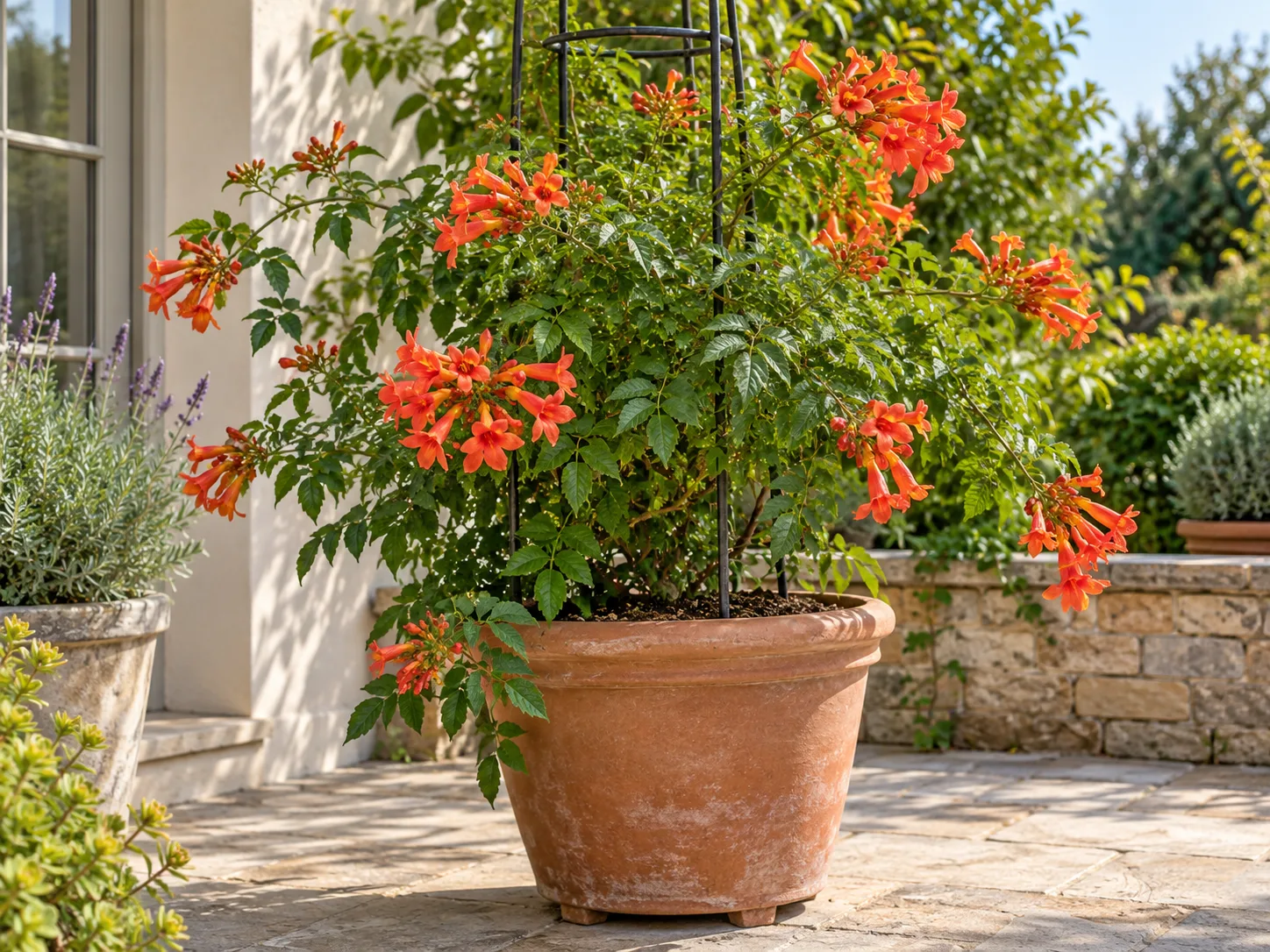
Water more often than you would a mature in-ground shrub, checking the top inch of mix and then watering until excess drains out. Empty standing water from a saucer, and do not let the plant sit in a puddle through cool weather. Root-bound plants dry quickly and can become top-heavy, so repot when roots circle densely or push through the drainage holes, moving up one container size rather than jumping into a huge volume of wet mix.
Before frost, move the pot to a bright, sheltered place where temperatures stay above freezing. If you cannot bring it indoors, place it against a protected wall and insulate the pot, but assume that leaves and exposed stems may still be damaged near 25°F. Resume outdoor placement gradually after cold weather settles, and prune confirmed frost damage only after new growth shows where the living wood begins. The RHS plant profile recommends container growing and indoor winter protection for colder gardens.
Propagate from cuttings or rooted layers
Softwood cuttings and layering are more reliable than waiting for seed because you can reproduce a plant with a known flower color and habit. UC Master Gardeners recommend green stem cuttings in early summer, while NC State also lists stem cuttings, layering, and division as options. Propagate only where growing the species is appropriate; producing more plants does not remove the regional spread concern.
To take a cutting, use a clean blade to snip a healthy nonflowering shoot several inches long, remove the lower leaflets, and place the cut end in a moist, freely draining propagation mix. Keep it warm in bright indirect light and humid but not sealed in a waterlogged container; check the mix regularly so it stays lightly damp. Once you see firm new growth and roots hold the mix together, pot it on and acclimate it gradually to brighter light.
Layering lets a flexible stem make roots while it is still attached to the parent. Bend a low, healthy stem to the ground, lightly wound or scrape the underside at a leaf node if needed, pin that section beneath a shallow layer of soil, and leave the tip exposed. Keep that area moist while it roots; when it resists a gentle tug and has new growth, sever the connection and transplant it. UC Cooperative Extension describes propagation by cuttings, rooted suckers, and seed, and RHS lists layering and semi-hardwood cuttings as methods.
Seed pods are long and narrow, and the winged seeds can disperse on wind. If you are in a region with escape concerns, do not collect or sow seed, and remove capsules before they open. The NC State profile describes the capsules and wind dispersal; the Florida UF/IFAS assessment is the deciding reference for Florida planting recommendations.
Troubleshoot frost damage, pests, and weak growth
If leaves blacken or drop after a cold night, first wait for the weather to warm rather than cutting the whole plant immediately. Scrape a small section of questionable stem: green tissue beneath the bark is alive, while dry brown wood may be dead. Once the risk of another freeze has passed and buds begin to swell, prune back to living tissue; if the crown is also dead, replace the plant only if it is recommended for your region.
Soft, yellowing growth with persistently wet soil points to drainage or overwatering before it points to fertilizer. Check whether a downspout, sprinkler, or low spot keeps the roots saturated, and correct that condition before adding amendments or another plant. Crispy leaves on a new planting can instead reflect wind, heat, or a sudden change from shade to full sun; acclimate container-grown plants over several days.
Sparse, leggy growth usually means too much shade or a lack of pruning to branch the framework. If flowers are also missing, review the bloom section’s light, fertilizer, water, and pruning checks rather than applying a high-nitrogen feed. Cape honeysuckle generally has few serious disease problems outdoors, but indoor plants may be more vulnerable to mites or whiteflies. NC State Extension notes spider mites and whiteflies on indoor specimens.
Identify pests before treating
Inspect new shoots and the undersides of leaves for aphids, scale, mealybugs, whiteflies, and fine webbing from mites. A small infestation can often be dislodged with a strong but controlled stream of water; for a larger problem, identify the pest and follow the label on any insecticidal soap or horticultural product you use. Spray only when the label permits, test a small section first, and avoid treating open flowers while pollinators are visiting.
Ants crawling up stems can be a clue that sap-feeding insects are producing honeydew. UC Master Gardeners recommend weekly monitoring and note that ants may protect mealybugs, whiteflies, or scale from natural predators. Their Cape honeysuckle guide suggests disrupting early infestations with water and watching for ants before the pest population spreads.
Conclusion
Cape honeysuckle rewards a sunny, warm garden when you decide on its shape before the stems take over. Give it draining soil, water it carefully while it establishes, tie stems to a real support if you want a vine, and prune with winter damage and bloom timing in mind.
The climate and regional checks come first: protect it where freezes are marginal, and do not plant it in Florida under the current UF/IFAS high-risk recommendation. Where it is suitable, regular boundary checks and a well-chosen shrub, hedge, trellis, or container form make its long season of trumpet flowers easier to enjoy.



