Tomato Care Guide: Light, Water, Soil and Support
Solanum lycopersicum
Grow tomatoes in full sun with steady moisture, fertile well-drained soil, and support matched to determinate or indeterminate plants.
Tomato Care Guide: Light, Water, Soil and Support
Start with wateringThe most common care mistake for TomatoWatering guide → →Tomato care essentials
Light
Water
Keep the root zone evenly moist while the plant is flowering and fruiting, but never saturated. Water deeply when the upper 2–3 cm of soil begins to dry, directing water at the soil rather than over the foliage.
Soil
Fertile, moisture-retentive but well-drained loam or container mix rich in organic matter. A slightly acidic pH near 5.8–6.8 is preferred.
Humidity
Temperature
Fertilizer
Compost and a fertilizer labelled for fruiting vegetables can support the crop, but excessive nitrogen encourages leafy growth at the expense of flowers and fruit. Sudden wilting, yellowing, or fruit defects should prompt a soil-moisture and root check before another dose of fertilizer.
About Tomato
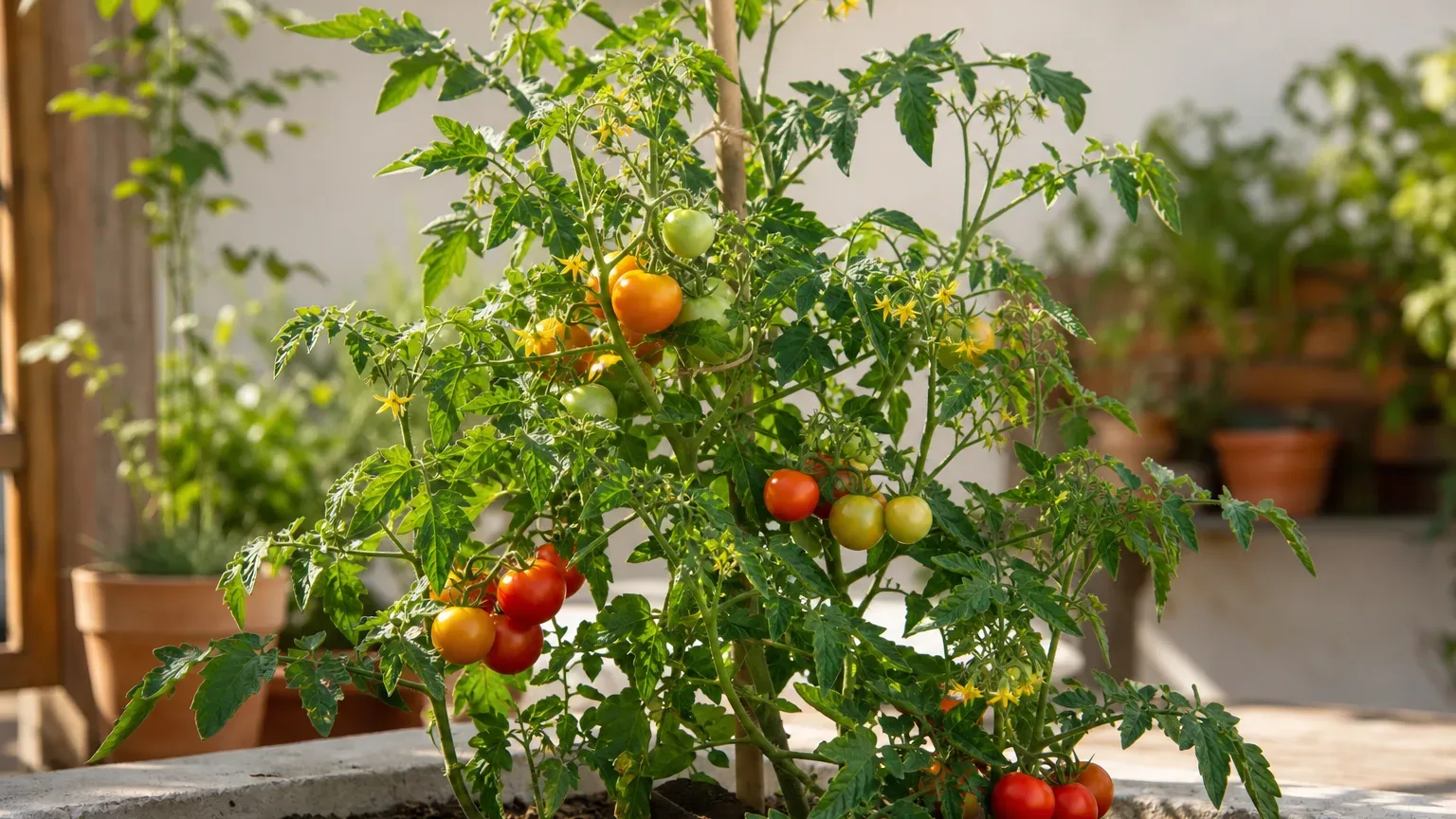
Tomato is native to Western South America, especially Peru, typically reaches 30 cm to 3 m tall and 30 cm to 1.2 m wide, depending on cultivar and support indoors, with rapid during warm weather growth. Tomato has a upright growth habit and part of the Solanaceae family. It is also known as Tamatar, Garden Tomato, Love Apple, and Lycopersicon esculentum.
| Detail | Information |
|---|---|
| Also known as | Tamatar, Garden Tomato, Love Apple, Lycopersicon esculentum |
| Native region | Western South America, especially Peru |
| Mature size | 30 cm to 3 m tall and 30 cm to 1.2 m wide, depending on cultivar and support |
| Growth rate | Rapid during warm weather |
| Growth habit | Upright |
| Scientific name | Solanum lycopersicum |
| Family | Solanaceae |
Tomato Care Guide: Light, Water, Soil and Support
A tomato is not simply a small bush that needs sun and water. Solanum lycopersicum cultivars range from compact patio plants to long, continuously extending vines, so the label determines how much room, support and pruning a plant can tolerate. Before changing its care, find out whether yours is determinate, indeterminate, semi-determinate or dwarf.
That distinction prevents two common failures: forcing a vigorous vine into a container and support system that are too small, or pruning a compact crop so hard that productive stems are removed. Once the growth habit is known, tomato care comes down to strong light, steady root-zone moisture, fertile but draining soil, measured feeding and airflow around supported foliage.
Tomato care at a glance
Give tomatoes a sunny outdoor position, a large enough root zone and soil that holds moisture without remaining saturated. Water by testing the soil rather than following a fixed weekday, and install support at planting instead of wrestling a mature plant into a cage.
Tomatoes are warm-season plants commonly grown as annual crops, even though they can live longer where cold does not kill them. The NC State Extension plant profile identifies tomato as a full-sun plant with rapid growth and notes that its mature size varies widely, which is why a universal height, pot or stake recommendation is unreliable.
Identify the growth habit first
The cultivar label is the most useful piece of equipment you have. Cornell Cooperative Extension describes the two main habits as determinate and indeterminate, but modern seed catalogues also include dwarf, patio and semi-determinate selections that need their stated mature size checked individually.
Growth habit affects more than height. It changes harvest pattern, support, spacing, container practicality and how much shoot removal is reasonable, so do not copy a pruning routine from an unidentified tomato on social media.
Determinate tomatoes
Determinate cultivars stop extending after reaching a genetically defined structure and tend to mature much of their crop in a more concentrated period. They are often bushier than indeterminate plants, but “determinate” does not automatically mean tiny; Clemson Extension advises checking the stated height because not every determinate cultivar is compact.
A sturdy cage or short stake may be enough for a compact determinate plant. Avoid routinely removing healthy side shoots, because those shoots can carry leaves and flower clusters that contribute to its finite crop.
Indeterminate tomatoes
Indeterminate cultivars continue extending and forming new flower clusters while growing conditions remain suitable. Their long stems usually need a tall stake, trellis or substantial cage, plus repeated tying as the plant grows.
They are often manageable with selective training to one or a few main stems, especially where space and airflow are limited. That is a management choice rather than a rule: heavier pruning reduces leaf area and potential fruiting sites, while no training can create a dense, difficult canopy.
Dwarf, patio and semi-determinate tomatoes
“Dwarf” can describe compact stature without telling you the entire fruiting pattern, while “patio” is a marketing clue rather than a precise botanical category. Semi-determinate plants fall between the familiar habits, so use the cultivar’s listed height and spread rather than assuming the word on the label guarantees a small pot.
Compact cultivars are normally the easiest choice for balconies and modest containers. A vigorous cherry tomato may produce small fruit but still make a very large indeterminate plant; fruit size does not predict plant size.
Light and temperature
Tomatoes need full sun for sturdy growth and reliable flowering. Alabama Cooperative Extension recommends six to eight hours of full sun, while a deeply shaded balcony or bright indoor window normally cannot provide the intensity an outdoor fruiting crop receives.
In very hot locations, distinguish “needs sun” from “cannot experience heat stress.” Keep morning and midday light strong, but temporary light afternoon protection can help during extreme heat, especially for container roots against a hot wall. Penn State Extension notes that tomato blossom drop can occur when night temperatures fall below 55°F or rise above 75°F, so flowers dropping during a heat wave may not indicate a fertilizer deficiency.
Watering without moisture swings
Aim for consistent moisture throughout the active root zone, not permanently wet soil. Push a finger or narrow probe a few centimetres below the surface; if that layer is beginning to dry, water deeply enough to wet the root ball, then let excess water leave through the bed or drainage holes.
Weather, container volume and crop load make a fixed schedule unreliable. A fruiting tomato in a large pot may need checking daily in hot, windy weather, whereas the same pot can remain wet much longer during rain or cool conditions. The detailed Tomato watering guide explains how to adjust that check through the season.
Mulch over a garden bed slows evaporation and reduces abrupt moisture swings. Keep it a little away from the stem, direct irrigation at the soil, and avoid leaving a container standing in a full saucer; consistent moisture means balanced air and water around roots, not saturation.
Soil and root space
Use fertile loam in the ground or a quality container mix that drains freely while retaining useful moisture. University of New Hampshire Extension recommends a slightly acidic pH of 6.2 to 6.8; a laboratory or extension soil test is more dependable than correcting pH from symptoms alone.
Garden soil can be improved with mature compost where drainage is already reasonable. Do not fill a pot with dense field soil, which can compact and drain poorly in a container; use the practical recipes and diagnosis steps in the Tomato soil guide.
Root volume must match the cultivar. A pot that dries from moist to wilted within hours, tips under its support or is packed with circling roots is not functioning as a stable root environment, even if its label once called it suitable for vegetables.
Feeding for balanced growth and fruit
Begin with good soil and use a fertilizer recommendation intended for tomatoes or fruiting vegetables. Apply according to a soil test or product label rather than feeding every time the plant looks tired, because wilt from dry roots, heat or root damage will not be corrected by extra nutrients.
Excess nitrogen can produce lush foliage with little fruit, a response documented by University of New Hampshire Extension. If growth is very leafy but flowering is weak, check the fertilizer history, light and cultivar before adding another dose; the Tomato fertilizer guide covers timing and deficiency lookalikes.
Container tomatoes need nutrients replenished because watering carries soluble minerals out of the pot, but that does not justify concentrated feed. Water a dry root ball first and never use fertilizer as an emergency treatment for a plant that is actively wilting.
Containers for tomato plants
Choose the cultivar before the pot. Alabama Extension gives a practical baseline of one plant per 5- to 7-gallon container, and North Carolina A&T advises a container of at least five gallons for fruiting vegetables; vigorous indeterminate tomatoes often benefit from more root volume and a heavier, more stable base.
Every container needs unobstructed drainage and enough depth for a substantial root system. Install the cage or stake when planting, because adding it after roots fill the pot can cause avoidable damage.
Tomatoes are generally cropped and replaced rather than maintained indefinitely as houseplants. Seedlings may move from a cell to an intermediate pot and then their final container, but an established fruiting plant should not be repeatedly shifted without a clear reason; use the Tomato repotting guide for timing and aftercare.
Support and pruning are cultivar decisions
Support keeps stems and fruit off the ground, makes harvesting easier and can improve airflow. Penn State’s staking guidance recommends taller supports for indeterminate than determinate plants and says to start staking while plants are young, not after stems have sprawled and become brittle.
Use a cage for a branching bush or train an indeterminate stem to a tall stake or trellis with soft, loose ties. Check ties as stems thicken, and anchor container supports to something stable if the leafy plant catches strong wind.
Pruning is not one-size-fits-all. Cornell’s tomato guide notes that staking and pruning indeterminate plants can improve access and fruit cleanliness, while determinate varieties do not require the same treatment. Remove yellow, diseased or soil-touching leaves selectively, then consult the Tomato pruning guide before removing vigorous shoots.
Flowering, pollination and fruit set
Tomato flowers are self-fertile, but pollen still has to move within the flower. Outdoors, wind and vibration usually help; on a sheltered balcony, gently shaking the support around midday can assist without touching each flower.
Flowers can drop when temperatures are unsuitable, the root zone repeatedly dries, or the plant is under broader stress. When flowers fail, correct the growing environment before reaching for a “bloom booster,” and avoid spraying flowers indiscriminately during hot weather.
Fruit load also changes water demand. Check a heavily laden plant more often, support clusters that strain stems, and harvest ripe fruit regularly so hidden splits or decay are found before they affect nearby fruit.
Seasonal care in warm and tropical climates
In frost-free regions, the best tomato season may be the milder dry period rather than the hottest, wettest part of the year. Local sowing calendars matter because sustained hot nights can interfere with fruit set, while humid rain keeps foliage wet and favours disease even when the plant is growing rapidly.
During intense summer heat, check containers early in the day and shield the pot itself from radiant heat. During monsoon conditions, prioritise drainage, wider spacing and airflow, and do not water simply because the calendar says it is time.
In cooler climates, transplant outdoors only after frost danger has passed and the soil has warmed. For seed-starting, transplant depth and hardening-off steps, follow the Tomato propagation guide rather than treating a tender seedling like an established crop.
Common warning signs and the first check
When a tomato suddenly wilts, check moisture below the surface before acting. Dry soil calls for a slow, thorough watering; wet soil with ongoing wilt points toward root stress, drainage trouble or disease, so adding more water makes diagnosis harder.
Yellow lower leaves have several possible causes, including age, prolonged wetness, nutrient shortage and disease. Look at the pattern, check both sides of leaves and inspect the stem and soil instead of diagnosing from colour alone.
Rapid leafy growth with few flowers should trigger a review of light and nitrogen. Flower drop during very hot or cool nights points first to temperature and moisture stability, while fruit cracking after rain or irrigation often follows a sudden change in water availability.
Tomato plant toxicity and handling
Keep the crop separate from the rest of the plant around pets. NC State lists tomato leaves and stems as containing the glycoalkaloids tomatine and solanine and identifies the plant as toxic to cats, dogs and horses; prevent chewing and contact a veterinarian after suspected ingestion rather than relying on a home remedy.
Ordinary staking and pruning are best done with clean tools and hand washing afterward, particularly if skin is sensitive. Remove fallen prunings from places where pets or children play, and do not confuse ripe edible fruit with permission to eat the foliage.
When to use this page vs other Tomato guides
Use this overview to identify the plant’s growth habit and understand how its care systems fit together. For a weak or unproductive plant, start with the likely limiting factor: the light guide for exposure and heat, the watering guide for moisture checks, or the soil guide for drainage and root-zone structure.
Use the fertilizer guide when growth and leaf colour suggest a nutrition issue after light, water and roots have been checked. Use the repotting, propagation and pruning pages for procedures where timing and cultivar habit matter more than a quick overview can show.
Related Tomato guides
- Tomato light requirements — choose exposure and respond to heat or shade symptoms.
- How to water Tomato plants — test moisture and prevent repeated wet-dry swings.
- Best soil for Tomato — build a draining, moisture-retentive root zone.
- Tomato fertilizer guide — feed without driving soft, overly leafy growth.
- Repotting Tomato plants — move seedlings and container plants with less root stress.
- Tomato propagation guide — start plants from seed or cuttings.
- Tomato pruning guide — adapt training to determinate or indeterminate growth.
Conclusion
Successful tomato care begins with the cultivar label, not a universal calendar. Match root space and support to mature habit, provide strong light, keep moisture steady without saturation, and feed only after the basic growing conditions are sound.
Determinate, indeterminate, dwarf and patio tomatoes can all crop well, but they should not be pruned or contained as though they are interchangeable. Observe the plant and weather, make one correction at a time, and use the detailed topic guides when the overview identifies the system that needs attention.
How to care for Tomato?
When should you water Tomato?
Keep the root zone evenly moist while the plant is flowering and fruiting, but never saturated. Water deeply when the upper 2–3 cm of soil begins to dry, directing water at the soil rather than over the foliage.
- Test the soil below the surface and water deeply if it feels dry - Water deeply when the upper 2–3 cm of soil begins to dry, directing water at the soil rather than over the foliage.
- Drain excess water - Water deeply when the upper 2–3 cm of soil begins to dry, directing water at the soil rather than over the foliage.
What soil works best for Tomato?
Fertile, moisture-retentive but well-drained loam or container mix rich in organic matter. A slightly acidic pH near 5.8–6.8 is preferred.
- 50% high-quality potting mix or loam - Fertile, moisture-retentive but well-drained loam or container mix rich in organic matter.
- 30% mature compost
- 20% perlite, pumice, or coarse material for drainage - Fertile, moisture-retentive but well-drained loam or container mix rich in organic matter.
Grower notes for Tomato
Start with the growth habit
Check the seed packet or plant label before planning space and support. Determinate tomatoes form compact, bushier plants, reach a cultivar-defined height, and ripen much of their crop in a concentrated period. Indeterminate tomatoes keep extending vine-like stems and setting fruit until weather or disease stops them, so they usually need taller, sturdier support. Dwarf and patio cultivars can differ from both patterns.
Give roots steady moisture
Tomatoes perform best when their root zone stays evenly moist rather than cycling between drought and saturation. Check below the surface, water deeply when the upper 2–3 cm dries, and use mulch to slow moisture swings in beds. Irregular moisture can contribute to fruit cracking and blossom-end rot, while waterlogged soil deprives roots of oxygen.
Use the sunniest practical position
Provide at least 6 hours of direct sun, with 8 hours often giving stronger flowering and fruiting where heat is not extreme. Keep enough space around leaves for airflow and avoid routinely wetting the foliage. In very hot climates, light afternoon protection can reduce heat stress, but deep shade produces weak growth and poor fruit set.
Choose a container for the cultivar
A full-size tomato needs a large, stable container; NC State Extension recommends at least 5 gallons and 1–2 feet deep, one plant per pot. Compact determinate, dwarf, and patio cultivars are the practical choices for smaller spaces. Install the cage, stake, or trellis at planting so later root disturbance is minimal.
Feed for fruit, not just leaves
Begin with fertile soil and follow a tomato fertilizer label rather than applying high-nitrogen feed by habit. Excess nitrogen can create vigorous foliage with relatively little fruit. A plant that is wilting from dry soil, heat, or damaged roots should be stabilized before it is fertilized.
Keep foliage away from pets
The ripe fruit is the edible crop, but the leaves and stems contain the toxic alkaloids tomatine and solanine. NC State lists tomato as a problem for cats, dogs, and horses. Prevent pets from chewing the plant or fallen green material, and contact a veterinarian if ingestion causes drooling, vomiting, diarrhea, weakness, or unusual behavior.
Are tomato plants safe for pets?
Ripe tomato fruit is edible for people, but the plant's leaves and stems contain toxic alkaloids and should be kept away from cats, dogs, horses, and other pets.
Tomato foliage and stems contain tomatine and solanine. NC State Extension lists the plant as a problem for cats, dogs, and horses; ingestion can cause marked gastrointestinal and neurologic signs. Keep pets away from foliage and seek veterinary advice after suspected ingestion.
Watering Tomato
For Tomato, test the soil below the surface and water deeply if it feels dry and water check daily in hot weather; water when the upper 2–3 cm is dry. Water more often during hot, windy weather and fruit development; reduce during cool or rainy periods.
| Detail | Information |
|---|---|
| How often | Check daily in hot weather; water when the upper 2–3 cm is dry |
| How to check | Test the soil below the surface and water deeply if it feels dry |
| Seasonal changes | Water more often during hot, windy weather and fruit development; reduce during cool or rainy periods |
Signs of overwatering
- persistently wet soil
- yellowing lower leaves
- soft or darkened roots
Signs of underwatering
- wilting that persists beyond the hottest part of the day
- dry soil pulling from the container edge
- cracked fruit after irregular watering resumes
Soil & potting for Tomato
Use a mix of 50% high-quality potting mix or loam, 30% mature compost, 20% perlite, pumice, or coarse material for drainage for Tomato. Good drainage with steady moisture; avoid both standing water and repeated drought. Target soil pH around 5.8–6.8. Repot transplant seedlings once into their final bed or container; tomatoes are usually replaced after the crop, ideally in warm season, after frost risk has passed and nights are reliably mild.
| Detail | Information |
|---|---|
| Recommended mix | 50% high-quality potting mix or loam, 30% mature compost, 20% perlite, pumice, or coarse material for drainage |
| Drainage | Good drainage with steady moisture; avoid both standing water and repeated drought |
| Soil pH | 5.8–6.8 |
| Repotting frequency | Transplant seedlings once into their final bed or container; tomatoes are usually replaced after the crop |
| Best season to repot | Warm season, after frost risk has passed and nights are reliably mild |
Signs it needs repotting
- seedling roots circle the nursery cell
- growth stalls between waterings
- the container is smaller than about 19 L for a full-size plant
Humidity & temperature for Tomato
Fertilizer & pruning for Tomato
Use compost and a fertilizer labelled for fruiting vegetables can support the crop, but excessive nitrogen encourages leafy growth at the expense of flowers and fruit. Sudden wilting, yellowing, or fruit defects should prompt a soil-moisture and root check before another dose of fertilizer. for Tomato.
| Detail | Information |
|---|---|
| Fertilizer type | Compost and a fertilizer labelled for fruiting vegetables can support the crop, but excessive nitrogen encourages leafy growth at the expense of flowers and fruit. Sudden wilting, yellowing, or fruit defects should prompt a soil-moisture and root check before another dose of fertilizer. |
Common problems on Tomato
Yellow Leaves
MediumLikely cause: Common on this plant type; confirm with recent watering, light, and root checks.
Quick fix: Inspect the plant and correct the most likely care stressor before stacking treatments.
Full fix guide →Brown Tips
MediumLikely cause: Common on this plant type; confirm with recent watering, light, and root checks.
Quick fix: Inspect the plant and correct the most likely care stressor before stacking treatments.
Full fix guide →Root Rot
MediumLikely cause: Common on this plant type; confirm with recent watering, light, and root checks.
Quick fix: Inspect the plant and correct the most likely care stressor before stacking treatments.
Full fix guide →Overwatering
MediumLikely cause: Common on this plant type; confirm with recent watering, light, and root checks.
Quick fix: Inspect the plant and correct the most likely care stressor before stacking treatments.
Full fix guide →Underwatering
MediumLikely cause: Common on this plant type; confirm with recent watering, light, and root checks.
Quick fix: Inspect the plant and correct the most likely care stressor before stacking treatments.
Full fix guide →Spider Mites
MediumLikely cause: Common on this plant type; confirm with recent watering, light, and root checks.
Quick fix: Inspect the plant and correct the most likely care stressor before stacking treatments.
Full fix guide →Mealybugs
MediumLikely cause: Common on this plant type; confirm with recent watering, light, and root checks.
Quick fix: Inspect the plant and correct the most likely care stressor before stacking treatments.
Full fix guide →Aphids
MediumLikely cause: Common on this plant type; confirm with recent watering, light, and root checks.
Quick fix: Inspect the plant and correct the most likely care stressor before stacking treatments.
Full fix guide →Leggy Growth
MediumLikely cause: Common on this plant type; confirm with recent watering, light, and root checks.
Quick fix: Inspect the plant and correct the most likely care stressor before stacking treatments.
Full fix guide →Slow Growth
MediumLikely cause: Common on this plant type; confirm with recent watering, light, and root checks.
Quick fix: Inspect the plant and correct the most likely care stressor before stacking treatments.
Full fix guide →Wilting
MediumLikely cause: Common on this plant type; confirm with recent watering, light, and root checks.
Quick fix: Inspect the plant and correct the most likely care stressor before stacking treatments.
Full fix guide →Drooping Leaves
MediumLikely cause: Common on this plant type; confirm with recent watering, light, and root checks.
Quick fix: Inspect the plant and correct the most likely care stressor before stacking treatments.
Full fix guide →Low Humidity
MediumLikely cause: Common on this plant type; confirm with recent watering, light, and root checks.
Quick fix: Inspect the plant and correct the most likely care stressor before stacking treatments.
Full fix guide →Not Enough Light
MediumLikely cause: Common on this plant type; confirm with recent watering, light, and root checks.
Quick fix: Inspect the plant and correct the most likely care stressor before stacking treatments.
Full fix guide →Fungus Gnats
MediumLikely cause: Common on this plant type; confirm with recent watering, light, and root checks.
Quick fix: Inspect the plant and correct the most likely care stressor before stacking treatments.
Full fix guide →Mold on Soil
MediumLikely cause: Common on this plant type; confirm with recent watering, light, and root checks.
Quick fix: Inspect the plant and correct the most likely care stressor before stacking treatments.
Full fix guide →