How to Grow and Care for Early Girl Tomatoes
Learn when to plant Early Girl tomatoes, how to support the indeterminate vines, keep fruit set steady, avoid common problems, and pick ripe tomatoes.
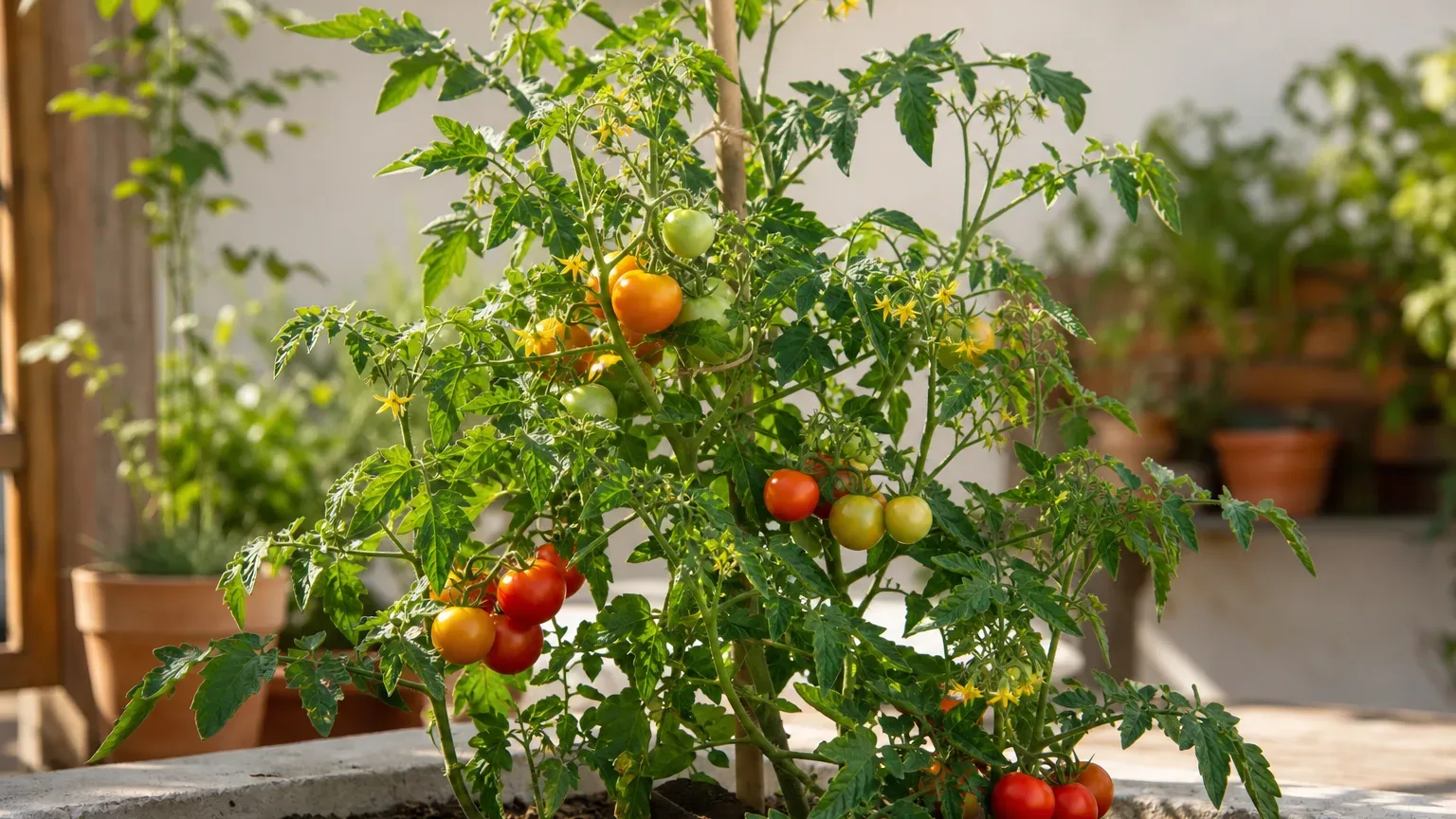
Standard Early Girl earns its place in a vegetable bed by producing medium-sized red tomatoes ahead of many full-season slicers. The name describes its head start to the first ripe fruit, not a compact plant: this is a vigorous, indeterminate vine that needs room and dependable support.
For a good crop, start with the right plant label, wait for warm conditions rather than planting by a date on the calendar, then keep the root zone evenly moist. A realistic harvest estimate, an early support plan, and restrained pruning matter more than a special fertilizer or a trick to make fruit ripen overnight.
Early Girl at a glance: an early slicer on a vigorous vine
Early Girl is an F1 hybrid tomato, Solanum lycopersicum, grown for early-season red slicing fruit. Cornell Cooperative Extension describes the standard variety as indeterminate, with crimson, slightly flattened tomatoes around 4 to 6 ounces and an approximate 57- to 63-day maturity window. Seed companies differ in their listed days, and the plant keeps flowering and setting fruit after the first tomatoes ripen rather than finishing in one short flush (Cornell’s Vegetable Varieties for Gardeners).
| Trait | What to expect |
|---|---|
| Habit | Indeterminate vine; grows and fruits until cold or stress ends the season |
| Fruit | Red, slightly flattened, medium-sized slicer |
| First harvest | Roughly 57–63 days from transplant in cultivar references; weather shifts the date |
| Best fit | Early fresh fruit followed by a long harvest |
| Key needs | Sturdy support; F1 seed will not reliably reproduce the parent |
Its flavor is a familiar, balanced garden-tomato flavor rather than a guarantee of the most complex tomato you will ever taste. The advantage is timing and reliability: you can enjoy a real slicer while later varieties are still sizing fruit, then keep picking as the plant sets new clusters.
Keep pets from chewing the vine. The ASPCA lists tomato plants as toxic to dogs, cats, and horses while noting that ripe tomato fruit is non-toxic; NC State Extension also flags tomato foliage and stems as poisonous if eaten in quantity (ASPCA tomato plant safety; NC State Extension tomato profile).
Is Early Girl right for your garden?
Grow standard Early Girl if you have a sunny bed, a support system, and enough season to keep an indeterminate vine productive. It suits gardeners who want earlier sandwiches and salads, a steady succession of fruit, or a first tomato to bridge the gap before larger, later cultivars ripen. Pair it with one or two varieties chosen for flavor, size, or sauce if you want more range than one early slicer can provide.
It is less convenient where space is tight, a short cage is all you have, or the container will dry out whenever you miss a day. A compact alternative, Bush Early Girl, is a distinct determinate selection, not a smaller growth stage of standard Early Girl; Cornell’s variety record describes it as a compact, roughly 18-inch plant. If the packet or nursery tag says only “Early Girl,” assume you are buying the full-size vine and plan support accordingly (Cornell’s Bush Early Girl profile).
What “early” and days to maturity mean
The number on a seed packet is a planning estimate, not a countdown guarantee. Standard Early Girl references commonly fall near 57 to 63 days, but the seller’s counting convention matters: for transplants, many catalogs count from the day you plant outdoors, while a directly sown crop would be counted from sowing. Read the note beside the number and compare varieties from the same supplier before deciding that one is a week earlier than another.
Cold soil, chilly nights, transplant shock, low light, heat during flowering, drought, and disease can all push that first ripe fruit later. Record transplant date and first harvest for your own yard; after two seasons, that local record is more useful than treating a catalog number as a promise. Johnny’s Selected Seeds likewise defines days to maturity from the transplant date when the crop is transplanted (Early Girl seed listing and maturity notes).
Build the season around warm soil, not the variety name
“Early” does not mean frost hardy. Set plants outdoors only after your local frost risk has passed and the soil has warmed; Oregon State Extension uses about 60°F soil temperature for tomato transplanting in its dry-farm guidance, while Minnesota and Iowa extensions also emphasize frost-free conditions and warm soil. If the forecast calls for a run of cold nights, wait a few days or protect transplants properly rather than asking a seedling to survive a premature start (Oregon State Extension’s tomato guidance; University of Minnesota Extension’s tomato guide).
Use your average last frost date as a starting point, then check the soil and next week’s forecast. A soil thermometer is more dependable than judging warmth from one sunny afternoon; a warm afternoon does not offset several cold nights.
The calendar shifts by climate: a cool-summer garden benefits from planting as soon as safe warmth arrives, while a hot-summer garden may get its best fruit set before extended heat. In frost-free climates, use local planting windows and heat patterns rather than winter-hardiness zones as a tomato calendar.
Start seed indoors or choose a transplant
Starting your own seed gives you more control over variety and timing. Sow indoors about five to six weeks before your expected outdoor planting date, or use the schedule recommended by your local extension service; starting months too early often creates tall, tangled plants that are difficult to keep healthy inside. Use a clean seed-starting mix, containers with drainage, and bright light directly over the seedlings so they grow sturdy rather than leaning toward a window.
If buying a transplant, choose a compact plant with a strong stem, evenly spaced green leaves, and no spots, wilting, or insect damage. Avoid plants already carrying lots of flowers or fruit in a tiny pot; they may be root-bound and stressed, and visible fruit is no substitute for a healthy root system. Minnesota Extension recommends sturdy transplants and starting seed only five to six weeks before outdoor planting (University of Minnesota Extension).
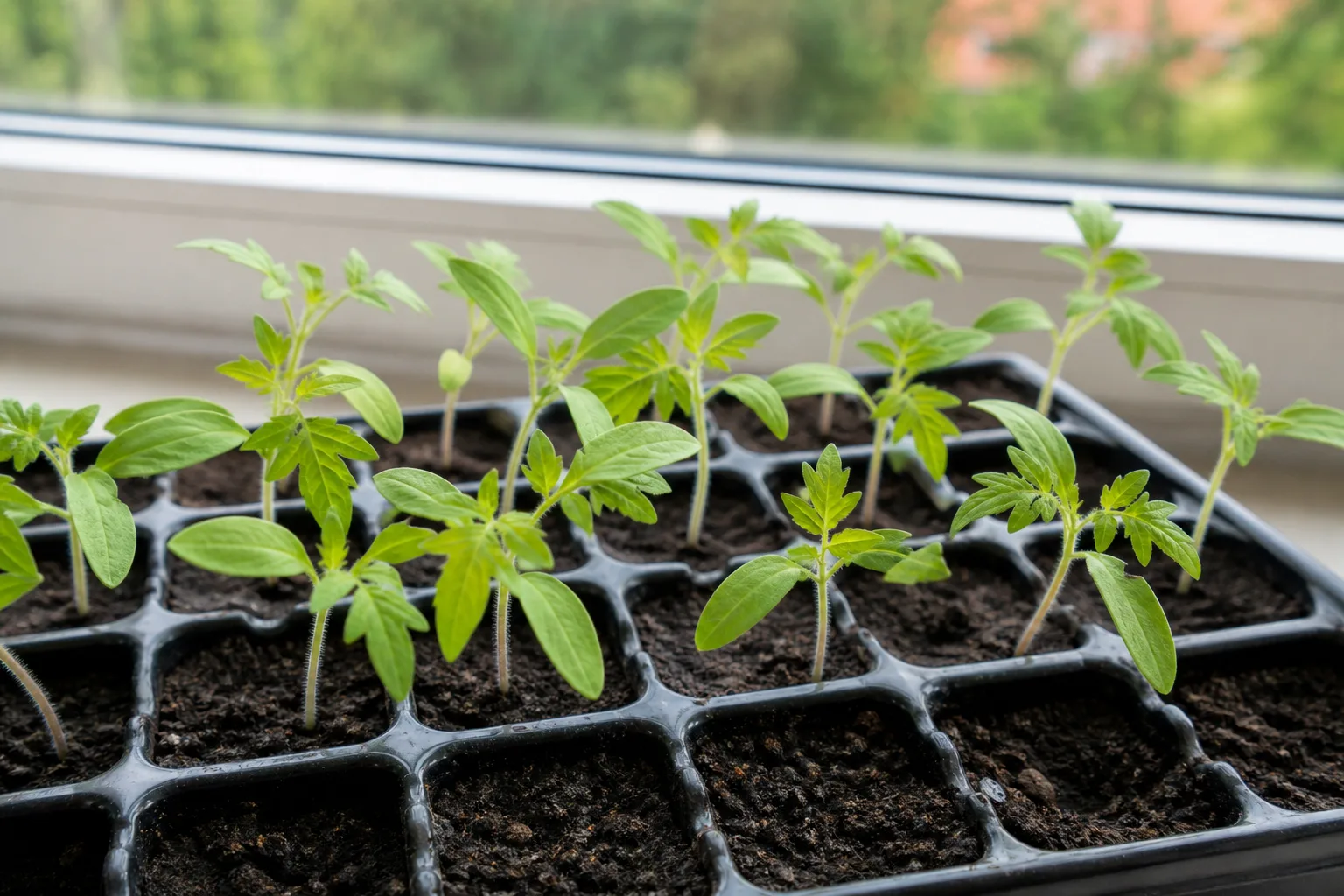
A compact seed-starting schedule
Sow seeds shallowly in moist—not saturated—mix and keep them warm until they emerge. Once the seedlings are up, move them into the brightest light available; a bright window is often weaker than it looks in late winter, so add a grow light if stems stretch or bend. Pot up when the first true leaves develop and the root ball begins to hold together, keeping the foliage above the mix.
About a week before planting, harden off the seedlings by gradually introducing outdoor light, breeze, and temperature changes. Start in a sheltered, bright-shade spot, then lengthen the outdoor time and add gentle morning sun each day. Bring plants inside when the weather turns cold or windy, and water them if the root ball begins to dry; hardening is acclimation, not deliberate drought stress.
The timing will shift by region: BBC Gardeners’ World likewise advises waiting until frost danger has passed and acclimating seedlings gradually before planting outside. Use that principle with your local frost calendar rather than copying another climate’s month-by-month dates (BBC Gardeners’ World tomato growing guide).
Choose a sunny bed and prepare the root zone
Choose the sunniest well-drained place available, with at least six hours of direct sun and preferably more. Morning sun helps foliage dry after dew; shade from a tree, wall, or later-growing vegetable can reduce flowering and delay ripening. Avoid a low, soggy corner and leave enough room to reach the plant without brushing wet foliage against neighboring crops.
Tomatoes are most dependable in deep soil that drains freely but holds some moisture. A mildly acidic pH around 6.0 to 6.8 is a useful target; use a soil test before adding lime or fertilizer. Mix in mature compost if needed, but avoid fresh manure or concentrated fertilizer in the planting hole because excess nitrogen can produce leaves at the expense of flowers (Iowa State University Extension’s home tomato guide; University of Minnesota Extension).
Rotate tomatoes with unrelated crops when you can, especially if that bed has had wilt or leaf disease. Peppers, eggplants, and potatoes are also nightshades, so moving among them does not give the break you get from beans or greens. Rotation cannot stop every airborne disease, but it reduces repeated exposure to some soil-borne problems.
Plant deeply and give the vine room to breathe
Plant after hardening off and water the seedling before it goes into the bed. Remove the lowest leaves and set the plant deeper than it was growing in its pot, leaving the upper leaves clear of the soil; tomato stems can form additional roots where buried. If a transplant is unusually leggy, lay the stem in a shallow trench with the leafy top above ground rather than bending it sharply into a deep hole (NC State Extension’s tomato plant profile).
For supported standard Early Girl vines, start with about 24 to 36 inches between plants and use the wider end in humid gardens or if you will leave several stems. A single-stem stake can fit closer than a broad cage, but crowded vines are harder to inspect, tie, and harvest. Adjust for local extension guidance and your support system.
Water slowly at the base after transplanting so the root ball and surrounding soil make contact. Do not press a cage into place later through a mature root zone; install it now while the plant is small and the roots have not spread. A small, caged tomato in a mulched bed shows the kind of early-season footprint to leave open around the vine.
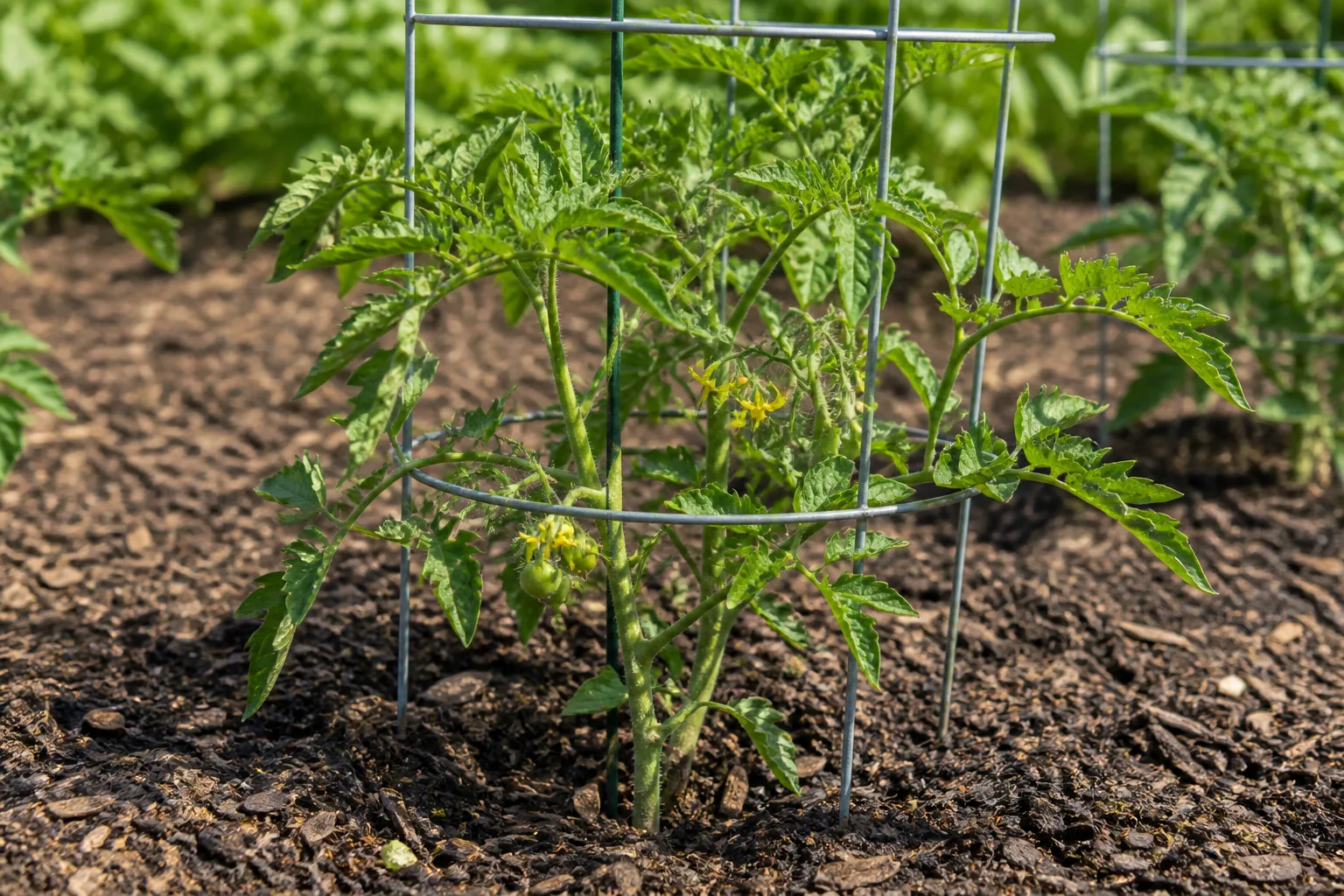
Put a sturdy support in place before growth takes off
Indeterminate Early Girl continues adding stems and fruit clusters, so the support needs to hold a heavier plant than a starter cage may suggest. Set a tall, stable stake, heavy-duty cage, or trellis at planting. If you choose a stake, tie the main stem loosely with soft material in a figure-eight so the stem can thicken; check ties as the plant grows and add them before a branch bends sharply.
A stake or trellis suits one or two trained stems that you can tie regularly. A broad cage takes less pruning but must be sturdy enough for a full-sized vine; a Florida weave uses posts and horizontal twine to support a row. Training makes plants easier to tend and improves airflow through the foliage (Iowa State tomato training guidance).
Keep fruit-laden branches off wet soil, where splash can spread some leaf diseases and fruit can rot unnoticed. In a windy garden, anchor the support deeply or add a brace before the growing vine makes a loose cage top-heavy.
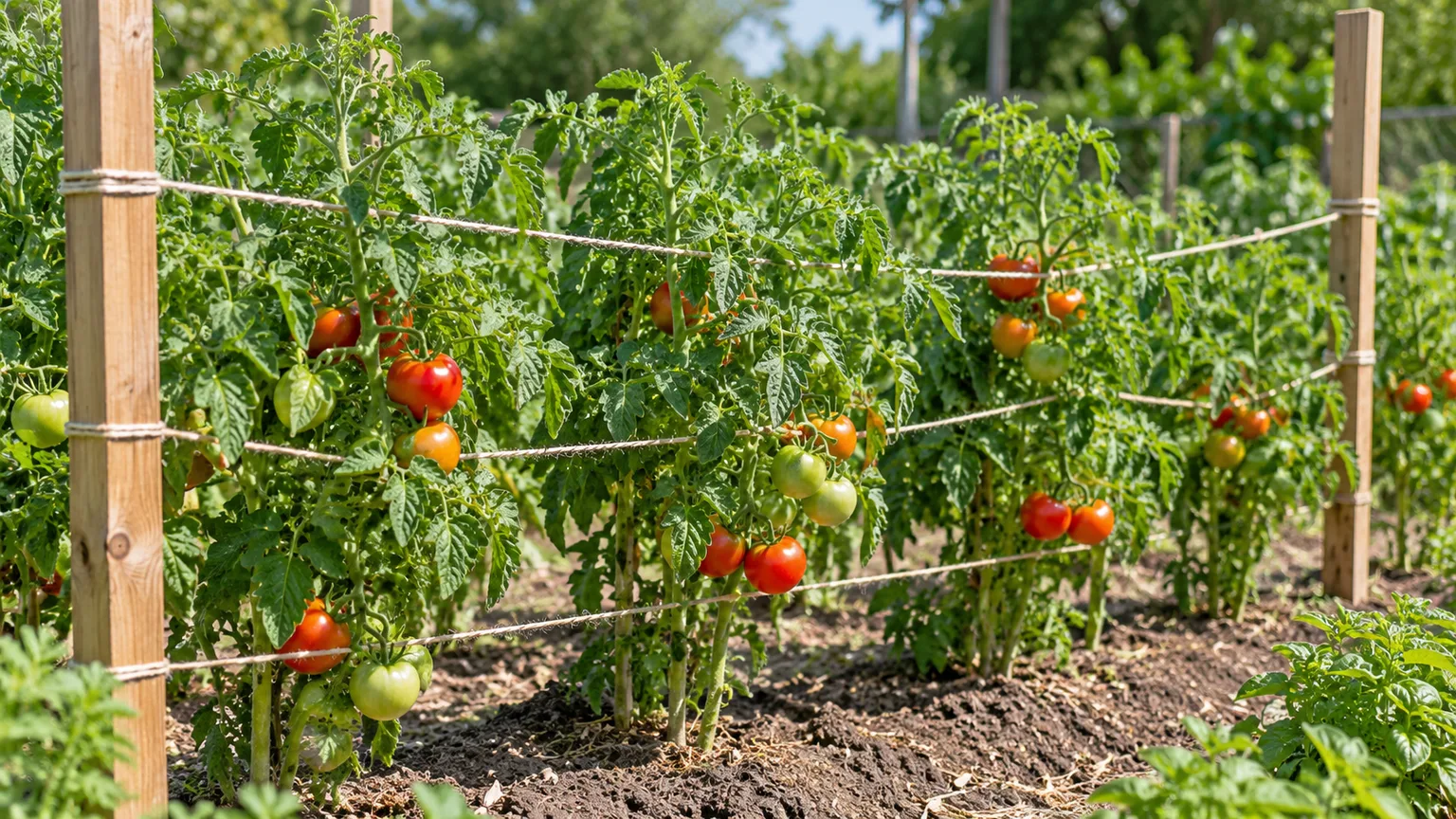
Water steadily and mulch after the soil warms
Aim for evenly moist soil, not a fixed schedule. About an inch of weekly water from rain and irrigation is a starting point for an in-ground plant, but heat, wind, soil, and plant size change demand. Check a few inches down: wait if it is cool and damp; water slowly if dry. Iowa State Extension recommends watering at the soil surface in the morning and keeping moisture steady during fruit development (Iowa State Extension).
Drip irrigation or a soaker hose makes it easier to water without splashing leaves. If you water by hand, direct the stream at soil. Containers need more frequent checks because their small volume dries quickly; on hot, windy days a large pot may need more than one watering, but check the mix rather than reacting to temporary midday wilt alone.
Once soil has warmed, add two to three inches of clean straw, shredded leaves, or another organic mulch, leaving a gap around the stem. Mulch steadies moisture, suppresses weeds, and reduces soil splash onto lower leaves.
Some West Coast growers dry-farm Early Girl, but that whole-system method depends on suitable climate, deep soil, and stored winter moisture. Oregon State trials found dry-farmed and irrigated fruit similarly flavorful in taste tests, while severe stress can shrink fruit and increase blossom-end rot; consistent watering is the safer default for a typical home bed (Oregon State Extension’s dry-farming research).
Feed moderately so flowers outnumber leaves
Start with the soil test and the fertilizer label. If the bed is fertile and you incorporated compost, the plant may need little additional feeding; if growth is pale or a test shows a shortfall, use a fertilizer appropriate for vegetables at the label rate. There is no special Early Girl feeding schedule that overrides soil conditions.
Avoid repeated heavy applications of high-nitrogen fertilizer. Nitrogen helps build leaves and stems, but an excess can keep the plant lush at the expense of flowers and fruit. More fertilizer will not make a plant “early”; overfeeding can also create salt stress or nutrient imbalance. If you do side-dress, keep the product away from direct stem contact and water it in as directed.
Blossom-end rot is not automatically a sign that the soil has no calcium. It often appears when a developing fruit cannot receive calcium consistently because moisture has fluctuated, roots are stressed, or growth conditions are out of balance. Stabilize watering and check the soil before adding lime, calcium sprays, or eggshells; an unnecessary amendment can create a different problem. University of Minnesota Extension specifically warns that excess nitrogen encourages leafy growth and slow fruiting (UMN Extension).
Prune selectively without exposing the fruit
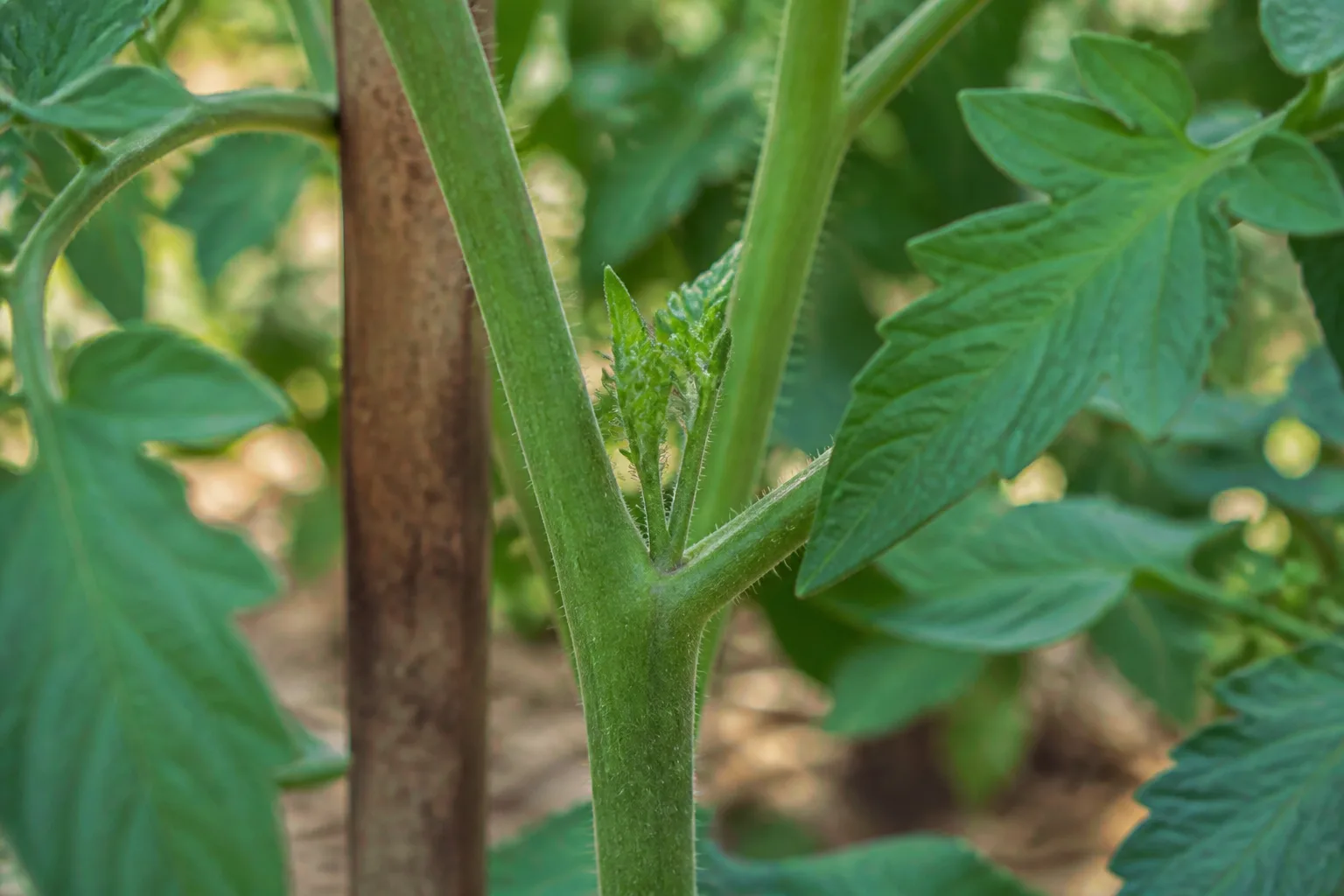
Pruning is optional, but a little training makes an indeterminate plant easier to support and inspect. A sucker grows from the angle between a leaf stem and the main stem. If you are growing to one or two leaders on a stake, remove the small suckers you do not want while they are easy to pinch; if the plant is in a strong cage, leave more shoots and thin only crowded, weak, or soil-touching growth.
Do not strip the vine bare or assume each sucker steals fruit production: extra stems can carry fruit, and excess pruning removes leaves that shade tomatoes from sunscald. Iowa State Extension advises against leaving the canopy too open and notes that determinate plants should not be pruned like indeterminate vines (Iowa State Extension’s pruning guide).
Remove yellow or diseased lower leaves and foliage touching soil, especially once the plant is established. Work on dry plants, clean your pruners between plants when disease is present, and avoid removing more than a small portion of healthy foliage at once. If frost is approaching and the plant is still pushing new flowers that have no chance to mature, you can top a healthy indeterminate vine late in the season; topping early removes future growing points and may cut the harvest short.
Help flowers set fruit through changing weather
Tomatoes have flowers with both reproductive parts, and outdoors, wind and insect visits usually shake pollen loose. If a sheltered patio or greenhouse plant flowers but fails to set fruit, gently tap the support or flower cluster on a dry day to create movement. This is a small assist, not a substitute for suitable temperatures, adequate light, or steady root moisture.
Temperature stress is a common reason flowers dry up and fall before fruit forms. Iowa State Extension notes that daytime heat above about 85°F and nights below about 55°F can interfere with tomato pollination; sustained very hot weather can also make fruit set unreliable. A brief spell of poor fruit set may resolve when conditions improve, so do not respond by pouring on fertilizer or repeatedly spraying the flowers (Iowa State Extension on tomato blossom drop).
If the plant blooms heavily but carries little fruit, check for temperature swings, drought or waterlogging, excess nitrogen, and insufficient sun. Keep soil evenly moist and wait for better weather; one Early Girl vine can set fruit without a second tomato plant nearby.
Grow Early Girl in a container—with realistic expectations
You can grow standard Early Girl in a pot, but it is not a compact patio variety. Give one plant a large, stable container with generous drainage, fresh potting mix, direct sun, and a sturdy support fastened so wind cannot tip the pot. Penn State Extension recommends a pot at least 20 inches wide for one tomato plant; a smaller pot can make watering and root temperature harder to manage, especially once the vine fills out (Penn State Extension’s container gardening guide).
Containers hold less moisture, so check often and water thoroughly when the mix begins to dry. Keep drainage holes clear, avoid leaving the pot in standing water, and use potting mix rather than garden soil, which can compact.
For a balcony or a small patio, Bush Early Girl or another labeled compact tomato may be the more forgiving choice. It has a determinate habit and a shorter footprint, though it still benefits from a cage and regular watering. Standard Early Girl suits containers best when you have space for the vine and are willing to manage the support and watering through summer.
Solve the problems most likely to spoil an early crop
Early harvest timing can help you get the first fruit before late-season stress peaks, but it does not make Early Girl immune to disease or pests. Check the undersides of leaves and new growth as you water; remove hornworms or clusters of eggs by hand when practical, and identify leaf symptoms before treating the whole plant. Avoid carrying diseased foliage or wet soil from one tomato to another.
Standard Early Girl is sold with resistance to some Fusarium and Verticillium wilt races, but resistance codes describe specific pathogens and strains, not general immunity. Cornell lists some resistance to Fusarium races 1 and 2 and Verticillium wilt; blights, Septoria leaf spot, cracking, and insect damage can still occur. Use the codes printed on the packet because seed suppliers and strains can vary (Cornell’s Early Girl record).
Blossom-end rot, cracking, sunscald, and disease
A dark, leathery patch at the blossom end of a developing tomato often points to blossom-end rot, a calcium-delivery disorder made worse by moisture stress. Remove badly damaged fruit, keep the soil moisture steadier, and avoid cultivating close to the roots. Adding calcium without testing the soil rarely fixes the conditions that caused the next fruit to develop the same way.
Cracks near the stem often follow a rush of water after dry soil. Mulch and regular watering reduce the swing; if heavy rain is forecast, harvest fruit already showing color and let it ripen indoors. Oregon State’s Early Girl trials link splitting to changes in water availability (Oregon State Extension).
Pale or bleached patches on the side facing the sun can be sunscald, especially after heavy pruning or when a branch breaks. Keep enough healthy leaves to shade fruit, use support to keep the plant upright, and avoid removing large sections of canopy at once. For leaf spots, yellowing, or wilting, compare the symptoms with a local extension diagnosis before applying a pesticide; similar-looking damage can have different causes and treatments.
Harvest ripe fruit and plan around frost
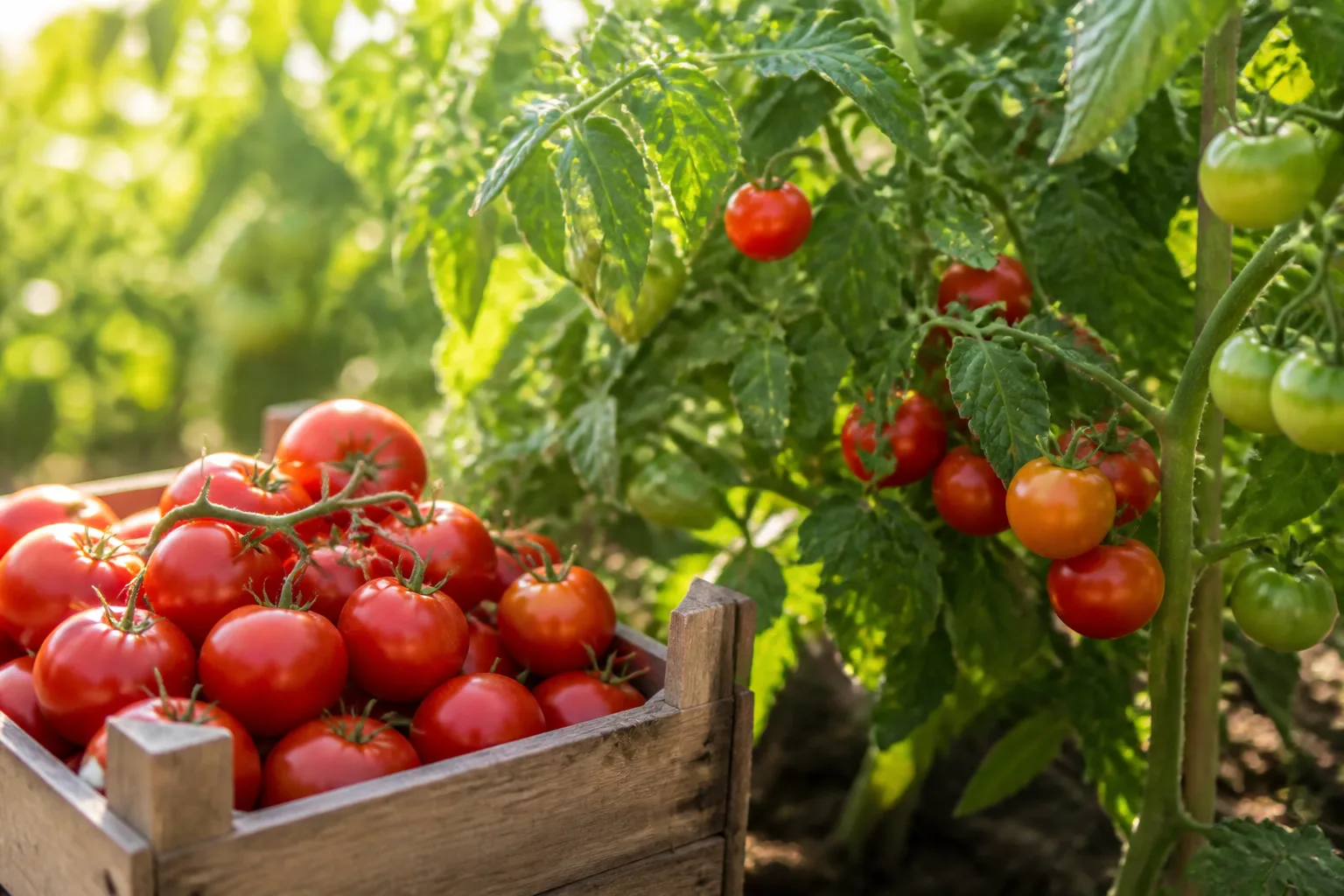
Pick an Early Girl when it has developed its mature red color and gives slightly to gentle pressure. The fruit should detach with a careful twist or a snip through the stem without pulling down the truss. Harvest every day or two when fruit is ripening quickly, and place softer tomatoes in a shallow container rather than piling them where they bruise.
You do not have to leave every tomato on the plant until it is fully red. A fruit that has begun to change color at the blossom end has entered the breaker stage and can continue ripening indoors at room temperature, away from direct sun. This helps when a fruit is splitting or frost is forecast; small, hard green tomatoes may not ripen well.
Early Girl does not stop producing after its first flush, but the calendar still matters. Count backward from your usual first fall frost when considering a late planting, and remember that the quoted maturity figure is measured under favorable conditions. Before a killing frost, bring in mature green and breaker-stage fruit and remove the exhausted plant; tomatoes are grown as annuals in most home gardens rather than expected to produce another season.
Understand seed saving, propagation, and overwintering
Early Girl is an F1 hybrid, so seed saved from its fruit may sprout but usually will not reproduce the same uniform Early Girl plant. The next generation can vary in fruit size, maturity, and growth habit because it separates traits from its parent lines. If you want a dependable Early Girl crop next year, buy fresh seed or a named transplant; if you want to experiment, label the saved seed as a variable offspring rather than a guaranteed copy.
You can root a healthy sucker in water or moist potting mix to make a clone of the original plant, since a cutting carries the same genetics. That does not extend the season by itself: a small late-summer cutting may not have time to grow, flower, and ripen fruit before cold weather. It can be useful in a long, frost-free season or for a protected indoor growing setup, but most gardeners get a more reliable next crop by starting new seed or buying a transplant at the proper time.
Conclusion
Treat Early Girl as a fast-starting slicer on a full-size vine. Give it warm soil, direct sun, a sturdy support at planting, and steady moisture; let the weather and your soil test guide feeding instead of pushing growth with extra fertilizer. Choose a cage and light pruning for a less demanding routine, or a stake and one or two stems if you want a narrower, earlier-trained plant.
The key distinction is between standard Early Girl and Bush Early Girl, and the key timing rule is to plant for warmth rather than the variety’s name. The 57- to 63-day maturity range helps set expectations, but your first ripe tomato depends on local conditions. Pick fruit when it colors and softens slightly, and keep harvesting while the vine continues to set new clusters.



