Aphids on Tomato: Identify, Treat, and Prevent
Quick answer
Look for clusters of soft-bodied, pear-shaped insects on tomato shoot tips and leaf undersides, often with sticky honeydew or shed white skins. Rinse small colonies from sturdy growth, preserve predators, and reassess before using a labeled contact treatment.
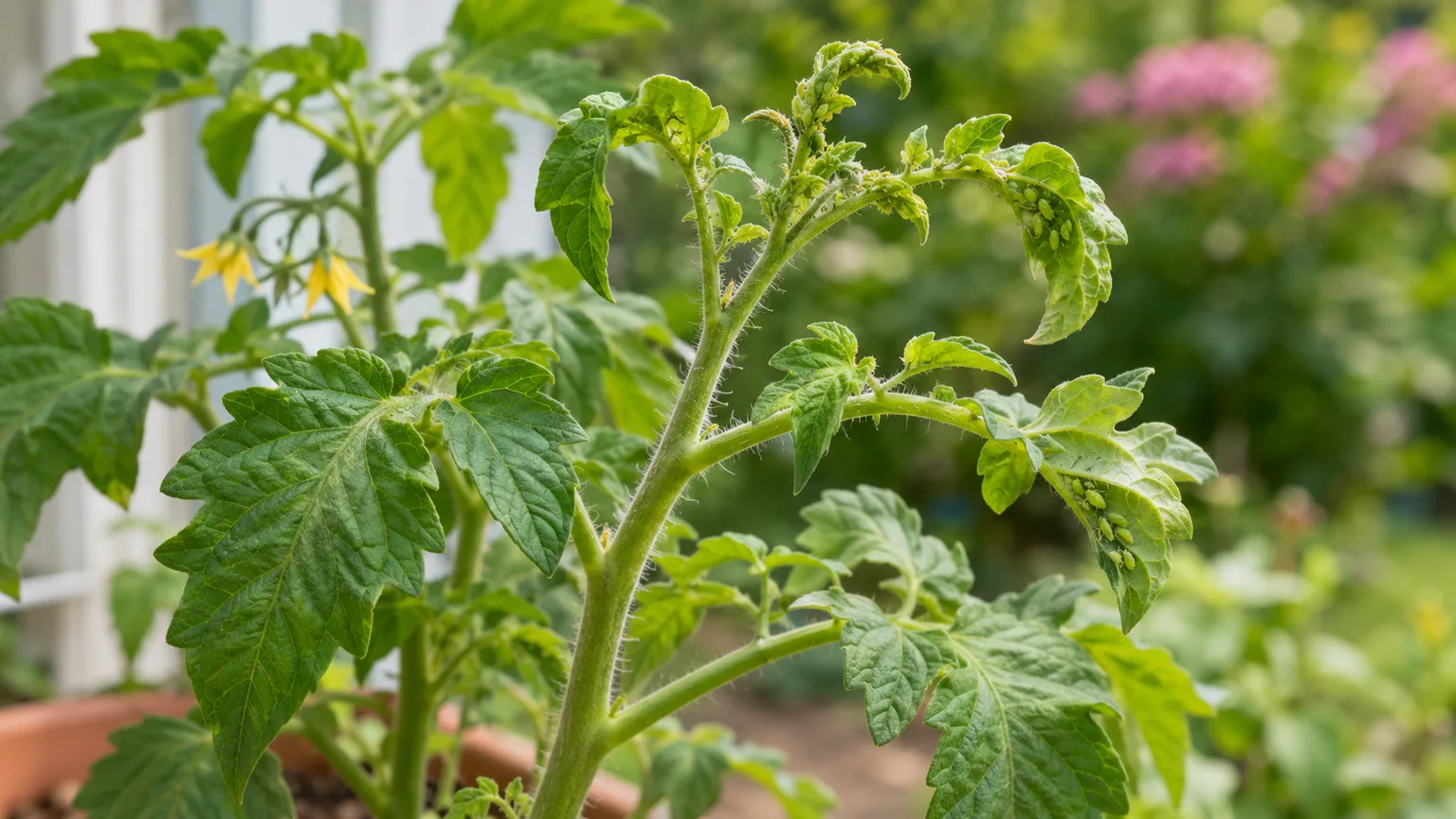
Aphids on Tomato: How to Identify and Control Them
This guide covers aphids on Tomato. See also the general Aphids guide, watering, and light pages for this plant.
Aphids on Tomato: How to Identify and Control Them
Quick answer
Tomato aphids are small, soft-bodied insects that cluster on new shoots, flower stems, and the undersides of leaves. Green peach aphids and potato aphids are among the species found on tomatoes; color alone is not enough to identify the species (UC IPM tomato aphid guide, UC IPM potato aphid guide). Confirm the pest by looking for groups of pear-shaped insects, sticky honeydew, and pale shed skins rather than diagnosing leaf curl alone.
On a sturdy plant, start by rinsing a small colony off with water and checking again over the next few days. Protect lady beetles, lacewings, and other predators. If numbers keep rising and new growth is being distorted, choose a tomato-labeled contact product and follow its label exactly.
Why aphids appear on tomato
Aphids feed by piercing plant tissue and drawing sap, often concentrating on tender growth. Tomato aphids may appear early in the season or build up on shoot tips later. Warm growing conditions and an abundance of soft new growth can support a colony, but the presence of aphids is not proof that watering or fertilizer is wrong.
Heavy nitrogen feeding can produce lush, tender growth and can make aphid management harder. Keep tomatoes growing steadily with appropriate watering and balanced nutrition; do not add fertilizer as a pest treatment. A vigorous plant may tolerate light feeding, while a dense infestation can distort young leaves and stems, reduce vigor, and leave honeydew on lower leaves or nearby surfaces.
How to confirm aphids
Inspect the youngest leaves, growing tips, flower clusters, and the undersides of leaves. Aphids are usually visible without magnification as small, pear-shaped insects. They may be green, pink, or other pale colors. Look for sticky honeydew, ants tending the colony, and white cast skins. Ants and honeydew support the diagnosis, but the insects themselves are the clearest confirmation.
Leaf curl by itself is not diagnostic. Check for other causes if no insects are present, or if curling is accompanied by mottling, mosaic patterns, or unusual yellowing. Aphids can transmit some viruses to tomatoes, but a curled leaf does not establish that a virus is present (Penn State Extension). For help separating pests from other symptoms, see tomato leaf curl and the Pest Identifier Tool.
First steps for a small colony
- Check several shoots and leaf undersides, including nearby tomato plants, to learn whether the colony is isolated or spreading.
- On a well-rooted, sturdy plant, dislodge aphids with a firm stream of water, directing it under leaves and around shoot tips. Avoid breaking stems or saturating the soil unnecessarily.
- Prune only a badly infested tip or leaf when the plant can spare it; bag and discard the material. Avoid removing large amounts of healthy foliage.
- Recheck in a few days. Look for new colonies and for predators such as lady beetle larvae, lacewing larvae, and tiny parasitic wasps.
Many established plants tolerate aphid feeding, and natural enemies often keep populations in check. Early-season tomato aphids are not automatically a reason to spray (UC IPM tomato aphid guide; University of Minnesota Extension). Preserve beneficial insects by avoiding broad-spectrum insecticides when possible (UC IPM aphid management).
When and how to treat
Consider a treatment when colonies continue to grow, new leaves are becoming distorted, and natural enemies or water sprays are not keeping numbers down. Insecticidal soap and horticultural oils work by contact, so coverage of aphids is essential; insects tucked inside curled leaves may be missed. These products can injure plants in hot conditions or when plants are drought-stressed, and some plants are sensitive. Test a small area and follow the product label, including crop, pest, temperature, and harvest instructions.
Do not use household detergent as a substitute for a labeled insecticidal soap. Avoid spraying flowers where pollinators are active, and do not apply any pesticide more often or at a higher concentration than its label allows. A spray may reduce exposed aphids but will not cure a virus infection already in the plant.
Recovery and prevention
Existing curled or distorted leaves may not flatten after aphids are removed. Judge recovery by whether new leaves emerge normally and colonies stop expanding. Keep soil moisture even, support the plant as needed, and avoid excess nitrogen that drives overly lush growth. Inspect new growth weekly, especially when nearby plants have aphids.
If damage continues after the insects are gone, review other tomato issues such as drooping leaves or yellow leaves. For broader growing guidance, visit the tomato care guide.
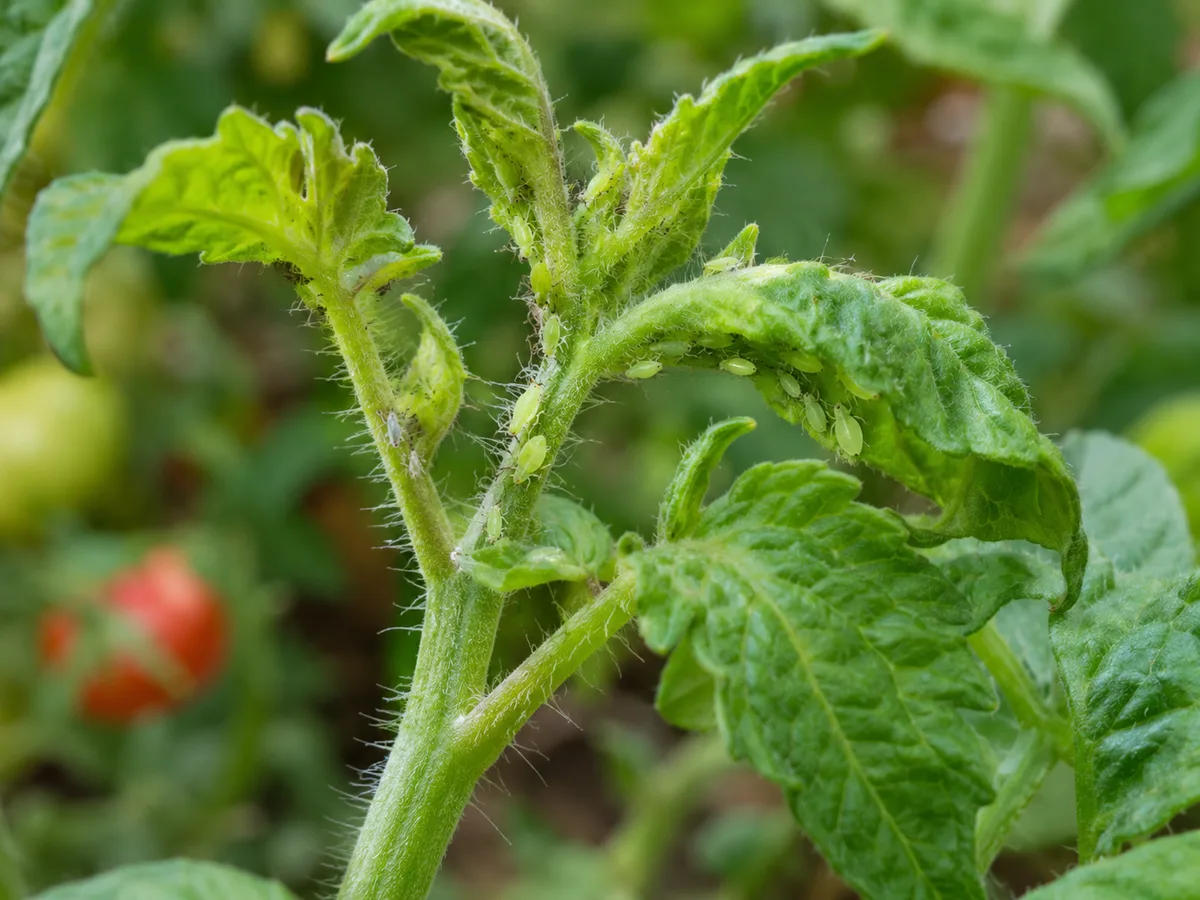
Aphids often gather on tender tomato shoots and leaf undersides; inspect these spots before treating.