Tomato Root Rot: Signs, Diagnosis, and First Steps
Quick answer
Suspect root rot on tomato when the plant wilts or yellows while soil stays wet and washed roots are brown, soft, or losing their outer tissue. Root rot is a symptom of several possible soilborne diseases, not one diagnosis; first check moisture and drainage, then inspect roots if decline continues.
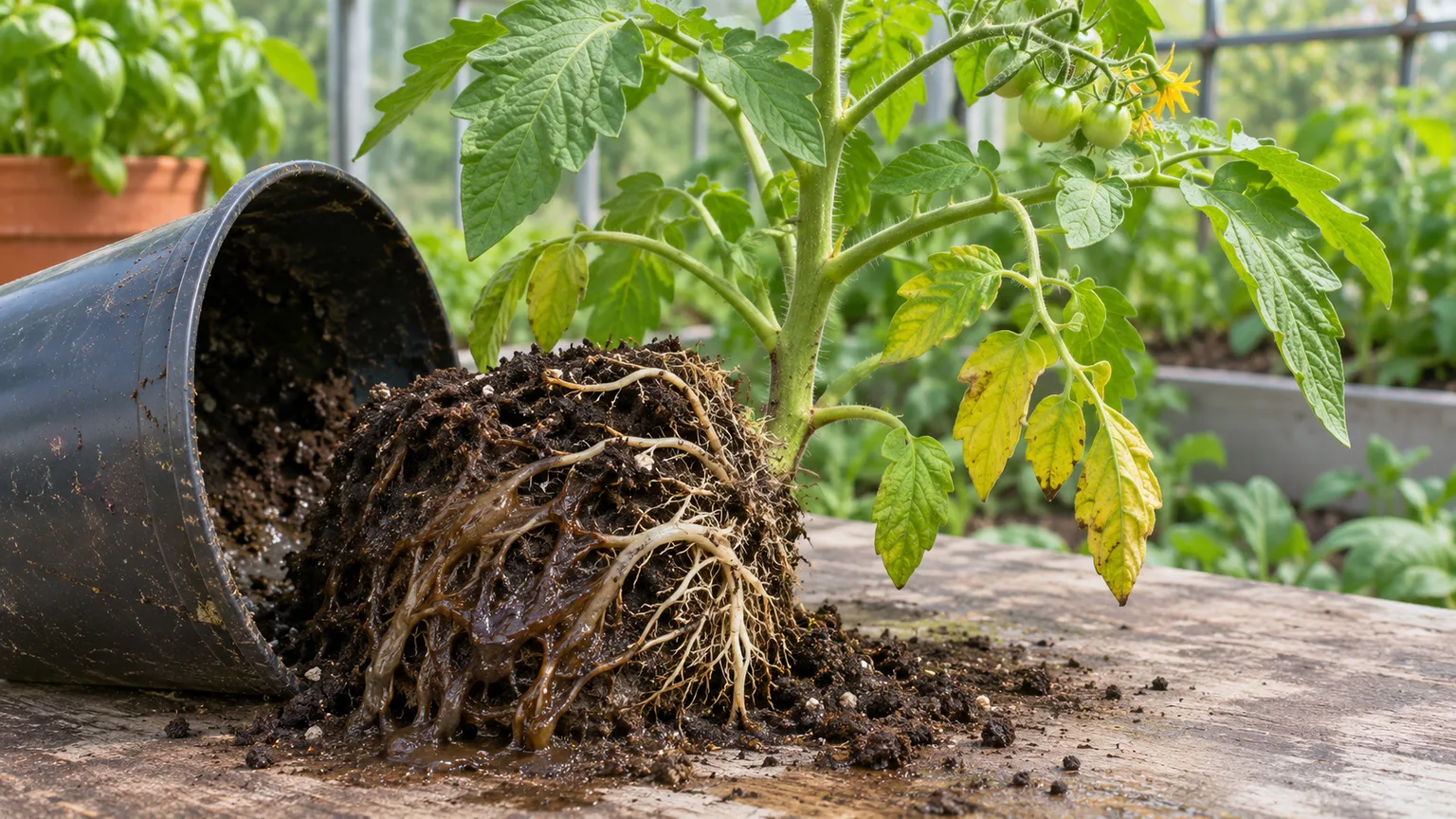
Root Rot on Tomato: How to Confirm and Respond
This guide covers root rot on Tomato. See also the general Root Rot guide, watering, and light pages for this plant.
Root Rot on Tomato: How to Confirm and Respond
Quick answer
On tomato, root rot is a root-zone problem—not a leaf-color diagnosis. Suspect it when the plant wilts or yellows even though soil remains wet, then look for roots that are brown, soft, water-soaked, or losing their outer layer. First check the moisture and drainage; if the plant keeps declining, inspect roots before watering or treating again.
Tomato root rot can involve different soilborne organisms, including Pythium and Rhizoctonia, while other tomato diseases can cause wilt or root discoloration. Root color is a clue, not a pathogen test. A lab diagnosis may be needed before choosing a disease-specific treatment.
What root rot looks like on tomato
Tomato plants with damaged roots may look thirsty: growth slows, lower leaves yellow, and the plant wilts despite moist soil. When you gently uncover and rinse roots, healthy sections should be firm and pale; decayed sections may be dark and soft. Piedmont Master Gardeners describe brown or black root tissue as a warning sign in vegetables including tomato, while Ohio State Extension lists several distinct tomato root diseases that can produce different root patterns.
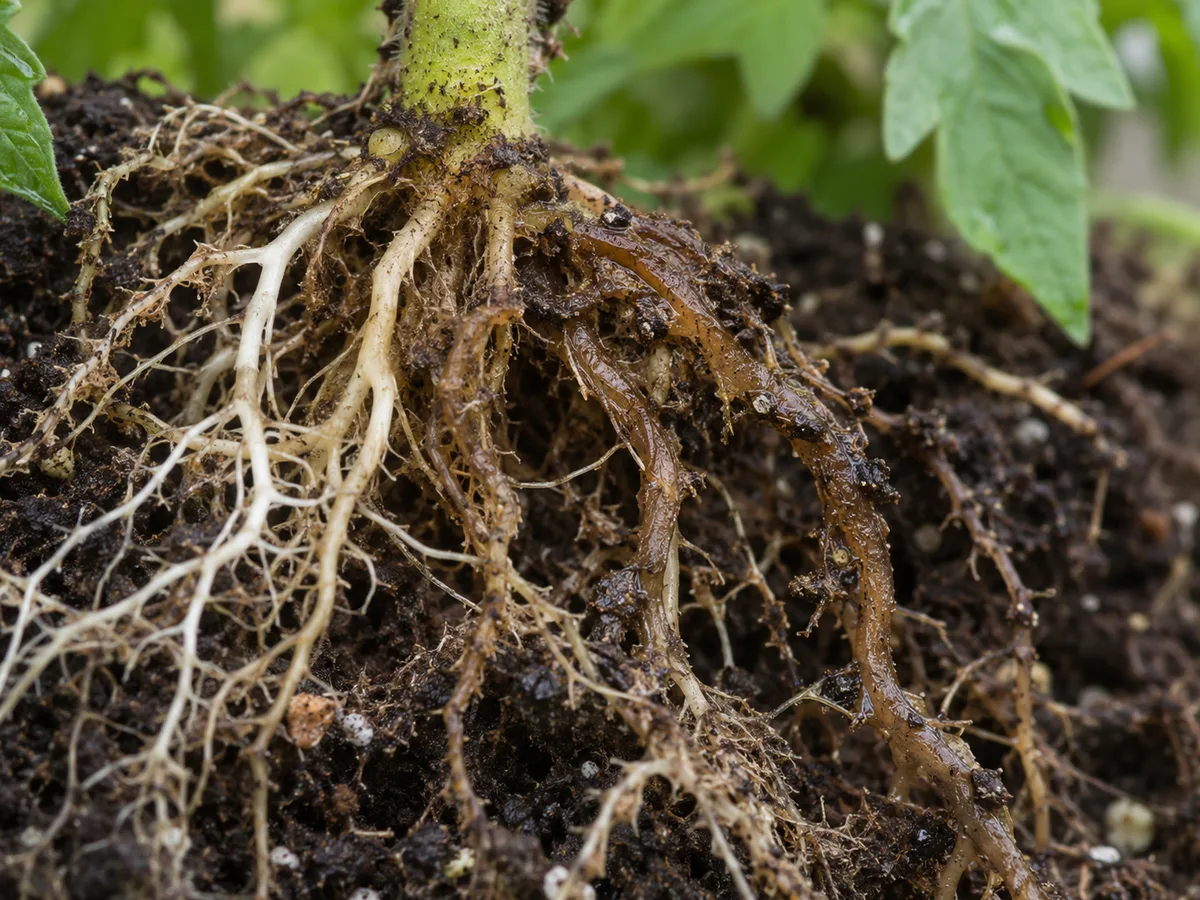
Compare root firmness as well as color: soft, deteriorating tissue is more concerning than a naturally tan root that remains firm.
With Pythium rot, fine roots can turn brown and decay; seedlings may collapse, while older plants can become stunted or wilt. The University of Connecticut’s tomato Pythium guide notes that the disease is favored by wet, poorly drained soil. That pattern makes prolonged saturation an important risk clue, but does not prove Pythium is the cause.
Confirm the root-zone pattern first
Before unearthing a fruiting garden plant, check the bed or container. Is water standing after irrigation or rain? Does the pot drain freely? Has the same patch stayed wet for days? Tomato roots need a root zone that drains; excess water and poor drainage raise the risk of Pythium rot.
If the plant continues to wilt or decline, carefully expose a few roots near the edge of the root zone and rinse away soil so you can compare tissue. A small sample gives useful evidence without immediately tearing up a healthy root system. If the plant is in a pot, slide it out only when needed to check the root ball and drainage holes.
Look for soft roots that collapse under light pressure, a slipping outer layer, or decay spreading into the crown at soil level. The Cornell Vegetable MD tomato key documents tomato-specific Pythium symptoms; however, similar above-ground wilting can come from other causes. If the plant is still firm at the base and the roots remain mostly firm, correct drainage and monitor before making a major intervention.
Separate root rot from tomato lookalikes
Tomato root problems do not all look alike. Ohio State Extension distinguishes corky root rot, black dot root rot, root-knot nematodes, and Pythium or Rhizoctonia root rots: corky roots can be cracked and bark-like, black dot root rot may show tiny black structures, and nematode injury forms galls. Those visible differences can narrow the possibilities, but they do not reliably identify every pathogen.
Wilt diseases can also cause yellowing and drooping. The Piedmont Master Gardeners’ vegetable-garden guide explains that vascular wilts affect water-conducting tissue, while root rots damage the roots themselves. If the stem has internal brown streaking but roots are largely intact, a vascular disease may fit better than root rot. Fungus gnats or a sour-smelling potting mix point to persistently wet media but do not confirm a pathogen.
For young seedlings that topple at the soil line, compare the pattern with UC IPM’s tomato damping-off guidance. For uncertain, valuable, or repeated cases, ask a local extension office or plant clinic about submitting a sample. The University of Wisconsin Plant Disease Diagnostics Clinic cautions that root and crown rots have multiple causes, so treatment should follow identification when possible.
The first fix: stop keeping the root zone saturated
Pause routine watering until you know whether the bed or container is actually drying. For a pot, empty any saucer or cachepot and confirm that drainage holes are open. For a garden bed, redirect runoff or use a raised planting area if water repeatedly pools around tomato roots. The aim is a moist, draining root zone—not bone-dry soil.
If only a few roots are damaged and the crown remains firm, preserve the healthy root system and avoid unnecessary pruning. In a container, remove only roots that are clearly soft and disintegrating, then replant at the same depth in fresh, well-drained potting mix and a clean pot with drainage. Do not add fertilizer or fungicide as a substitute for correcting saturated conditions; the responsible pathogen may not be known.
When most of the roots are mushy, the crown is soft, or the plant continues to collapse, remove the plant and roots rather than leaving decaying tissue in the bed. Bag and discard diseased debris, and clean soil from tools before using them elsewhere. UConn Extension identifies drainage and soil aeration as prevention priorities for tomato Pythium rot.
Recovery and what to watch
Existing yellow leaves may not turn green again. Look instead for a firm crown, no new wilting while the root zone is moist, and fresh growth that stays upright. Improvement is gradual; avoid repeated unpotting or additional root pruning if the remaining roots are firm.
Escalate the diagnosis if decay reaches the stem base, the plant worsens despite better drainage, or neighboring plants develop the same pattern. Affected patches and recurring cases are worth discussing with a local extension specialist, especially before planting another tomato in the same soil. The pathogen determines whether rotation, resistant cultivars, or other measures make sense.
Prevent repeat root problems
Choose a sunny site where water does not collect, and avoid frequent shallow irrigation that leaves the root zone continually wet. In containers, match pot size to the root system and use a mix that drains through the pot rather than remaining saturated. Inspect the plant after extended rain or a change in irrigation routine.
Remove infected plant debris at season’s end and clean soil from stakes, cages, and tools. Where root disease has recurred, rotate tomatoes and other susceptible nightshades away from that bed when space allows. Because resistance differs by pathogen, use a disease-resistant cultivar only when it matches the problem identified in your area.
Related tomato guidance
Compare persistent wet-soil wilting with the tomato problems hub and general root rot signs. The Root Rot Risk Checker can organize drainage and moisture observations, but it cannot identify a pathogen. See the tomato care guide for routine growing conditions.