Tomato Soil Guide for Beds and Containers
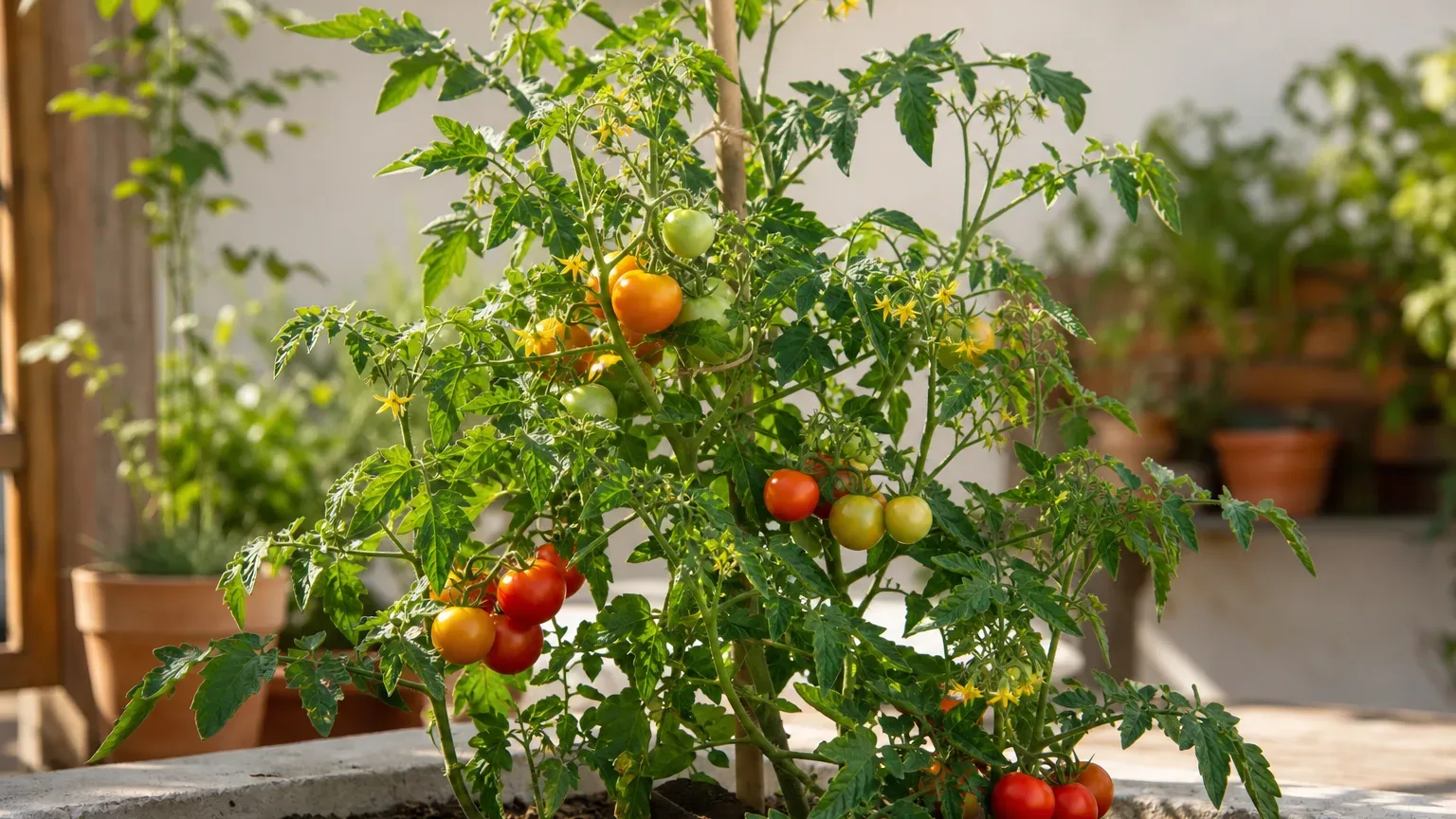
Tomato Soil Guide for Beds and Containers
Tomato Soil Guide for Beds and Containers
Tomato roots need a combination that sounds contradictory: reliable moisture around fine feeder roots, yet enough open pore space for excess water to leave and oxygen to return. A fertile loam can provide that balance in a bed. A container needs a lighter engineered potting mix because ordinary garden soil settles and behaves very differently inside a pot.
Before buying amendments, identify the actual problem. If water remains on the surface after irrigation, roots smell sour, or the bed stays sticky for days after rain, drainage is the priority. If water races through and plants wilt again within hours, improve moisture retention. For the wider growing picture, start with the Tomato overview; this page stays focused on the root zone.
Best soil for tomato roots
Tomato (Solanum lycopersicum) performs best in fertile soil that is moist but freely drained. NC State Extension describes the preferred soil as moist, loamy and slightly acidic, while Utah State advises raised beds where native ground drains poorly. The target is not a mix that becomes dry immediately; it is one that releases surplus water while retaining a useful reserve between irrigations.
That balance matters throughout flowering and fruit filling. Waterlogged pores restrict root aeration, but a coarse, drought-prone root zone causes sharp moisture swings. Soil choice therefore works together with the Tomato watering guide, not as a substitute for checking moisture.
Texture: fertile, moisture-holding and aerated
In a garden bed, a workable loam or improved sandy loam is ideal. Mature compost can improve structure and nutrient-holding capacity, but adding more is not always better. Utah State’s tomato guidance recommends fertile, well-drained soil and specifically warns that tomatoes do poorly in heavy, wet ground.
Judge the finished bed by structure rather than colour. Moist soil should crumble when pressed instead of forming a dense, shiny ribbon, and an irrigation basin should empty rather than remain flooded. Avoid making a narrow “perfect” planting hole in solid clay: it can act like a sump. Improve a broad bed or raise the root zone instead.
The useful pH range
A slightly acidic root zone makes sense for tomatoes. NC State gives a range of pH 5.8–6.8, while Clemson Extension recommends 6.0–6.5 for its regional soils. Treat roughly 6.0–6.8 as a practical home-garden target, then follow a laboratory soil-test recommendation rather than adding lime or sulphur by guesswork.
Do not confuse the acidity of tomato fruit with the pH required by its roots. A plant growing badly in compacted, saturated soil will not be repaired by chasing a precise pH decimal. Correct drainage first, then adjust pH only from a measured result.
Test before changing the soil
For an established bed, take several small samples from the future tomato row, mix them, and submit a representative sample to a local soil-testing service. A basic soil test can prevent unnecessary lime and excessive phosphorus from repeated compost or fertiliser applications. Clemson calls a soil test the best way to determine crop fertilisation needs and advises incorporating amendments according to the report.
Pair the laboratory result with a simple field observation. Dig a hole about the depth of the main root zone, fill it once to wet the surrounding soil, then fill it again and watch whether water drains steadily. This is a comparative garden check, not a laboratory permeability test, but standing water hours later is a clear reason to raise the bed, open an outlet, or choose another site.
Preparing garden beds for tomatoes
Clear perennial weeds and remove old diseased Solanaceae debris before preparation. Spread a modest layer of mature, clean compost over the bed and mix it through the upper root zone without pulverising wet soil. Do not work clay while it smears onto the spade; compaction created during preparation can last through the crop.
Install stakes, cages, or trellis anchors before roots occupy the bed. Keeping stems and fruit off the ground also improves airflow; Clemson identifies staking and trellising as useful disease-management practices. Soil preparation is also the right time to plan irrigation so water reaches the root zone without routinely splashing foliage.
Improving heavy clay
Do not try to turn clay into sandy soil by adding a token bucket of sand. Improve a broad area with mature compost, avoid foot traffic on wet beds, and use a raised bed if water has no route away. Utah State specifically recommends a raised bed for a site that does not drain well.
If the subsoil or paved boundary traps water, adding porous material to the top alone may not solve the bottleneck. Provide a safe drainage route or relocate the bed. During prolonged rain, a higher crown around each plant can keep the stem base out of the wettest layer, but it cannot compensate for a bed sitting in a sealed basin.
Managing fast-draining sandy soil
Sandy soil usually needs more organic matter and a mulch after planting, not extra drainage material. Mix mature compost through the bed, then water deeply enough to wet the active root zone. A surface mulch reduces evaporation and soil splash, although it should not be packed against the stem.
Nutrients can leach faster from sandy beds, so base feeding on a soil test and split applications where locally recommended. Keep detailed fertiliser decisions in the Tomato fertilizer guide. Rich manure applied immediately before planting can create excessive salts or lush growth, so use fully matured inputs and avoid guessing at rates.
Raised beds and India’s monsoon
In regions with intense monsoon downpours, the useful question is not merely “Is this a raised bed?” but “Where will the water go?” Raise the tomato root zone above surrounding grade, keep paths lower, and provide an unobstructed outlet that does not erode neighbouring ground. A bed with masonry sides and a sealed base can still become a tank.
Before the rainy period, clear drain holes and channels, repair settled low spots, and top up the bed with structurally stable mix rather than a thick layer of fresh manure. After heavy rain, pause irrigation and check below the surface; do not follow a fixed watering calendar. If the bed remains saturated, temporary rain protection may reduce direct loading, but airflow must remain open in humid weather.
Monsoon hygiene matters because wet conditions favour many tomato diseases and splashing moves contaminated soil onto lower leaves. Remove yellow or spotted lower foliage, tie stems up, and keep fallen fruit and infected debris out of the bed. Do not dig or walk on saturated soil, because that compresses the pore spaces you are trying to preserve.
Container tomato soil is not garden soil
Use a commercial potting mix or a deliberately blended soilless/loam-based container medium, never dense field soil by itself. RHS recommends peat-free loam-based or multipurpose compost for container tomatoes, and NC State advises at least about 5 gallons (19 L), 1–2 feet deep, with one plant per pot. Vigorous indeterminate cultivars often benefit from more root volume and a heavier, stable container.
Every pot needs generous drainage holes that remain open. A layer of stones at the bottom does not repair a blocked outlet and reduces usable root volume. Set the pot where discharged water can escape, and empty any saucer after irrigation or rain rather than leaving the root ball standing in water.
A practical DIY tomato potting mix
A useful starting blend is about 50% quality potting mix or screened loam-based container medium, 30% mature compost, and 20% aerating material such as perlite, pumice, or coarse composted bark. This is a starting recipe, not a universal formula. Coir-heavy mixes may hold substantial water, while bark-rich mixes may dry faster; adjust after testing how the blend behaves in your pot and climate.
Moisten and mix the components before planting, then fill without stamping the medium down. The final mix should hold together briefly when squeezed but break apart when touched. Compost alone is too variable and can slump, stay wet, or contain excessive nutrients, so it should be one component rather than the entire container medium.
Choosing a store-bought mix
Choose a fresh, clean potting medium labelled for vegetables or outdoor containers. The ingredient list should include materials that provide both water retention and air space; avoid bags that are waterlogged, sour-smelling, or visibly contaminated. “Garden soil” and “topsoil” are intended mainly for ground use and are usually too dense as the sole ingredient in a tomato pot.
If a packaged mix sheds water when first opened, pre-moisten it slowly in a tub instead of repeatedly flooding the planted pot. If it remains sodden for days, increase the coarse fraction at the next potting rather than repeatedly withholding water until the plant wilts.
Check drainage before planting
Fill and water the prepared container before the seedling goes in. Water should wet the whole mix and begin leaving the base without pooling for a prolonged period. Check that labels, flat paving, or compacted roots are not sealing the holes; pot feet can help when a flat base sits flush on a terrace.
In beds, inspect after a real irrigation or downpour. A dark surface alone does not prove saturation, so dig a small inspection hole away from the planting point. If the root-zone soil glistens, smells anaerobic, or squeezes out water, delay planting and fix drainage rather than sacrificing the transplant.
Disease hygiene starts with the soil
Tomatoes share important soil-borne problems with peppers, aubergines, and potatoes. Clemson advises avoiding a site where these crops have grown for at least three years, and NC State similarly recommends a three-to-four-year break from nightshade-family crops. Rotation cannot eliminate every pathogen in a small garden, but it reduces repeated planting into the same contaminated root zone.
Start with clean transplants and clean containers. Discard roots and infected debris after harvest rather than mixing them into a cool home compost pile. RHS guidance for tomato ring culture stresses cleaning the growing area, preventing old soil from contaminating fresh aggregate, and ensuring that standing water cannot collect.
Do not automatically reuse potting mix from a tomato that had wilt, root rot, nematode galls, or unexplained collapse. Bag and discard suspect material according to local waste rules, scrub the container, and begin with fresh medium. Healthy old mix may be reused for lower-risk purposes after roots are removed and structure restored, but it should not be assumed sterile.
Warning signs that the soil is wrong
Persistently wet soil, yellowing lower leaves, a sour smell, and soft dark roots point toward poor aeration or blocked drainage. Water that runs down a gap at the pot edge while the centre remains dry indicates a shrunken or water-repellent root ball, not excellent drainage. A hard crust, slow infiltration, and roots circling near the surface can indicate compaction or inadequate volume.
Wilting alone is not a diagnosis. A tomato can wilt in dry soil, waterlogged soil, intense heat, or from vascular disease. Check moisture several centimetres down and inspect drainage before adding either water or fertiliser. If the plant has outgrown its pot, use the Tomato repotting guide rather than trying to correct a root-bound plant with amendments.
When to use this page vs other Tomato guides
Use this soil guide to choose a bed, build a container mix, interpret drainage, set a pH target, and reduce soil carry-over between crops. Use the watering guide for when and how deeply to irrigate, the fertilizer guide for nutrient timing, and the repotting guide for moving seedlings into their final container.
For starting new plants, seed media, and transplant readiness, use the Tomato propagation guide. Soil cannot compensate for inadequate sun, so weak pale growth in a free-draining mix also deserves a check against the Tomato light guide.
Related Tomato guides
The Tomato care overview connects cultivar habit, support, temperature, water, and root-zone choices. The Tomato watering guide helps translate this soil’s drainage rate into an irrigation decision, while the Tomato fertilizer guide covers feeding after roots, light, and moisture are stable.
Container growers should continue with Tomato repotting for final-pot sizing and transplant steps. Growers raising their own seedlings can use Tomato propagation for the sterile seed-starting stage before plants enter the richer final mix described here.
Conclusion
Good tomato soil is not a single recipe. In beds, aim for fertile, crumbly soil with a measured slightly acidic pH and a real route for surplus water to leave. In containers, use a clean potting medium with stable air space, enough root volume, and unobstructed holes.
Your first action should be simple: water the empty pot or inspect the bed after irrigation and observe drainage before planting. That test tells you whether to add moisture-holding organic matter, raise the root zone, open an outlet, or leave a well-balanced soil alone.