Tomato Watering Guide for Pots and Garden Beds
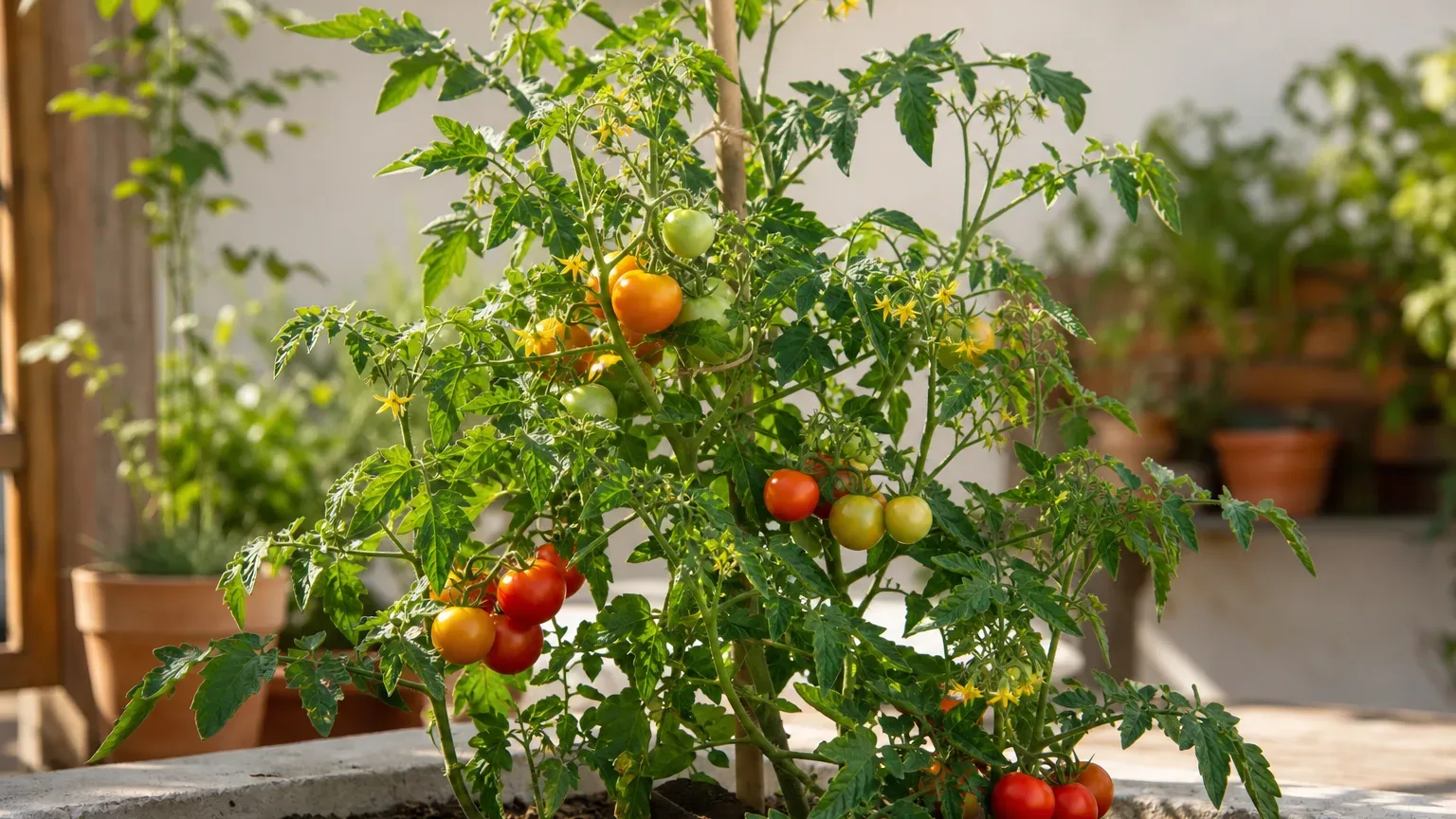
Tomato Watering Guide for Pots and Garden Beds
Tomato Watering Guide for Pots and Garden Beds
A tomato plant can wilt in dry soil, wilt in saturated soil, and wilt briefly on a hot afternoon even when its roots still have enough moisture. That is why tomato watering should start with the root zone, not the clock or the leaves alone. Check the soil, account for the container or bed, then respond to the weather.
The target for Solanum lycopersicum is steady access to moisture with enough drainage for roots to remain aerated. During flowering and fruit expansion, sharp swings between dry and wet are more troublesome than a slightly imperfect amount on one ordinary day. This guide shows how to make that judgment in containers, garden beds, summer heat, and monsoon rain.
The quick answer: aim for even root-zone moisture
Water when the upper 2–3 cm of soil begins to feel dry, then wet the root zone thoroughly rather than sprinkling the surface. Do not wait for a fruiting tomato to become severely wilted, but do not add water while the soil below the surface is already wet. The Royal Horticultural Society recommends keeping tomato soil or compost evenly moist and notes that containers can need daily watering in hot weather.
Treat “daily” or “once a week” as a possible outcome, not a rule. A compact tomato in a 20-litre pot on a hot terrace may need a morning check every day, while a mulched plant in moisture-retentive ground may go several days between irrigations. Your soil check determines whether a check becomes a watering.
How often should you water a tomato plant?
Check young transplants every day until their roots spread into the surrounding soil. Established plants in the ground usually need less frequent but deeper irrigation than container plants. UF/IFAS gives a broad starting point of about 1–2 inches of water per week, preferring a thorough soaking to several light sprinklings, but rainfall, heat, wind, soil texture, plant size, and crop load can move a particular plant far from that baseline.
In warm weather, check in the morning. If the upper layer is dry and the soil lower down is only faintly moist, water. If it is cool and clearly moist below the surface, wait and check again later; repeated watering into wet soil reduces the air available to roots.
Use three checks before watering
First, push a finger 2–3 cm into the soil away from the stem. Second, notice container weight: a pot that is much lighter than it was after irrigation is losing stored water. Third, compare the plant at dawn or morning, not only at 3 p.m.; persistent morning wilt with dry soil is more meaningful than temporary afternoon droop during extreme heat.
A wooden skewer can help in a deep container. Insert it well into the mix and leave it briefly; dark, damp soil clinging to the lower section means moisture remains at depth. No single test is perfect, so combine the soil feel with pot weight, recent rainfall, and drainage.
How to water tomatoes deeply and cleanly
Apply water slowly at soil level over the active root area. A watering can without a harsh jet, a drip line, or a soaker hose allows water to enter instead of running off. Morning watering is practical because the plant begins the hot part of the day with available moisture, and any accidentally wetted foliage has time to dry.
Do not pour every watering against the stem. As the plant matures, spread water across the root zone around it. Mulch over beds can slow evaporation and moderate dry-to-wet swings; Penn State likewise recommends drip irrigation and mulch to support more uniform soil moisture.
Watering tomatoes in containers
Containers have limited reserves and warm quickly. Use a large pot with open drainage holes, water slowly across the surface until excess begins to leave the bottom, then empty any saucer. UF/IFAS recommends a container large enough not to dry too quickly and identifies a five-gallon bucket with drainage holes as an accessible option; vigorous full-size cultivars often benefit from more volume.
Check a sun-exposed pot daily during hot, windy periods, but water only if the root-zone check calls for it. A small pot may genuinely need water once or even twice on an exceptional hot day, while a large self-watering container may not. If a pot goes from saturated to wilted within hours, increasing root volume or improving the mix is more reliable than trying to keep pace with repeated small drinks.
Watering tomatoes in the ground
In beds, encourage roots to explore downward by watering thoroughly and allowing the upper surface to begin drying before the next irrigation. Shallow daily sprinkling wets weeds and the top few centimetres but may leave deeper roots short of water. The exact interval changes with sandy, loamy, clay-rich, raised, or compacted soil.
Place 5–8 cm of organic mulch around established plants after the soil has warmed, leaving a small gap around the stem. Mulch reduces direct evaporation and softens moisture fluctuations, but it does not fix poor drainage. After heavy rain, pull back a small section and check below it before irrigating again.
How much water do tomatoes need?
Weekly volume is best used as a planning benchmark, not as a dose to pour regardless of conditions. The often-cited 1–2 inch range includes rain and irrigation together. A plant in fruit, a sandy bed, and hot dry wind increase demand; cool cloudy weather, moisture-retentive soil, and recent rain reduce it.
Measure your system once. Place straight-sided containers along a bed during irrigation and note how long it takes to collect the intended depth, or record how much water brings a known container to free drainage. This turns “deeply” into something repeatable without pretending every tomato requires the same litres each day.
Tomato watering during extreme heat
During a heatwave, check soil at dawn and again in late afternoon if a container is small or exposed. Water in the morning when needed, and give enough to wet the full root ball. A brief afternoon droop can be a heat response; if the soil is still moist and the plant recovers after temperatures fall, another soaking may create a wet-root problem rather than solve heat stress.
Mulch, adequate pot volume, and temporary light afternoon shade can reduce rapid water loss. Penn State reports that high heat, drought stress, and interrupted irrigation coincided with more physiological fruit problems in field tomatoes and advises monitoring irrigation during high heat. Keep the adjustment proportional: check more often, but do not assume “hot” automatically means “water again.”
Tomato watering during monsoon and heavy rain
Monsoon care is often about withholding irrigation and protecting drainage. Stop routine watering when rain is keeping the root zone moist. Make sure container holes are open, elevate pots that sit flush on a solid floor, empty saucers, and divert roof runoff that concentrates water into one bed.
Do not try to “balance” several wet days with fertilizer or by letting the plant become severely dry afterward. Resume watering only when soil checks show the root zone is drying. If heavy rain follows drought while fruit are ripening, harvest colour-breaking fruit before a forecast deluge when practical; sudden water availability can increase cracking risk.
Water needs during flowering and fruit development
Tomatoes need their most consistent moisture from flowering through fruit expansion. Drought at this stage can interrupt growth, while flooding excludes oxygen and compromises roots. Maintain the same soil-led method, but shorten the time between checks as the canopy and fruit load increase.
Avoid large corrective soakings after prolonged drought when fruit are close to ripe. Rehydrate the root zone evenly and restore a stable pattern. Determinate plants carrying many fruits at once may show a concentrated period of high demand; indeterminate plants continue adding flowers and fruit, so their peak can last longer.
Irregular watering and tomato fruit cracking
Cracking is most common when moisture availability changes rapidly, especially when rain or heavy irrigation follows a dry period. Water entering expanding fruit increases internal pressure faster than the skin can accommodate it. Penn State describes dry-to-wet shifts as a major cracking trigger, while NC State notes that heavy rain after dry weather is a leading cause of splitting and cracking.
Consistent irrigation and mulch can reduce the swing, but they cannot remove every crack. Cultivar genetics, ripeness, fruit temperature, direct rain on fruit, canopy cover, and pruning also affect susceptibility. A cracked fruit is therefore not proof that you simply “watered too much.”
Blossom-end rot is not only a watering problem
Blossom-end rot is a physiological disorder associated with inadequate calcium reaching developing fruit. Moisture stress matters because calcium moves with water from roots, but the disorder is not evidence that the soil always lacks calcium and is not caused by watering alone. NC State identifies interacting factors that include water-supply extremes, calcium availability, nutrient balance, and excessively saline soil.
Heat, root injury, rapid growth, cultivar susceptibility, and low or excessive soil moisture can all disrupt delivery to fruit. Clemson explains that blossom-end rot can occur even where soil calcium is adequate and that foliar calcium sprays are ineffective because calcium applied to leaves does not move into fruit as advertised. Keep moisture uniform, protect roots, avoid excessive nitrogen and salts, and use a soil test before adding lime, gypsum, or calcium products.
Signs a tomato is too dry
Dry soil several centimetres down, a noticeably light pot, leaf curl, and wilt that persists into the cooler morning point to inadequate moisture. Fruit growth may slow, flowers may abort under combined heat and drought stress, and a container mix may pull away from the pot wall.
Water thoroughly and confirm that the root ball accepts water. Very dry peat- or coir-based mix can shed water down gaps at the edge; apply slowly in two passes a few minutes apart. Do not compensate with a permanent daily dribble that wets only the surface.
Signs a tomato is staying too wet
Persistently wet soil, stalled growth, yellowing lower foliage, and wilt despite a heavy pot suggest roots are short of oxygen or damaged. A sour smell, dark soft roots, algae on constantly wet mix, or water standing in a saucer strengthen that diagnosis.
Pause irrigation and restore drainage. In containers, clear holes and remove standing water; in beds, redirect runoff and avoid compacting wet soil. Do not assume every yellow leaf proves overwatering, because nutrient issues and disease can look similar; use the moisture and root evidence together.
Common tomato watering mistakes
- Following a rigid calendar: replace “water every day” with “check every day during demanding weather.”
- Giving frequent shallow sips: wet the working root zone, then reassess before the next irrigation.
- Letting pots stand in runoff: drain fully and empty saucers.
- Ignoring rain under mulch: inspect the soil, because the surface can hide a saturated root zone.
- Responding to every afternoon wilt: confirm soil moisture and morning recovery first.
- Treating blossom-end rot with calcium by default: stabilize moisture and roots, then use a soil test to determine whether calcium or pH correction is justified.
- Swinging from drought to flooding: restore steady moisture without repeated emergency soakings.
When to use this page vs other Tomato guides
Use the Tomato overview for the complete crop-care picture and cultivar differences. If water drains too slowly, the Tomato soil guide helps you correct the bed or container mix; if growth is weak despite suitable moisture, compare the Tomato light guide and Tomato fertilizer guide.
For moving a seedling into its final pot, use the Tomato repotting guide. Watering supports recovery, but container size, transplant depth, and root handling belong there.
Related Tomato guides
- Tomato overview — whole-plant care and growth habit
- Tomato light — sun exposure and heat trade-offs
- Tomato soil — drainage and moisture retention
- Tomato fertilizer — feeding without excess salts or nitrogen
- Tomato repotting — final-container timing and transplant care
- Tomato propagation — starting plants from seed or cuttings
- Tomato pruning — canopy decisions for determinate and indeterminate plants
Conclusion
Successful tomato watering means evenly moist, freely drained soil, not a universal number of days. Check 2–3 cm below the surface, water the full root zone when it begins to dry, and let pot size, soil, weather, and fruit load determine the next check. Containers demand closer attention in heat; beds benefit from deep irrigation and mulch; monsoon conditions call for restraint and drainage.
Steadier moisture lowers avoidable stress and may reduce fruit cracking and blossom-end rot, but neither disorder has a single cause. Protect roots, avoid dry-to-flood cycles, and investigate calcium, salinity, heat, cultivar, and nutrition before blaming the watering can alone.