Brown Tips on Tomato Leaves: Causes and What to Check
Quick answer
Brown tips on tomato leaves can follow uneven moisture, environmental or nutrient stress, or a disease that is spreading beyond the tips. First check the soil below the surface and inspect whether damage is limited to crisp edges or forms expanding spots; water only if the root zone is dry.
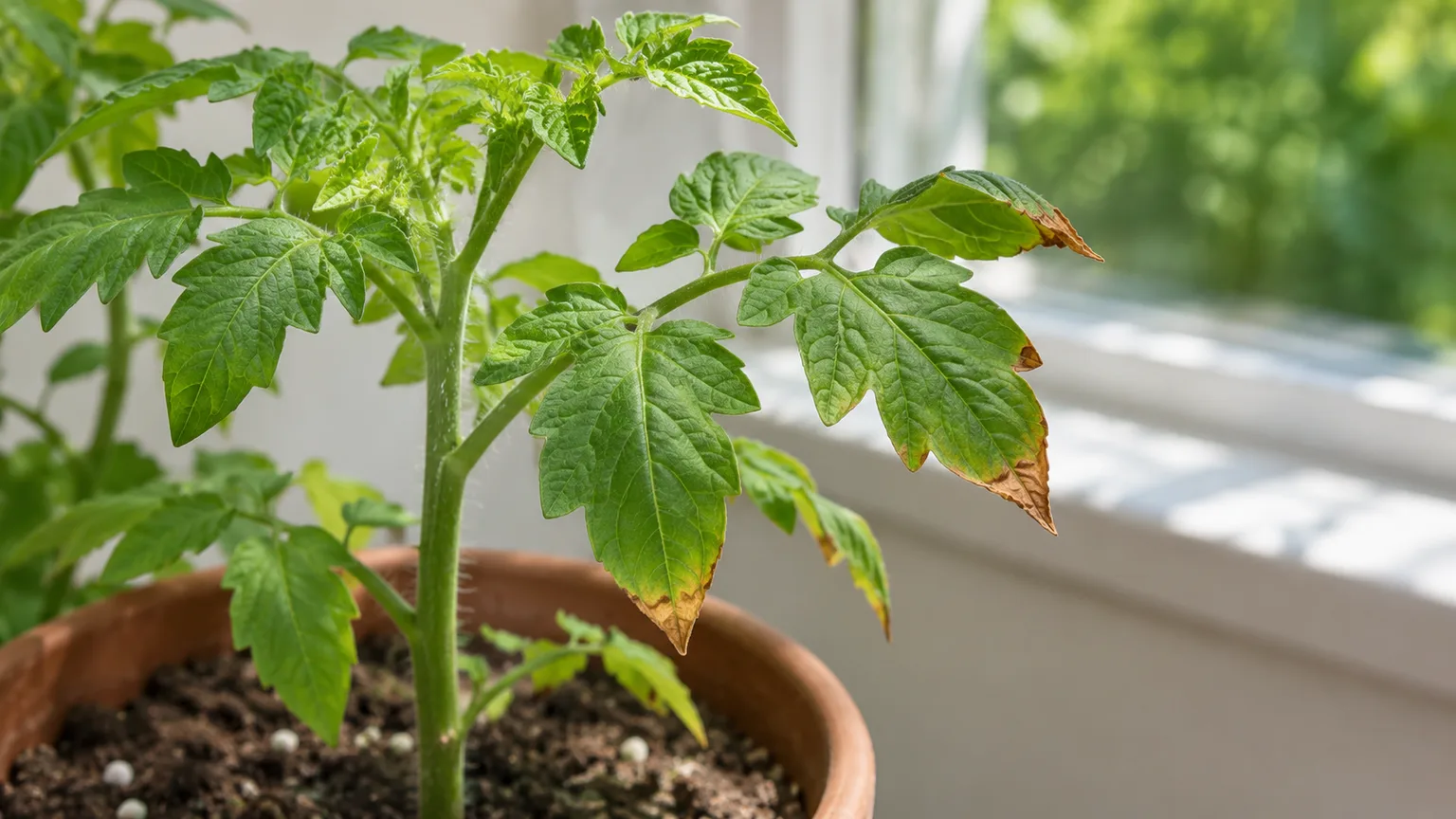
Brown Tips on Tomato: Causes, Checks & Fixes
This guide covers brown tips on Tomato. See also the general Brown Tips guide, watering, and light pages for this plant.
Brown Tips on Tomato: Causes, Checks & Fixes
Quick answer
Brown tips on tomato leaves are a symptom, not a diagnosis. The RHS tomato leaf guide groups leaf problems under water, light, temperature, and nutrient imbalances, while spots from disease can resemble edge damage early on. First, check soil below the surface and inspect several leaves. If the root zone is dry, water at the soil line; if it is moist, do not add water until you have checked for lesions, recent fertilizer or spray use, and heat or wind exposure. For symptom patterns that apply across plants, see the brown-tips symptom guide.
Tomato leaves are compound: a single leaf has several leaflets. Note whether tips on many leaflets dry evenly, one exposed side is scorched, or separate spots are appearing across the leaf. Those patterns lead to different next steps.
Why brown tomato leaflet tips can look like disease
Dry, papery tips that stay limited to leaflet edges can follow a stretch of dry soil, hot dry wind, or another change in growing conditions. That pattern alone cannot confirm a nutrient deficiency. Tomatoes can also develop physiological leaf symptoms when water, light, temperature, or nutrient conditions are unsuitable, so compare the timing with changes in care and weather before feeding or spraying.
Disease is more likely when the marks are distinct lesions rather than just a thin, crisp edge. On tomato, Septoria leaf spot forms small spots with dark edges and tan or gray centers; early blight can form larger irregular spots, sometimes with concentric rings and yellow tissue around them. Late blight may begin as irregular water-soaked marks that turn olive and brown, with rapid browning and shriveling in cool, wet weather. Compare the pattern with the tomato diagnosis guide rather than treating every brown mark as drought.
Read the tomato canopy before changing care
Look at the whole plant, not just its most damaged leaflet. Older lower leaves with expanding spots and yellowing can fit common tomato leaf diseases; crisp margins concentrated on leaves facing hot wind or reflected heat fit an exposure pattern better. Check weather, watering, and exposure alongside the newest growth; use those as clues, not as proof of a single cause.
Tomatoes grow quickly and carry a large canopy during flowering and fruiting. Check the soil beneath mulch or near the root zone, since a dry surface can differ from the moisture around active roots. Also note if the plant is in a container, raised bed, or open ground; container soil can dry faster, while compact or persistently wet soil can stress roots. Use the Tomato watering guide to review the normal moisture check, and the Tomato soil guide if water remains in the root zone for a long time. The Tomato overview explains how determinate and indeterminate canopy growth affects support and spacing.
First fix: correct moisture only when the root zone is dry
Feel the soil a few centimeters below the surface. If it is dry there, water slowly and deeply at the base of the tomato until the root zone is moistened. Then keep checking soil rather than following a rigid calendar. If the soil is already damp, do not water again to treat the brown tips; move on to recent fertilizer, spray, heat, and leaf-spot checks. The Tomato watering guide linked above covers routine watering decisions.
If browning followed fertilizer application, pause further feeding while you check the label and the plant’s overall pattern. Do not add calcium, potassium, or a “bloom booster” based on brown tips alone. The Tomato fertilizer guide can help you compare the product and feeding schedule with the plant’s needs. A soil test is a better basis for correcting a suspected deficiency than guessing from one symptom.
Separate scorch from tomato leaf spots
| What you see | More useful clue | Next step |
|---|---|---|
| Crisp brown tips or edges on exposed leaflets | Recent heat, wind, dry soil, or a change in the site | Stabilize moisture if the root zone is dry; reduce harsh reflected heat where practical. |
| Small spots with dark margins and pale centers | Septoria-like lesions; spots may spread beyond the leaflet tip | Avoid wetting foliage; if yellowing becomes the main symptom, compare with the yellow-leaves symptom guide. Seek local diagnosis if unsure. |
| Larger spots with rings or yellow tissue, often starting low | Early blight is one possibility | Inspect nearby leaves and stems; remove only clearly diseased material and follow local extension guidance. |
| Irregular water-soaked marks expanding quickly, followed by browning or shriveling | A potentially serious disease pattern, especially in cool, wet weather | Isolate work on the plant, avoid handling healthy plants after it, and contact an extension diagnostic service promptly. |
The Penn State tomato disease guide describes early blight and Septoria patterns and advises keeping foliage dry, spacing plants for airflow, mulching, and removing infected leaves appropriately. Do not compost leaves that you believe are diseased. When the pattern is unclear, the Penn State scouting guide recommends careful scouting and seeking diagnostic help rather than relying on a single visual clue.
What to record over the next week
Take a clear photo of the same branch and note whether affected tissue is limited to older or exposed leaflets, whether new spots appear, and whether the newest leaves remain clean. Record recent watering, fertilizer, pesticide or herbicide exposure, and weather. That small record helps separate a one-time environmental scorch from a problem that continues to spread. If damage is advancing quickly, stems are affected, or a large part of the canopy wilts, ask a local extension office or plant clinic to identify the cause before treating.
What not to do
- Do not water again without checking soil moisture; excess water can worsen root stress.
- Do not apply fertilizer or a nutrient supplement unless the symptoms and soil or growing history support that diagnosis.
- Do not spray a fungicide or pesticide simply because leaf tips are brown. Identify the problem first and follow any product label and local rules.
- Do not strip the tomato plant of all browned leaves. If disease is suspected, remove clearly affected foliage carefully and avoid removing more healthy canopy than necessary.
Recovery and prevention
Brown tissue will not turn green again. Keep it only if it is mostly intact; trim fully dead leaflet tips or leaves for appearance, using clean shears. The meaningful recovery sign is that new leaflets stay healthy and the damage stops expanding.
For prevention, keep tomato root-zone moisture reasonably steady, water the soil rather than routinely wetting the leaves, and give the canopy room for airflow. Mulch can buffer soil moisture swings. Avoid unneeded fertilizer, and inspect lower leaves regularly during humid or rainy weather. Penn State’s guidance on tomato disease prevention includes crop rotation, spacing, mulch, and avoiding foliage wetting.
When to use this page vs other Tomato guides
- Use this page for dry leaflet ends or margins without a clear diagnosis.
- Use the underwatering guide when soil is dry and the whole plant is losing turgor.
- Use the overwatering guide if soil stays wet and the plant is declining despite moisture.
- Use the Tomato problems hub to compare other symptom guides. The overview and relevant care guides are linked in the sections above and below.
Related Tomato guides
- Tomato overview — general growing conditions and growth habit.
- Tomato problems hub — browse tomato symptoms when brown tips are only one part of the picture.
- Tomato watering — routine soil-moisture checks.
- Tomato soil — drainage and root-zone conditions.
- Tomato fertilizer — feeding decisions when nutrient stress is suspected.
Related tool
Use the Plant Problem Diagnosis Tool to compare brown tips with other symptoms before making several care changes.
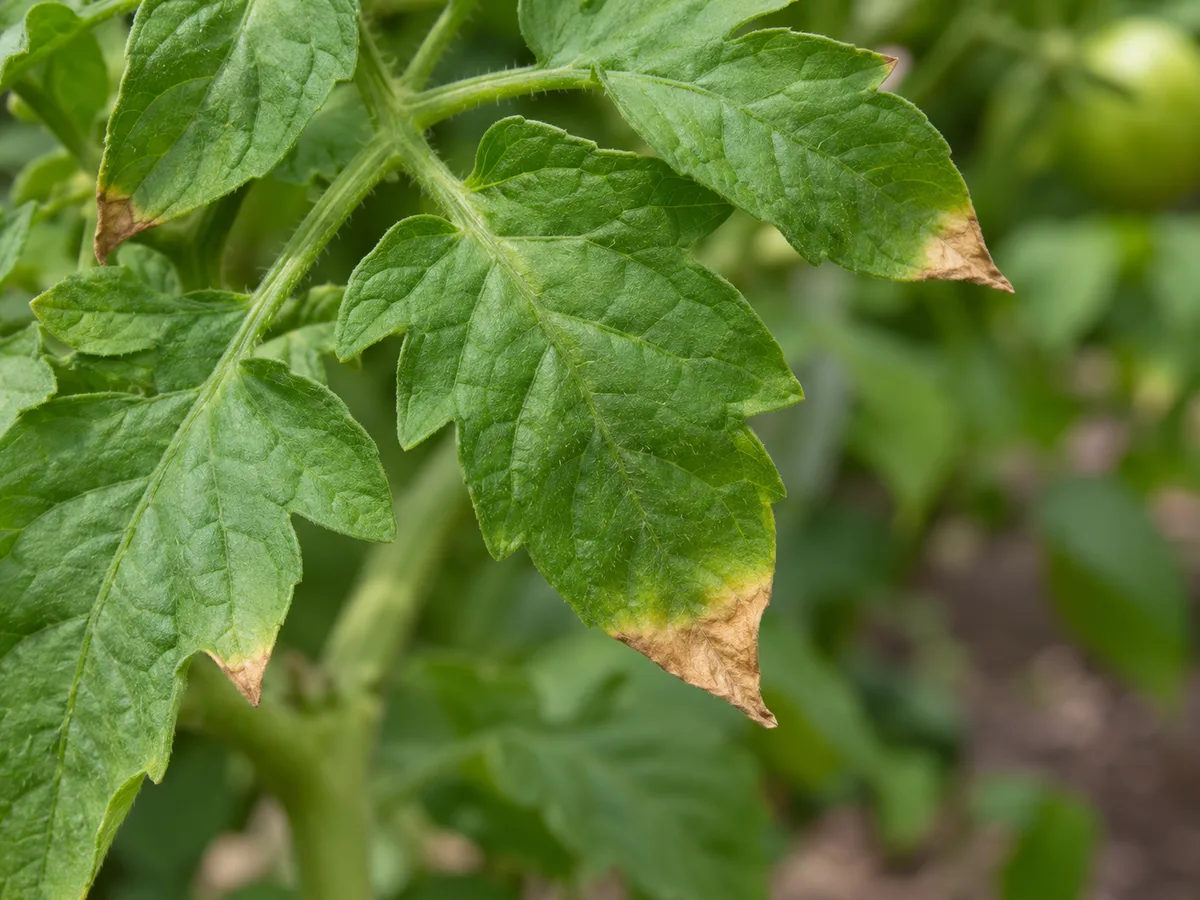
Crisp brown tips on tomato leaflets should be compared across the plant with soil moisture, recent weather, and any spreading leaf spots.