Drooping Leaves on Tomato: Causes, Checks & Fixes
Quick answer
Check the soil before watering a drooping tomato: dry soil suggests water stress, while persistently wet soil can damage roots and also cause wilt. If the plant droops in afternoon heat but recovers by evening, monitor it; one-sided yellowing, a brown stem interior, or persistent whole-plant wilt warrants closer disease diagnosis.
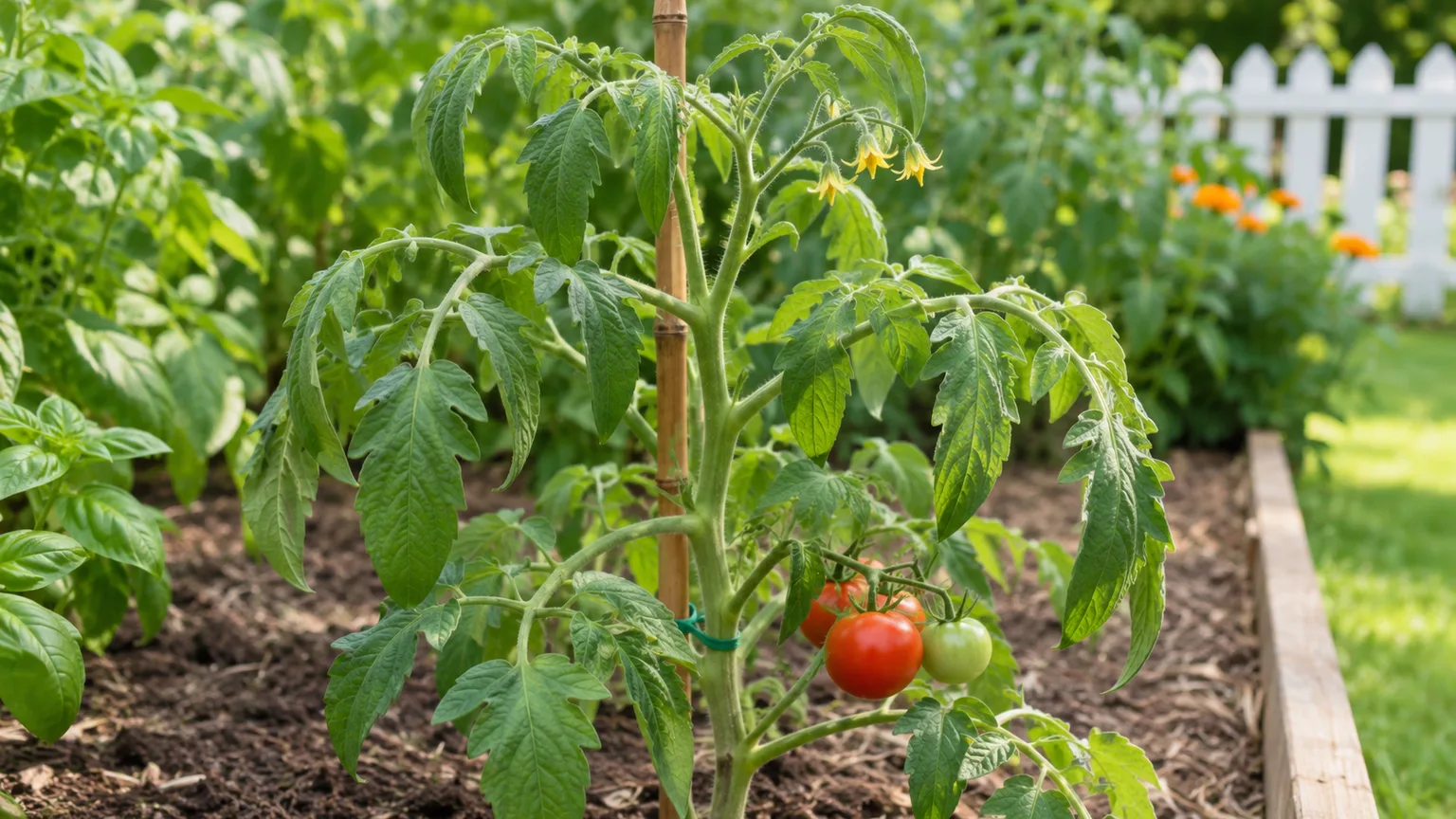
Drooping Leaves on Tomato: Causes, Checks & Fixes
This guide covers drooping leaves on Tomato. See also the general Drooping Leaves guide, watering, and light pages for this plant.
Drooping Leaves on Tomato: Causes, Checks & Fixes
Quick answer
Drooping tomato leaves are a symptom, not a diagnosis. First check the root zone: dry soil points toward insufficient water, while persistently saturated soil can deprive roots of oxygen and impair water uptake (Wisconsin Extension). If droop appears during a hot, windy afternoon and eases as the day cools, observe the plant before adding water. If it stays wilted despite moist soil, look for disease clues.
Why tomato leaves droop
Tomato foliage can temporarily lose firmness when leaves lose water faster than roots can replace it. Heat, wind, and low humidity increase water loss; drought can do the same. A hot-afternoon droop that recovers in cooler evening conditions can therefore occur even when soil is not dry (Wisconsin Extension). Confirm soil moisture before watering rather than following the leaves alone.
Wet soil is another possibility. Roots need air as well as water, and prolonged saturation can injure roots so they take up water poorly. Check that containers drain freely and that garden beds are not waterlogged. Avoid alternating between soaking and severe drying; aim for evenly moist, well-drained soil.
Check the symptom pattern
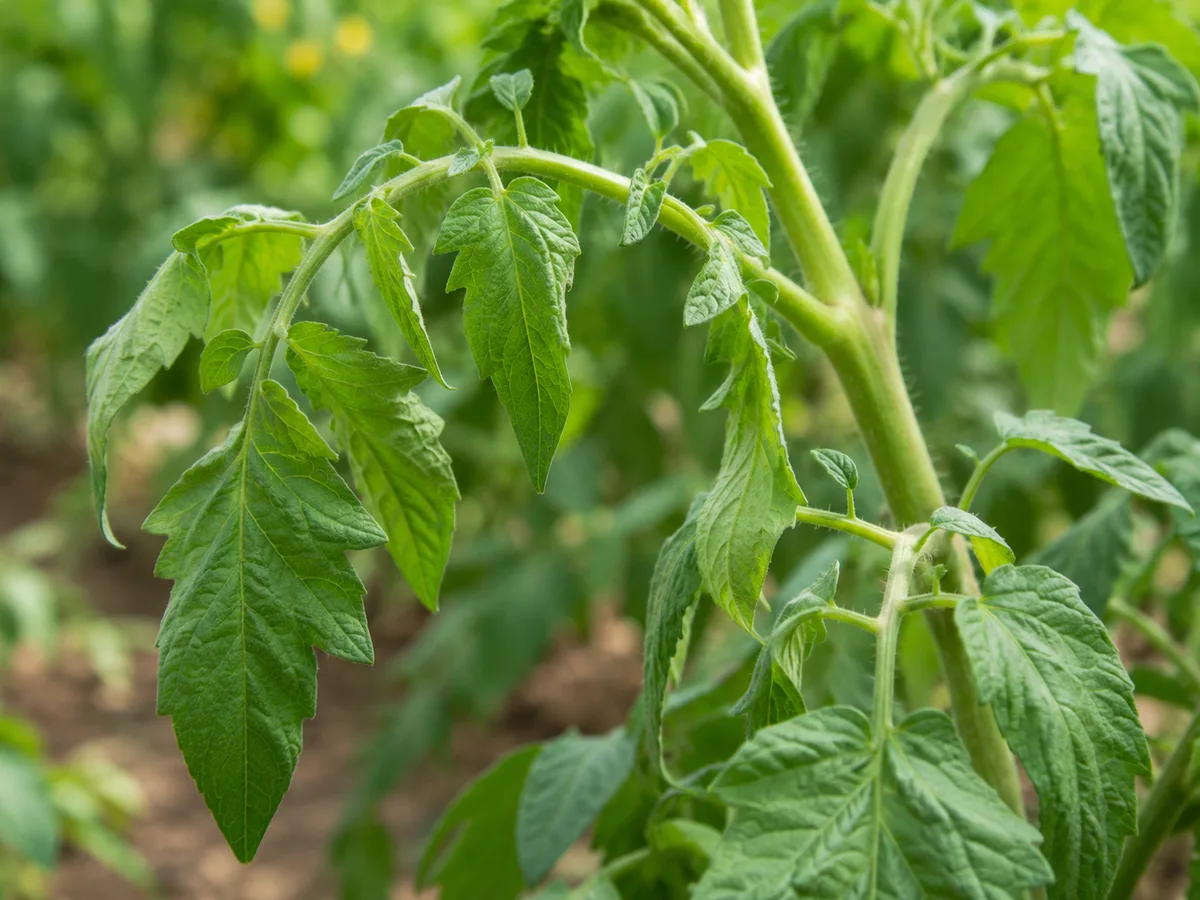
Compare the droop across the plant and check whether it improves after the hottest part of the day.
Temporary heat or water stress
If the whole plant droops during peak heat but firms up later, note the weather and check moisture several inches down. Water the root zone thoroughly when it is dry, preferably early in the day, and allow excess water to drain. If the soil is moist, wait for cooler conditions and reassess instead of adding more water.
Persistent wilt with yellowing or stem clues
Fusarium wilt can begin as one-sided wilting of a leaflet, branch, or plant; lower leaves may yellow first, and a lengthwise cut near the stem base can show light-brown vascular streaks. As the disease advances, wilt may become persistent regardless of watering (NC State Extension). Verticillium wilt can also start on lower leaves, often on one side; yellow wedge-shaped lesions and tan veins with a green stem center are diagnostic clues described by University of Minnesota Extension. Do not cut stems unless needed for diagnosis, and sanitize tools afterward.
Bacterial wilt can cause sudden wilting while leaves remain green, particularly in warm, moist conditions. NC State describes a white bacterial stream from a freshly cut stem placed in water as a strong indicator, but cutting is only a clue and a lab diagnosis is more reliable (NC State Extension). Other causes of tomato wilt include tomato spotted wilt virus and root-knot nematodes, so symptoms alone may not settle the diagnosis (N.C. Cooperative Extension).
What to do first
- Check soil moisture below the dry surface layer and confirm that water can drain away.
- Note whether the plant recovers in the evening or remains wilted overnight.
- Look for one-sided yellowing, lower-leaf progression, stem lesions, or rapid decline.
- If disease is suspected, avoid moving soil or plant debris to other beds and contact a local extension office or plant diagnostic clinic. Do not assume extra watering or fertilizer will cure a vascular disease.
For confirmed bacterial wilt, NC State advises promptly removing infected plants and containing them to limit movement of soil and bacteria; management is difficult once the pathogen is present (NC State Extension). For Fusarium wilt, there is no cure for an infected plant; resistant varieties and rotation are preventive measures for future plantings (NC State Extension).
Recovery and prevention
After correcting a dry root zone, judge recovery by the plant’s overall firmness and new growth rather than expecting badly wilted or diseased leaves to look normal again. For plants in containers, keep drainage holes open; in beds, avoid planting into persistently soggy soil. Water consistently at the base and keep notes on hot spells and watering so temporary midday wilt is easier to distinguish from a worsening pattern.
Related tomato problems
Use the Plant Problem Diagnosis Tool to compare symptoms before changing multiple care variables.