Wilting Tomato Plants: Causes, Checks & First Steps
Quick answer
Check soil moisture before watering a wilted tomato. A plant that droops during hot afternoons but firms up later may be under temporary heat stress; dry soil calls for a thorough root-zone watering, while persistently wet soil calls for better drainage. Wilting that persists in moist soil, especially with one-sided yellowing or stem discoloration, may indicate disease and needs diagnosis.
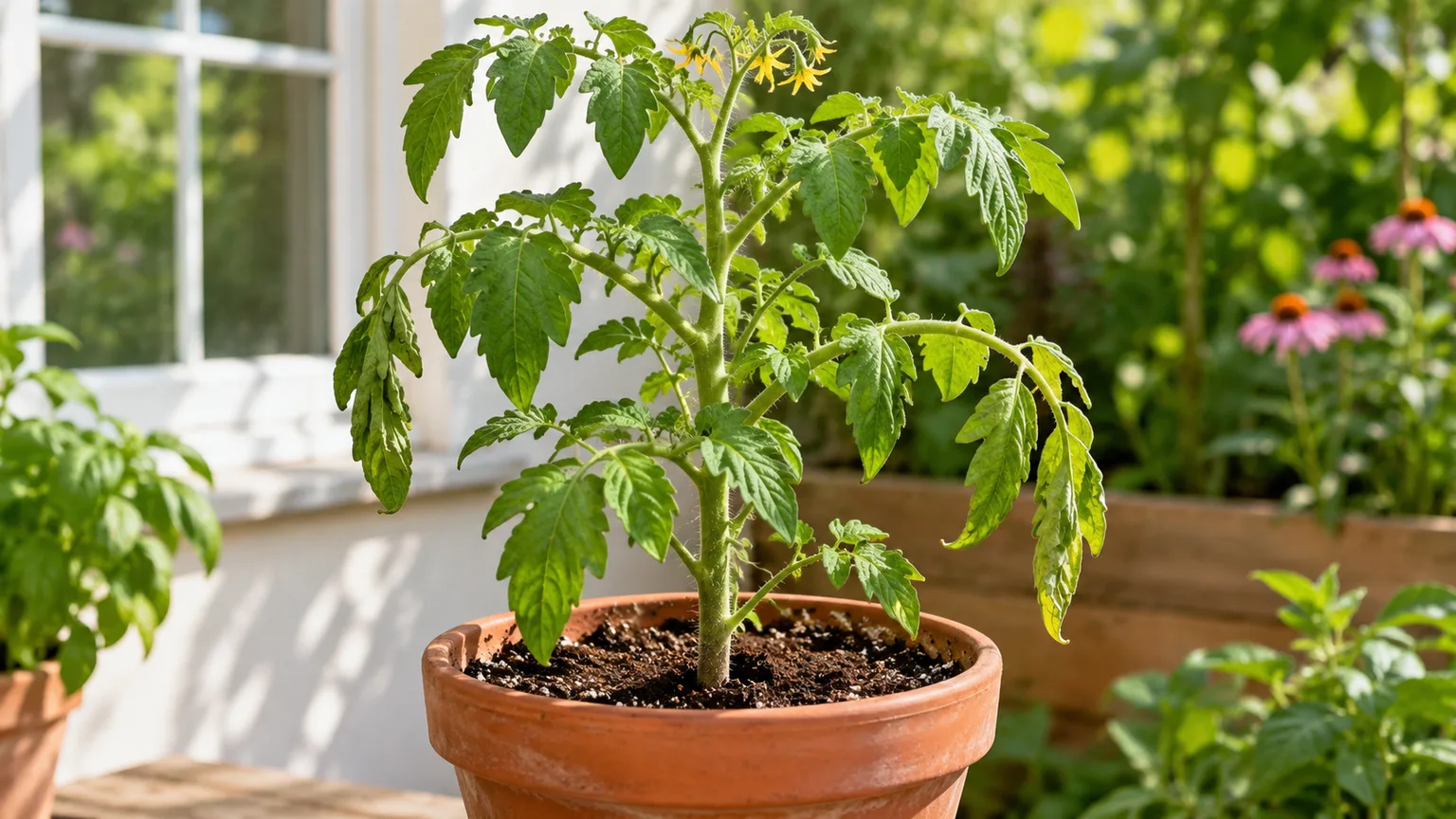
Wilting on Tomato: Causes, Checks & Fixes
This guide covers wilting on Tomato. See also the general Wilting guide, watering, and light pages for this plant.
Wilting on Tomato: Causes, Checks & Fixes
Quick answer
Wilting is a symptom, not a diagnosis. Start by checking soil below the surface and noting when the droop appears. If leaves hang during the hottest part of the day and recover as it cools, the plant may be losing water faster than roots can replace it. If the root zone is dry, water it thoroughly and allow drainage. If the soil stays wet while the plant remains wilted, stop adding water and inspect drainage and disease clues. A fruiting tomato in a sunny container can use water differently from a young plant in a cool bed, so judge moisture directly rather than following a fixed daily amount (Homes & Gardens).
Why tomato plants wilt
Tomato plants can wilt when they lose water faster than roots can take it up. Dry soil is one cause, but hot weather can also trigger temporary droop even when soil contains moisture. Saturated soil can injure roots and interfere with water uptake, so adding water without checking can make matters worse (Wisconsin Extension).
Wilting that persists in moist soil may have a disease cause. Tomato wilt lookalikes include Fusarium and Verticillium wilts, bacterial wilt, white mold, and seedling damping-off; other problems such as viral disease and root-knot nematodes can also affect water movement or plant vigor (N.C. Cooperative Extension).
Check the pattern first
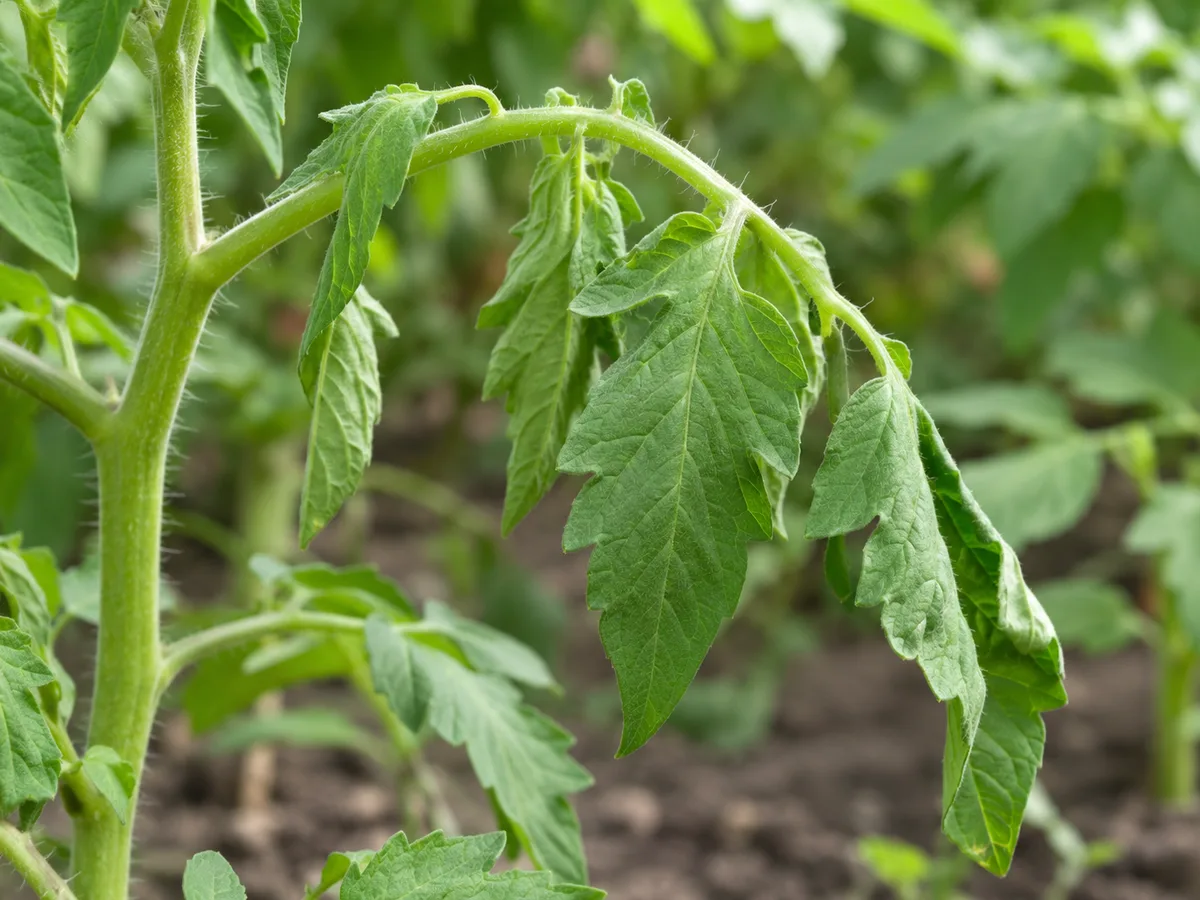
A drooping canopy is a cue to check soil moisture and the plant’s pattern before treating it.
- Afternoon droop that eases by evening: note heat and wind, then check whether the plant firms up after conditions cool.
- Wilt with dry soil: water the root zone evenly and let excess drain; reassess rather than repeatedly giving small splashes.
- Wilt with soil that stays wet: check for blocked drainage, standing water, or root damage. Do not reflexively water again.
- One-sided wilt or yellowing that starts low: consider vascular wilt. Minnesota Extension describes one-sided lower-leaf decline and discolored veins near the stem base as clues for Verticillium and Fusarium wilt (University of Minnesota Extension).
- Sudden whole-plant wilt while foliage remains green: bacterial wilt is one possibility. A symptom pattern cannot confirm it; seek a local diagnosis before deciding how to manage the plant (NC State Extension).
Seedlings need a separate check: damping-off affects young seedlings, often with darkened stems at the soil line followed by collapse. On larger plants, white mold can girdle a stem with a dark, water-soaked lesion and cause the stem above it to wilt; look for the lesion and white growth rather than treating wilt as a watering issue (University of Minnesota Extension).
If a tomato stem has a distinct rotted patch or internal staining, inspect the stem rather than focusing only on watering: the RHS notes that stem rots can cause wilt, while vascular staining can fit Fusarium or Verticillium wilt (RHS tomato stem guide). Avoid cutting into multiple stems; photographs and a sample shared with an extension diagnostician can help narrow the cause.
What to do
- Check moisture several centimeters into the root zone, not just the dry surface. In containers, make sure water can escape and empty standing water from the saucer.
- If the root zone is dry, water thoroughly at the base and allow excess to drain. If it is wet, pause irrigation while you check drainage and let the soil begin to dry.
- Recheck after the hottest part of the day and the following morning. Record whether the wilt resolves, stays on one side, or spreads.
- If a plant remains wilted in moist soil or develops lower-leaf yellowing or stem lesions, contact an extension office or plant diagnostic clinic. Avoid moving potentially affected soil or plant debris between beds.
Fusarium wilt can cause lower leaves to yellow and wilt, sometimes first on one side; resistant varieties and rotation help reduce risk in future plantings, but are not a cure for a currently infected plant (NC State Extension). For confirmed bacterial wilt, follow local extension guidance; NC State notes that management is difficult and recommends removing confirmed infected plants while limiting movement of contaminated soil and debris (NC State Extension).
Recovery and prevention
After correcting dry soil or drainage, look for the wilt to stop spreading and for new growth to remain firm. Leaves damaged by disease or prolonged stress may not recover their former appearance. Water based on root-zone moisture and conditions rather than a fixed calendar, and keep container drainage open. For a broader care baseline, see the Tomato Overview and Tomato Watering Guide.
When to use this page vs other tomato guides
Use this page when leaves, stems, or the whole tomato plant are losing firmness. If the main finding is persistently wet soil and slow dry-down, compare it with Overwatering Tomato; if leaves droop but the plant recovers and no other wilt signs appear, see Drooping Leaves on Tomato. The Tomato Problems hub helps route symptoms that are primarily spots, yellowing, pests, or stem injury rather than wilt.
Related tool
Use the Plant Problem Diagnosis Tool to compare tomato symptoms before changing several care variables.
Related tomato problems
Use the Plant Problem Diagnosis Tool to compare symptoms before changing several care variables.
FAQs
Why does my tomato wilt in the afternoon but recover later?
Heat and wind can temporarily increase water loss from leaves. If the plant firms up as the day cools and the root zone is not dry, observe it before adding water. Persistent wilt overnight deserves a closer check.
Should I water a wilted tomato plant right away?
Check soil several centimeters down first. Water if the root zone is dry; if it is already wet, pause and check drainage instead of adding more.
What does one-sided wilting on tomato mean?
One-sided wilt with lower-leaf yellowing can fit Fusarium or Verticillium wilt. These signs do not prove a diagnosis, so ask a local extension service or plant clinic if the pattern persists.
Can a tomato plant recover from wilting?
Temporary heat or dry-soil wilt may improve after conditions are corrected. A vascular disease may continue despite watering because it interferes with water movement inside the plant.
When should I seek help for a wilted tomato?
Get a diagnosis if the plant stays wilted in moist soil, declines quickly, or develops one-sided yellowing or stem lesions. A brief afternoon droop alone is not a reason to remove it.