Low Humidity on Tomato: Diagnose Dry-Air Stress
Quick answer
Low relative humidity can increase water loss from tomato leaves, especially in hot, windy conditions, but it does not create a unique symptom. First check root-zone moisture and recent heat or wind; water the soil only if it is dry, and do not raise humidity blindly.
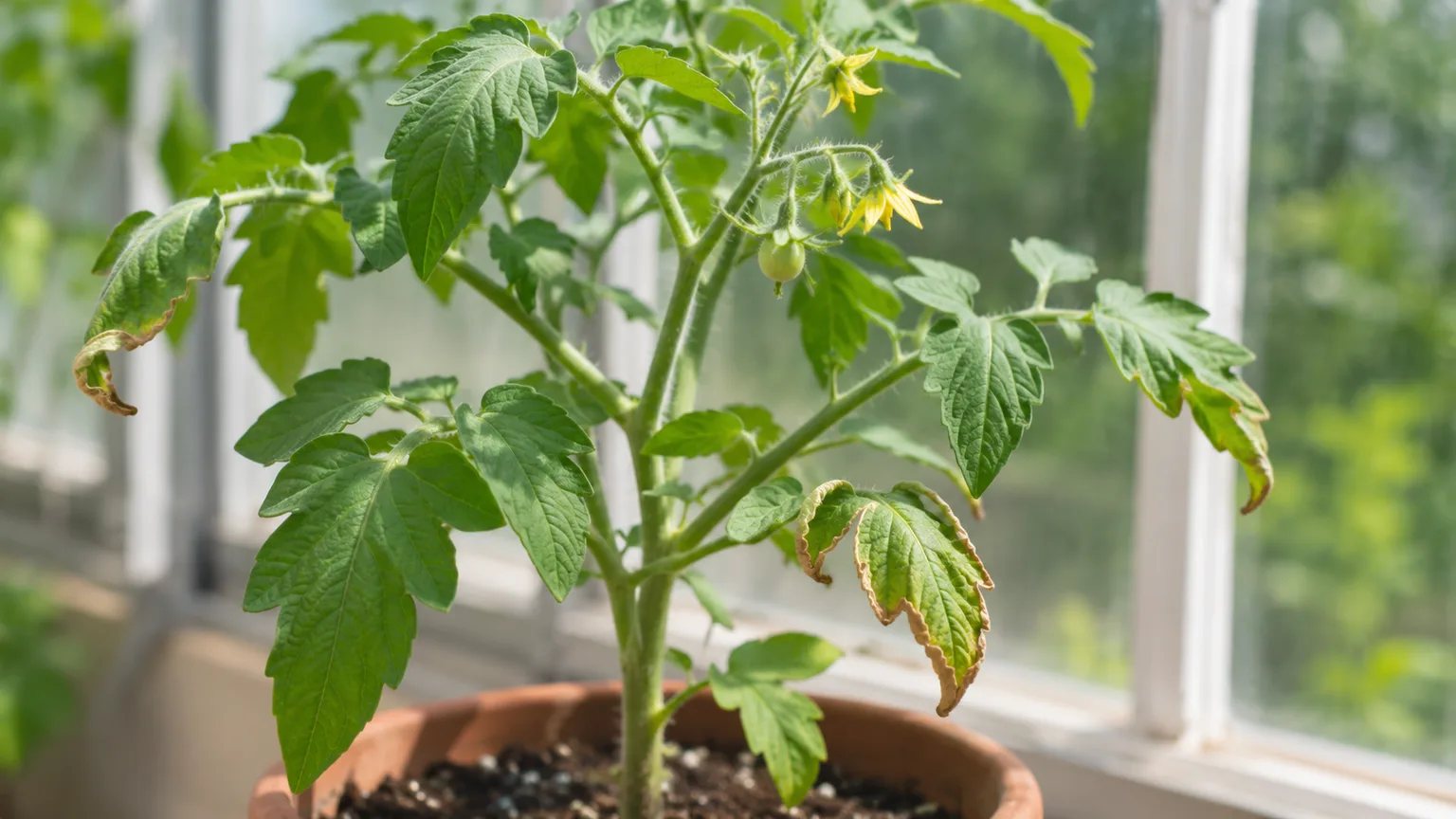
Low Humidity on Tomato: Causes, Checks & Fixes
This guide covers low humidity on Tomato. See also the general Low Humidity guide, watering, and light pages for this plant.
Low Humidity on Tomato: Causes, Checks & Fixes
Quick answer
Low relative humidity can increase the rate at which water leaves tomato foliage, particularly when the air is hot or moving. But curled leaves or brown edges do not prove that humidity is low: the same pattern can follow dry soil, heat, root disturbance, herbicide exposure, pests, or disease. University of Minnesota Extension identifies drought stress as one cause of upward, inward leaf roll on tomatoes; the curl is a clue, not a humidity test (UMN tomato leaf diagnosis).
First, check the soil around the active roots. If it is dry several centimetres below the surface, water the root zone thoroughly and let excess drain. If it is already moist, do not add more water or try to humidify the whole garden; check heat, wind, roots, and leaf undersides instead.
Why dry air can matter to a tomato
Tomato is a heat-loving crop that needs a long frost-free season and full sun, according to UMN Extension’s tomato growing guide. Outdoors, low relative humidity is usually one part of a broader weather pattern. Warmth and wind can increase evaporative demand, while a small pot or shallow, dry bed limits how quickly roots replace the water lost through leaves.
Relative humidity also changes with temperature, so one humidity reading does not tell you exactly how strongly the air is pulling water from a leaf. Greenhouse growers use vapor-pressure deficit (VPD) to interpret humidity together with temperature. Bayer’s protected-culture tomato guide explains that a high VPD in dry greenhouse air can drive high transpiration and stress; its greenhouse guidance is not a universal outdoor target (Bayer’s greenhouse tomato guide).
For an outdoor tomato, the practical question is not “How do I raise humidity?” but “Can this plant replace the water it is losing, and is another stress present?”
What dry-air stress may look like
Dry air has no unique tomato symptom. During hot, dry, or windy weather, a plant may lose firmness or show leaf-edge scorch if water supply cannot keep up with demand. Tomato leaf roll often curls upward and inward; leaves can become thick or leathery in pronounced cases. Extension guidance associates this roll with drought stress, while its tomato disorder guide emphasizes that curled foliage has multiple possible causes (UMN tomato disorders guide).
A brief midday droop that improves in the evening can reflect temporary heat load, while persistent wilt deserves a closer root and stem check. Tomato wilting can also arise from insects or vascular disease, so do not keep increasing irrigation when the soil is wet or symptoms remain on one side of the plant (UMN tomato wilt diagnostic).
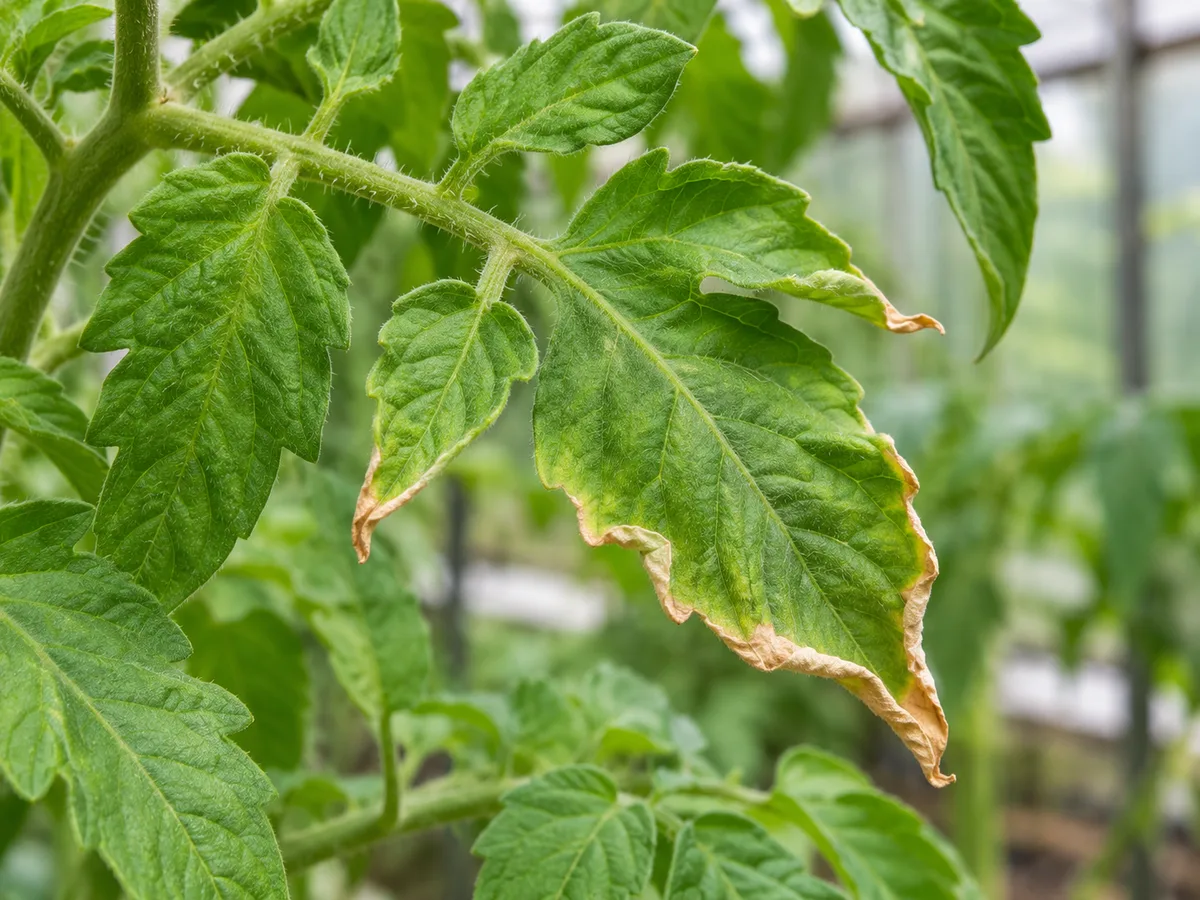
Brown edges and rolled leaflets can accompany water stress, but do not identify low humidity by themselves.
Check the root zone before changing humidity
- Feel the soil several centimetres down near the plant, not just the dry surface. Check more than one spot because a container can dry unevenly.
- Notice the time pattern. Does the tomato perk up after sunset or after a thorough watering, or does it remain wilted despite moist soil?
- Review the last few days: hot afternoons, drying wind, a recent transplant, a small container, or missed watering can all raise water stress.
- Inspect leaves and stems. Insects on new growth, mottled leaves, one-sided yellowing, stem lesions, or a broken stem point away from simple low humidity.
Tomatoes need dependable root-zone moisture, and hot, dry spells can make irrigation more important; check soil rather than relying on a fixed calendar (UMN vegetable-garden watering guidance). Compare your routine with the Tomato watering guide and use the Tomato soil guide if water runs off, pools, or drains unusually fast.
The safest first fix
If the root zone is dry, water slowly at the soil line until the bed or potting mix is evenly moist and excess water can drain. Do not splash water over foliage as a substitute for irrigation. For a container tomato, empty standing water from its saucer and recheck the mix later; in a bed, account for recent rain and how deeply the soil is moist.
If the root zone is already moist, hold off on watering. Temporarily protect a container from the harshest late-afternoon heat or drying wind while keeping the tomato in the strong light it needs to fruit. Do not place an outdoor plant in a sealed enclosure to “trap humidity”; stagnant, persistently damp conditions are not a substitute for healthy roots.
For protected-culture tomatoes, assess temperature and humidity together with greenhouse-appropriate VPD guidance. Do not apply a commercial greenhouse RH target directly to a patio pot or garden bed; cultivar, temperature, ventilation, and crop stage change the context.
Separate leaf roll from other tomato problems
| What you notice | More likely direction |
|---|---|
| Older leaves roll upward after a hot, dry spell and soil is dry | Check for root-zone water deficit and weather stress; drought-related leaf roll is one possibility. |
| Whole plant wilts while soil is wet, or one side declines first | Stop adding water and inspect roots and lower stems; seek local extension diagnosis if it persists. |
| Leaves twist with thickened veins, bleaching, or damage strongest on one side | Review recent herbicide drift or spray exposure. |
| Insects cluster on new growth, or leaves show mottling and unusual distortion | Inspect for sap-feeding pests or virus-like patterns; humidity alone will not explain them. |
UMN’s tomato symptom keys list aphids, virus, and herbicide injury alongside drought-related leaf roll, and separate several causes of wilting (UMN tomato symptom keys). If the plant remains wilted after the soil is moist, use the Tomato wilting guide and Tomato drooping-leaves guide for the next checks.
Greenhouse tomatoes need a different humidity decision
In a greenhouse, humidity is measurable and interacts with temperature, ventilation, and pollination. Bayer’s production overview notes that very dry air can increase transpiration and stress plants; it also describes how humidity extremes can affect tomato pollination. Those figures are for protected production, so treat them as context rather than a universal setting.
If you grow tomatoes under cover, log temperature and relative humidity at canopy height over the day instead of making a change from one spot reading. Improve ventilation when heat accumulates, and use a crop-specific VPD reference before adding a humidifier. Repeatedly wetting foliage does not address a dry root ball, a hot greenhouse, or poor air exchange.
Recovery and prevention for tomato
A curled leaf may stay curled after conditions improve. Look for firm new growth, normal flowering, and no continued spread of edge damage over the next several days. If an established tomato has lost much of its foliage, protect the healthy canopy from sudden stress and do not remove leaves that are still green and functional.
During hot weather, inspect container tomatoes more often because limited mix volume can dry faster than a garden bed. Keep irrigation directed to the soil and use mulch in the bed without piling it against the stem. The Tomato overview and Tomato light guide help balance full-sun growth with temporary relief from severe afternoon heat. If yellowing becomes more prominent than curling, compare it with the Tomato yellow-leaves guide.
For general symptom context, see the low-humidity guide. This page is for tomato leaf stress when dry air may increase water demand; use the Tomato problems hub to compare other symptoms before treating.
Related Tomato guides
Use Tomato watering when the root zone is dry or container moisture swings quickly. Use Tomato soil when drainage or shallow rooting is part of the problem, and Tomato light when afternoon heat is intense. For wilt that does not improve after soil moisture is corrected, use Tomato wilting or the Tomato problems hub.
Related tool
Use the Humidity Calculator to understand a measured indoor or greenhouse humidity reading. Outdoor tomatoes are better managed by checking root-zone moisture and weather exposure than by chasing a target RH.