44 Best Tomato Varieties to Grow in Your Garden
Choose among 44 best tomato varieties for slicing, snacks, or sauce, with practical notes on maturity, plant habit, disease resistance, and garden space.
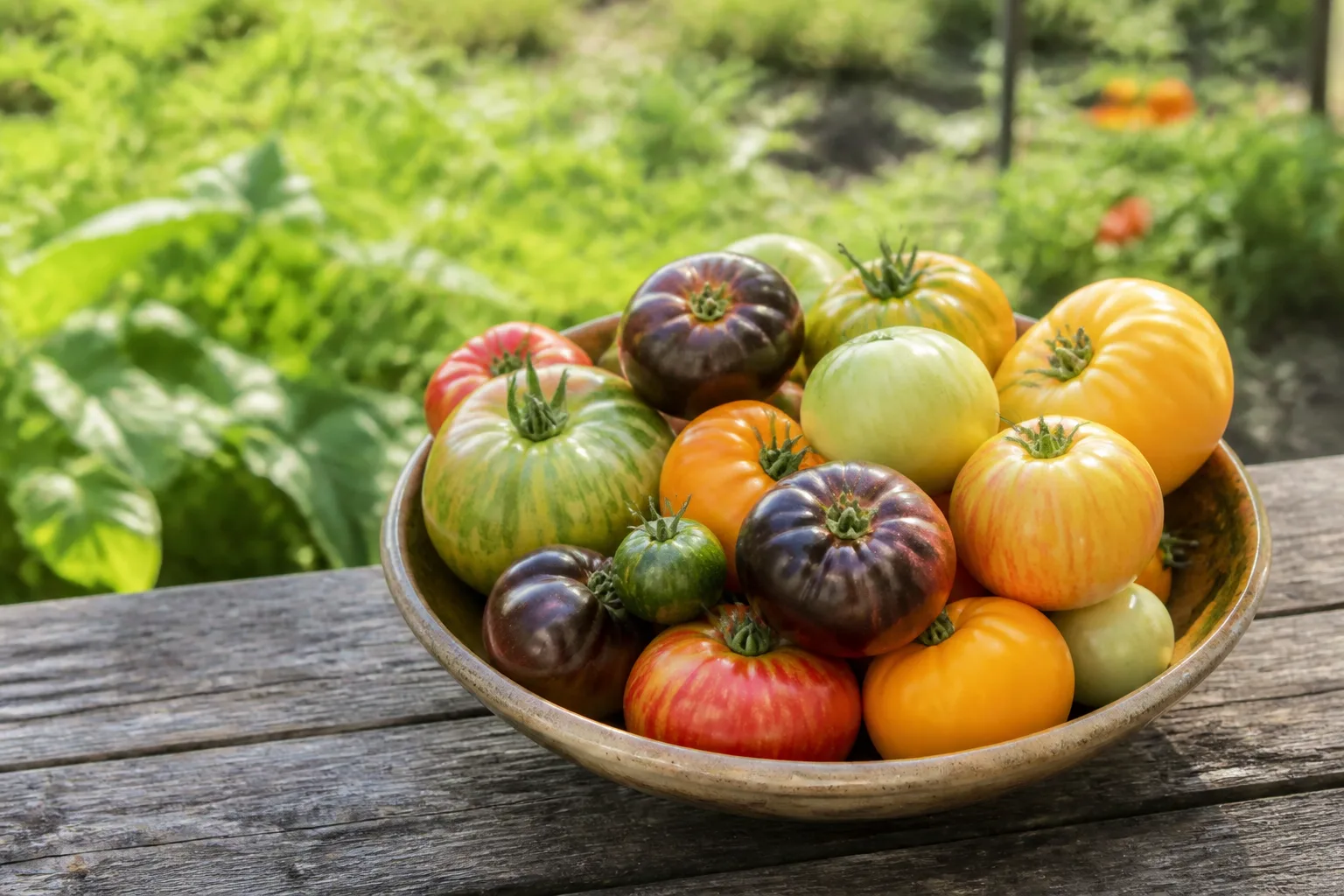
The best tomato variety is the one that ripens in your season, fits the space you can support, and suits what you like to eat. For an early slicer, start with Early Girl; for sweet snack-size fruit, compare Sungold and Sweet Million; for sauce, try Roma or San Marzano; and for a compact bed, look at determinate choices such as Sophie’s Choice or Silvery Fir Tree. A long-season garden can make room for a large heirloom like Yellow Brandywine or Cherokee Purple.
Tomato names alone do not tell the whole story. One “bush” type may still need a cage, an indeterminate vine can outgrow a small pot, and the maturity number on a packet is usually an estimate from transplanting rather than a countdown that accounts for cool nights. Use the list below to make a shortlist, then confirm the exact plant habit, maturity basis, and disease-resistance codes on the seed packet you plan to buy.
Choose a tomato by harvest, flavor, and garden space
Start with the harvest you want. Cherry and grape tomatoes give you small fruit for snacking and salads; slicers are useful for sandwiches; beefsteaks deliver thick slices but need time, steady care, and strong support; paste tomatoes tend to have firmer flesh that suits cooked sauces. Color and flavor can narrow the choice further, but they should come after season length and plant size.
| If you want… | Start with… | Check before buying |
|---|---|---|
| The earliest full-size red slicer | Early Girl, Matina, or Manitoba | Days from transplant and local performance |
| A steady bowl of sweet small fruit | Sungold, Sweet Million, or Gardener’s Delight | Vine length and sturdy support |
| A compact plant for a small bed | Sophie’s Choice, Silvery Fir Tree, or Tasmanian Chocolate | Whether the seed strain is truly determinate or dwarf |
| Large, colorful slices | Yellow Brandywine, Striped German, or Pineapple | Long-season timing and reliable staking |
| Sauce and preserving fruit | Roma, San Marzano, or Golden Roma | Fruit firmness, harvest concentration, and the exact plant habit |
| Dark or unusual fruit | Cherokee Purple, Black Krim, or Indigo Rose | Ripeness cues and any resistance listed for the cultivar |
These are starting points, not universal winners. Weather shifts maturity, fruit set, and flavor; even two seed sellers may describe a selection differently. Oregon State University Extension recommends choosing a cultivar by its fruit type, intended use, growth habit, and growing conditions. The Royal Horticultural Society’s tomato guide likewise groups choices by fruit size, shape, color, and growing habit.
Understand plant habit before you buy
Determinate tomatoes stop extending their main stems after flowering at the tips. They are generally bushier and tend to ripen much of their crop in a more concentrated window. That can make them useful where the season is short, the garden is compact, or you want several pounds for cooking at once. “Determinate” does not automatically mean tiny or cage-free; check the mature dimensions and support recommendation.
Indeterminate tomatoes keep growing and setting flower clusters through the season until frost, disease, or another stress stops them. They need a tall stake, cage, trellis, or other sturdy support, and their harvest is usually spread over a longer period. Semi-determinate cultivars land between those patterns. Iowa State Extension explains the distinction and notes that compact determinates concentrate their harvest, while indeterminate vines keep producing.
The choice affects more than pruning. A determinate plant may fit a raised bed, patio container, or short season, while a vining indeterminate can be a better use of vertical space if you can secure it. For either habit, a “compact” label is not permission to crowd plants; foliage needs airflow, sun, and a support sized for a wet, fruit-heavy plant.
Early dependable slicers and compact plants
This group gives you classic red or yellow table tomatoes, including a few choices for a cooler or shorter season. “Early” is relative to your climate: the same cultivar may ripen on a different schedule in a cloudy coastal garden and a hot inland one.
Early Girl is an early red slicer that can fruit before later beefsteaks. It is indeterminate, so give it tall support and expect repeated picking rather than one concentrated harvest.
Lemon Boy adds a yellow, round slicer for fresh eating and color contrast. Maturity, size, and resistance claims can differ between Lemon Boy and Lemon Boy Plus; check the exact packet.
Better Boy is a vigorous indeterminate hybrid with smooth red fruit. Georgia Extension describes 12- to 16-ounce tomatoes, and Clemson lists its resistance codes; give the heavy vine strong support.
Bush Early Girl is a compact counterpart to Early Girl. Its determinate habit concentrates harvest in a smaller footprint, though a cage still helps support the fruit load.
Bush Beefsteak can refer to different compact beefsteak selections. Expect large fruit, not necessarily a tiny plant; confirm cultivar, mature height, maturity, and habit before container growing.
Marglobe Improved is a red main-crop slicer based on an older open-pollinated line. North Carolina State lists Marglobe for heat and humidity; verify habit and resistance for the specific selection.
Cold Set is bred to set fruit in cooler conditions than many standard tomatoes, but it is not frost-proof. Plant after frost risk and confirm the seed line’s maturity and habit.
Manitoba is an early red tomato for short-season gardens. It still needs warm soil and a frost-free window; follow regional transplant guidance and protect young plants from cold snaps.
Matina is an early European salad tomato, often sold as an indeterminate vine. It can precede large heirlooms while producing classic red fruit; check maturity and support needs.
Silvery Fir Tree pairs compact, determinate growth and finely divided silvery-green foliage with red salad-size fruit. A small cage keeps its branches and tomatoes off the ground.
Sophie’s Choice is a compact, determinate early tomato for a small bed or large container. Cornell’s cultivar database describes an 18- to 24-inch plant with orange-red fruit; water consistently.
Subarctic Plenty is a very early, small-fruited red tomato for short seasons. Its compact determinate habit simplifies support and protection, but it is an early crop, not a season-long producer.
Big, richly flavored slicers and heirlooms
Large heirlooms are often grown for their color, texture, and individual flavor rather than uniform fruit or a compact footprint. They can be especially rewarding for sandwiches and fresh slices, but a short growing season may favor an earlier companion variety. The fruit can also be irregularly shaped; a ribbed or lumpy tomato is not automatically a problem.
Yellow Brandywine produces large golden-yellow beefsteaks for salads and thick slices. It is generally indeterminate and late; start with a transplant and pair with an early slicer in a short season.
Pink Brandywine is a large pink-red slicer with soft, juicy flesh and rich flavor. This indeterminate heirloom can take longer to ripen than early hybrids; support branches before fruit gets heavy.
Striped German is a large beefsteak with golden skin and red-orange marbling. It makes a striking slicer, but its sprawling vine and long season suit a roomy garden best.
Beauty King is a large bicolor tomato with a golden base and red striping. Grow it for vivid slices, give its vine tall support, and judge ripeness by feel as well as color.
Dr. Wyche’s Yellow produces golden-orange beefsteaks for fresh eating. This indeterminate heirloom needs room and steady moisture; large fruit can crack after drought followed by heavy rain.
Basinga is a pale golden beefsteak, sometimes with a pink blush, that adds color to fresh slices. It is typically indeterminate; provide sturdy support and check its maturity estimate.
Oxheart describes heart-shaped tomatoes, not one standardized cultivar. Large, tapered fruit often has meaty flesh for slicing or sauce; habit, color, and timing depend on the named selection.
Raspberry Oxheart is a pink, tapered tomato with substantial flesh for slicing. Its vine is commonly indeterminate and needs support; check whether the seller identifies a specific open-pollinated strain.
Pink Accordion has deeply pleated pink-red fruit that stands out on a platter. Its folds suit stuffing or cooking better than tidy slices; give the large plant a long season and support.
Pineapple is a yellow-orange beefsteak with red marbling, grown for sweet fresh slices. It is usually indeterminate and late, so pair it with an earlier tomato for a sooner harvest.
Earl of Edgecombe is an orange heirloom slicer with a mellow, fruity profile. Fruit size and habit may vary by seed line; give the vine a long season and support.
Pink Berkeley Tie-Dye offers pink-red fruit with green striping and a dusky interior. It benefits from a cage and steady moisture; judge ripeness by feel and color shift.
Costoluto Genovese is a ribbed red Italian tomato for platters and sauce. Typically indeterminate and less uniform than paste types, it needs vine support and picking while firm.
Dark-fruited tomatoes for deeper color
“Black” or “purple” tomatoes are usually shades of dusky red, mahogany, olive, or rose rather than truly black flesh. Sun exposure may darken anthocyanin-rich shoulders, while the lower fruit remains red or green. These tomatoes make distinctive salads and slices, but their unusual color means that a squeeze test and familiarity with the cultivar are especially useful at harvest.
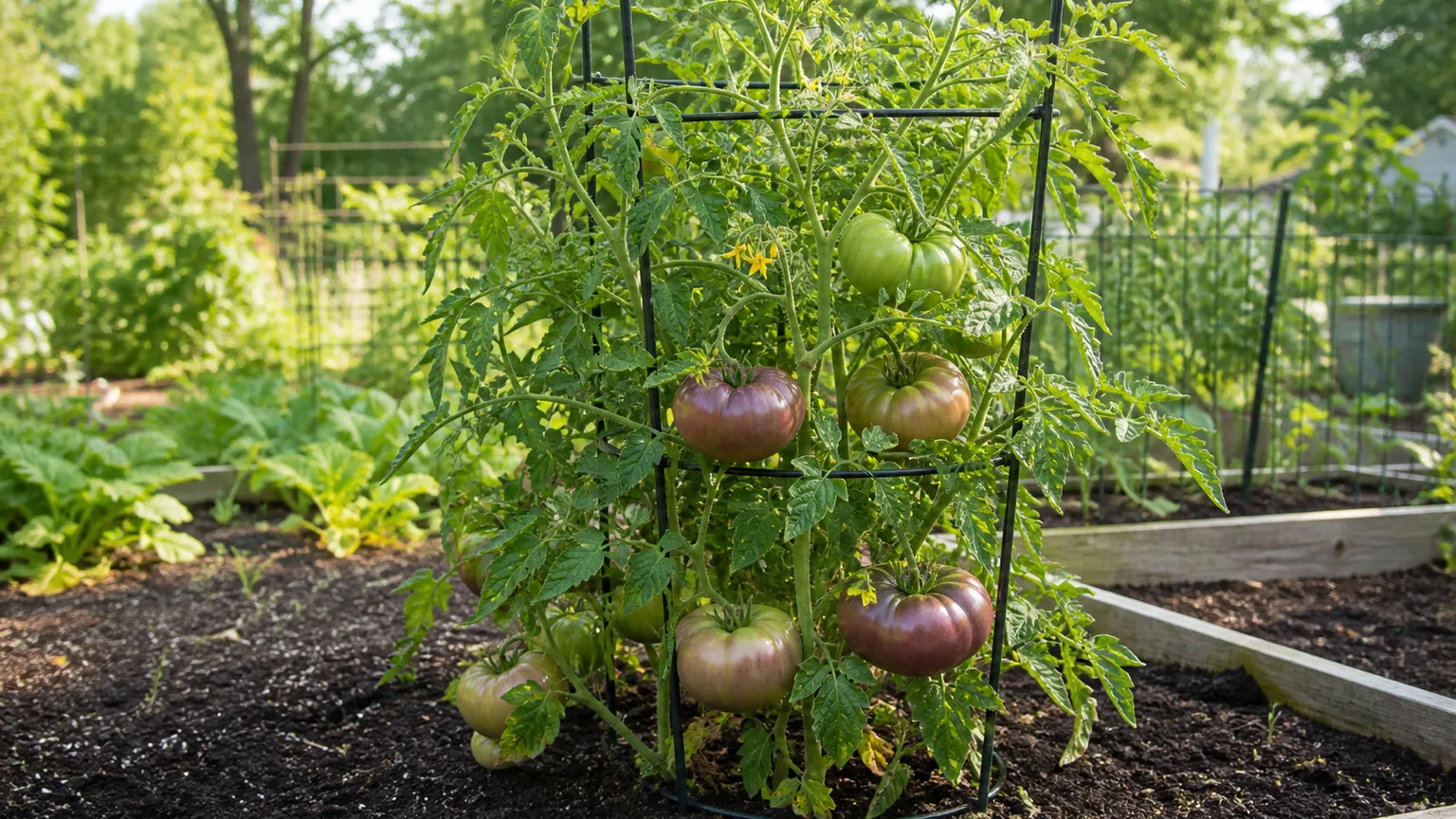
Cherokee Purple is a large, indeterminate heirloom with dusky rose-purple fruit and green shoulders. Iowa State notes its oblate shape; Clemson lists no specific resistance codes, so do not rely on it for disease control.
Black Krim bears dark mahogany to purple-red beefsteaks with green shoulders. Use it for richly colored slices and check softness, not standard red cues; assume no resistance unless the packet says otherwise.
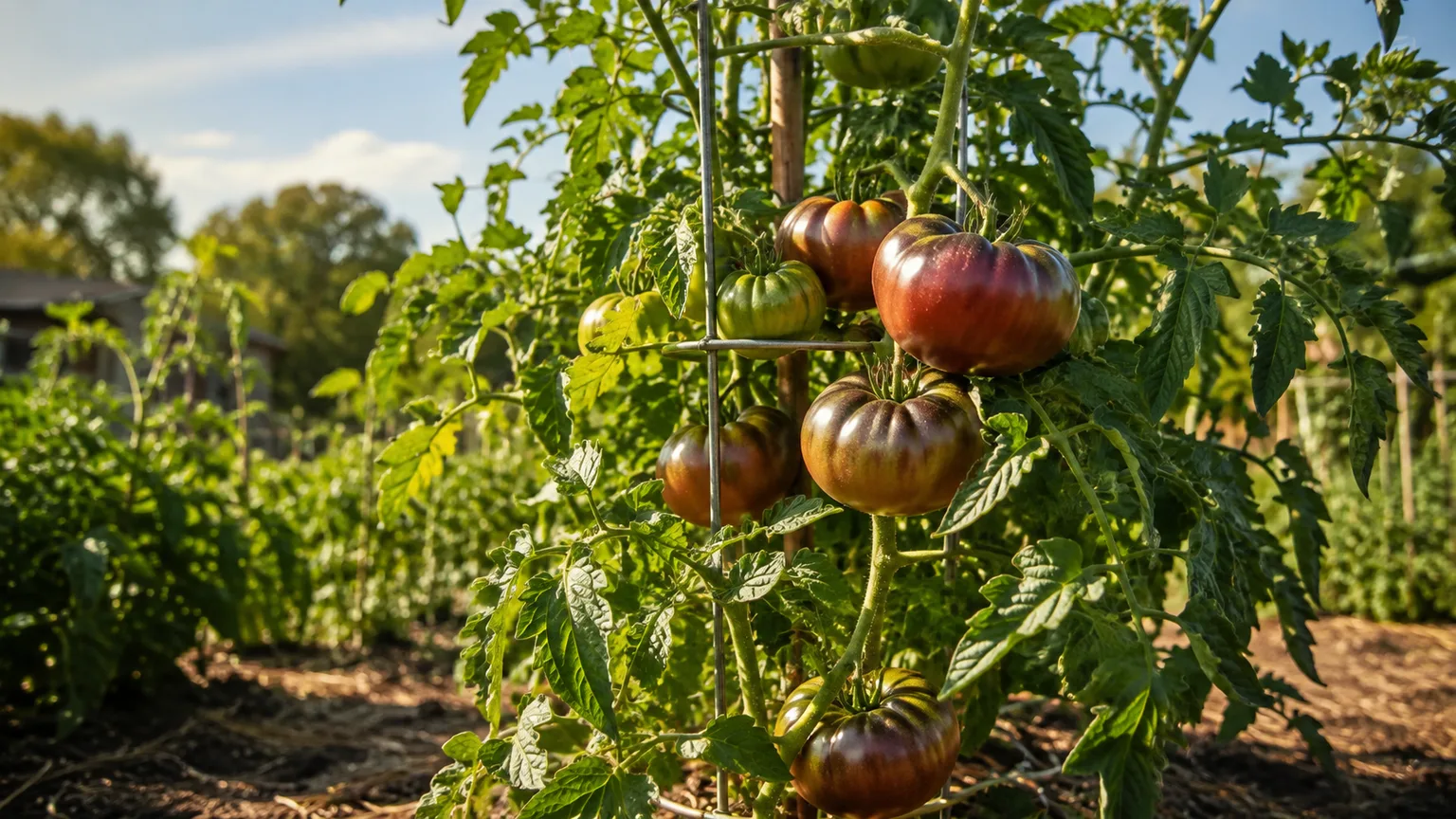
Black Prince produces oval, plum-shaped mahogany fruit for salads or roasting rather than oversized slices. It is open-pollinated, so gardeners can save seed from healthy, fully ripe fruit.
Black Beauty has anthocyanin-rich skin that darkens nearly black in sun while the flesh ripens red. Do not wait for uniform black color; give its indeterminate vine support.
Indigo Blue Beauty has purple-blue shoulders and red-pink flesh; shaded skin may stay lighter. Grow it for color and judge ripeness by softness near the blossom end.
Indigo Rose is a salad-size tomato with anthocyanin-rich skin and red flesh beneath. Oregon State notes its high anthocyanin content; wait for a red-orange underside and slight softness.
Tasmanian Chocolate is a dwarf tomato with dusky red-brown fruit, a more manageable dark-fruited option. Confirm its final size and give it a small cage, especially in a container.
Striped, green, and patterned varieties
Patterned tomatoes are not all ripe when they look red, and green tomatoes are not all unripe. Learn the cultivar’s mature color before picking; otherwise it is easy to cut into a firm, tart fruit too early or leave a ripe one on the vine until it cracks. These varieties are often best in fresh salads where their unusual color remains visible.
Green Zebra stays green, with dark stripes that shift toward yellow as it matures. This tangy slicer is ready when slightly soft; do not wait for red.
Blush Tiger is an elongated small tomato with pale skin and red-orange streaks. Its firm fruit suits snacks and salads; check the packet for mature color and size.
Zebra Cherry is a small striped tomato for snacking and salads. Size and pattern vary by strain; check color change and softness once the first fruit begins to mature.
Datterino Tigrato is a small, elongated Italian-style tomato with tiger stripes for snacking or roasting. Confirm vine type, size, and maturity on the packet.
Cherry and small-fruited tomatoes for snacking
Small tomatoes usually give you more fruit per cluster, but the plants can still become tall, heavy vines. They are excellent for snacking straight from the garden, lunchboxes, salads, and roasting. If you grow several colors, dedicate a bowl or row to them: cherry plants may keep producing when larger slicers have slowed.
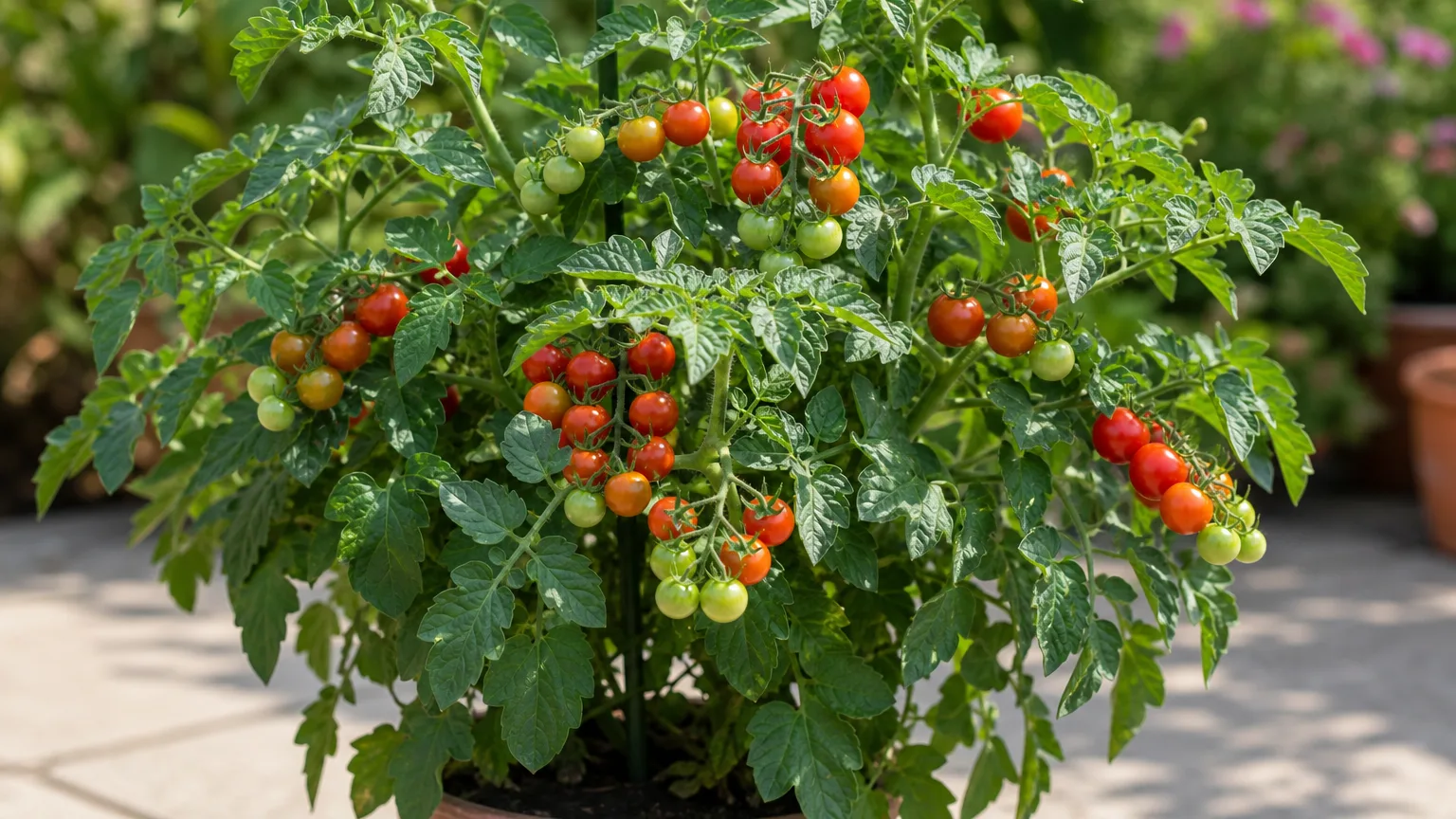
Yellow Pear is an indeterminate cherry type with golden, pear-shaped fruit. North Carolina State notes its sweet flavor; the long vine needs support and frequent picking.
Sungold is a vigorous indeterminate cherry with sweet orange fruit. Oregon State lists it as midseason, and the RHS recommends it for snacking; provide tall support and pick regularly.
Sweet Million produces long clusters of red cherries on an indeterminate plant. The RHS recommends its cascading trusses; leave room for tall support and harvest often.
Gardener’s Delight is a productive red cherry, typically indeterminate, for fresh picking and salads. Confirm fruit size, resistance, and maturity on the packet.
Sun Sugar Yellow Cherry, commonly sold as Sun Sugar, is usually orange-gold rather than lemon-yellow. Its sweet bite-size fruit suits snacks; check current resistance and support details.
Paste tomatoes for cooking and preserving
Paste and plum tomatoes tend to have more solid flesh and less watery seed gel than many juicy slicers, so they cook down efficiently. They can be canned, frozen, roasted, or made into sauce, but the best preserving choice is also the one that matures reliably in your garden. For a large batch, concentrated fruit set can be helpful; for fresh cooking all summer, a vining paste type may suit you better.
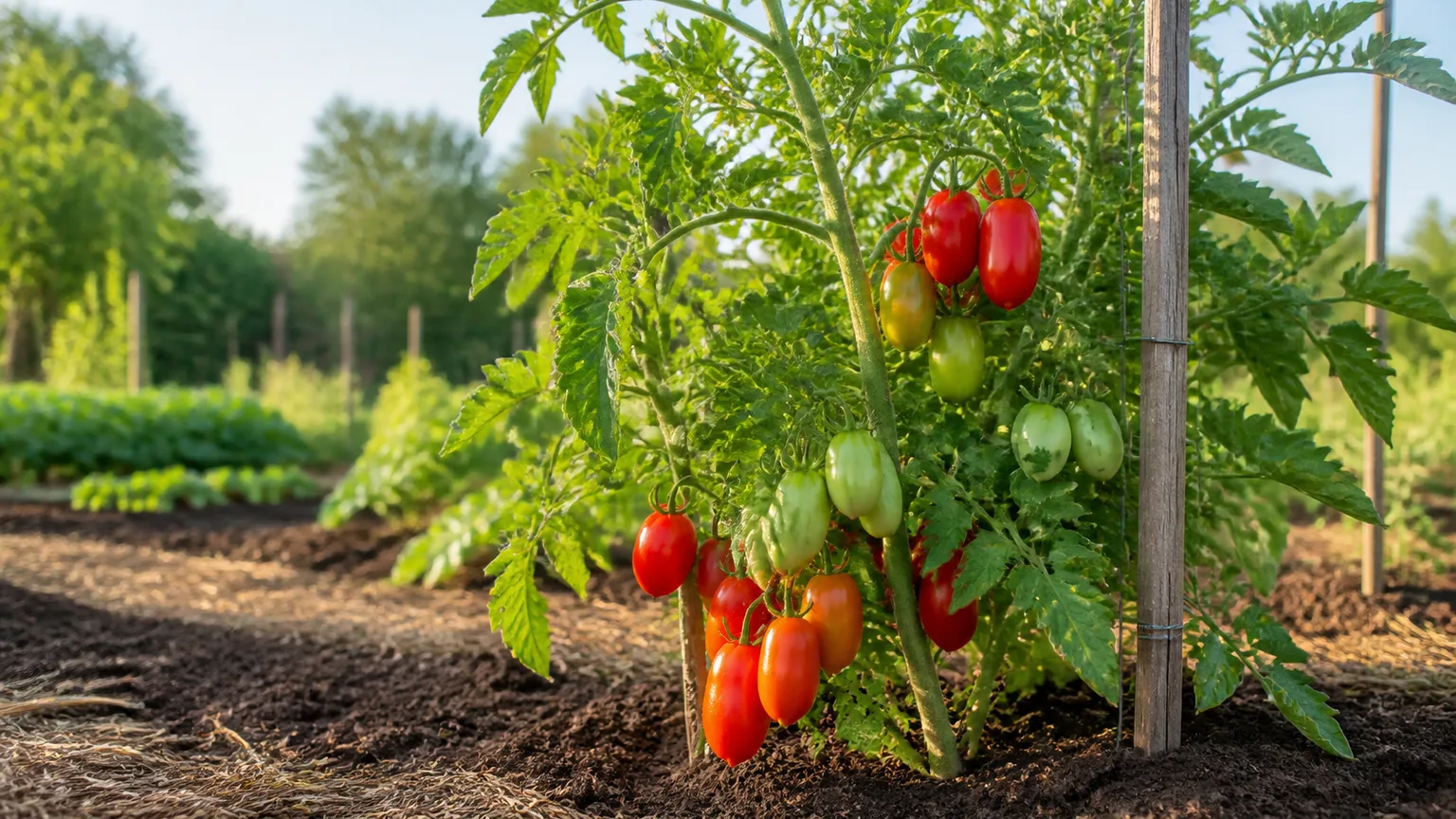
San Marzano is a tapered Italian paste tomato with meaty flesh for sauce. Clemson lists it as indeterminate with no specific resistance codes; provide a long season, tall support, and even watering.
Roma is a familiar firm plum tomato for sauces, roasting, and preserving. North Carolina State notes its canning use. Many lines are determinate, but verify habit and maturity for yours.
Golden Roma brings the plum shape and sauce use of a Roma type to golden-yellow fruit. Check whether your seed line is determinate or vining and when its crop ripens.
Build a balanced tomato lineup
If you have space for three plants, choose for different jobs rather than planting three varieties with the same harvest. A useful starter combination is one early slicer, one cherry tomato, and one larger main-season slicer. If you make sauce every summer, swap the third plant for a paste type or add it if the bed can support four vines.
For a small garden, one compact determinate plant can provide the main crop, with a single indeterminate cherry trained vertically if you have a sunny wall or sturdy trellis. For a long, warm season, a large heirloom can be the centerpiece, balanced by a reliable hybrid with documented resistance. In a short season, choose one or two early options and treat a late beefsteak as a bonus rather than the whole plan.
Keep notes after harvest: first ripe date, fruit quality, cracking, yield, disease issues, and whether your household used the crop. These observations are more useful than a general “best tasting” ranking because they show how a variety performs in your microclimate and garden. Gardening Know How’s variety guide similarly sorts choices by growing space and regional conditions, a better starting point than flavor adjectives alone.
Match your variety to sun, heat, and season length
Tomatoes need a sunny site and a long enough frost-free period to flower and ripen fruit. A heat-loving variety can be slow in a cool coastal summer; an heirloom beefsteak may not finish before fall frost in a northern garden. Choose a transplant from a reputable local nursery or start seeds indoors early enough for your region, following local frost dates and soil temperature guidance.
In short-season climates, favor an earlier variety such as Early Girl, Matina, Manitoba, Sophie’s Choice, or Subarctic Plenty. Oregon State Extension notes that its cold-climate growers should choose the lowest maturity number available and add time because cool evenings delay ripening. A determinate plant can also be easier to protect with a cover when temperatures dip, but it still needs warmth to grow.
In hot or humid regions, the main challenge may be disease pressure or fruit set during extreme heat. Select varieties with resistance codes relevant to your local disease history and use good airflow, crop rotation, and soil-level watering. North Carolina State identifies Marglobe as an heirloom that performs well in its heat and humidity; that regional note is a useful starting point, not a guarantee for every hot garden.
For containers, choose varieties labeled compact, dwarf, patio, or determinate, and use a sufficiently large pot with drainage. Sophie’s Choice, Silvery Fir Tree, Tasmanian Chocolate, and Bush Early Girl are more manageable starting points than an 8-foot Sungold or Yellow Pear vine. Container soil dries faster than a garden bed, so steady watering matters as fruit develops.
Read days to maturity as a planning estimate
Days to maturity usually count from transplanting, not from the day a seed is sown. The number describes an expected first harvest under favorable conditions; it does not mean every fruit is ripe on that date. Oregon State Extension groups early, midseason, and late cultivars by approximate maturity windows and warns that direct-seeded plants can take longer. Local weather can shift the schedule further.
Use the number to compare choices from the same supplier rather than to promise a harvest date. If your frost-free window is short, leave a buffer for transplant shock, cloudy days, cool nights, and the fruit that ripens after the first one. In a warm region, a longer-season heirloom can have time to develop its full crop; in a cool one, a fast slicer may be more dependable.
Nurseries sometimes label maturity differently or round the number, so check whether a catalog counts from sowing or transplanting. Buying a young plant also changes the calendar compared with starting from seed. Oregon State’s tomato guide gives the reader a useful baseline, but your own garden records are the best way to refine timing year to year.
Choose resistance for the diseases in your area
If tomato diseases have repeatedly shortened your harvest, read the letters after a cultivar name. Depending on the supplier, codes such as V, F, N, T, or TSWV refer to resistance or tolerance to specific diseases or pests. Resistance is not immunity, and one “disease-resistant” claim does not cover every blight, leaf spot, or virus. Check the label against the problems actually found in your area.
University extension lists can help you compare cultivars and decode labels. Georgia Extension explains common resistance abbreviations, while Clemson’s cultivar table identifies specific resistance codes and marks Brandywine, Cherokee Purple, and San Marzano with none in its list. Cornell’s disease-resistant tomato database is another resource for checking a named cultivar.
Keep the rest of the growing routine in place: rotate tomatoes and related crops, avoid crowding, remove diseased debris, and water at the soil line when practical. Minnesota Extension explains that resistant cultivars can still become infected; resistance generally reduces damage rather than eliminating risk. A healthy hybrid may be a sensible anchor plant, with one heirloom grown alongside it for flavor.
Support plants and protect fruit quality
Set stakes, cages, or trellises at planting or soon after, before roots spread and branches become heavy. An indeterminate vine can keep lengthening through summer, and even a determinate bush can collapse under a full crop. Tie stems loosely with soft material, keep foliage off wet soil, and leave air between neighboring plants. Pruning is a management choice, not a cure-all; follow the variety’s habit and support system.
Steady moisture helps fruit swell evenly. Letting a plant dry hard and then saturating it can contribute to cracking, especially after rain. Mulch after the soil warms, water deeply at the base, and avoid excess nitrogen that encourages leaves at the expense of fruit. Large heirlooms deserve particular attention because their fruit can be heavy and their skins may be delicate.
Flavor also depends on harvest stage and growing conditions. A perfectly named cultivar cannot compensate for immature fruit, insufficient sun, or a stressed plant. Use the variety’s expected color as your first cue, then check that the fruit gives slightly under gentle pressure. The RHS guide offers practical growing guidance for cordon and bush types; follow the training recommendation for the specific plant you choose.
Harvest by ripeness, not color alone
Red tomatoes are easiest to read, but yellow, green, striped, and dark cultivars call for a little more attention. Green Zebra should soften while retaining green and yellow stripes; Indigo Rose can have dark shoulders above red flesh; Black Beauty can remain nearly black on the sun side when ripe. Keep the packet or a label near the plant so anyone helping with harvest knows what mature color to expect.
Pick a fully colored tomato that feels slightly soft but still firm enough to handle. Snip the stem if twisting risks damaging a branch or neighboring truss. If fruit begins cracking after rain, harvest it promptly and use sound fruit soon. A taste test from one ripe tomato is the most reliable way to learn when that particular variety reaches its best flavor in your garden.
Conclusion
For a dependable first tomato, grow an early slicer such as Early Girl and add one cherry variety for easy snacking. Choose a paste tomato if sauce is the goal, or give an heirloom beefsteak a sunny, well-supported spot when your season is long enough. Compact types can make a small garden productive, while indeterminate vines earn their space when trained vertically.
Before buying, check the exact seed line’s habit, days-to-maturity basis, fruit size, and resistance codes. Then choose one or two varieties that solve a real need in your garden. Keeping notes on timing, yield, flavor, and disease pressure will help you pick even better next season.



