Cherry Tomato Care Guide: Sun, Water and Support
Solanum lycopersicum var. cerasiforme
Grow cherry tomatoes in full sun with steady moisture, fertile well-drained soil, and support matched to determinate or indeterminate habits.
Cherry Tomato Care Guide: Sun, Water and Support
Start with wateringThe most common care mistake for Cherry TomatoWatering guide → →Cherry Tomato care essentials
Light
Water
Keep the root zone evenly moist while flowering and fruiting, without leaving it saturated. Water deeply when the upper 2–3 cm of soil begins to dry, directing water at the soil rather than over the foliage.
Soil
Fertile, moisture-retentive but well-drained loam or container mix rich in organic matter. A slightly acidic pH around 5.8–6.8 is preferred.
Humidity
Temperature
Fertilizer
Compost and a fertilizer labelled for fruiting vegetables can support production, but excessive nitrogen encourages leafy growth at the expense of flowers and fruit. Sudden wilting, yellowing, or fruit defects should prompt a moisture and root check before another fertilizer dose.
About Cherry Tomato
Cherry Tomato is native to Western South America, with domestication centered in the Americas, typically reaches 30 cm to 3 m tall and 30 cm to 1.2 m wide, depending on cultivar and support indoors, with rapid during warm weather growth. Cherry Tomato has a upright growth habit and part of the Solanaceae family. It is also known as Cherry Tomato, Cerasiform Tomato, Baby Tomato, and Small-fruited Tomato.
| Detail | Information |
|---|---|
| Also known as | Cherry Tomato, Cerasiform Tomato, Baby Tomato, Small-fruited Tomato |
| Native region | Western South America, with domestication centered in the Americas |
| Mature size | 30 cm to 3 m tall and 30 cm to 1.2 m wide, depending on cultivar and support |
| Growth rate | Rapid during warm weather |
| Growth habit | Upright |
| Scientific name | Solanum lycopersicum var. cerasiforme |
| Family | Solanaceae |
Cherry Tomato Care Guide: Sun, Water and Support
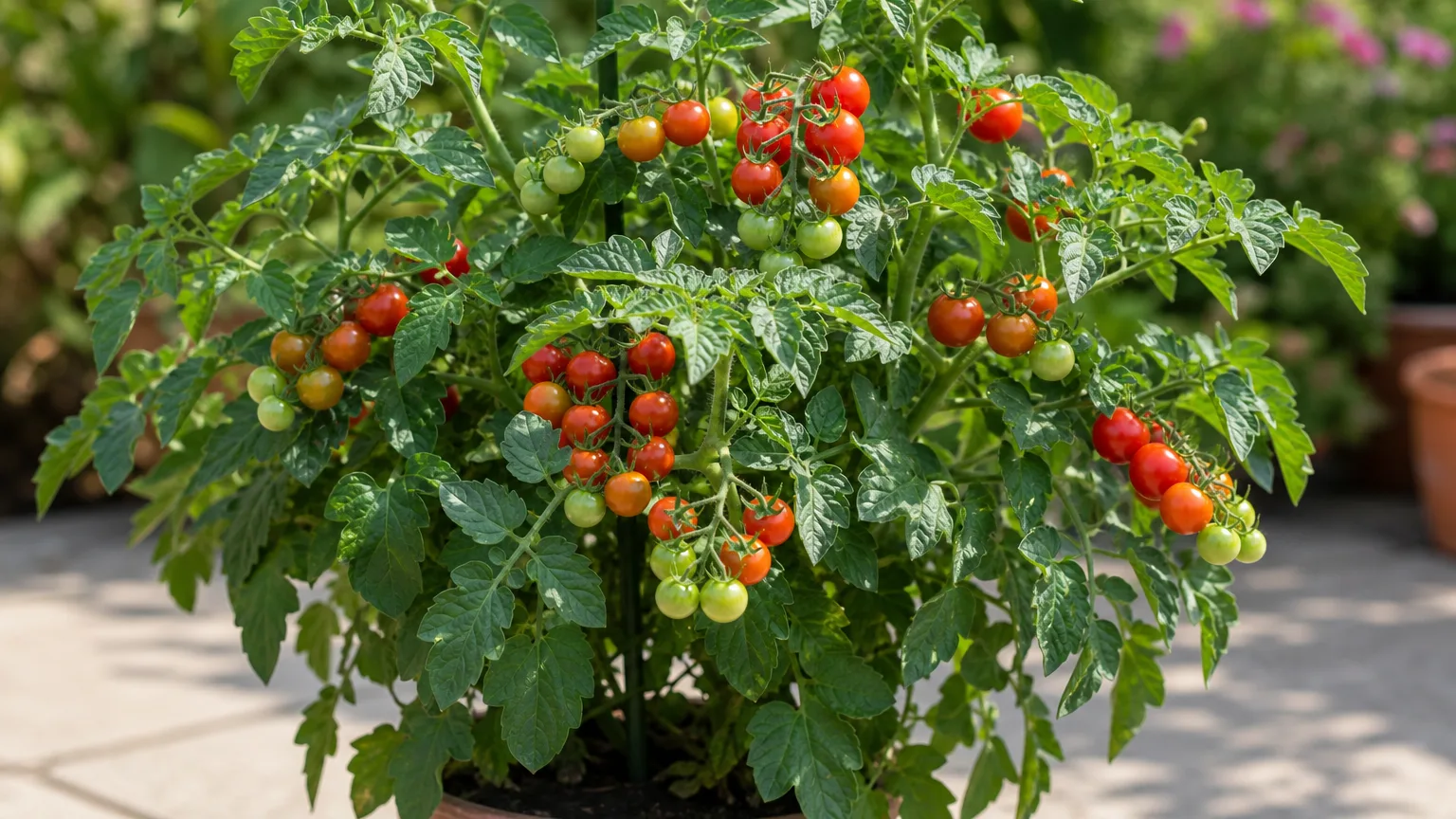
A cherry tomato is defined by its small fruit, not by a single plant shape. One seed packet may produce a knee-high bush that sets most of its crop together; another may produce a vine that keeps extending beyond a balcony railing. The first step in cherry tomato care is therefore to identify whether the cultivar is determinate, indeterminate, dwarf, patio or trailing.
That label controls the practical decisions that follow: final container size, support height, spacing and whether sucker removal is useful or harmful. The essentials are still recognisable—strong sun, steady moisture, fertile well-drained soil and protection from damaging weather—but they must be scaled to the plant you actually have.
Cherry tomato care at a glance
Place the plant in a genuinely sunny outdoor position, install its support while it is young and give the roots enough soil volume that the pot does not swing from wet to wilted in a few hours. Water when the upper layer starts drying, then soak the full root ball and let excess water drain. Feed measured amounts during active growth rather than chasing every yellow leaf with fertilizer.
Cherry tomato (Solanum lycopersicum var. cerasiforme) is a fast warm-season crop, usually replaced after harvest even where frost does not end its life. The broader NC State tomato profile records a mature range from about 1 to 10 feet, which is a useful warning against choosing a pot or stake from fruit size alone.
Read the cultivar label first
“Cherry” tells you that the fruits are small. It does not tell you whether the stem eventually stops, whether the plant belongs in a hanging basket, or whether it can cover a tall trellis. The RHS tomato guide separates vigorous cordon or indeterminate plants from compact bush or determinate plants and also recognises dwarf and trailing choices.
If the label is missing, do not guess from the seedling’s current height. Give it temporary support, avoid removing healthy suckers, and watch the growing tips and flower clusters while trying to identify the cultivar.
Determinate cherry tomatoes
A determinate cherry tomato reaches a cultivar-defined structure, sets a comparatively concentrated crop and then declines. Bushy does not always mean unsupported: fruit-loaded side stems can still bend, so a sturdy cage fitted early is usually safer than trying to prop each branch after clusters swell.
Do not strip determinate suckers by default. Those side shoots form part of the finite fruiting framework, and heavy removal can trade much of the potential crop for a tidier-looking plant. Clemson Extension distinguishes determinate plants by their limited size and concentrated set, while indeterminate plants continue producing over an extended season.
Indeterminate cherry tomatoes
An indeterminate cherry tomato continues making stem, leaves and flower trusses while conditions remain suitable. Cultivars such as the small-fruited ‘Sweet 100’ can be prolific without being compact; they need a tall, firmly anchored stake, string system, trellis or large cage rather than a short patio ring.
The harvest is spread over a longer window, but so is the maintenance. Tie new extension regularly with soft loops, check that the support cannot tip with a loaded container, and decide whether the plant will keep one, two or several leaders before removing any sucker.
Dwarf, patio and trailing cultivars
Dwarf and patio labels are more promising for modest balconies, but the stated mature dimensions still matter. NC State lists ‘Tiny Tim’ as a dwarf cherry patio plant, while the same profile lists ‘Super Sweet 100’ and ‘Sweet Million’ simply as cherry cultivars. That difference illustrates why “cherry” and “container-sized” are not synonyms.
Trailing basket cultivars need unobstructed drainage and frequent moisture checks because a small suspended root ball heats and dries quickly. Their cascading stems should be allowed to hang rather than forced into an upright pruning plan intended for cordon tomatoes.
Give it crop-level light
Cherry tomatoes need direct outdoor sun to build sturdy stems, flower repeatedly and sweeten a sustained crop. Aim for at least six hours where practical; deep balcony shade and an ordinary indoor window generally produce stretch and poor flowering rather than a useful harvest. The detailed Cherry Tomato light guide helps separate weak-light growth from heat stress.
In very hot climates, keep the plant’s morning light strong but protect the container itself from a sun-heated wall or floor. A brief, light afternoon screen during extreme heat is different from growing in shade all day. If flowers drop during hot nights, correct temperature and moisture stress before assuming the plant needs more phosphorus.
Keep moisture steady through fruiting
Water according to the root zone, not a repeating weekday. Check 2–3 cm below the surface; when that layer begins to dry, water slowly until the entire root ball is moist and drainage appears. A fruit-laden indeterminate plant in a breathable pot may need daily checks in hot wind, while the same container can stay wet during humid rain.
Repeated dry-to-soaked swings increase the risk of cracked fruit, and inconsistent water availability also contributes to blossom-end rot even when calcium exists in the soil. NC State links uneven moisture with fruit cracking, so mulching a bed and using a stable-sized container are often more useful than adding another product. Use the Cherry Tomato watering guide for a full moisture-check routine.
Direct water to the soil and empty any full saucer. “Consistently moist” does not mean saturated: roots still need air, and an always-wet container can wilt from root trouble while looking as if it needs another drink.
Build a fertile, draining root zone
In a bed, use loose loam enriched with mature compost where drainage is already good. In a container, use a quality potting mix with organic matter and coarse aeration; dense garden soil can compact into a poorly drained mass. A slightly acidic root zone is suitable, and Clemson Extension recommends soil testing rather than correcting pH from leaf colour alone.
The best mix holds enough moisture for a heavy fruit load but releases excess water promptly. If the surface stays wet for days, smells sour or the plant wilts despite wet soil, inspect drainage before watering again. The Cherry Tomato soil guide covers mix choices and drainage diagnosis in detail.
Choose root space by mature habit
Choose the cultivar first and the pot second. A compact determinate or dwarf cherry can fit a large patio container, while a vigorous indeterminate needs substantially more root volume, ballast and vertical clearance. UF/IFAS recommends at least a five-gallon container as a practical baseline and advises smaller-growing cultivars for container culture.
Use one plant per final pot, keep every drainage hole open and fit the support before roots occupy the container. A pot is functionally too small when it dries to wilt within hours, tips under the canopy, or leaves no stable way to anchor the support. Seedlings should reach their final home before becoming badly root-bound; the crop is normally replaced after harvest rather than kept through repeated repotting. See the Cherry Tomato repotting guide for moving and aftercare steps.
Feed the crop, not just the leaves
Start with fertile soil, then use a fertilizer labelled for tomatoes or fruiting vegetables at its stated rate. A soil test is the better guide in a bed; in a container, smaller regular applications are easier to control than occasional concentrated doses. Water a dry root ball before feeding.
Too much nitrogen can build a large green canopy with relatively little fruit, a pattern noted by NC State Extension. Before adding fertilizer to a wilted or yellowing plant, check sun, moisture and roots. The Cherry Tomato fertilizer guide explains timing and how common stress symptoms can imitate deficiency.
Match support to the growth habit
Install support at planting, before stems sprawl and roots fill the pot. A compact determinate plant usually suits a broad cage that carries several fruiting branches. A vigorous indeterminate suits a tall trellis, stake or string system with loose ties added as each new section extends.
Support is not optional merely because cherry fruits are light. A single fruit may be small, but long trusses and repeated clusters add weight along tender stems. RHS notes that indeterminate tomatoes become very tall and need suitably tall supports, while bush types need less maintenance but may still need help when heavily laden.
Prune only with a clear purpose
Remove leaves that are dead, clearly diseased or touching the soil, preferably while the canopy is dry. Beyond that cleanup, pruning depends on habit and support. Keep determinate side shoots unless one is damaged or obstructs safe tying; each healthy shoot may carry part of the limited crop.
For a vertically trained indeterminate plant, selectively pinch young suckers that conflict with the chosen leaders. A caged indeterminate can retain more stems than a single-stake plant. The Wisconsin tomato pruning guide reserves routine sucker training for indeterminate tomatoes and warns against stripping away the canopy that shades fruit. Follow the cultivar-specific Cherry Tomato pruning guide before making structural cuts.
Plan the crop around local weather
In India and other warm regions, “warm-season crop” does not mean the hottest, wettest months are always best. Local elevation and monsoon timing matter. In many lowland climates, a milder dry-season window gives better flower retention and fewer hours of wet foliage; in cooler regions, planting waits until frost risk has passed.
Small-fruited tomatoes may continue setting when larger fruits struggle in heat. UF/IFAS reports that cherry and grape tomatoes typically perform better through Florida summers, but that is not immunity to hot roots, dry pots or disease-promoting humidity. During monsoon weather, prioritise drainage, airflow and rain protection; during dry heat, check containers early and shield the pot from radiant heat.
Read the plant before reacting
Persistent wilt with dry soil calls for a thorough watering; wilt with wet soil calls for a drainage and root check. Long gaps between leaves, a weak stem and poor flowering point first to inadequate light. A dense dark-green canopy with little bloom calls for a review of nitrogen, light and cultivar.
Flower drop during a hot spell is not automatically a feeding problem. Fruit splitting after rain or a heavy watering points to a moisture swing, while a black patch at the blossom end calls for steadier root-zone moisture rather than simply adding calcium. Make one correction at a time so the plant’s response remains readable.
Keep foliage away from pets
Treat the ripe fruit and the vegetative plant as different things. Tomato leaves and stems contain the glycoalkaloids tomatine and solanine; NC State identifies them as a problem for cats, dogs and horses and lists the foliage and stems as the poisonous parts.
Keep pruned leaves and fallen green material out of reach. If an animal chews the plant, contact a veterinarian for case-specific advice rather than using a home remedy, especially if drooling, vomiting, diarrhoea, weakness or unusual behaviour appears.
When to use this page vs other Cherry Tomato guides
Use this overview to identify growth habit and see how the care systems affect one another. For a stretched plant or flowers failing in shade, go to the light guide. For wilting, cracking or uncertainty about when to soak a pot, use the watering guide. For slow drainage or a dense container mix, start with the soil guide.
Use the fertilizer page only after light, moisture and roots have been checked. Use repotting for a seedling or undersized container, propagation for starting the next crop, and pruning for cuts that differ sharply between determinate and indeterminate plants.
Related Cherry Tomato guides
- Cherry Tomato light requirements — choose exposure and tell shade stretch from heat stress.
- How to water Cherry Tomato — test the root zone and reduce wet-dry swings.
- Best soil for Cherry Tomato — balance moisture retention with fast drainage.
- Cherry Tomato fertilizer guide — feed fruiting growth without excess nitrogen.
- Repotting Cherry Tomato — move seedlings into cultivar-sized containers.
- Cherry Tomato propagation guide — start plants from seed or suitable cuttings.
- Cherry Tomato pruning guide — make habit-aware decisions about suckers and leaders.
Conclusion
Successful cherry tomato care starts by separating fruit size from plant size. Read the cultivar label, then match the root volume, cage or trellis and pruning plan to a determinate bush, indeterminate vine, dwarf patio plant or trailing basket cultivar.
Give that plant strong light, a fertile draining root zone and steady moisture without saturation. Observe weather and symptoms before reaching for fertilizer or shears, and let the detailed guides handle the care system that needs the next adjustment.
How to care for Cherry Tomato?
When should you water Cherry Tomato?
Keep the root zone evenly moist while flowering and fruiting, without leaving it saturated. Water deeply when the upper 2–3 cm of soil begins to dry, directing water at the soil rather than over the foliage.
- Test the soil below the surface and water deeply if it feels dry - Water deeply when the upper 2–3 cm of soil begins to dry, directing water at the soil rather than over the foliage.
- Drain excess water - Water deeply when the upper 2–3 cm of soil begins to dry, directing water at the soil rather than over the foliage.
What soil works best for Cherry Tomato?
Fertile, moisture-retentive but well-drained loam or container mix rich in organic matter. A slightly acidic pH around 5.8–6.8 is preferred.
- 50% high-quality potting mix or loam - Fertile, moisture-retentive but well-drained loam or container mix rich in organic matter.
- 30% mature compost
- 20% perlite, pumice, or coarse material for drainage - Fertile, moisture-retentive but well-drained loam or container mix rich in organic matter.
Grower notes for Cherry Tomato
Check the cultivar habit first
Cherry describes fruit size, not plant architecture. Determinate cherry tomato cultivars are bushier, stop at a cultivar-defined height, and ripen much of their crop in a shorter period. Indeterminate cultivars continue extending vine-like stems and setting fruit until weather or disease stops them. Read the label before choosing the pot, spacing, support, or pruning method.
Use the sunniest practical position
Give Cherry Tomato at least 6 hours of direct sun and good airflow. Strong light supports sturdy stems, flowering, and fruit development. Deep shade produces weak growth and poor fruit set. In very hot climates, temporary light afternoon protection can reduce stress, but the plant still needs a genuinely sunny position.
Keep moisture steady during fruiting
Check 2–3 cm below the surface and water deeply when that layer begins to dry. Repeated swings from dry soil to heavy watering can contribute to split fruit, while inconsistent root-zone moisture is associated with blossom-end rot. Mulch beds to slow moisture loss, and never leave a container standing in a water-filled saucer.
Match support to the plant
A compact determinate or dwarf cherry cultivar may suit a sturdy cage and a large patio pot. A vigorous indeterminate cultivar needs a tall stake or trellis and regular tying as it grows. Install support at planting to avoid damaging established roots later. Do not remove determinate shoots by default because that can remove productive growth.
Feed for flowers and fruit
Begin with fertile, well-drained soil and use a fertilizer labelled for fruiting vegetables according to its directions. Excess nitrogen can produce lush foliage with relatively little fruit. Stabilize a plant stressed by dry soil, heat, or root trouble before feeding it, because fertilizer cannot correct those conditions.
Keep foliage away from pets
The ripe fruit is the edible crop, but tomato leaves and stems contain the toxic alkaloids tomatine and solanine. NC State Extension identifies tomato as a problem for cats, dogs, and horses. Prevent pets from chewing foliage or fallen green material, and contact a veterinarian after suspected ingestion, especially if symptoms develop.
Are cherry tomato plants safe for pets?
Ripe cherry tomato fruit is the edible crop for people, but the plant's leaves and stems contain toxic alkaloids and should be kept away from cats, dogs, horses, and other pets.
Cherry tomato foliage and stems contain tomatine and solanine. NC State Extension lists tomato as a problem for cats, dogs, and horses; ingestion can cause gastrointestinal and neurologic signs. Keep pets away from foliage and seek veterinary advice after suspected ingestion.
Watering Cherry Tomato
For Cherry Tomato, test the soil below the surface and water deeply if it feels dry and water check daily in hot weather; water when the upper 2–3 cm is dry. Water more often during hot, windy weather and fruit development; reduce during cool or rainy periods.
| Detail | Information |
|---|---|
| How often | Check daily in hot weather; water when the upper 2–3 cm is dry |
| How to check | Test the soil below the surface and water deeply if it feels dry |
| Seasonal changes | Water more often during hot, windy weather and fruit development; reduce during cool or rainy periods |
Signs of overwatering
- persistently wet soil
- yellowing lower leaves
- soft or darkened roots
Signs of underwatering
- wilting that persists beyond the hottest part of the day
- dry soil pulling from the container edge
- split fruit after irregular watering resumes
Soil & potting for Cherry Tomato
Use a mix of 50% high-quality potting mix or loam, 30% mature compost, 20% perlite, pumice, or coarse material for drainage for Cherry Tomato. Good drainage with steady moisture; avoid standing water and repeated drought. Target soil pH around 5.8–6.8. Repot move a seedling into its final bed or container before it becomes root-bound; plants are usually replaced after the crop, ideally in warm season, after frost risk has passed and nights are reliably mild.
| Detail | Information |
|---|---|
| Recommended mix | 50% high-quality potting mix or loam, 30% mature compost, 20% perlite, pumice, or coarse material for drainage |
| Drainage | Good drainage with steady moisture; avoid standing water and repeated drought |
| Soil pH | 5.8–6.8 |
| Repotting frequency | Move a seedling into its final bed or container before it becomes root-bound; plants are usually replaced after the crop |
| Best season to repot | Warm season, after frost risk has passed and nights are reliably mild |
Signs it needs repotting
- seedling roots circle the nursery cell
- growth stalls between waterings
- the container is too small for the cultivar's mature habit
Humidity & temperature for Cherry Tomato
Fertilizer & pruning for Cherry Tomato
Use compost and a fertilizer labelled for fruiting vegetables can support production, but excessive nitrogen encourages leafy growth at the expense of flowers and fruit. Sudden wilting, yellowing, or fruit defects should prompt a moisture and root check before another fertilizer dose. for Cherry Tomato.
| Detail | Information |
|---|---|
| Fertilizer type | Compost and a fertilizer labelled for fruiting vegetables can support production, but excessive nitrogen encourages leafy growth at the expense of flowers and fruit. Sudden wilting, yellowing, or fruit defects should prompt a moisture and root check before another fertilizer dose. |
Common problems on Cherry Tomato
Yellow Leaves
MediumLikely cause: Common on this plant type; confirm with recent watering, light, and root checks.
Quick fix: Inspect the plant and correct the most likely care stressor before stacking treatments.
Full fix guide →Brown Tips
MediumLikely cause: Common on this plant type; confirm with recent watering, light, and root checks.
Quick fix: Inspect the plant and correct the most likely care stressor before stacking treatments.
Full fix guide →Root Rot
MediumLikely cause: Common on this plant type; confirm with recent watering, light, and root checks.
Quick fix: Inspect the plant and correct the most likely care stressor before stacking treatments.
Full fix guide →Overwatering
MediumLikely cause: Common on this plant type; confirm with recent watering, light, and root checks.
Quick fix: Inspect the plant and correct the most likely care stressor before stacking treatments.
Full fix guide →Underwatering
MediumLikely cause: Common on this plant type; confirm with recent watering, light, and root checks.
Quick fix: Inspect the plant and correct the most likely care stressor before stacking treatments.
Full fix guide →Spider Mites
MediumLikely cause: Common on this plant type; confirm with recent watering, light, and root checks.
Quick fix: Inspect the plant and correct the most likely care stressor before stacking treatments.
Full fix guide →Mealybugs
MediumLikely cause: Common on this plant type; confirm with recent watering, light, and root checks.
Quick fix: Inspect the plant and correct the most likely care stressor before stacking treatments.
Full fix guide →Aphids
MediumLikely cause: Common on this plant type; confirm with recent watering, light, and root checks.
Quick fix: Inspect the plant and correct the most likely care stressor before stacking treatments.
Full fix guide →Leggy Growth
MediumLikely cause: Common on this plant type; confirm with recent watering, light, and root checks.
Quick fix: Inspect the plant and correct the most likely care stressor before stacking treatments.
Full fix guide →Slow Growth
MediumLikely cause: Common on this plant type; confirm with recent watering, light, and root checks.
Quick fix: Inspect the plant and correct the most likely care stressor before stacking treatments.
Full fix guide →Wilting
MediumLikely cause: Common on this plant type; confirm with recent watering, light, and root checks.
Quick fix: Inspect the plant and correct the most likely care stressor before stacking treatments.
Full fix guide →Drooping Leaves
MediumLikely cause: Common on this plant type; confirm with recent watering, light, and root checks.
Quick fix: Inspect the plant and correct the most likely care stressor before stacking treatments.
Full fix guide →Low Humidity
MediumLikely cause: Common on this plant type; confirm with recent watering, light, and root checks.
Quick fix: Inspect the plant and correct the most likely care stressor before stacking treatments.
Full fix guide →Not Enough Light
MediumLikely cause: Common on this plant type; confirm with recent watering, light, and root checks.
Quick fix: Inspect the plant and correct the most likely care stressor before stacking treatments.
Full fix guide →Fungus Gnats
MediumLikely cause: Common on this plant type; confirm with recent watering, light, and root checks.
Quick fix: Inspect the plant and correct the most likely care stressor before stacking treatments.
Full fix guide →Mold on Soil
MediumLikely cause: Common on this plant type; confirm with recent watering, light, and root checks.
Quick fix: Inspect the plant and correct the most likely care stressor before stacking treatments.
Full fix guide →